
About this worksheet
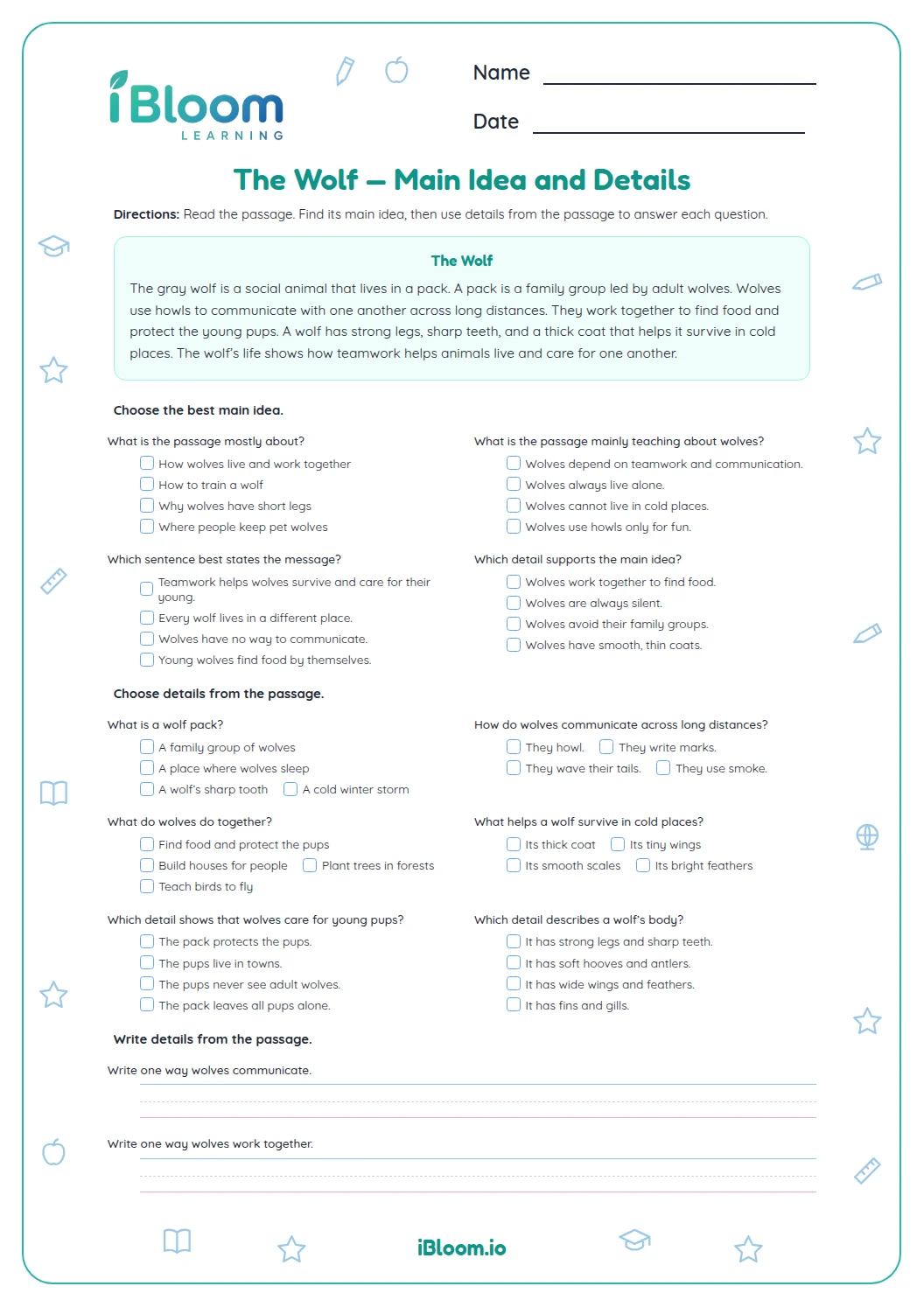
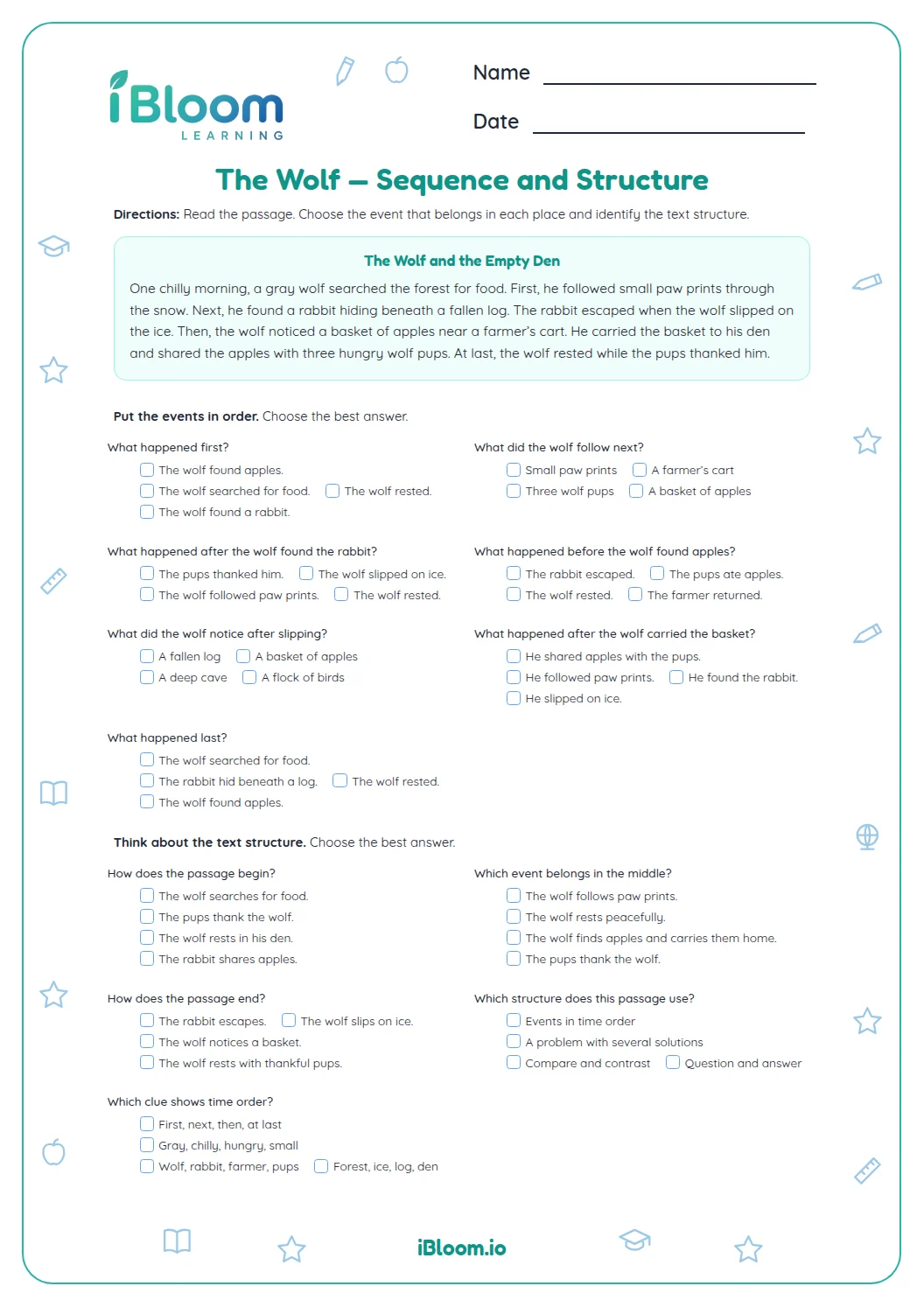
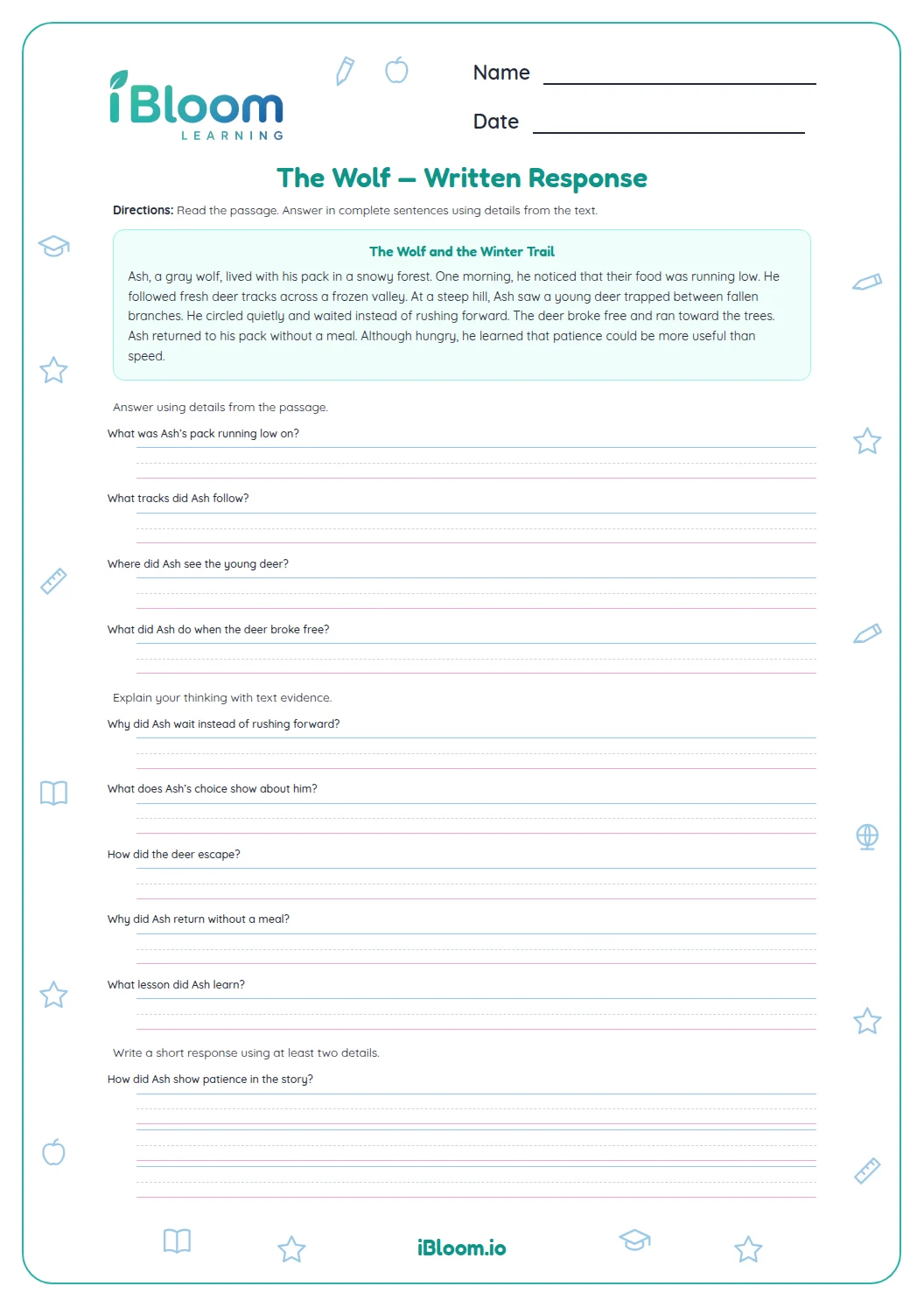
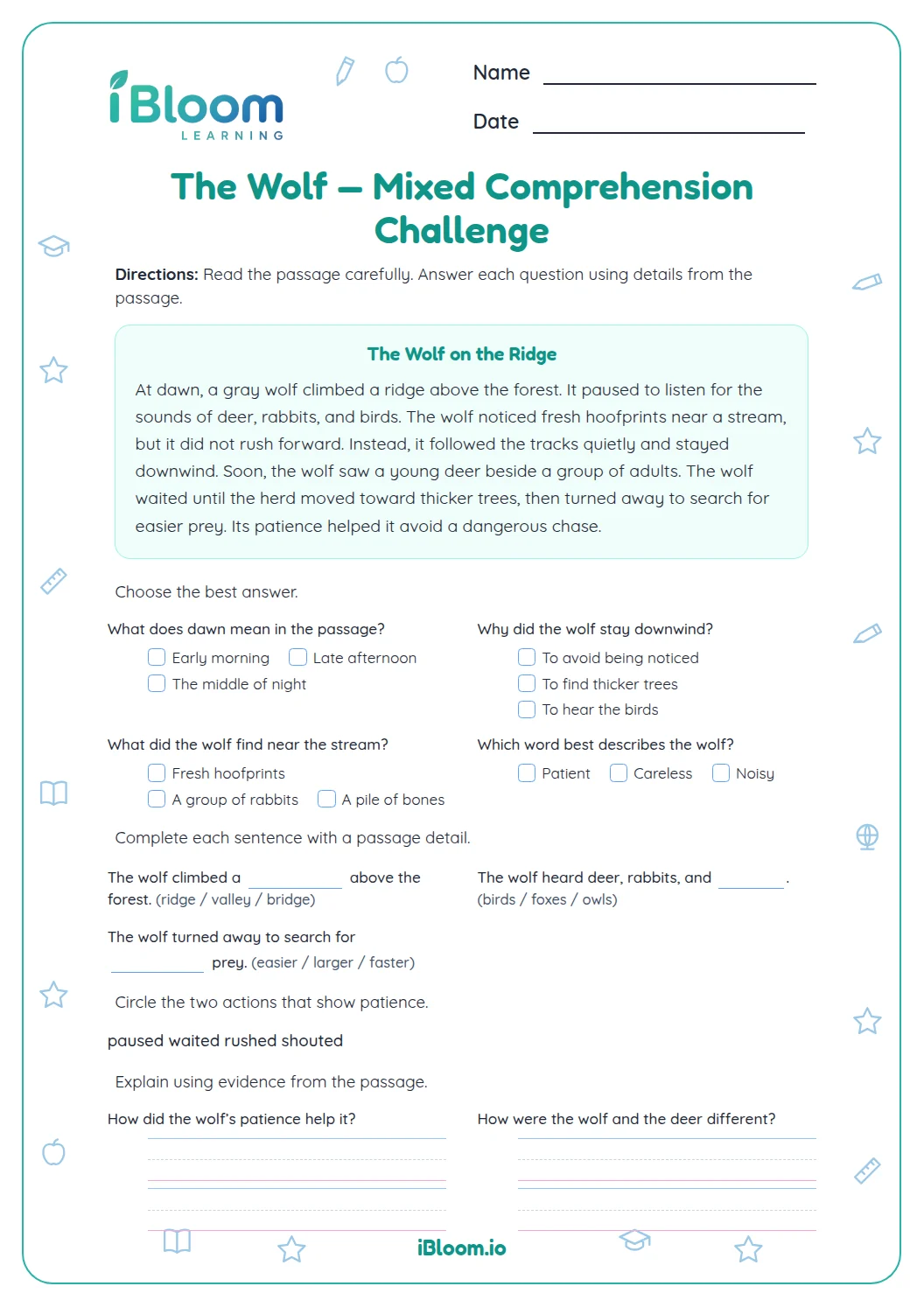
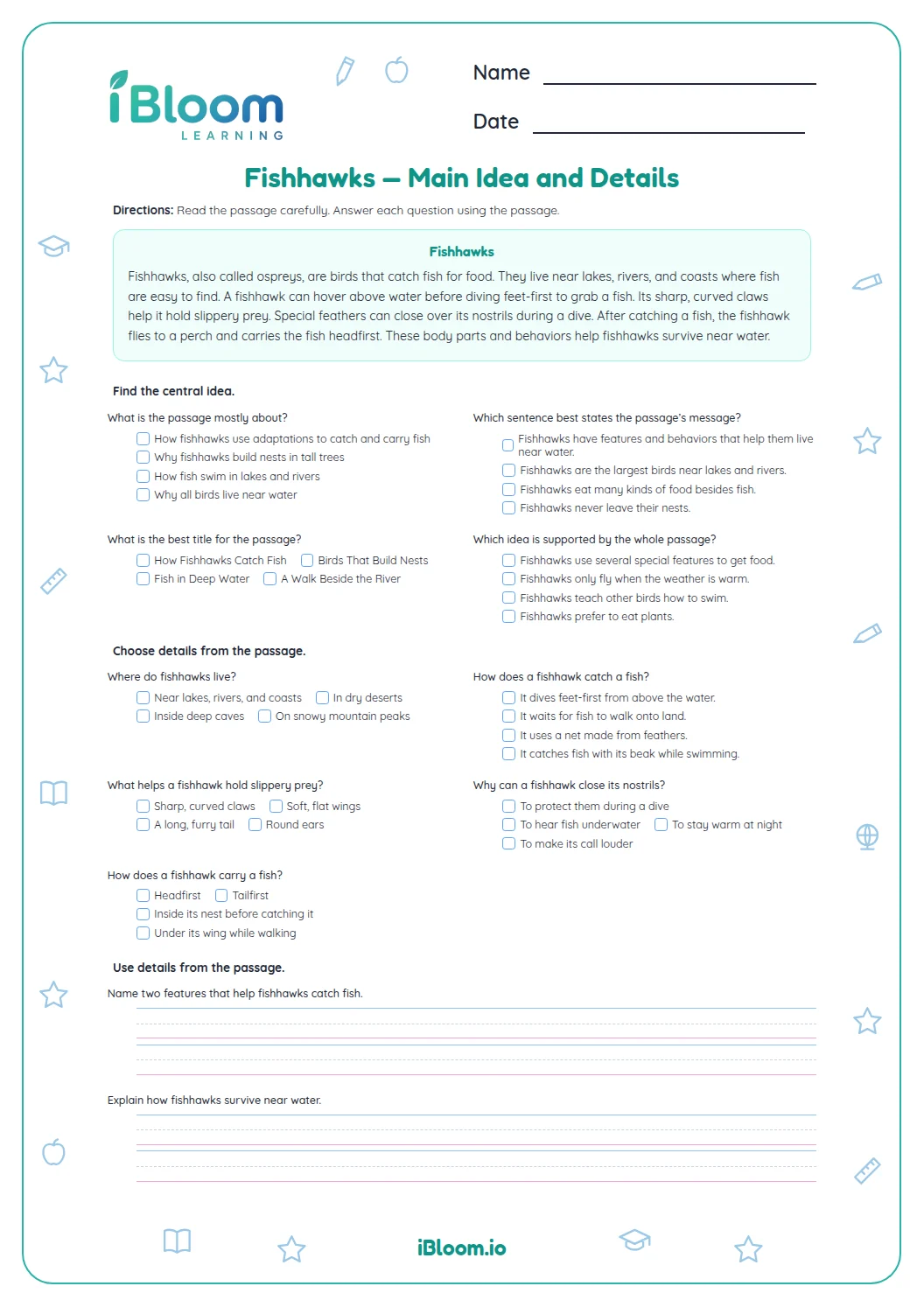
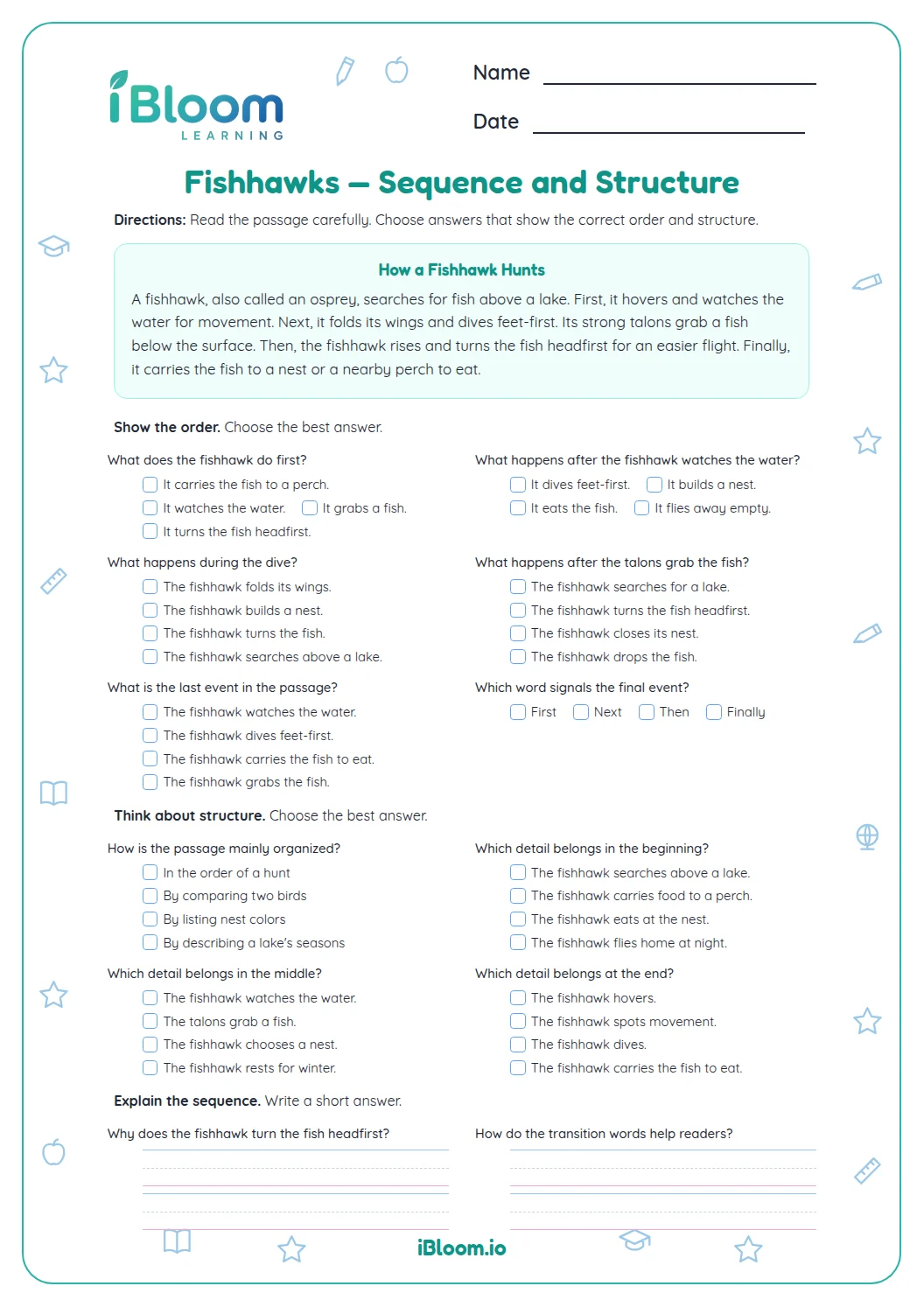
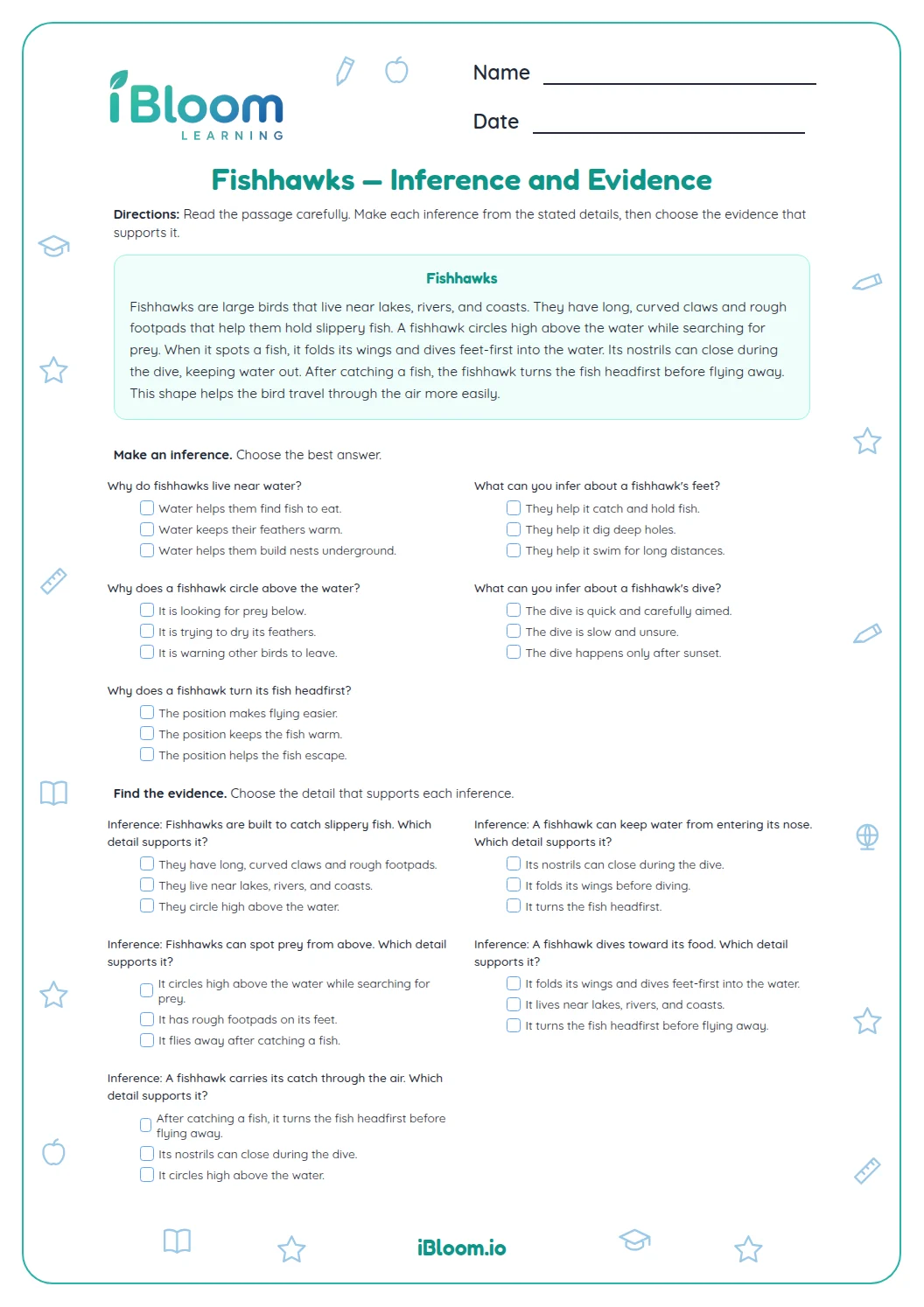
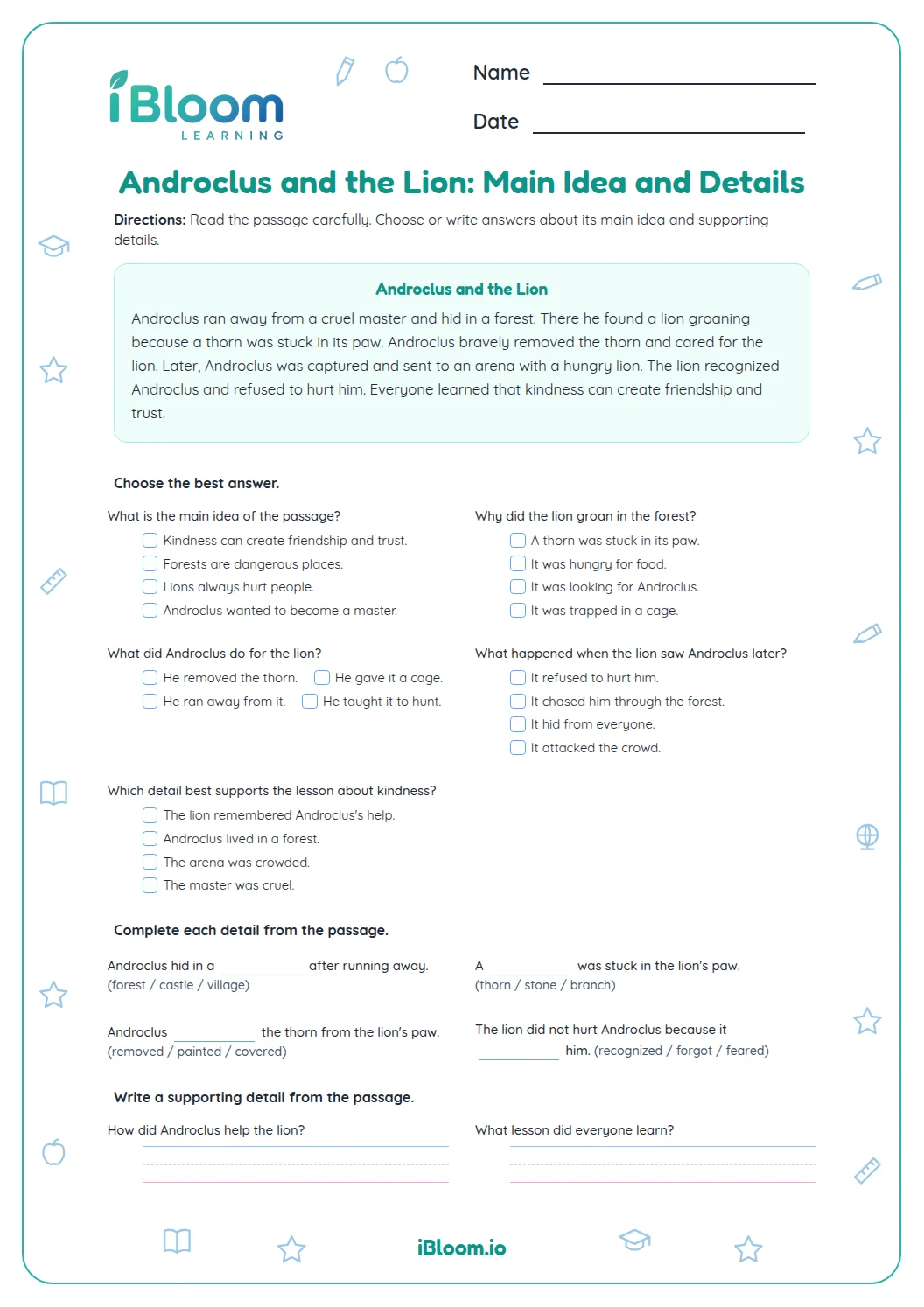
This Grade 4 fable worksheet pairs an original story about a hungry wolf and a shepherd’s dog with 14 comprehension questions. Students recall details, use context to explain words such as “crept” and “paused,” and support an explanation with evidence from the story. A separate key gives answers and sample responses. The detail and inference questions practice CCSS RL.4.1.
Aligned to RL.4.1
Which details explain why the wolf changes direction?
The wolf first expects food near the gate, but the dog warns that the path ends at the river. The wolf also notices that the lantern smells of oil, not supper. Together, these clues explain why he follows the hill lights.
- 1The dog warns that the first path ends at the river. The oil smell shows the gate lantern is not a food signal.
How can nearby events explain a story word?
Use the action around an unfamiliar word. The wolf “crept closer” before the chain rattled, so crept means he moved quietly and carefully. He “paused” after hearing the dog’s warning, which means he stopped briefly before choosing.
How do story details support a lesson?
A lesson should fit what the character does and what happens next. The wolf checks the lantern and listens to the dog before acting; that supports the idea of looking carefully before making a choice. A written answer should name at least one detail.
How to use this worksheet
- 1Read the fable once to follow the wolf’s choices.
- 2Answer the detail questions by locating the relevant sentence.
- 3Use nearby actions to infer the meanings of “crept” and “paused.”
- 4For question 15, give the wolf’s reason and cite a story clue.
- 5For question 14, state a lesson and connect it to an event.
- 6Check answers with the key; written responses may use different wording.
Common mistakes and quick fixes
The mistake
Using a guess about wolves instead of a detail from this fable.
The fix
Find the sentence about the chain, the dog’s warning, or the lantern smell.
The mistake
Defining “crept” as simply “walked.”
The fix
Use the quiet, careful way the wolf moves toward the gate.
The mistake
Giving a lesson without showing where it appears in the story.
The fix
Name the wolf’s choice to check the lantern or follow the safer hill path.
Common Core alignment
This page practices the specific reading, writing, or mathematics skills named below.
Answer questions about a fable using details and examples from the passage.
On this sheet: Questions ask readers to use explicit story details and make a supported inference.
Show the official wordingHide the official wording
Refer to details and examples in a text when explaining what the text says explicitly and when drawing inferences from the text.
What to practice next
Make more practice
Further reading
Questions parents and teachers ask
What is the fable about?
A hungry wolf approaches a shepherd’s gate because he expects food. An old dog warns him that the path ends at a river and points him toward lights on a hill. The wolf follows the clues, finds berries, and later thanks the dog.
What does “crept” mean in the story?
“Crept closer” means the wolf moved quietly and carefully toward the gate. The surrounding sentence describes him approaching before a chain rattles and a bell rings. Readers can use that action to infer the word’s meaning. The question asks for the word as it is used in this passage.
What does the wolf learn?
The wolf learns to look carefully before acting. He stops after the dog’s warning, notices the gate lantern smells of oil rather than supper, and follows the hill lights. Students can support this lesson with one of those details.
How many questions are on the worksheet?
There are 14 questions across three worksheet pages, followed by a three-page answer key. The items include selected-response details, short answers, vocabulary in context, and two written responses that ask students to use evidence. The passage appears before the questions.
Can written answers use different words from the key?
Yes. Questions 13 and 14 ask students to explain a reason and a lesson, so the key gives sample responses. Another response works if it accurately reflects the fable and includes a relevant detail, such as the river warning or the oil smell.