






About this worksheet
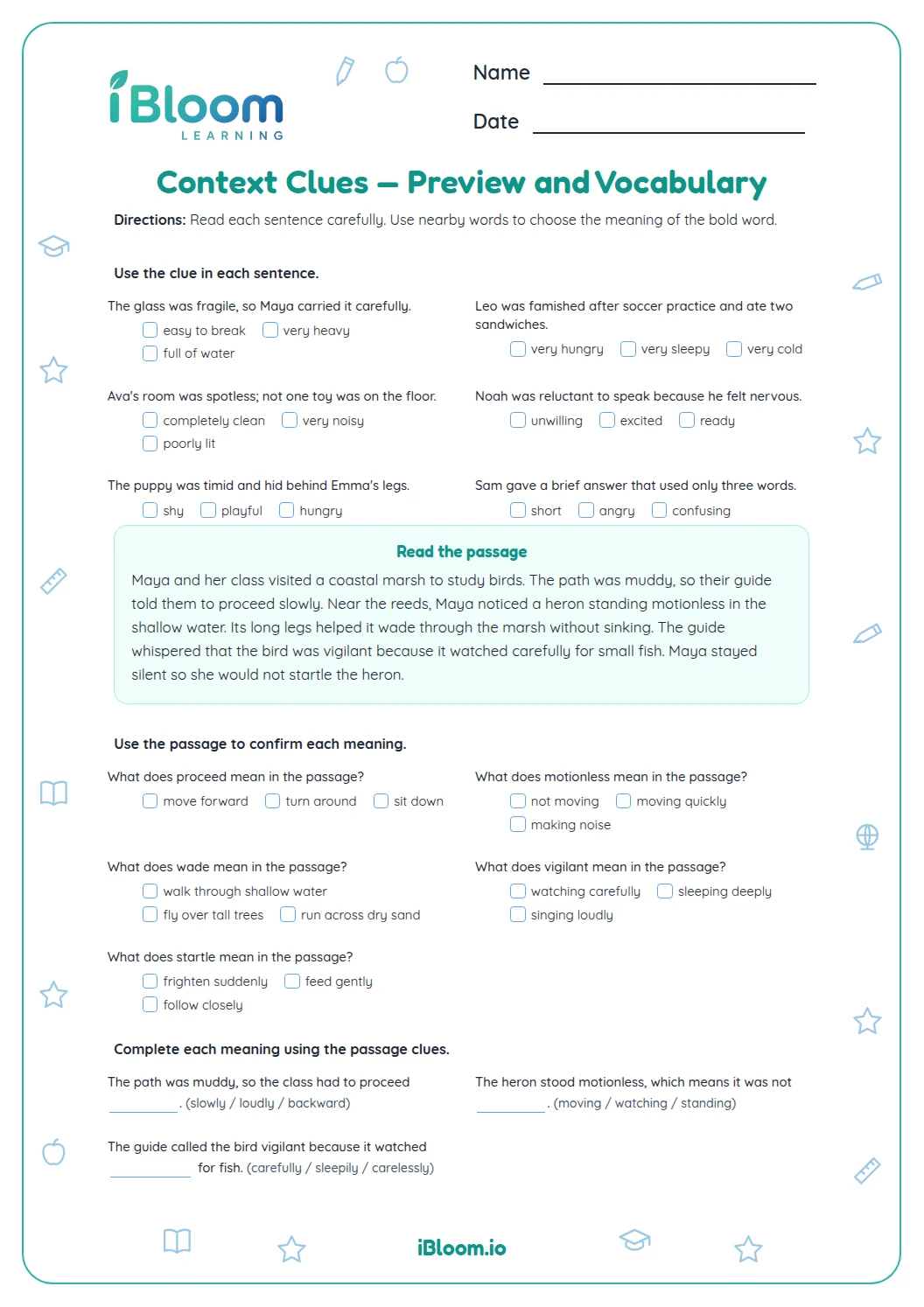
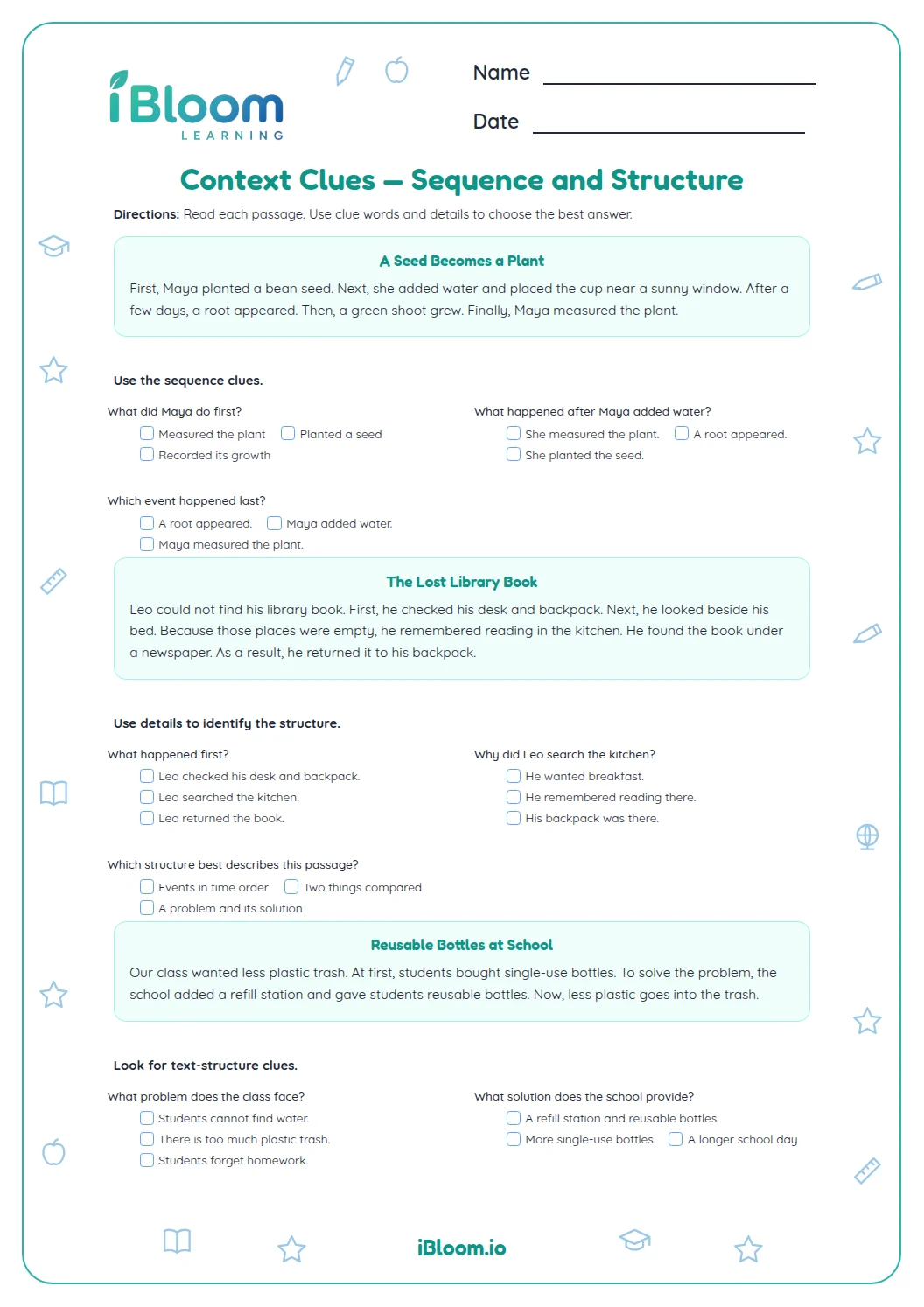
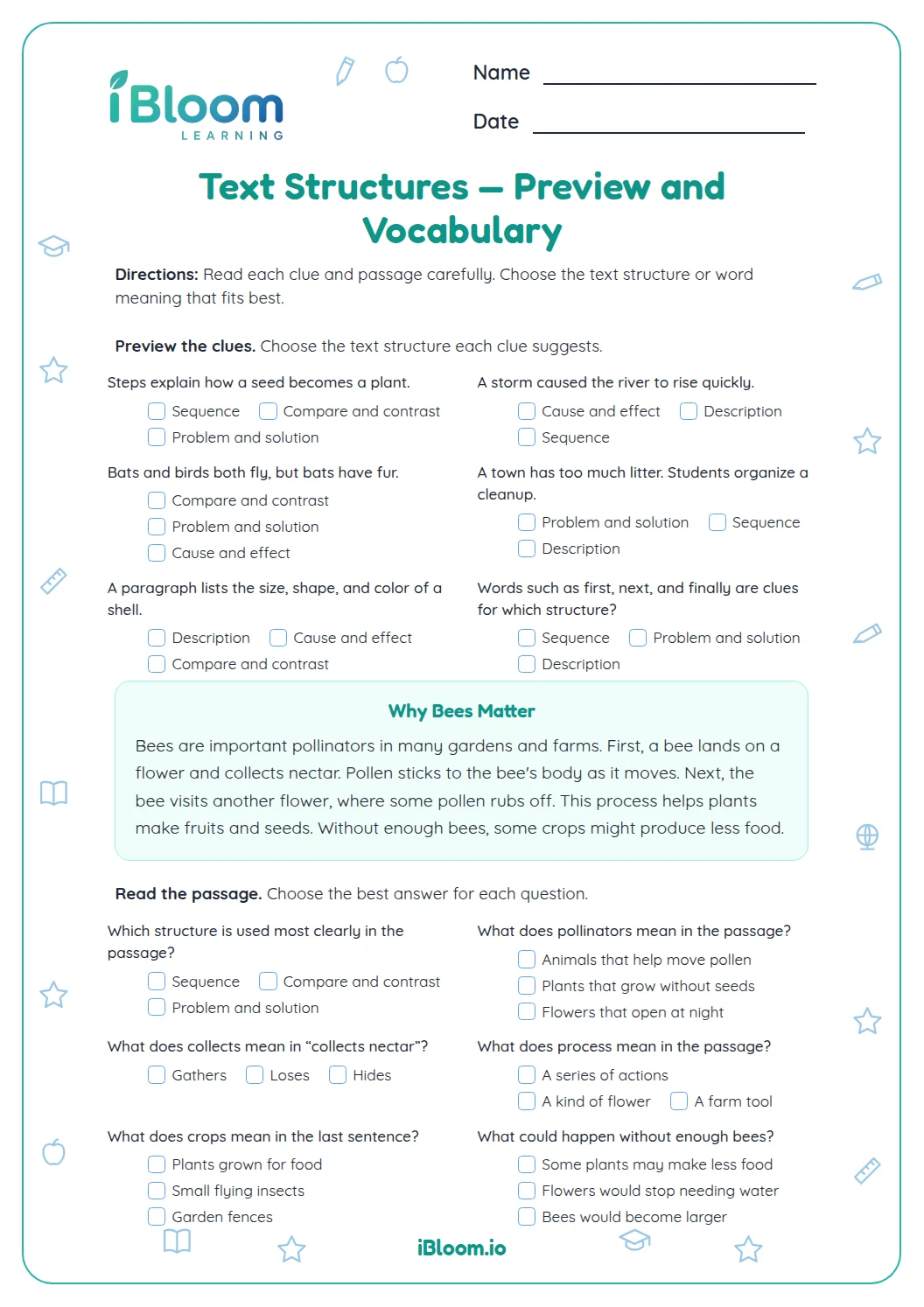
This Grade 5 reading-comprehension printable uses an original passage about students planning shade for a hot playground. Students identify the central problem, trace the council’s staged solutions, and use context to interpret a vocabulary word. The 14 questions include multiple-choice structure checks and passage-detail responses, followed by a separate answer key.
How does the passage reveal its problem-solution structure?
The first paragraph explains the difficulty: students cannot comfortably use a hot, mostly sunny blacktop. The next paragraphs show the council investigating, choosing an affordable first step, and checking results. This pattern helps readers understand why each action follows.
- 1Question 1 names the overheated blacktop as the problem that starts the plan.
How do the details connect each action to the problem?
The survey and map help students locate where shade is needed. Donations and volunteers make tree planting possible despite limited funds. The watering schedule supports the new trees. Each action addresses a practical part of creating shade.
- 1Question 4 connects the staged plan to the school’s limited budget.
What can readers infer from the ending?
The final fill-in items ask students to connect each response to a passage detail, including the trees, watering schedule, and need for continued improvement.
- 1Question 9 asks why the two projects could not happen at the same time.
How to use this worksheet
- 1Read the opening paragraph to locate the problem.
- 2Mark each action the people take to respond.
- 3Notice why the solution happens in stages.
- 4Track the result and any limits described at the end.
- 5For written answers, use a specific passage detail.
Common mistakes and quick fixes
The mistake
Calling any event in the passage the main problem.
The fix
Choose the difficulty that causes people to take action.
The mistake
Treating a proposed action as a completed result.
The fix
Check verbs and time words to see what happened and what is planned.
The mistake
Saying the solution worked perfectly.
The fix
Include the ending’s limit: shade improved in part, but the work continues.
What to practice next
Make more practice
Questions parents and teachers ask
What is problem-and-solution text structure?
This structure introduces a difficulty and describes actions taken to address it. In “A Cooler Place to Play,” the blacktop becomes too hot, so students survey classmates, map shade needs, and help plan tree planting. The questions ask readers to connect those responses to the problem.
What problem do students face in the passage?
The blacktop beside Maple School becomes too hot for recess, and the small tree provides little shade. Students move games indoors, where the gym is busy. The student council investigates the need and shares its findings with the principal.
Why does the school plant trees before adding a shade sail?
The passage says the school cannot afford both projects at once. Families donate two young trees, volunteers plant them, and the principal arranges a shade sail for the following year. This detail explains why the solution happens in stages.
Does the plan solve every hot day right away?
No. By autumn, the trees cool only part of the playground, and the passage says the plan does not solve every hot day immediately. Students make a watering schedule and track progress, giving the school a practical start and a way to keep improving.
How can students support a written response?
Students can name a specific passage detail that answers the question. For example, to explain the staged plan, they can refer to the school’s inability to afford both projects at once. The answer key lists concise responses that match the passage.
How many questions and pages are there?
The worksheet has 14 questions: six multiple-choice items and eight short passage-detail responses. The reading and questions span three printable pages, followed by a separate three-page answer key. Students can return to the passage while answering the detail questions.