




About this worksheet
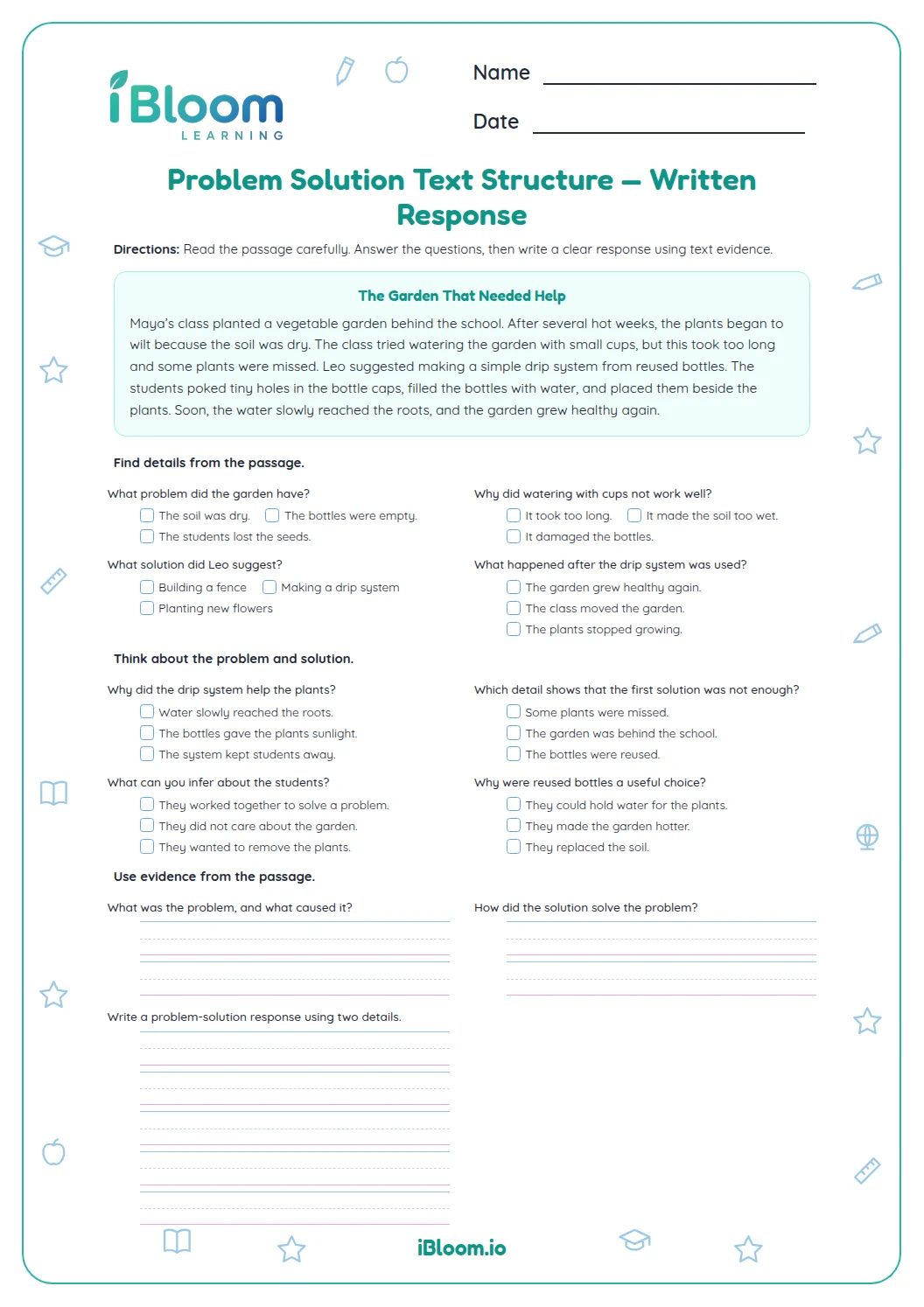
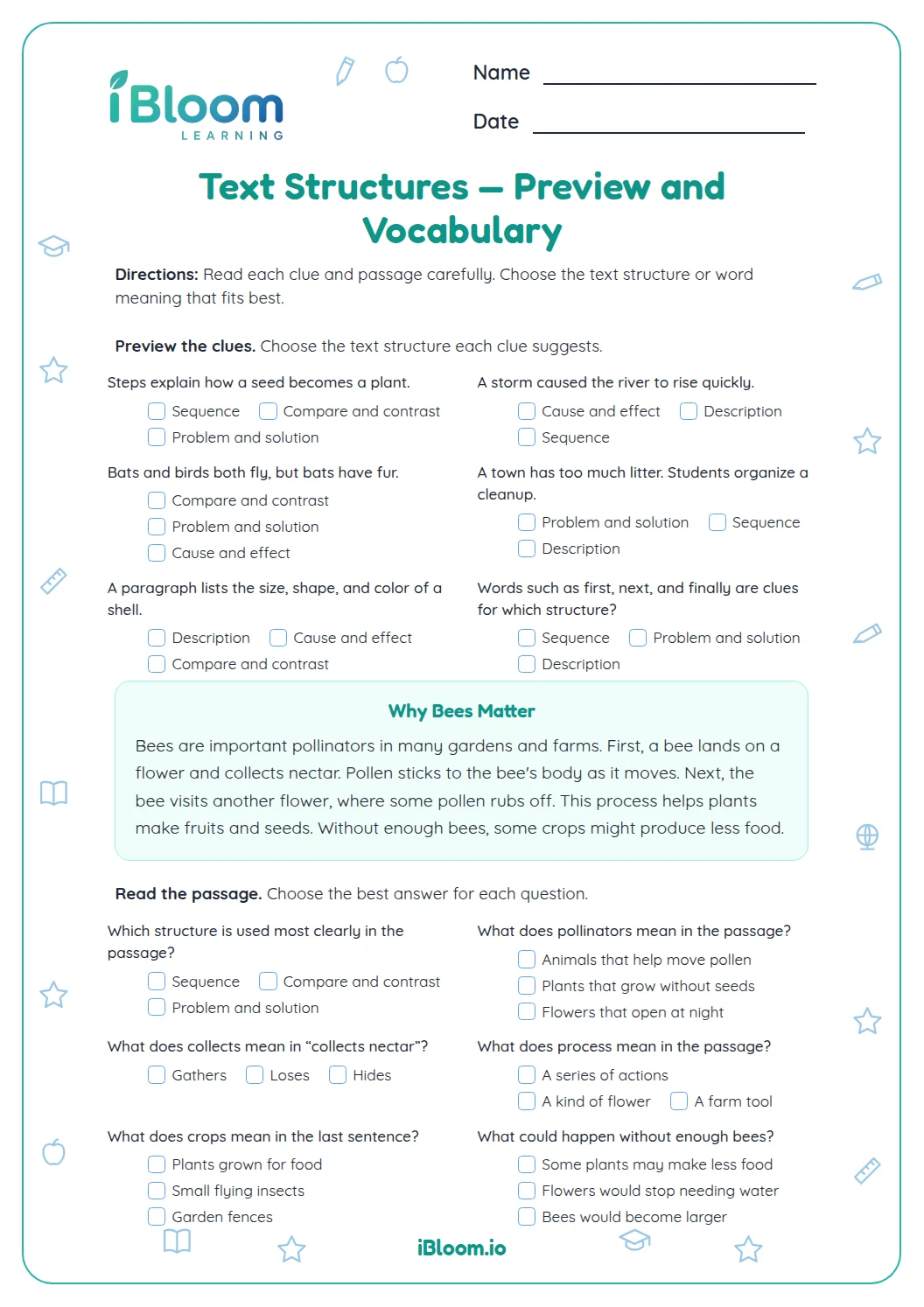
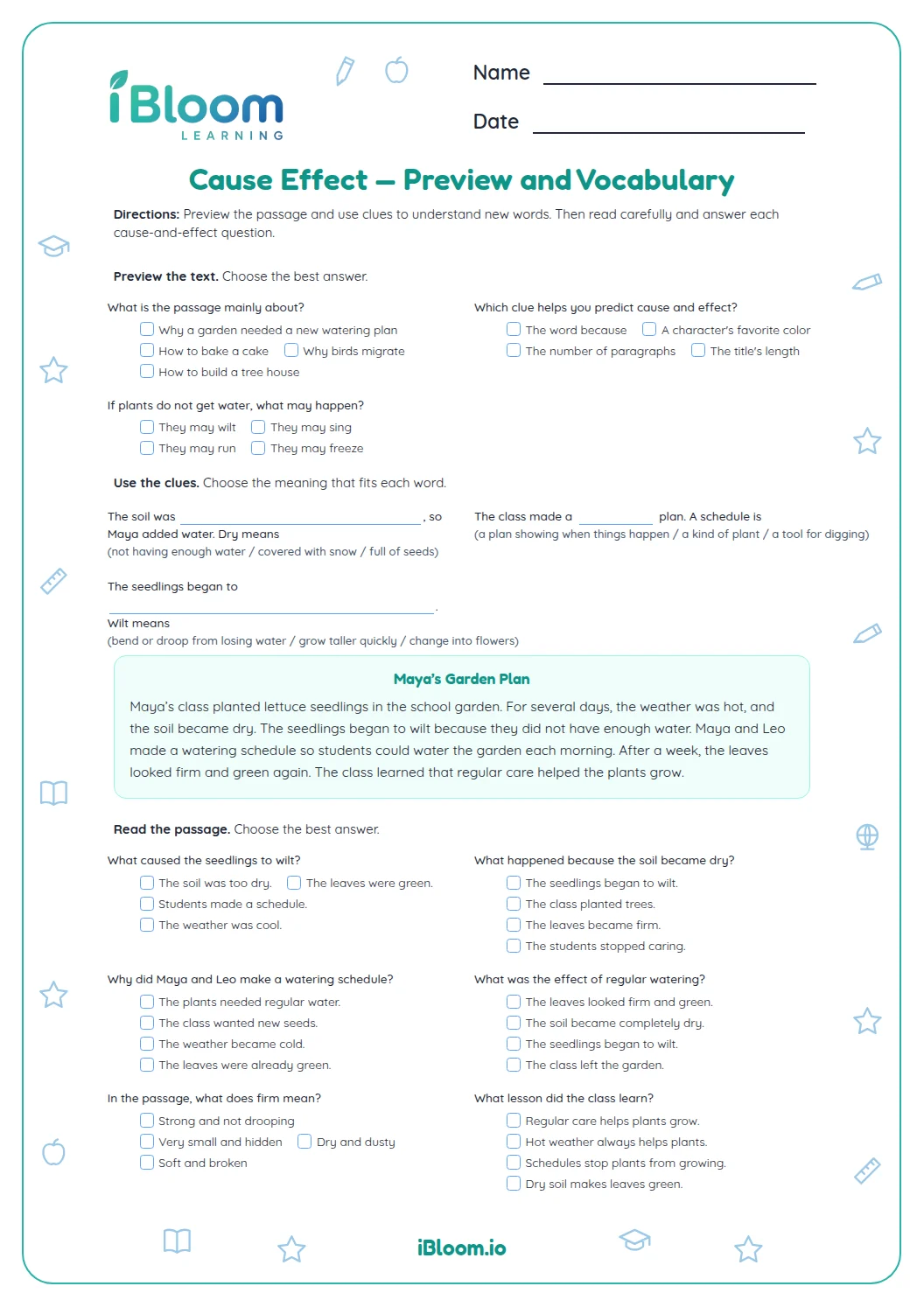
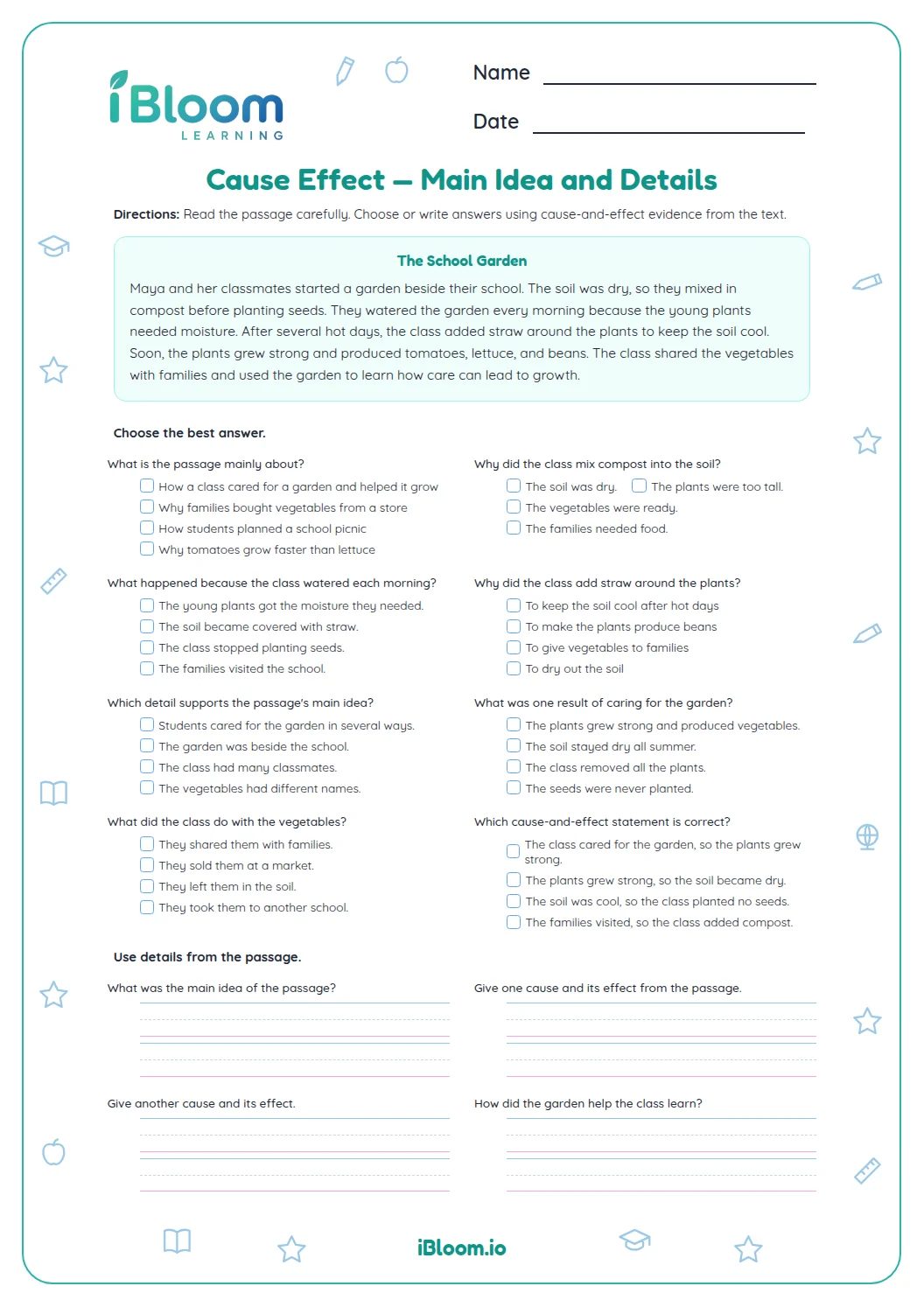
This Grade 5 reading worksheet uses an original informational passage about a town responding to shoreline erosion. Learners identify the problem, locate possible solutions, follow a proposed test, and explain relationships between ideas in the text. The activity includes one passage and 12 questions, followed by its answer key.
How does the passage connect a problem to possible solutions?
The first paragraph explains the erosion and the unsafe path. The next paragraph names three possible responses. The final paragraph describes a small test that could provide evidence before the town makes a larger change.
One written response asks why students suggest starting with a small patch. The passage says a small test would provide evidence about soil movement before the town expands the plan.
- 1Problem: runoff moves soil toward the path.
- 2Test: plant one patch and leave a nearby patch bare.
- 3Compare: measure soil movement after a storm.
- 4Reason: gather evidence before planting more.
Why does the order of the proposed test matter?
The class first changes one small area, then waits for a storm, and then compares how much soil moved. This sequence gives the students a way to compare a planted area with a bare area.
Which details help readers understand the plan?
The passage names the slope, the path, and the three plans. Details about roots, a wall, and a walkway help readers see how the proposed solutions differ.
How to use this worksheet
- 1Read the passage once to understand the situation.
- 2Underline the sentence that states the problem.
- 3Mark each solution and the detail that describes it.
- 4Put the proposed test steps in order.
- 5Use passage details when explaining how the structure works.
Common mistakes and quick fixes
The mistake
Treating a possible benefit as a proven result.
The fix
Notice words such as “could” and “might”; the class still plans a test.
The mistake
Listing solutions without connecting them to the problem.
The fix
Explain how each plan could address erosion or the unsafe path.
The mistake
Reversing the steps of the test.
The fix
Track what happens first, after the storm, and when results are compared.
What to practice next
Make more practice
Questions parents and teachers ask
What is the problem in “A Safer Shoreline”?
Rainwater carries soil down a bare slope, and the hillside beside the walking path begins to crumble. The erosion makes the route unsafe, so the town closes it. The passage then presents ideas that might reduce the danger or provide a safer route.
Which solutions do the students compare?
They consider planting native grasses, adding a low stone wall, or building a wooden walkway farther from the slope. Each option addresses the situation differently. The passage does not say that one option has already been selected or proven best.
How can readers recognize problem-and-solution structure?
Look for a difficulty that needs attention, followed by plans that might address it. Here, erosion and an unsafe path form the problem. Phrases such as “one plan,” “another plan,” and “a third” introduce possible responses. These signal phrases help readers follow how the passage is organized.
What sequence does the class propose?
The class suggests planting a small section, leaving a nearby section bare, waiting for a storm, and measuring soil movement in both places. This order lets students compare areas before the town considers planting more grass. The comparison uses the same storm conditions in both areas.
Does the passage say grass will definitely stop erosion?
No. It says roots could hold soil and leaves might slow rain, then describes a small test. Readers should distinguish a possible benefit from a measured result; the passage gives no test results and does not declare one solution best.
What is included in the answer key?
The separate key gives choices for the ten multiple-choice questions and sample responses for the two written questions. For open responses, accept wording that explains the test or a possible benefit and is supported by details in the passage. The key keeps each response connected to a detail or idea in the passage.