


About this worksheet
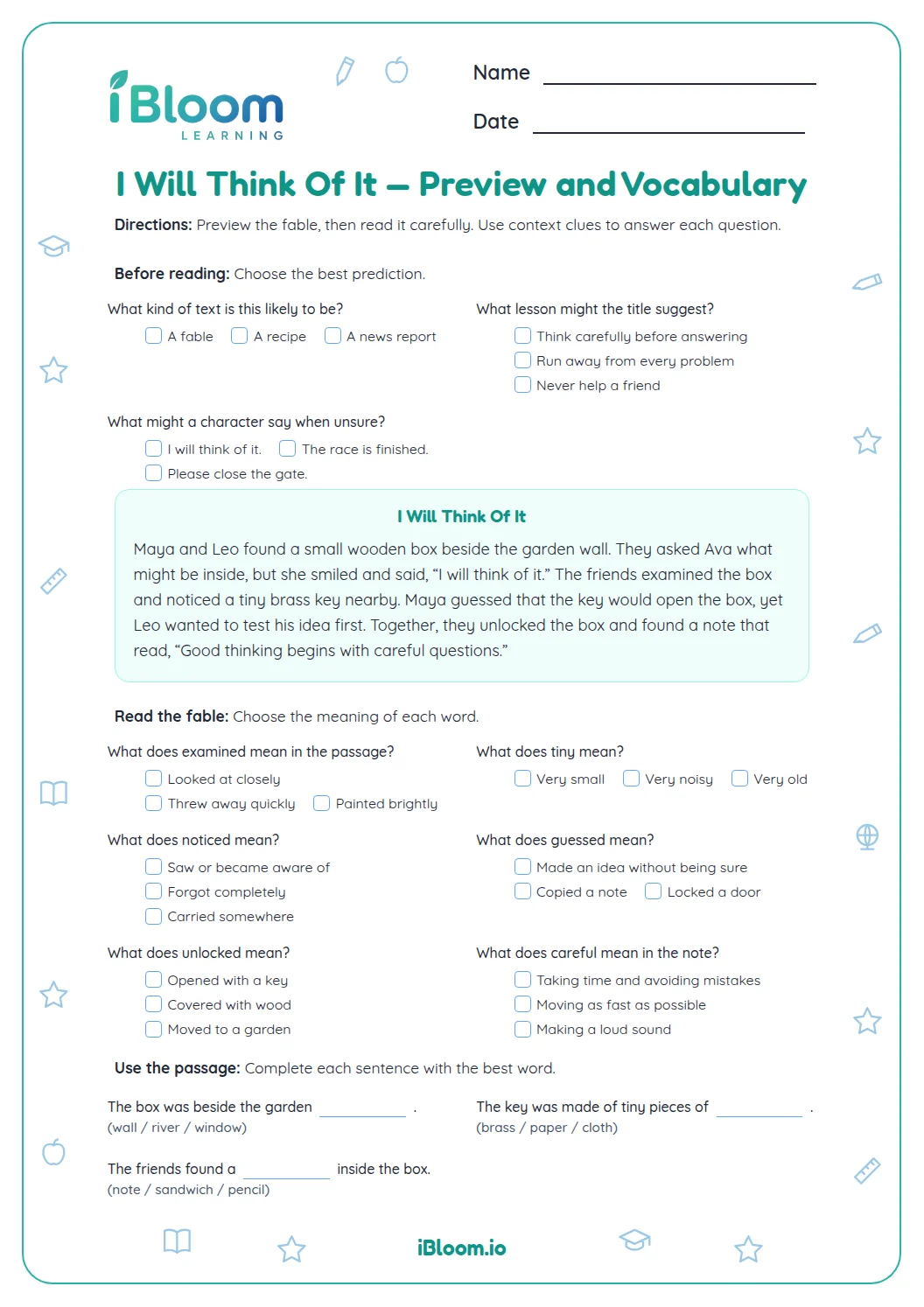
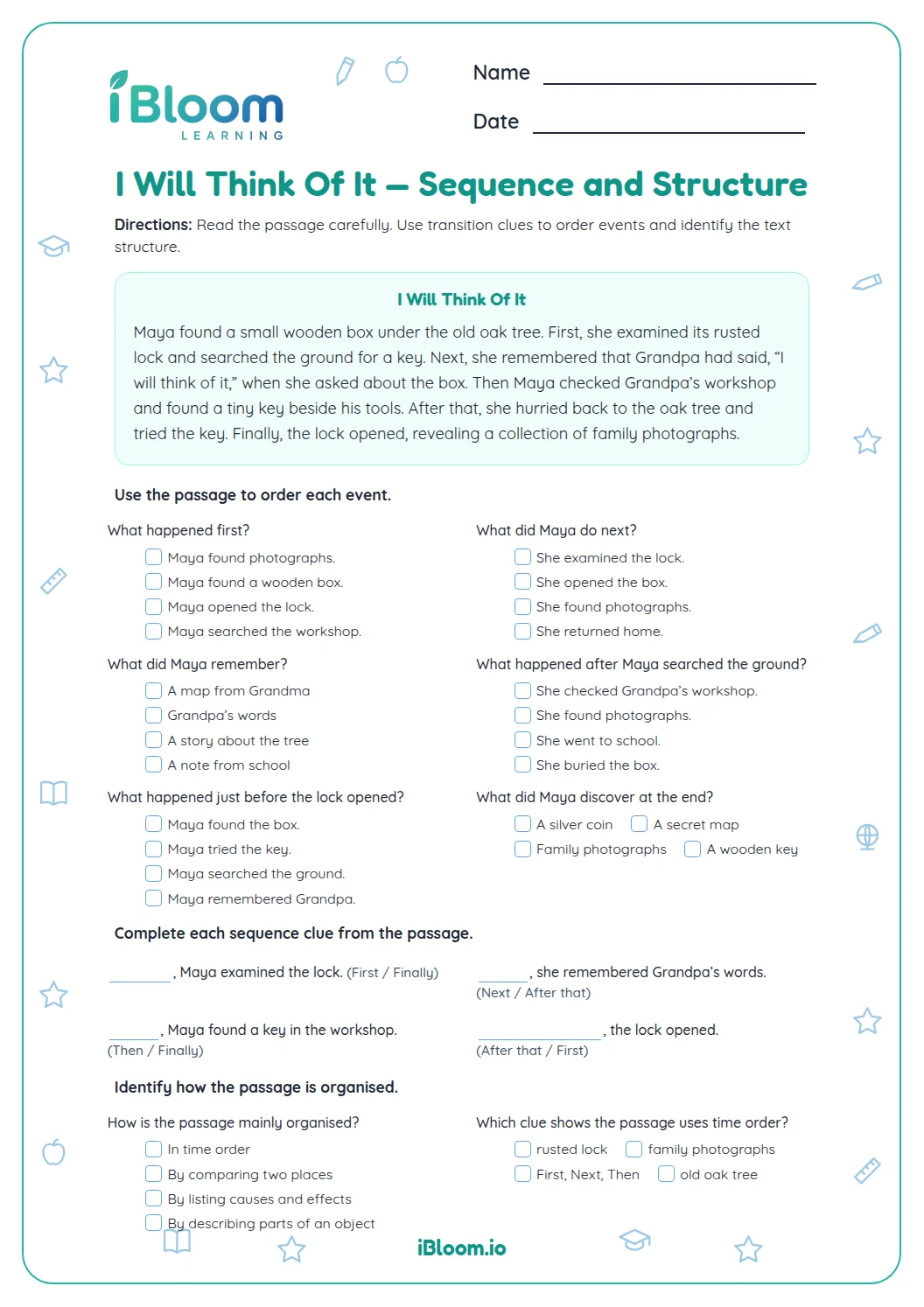
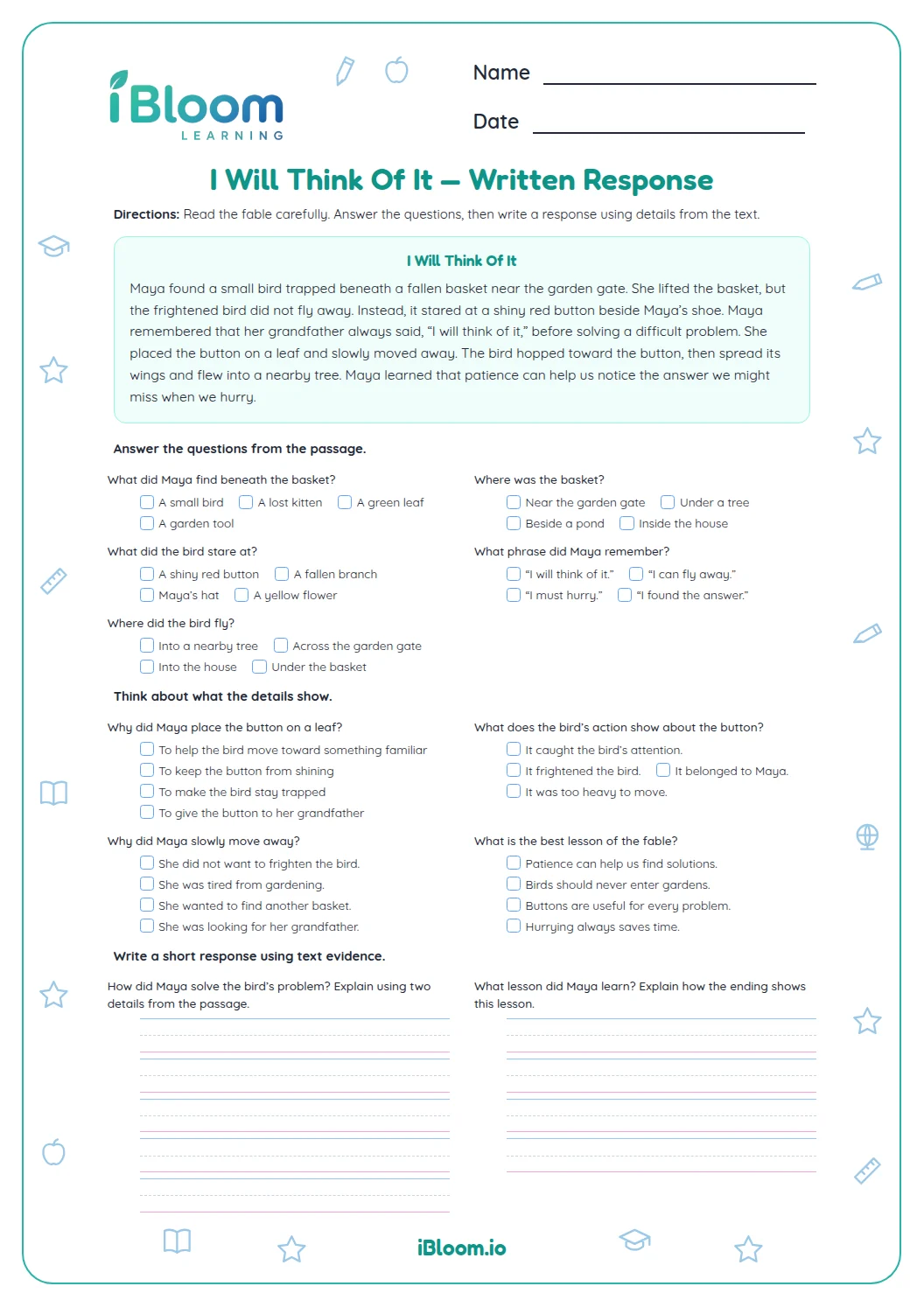
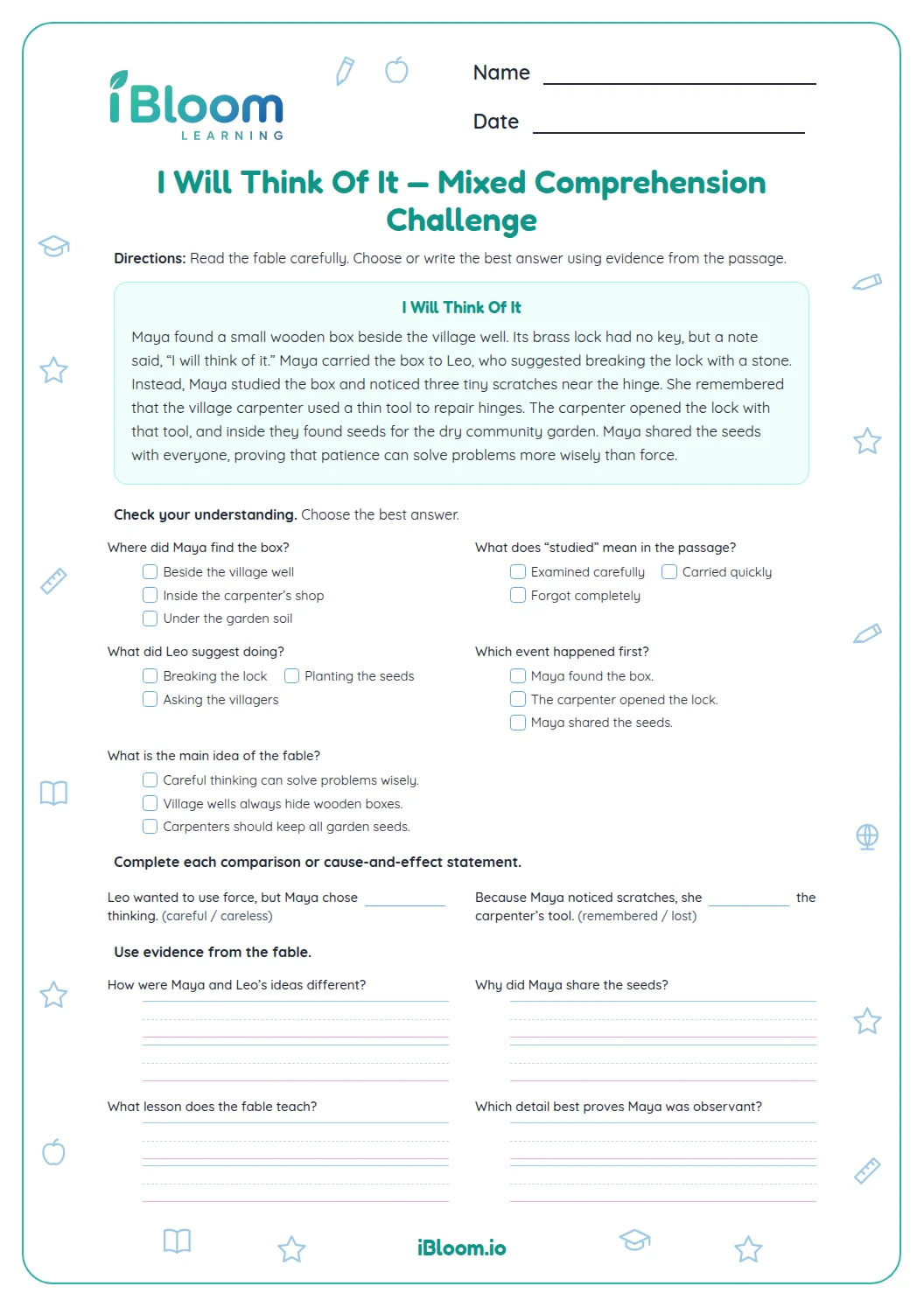
This fable follows Maya and Leo as they help a tangled bird. Students identify the central idea, find supporting details, track how characters respond and summarize the solution. The answer key includes sample written responses.
Aligned to RL.5.2
What does this worksheet ask students to do?
This fable follows Maya and Leo as they help a tangled bird. Students identify the central idea, find supporting details, track how characters respond and summarize the solution. The answer key includes sample written responses.
A short fable about Maya, Leo and a rescued bird supports main-idea, detail and summary practice.
How can a student work through an example?
Read the question, identify the skill it names, and check the completed response against the sentence, graph, or passage.
- 1Question 1: What is the main idea of the fable? Answer: Teamwork and care can solve a problem.
How can families use the answer key?
Finish a part before checking it. Compare the answer with the key, then ask which word, place value, bar or story detail supports the response.
How to use this worksheet
- 1Read the part heading and its direction before starting.
- 2Answer each item using the sentence, graph, or passage details.
- 3For written responses, use a complete sentence when asked.
- 4Review the answer key after finishing a part.
Common mistakes and quick fixes
The mistake
Choosing a detail that is true but does not support the main idea.
The fix
Ask whether the detail helps explain the whole story’s message.
The mistake
Retelling every event instead of summarizing.
The fix
Name the problem, the important response and how it ends.
The mistake
Confusing the lesson with a single event.
The fix
State what the characters learn, then point to the actions that support it.
Common Core alignment
These standards describe the writing and reading work practiced on this page.
Determine the story’s theme from details and summarize its events.
On this sheet: Students infer the lesson from how Maya and Leo respond to a problem and identify the supporting details.
Show the official wordingHide the official wording
Determine a theme of a story, drama, or poem from details in the text, including how characters in a story or drama respond to challenges or how the speaker in a poem reflects upon a topic; summarize the text.
What to practice next
Make more practice
Further reading
Questions parents and teachers ask
What is the main idea of this fable?
The fable shows how Maya, Leo and their teacher work together to help a bird. Students use details to explain the problem, the characters’ actions and how it is resolved. Students can work independently, then use the printed key to compare each response. Invite them to explain the clue or calculation that led to the answer.
What is included in the answer key?
The separate answer key lists the correct responses for the selected items and gives sample wording for questions with more than one acceptable response. Review it after the student completes a section, and use differences in wording as a chance to explain the same idea clearly.
How long should this worksheet take?
Plan for about 20 minutes, with extra time if the student explains written answers aloud. The questions move from direct practice to applying the same skill in a new sentence, comparison or summary. A short pause between parts can make checking easier.
Can a student complete this worksheet independently?
A student who has practiced the skill can try the questions independently. Read the instructions together first, especially the part headings. For a written response, ask the student to point to the evidence or rule used before checking the model in the key.
What should we review after finishing?
Review any answer that differs from the key and ask the student to explain the choice. Return to the relevant sentence, graph value, number or passage detail. Then invite the student to make one new example using the same skill.