




About this worksheet
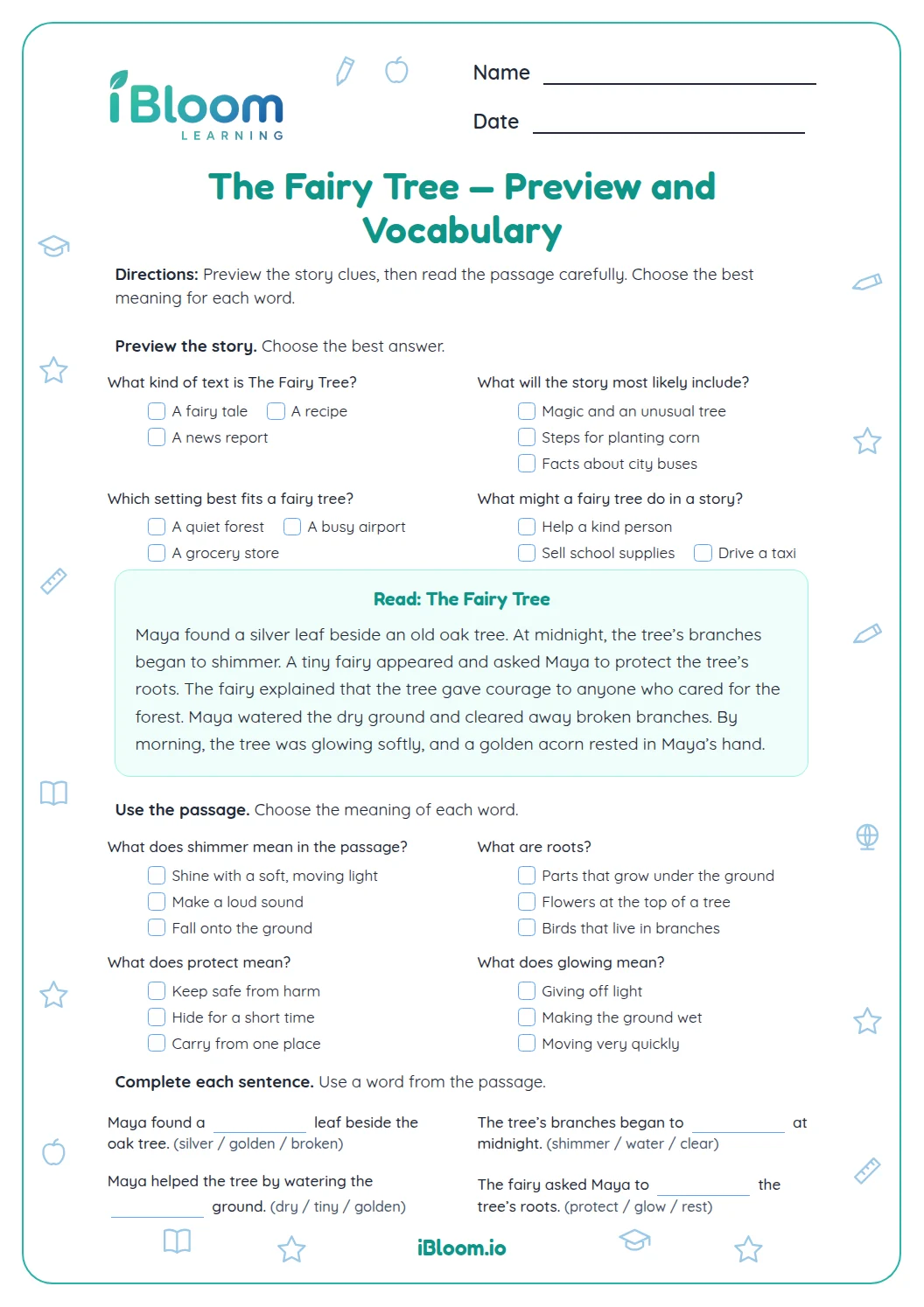
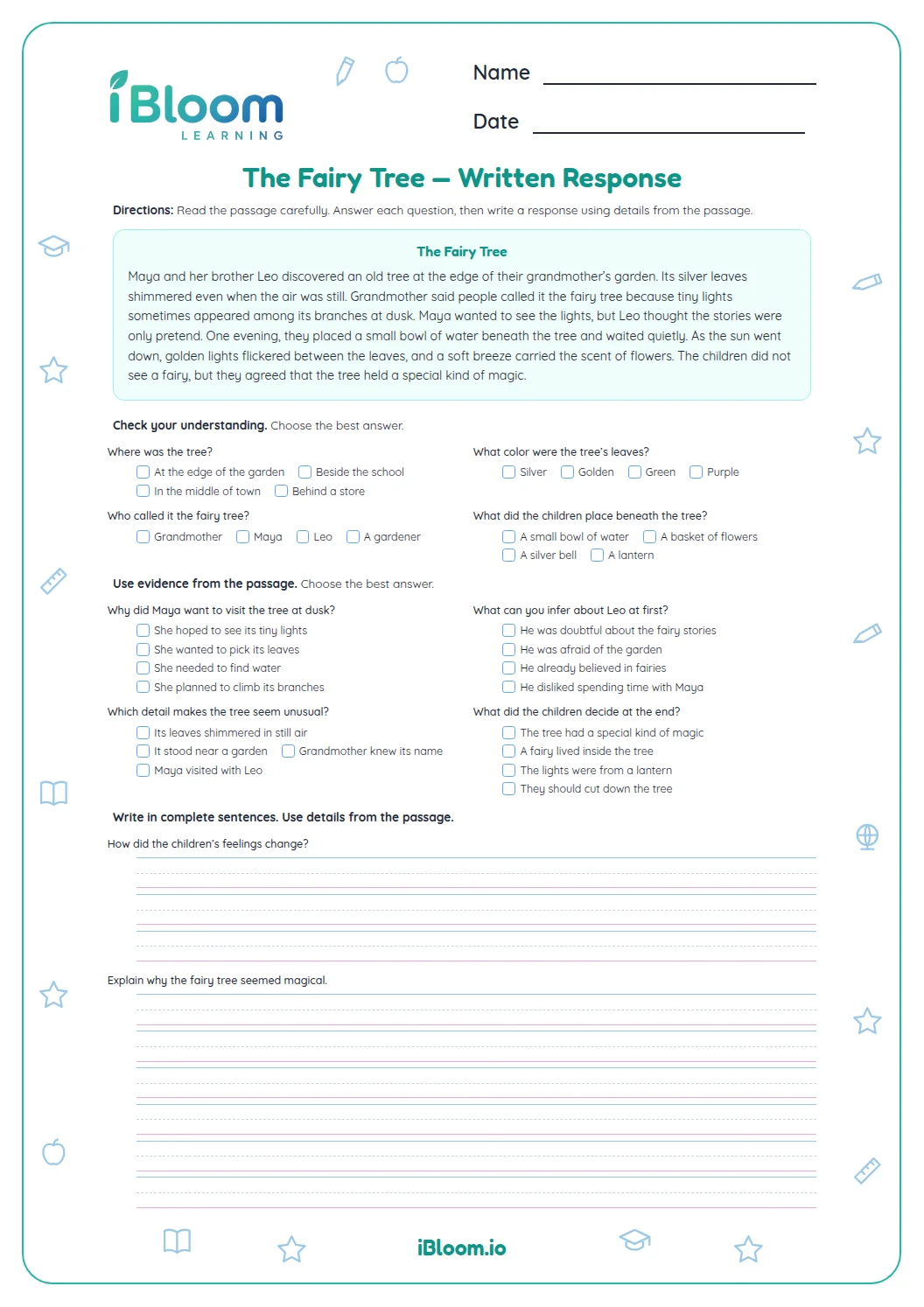
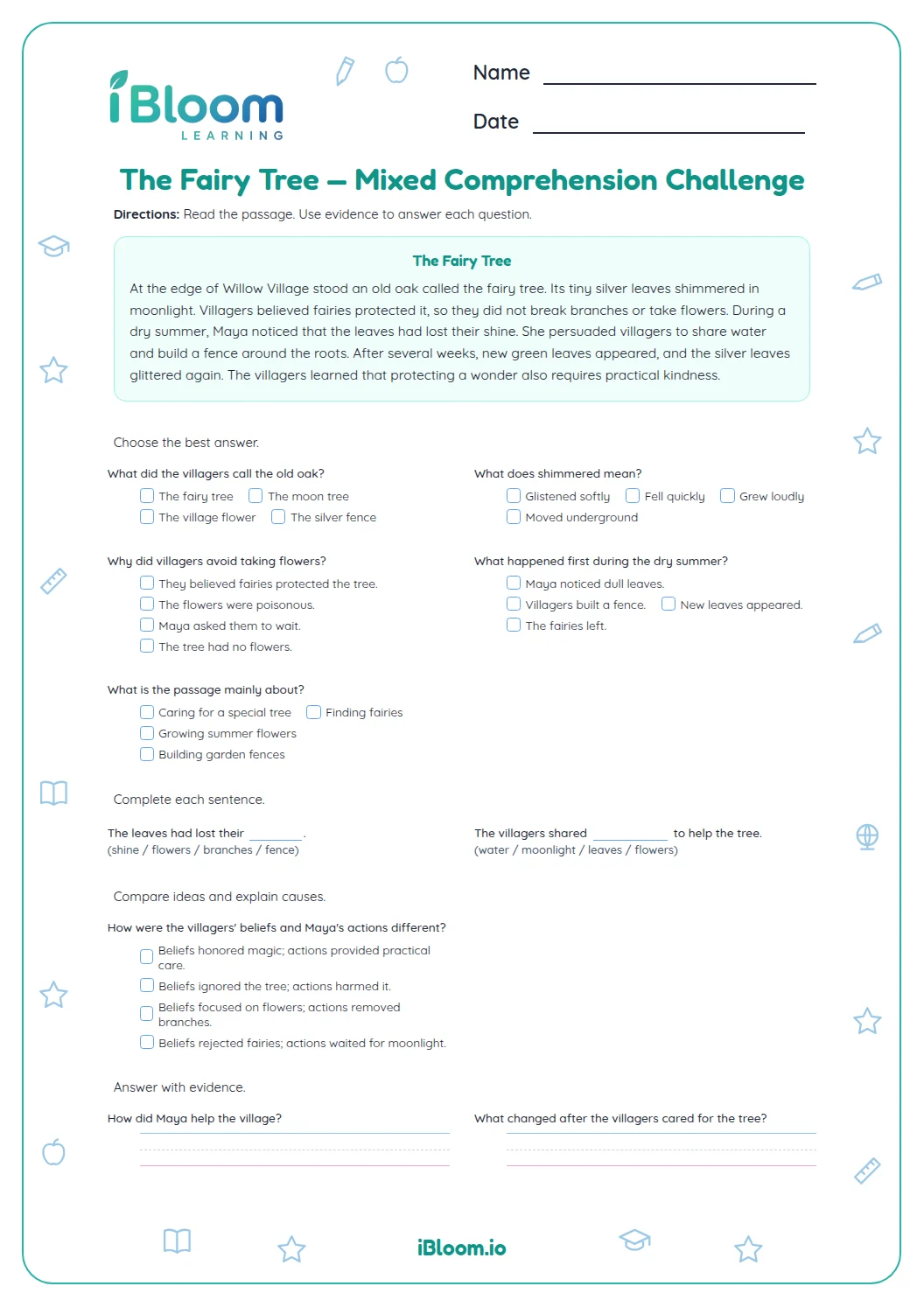
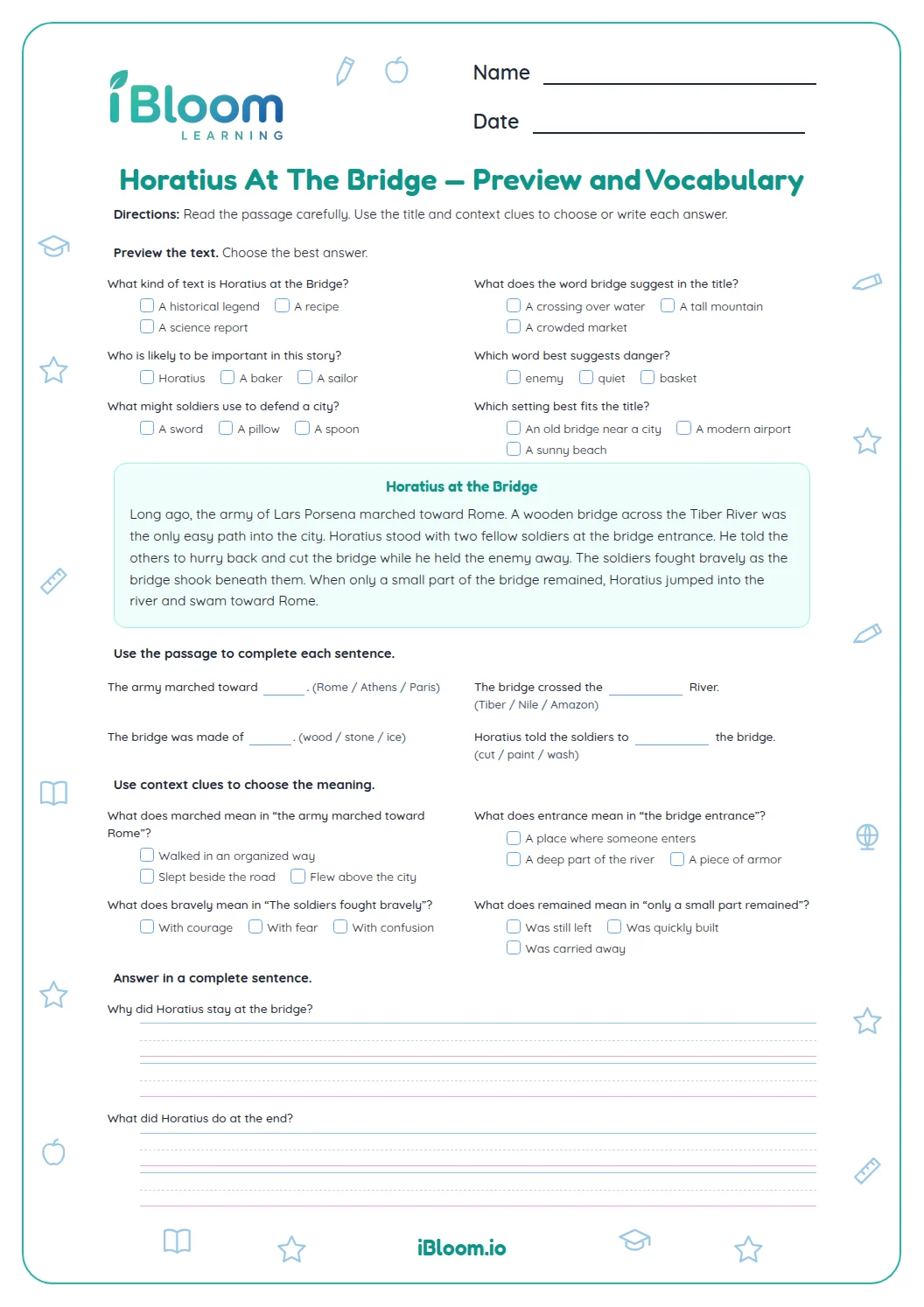
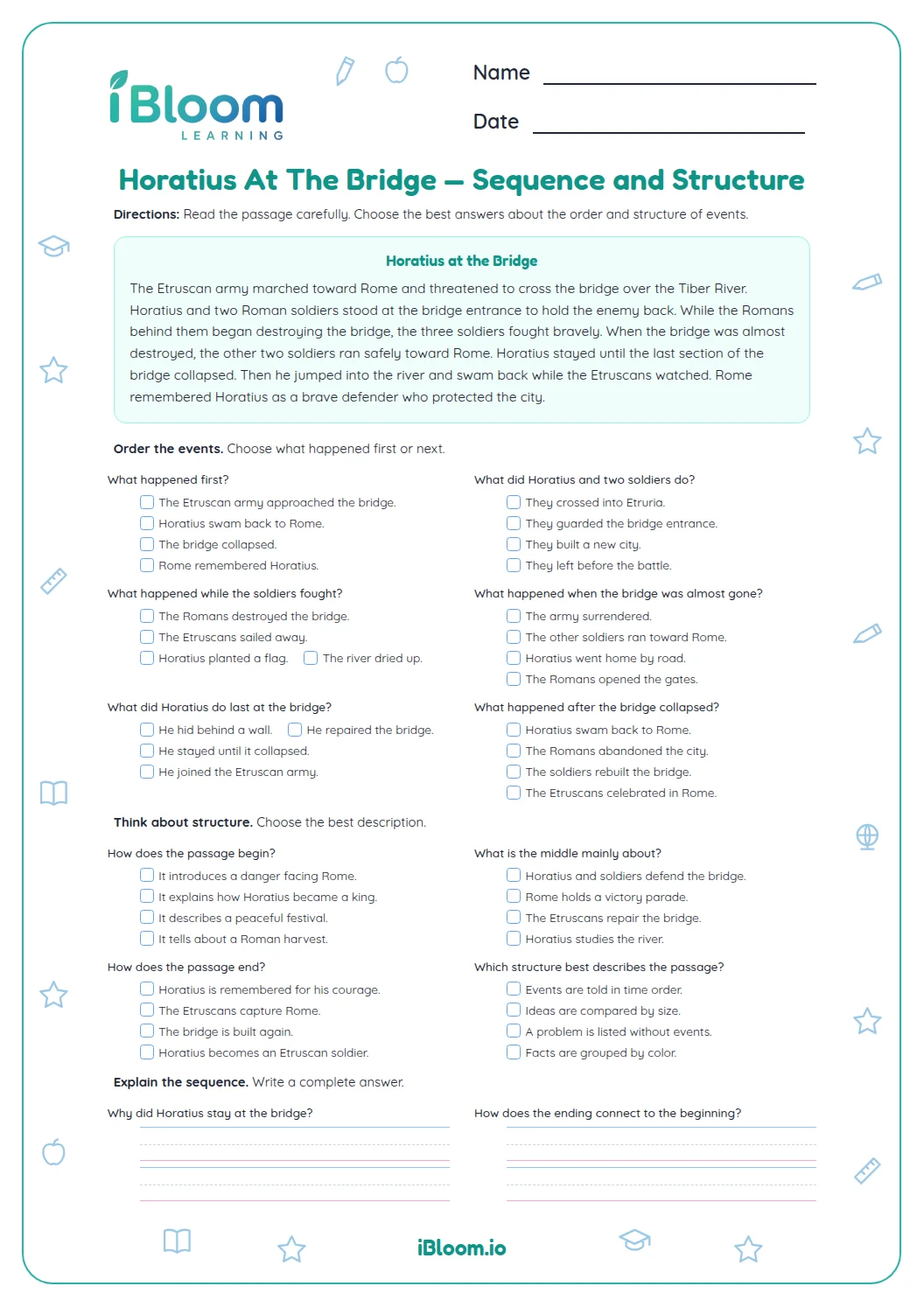
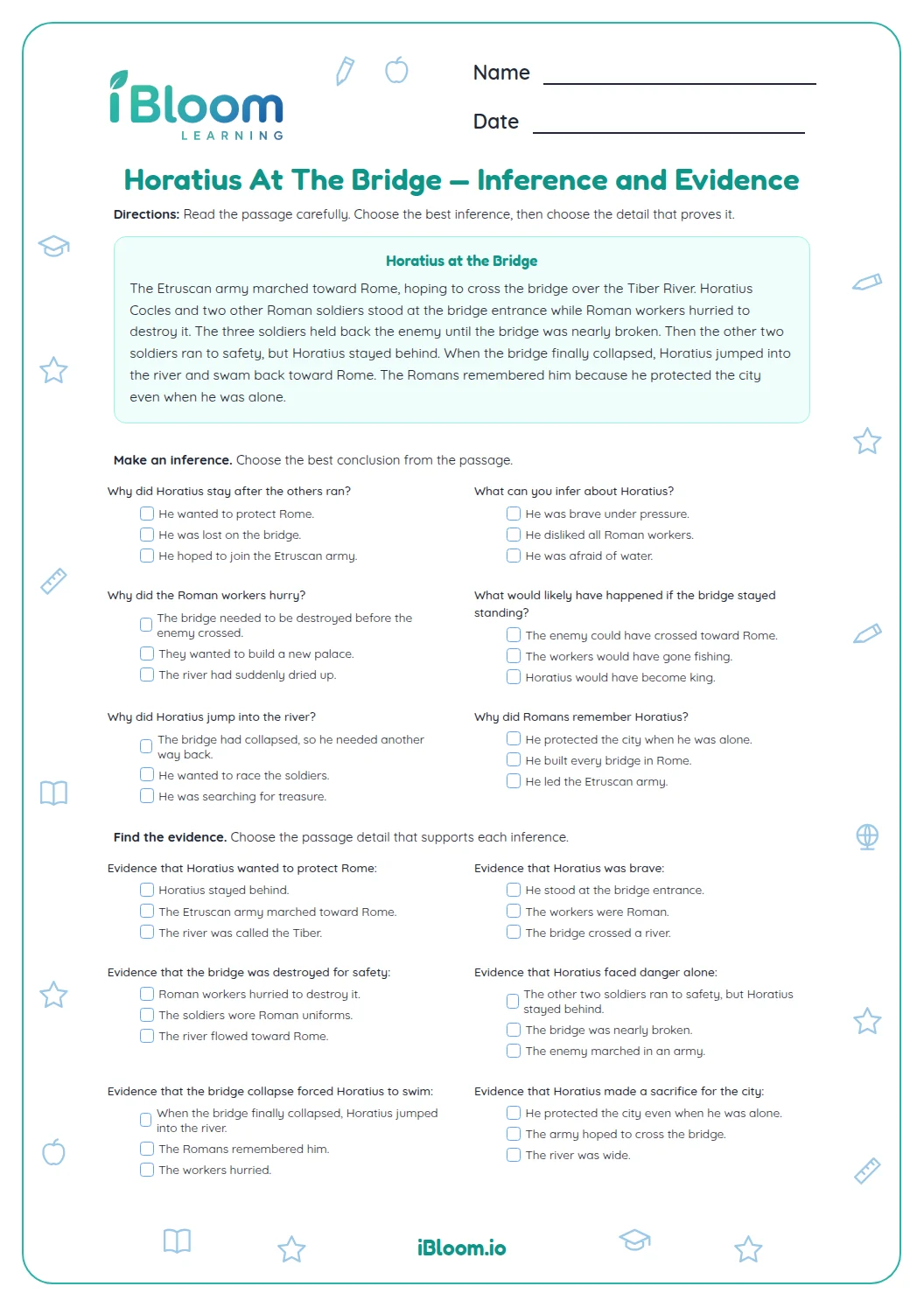
This Grade 5 reading worksheet pairs an original fable, “The Fairy Tree,” with 15 comprehension questions. The passage follows Mara as she helps her village protect an old tree, two owls, and a stream bank. After reading, learners track what happens first, next, and last; use context clues; explain the solution; and examine how the beginning, middle, and ending fit together. The passage opens the sheet, followed by three question parts. A separate four-page answer key includes concise answers and sample written responses.
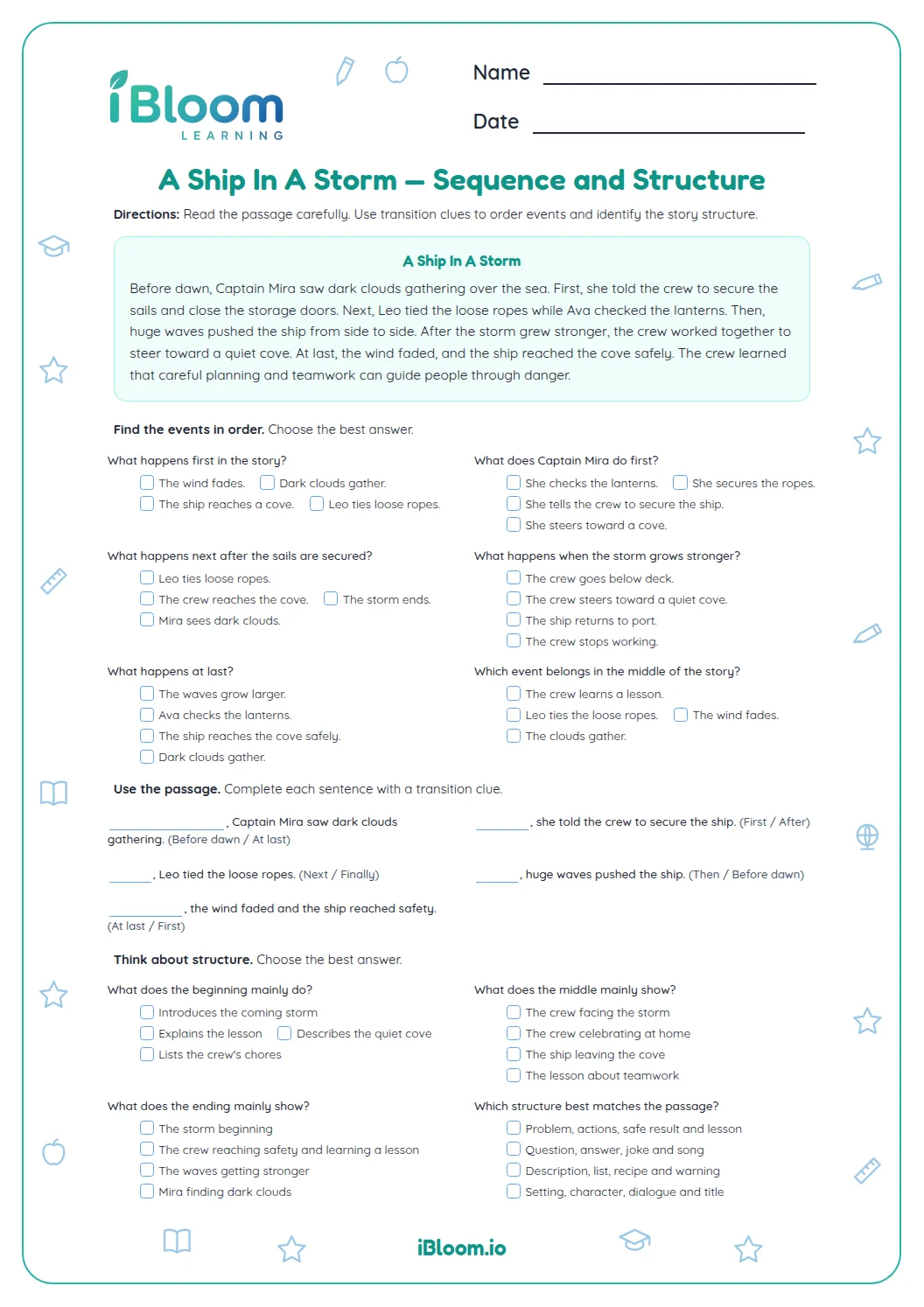
What happens first, next, and last in the fable?
The storm splits a branch, so the council considers removing the tree. Mara asks them to wait and proposes a safer plan. After the neighbors brace the trunk and plant willow shoots, the owls raise chicks and the stream bank holds.
Question 3 asks what happened first after the branch split: the council planned to cut down the tree. Question 11 asks for three events in order: the branch splits, Mara suggests a plan, and the owls later raise chicks.
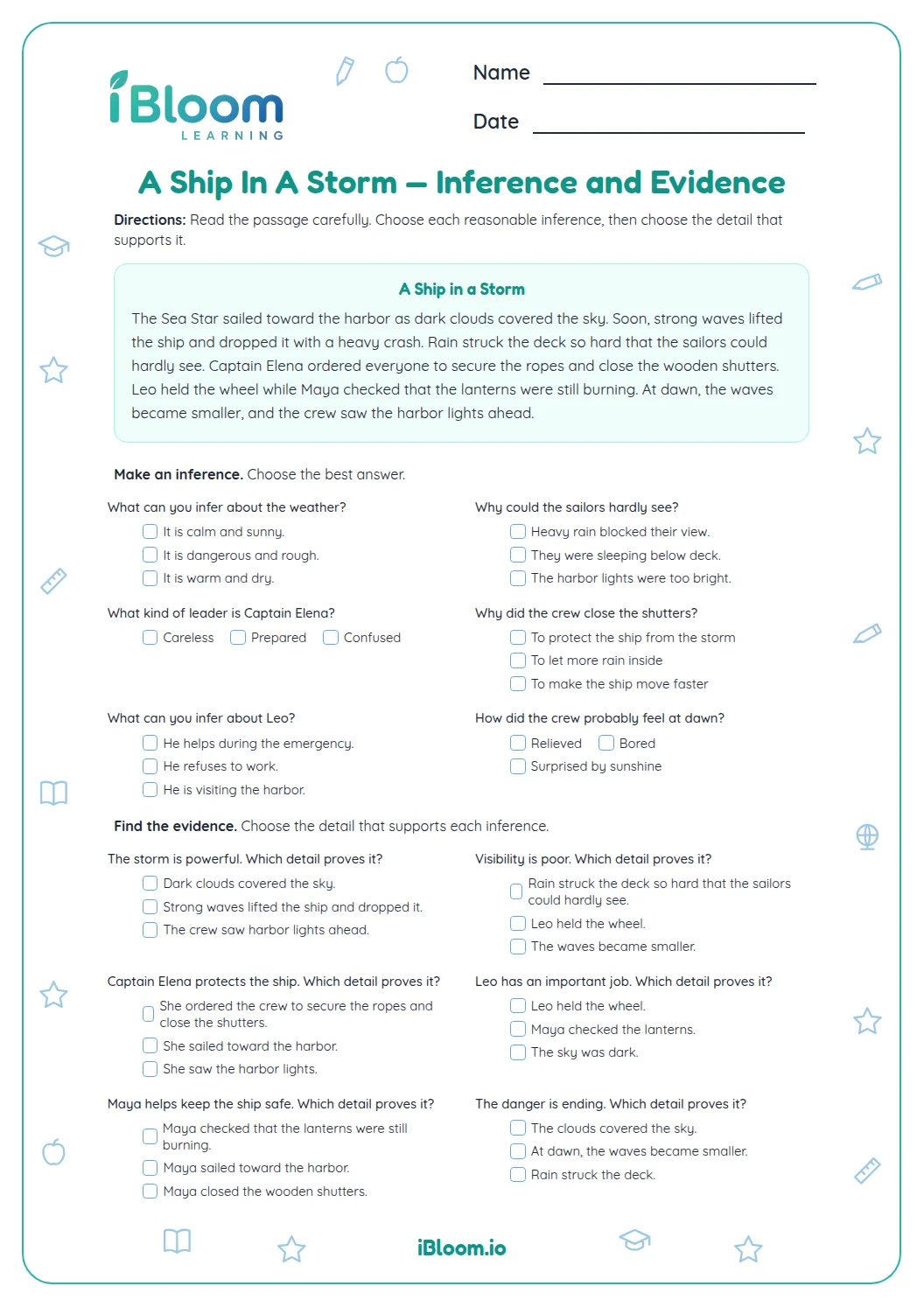
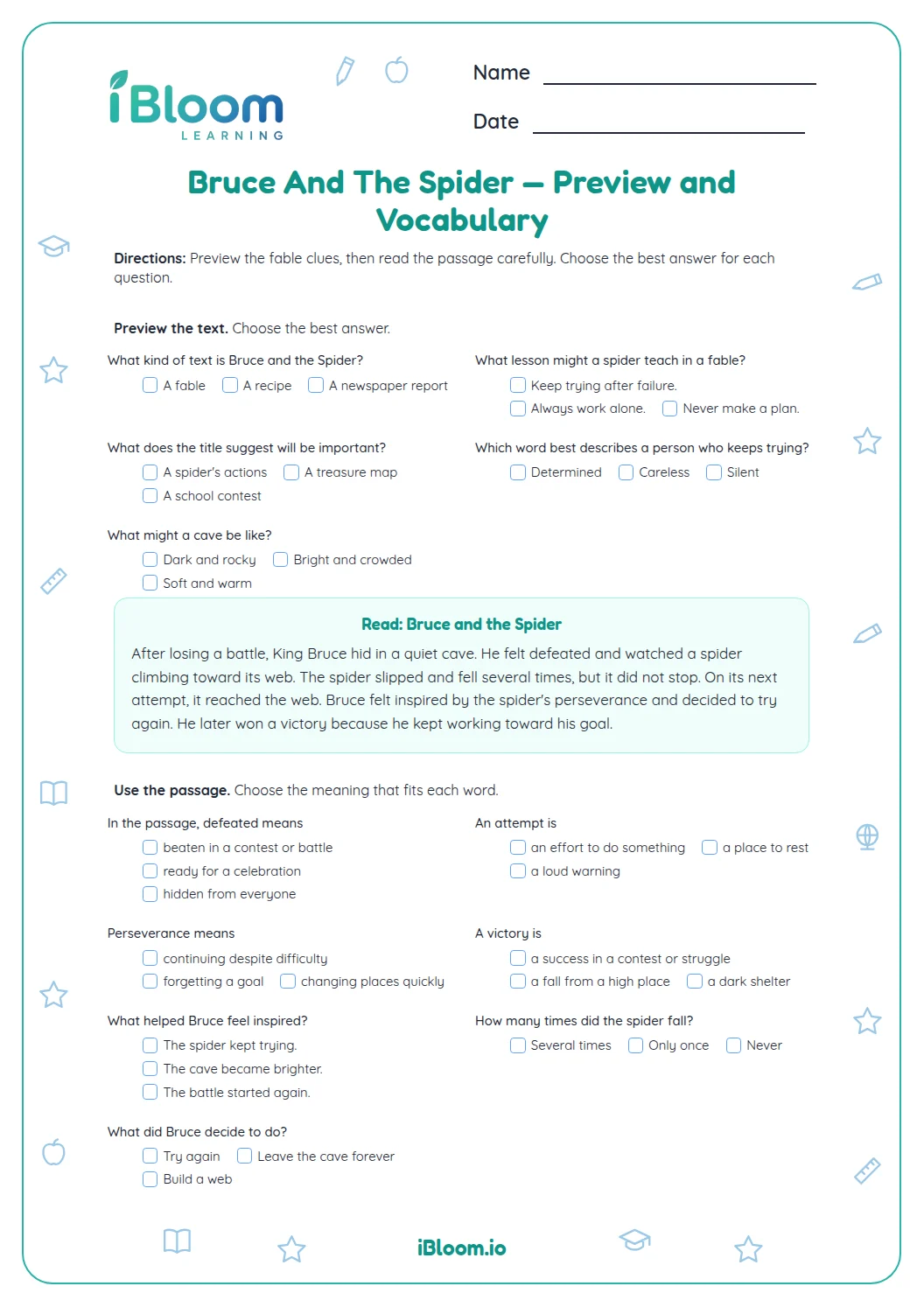
How do context clues explain unfamiliar words?
Use the nearby action and result to infer what an unfamiliar word means. Mara proposes a plan before the neighbors begin the work, so the word signals that she suggested an idea for them to consider.
In question 6, “bracing the trunk” follows the proposal to keep the damaged tree standing. The context points to supporting or steadying the trunk.
How does the story’s structure lead to its resolution?
The beginning introduces the tree and the danger after the storm. The middle shows Mara’s plan and the neighbors’ work. The ending shows what changed: the tree remains, the owls are safe, and the stream bank is protected.
Question 12 asks how the final paragraph resolves the main problem. A complete response names the brace and willow shoots and explains how they let the tree remain.
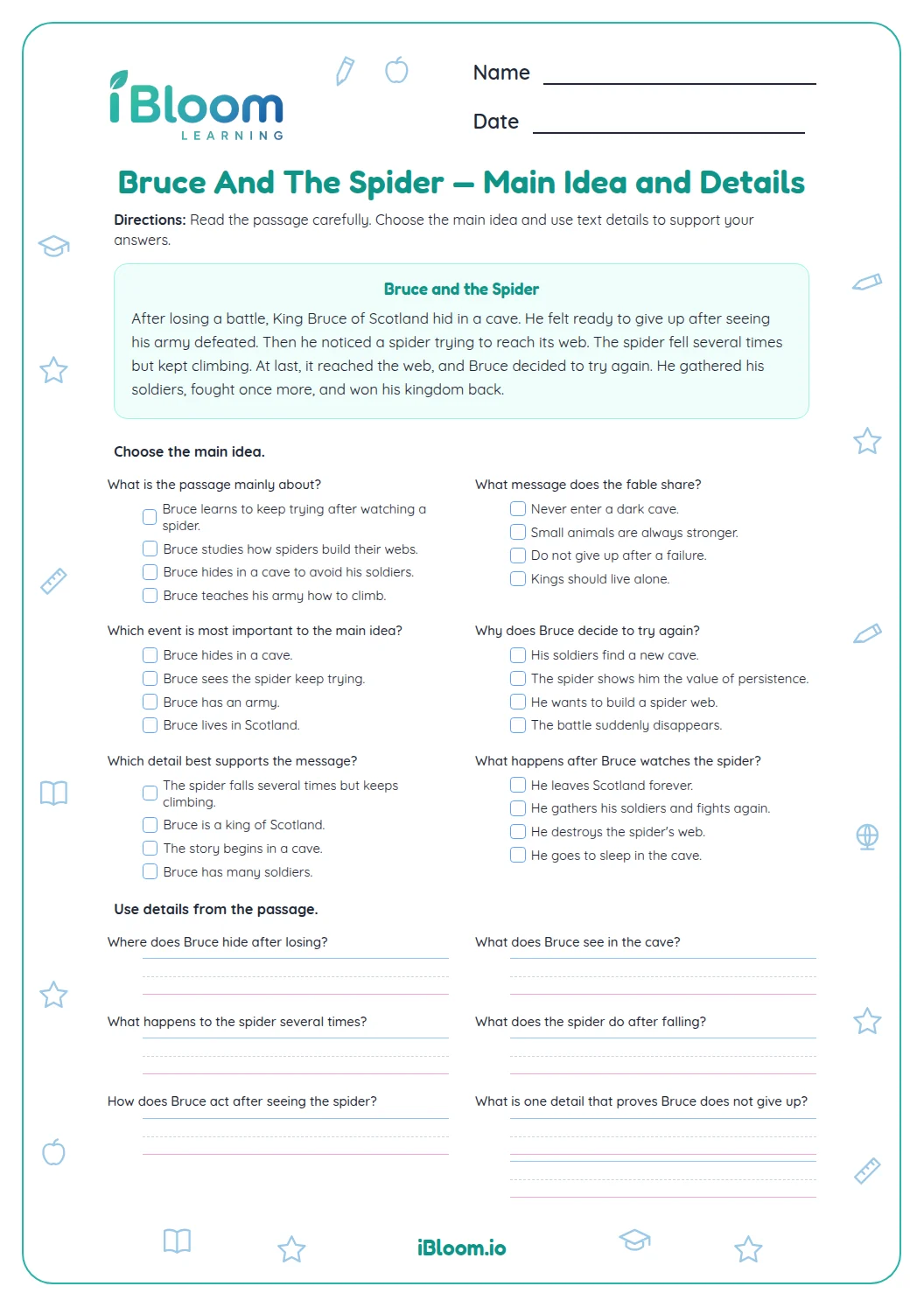
What does the fable suggest about solving a problem?
The ending calls teamwork and careful work the real magic. That detail supports the idea that a thoughtful plan can solve a problem while protecting more than one part of a community.
Question 15 asks for a lesson. One sample is that planning and teamwork can protect several things at once; learners should connect their lesson to events in the passage.
How to use this worksheet
- 1Read the passage once to understand the main problem and characters.
- 2Reread the paragraphs named by a question before choosing an answer.
- 3For sequence questions, list the events in the order they happen in the passage.
- 4Use nearby actions and results to work out the meaning of an unfamiliar word.
- 5For written responses, name a passage detail and explain how it answers the question.
- 6Check the key after completing the 15 questions; compare reasoning, not just wording.
Helpful checks
The mistake
Confusing the order an event is mentioned in a question with story order.
The fix
Return to the passage and track when each event actually happens.
The mistake
Guessing a word meaning without using its context.
The fix
Read the sentence before and after the word for clues about what it does.
The mistake
Retelling the ending without explaining the resolution.
The fix
Name the actions that protect the tree and say how they solve the council’s problem.
What to practice next
Make more practice
Questions parents and teachers ask
How long is the passage?
“The Fairy Tree” is an original fable of about 120 words, followed by 15 questions. Learners can reread the short passage while answering. It takes up the opening page, and the questions continue across three parts before the separate answer key.
What does the worksheet mean by sequence and structure?
Sequence means the order in which events happen. Structure refers to how the beginning introduces the problem, the middle develops a response, and the ending shows what changes. Several questions ask learners to connect the events to the story’s solution.
What is the main problem in the fable?
A storm splits a branch on the old tree, and the village council worries it may fall. Mara points out that the hollow shelters owls and the roots hold the stream bank. Her plan gives the village a way to make the tree safer.
How should students answer written questions?
Students should answer the question directly and include a relevant detail from the passage. For example, a response about the resolution can mention the brace and willow shoots, then explain that they help protect the tree and stream bank. The key offers sample wording.
Is “The Fairy Tree” a traditional fairy tale?
The passage is an original fable written for this worksheet. It uses a village problem and a lesson about careful work and teamwork, while the tree’s name suggests fairies even though no fairy appears in the story. Learners can discuss how that name shapes expectations.
What should students read or practice next?
Students who want more practice can read another Grade 5 fable and track its problem, important events, and resolution. The related story worksheets include several different fables, so learners can compare how each one organizes events and builds toward its ending.