



About this worksheet
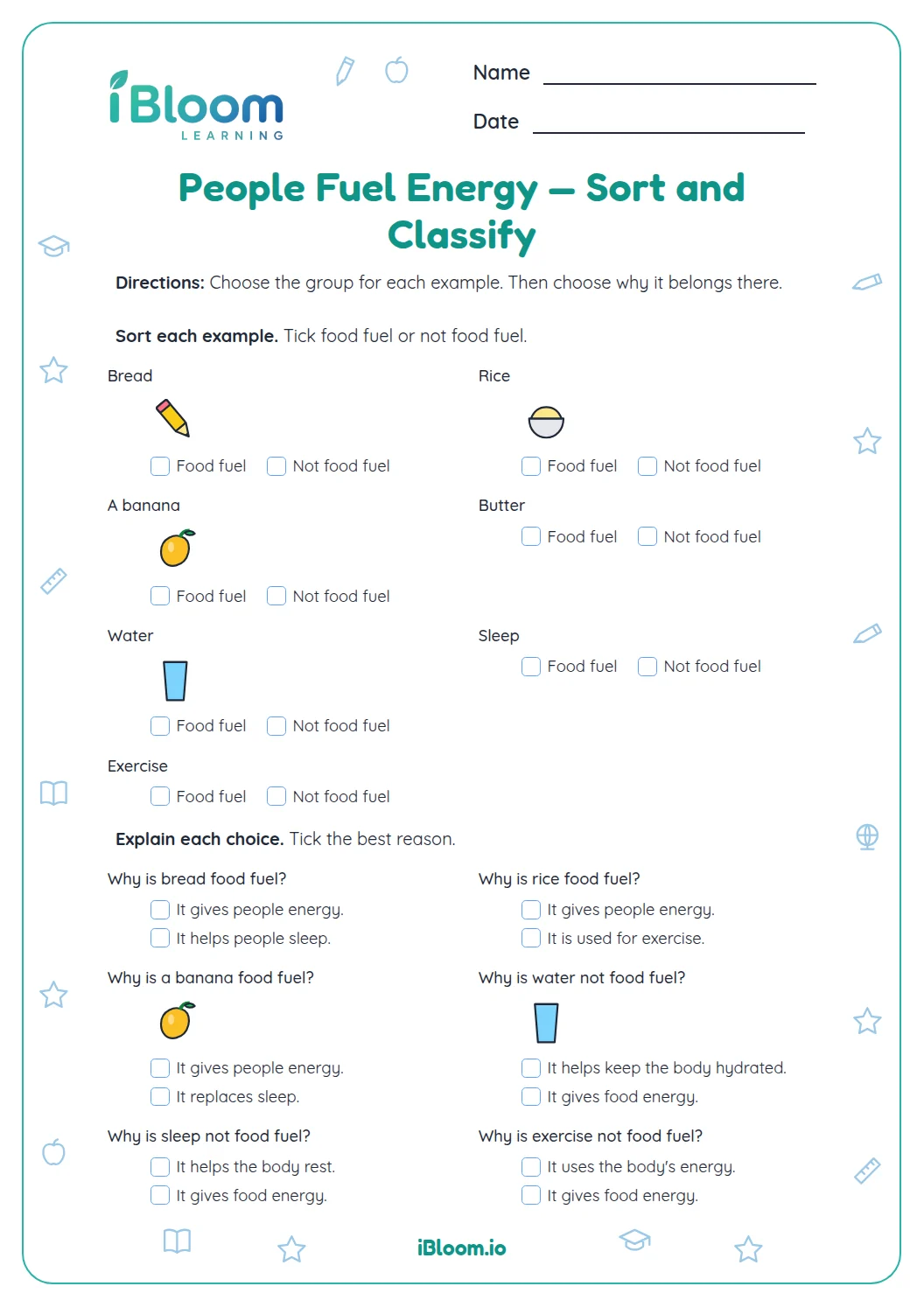
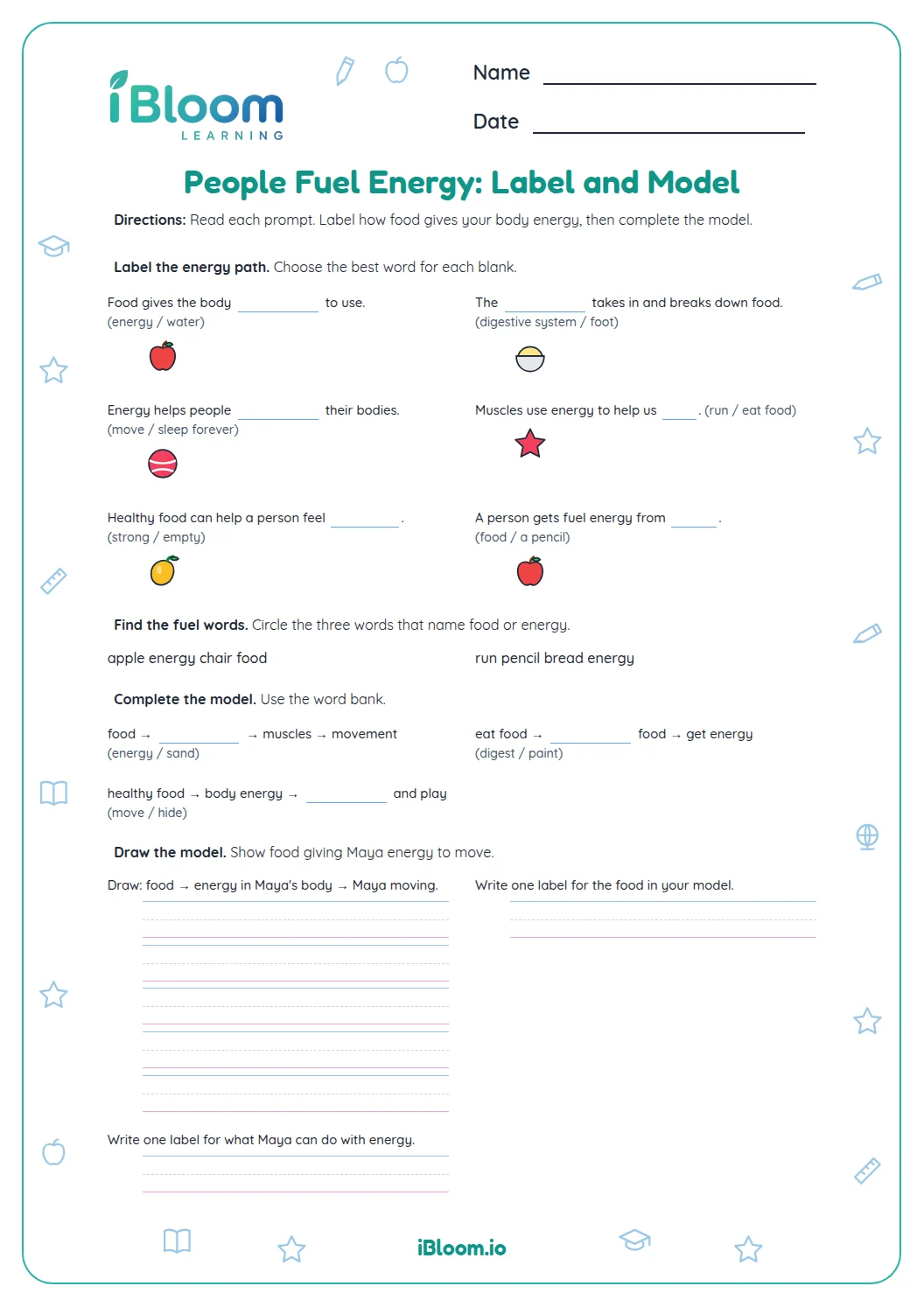
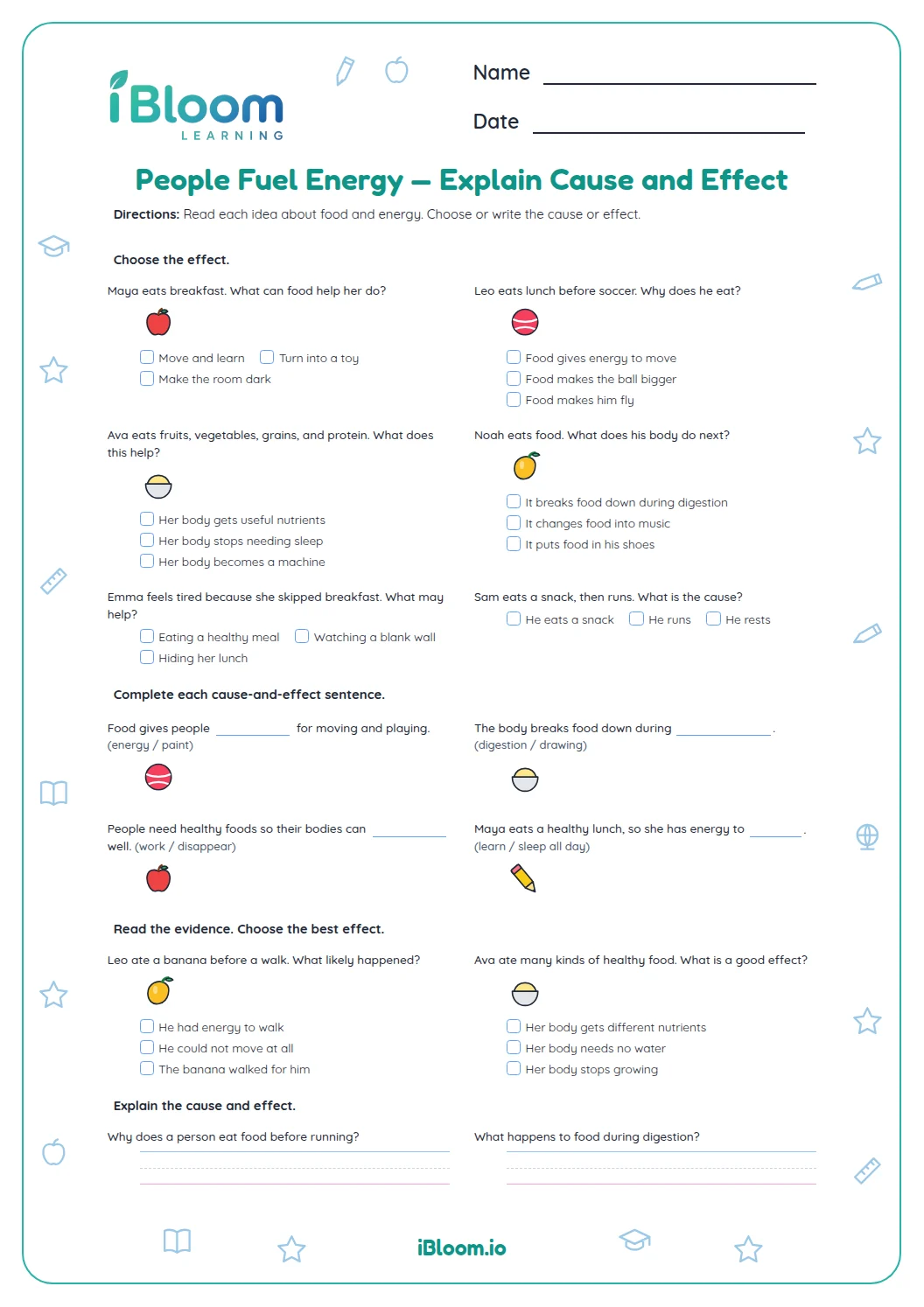
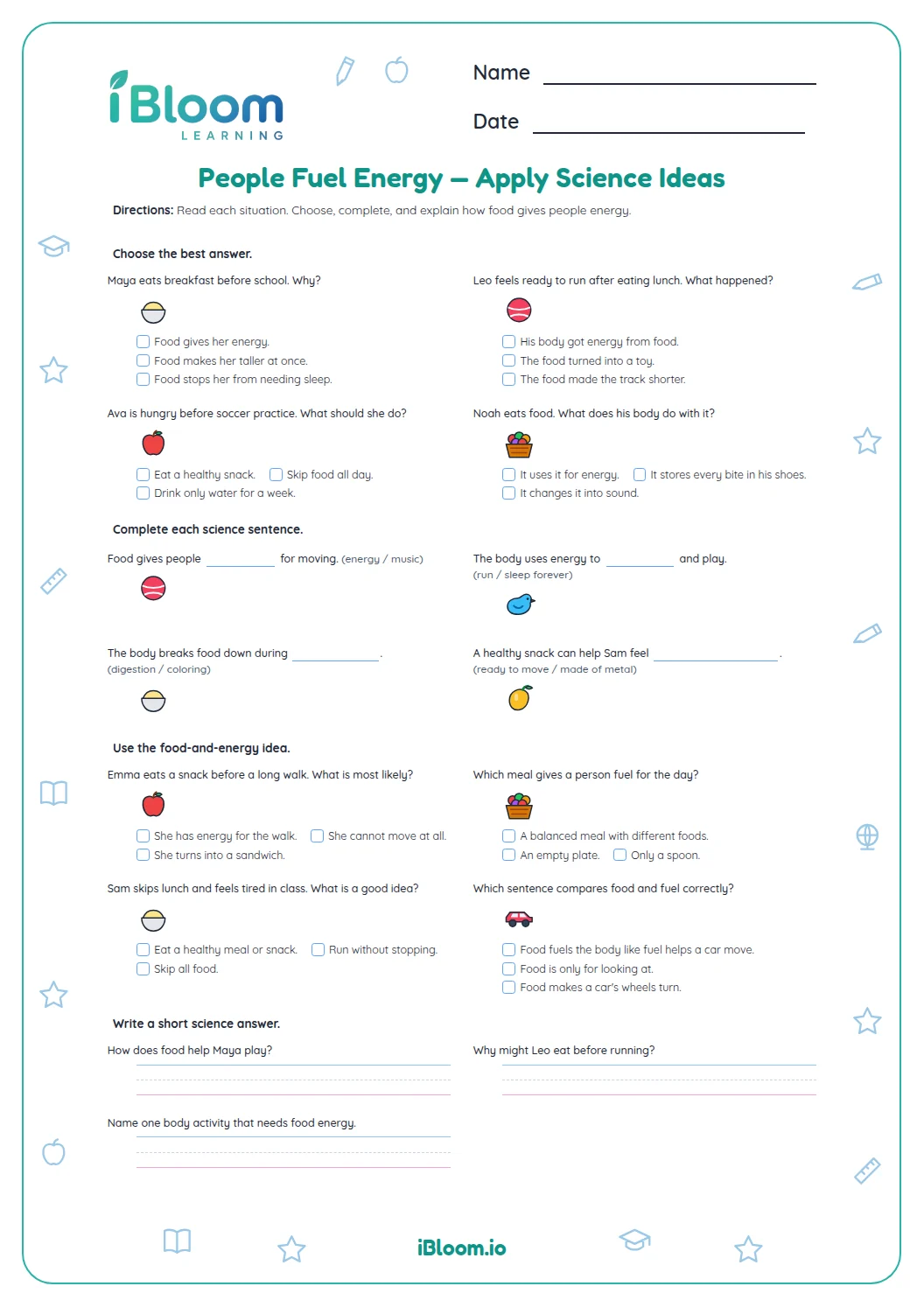
This Grade 1 science worksheet explores how food supports body activity and how sunlight connects to plant food. Learners choose answers about muscles, digestion, and a missed meal, complete food-energy ideas, and explain a simple sun-to-plant-to-person path. The final questions revisit digestion and everyday activity. A separate answer key includes sample wording for open responses.
How does food connect to body activity?
The first questions connect food with energy for movement and other body activity. Learners also consider what may happen when Noah misses lunch and feels tired, and identify digestion as breaking food into smaller parts.
How does sunlight connect to food?
Plants use sunlight as they grow. People can eat plants, and some foods come from animals that eat plants. For the path question, follow the simple sequence printed on the sheet: sun to plant to person.
- 1Sunlight helps a plant grow.
- 2A person eats the plant.
- 3The path is sun → plant → person.
What happens during digestion?
Chewing begins breaking food into smaller pieces. Digestion continues in the body, where food is broken down further. Questions 4, 8, and 13 connect the mouth, chewing, and digestion without asking children to memorize a detailed process.
How to use this worksheet
- 1Read the one-line direction at the start of each part.
- 2Complete the first item together and explain the choice or strategy.
- 3Finish the remaining items without looking at the key.
- 4Compare each answer with the key and mark any item to revisit.
- 5For missed items, explain why the correct response fits.
Common mistakes and quick fixes
The mistake
Thinking food energy is only for exercise.
The fix
Remember that the body uses energy for many activities and for growth.
The mistake
Saying sunlight is food that a person eats.
The fix
Trace the path: sunlight helps plants grow, and people can eat plants or foods from animals.
The mistake
Thinking chewing completes digestion.
The fix
Chewing breaks food into smaller pieces; digestion continues inside the body.
What to practice next
Make more practice
Questions parents and teachers ask
What does food energy help people do?
Food supplies energy the body uses for activities such as walking, running, and playing, as well as growth and other body needs. Questions 3, 5, 7, and 14 connect food energy with movement and activity in familiar examples. These are everyday ways children can recognize energy use.
How are sunlight, plants, and people connected?
Plants use sunlight as they grow. People can eat plants, and some foods come from animals that eat plants. Question 12 asks children to complete a simple path from the sun to a plant to a person. This connects plant growth with a familiar food source.
How many questions are included?
There are 14 questions in four parts: three choices and 11 short responses about food energy, the energy path, digestion, and body activity. The worksheet and its answer key each have three pages. The key includes sample wording for open responses.
Are all foods from plants?
No. Apples and bread made from grain are examples of foods from plants, while eggs and fish come from animals. Question 2 asks learners to recognize a plant food. The other questions focus on how food supports the body. Talk about a food your family eats and where it comes from.
How can I discuss this topic with a first grader?
Start with an everyday activity such as walking and ask what the body needs to do it. Then choose a familiar food and talk about whether it comes from a plant or animal. Connect plants to sunlight and talk about how chewing starts digestion.