





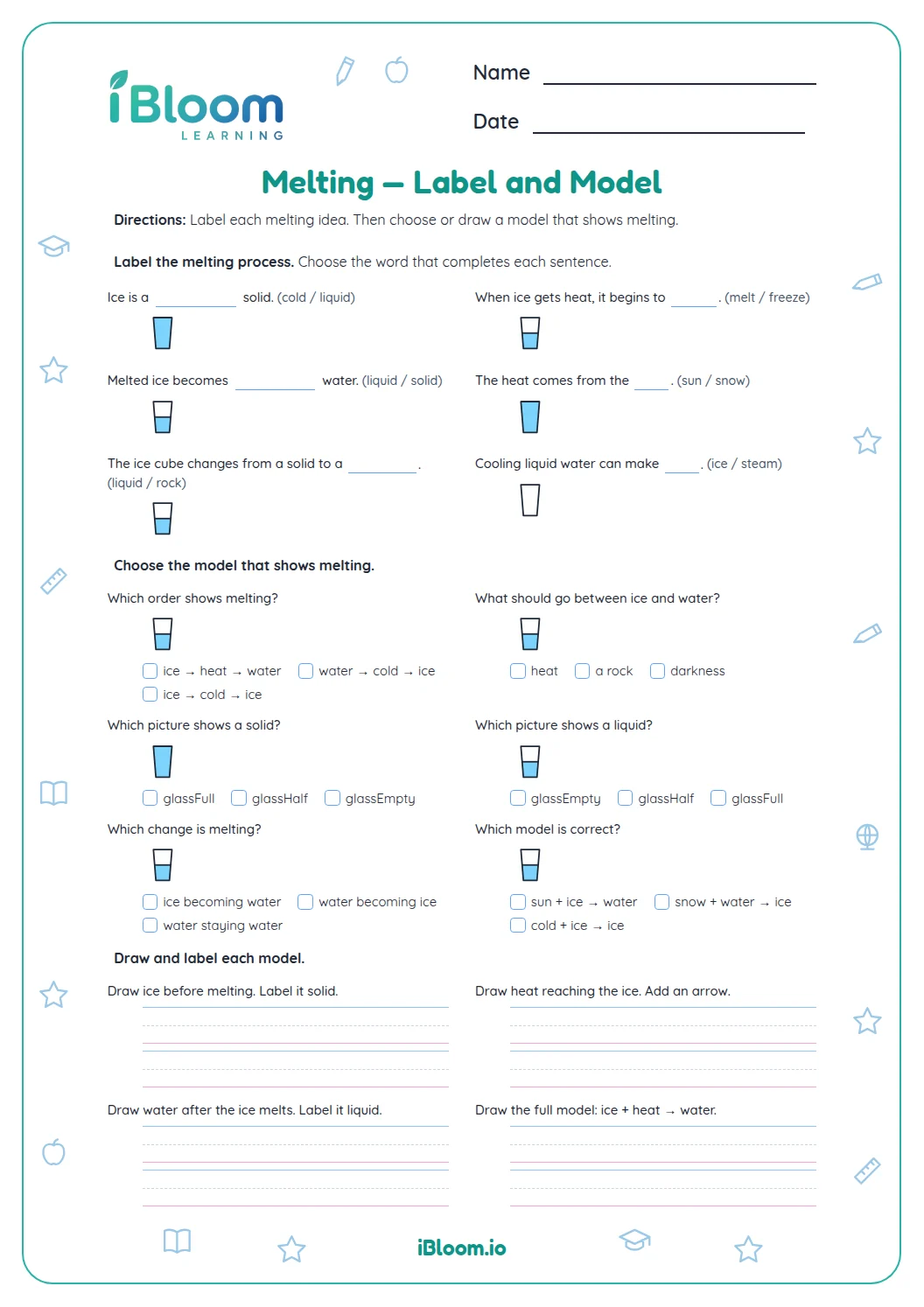
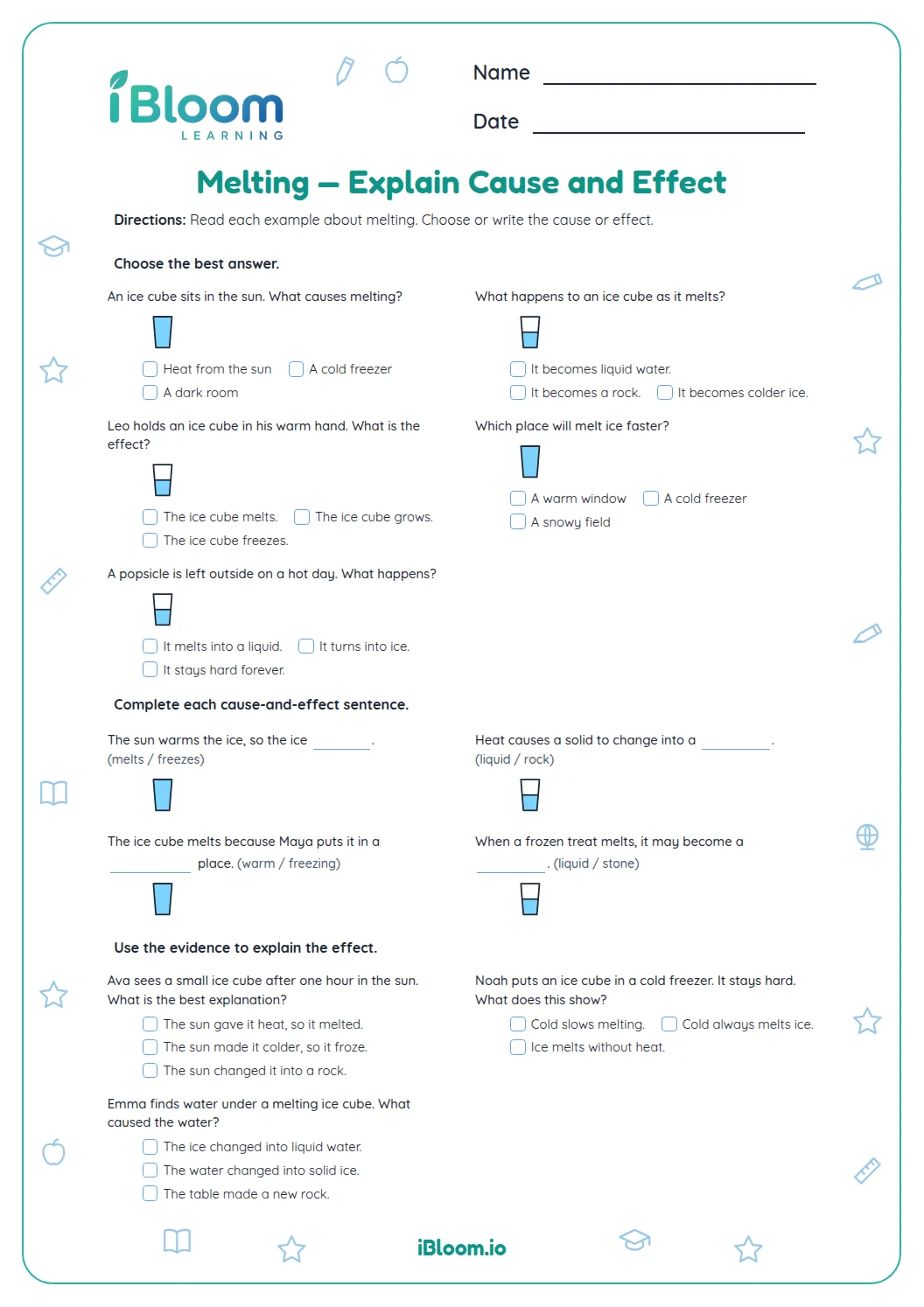
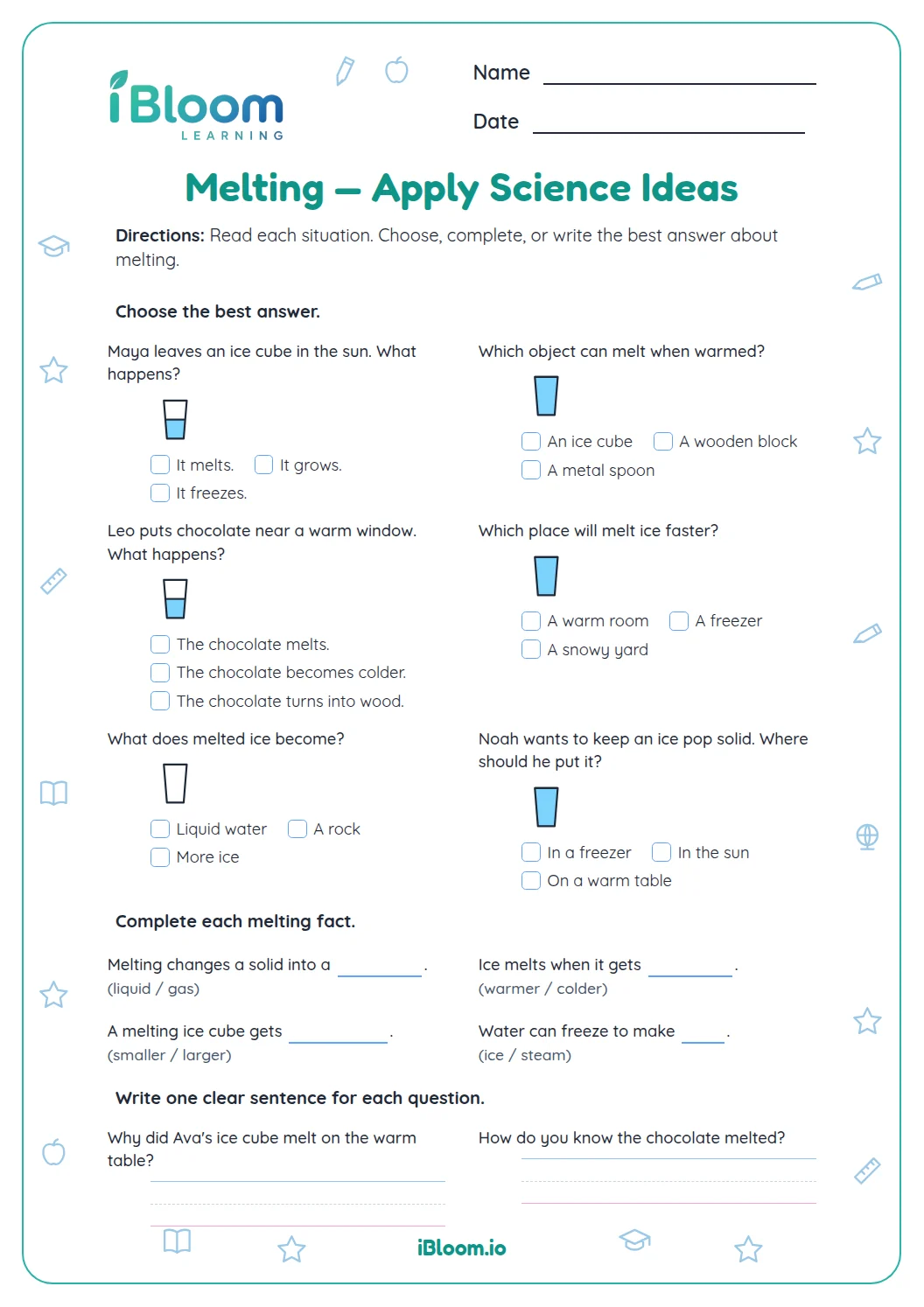


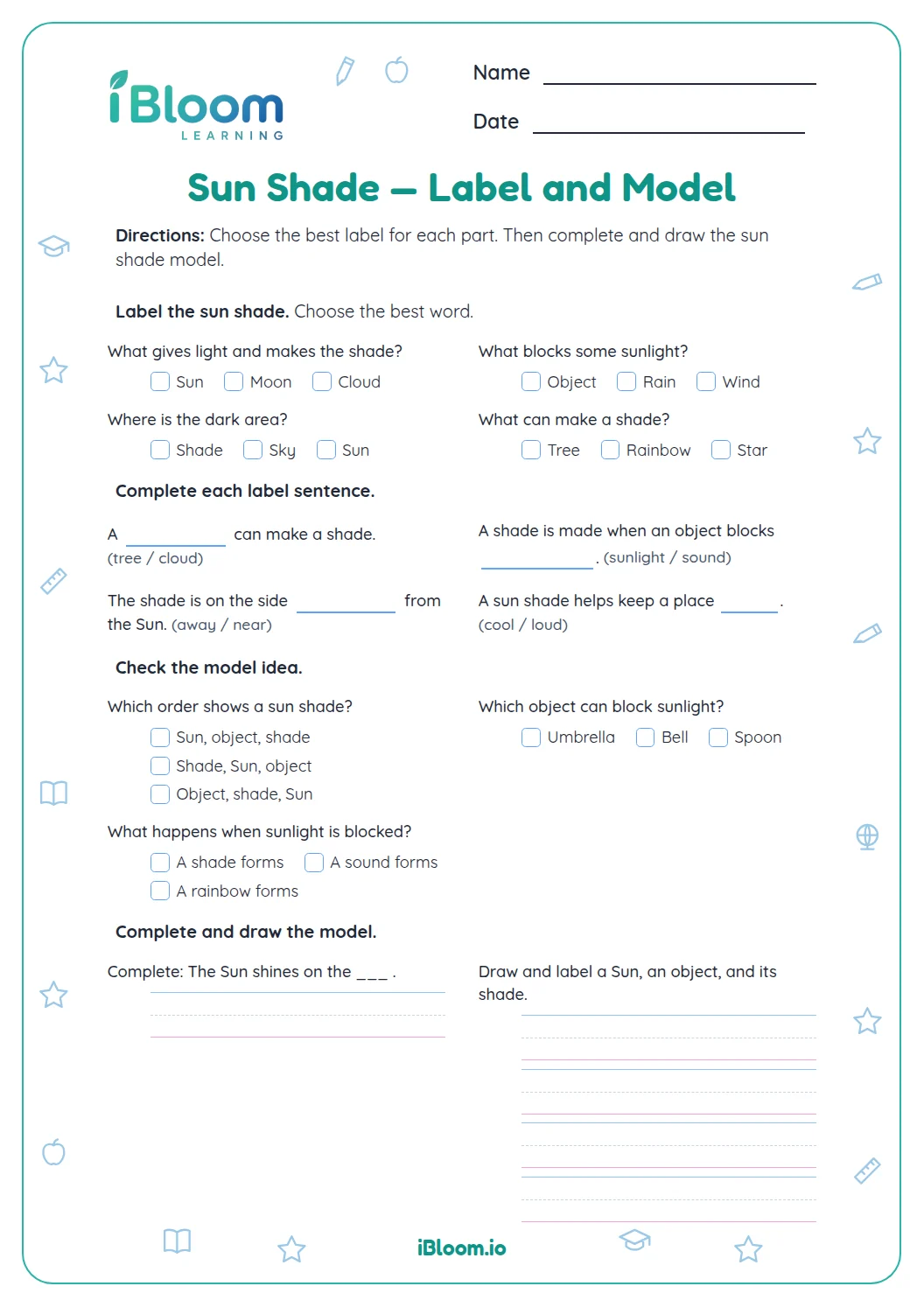

About this worksheet
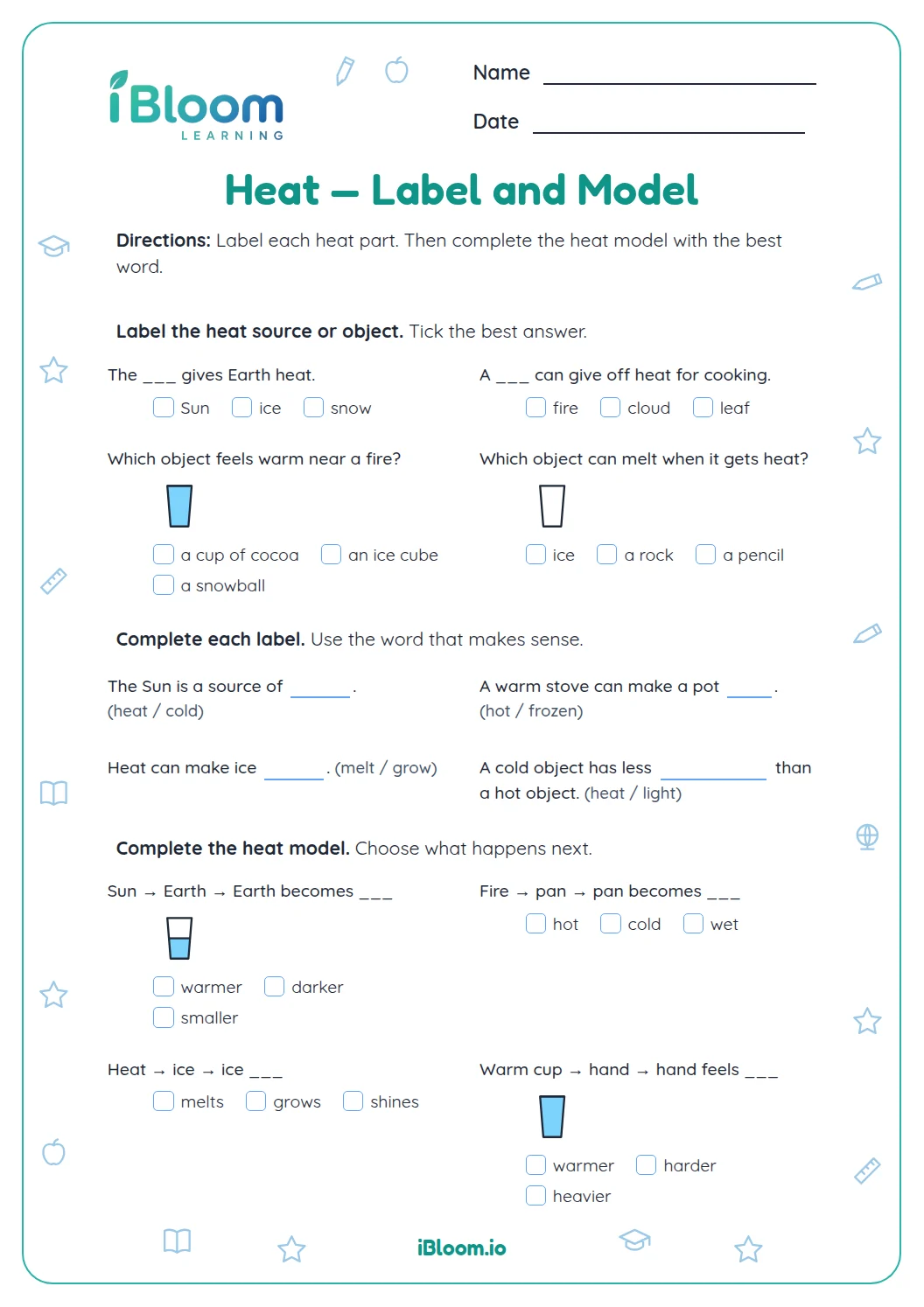
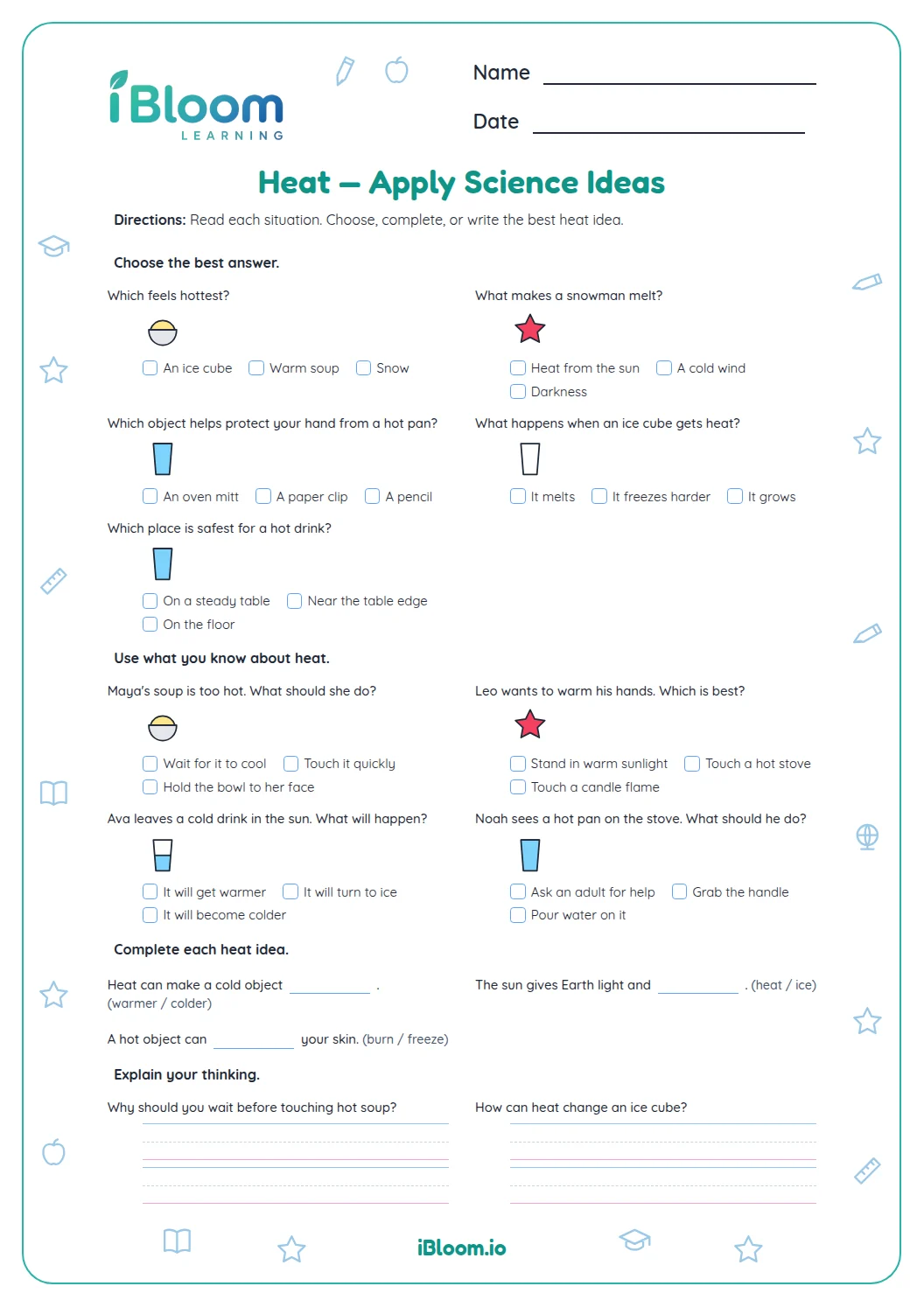
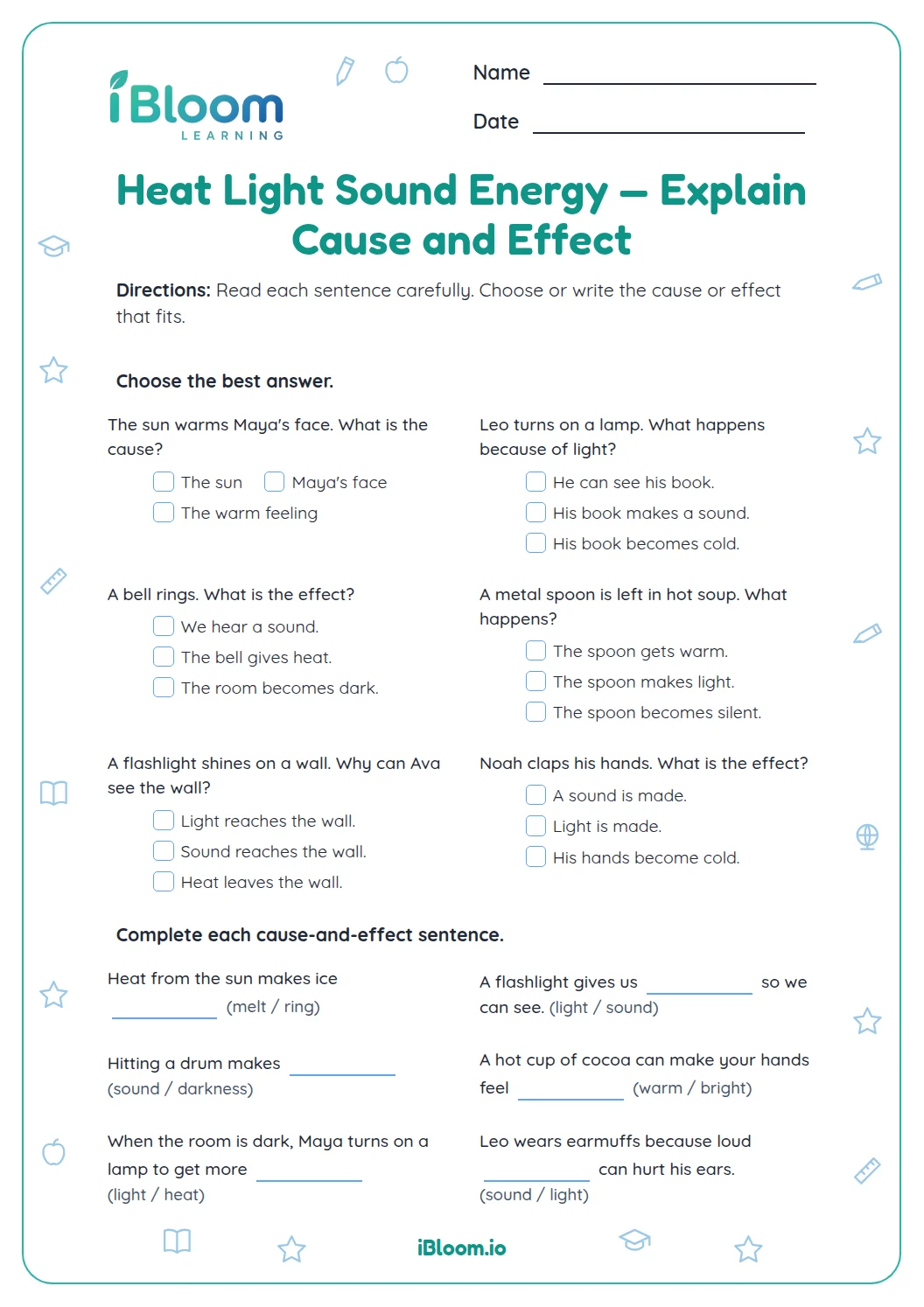
This Grade 1 printable focuses on heat cause and effect, matching the old sheet’s real-life examples. Fourteen questions ask learners to identify a heat source, explain heat moving from a warmer object to a cooler one, predict changes such as melting or drying, and choose a safe response around hot cookware. The answer key follows the same order.
How does heat cause a change?
Part A identifies causes and effects in familiar situations, such as an ice cube in a warm hand or a spoon in hot soup. Part B completes short statements about warming, melting, drying, and heat moving to a cooler object.
The old sheet uses the same cause-and-effect method with soup, shade, sunlight, and clothing.
- 16 questions practice the skill in steps
- The answer key follows the worksheet questions
- Open responses include sample answers
How can a learner connect heat to an effect?
Question 2 asks why a metal spoon warms in hot soup. Heat moves from the warmer soup into the cooler spoon, so the spoon becomes warmer.
How can the answer key support practice?
Check one answer at a time. For a written response, compare the idea with the sample instead of requiring identical wording.
- Point to one clue that supports the answer
- Return to the passage or situation when needed
A simple practice routine
- 1Name the change in the situation.
- 2Find the heat source or warmer object.
- 3Decide which way heat moves.
- 4Complete each effect sentence with a word that fits.
- 5Use the key to check the cause and result.
Common mistakes and quick fixes
The mistake
Saying a cold spoon warmed the hot soup.
The fix
Track heat from the warmer soup into the cooler spoon.
The mistake
Mixing up melting and freezing.
The fix
Warmth can melt ice; cooling can freeze liquid water.
The mistake
Touching a hot pan to test its temperature.
The fix
Use an oven mitt and ask an adult for help around hot cookware.
What to practice next
Make more practice
Questions parents and teachers ask
What heat ideas does this worksheet practice?
It connects heat sources with effects such as melting, warming, drying, and softening. Learners also consider heat moving from a warmer object to a cooler one and choose a safe response around a hot pan. Invite the learner to explain one choice and point to its evidence before checking.
How many questions are on the printable?
The worksheet has 14 questions on two pages, plus a two-page answer key. The first eight are multiple choice; the last six complete short cause-and-effect sentences about everyday examples. Invite the learner to explain one choice and point to its evidence before checking.
What is one worked example from the sheet?
Question 2 asks why a metal spoon feels warm after sitting in hot soup. Heat moves from the warmer soup to the cooler spoon, so the spoon warms. This is the same cause-and-effect reasoning learners use in other items. Invite the learner to explain one choice and point to its evidence before checking.
Can this page be used to teach hot-surface safety?
Yes. One question asks for a safe response to a hot pan, with asking an adult and using an oven mitt as the correct choice. The worksheet supports discussion, but children should follow an adult’s directions around cookware. Invite the learner to explain one choice and point to its evidence before checking.
Does the answer key allow other responses?
The multiple-choice responses have one listed answer. The fill-in answers are short words or phrases; accept an equivalent response when it fits the sentence and preserves the cause-and-effect idea, such as heat moving to a cooler object. Invite the learner to explain one choice and point to its evidence before checking.