





About this worksheet
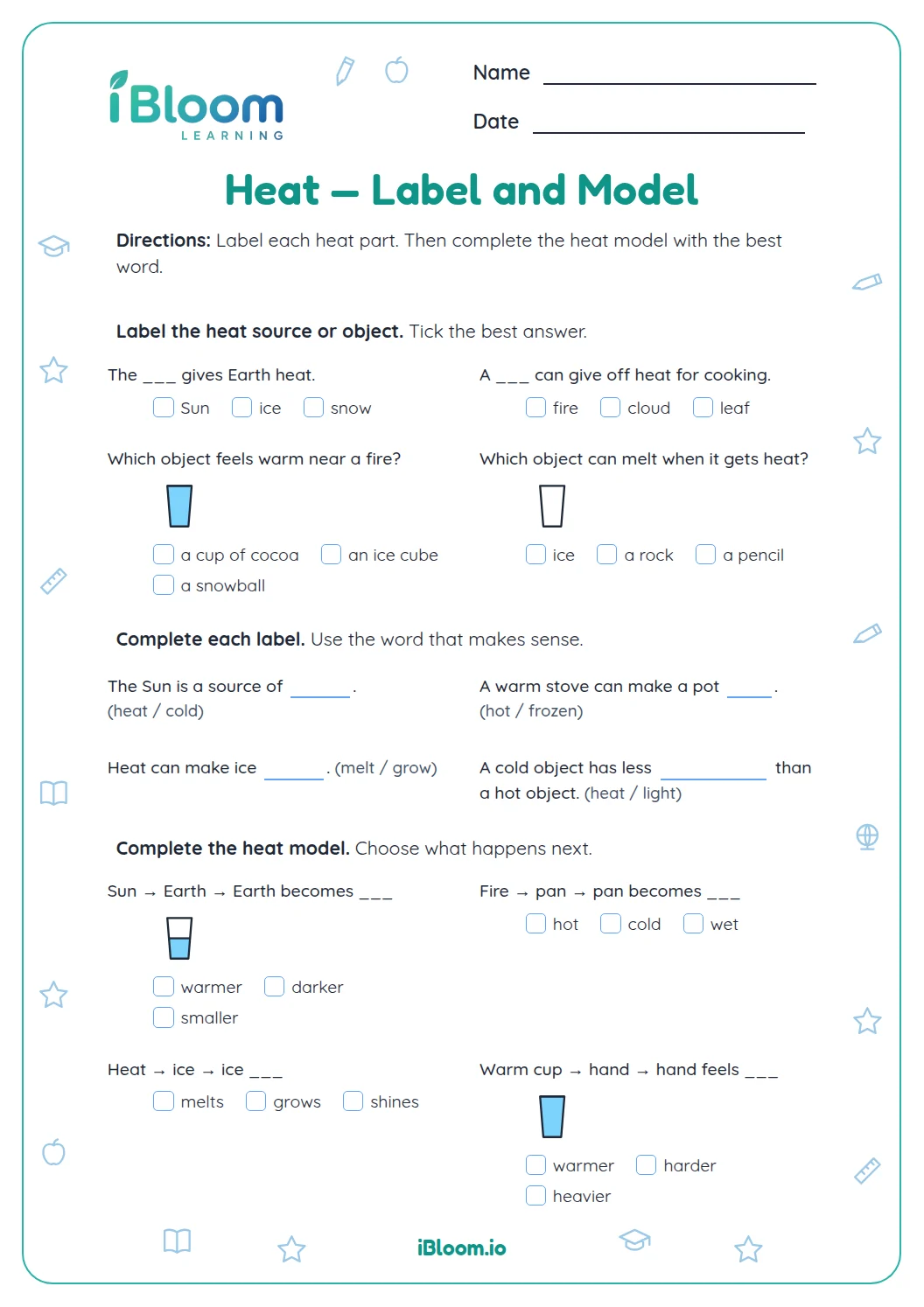
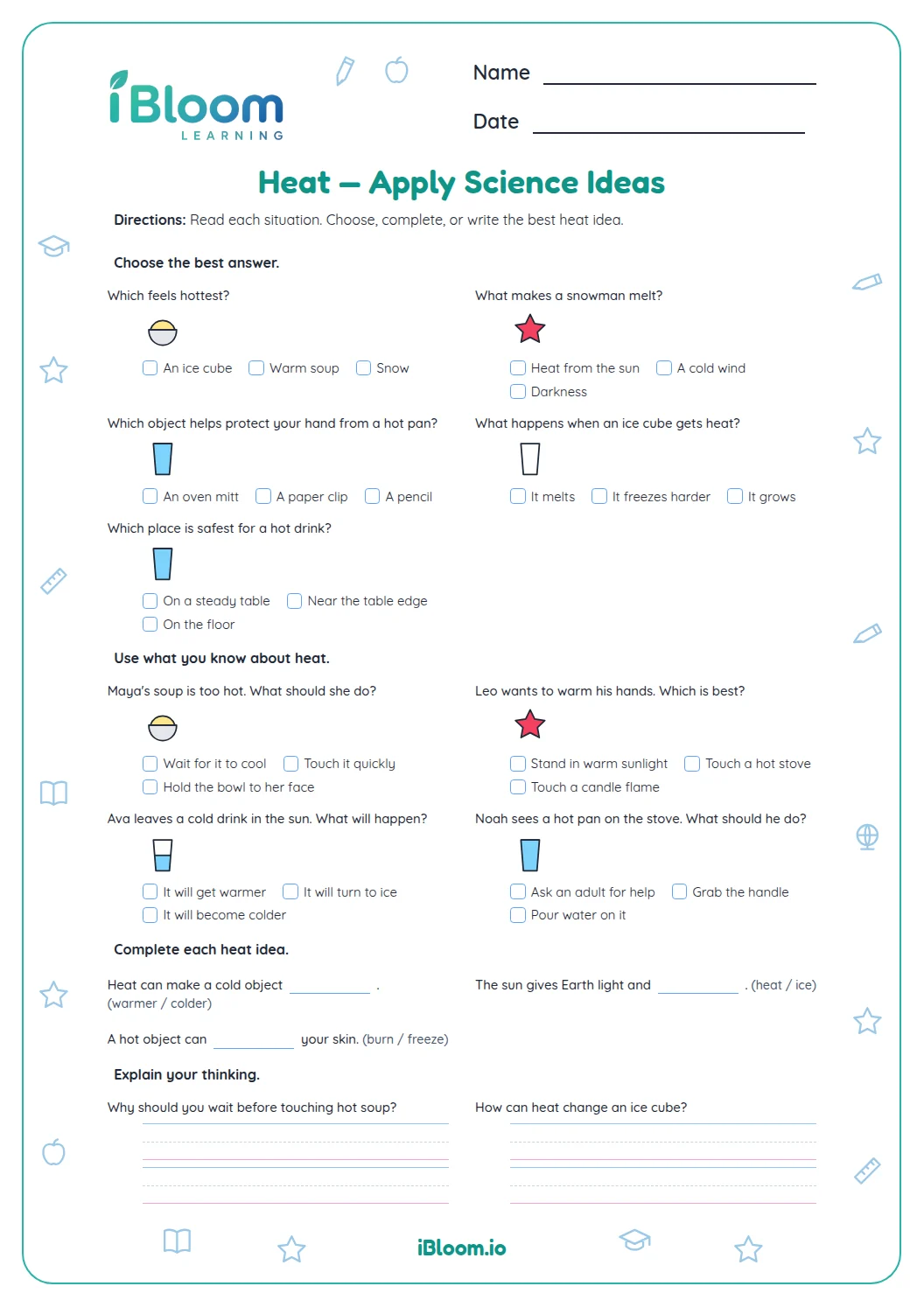
This free printable Grade 1 heat worksheet asks children to recognize heat sources and explain changes they can observe. Picture choices, fill-in prompts, and short answers cover sunlight warming a floor, heat moving to a spoon, and ice melting. Sample answers in the separate key allow sensible observations in children’s own words. The sunlight questions connect with NGSS K-PS3-1.
Aligned to K-PS3-1
Where can heat come from?
Heat can come from sunlight, a fire, warm food or friction when hands rub together. A heat source can warm something nearby. Children identify familiar sources before explaining what changes.
- 1Question 1 asks which pictured item can warm nearby objects.
- 2A fire is a heat source; snow and a leaf are not heat sources in this choice set.
How can heat change an object?
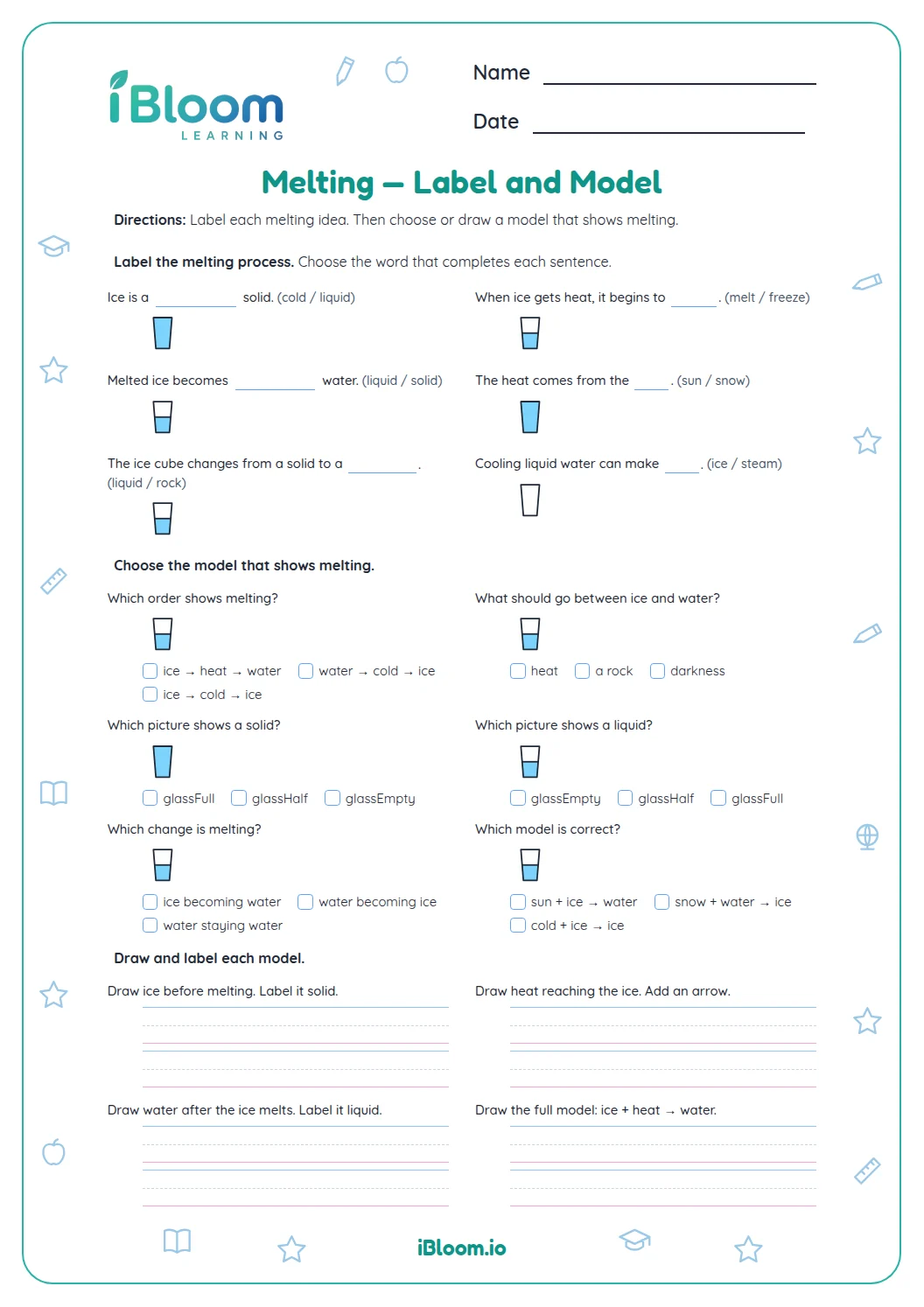
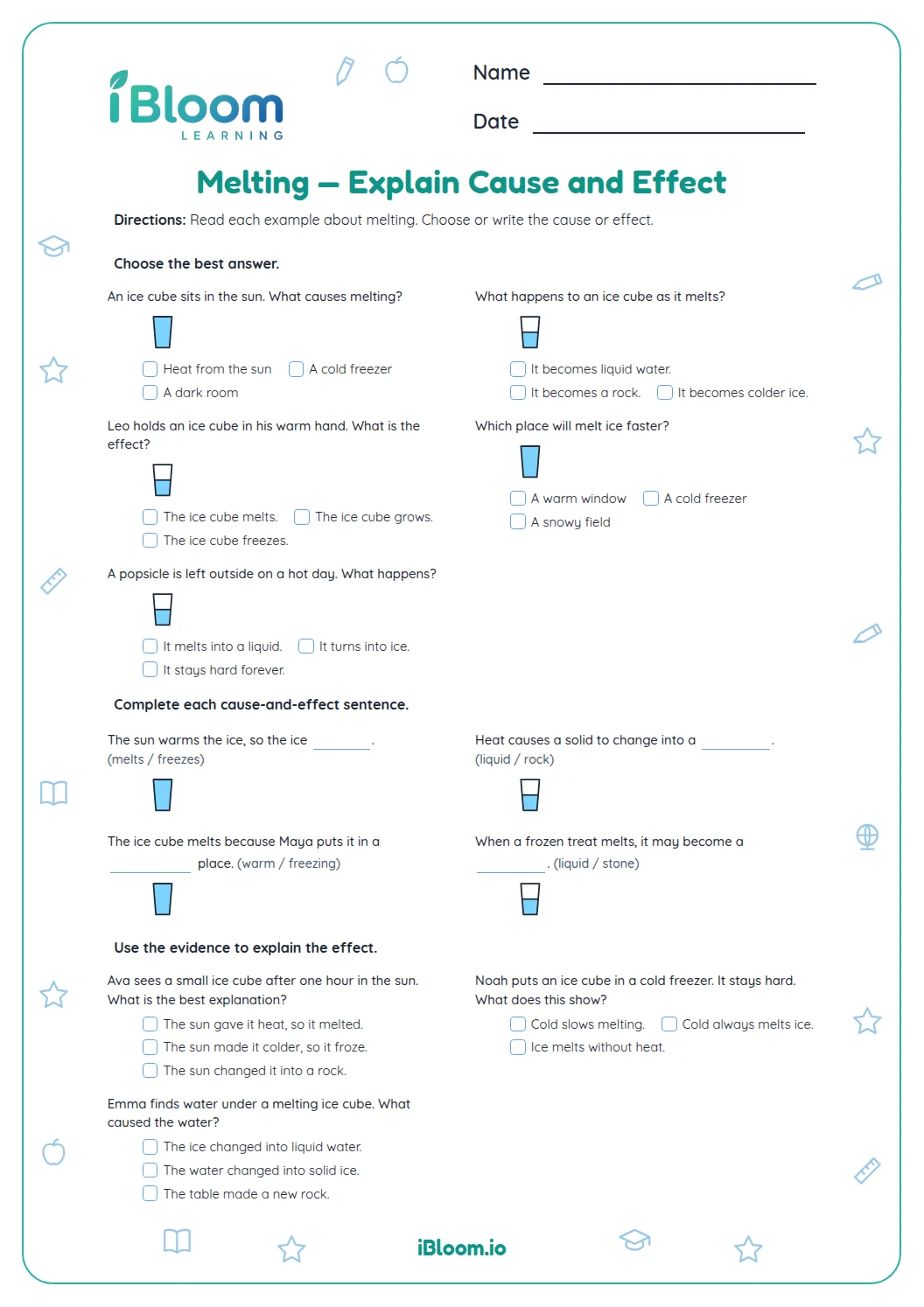
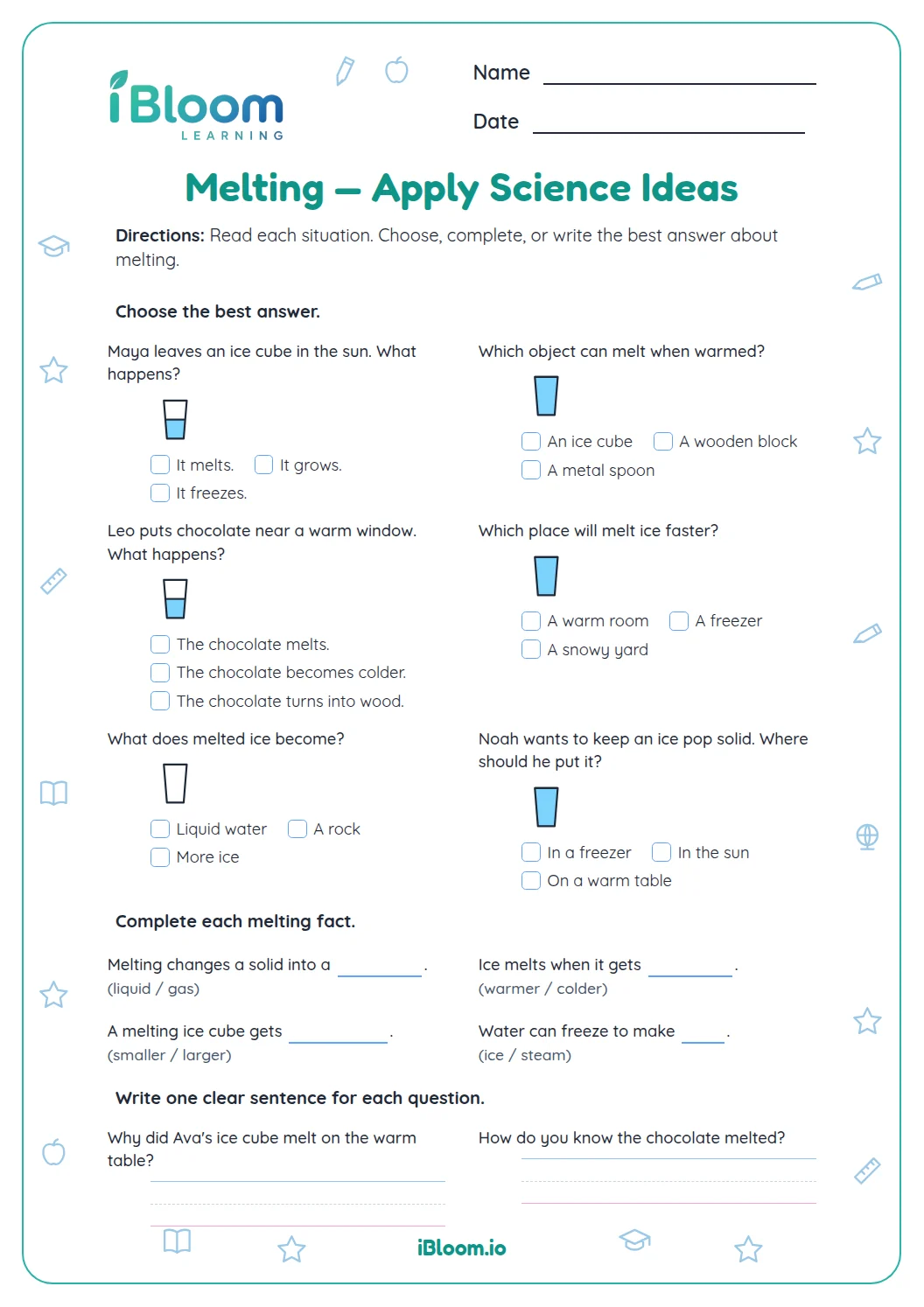
When a warmer object touches a cooler one, heat can move into the cooler object. That can make a spoon warmer or soften butter. Heat from sunlight can also warm the ground and melt ice.
How can children explain a heat change?
Name what was warmer, what became warmer, and the change you can observe. For example: “Heat moved from the hot soup to the cooler spoon, so the spoon feels warm.” Choose safe ways to stay comfortable around heat.
How to use this worksheet
- 1Read the choices aloud and invite the child to name each pictured object.
- 2In questions 1 and 9, sort heat sources from cool objects.
- 3Talk through which object starts warmer in questions 5 and 8.
- 4Use the sunlight examples to connect a source to an observable change.
- 5Accept short explanations that correctly name a source and a likely change.
Common mistakes and quick fixes
The mistake
Calling a shadow a heat source.
The fix
Ask what is making the surface warmer; sunlight supplies energy while a shadow blocks some light.
The mistake
Saying the ice warms the room.
The fix
Compare temperatures: heat moves from the warmer surroundings into the cooler ice.
The mistake
Suggesting a child touch a hot stove to warm up.
The fix
Choose a safe action such as putting on a sweater and discuss adult help around hot objects.
Curriculum alignment
This page gives children practice with the skills described in this standard.
Observe how sunlight warms Earth’s surface.
On this sheet: Children reason about sunlight warming ground and ice, then apply observations to familiar temperature changes.
Show the official wordingHide the official wording
Make observations to determine the effect of sunlight on Earth’s surface.
What to practice next
Further reading
Questions parents and teachers ask
What is a heat source?
A heat source is something that can warm another object, such as the Sun, a fire, or warm food. Children identify familiar examples in questions 1, 7, and 9, then use them to reason about changes. Ask your child to point to the question and explain the clue that supports the answer in their own words.
Why does ice melt in a warm place?
Heat moves from the warmer surroundings into the cooler ice. The added heat changes solid ice into liquid water. Questions 5, 10, and 15 ask children to connect warmth with this observable change. Ask your child to point to the question and explain the clue that supports the answer in their own words.
What is a safe way to stay warm?
A sweater or warm blanket can help a person stay comfortable. Children should not touch a stove or flame. Question 6 highlights a safe choice, and question 14 asks how a blanket helps. Ask your child to point to the question and explain the clue that supports the answer in their own words.
Does heat move into a spoon from hot soup?
Yes. The soup is warmer than the spoon, so heat moves into the cooler spoon and makes it feel warmer. Question 8 gives children a sentence frame for explaining that direction. Ask your child to point to the question and explain the clue that supports the answer in their own words.
What answers count for the open questions?
The key gives sample ideas, not the only acceptable wording. A response should name a reasonable source, object, or change. For example, “the ground” is a suitable answer to question 3 about what sunlight can warm. Ask your child to point to the question and explain the clue that supports the answer in their own words.
How can we extend this activity?
Observe a safe sunny patch indoors and compare it with a shaded spot. Ask which feels warmer and what source may explain the difference. The linked shade and sunlight activities continue these observations. Ask your child to point to the question and explain the clue that supports the answer in their own words.