






About this worksheet
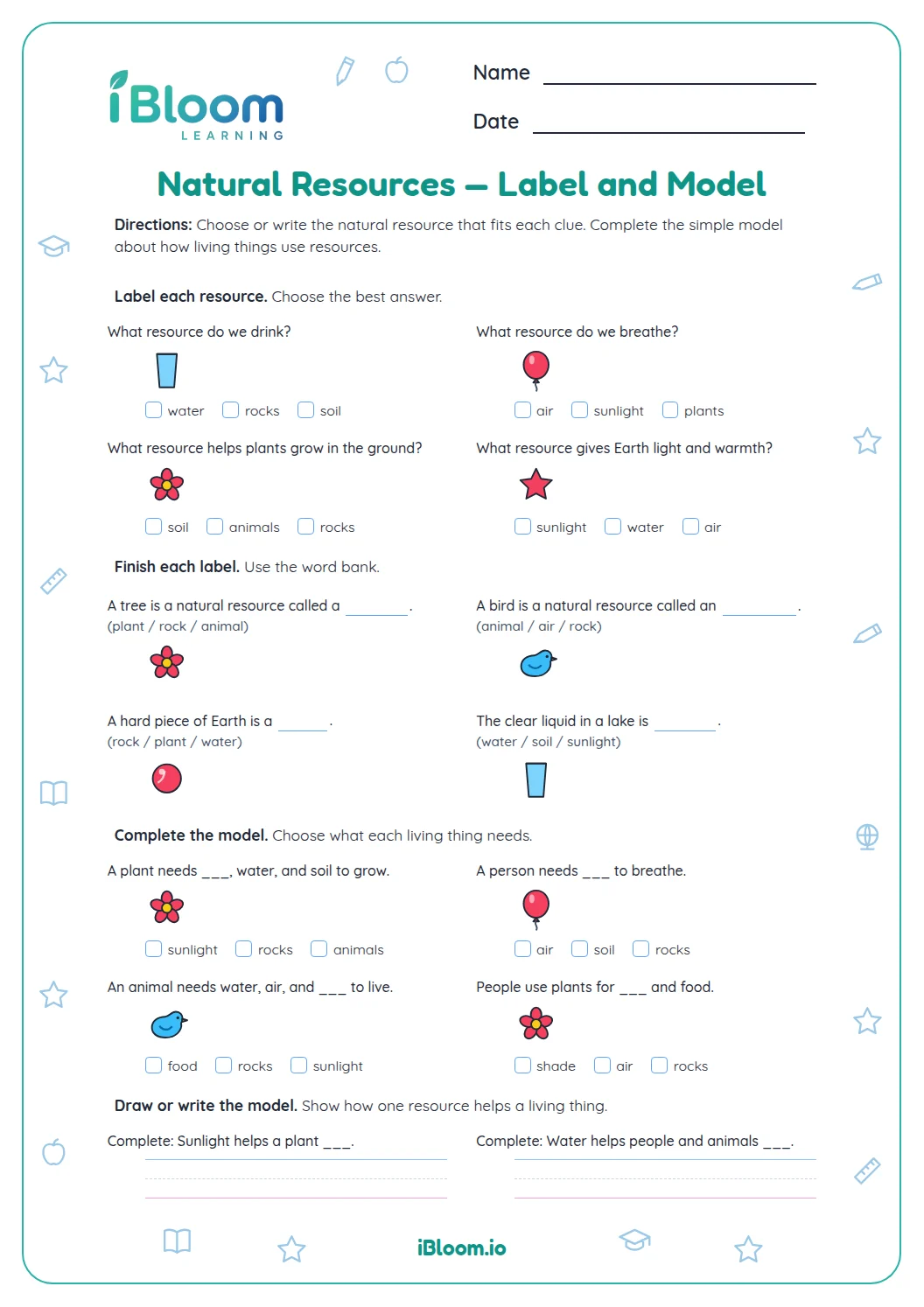
This free printable Grade 1 science worksheet gives children 14 ways to connect natural resources with familiar situations. Part A asks which resource fits four examples. Part B completes four sentences about sunlight, oxygen, birds and soil. Part C asks children to choose actions that use resources wisely and help the environment. Part D has two short explanations. The practice supports NGSS K-ESS3-3 by asking children to communicate helpful choices for water, air, trees and other living things. A separate answer key gives each choice and sample written answers.
Aligned to K-ESS3-3
Which resources do people and plants use?
A natural resource comes from nature. Water, soil, air and sunlight support living things, and people use resources in everyday life. A tree can provide wood, and soil helps plants grow.
Part A connects familiar situations with water, soil, air or sunlight. Part B completes four sentences about sunlight, oxygen, living things and soil. For question 6, the missing word is oxygen: people breathe oxygen from the air.
Which choices help care for resources?
Part C asks children to connect resource ideas with useful actions. The situations include dry soil around a plant, clean air near a home, and saving water. A separate question asks children to distinguish natural materials from objects people make.
- 1Situation: Emma wants clean air near her home.
- 2Helpful choice: Plant trees.
- 3Reason: Trees are living things that can help keep the local environment healthy.
What should children include in the written answers?
Part D asks for a resource with one use, then asks which resource a plant in a dark room is missing. A short answer is enough when it names the resource and explains the connection.
For question 13, “I use water for drinking” names both a resource and its use. For question 14, children can name sunlight and say that plants need it to grow. The key gives samples; accept clear wording in the child’s own words.
How do small actions reduce human impact?
Saving water, caring for plants and helping keep air clean are choices that can reduce waste or help the local environment. Talk about what changes when a resource is wasted less or when a place stays clean.
The worksheet includes examples about water, air and plant care. Children can also name a local choice, such as carrying a reusable bottle or keeping litter out of a stream.
How to use this worksheet
- 1Read each situation and name the resource before looking at the choices.
- 2Complete the four sentences with a resource or material that fits.
- 3For Part C, explain why the selected action helps people or the environment.
- 4Say the two Part D answers aloud before writing them.
- 5Check choices with the key and look for a clear reason in each written answer.
Mistakes to check together
The mistake
Calling a chair or paper a natural resource in its finished form.
The fix
Name the source in nature: trees provide wood and can provide material for paper.
The mistake
Writing “air” when a sentence asks what people breathe from the air.
The fix
People breathe oxygen, which is one gas in the air.
The mistake
Saying “sunlight” without explaining the plant question.
The fix
Add that plants need sunlight to grow.
Curriculum alignment
Choose and explain actions that reduce waste and help care for water and trees.
On this sheet: Children select helpful actions and explain how turning off a tap and using both sides of paper conserve resources.
Show the official wordingHide the official wording
Communicate solutions that will reduce the impact of humans on the land, water, air, and/or other living things in the local environment.
What to practice next
Make more practice
Further reading
Questions parents and teachers ask
Which natural resources are named on this worksheet?
The questions name water, soil, air and sunlight, and also mention trees, rocks and living things. Children connect resources with plant growth, breathing, drinking and light. The later questions ask them to choose actions that save water, help care for plants and keep air clean.
Why does the worksheet ask about oxygen and air?
Air is a mixture of gases, and oxygen is one gas people breathe. The sentence asks children to complete “We breathe ___ from the air” with oxygen. You can explain that air also contains other gases, even though this question focuses on oxygen.
What should my child write for the resource-use question?
Name a resource and one way people use it. For example, “I use water for drinking” or “People use soil to grow food” both give a resource and a use. The answer key includes a sample, and clear answers in a child’s own words are fine.
How does saving water help?
People, plants and animals need water, so using only what is needed helps conserve it. Question 10 asks children to choose why people should save water, and question 11 applies the idea to a dry plant. The key accepts a clear explanation in a child’s own words.
What does a plant in a dark room need?
The worksheet asks children to identify sunlight as the missing resource and explain that plants need it to grow. A short response is enough when it includes both the resource and its purpose. The answer key gives a sample, but children can use their own clear wording.