







About this worksheet
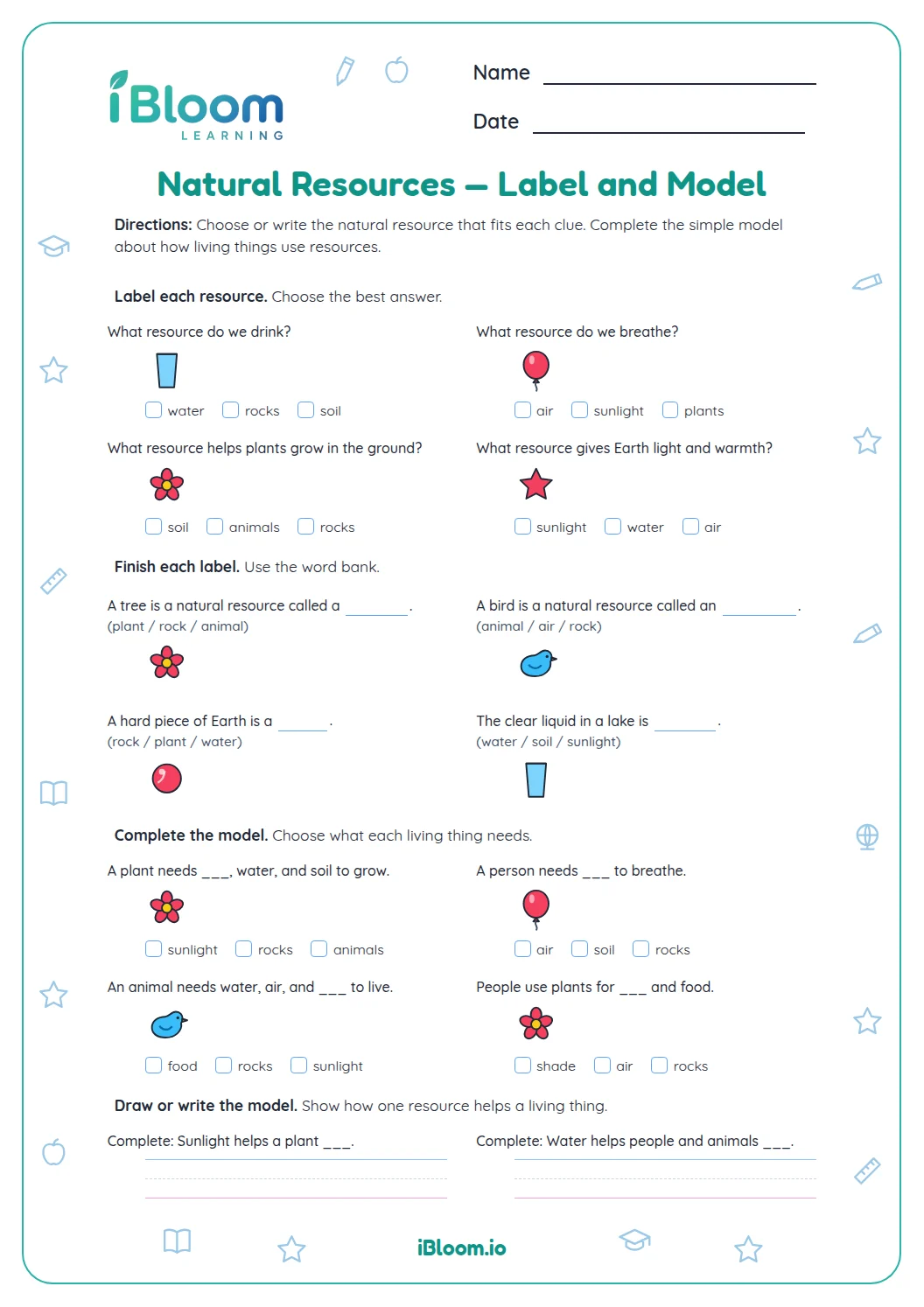
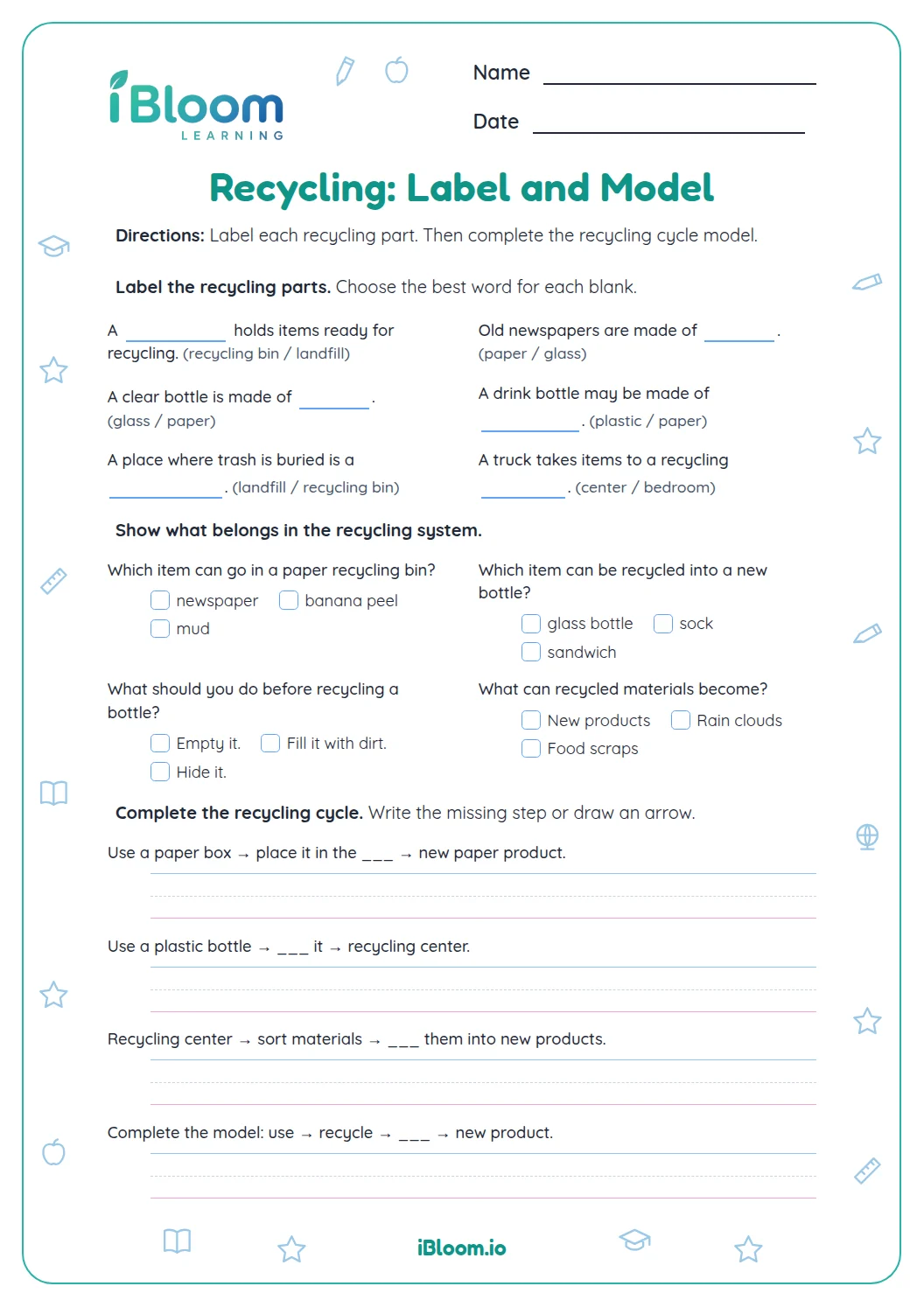
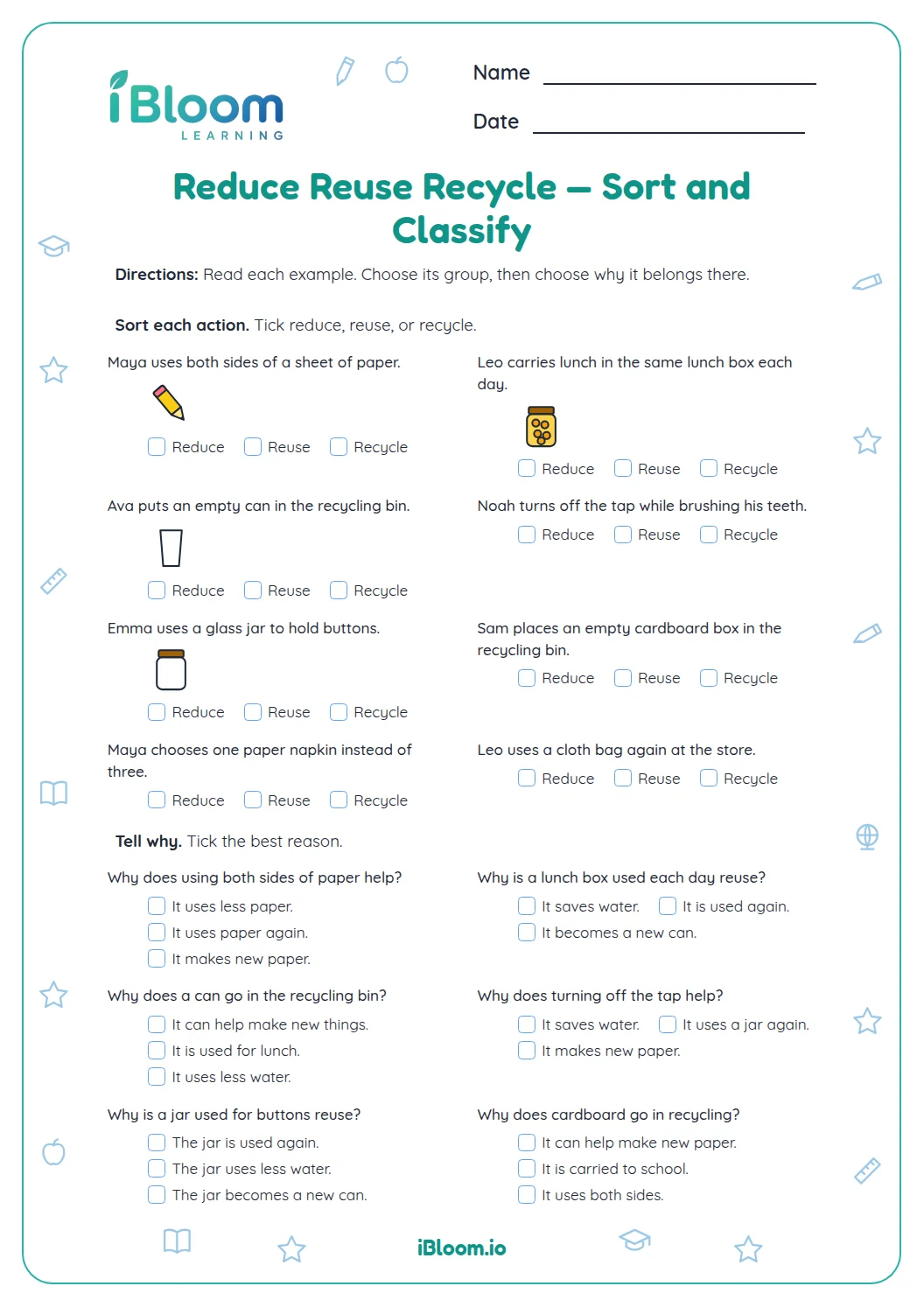
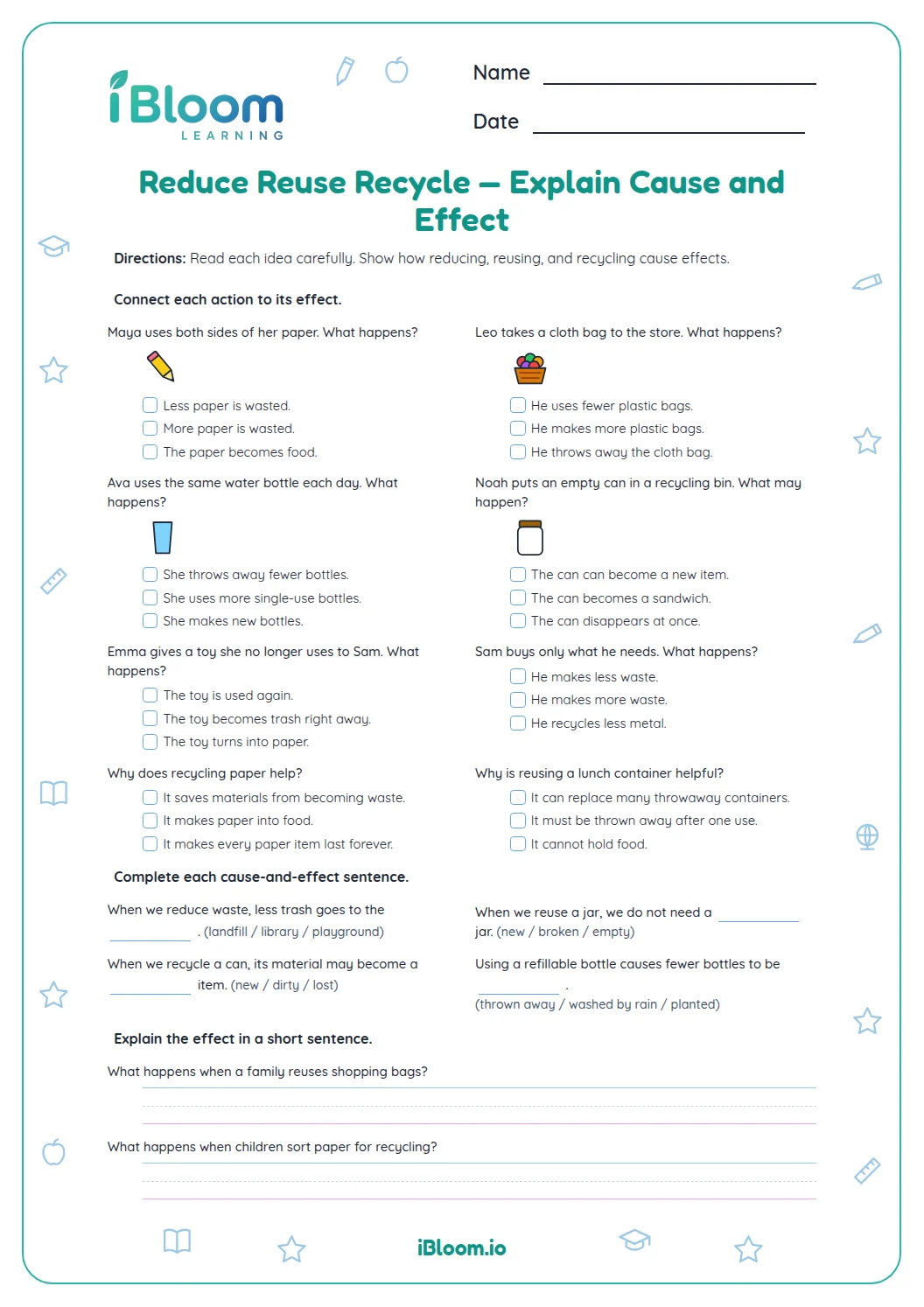
This Grade 1 science worksheet helps children tell natural resources from things people make and use clues to identify materials such as water, soil, air, and sunlight. The 16 items follow the old sheet’s mix of choices, sentence completion, evidence clues, and everyday conservation decisions. The printable has three worksheet pages and a separate answer key.
Which things are natural resources?
Water, sunlight, air, soil, and rocks occur in nature. A plastic bottle is made by people, even though it uses materials that come from nature.
How do sentence clues help?
For question 5, “A rock is a ___ resource,” the right word is natural. The sentence describes what a rock is, rather than something people manufacture.
How can children apply the idea?
Question 14 asks which action saves a resource. Turning off water while brushing uses less water than leaving the tap running.
How to use the worksheet
- 1Read the part heading and direction before starting.
- 2Work through each prompt in order.
- 3Reread a sentence or inspect its model before choosing.
- 4Explain a choice by pointing to its clue.
- 5Use the separate key to check and correct answers.
Common slips and fixes
The mistake
Answering after reading only part of a prompt.
The fix
Reread the full sentence or direction before deciding.
The mistake
Choosing a response that is related but does not fit the exact clue.
The fix
Try the answer in the sentence or compare it with the model.
The mistake
Checking the key before trying the item.
The fix
Make a first attempt, then use the key to find and correct a missed clue.
What to practice next
Questions parents and teachers ask
What natural resources appear on the worksheet?
The questions name water, sunlight, air, soil, rocks, and materials made from resources. Children decide whether an item occurs in nature, use sentence clues to identify a resource, and consider how people can conserve water. The answer key gives a check for every question. Ask the child to point to the specific resource clue in that question.
How many questions are included?
There are 16 questions across four parts: identify a natural resource, complete a science sentence, select the word supported by a clue, and apply the idea to everyday choices. The page follows the old sheet’s mix of recognition and reasoning activities. Ask the child to point to the specific resource clue in that question.
What does the answer key include?
The separate key marks the correct choices and fills each sentence blank. For example, a rock is a natural resource, and the Sun gives Earth light and heat. Use those answers to revisit the clue that supports each response. Ask the child to point to the specific resource clue in that question.
Can this worksheet be used with a class?
Yes. Children can complete the questions independently or discuss why a choice fits. For an item about saving water, ask them to compare the listed actions and explain which one avoids wasting a resource. Ask the child to point to the specific resource clue in that question.
How long should children spend on it?
Plan about 20 minutes for the three worksheet pages, including time to read each question and check the answer key. An adult can read the directions aloud, while the child makes the science choices and explains a clue. Ask the child to point to the specific resource clue in that question.