





About this worksheet
This Grade 1 weather worksheet uses a weather wheel as a record of observed conditions. Students match picture clues and simple observations to sunny, rainy, snowy, or windy records, then decide when a record should be updated. The answer key lists each match. Children can explain a choice by naming the clue, such as falling rain or moving branches.
How do weather symbols match what I observe?
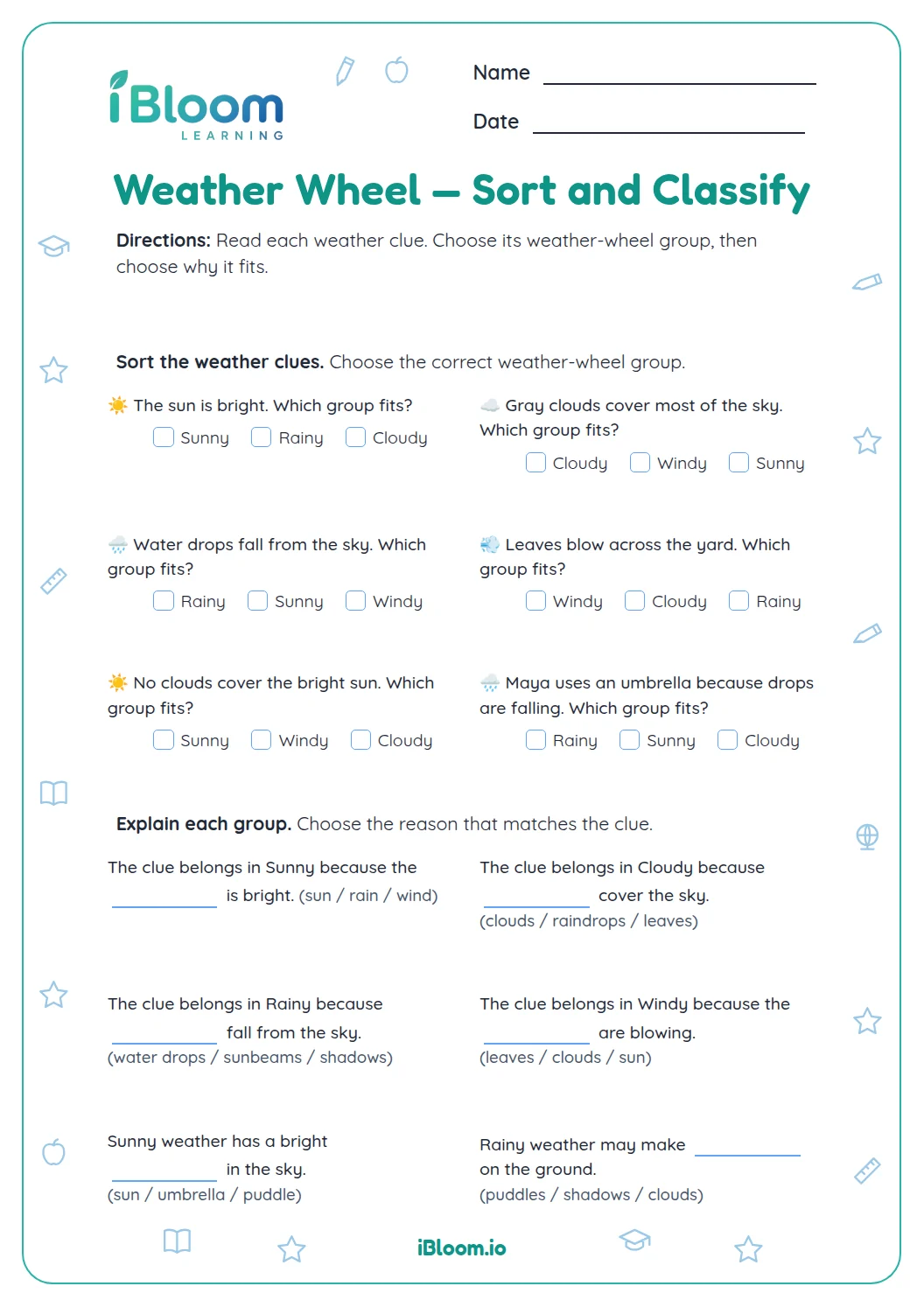
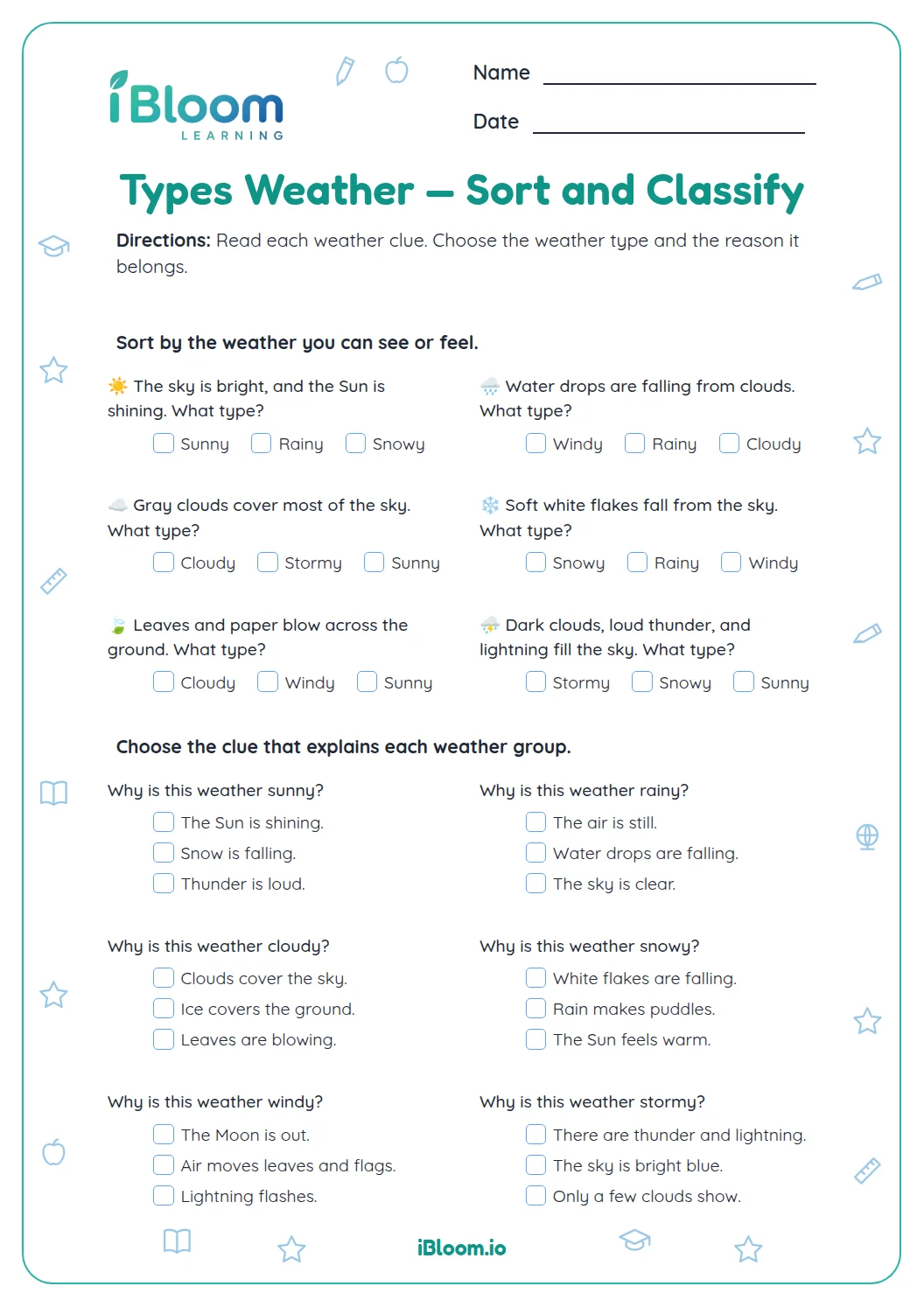
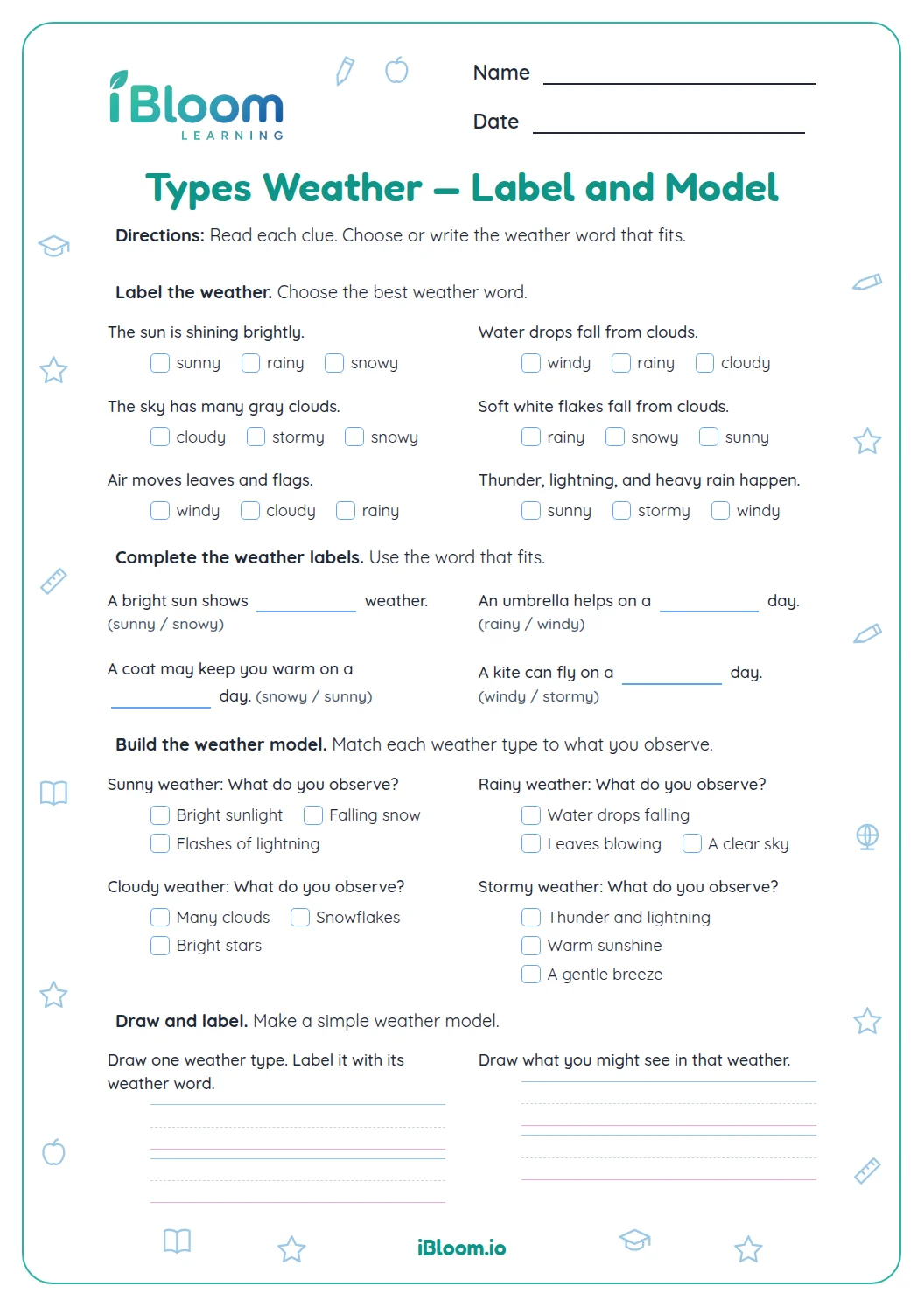
Match a visible clue to a weather record. Falling drops support rainy, snowflakes support snowy, and moving leaves can support windy.
- 1Question 2 shows rain and asks which weather symbol fits: rainy.
When should I update the weather wheel?
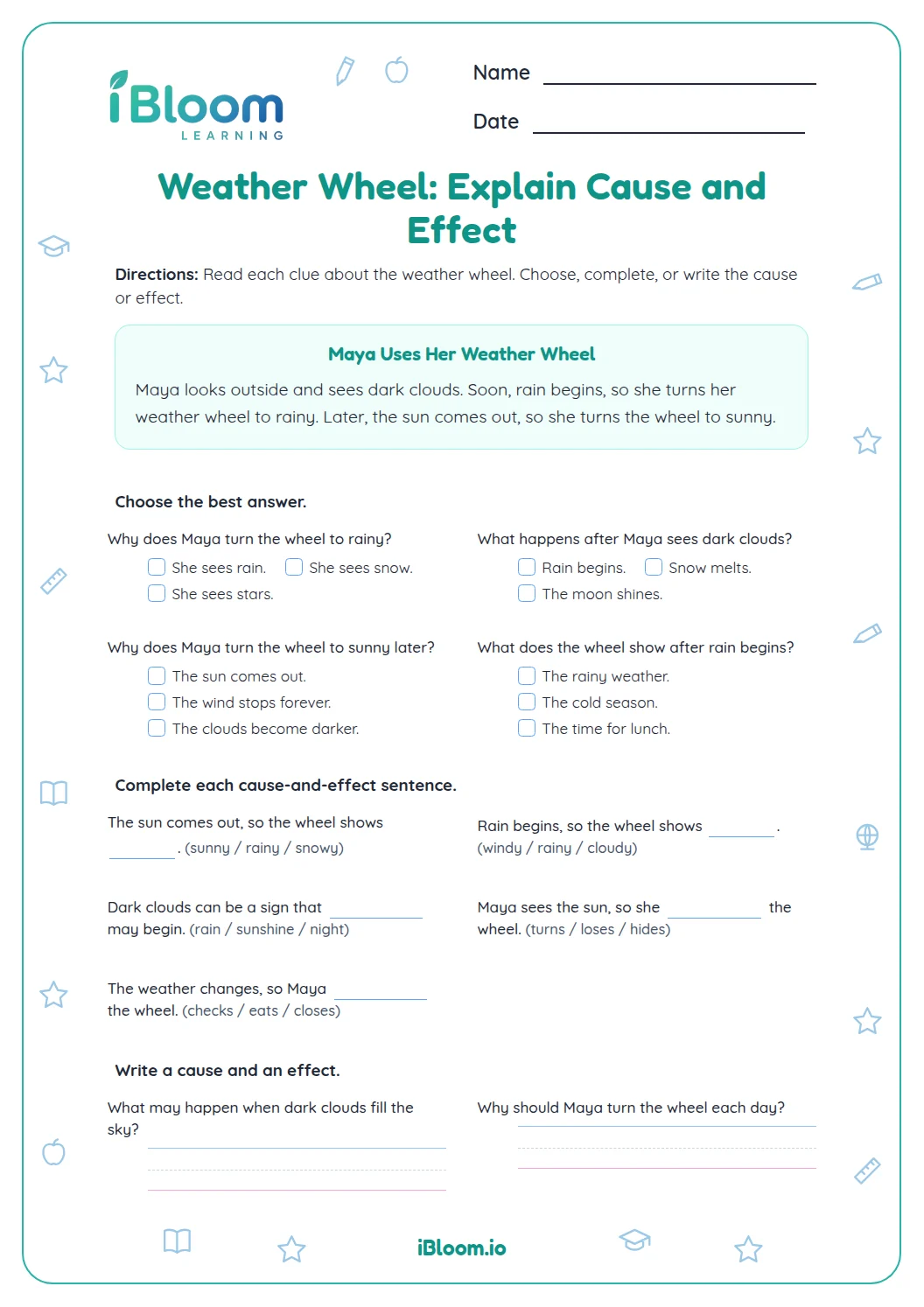
Update the arrow after checking the current conditions. A wheel left on yesterday’s symbol no longer records today’s observation. A wheel describes the weather being observed; it does not give an exact forecast.
What counts as evidence for a weather record?
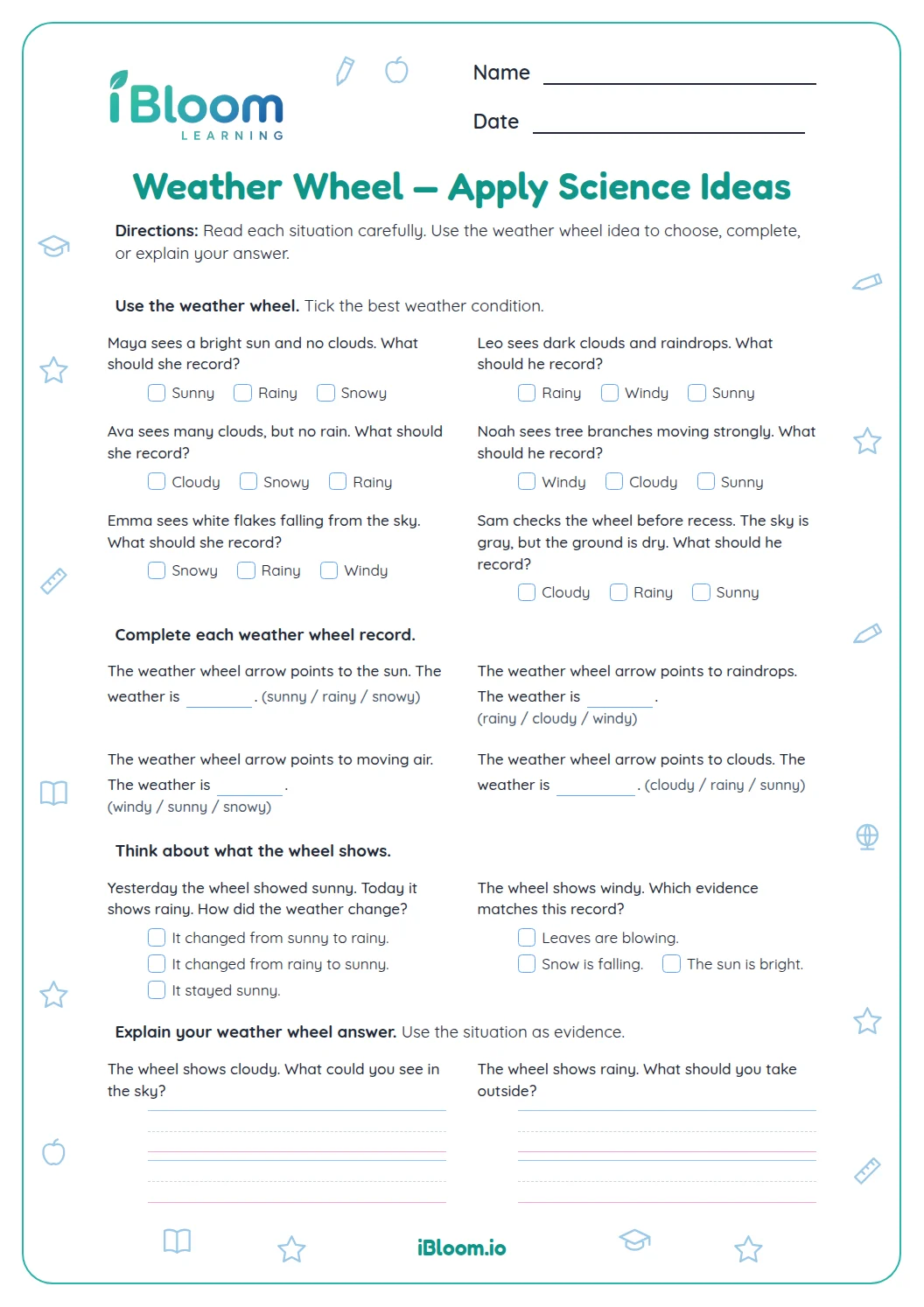
A record should match the conditions the observer notices. Falling rain supports rainy; moving branches can support windy.
How to use this weather observation worksheet
- 1Look at the weather clue in each question.
- 2Match the clue to a weather word or symbol.
- 3Use today’s observations when setting the wheel.
- 4Explain which evidence helped you decide.
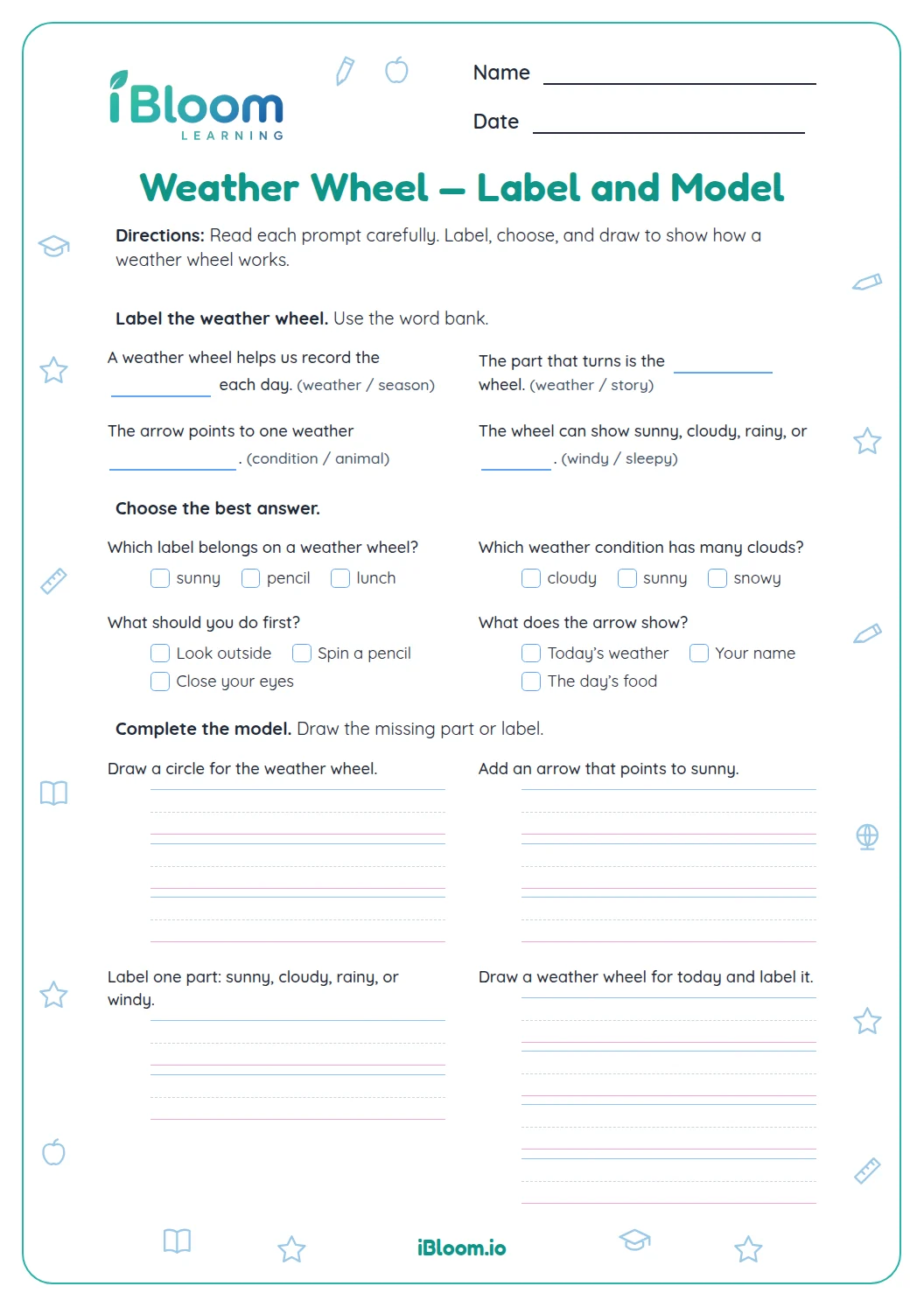
- 5Draw a simple symbol and label it clearly.
Common mistakes and quick fixes
The mistake
Leaving the wheel on yesterday’s weather
The fix
Check today’s conditions and move the arrow to the current record.
The mistake
Using a guess as if it were an observation
The fix
Name a visible clue such as rain, snowflakes, or moving leaves.
The mistake
Confusing a weather record with an exact forecast
The fix
Use the wheel to describe observed weather, not tomorrow’s exact conditions.
What to practice next
Make more practice
Questions parents and teachers ask
Does the weather wheel predict tomorrow’s weather?
No. The wheel records weather that has been observed. A sunny symbol tells what the observer recorded, not the exact weather that will happen tomorrow. Students use it as a simple record of present conditions, then update it after observing again.
What clues can show that it is windy?
Moving leaves, swaying branches, or a flapping flag can be clues that wind is moving objects. A student can record windy weather after noticing one of these visible clues outdoors. The picture and observation questions use this same kind of evidence.
Should the wheel show yesterday or today?
It should show the weather being recorded now. If it still points to yesterday’s condition, observe today’s weather and move the arrow to the matching symbol on the wheel. The question checks that a record is updated after a new observation.
What if the sky is cloudy but it is not raining?
Record what is observed. Clouds alone do not mean rain is falling. If the wheel has a cloudy choice, that may fit; if not, use the closest accurate record available on that wheel. Question 13 distinguishes clouds from falling rain.
Why should a weather record match evidence?
Evidence makes the record clear and checkable. Falling drops support rainy, visible snowflakes support snowy, and moving leaves can support windy. Students can explain their choice by naming the clue they noticed, as they do throughout this worksheet. They name evidence instead of guessing or predicting.