





About this worksheet
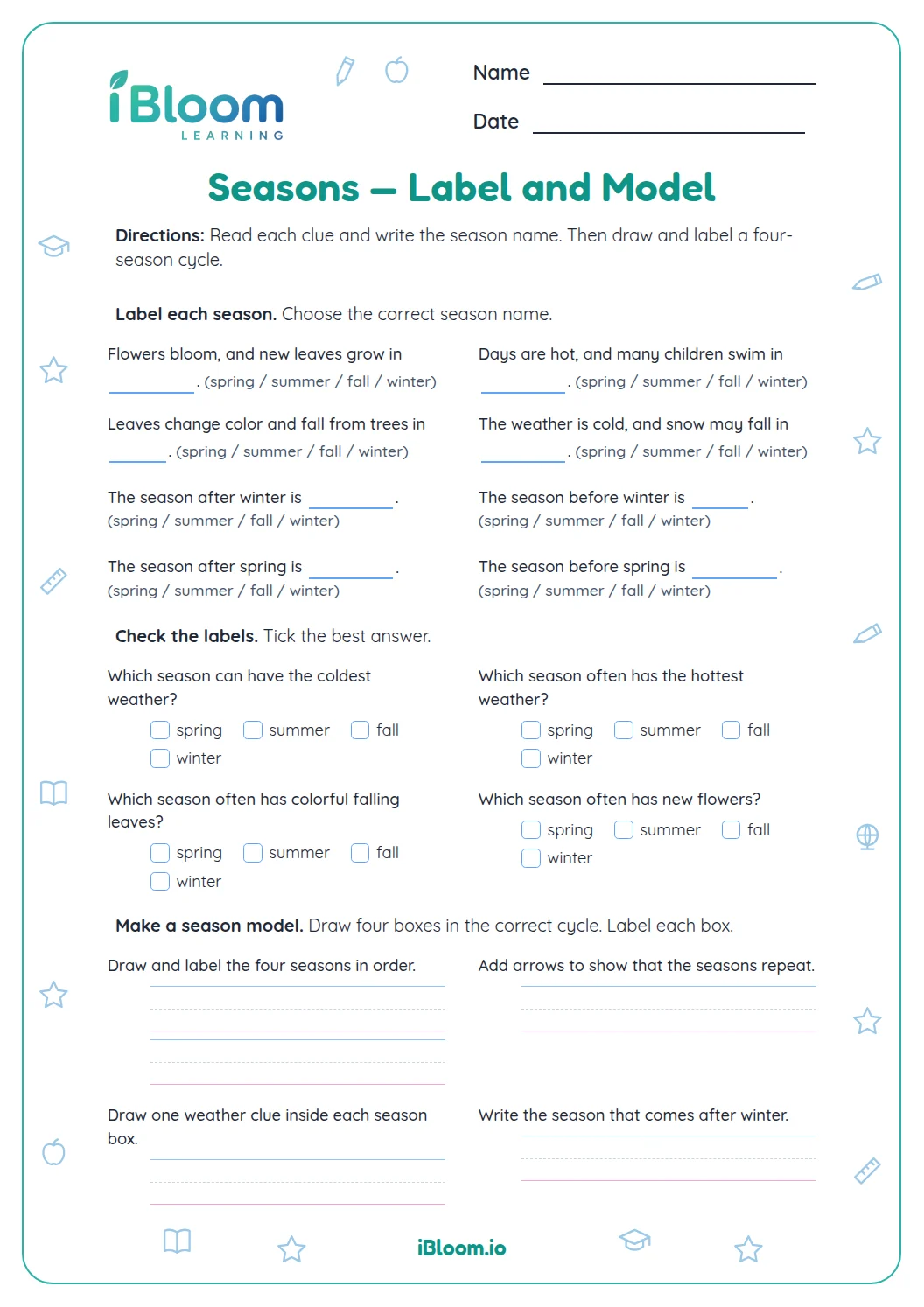
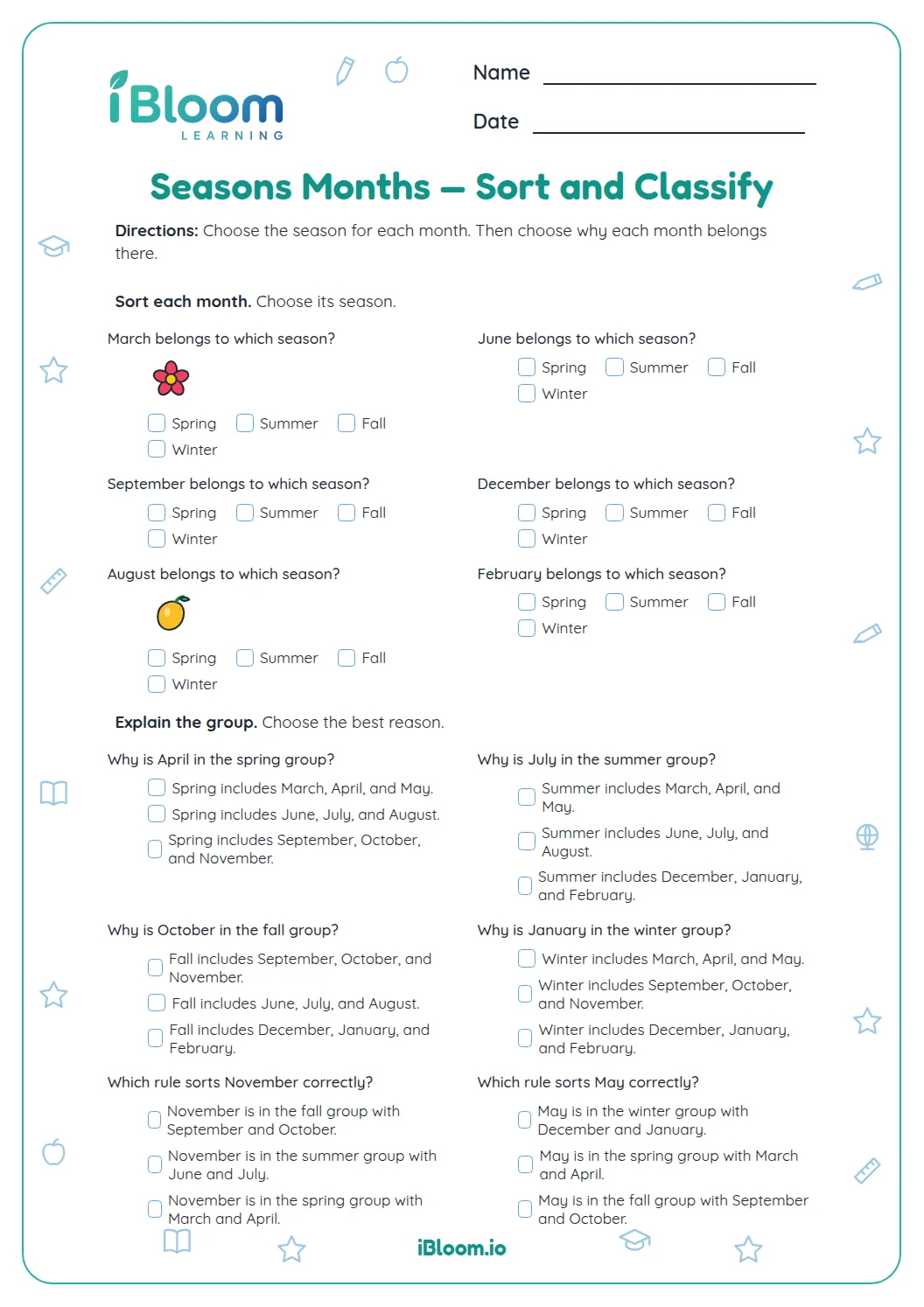
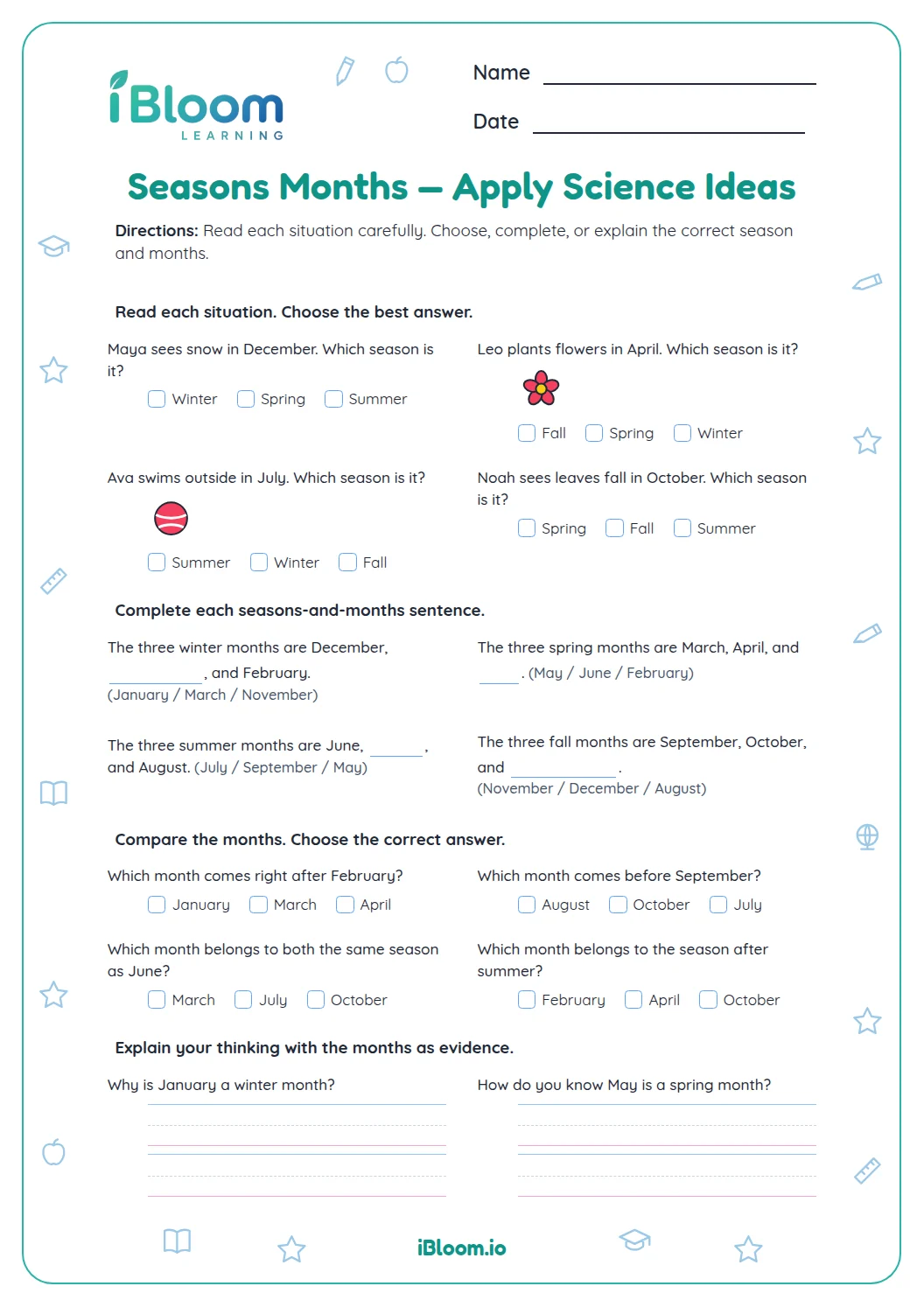
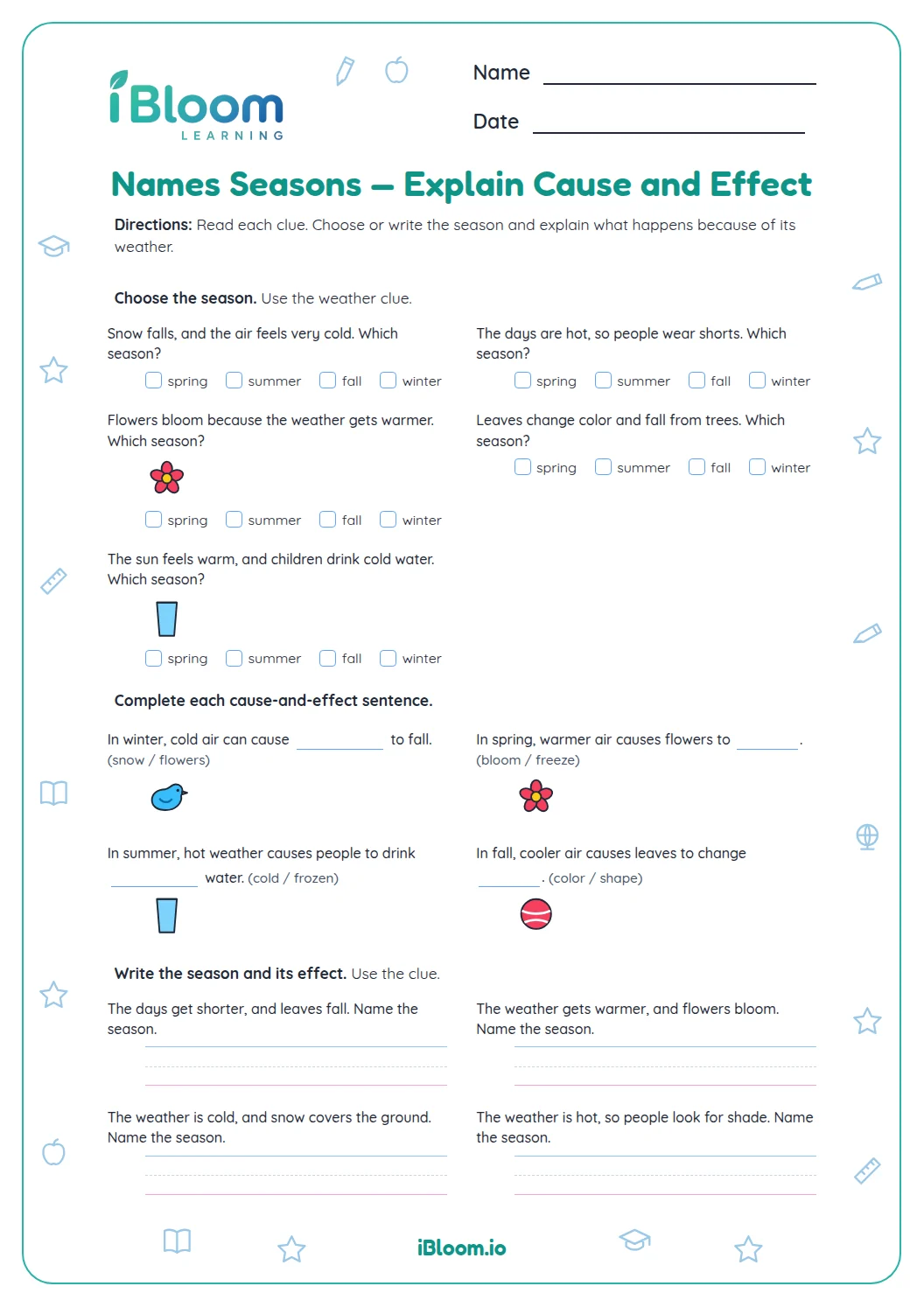
This Grade 1 seasons worksheet asks children to connect seasonal weather with effects they can observe. Learners choose outcomes, use Maya’s short account of spring, summer, fall, and winter, and explain a cause-and-effect link. The printable includes a separate key with direct answers and sample responses.
What skill does this worksheet practice?
This Grade 1 seasons worksheet asks children to connect seasonal weather with effects they can observe. Learners choose outcomes, use Maya’s short account of spring, summer, fall, and winter, and explain a cause-and-effect link. The printable includes a separate key with direct answers and sample responses.
How can a child work through the questions?
Read the cause first, then choose or write the result that fits the observation. In the passage, Maya notices a season and a weather condition before describing what happens.
- 1The air turns cool in fall. What may happen to many leaves?
- 2The passage says cool fall air made leaves turn orange and brown.
- 3Answer: They change color
What is included on the printable pages?
Part A connects seasonal conditions with effects. Part B uses Maya’s observations as evidence. Part C asks learners to complete or explain seasonal cause-and-effect links. The key includes sample wording for answers that may vary.
How to use this worksheet
- 1Read the directions together before starting.
- 2Complete the first part slowly and talk through the strategy.
- 3Work through the remaining parts, pausing to reread any confusing prompt.
- 4Use the answer key after the learner has finished.
- 5For any missed item, revisit the clues or model and try it again.
Common mistakes and quick fixes
The mistake
Rushing past an important clue in the prompt.
The fix
Reread the whole prompt and point to the detail that supports the answer.
The mistake
Giving an answer that does not match the requested form.
The fix
Check whether the item asks for a number, word, choice, or explanation.
The mistake
Changing an answer without checking the model or text.
The fix
Compare the answer with the shown information before revising.
What to practice next
Questions parents and teachers ask
What does cause and effect mean in a seasons lesson?
A cause is an event or condition that helps bring about a result, and an effect is what happens. In this worksheet, children connect seasonal weather observations, such as cool fall air, with effects such as leaves changing color in fall.
Do the questions ask children to measure daylight hours?
The worksheet asks children to notice seasonal conditions and their effects rather than measure exact daylight hours. They use Maya’s observations of spring rain, summer sunshine, fall air, and winter cold to choose or explain what happened in her town.
Why compare winter with spring or summer?
Seasonal comparisons make it easier to notice how weather and nature change over the year. Maya’s short passage gives examples from spring, summer, fall, and winter, including flowers growing, sunny days, leaves changing color, and snow on the ground in winter.
What makes a good written answer?
A good answer names an observation and connects it to an effect or conclusion. The key gives sample responses for open questions; children may use different clear wording as long as the cause and effect match Maya’s passage and name both parts clearly.
How can families support this science practice?
Families can notice seasonal conditions together, such as cool fall air or snow in winter, and talk about what changes as a result. Maya’s passage offers examples to compare, and children can add a local observation that they have seen themselves.
How many practice questions are included?
There are 18 questions in four parts, including Maya’s short passage. Children identify effects of seasonal conditions, use details from her observations, and explain cause-and-effect links. The key includes direct answers and sample wording for open responses in complete sentences.