






About this worksheet
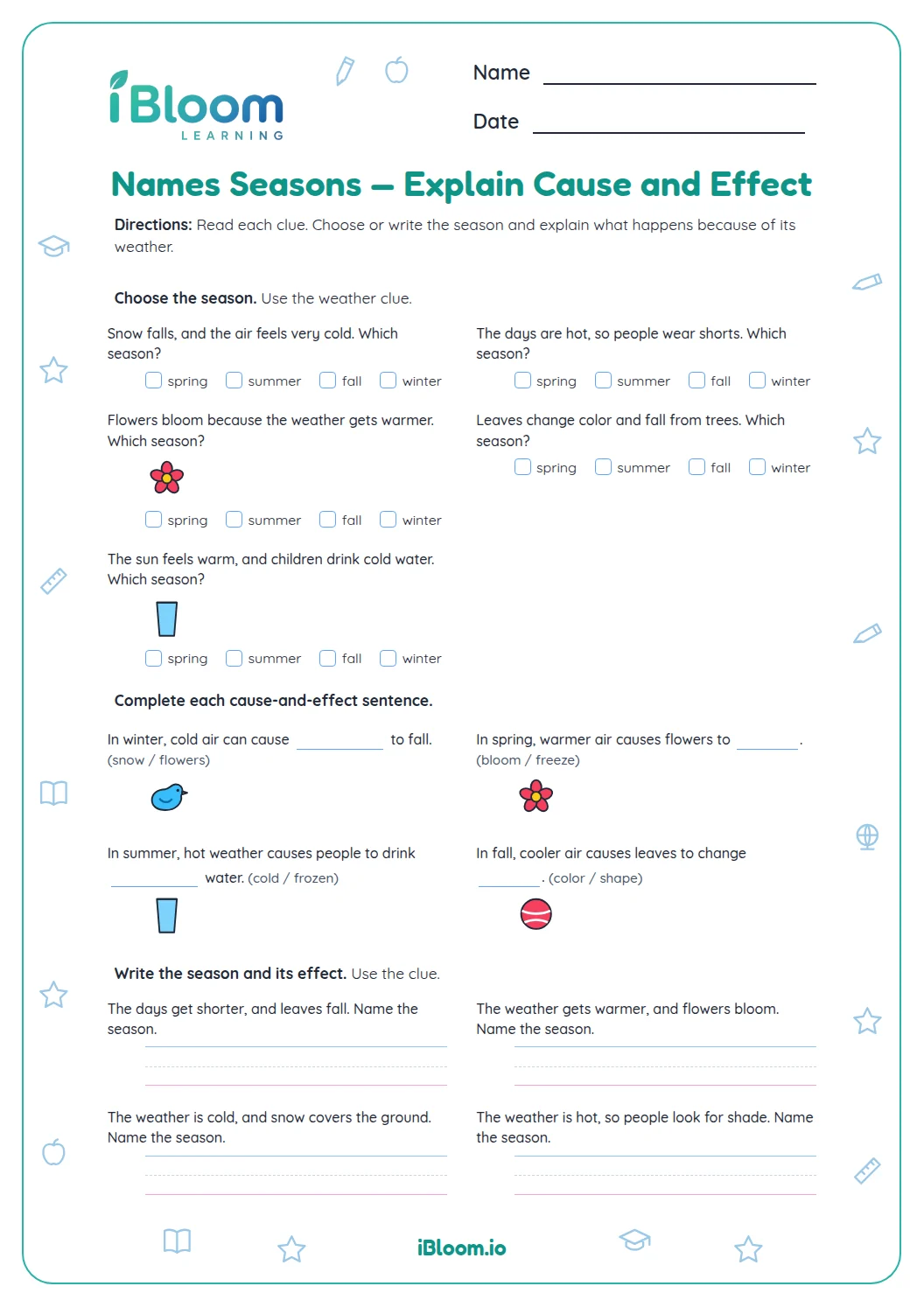
This Grade 1 printable gives 12 questions about naming seasons from familiar weather and nature clues. Learners choose a season for short clues, then write season names in everyday situations. A separate answer key is included.
What clues help name a season?
Look for details about temperature, snow, flowers, or leaves. “Leaves change color and fall” points to fall.
Can one clue be enough?
A clear clue can point to one season. A snowy ground or snowman strongly suggests winter; new flowers and buds suggest spring.
How can I explain a season clue?
Name the season, then connect it to one detail in the clue. For example, “Winter, because it says snow covers the ground.”
How to use this worksheet
- 1Read the whole clue.
- 2Notice the weather or nature detail.
- 3Choose the season that best matches.
- 4For a written response, name the season and quote a clue in your own words.
- 5Check that the clue supports your choice.
Common mistakes and quick fixes
The mistake
Choosing summer for any sunny day.
The fix
Look for the full clue, including temperature or plant changes.
The mistake
Mixing spring flowers with fall leaves.
The fix
Spring has new growth; fall has leaves changing and falling.
The mistake
Naming a season without using the clue in a written answer.
The fix
Add the weather or nature detail that supports the season.
What to practice next
Make more practice
Further reading
Questions parents and teachers ask
What clues show that it is fall?
Changing and falling leaves are clues for fall. Learners connect details such as colorful leaves with a season, then use evidence in two short responses. The separate answer key gives sample evidence statements for those questions on page two.
What season has new flowers and buds?
Spring is the best match for new buds and flowers in these questions. Learners use the plant clue to support the season they name. Other questions use details such as hot days, snow, or changing leaves throughout the worksheet.
Does every warm day mean it is summer?
A single warm or sunny day may not identify a season by itself. Read the entire clue and consider details such as snow, flowers, long days, or falling leaves. The questions ask for the season that best fits each description.
How many questions are included?
There are 12 questions across two worksheet pages. They include season choices, written season names, and two short responses that use evidence from the clue provided. A separate answer key is included so families can review each response together.
How should a child use a season clue?
Name the season, then point to a detail in the clue that supports it. For example, “Winter, because the clue mentions snow.” The answer key gives the season names for these questions, so an adult can help the child explain the match aloud.