




About this worksheet
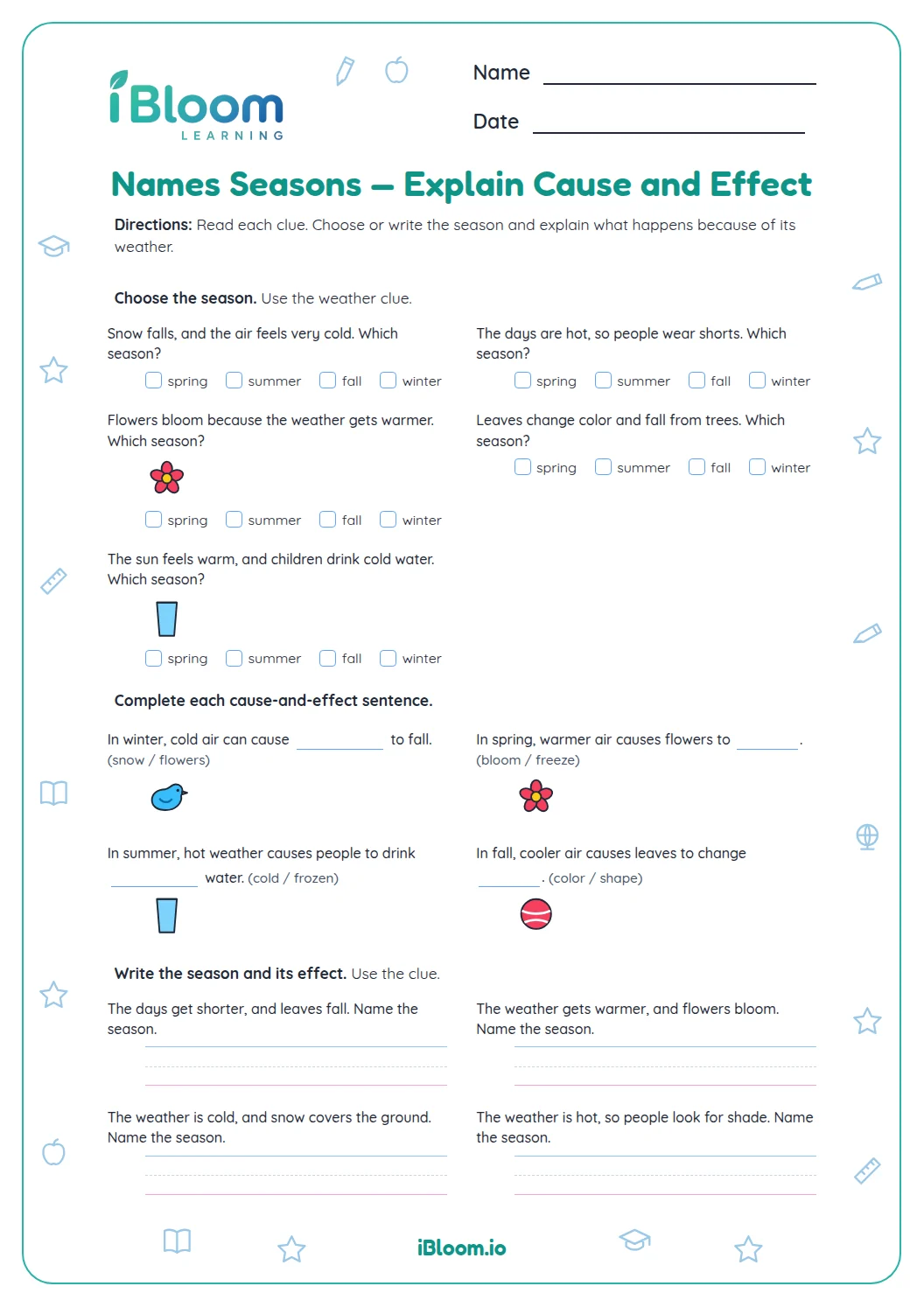
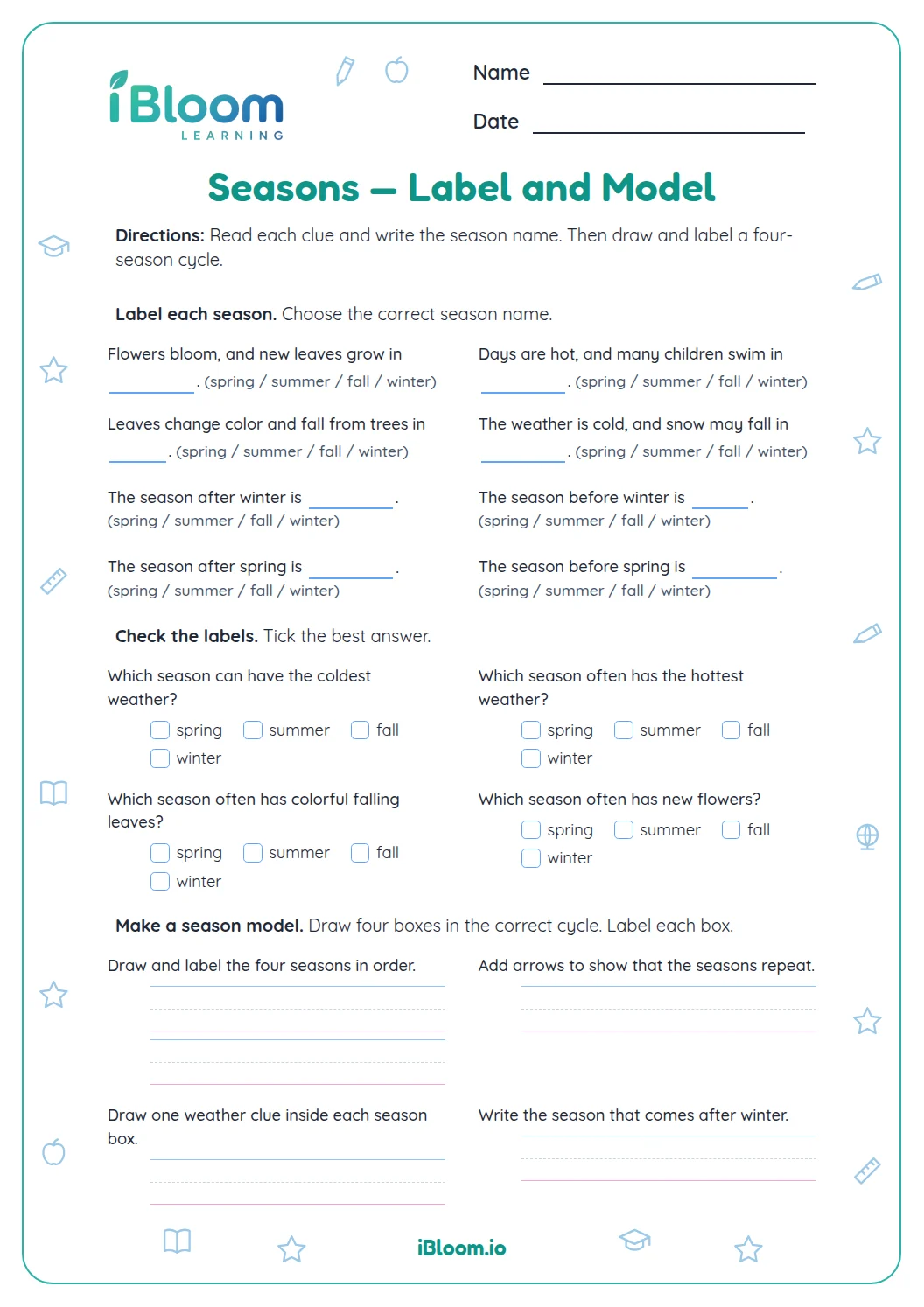
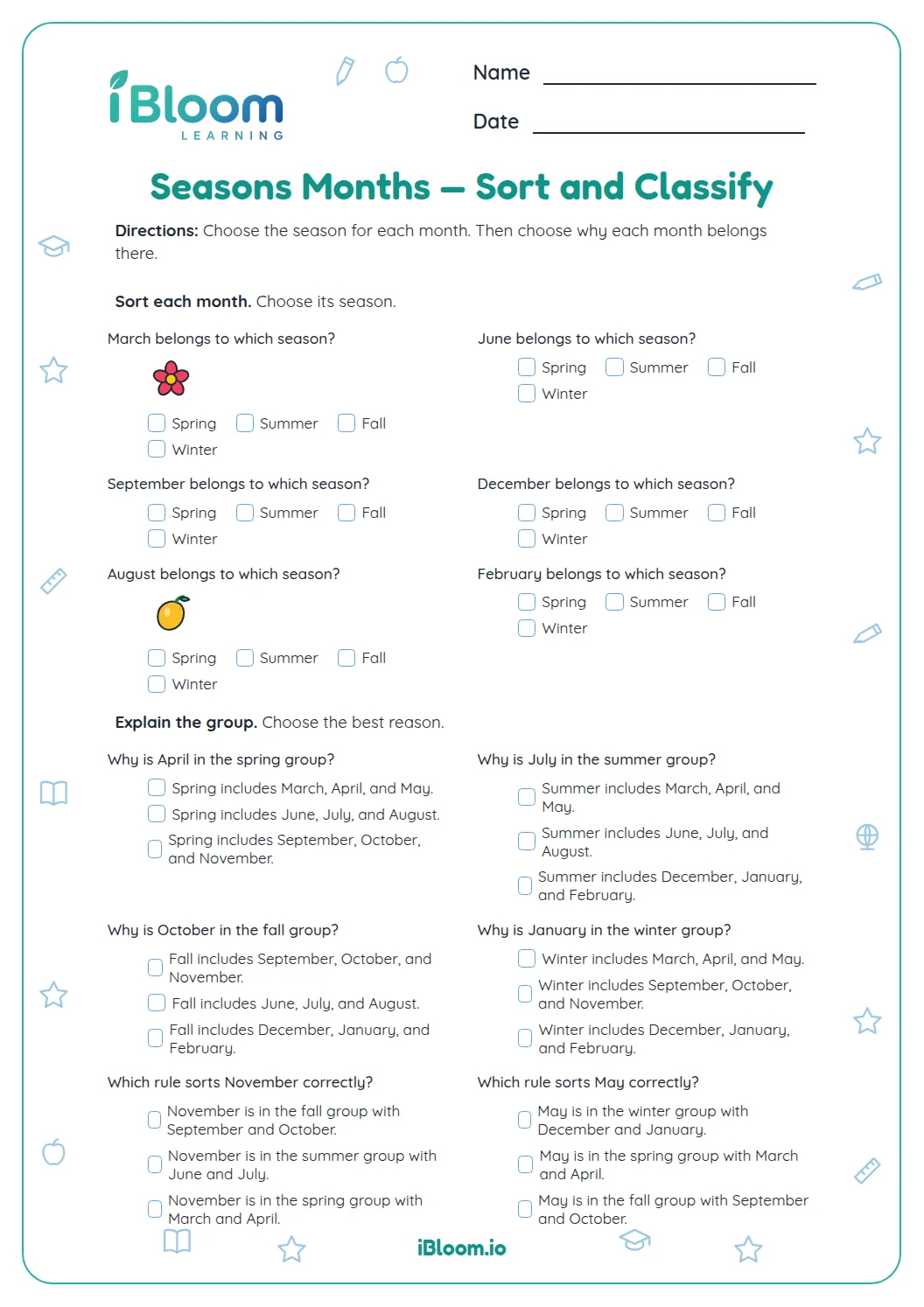
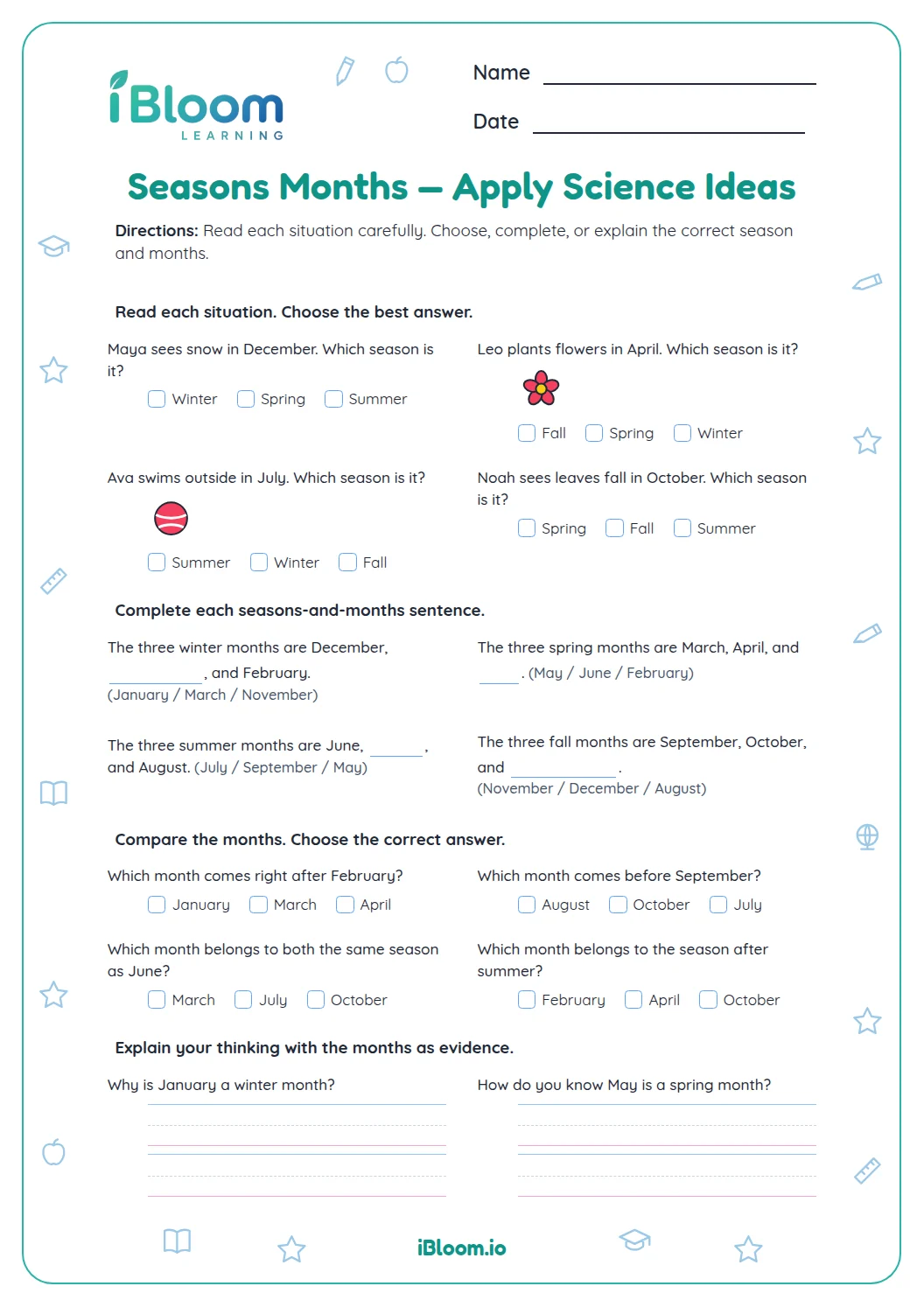
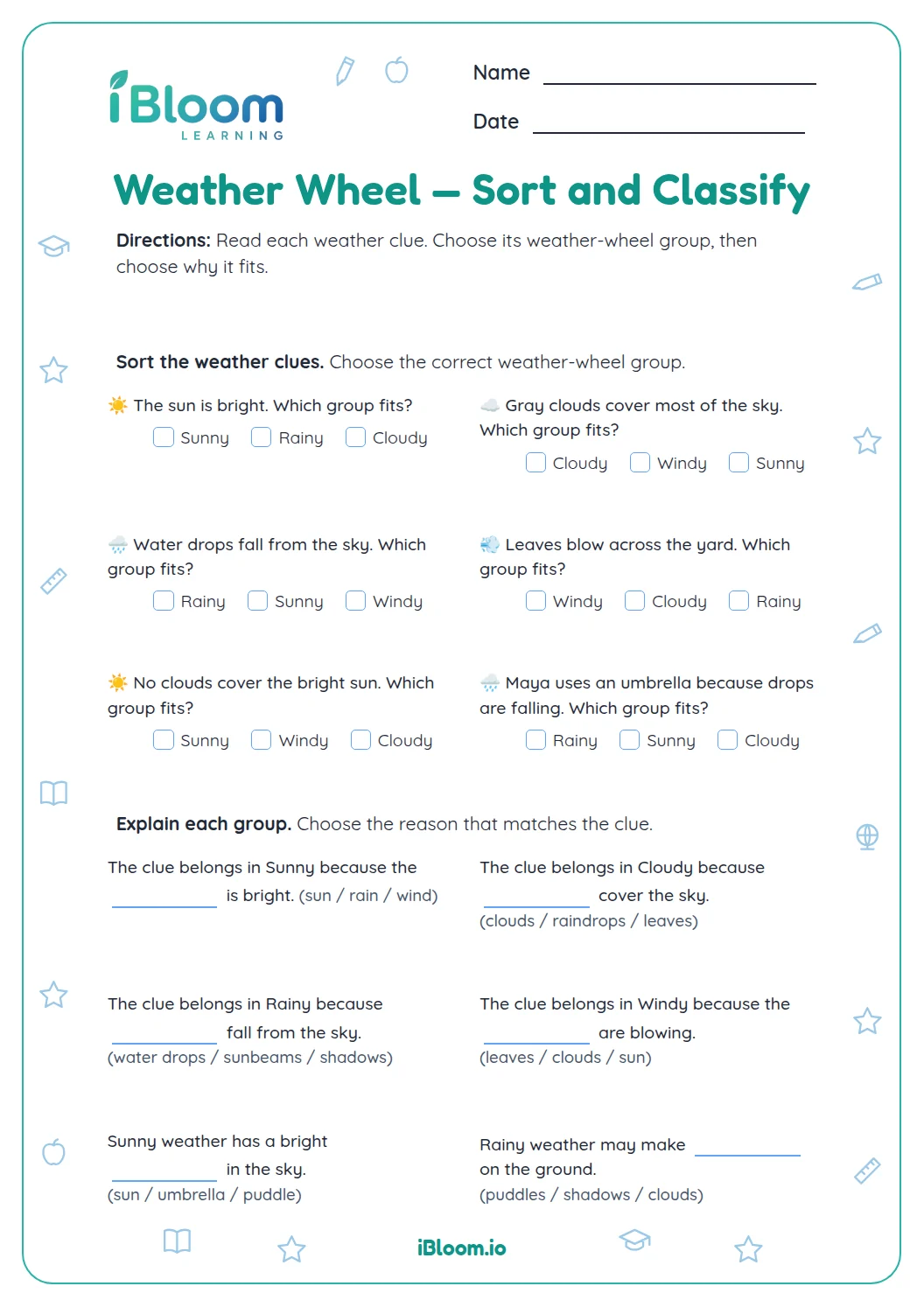
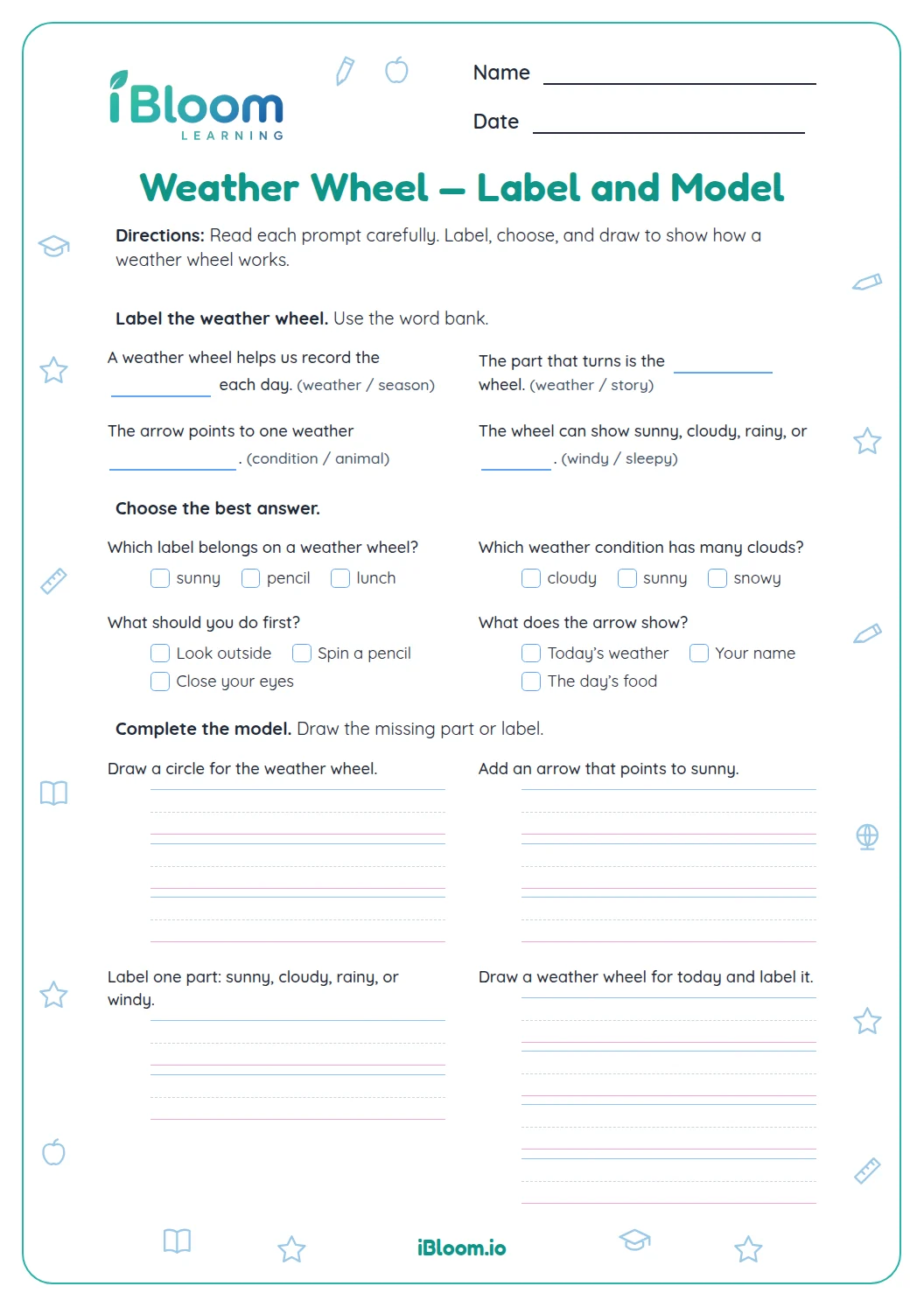
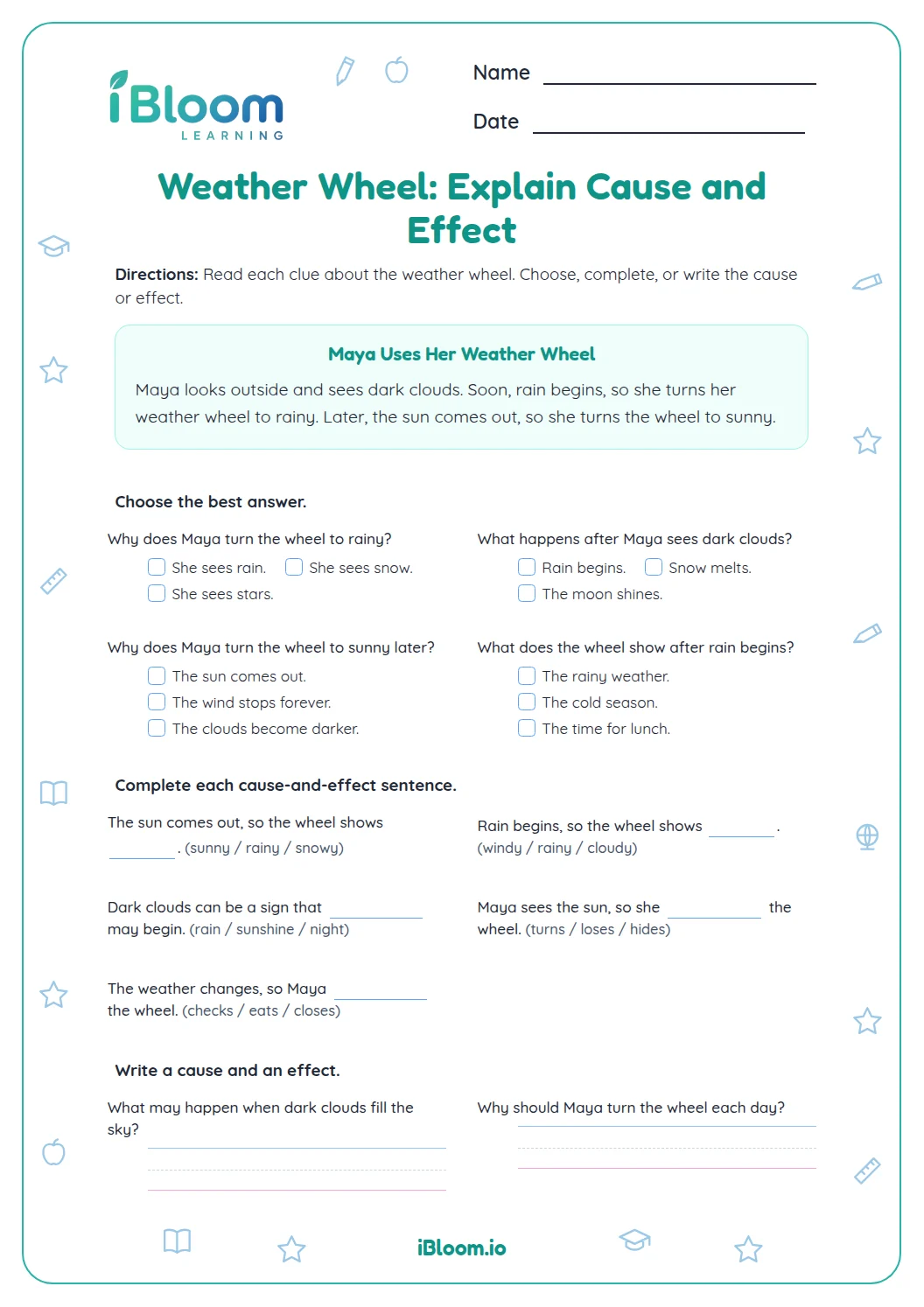
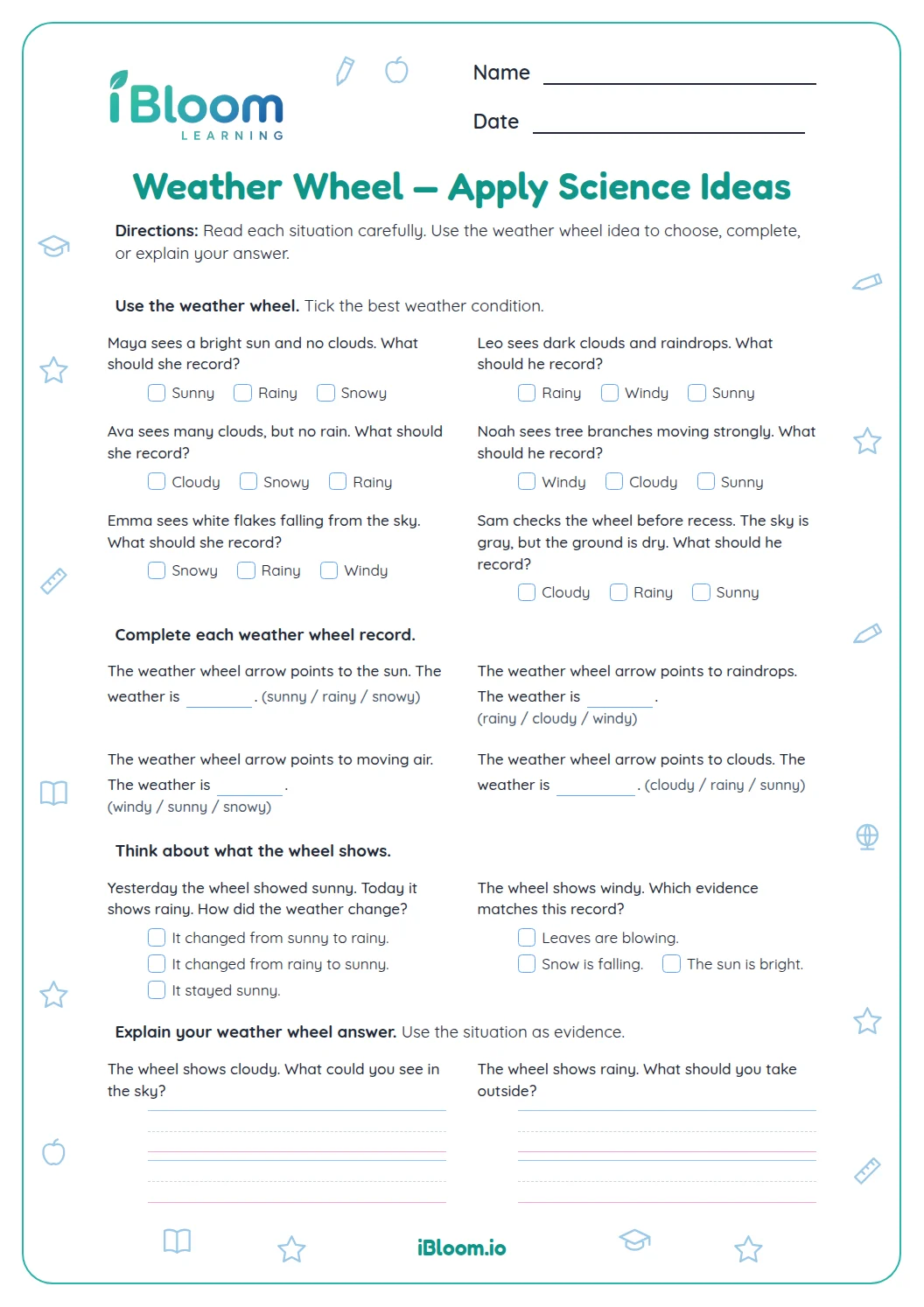
This Grade 1 science worksheet helps children classify familiar clues by season and connect each clue to a reason. Part A has six season choices; Part B has eight questions about why a clue fits. The separate answer key supports checking and discussion.
How can you classify a season clue?
Look at the whole clue and choose the season it best describes. New buds and blossoms often point to spring; colorful falling leaves are a fall clue.
- 1A child builds a snow fort outdoors. Winter is the season that best fits the clue.
How can you explain why a clue fits?
Connect the clue with a seasonal pattern. For example, new blossoms are a spring clue because plants begin growing again.
Can seasonal clues vary by place?
Yes. Weather and plants differ by region, so these questions use familiar patterns rather than promises about every location or day.
How can I use this worksheet?
- 1Read the whole clue before naming a season.
- 2Think about weather, plants, daylight, or the activity described.
- 3Choose the season that best fits the clue.
- 4Check the key and discuss clues that can vary by location.
Common mistakes and quick fixes
The mistake
Using one day’s weather to name the season.
The fix
Read the prompt again and check the evidence before choosing or writing an answer. Consider the broader pattern and other clues in the sentence.
The mistake
Mixing up fall and spring because both can be mild.
The fix
Read the prompt again and check the evidence before choosing or writing an answer. Look for leaves falling or harvest clues for fall, and new buds for spring.
The mistake
Assuming every place has the same weather.
The fix
Read the prompt again and check the evidence before choosing or writing an answer. Treat the clue as a common seasonal pattern; local weather can differ.
What to practice next
Make more practice
Questions parents and teachers ask
Which seasons are included?
The worksheet uses spring, summer, fall, and winter. In Part A, children write a season for each of six clues. In Part B, they choose a reason that explains a seasonal clue, then check with the separate answer key. All four season names appear in answer choices.
How many questions are included?
There are 14 questions across two worksheet pages. Six ask children to classify clues by season, and eight ask them to select why a clue fits. A separate answer key lists the correct response for each question. The question numbers match the key.
What kinds of clues do children classify?
The clues describe familiar weather, plants, and activities, such as new blossoms, snow, pumpkins ready for harvest, and leaves drifting down. Children connect each detail with the season it best describes, then identify a reason for other clues. The wording keeps each clue in its season context.
Do seasonal patterns look the same everywhere?
No. Weather and plants vary by region, and a season does not guarantee a particular kind of day. The worksheet uses familiar patterns; children can also compare them with what they notice locally and discuss differences. Compare the clues with what the child observes locally.
How can I help a child who is unsure?
Ask the child to reread the whole clue and name the detail that matters, such as new buds or snow. Then compare the choices. In Part B, ask which reason connects that detail to the named season before checking the key.