








About this worksheet
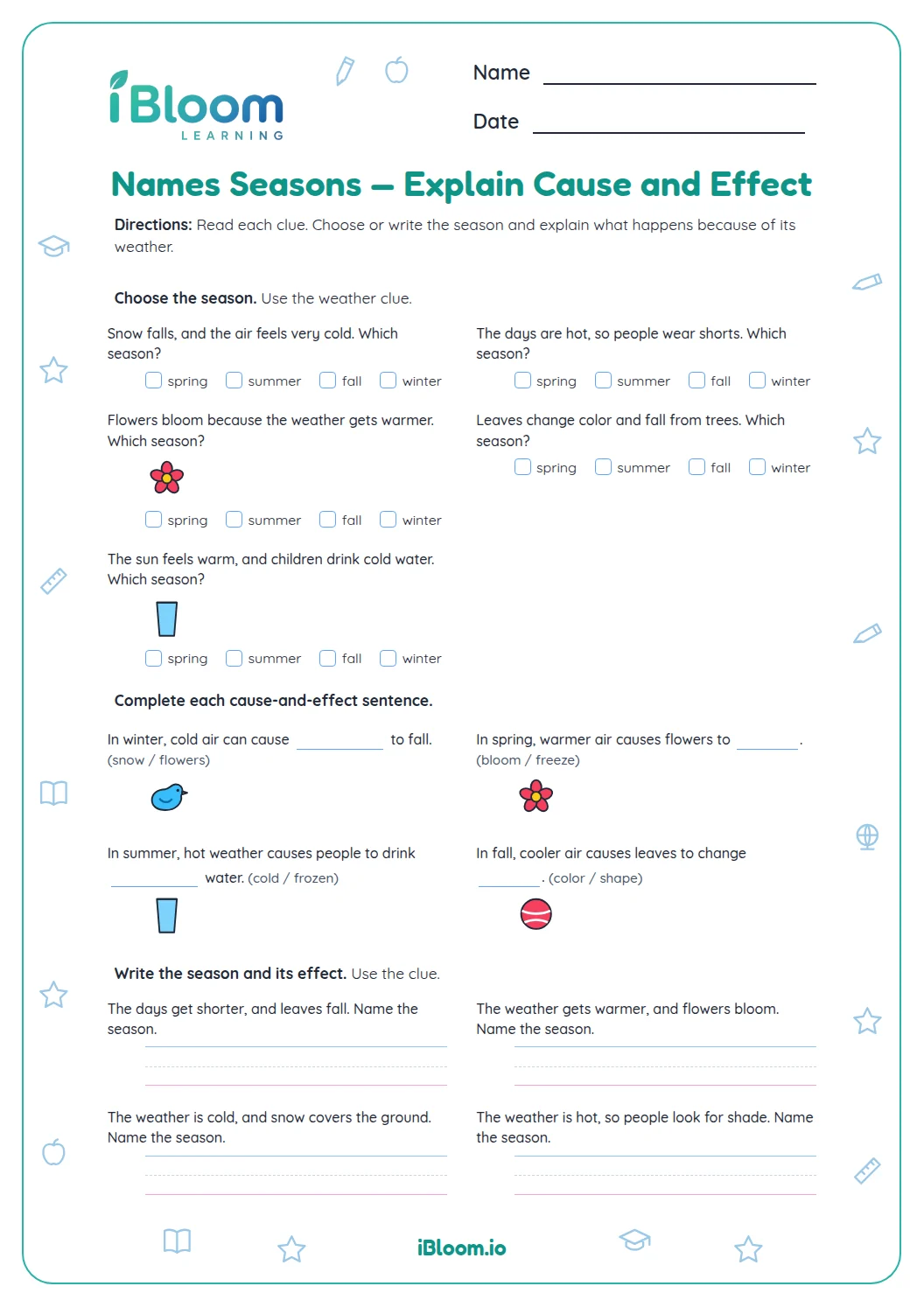
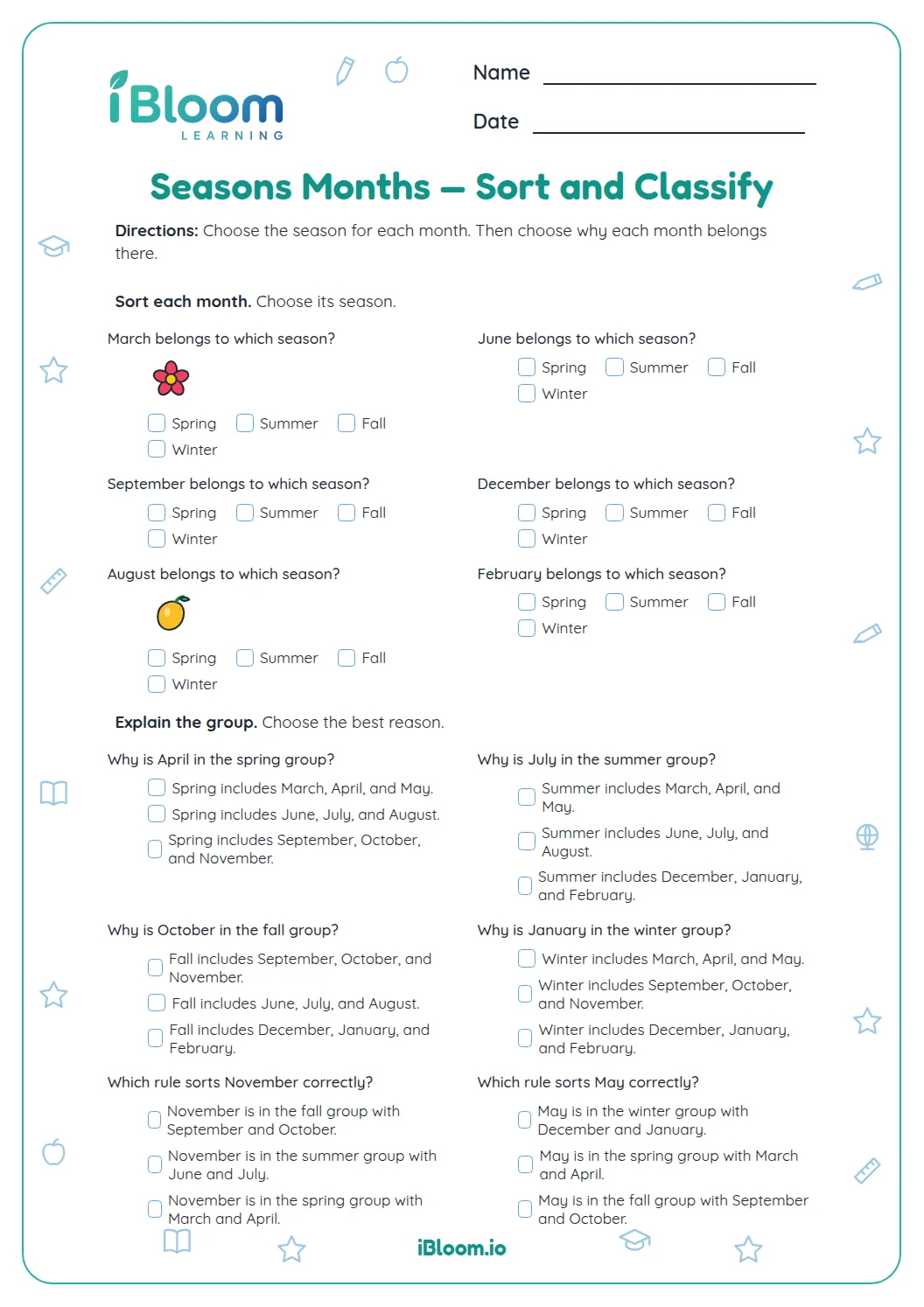
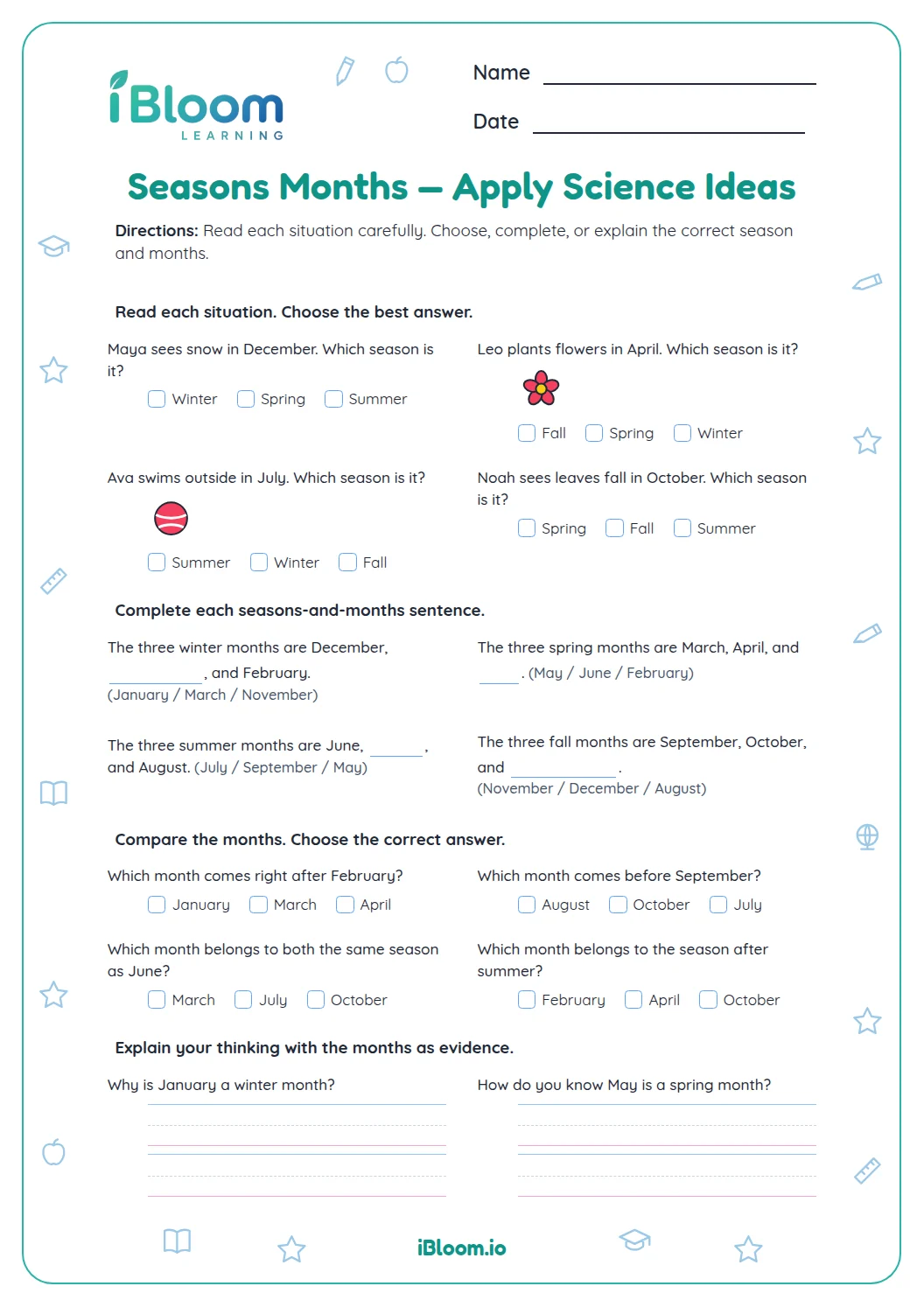
This free Grade 1 science printable helps children name seasons from familiar weather and nature clues and model the repeating order of the year. It includes 14 questions with picture clues, multiple-choice practice, and a season-cycle model. The activities connect seasonal patterns with NGSS 1-ESS1-2. A separate answer key lists the season names and cycle answers.
Aligned to 1-ESS1-2
How can weather help name a season?
The first questions match familiar weather or nature clues to a season. The picture clues show a snowflake and tree or warm sun and flower alongside the words.
- 1Clue: leaves turn colors and drop from trees.
- 2Choose the season that matches this nature pattern.
- 3Answer: fall
What order do the seasons follow?
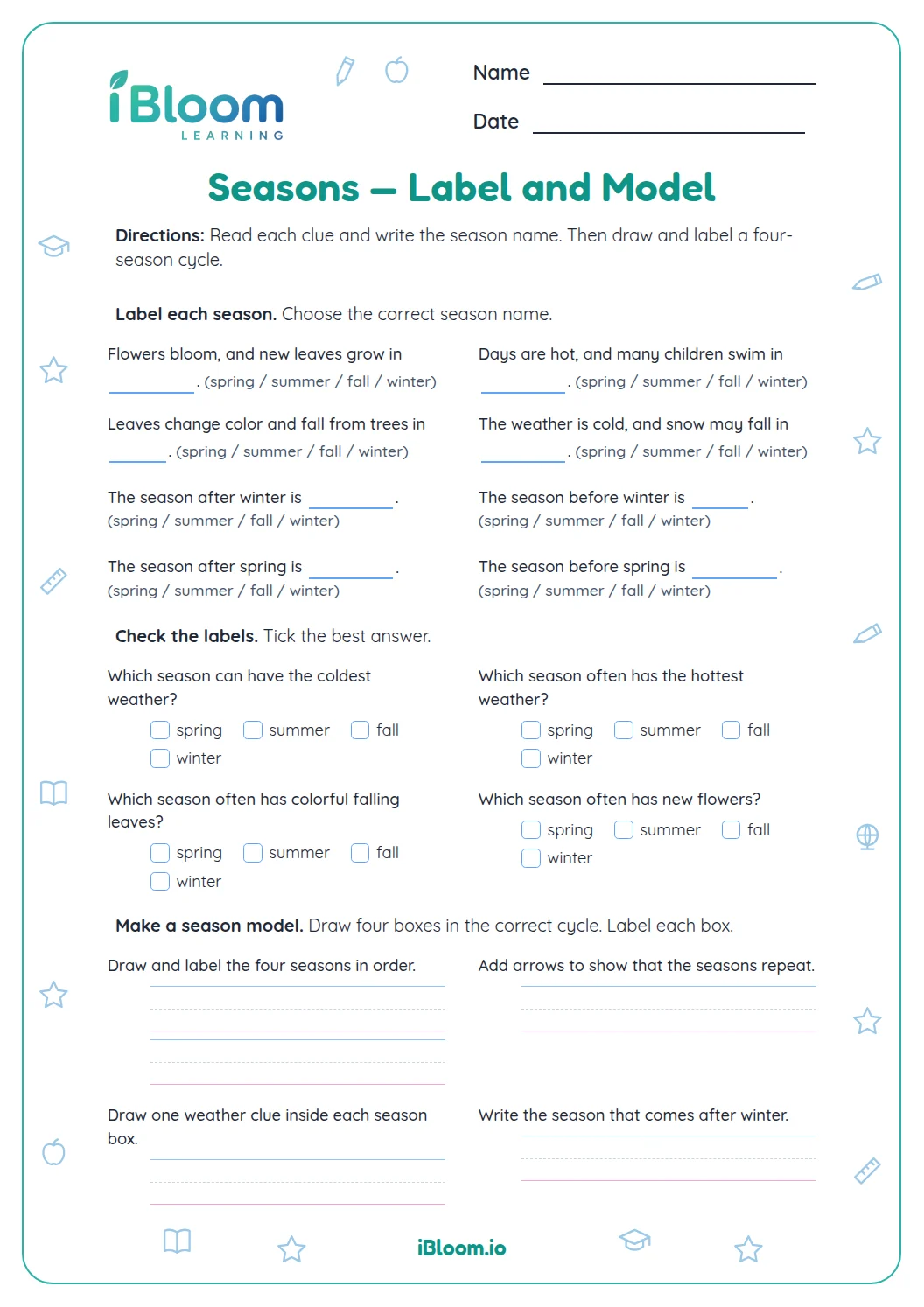
The seasons repeat in a cycle: winter, spring, summer, fall, then winter again. A cycle model helps show what comes before and after each season. The questions ask children to complete the pattern and name the next season.
How can I show a season with a drawing?
Question 13 models the repeating cycle: winter, spring, summer, fall, then winter again.
What does the worksheet practice?
The 14 questions use weather and nature clues, season choices, and fill-ins that model the repeating cycle. Picture clues support two items, and the answer key gives the season response for each question.
How can I use this worksheet?
- 1Say the four season names together in order.
- 2Read a weather or nature clue and choose the season it suggests.
- 3Use the cycle questions to check what comes next or before.
- 4Connect each clue to a familiar seasonal pattern.
- 5Review the answers with the key.
What mistakes should children check?
The mistake
Mixing up fall and spring because both can be cool.
The fix
Use nature clues too: new flowers point to spring; falling colored leaves point to fall.
The mistake
Treating one day’s weather as proof of a season.
The fix
Think of common patterns across a season rather than a single day.
The mistake
Skipping a season in the cycle.
The fix
Say winter, spring, summer, fall, then repeat the cycle.
Next Generation Science Standards alignment
This page uses observations of seasonal weather and nature patterns.
Observe seasonal patterns and connect the amount of daylight to the time of year.
On this sheet: Children use seasonal clues and a cycle model to describe recurring patterns across the year.
Show the official wordingHide the official wording
Make observations at different times of year to relate the amount of daylight to the time of year.
What to practice next
Make more practice
Further reading
Questions parents and teachers ask
What are the four seasons in order?
The repeating order is winter, spring, summer, and fall, followed by winter again. Question 13 asks children to complete part of that sequence. Saying the four names in order helps learners see how each season leads to the next.
What clues can help a child identify fall?
Cooler air and leaves that change color or fall are familiar fall clues. The worksheet pairs these with a leaf and tree picture clue. Children can use a weather or nature detail to support the season they name.
Are weather clues exactly the same every year?
No. Weather can vary from day to day and from place to place. This worksheet uses familiar examples, such as cold days for winter and warm sunny days for summer, to practice common seasonal patterns rather than predict every day’s weather.
What should my child draw for the final question?
Question 14 asks which season follows summer in the repeating cycle. The answer is fall. Another item asks children to place summer between spring and fall, so they practice both the next season and the full order. Children can check the cycle by saying all four names aloud.
How does the season cycle help with the questions?
The cycle makes the order visible: winter comes before spring, spring before summer, summer before fall, and fall before winter. If a child is unsure what follows a season, have them say the four names in order and point to the next one.
How many questions are included?
There are 14 items about season clues, weather patterns, daylight, and the repeating order. The printable includes a worksheet and a separate answer key. Children can say the season names aloud before choosing an answer and checking the key.