










About this worksheet
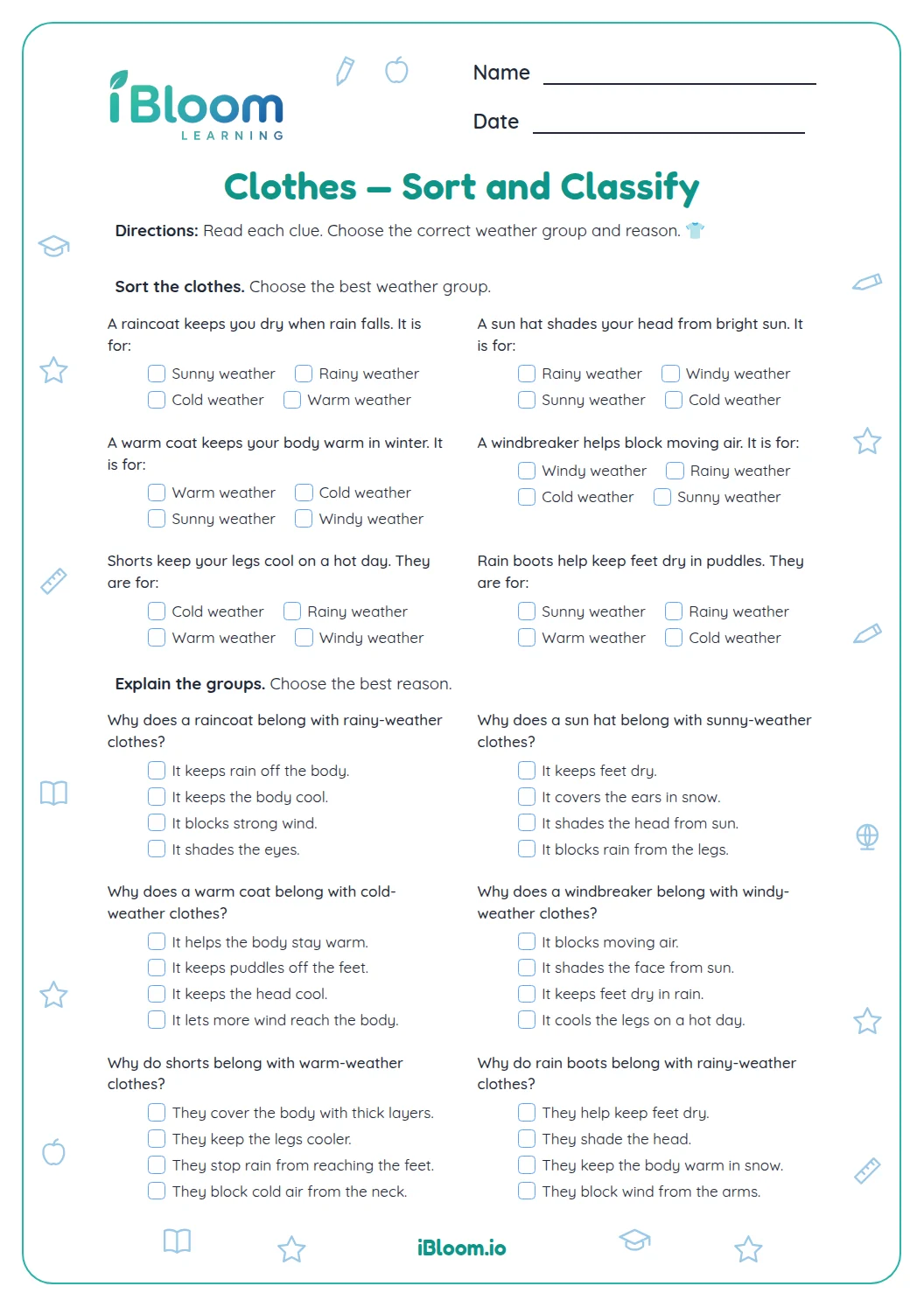
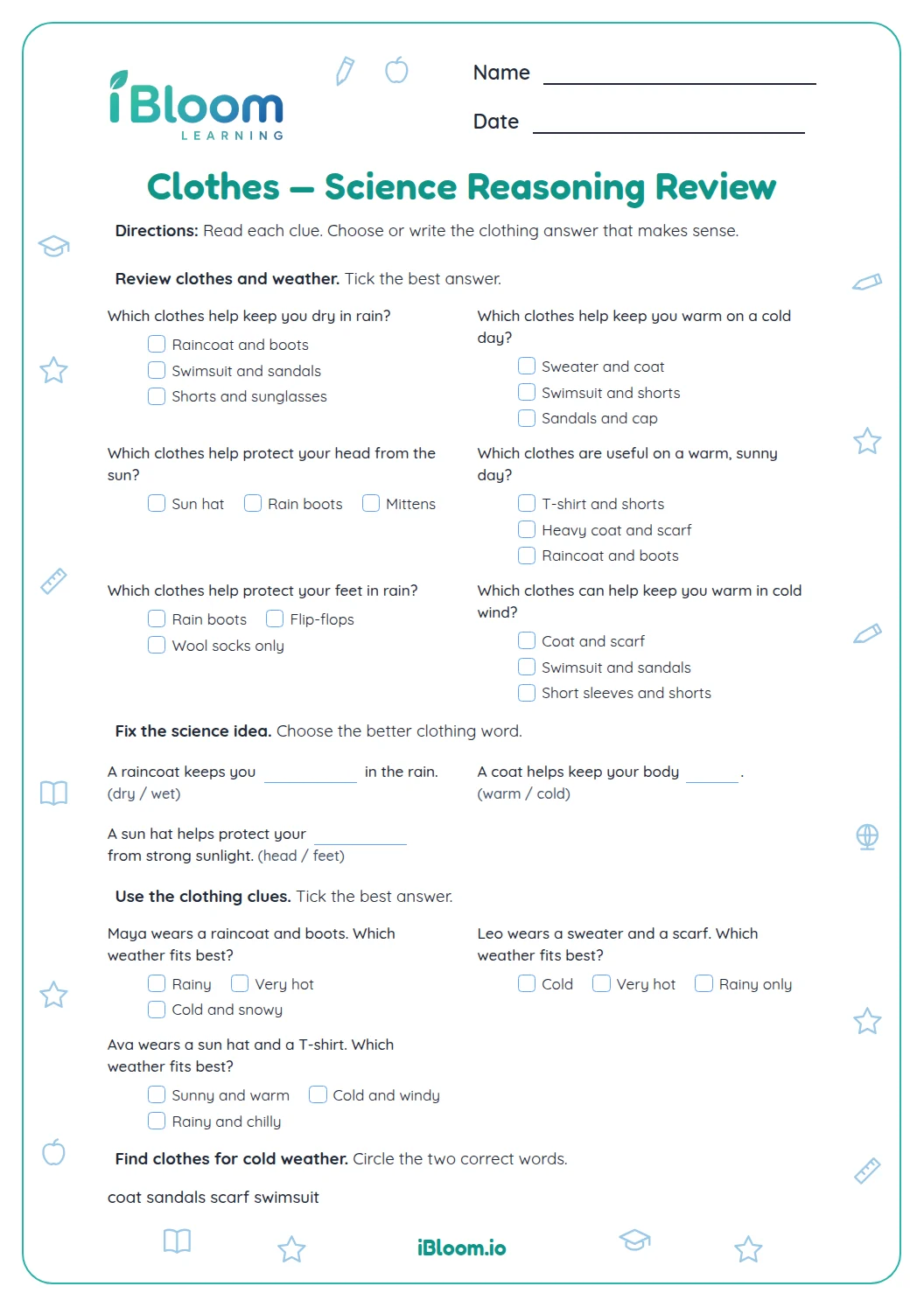
Children use clues about rain, wind, sun, and snow to choose clothing for warmth, shade, and staying dry. They answer choice questions and explain how an item helps in the described conditions. The answer key offers sample explanations.
How do weather clues guide clothing choices?
Rain, wind, sun, and snow offer clues about what clothing may help. A raincoat helps keep clothing dry, gloves help keep hands warm, and a hat can provide shade. Part A asks students to match clothing choices to weather conditions.
- 11) Rainy walk → raincoat; it helps keep clothing dry.
- 23) Snow → gloves; they help keep hands warm.
Why choose layers for a cold or windy day?
A coat or sweater can add warmth on a cool or windy day. Gloves and hats cover parts of the body that may feel cold. Questions 2 and 10 connect cold conditions with useful layers.
How can a child explain an outfit choice?
A clear explanation names an item and how it helps in the described weather. “Boots help keep feet warm and dry in slushy snow” connects the clothing to the conditions. Parts B and C ask children to explain choices.
How to use this worksheet
- 1Read the weather clue first: rain, wind, sun, or snow.
- 2Think about whether the person needs warmth, shade, or help staying dry.
- 3Choose clothing that fits the conditions in the prompt.
- 4For a written answer, name the item and how it helps.
- 5Check that each item matches the weather described.
Common mistakes and quick fixes
The mistake
Choosing clothes for a different kind of weather.
The fix
Underline the weather word before choosing an item.
The mistake
Naming an item without explaining why it helps.
The fix
Add “to stay warm,” “to stay dry,” or another clear reason.
The mistake
Assuming one outfit works for every cold day.
The fix
Use the prompt’s specific clue, such as wind, snow, or slush.
What to practice next
Questions parents and teachers ask
What does this worksheet teach about weather?
The worksheet asks children to use simple weather clues to choose clothing that may help. Rain suggests an item that keeps clothing dry, while snow can call for warm layers and gloves. Students connect a condition with warmth, shade, or staying dry.
Why are pictures included in some questions?
The pictures show weather clues such as rain, clouds, sun, and snow. Children use the condition pictured with the question to choose clothing from the answer choices. The clothing itself is named in words, so the picture helps set the scene.
Can more than one outfit be a good answer?
More than one outfit can make sense in a written response. The key gives examples, such as a coat for a cold day, but a warm sweater may also work. Check that the clothing fits the specific weather and that the explanation tells how it helps.
How can I help without choosing the outfit for my child?
Ask your child to describe the weather first. Then ask whether the person needs warmth, shade, or help staying dry. These questions support the decision while leaving the child to choose clothing and explain how it fits the conditions.
Why should children notice the exact weather clue?
Rain, wind, sun, and snow suggest different clothing choices. A raincoat can help in wet conditions, while gloves help keep hands warm in snow. Looking closely at the weather clue helps children select an item that fits the situation.
What should my child practice next?
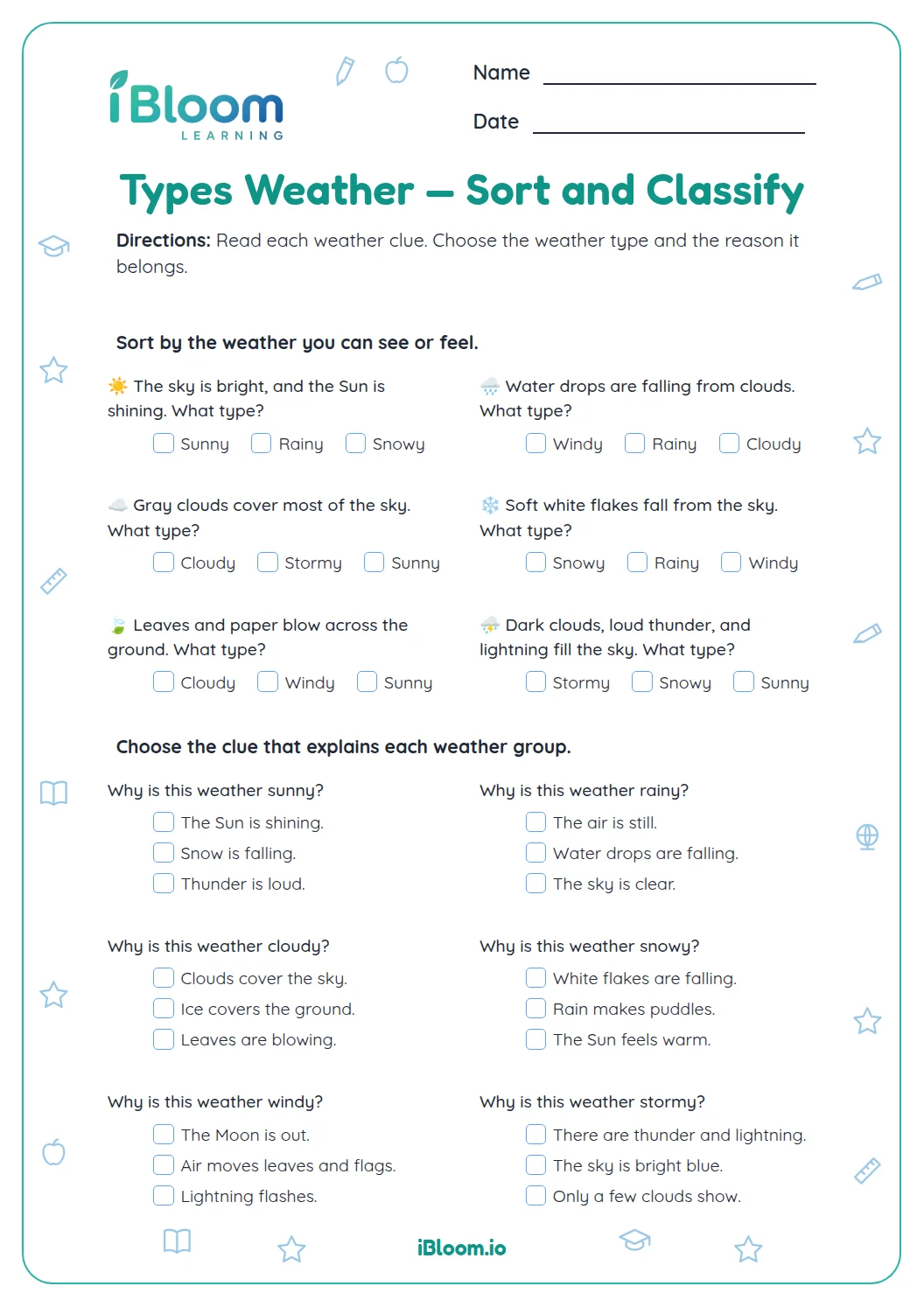
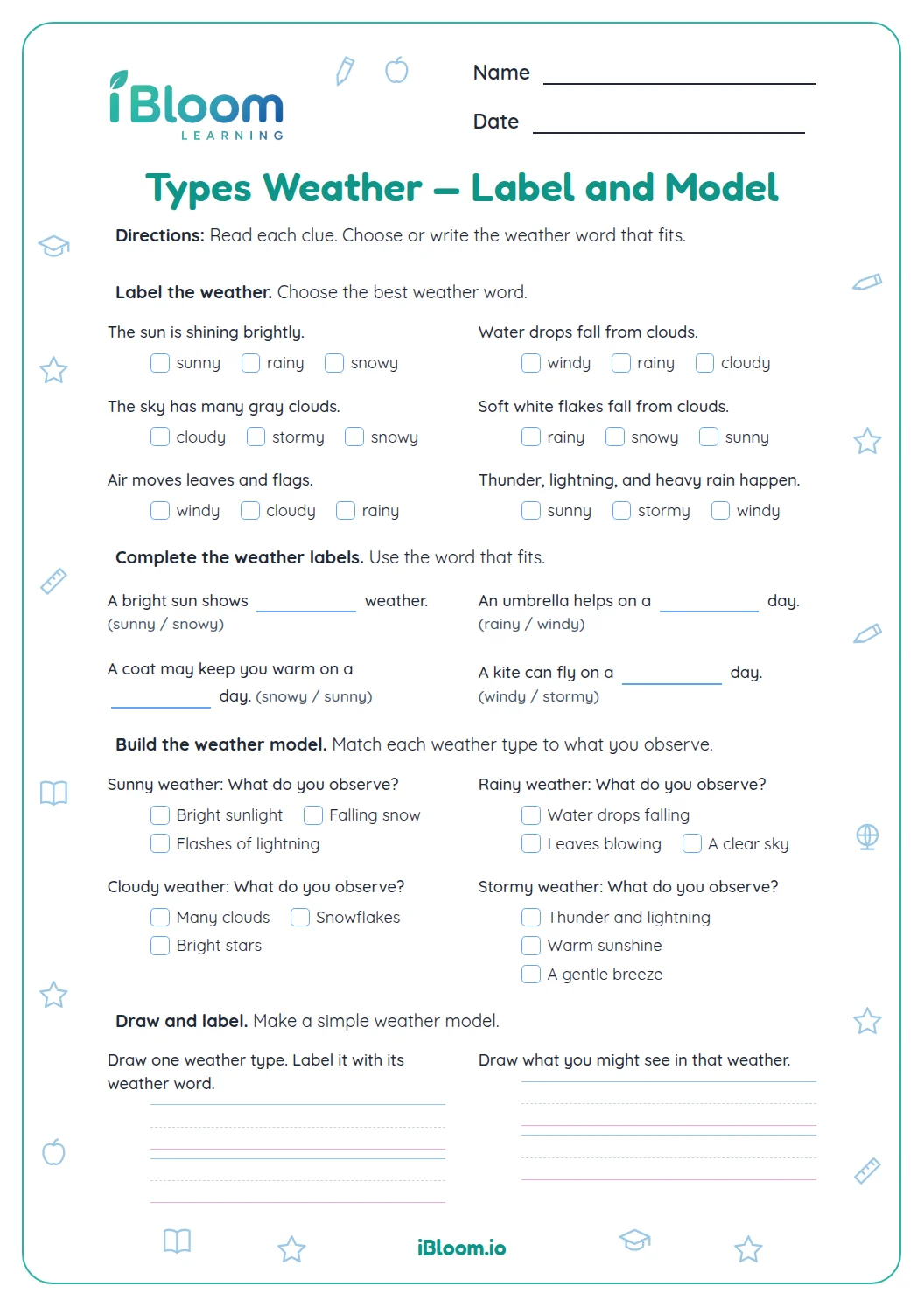
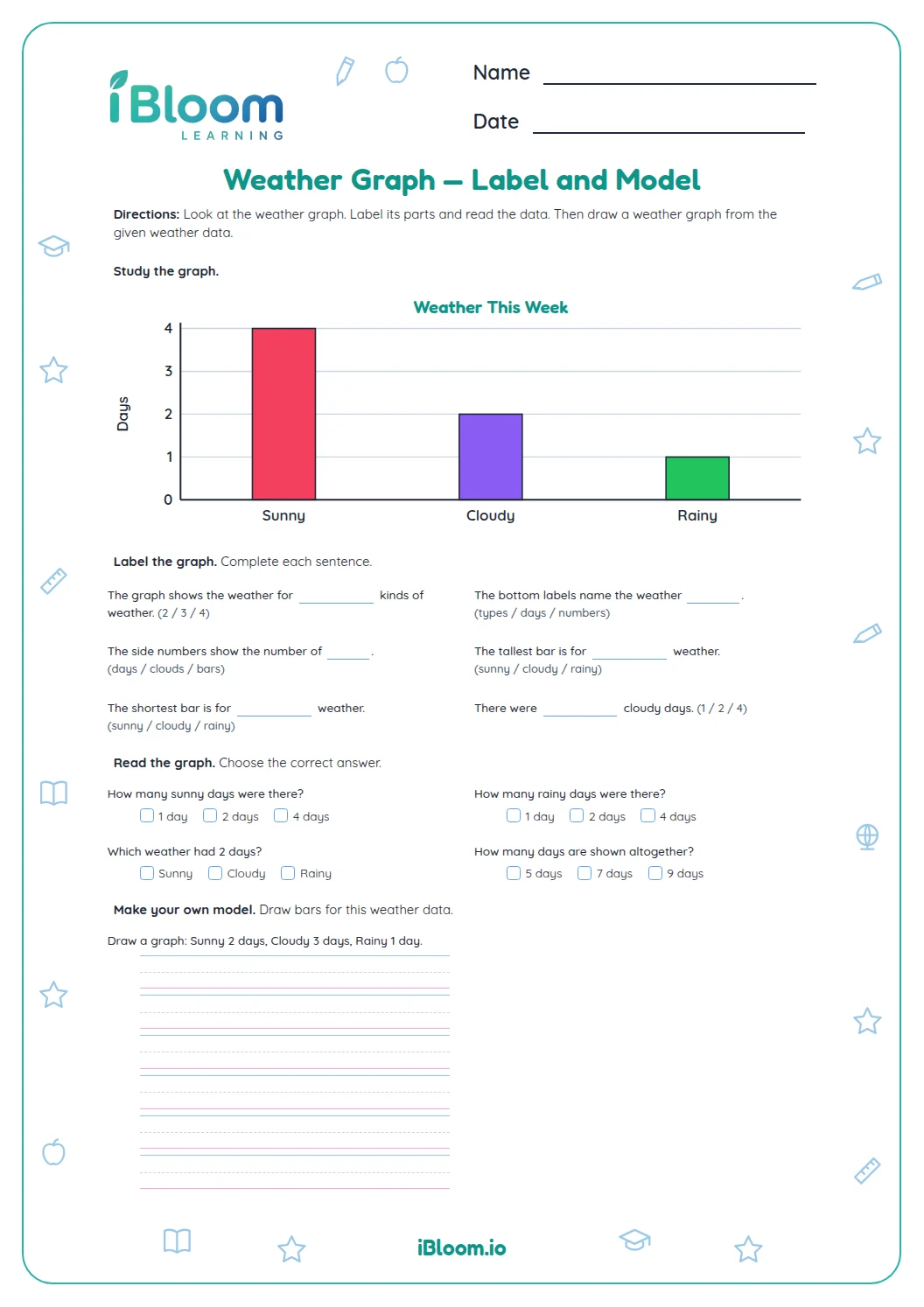
The Types of Weather page gives practice naming conditions. Seasons and Seasons and Months connect conditions to the year, while the Weather Graph page adds practice reading recorded observations. These topics extend the weather vocabulary used in this clothing activity.