
About this worksheet
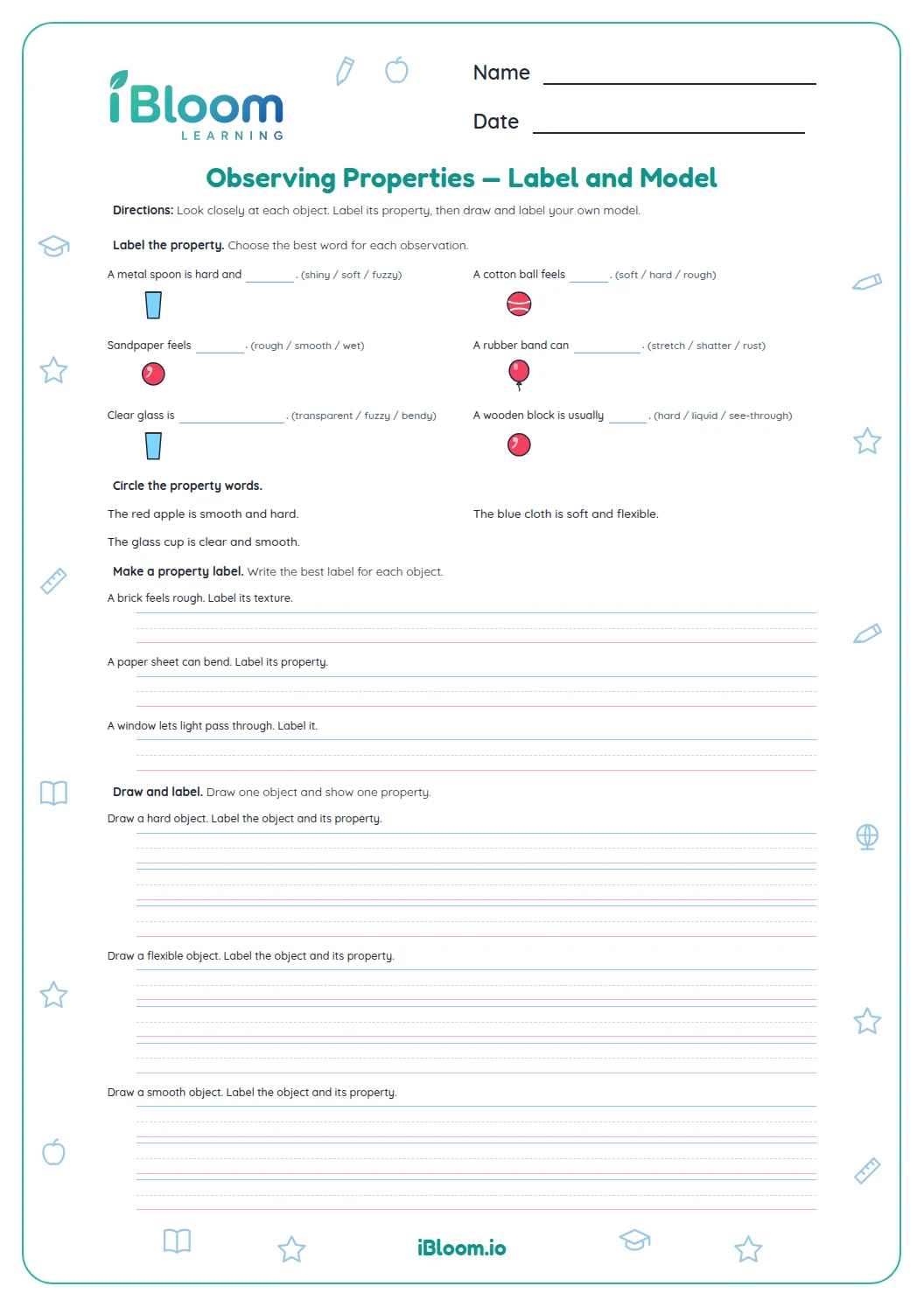
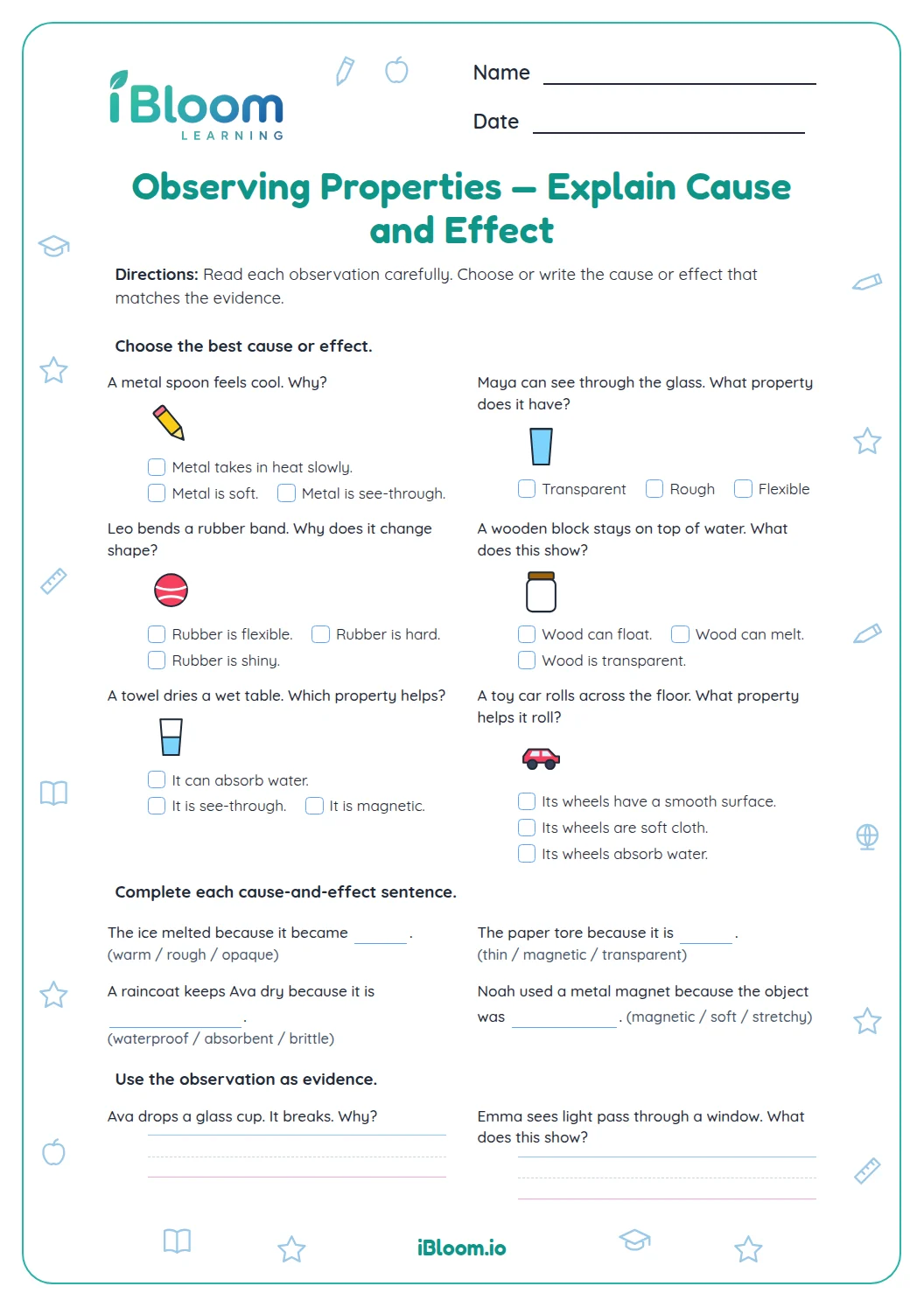
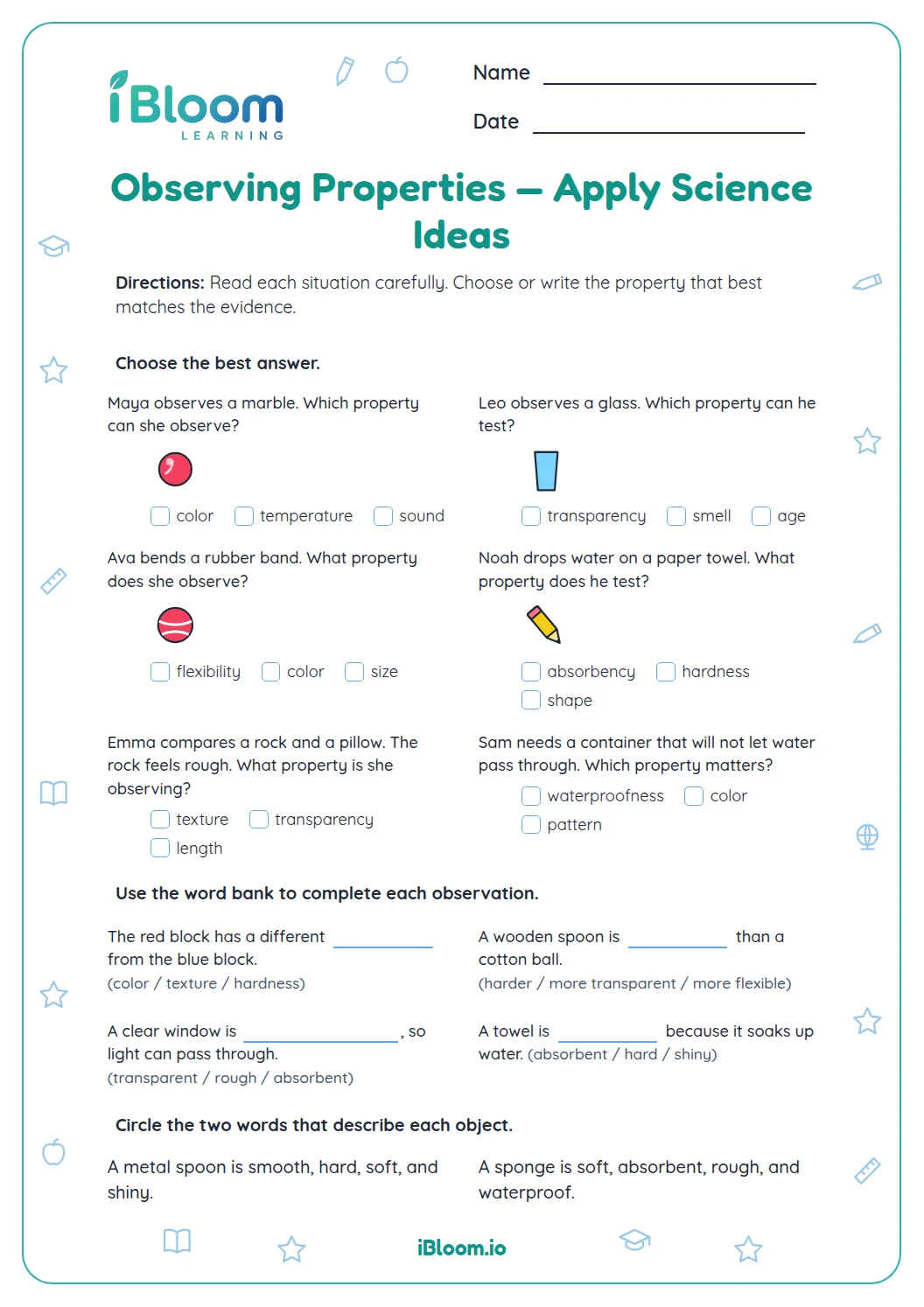
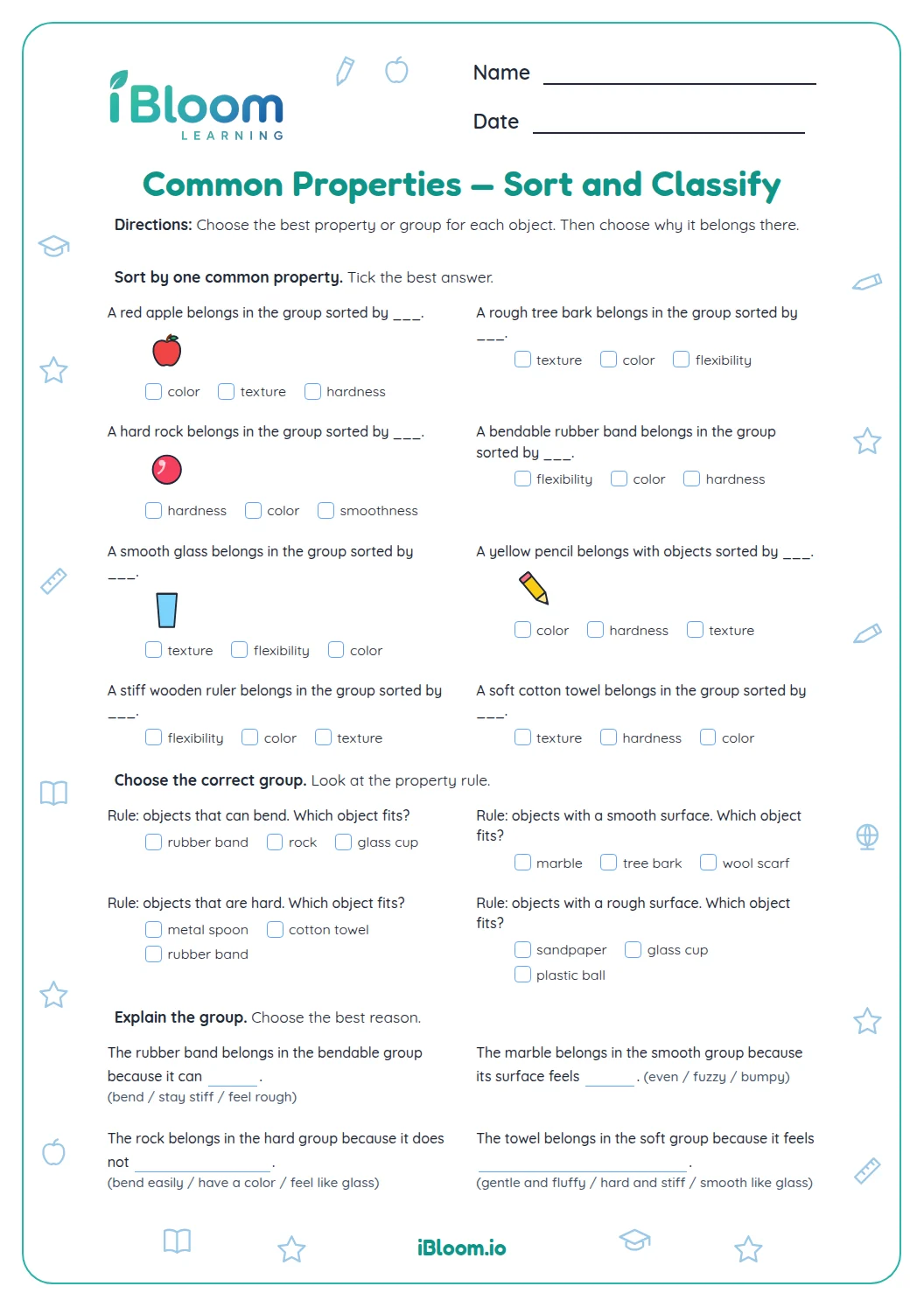
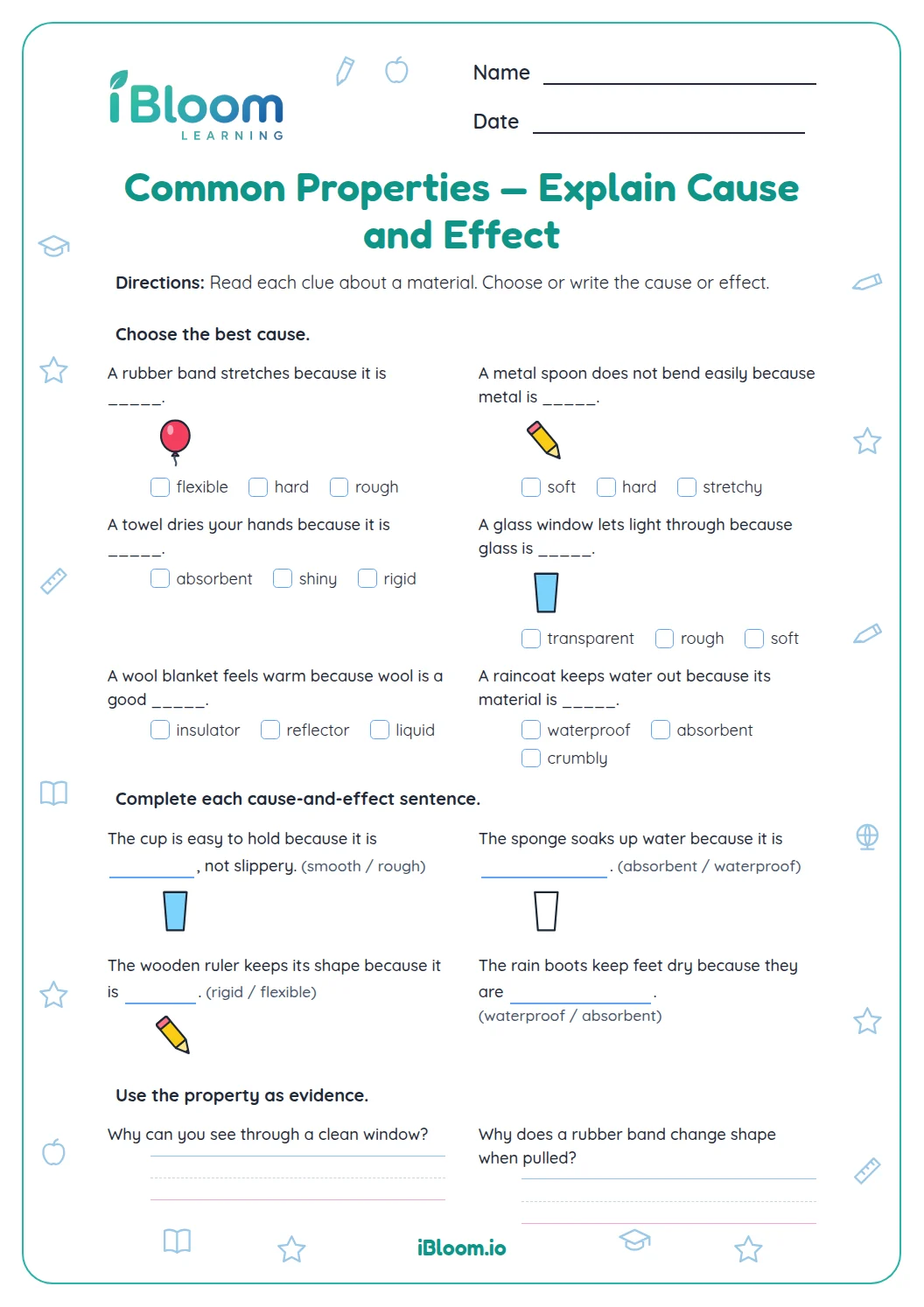
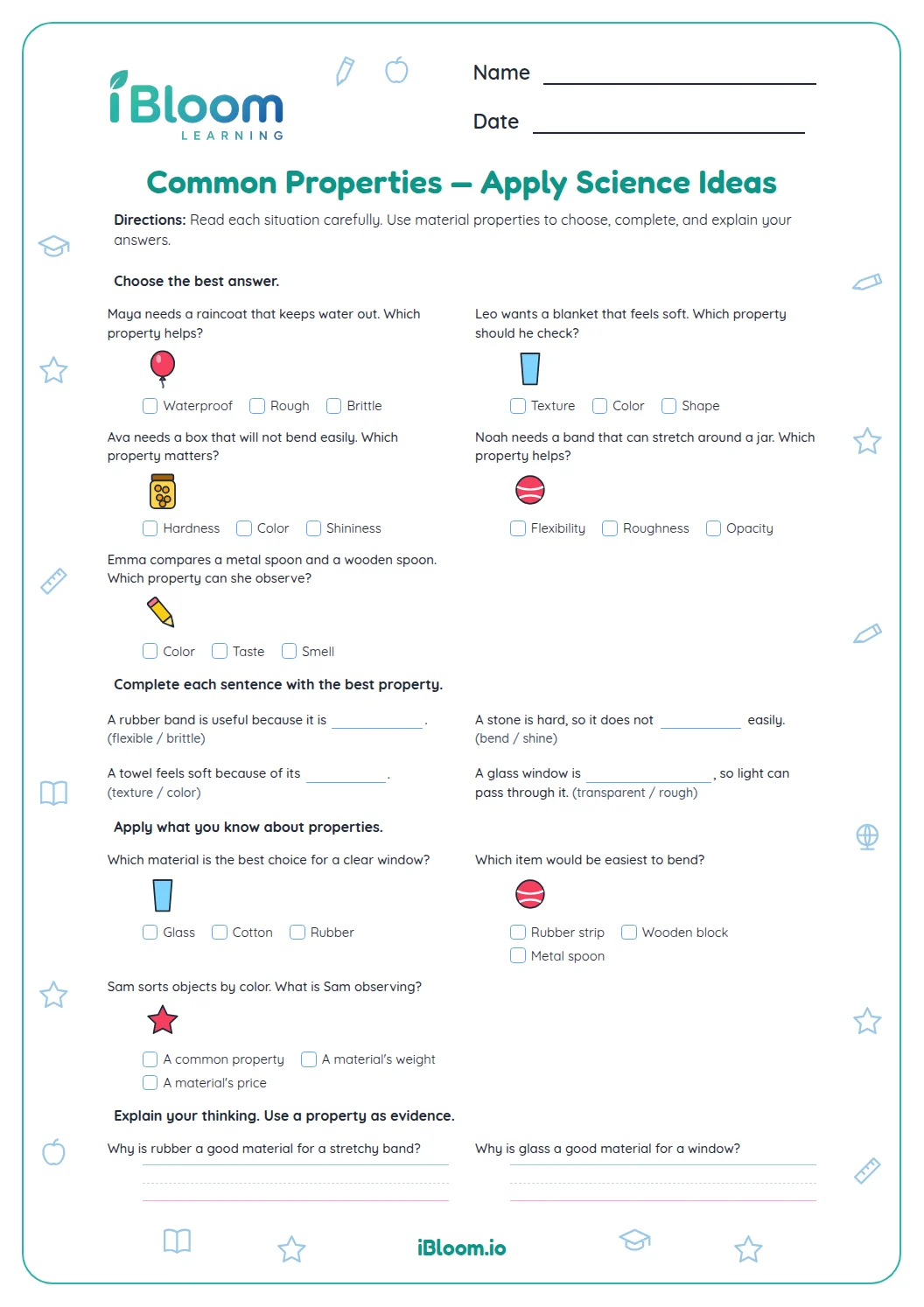
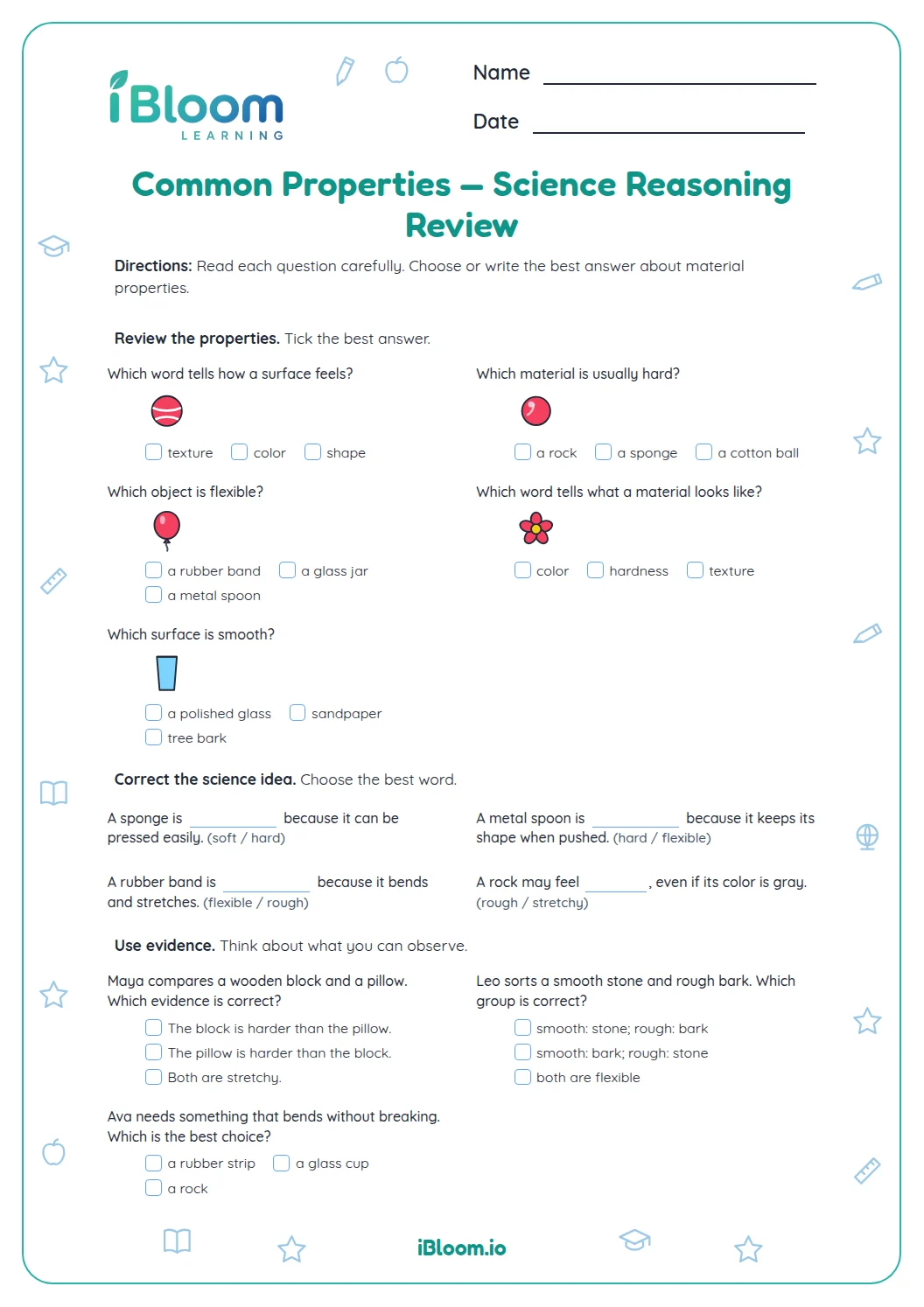
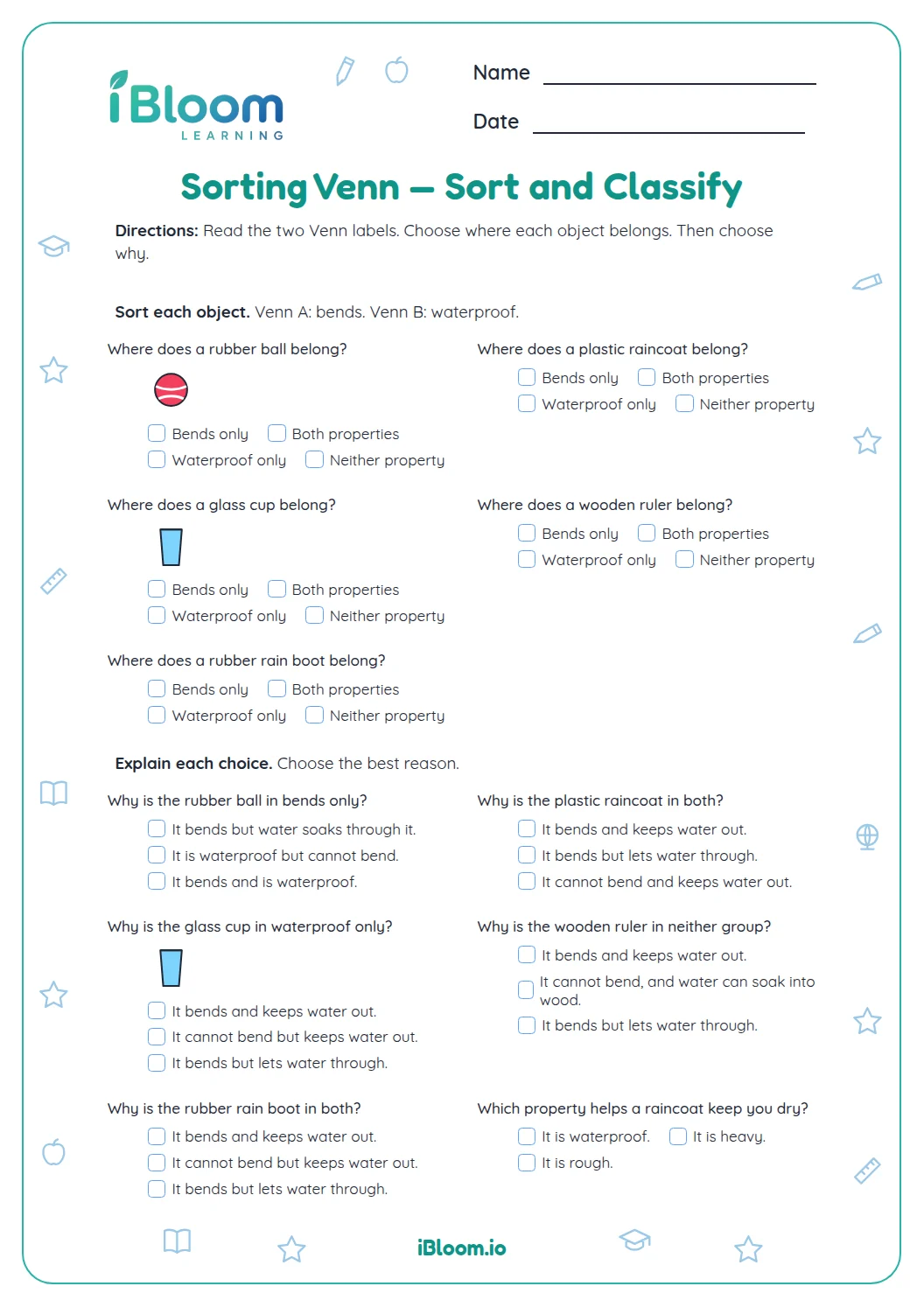
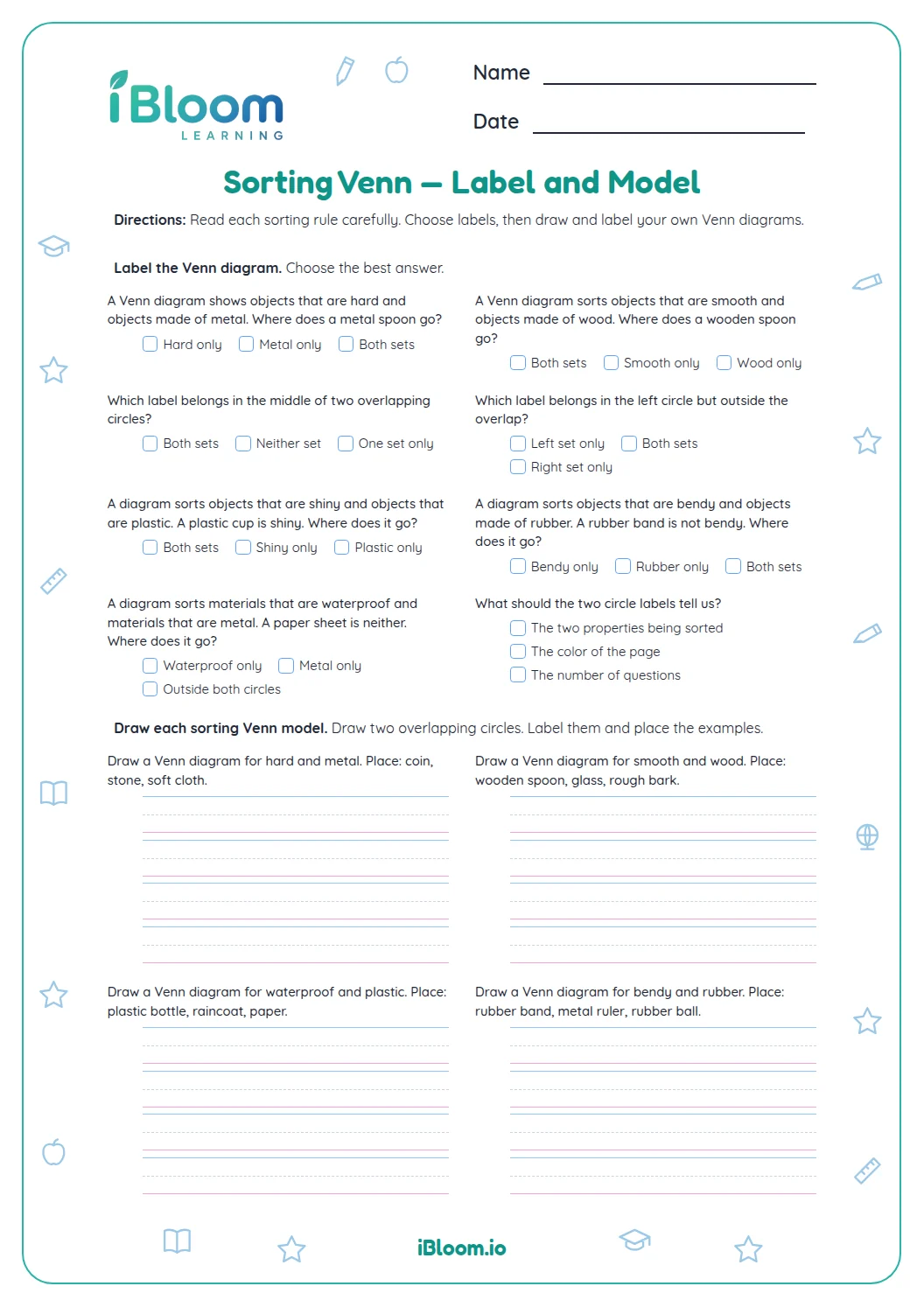
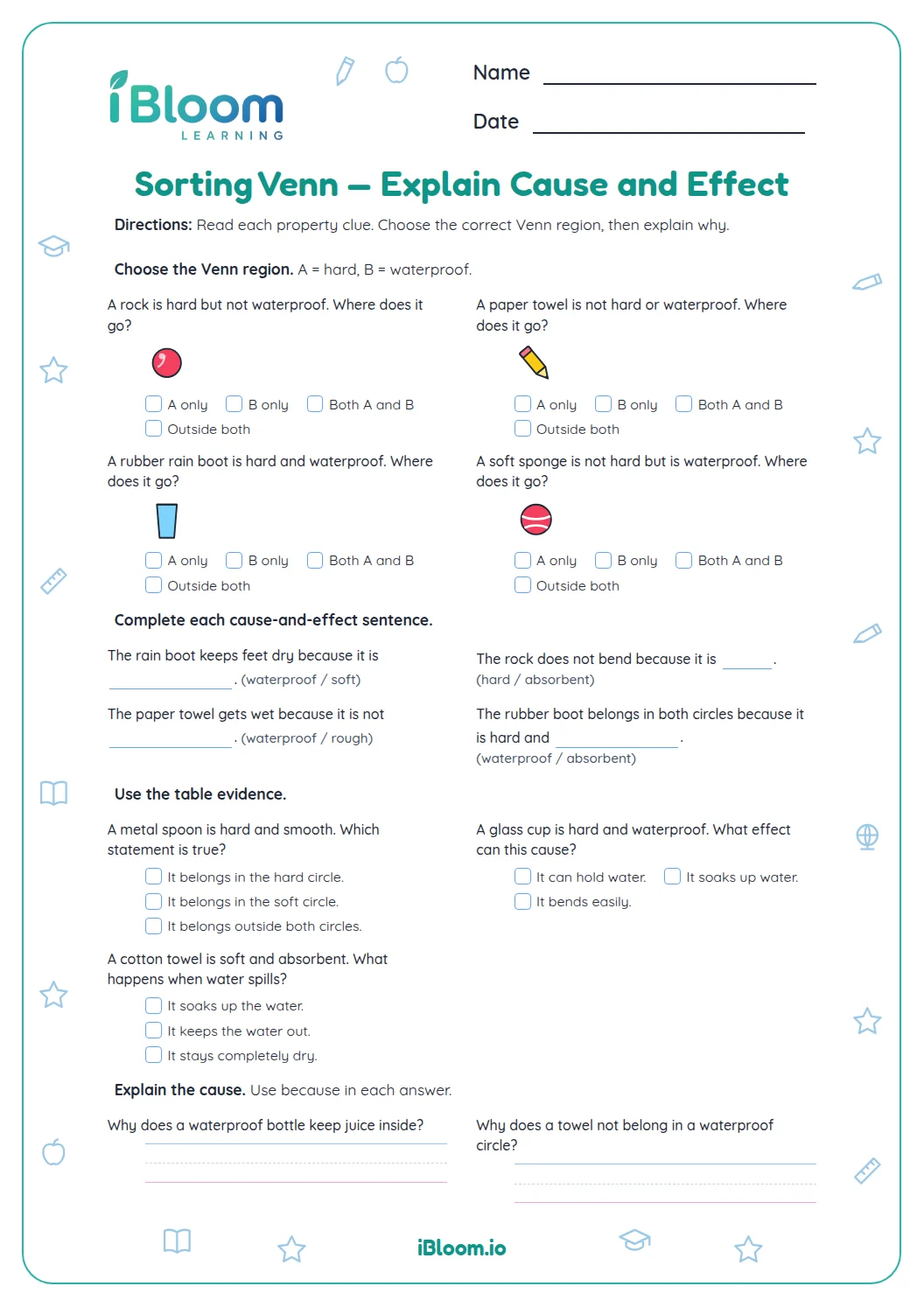
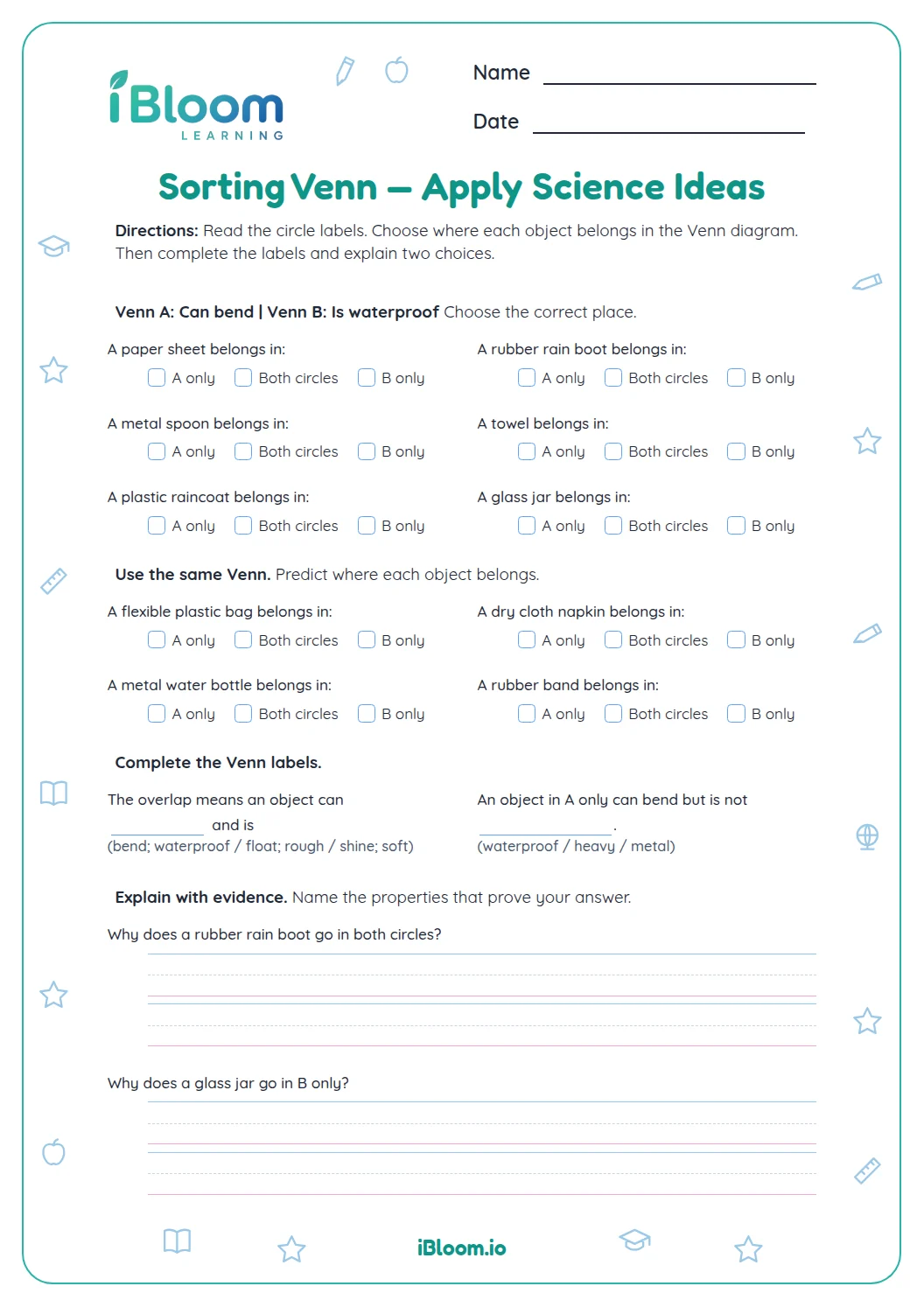
This Grade 2 worksheet asks children to classify objects by what they can observe or test. They identify a property from an observation, choose objects that belong together, complete property statements, and explain why materials can share a group even when they are not the same material. The answer key includes sample explanations and reinforces describing evidence rather than guessing from an object’s name alone.
Aligned to 2-PS1-1
What is a material property?
A material property is something that can be observed or tested. Children can describe texture, flexibility, transparency, hardness, magnet response, and whether water soaks in or stays out. Use the observation itself as evidence for the group.
How can objects be sorted?
Objects made of different materials can share a property. A sponge and a paper towel can both be absorbent; a clear glass marble and a clear plastic ruler can both be transparent. One object can also have several properties, so the group depends on the property named.
What does the worksheet ask children to do?
Parts A and B connect observations to property words and groups. Part C asks children to explain why objects belong together. The aim is careful classification from evidence, not guessing every feature from the object’s name.
How to use this worksheet
- 1Read the observation in each question before naming a property.
- 2Choose an object or group that matches the property in Part A.
- 3Use the exact observation to complete each property statement in Part B.
- 4In Part C, name the shared property and cite what the objects do or feel like.
- 5Check the key and discuss why a property can group different materials.
Common mistakes and quick fixes
The mistake
Sorting only by what an object is made from.
The fix
Notice that objects made from different materials can share a property.
The mistake
Calling every water-resistant item absorbent.
The fix
Absorbent materials take water in; waterproof materials keep water from passing through.
The mistake
Assuming one object has only one property.
The fix
Name the particular property used for the group; the same object can fit other groups too.
Curriculum alignment
This page targets the named skill at its intended grade. The cited standard gives the closest curriculum connection.
Classify materials by observable properties.
On this sheet: Children classify materials using observations of texture, flexibility, transparency, magnet response, and interaction with water.
Show the official wordingHide the official wording
Plan and conduct an investigation to describe and classify different kinds of materials by their observable properties.
What to practice next
Make more practice
Further reading
Questions parents and teachers ask
What does “observable property” mean?
It is a feature that can be observed or tested, such as roughness, flexibility, transparency, or whether a material absorbs water. A property is useful for sorting when it can be checked in a consistent way. Children can feel a surface, try bending an item, or observe whether light passes through.
Can two different materials be sorted into the same group?
Yes. Objects made from different materials may share a property, such as being smooth or transparent. A sorting rule should say which shared feature matters. “Made of the same material” is one possible rule, but this activity often groups objects by a feature they can observe.
What is the difference between absorbent and waterproof?
An absorbent material takes in water. A waterproof material keeps water from passing through easily. Children can test water absorption by noticing whether the material takes in water or lets it run off. The property word should match that observation.
Why can an object belong to more than one group?
An object can have several properties. For example, a clear plastic object may be both transparent and flexible. Naming the property makes the sorting rule clear. The same object could be grouped as transparent in one activity and flexible in another.
Which Grade 2 science idea does this practice support?
This practice supports NGSS 2-PS1-1 by asking children to describe and classify materials by observable properties. Children identify properties from observations and explain groupings using evidence such as texture, flexibility, transparency, magnet response, or interaction with water. These are property patterns they can observe or test.