Free printable practice
Common Properties Practice Activities
Grade 2 students practice describing, comparing, and sorting everyday materials by observable properties such as color, texture, hardness, and flexibility.
Free printable worksheet PDFs
Preview every available page, then download the free worksheet PDF for home, homeschool, tutoring, or classroom practice.
Preview the exact activity before downloading it.
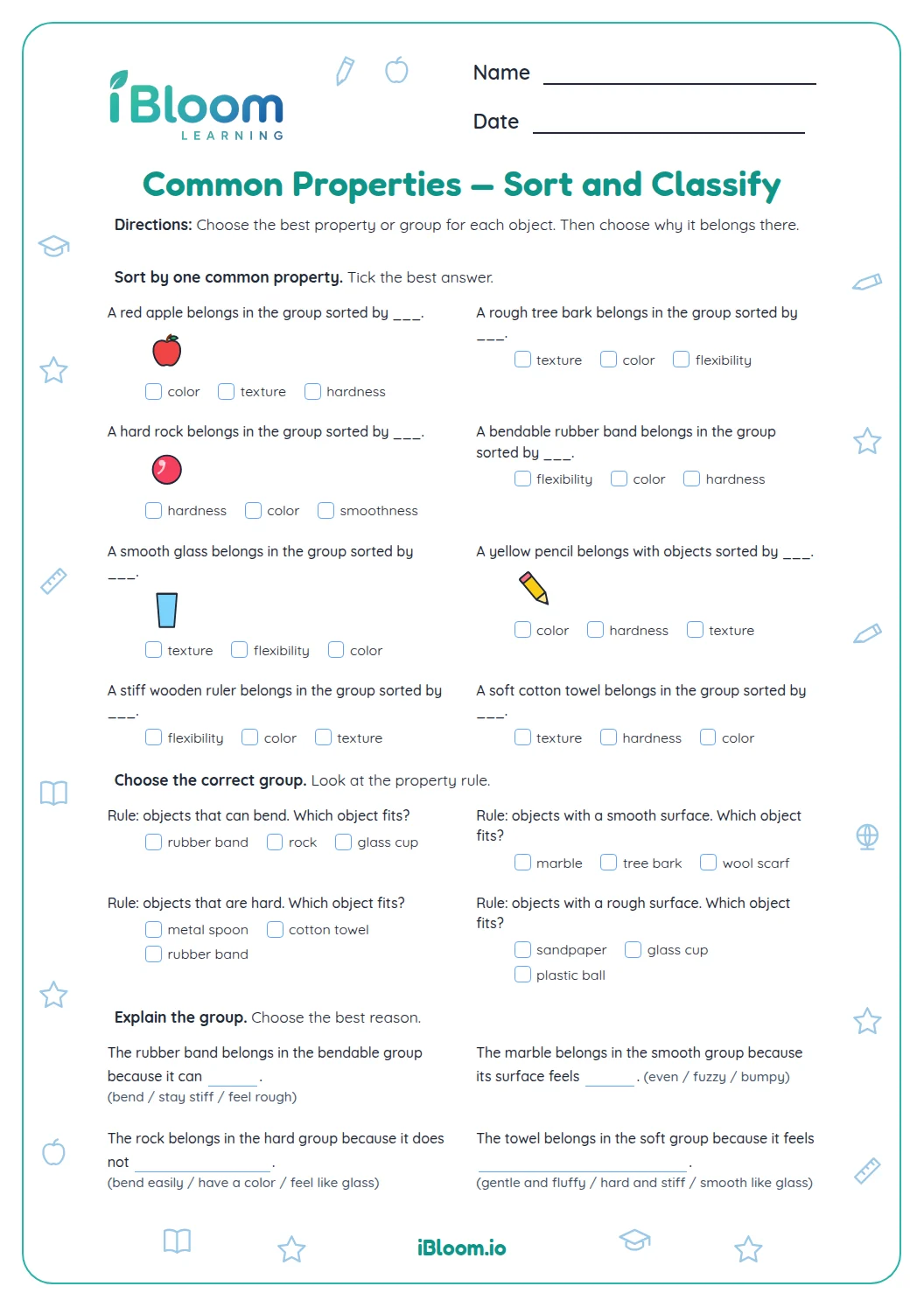 Common Properties — Sort and ClassifyGrade 2 students practice describing, comparing, and sorting everyday materials by observable properties such as color, texture, hardness, and flexibility. This sort and classify worksheet provides a distinct, age-appropriate way to practise the same lesson.Grade 2Free PDF preview
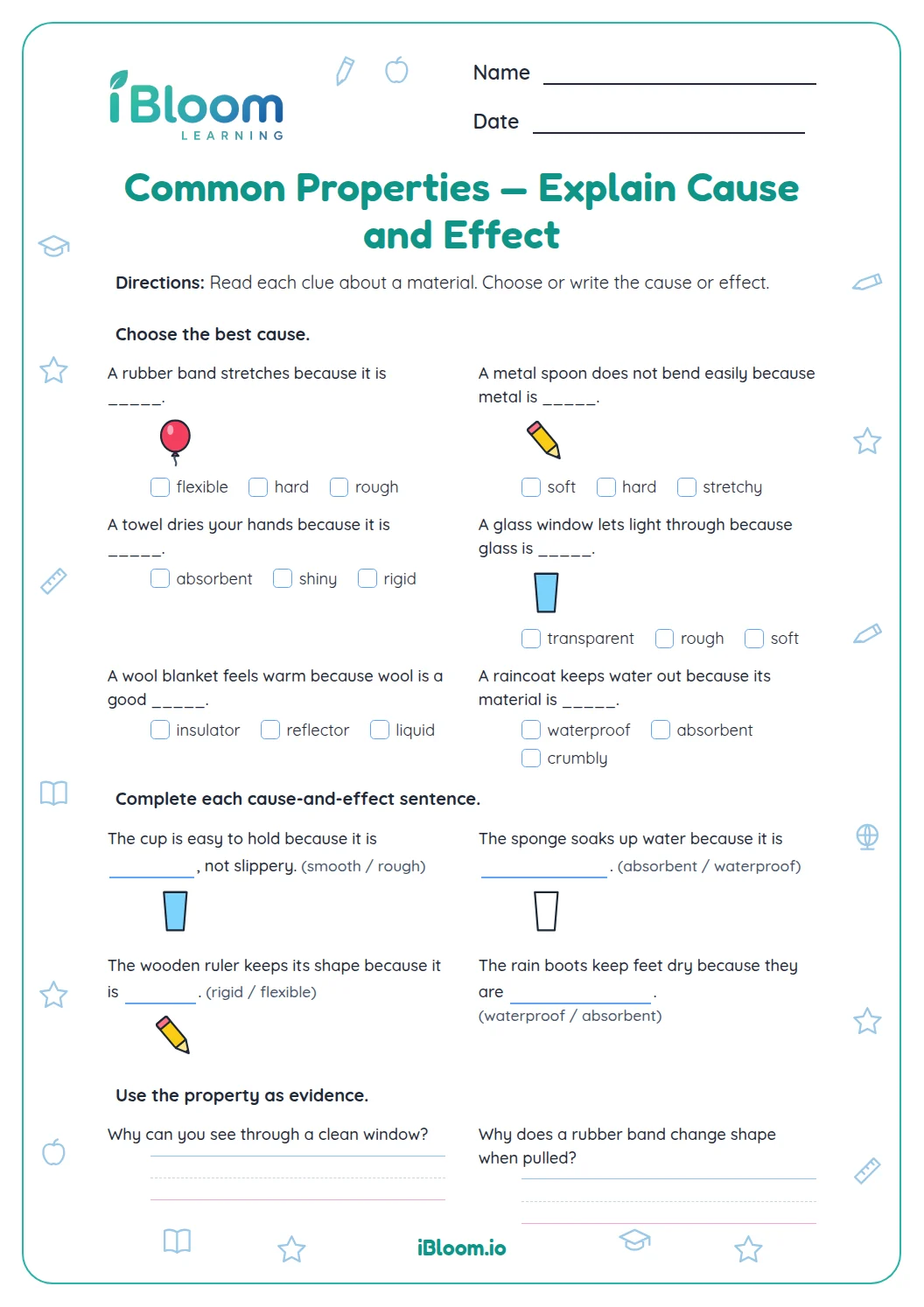 Common Properties — Explain Cause and EffectGrade 2 students practice describing, comparing, and sorting everyday materials by observable properties such as color, texture, hardness, and flexibility. This explain cause and effect worksheet provides a distinct, age-appropriate way to practise the same lesson.Grade 2Free PDF preview
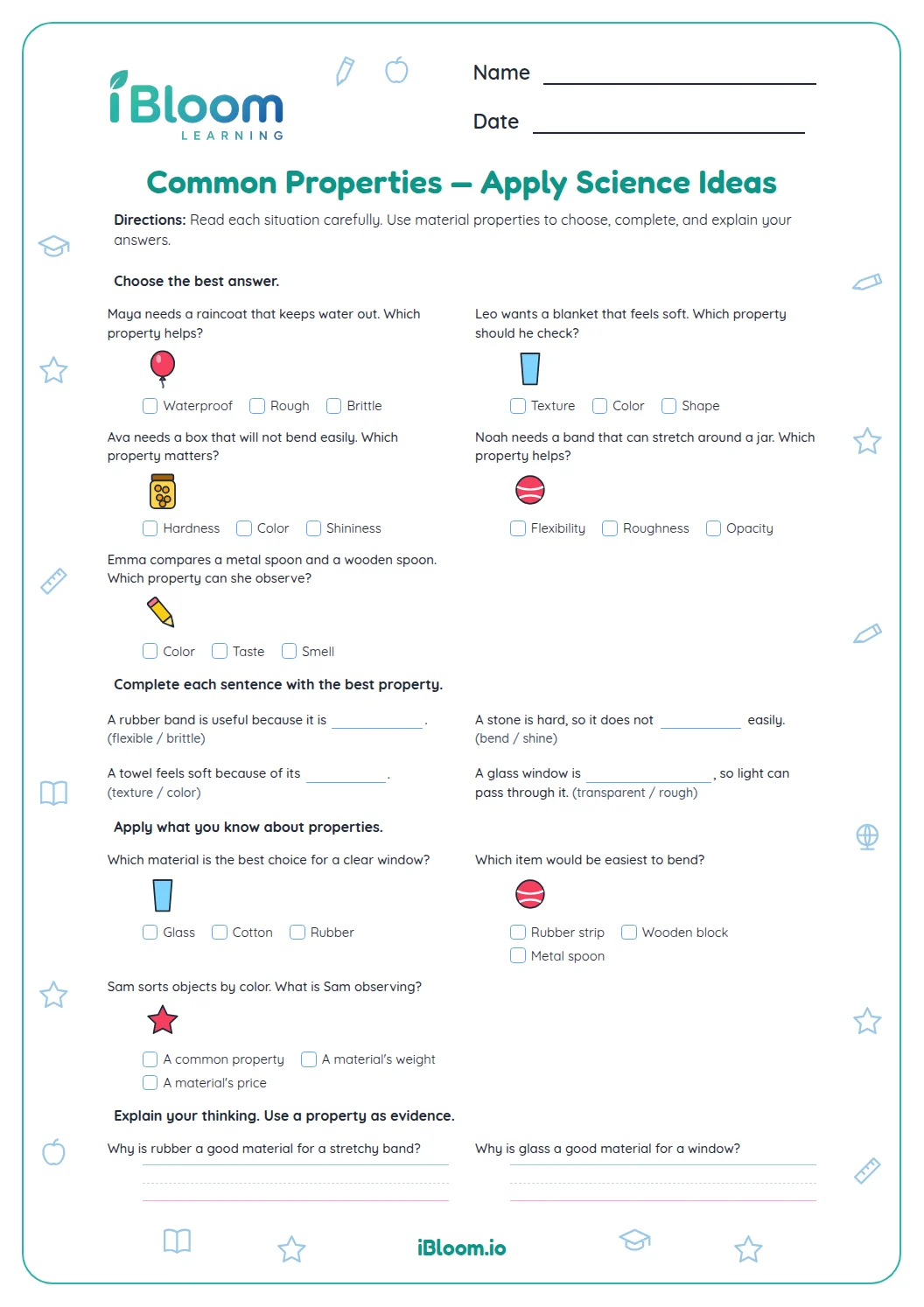 Common Properties — Apply Science IdeasGrade 2 students practice describing, comparing, and sorting everyday materials by observable properties such as color, texture, hardness, and flexibility. This apply science ideas worksheet provides a distinct, age-appropriate way to practise the same lesson.Grade 2Free PDF preview
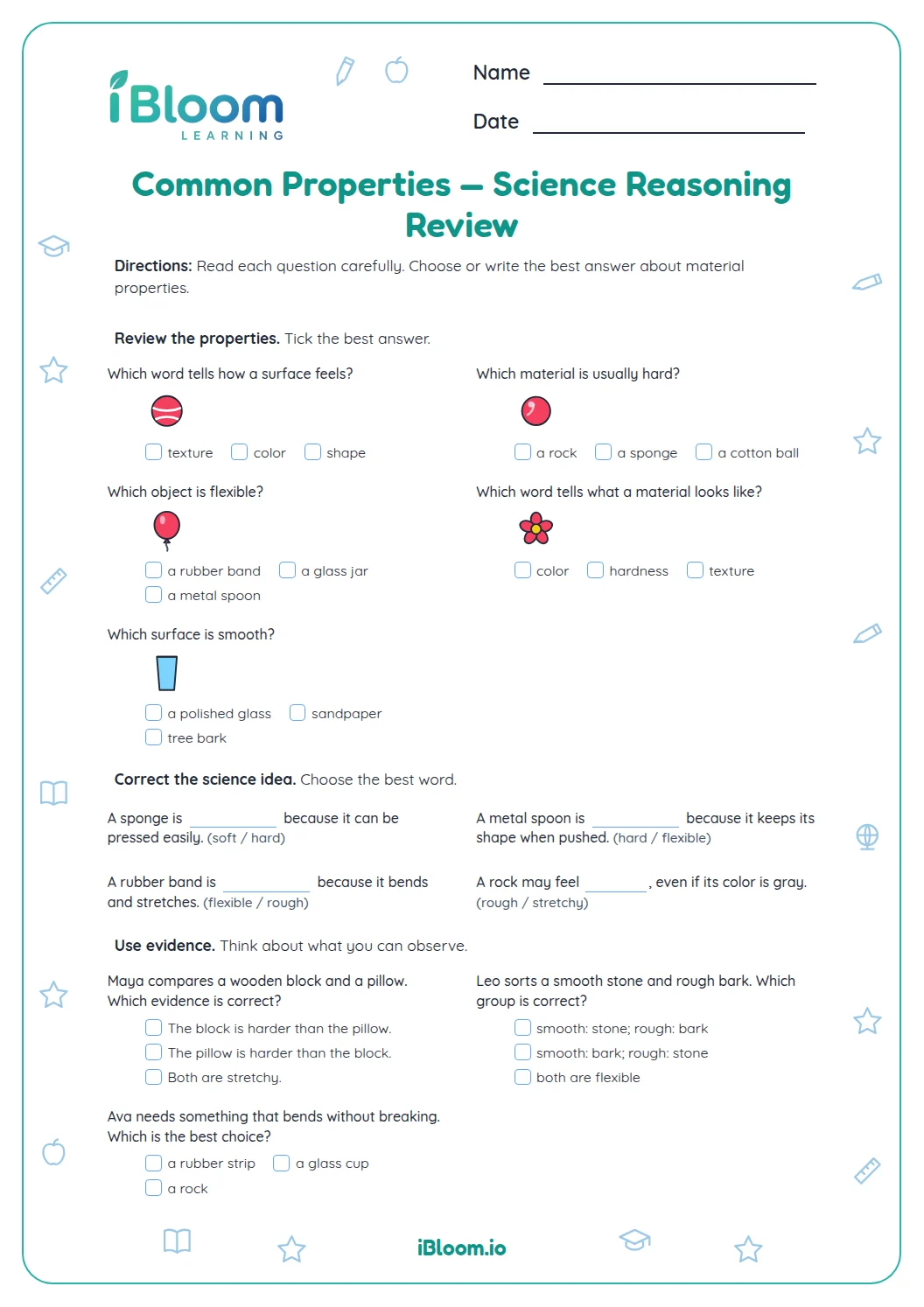 Common Properties — Science Reasoning ReviewGrade 2 students practice describing, comparing, and sorting everyday materials by observable properties such as color, texture, hardness, and flexibility. This science reasoning review worksheet provides a distinct, age-appropriate way to practise the same lesson.Grade 2Free PDF preview
Practice that builds confidence
What students learn
These Grade 2 science worksheets help children notice the common properties of materials they can observe and describe. Students practice using words such as smooth, rough, hard, soft, flexible, stiff, transparent, and absorbent to compare real objects.
The printable activities include sorting tasks, picture-based questions, matching, labeling, and short explanations. Children learn to connect an object’s material properties with how it looks, feels, and may be used in everyday life.
Common properties are the features that help us describe and compare materials. In this collection, children focus on observable properties such as color, shape, size, texture, hardness, softness, flexibility, stiffness, transparency, and absorbency. They move from simply naming an object to explaining what the material is like: a sponge is soft and absorbent, while a glass cup is hard and transparent.
How the practice progresses
The worksheets begin with familiar pictures and property words, then ask students to sort objects into groups. Later activities invite children to choose the best describing word, compare two materials, or explain why one material is better suited for a purpose. This progression supports careful observation before children make conclusions.
A simple parent routine
At home, choose three everyday items, such as a paper towel, plastic spoon, and wooden block. Ask your child to describe each one using two property words, then sort the items in a new way: rough and smooth, bendable and not bendable, or absorbent and not absorbent. Encourage the sentence frame, “This material is ___ because ___.”
Classroom uses for teachers
Teachers can use these printables during a material properties unit, science centers, small-group vocabulary review, or as follow-up after a hands-on observation table. They also work well with real objects: students can examine classroom items first, then complete a worksheet to record and compare their observations.
Common errors to watch for
Some children confuse an object with the material it is made from, such as saying “chair” instead of “wood” or “plastic.” Others describe what they like about an item instead of its property. Watch for vague words like “good” or “nice,” and prompt students to use science vocabulary such as shiny, dull, soft, hard, rough, or smooth.
Free printable PDF download
Use this grade 2 common properties worksheet page to preview the activity, print it, or download it as a PDF for quick practice. It works well for homework, homeschool lessons, tutoring, morning work, revision, and classroom centers.
Answers and answer key support
After the child completes the worksheet independently, parents and teachers can use the answer support or answer key information to check the work, review mistakes, and choose the next practice step.
Why iBloom worksheets help
The activities keep the focus on grade-appropriate observation, comparison, and vocabulary. Picture clues, sorting formats, and short written responses give children multiple ways to show understanding. A helpful child-friendly strategy is: look closely, touch safely if allowed, name the property, then tell how you know.
Helpful answers
Frequently asked questions
What properties do these Grade 2 worksheets focus on?
They focus on common observable properties such as color, texture, hardness, softness, flexibility, stiffness, transparency, and absorbency.
Do children need to know the names of different materials first?
A basic familiarity with everyday materials like wood, plastic, metal, glass, cloth, and paper helps, but the worksheets also build vocabulary through pictures and simple descriptions.
How can I make this practice hands-on at home?
Place a few safe household objects on a table and ask your child to sort them by one property at a time, such as smooth or rough, bendable or stiff, absorbent or not absorbent.
What is a common mistake students make with material properties?
Students often name the object instead of describing its material. For example, they may write “cup” when the property answer should be “hard,” “smooth,” or “transparent.”
Can teachers use these worksheets in science centers?
Yes. They are well suited for science centers, vocabulary review, observation recording, small-group practice, and follow-up after students examine real classroom materials.
Is this grade 2 common properties worksheet free?
Yes. You can preview it for free and use the printable worksheet for home or classroom practice.
Can I download this grade 2 common properties worksheet as a PDF?
Yes. Use the worksheet download option to save a printable PDF, or print the worksheet directly from the page.
Does this grade 2 common properties worksheet include answers or an answer key?
When the activity has fixed answers, iBloom includes answer support so parents and teachers can check the completed worksheet.