Free printable practice
States Matter Practice Activities
Printable Grade 2 science activities for identifying solids, liquids, and gases through everyday examples, sorting tasks, and observation-based practice.
Free printable worksheet PDFs
Preview every available page, then download the free worksheet PDF for home, homeschool, tutoring, or classroom practice.
Preview the exact activity before downloading it.
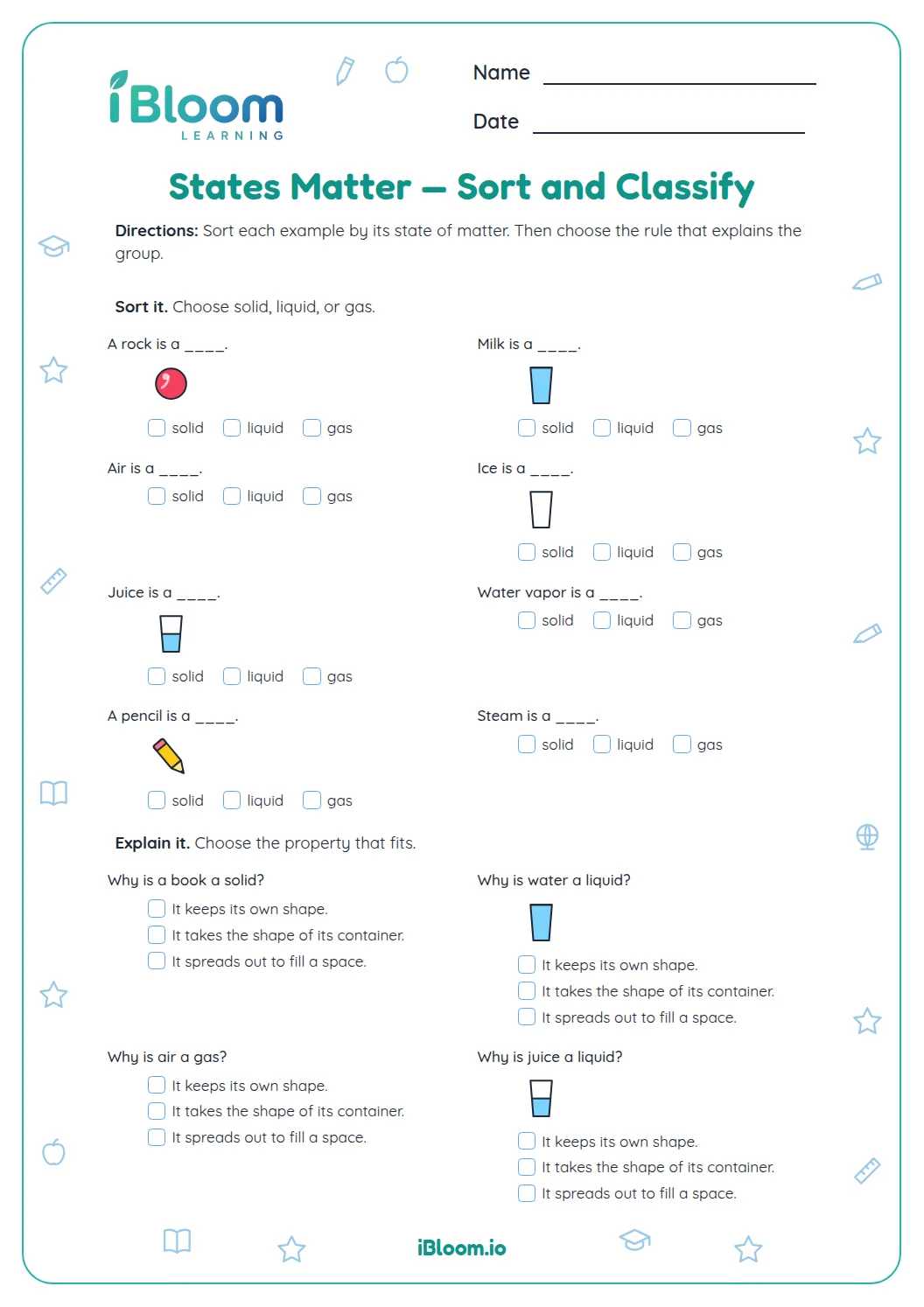 States Matter — Sort and ClassifyPrintable Grade 2 science activities for identifying solids, liquids, and gases through everyday examples, sorting tasks, and observation-based practice. This sort and classify worksheet provides a distinct, age-appropriate way to practise the same lesson.Grade 2Free PDF preview
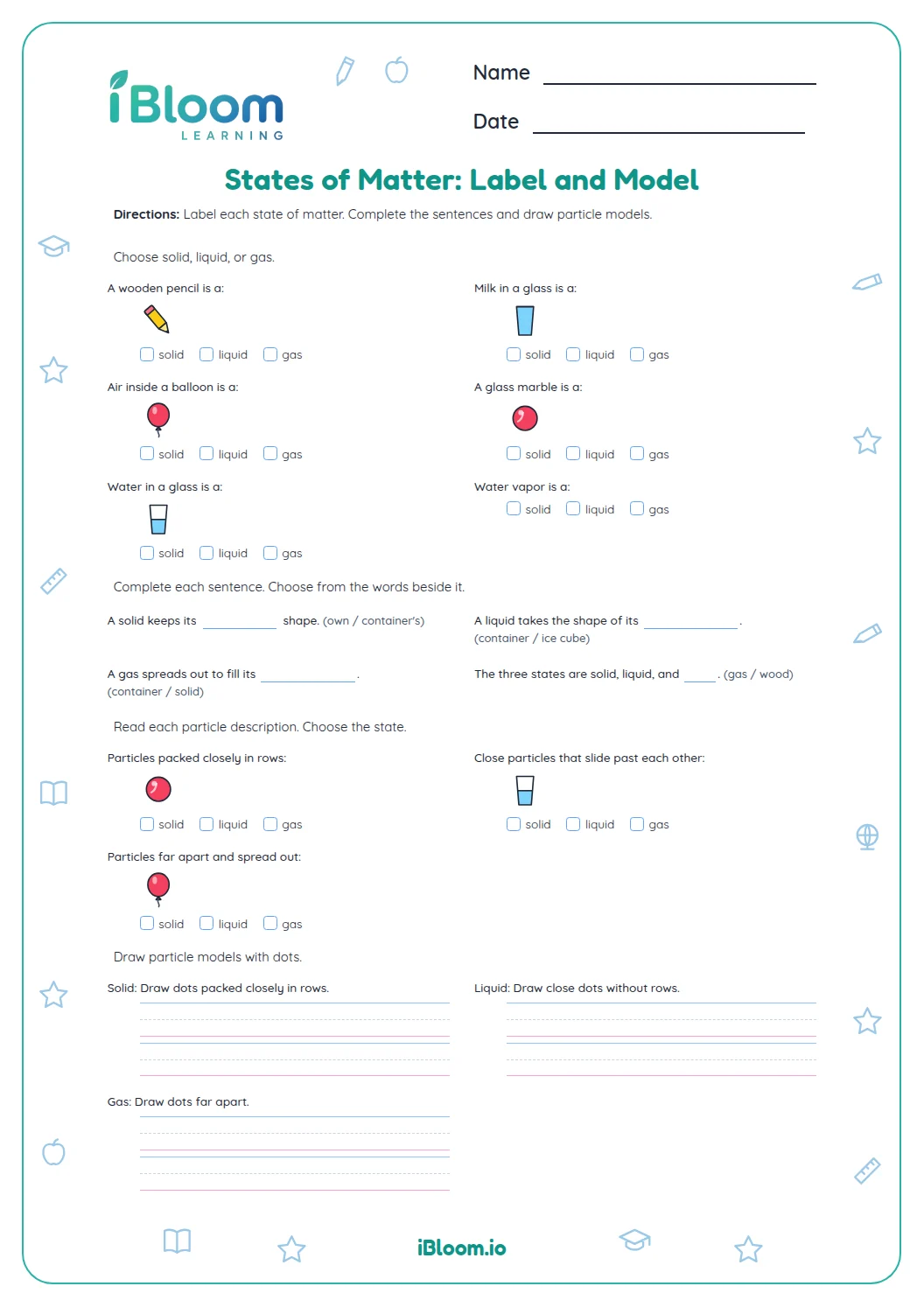 States Matter — Label and ModelPrintable Grade 2 science activities for identifying solids, liquids, and gases through everyday examples, sorting tasks, and observation-based practice. This label and model worksheet provides a distinct, age-appropriate way to practise the same lesson.Grade 2Free PDF preview
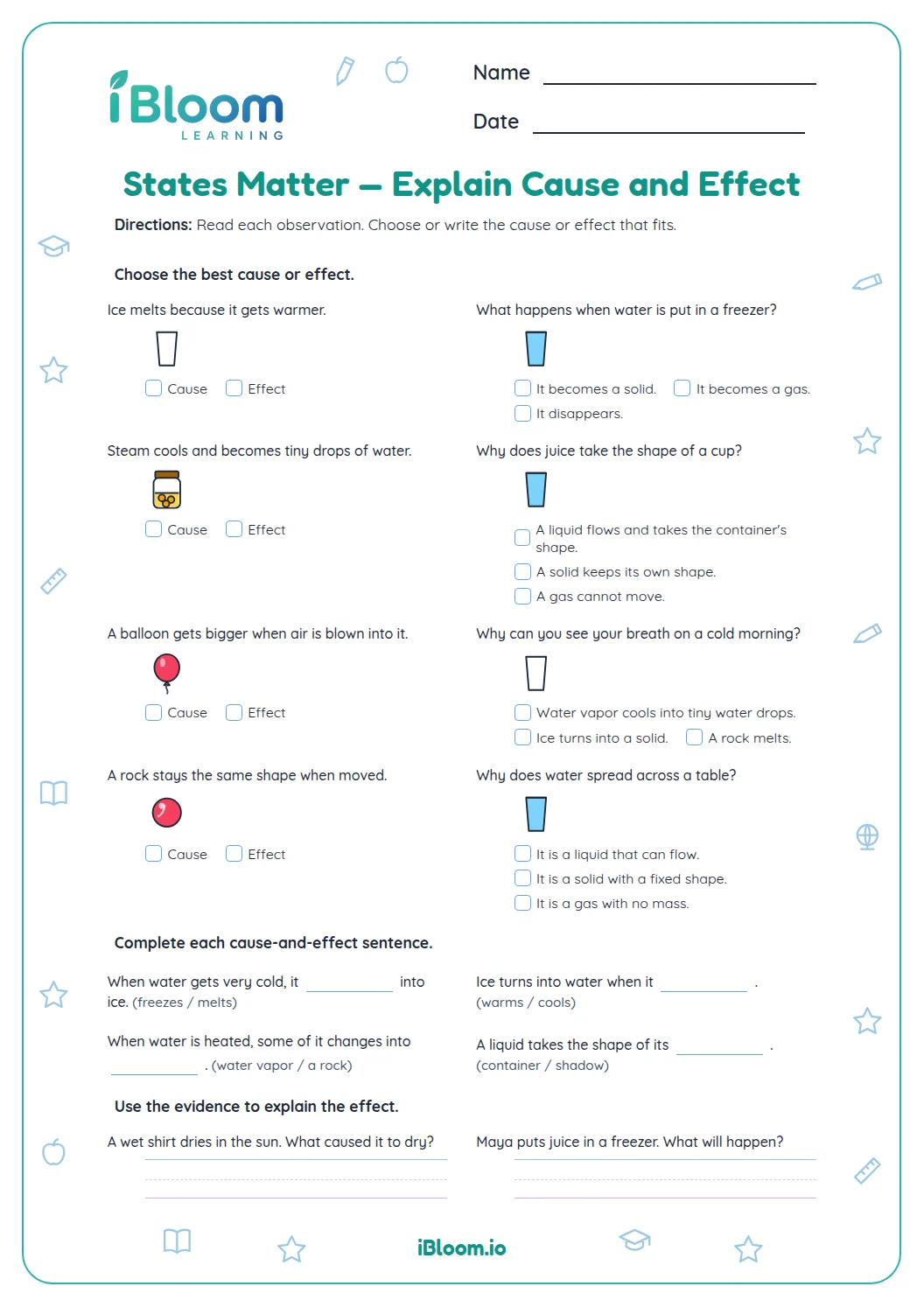 States Matter — Explain Cause and EffectPrintable Grade 2 science activities for identifying solids, liquids, and gases through everyday examples, sorting tasks, and observation-based practice. This explain cause and effect worksheet provides a distinct, age-appropriate way to practise the same lesson.Grade 2Free PDF preview6 pages
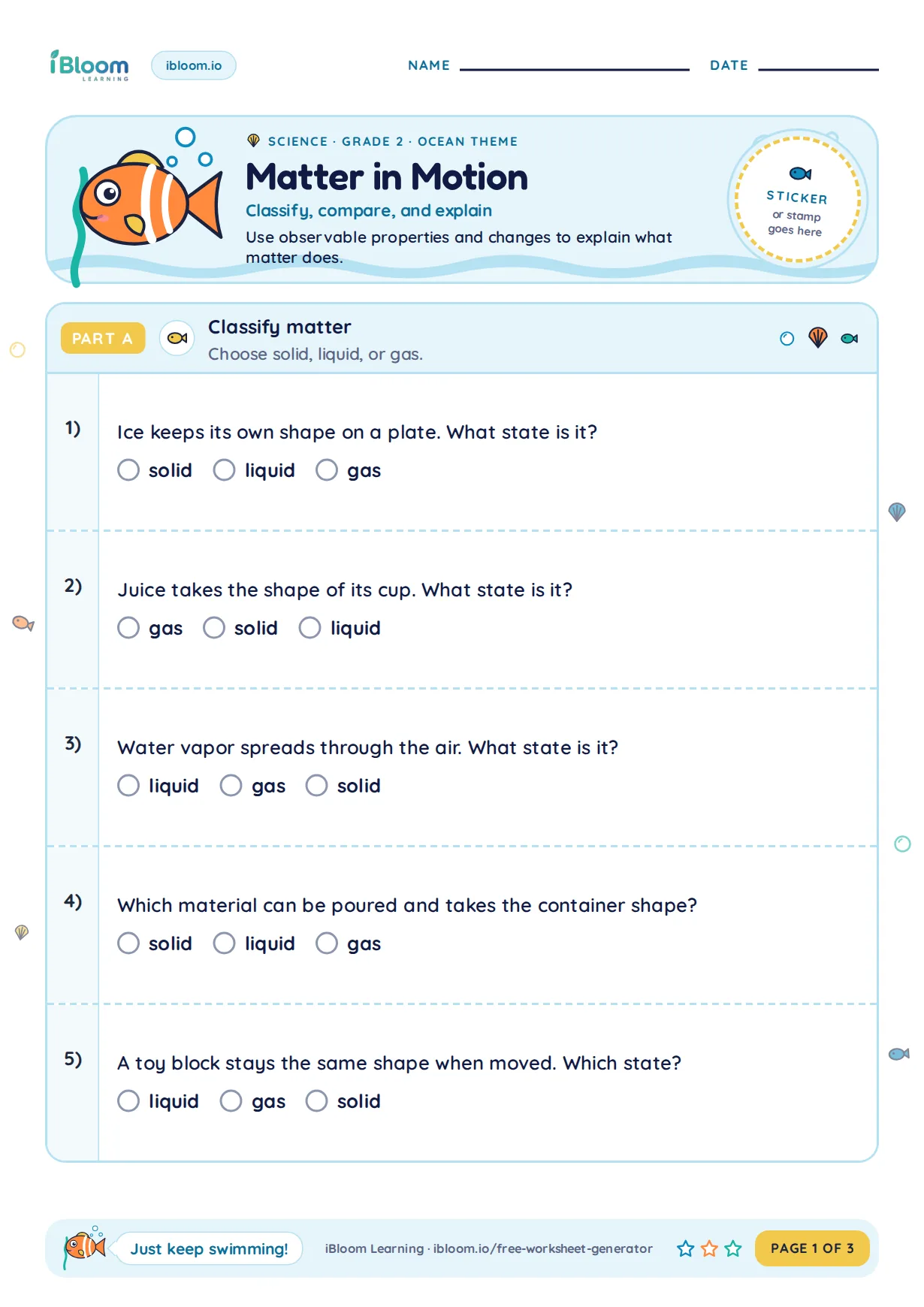 States Matter — Apply Science IdeasPrintable Grade 2 science activities for identifying solids, liquids, and gases through everyday examples, sorting tasks, and observation-based practice. This apply science ideas worksheet provides a distinct, age-appropriate way to practise the same lesson.Grade 2Free PDF preview
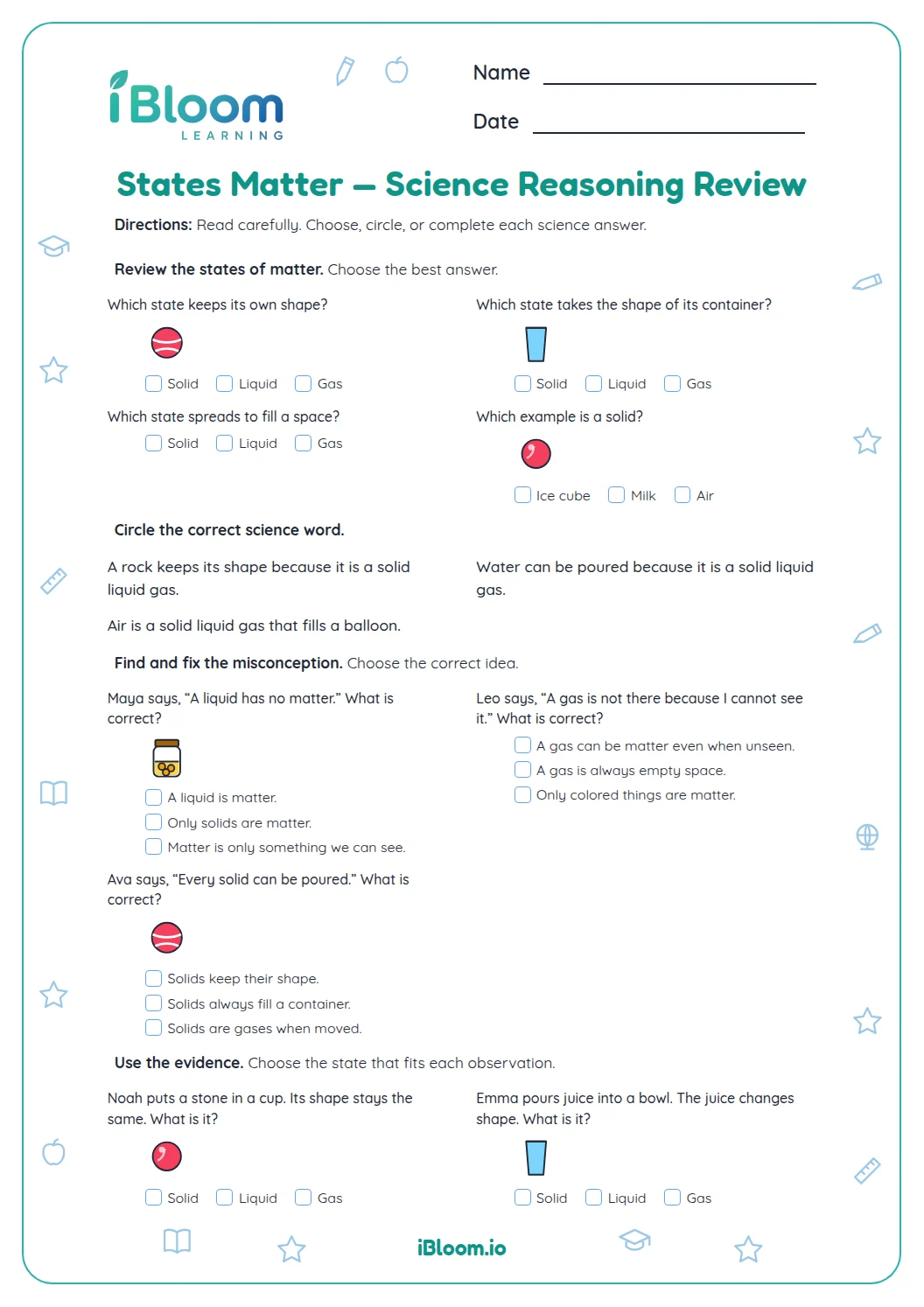 States Matter — Science Reasoning ReviewPrintable Grade 2 science activities for identifying solids, liquids, and gases through everyday examples, sorting tasks, and observation-based practice. This science reasoning review worksheet provides a distinct, age-appropriate way to practise the same lesson.Grade 2Free PDF preview
Practice that builds confidence
Building the idea of matter
These Grade 2 science worksheets help children practise recognizing the three common states of matter: solid, liquid, and gas. Students learn to describe how materials can have a fixed shape, take the shape of a container, or spread out in the air.
The printable activities include picture sorting, object classification, simple observation prompts, and vocabulary practice. Children connect the science words to familiar examples such as ice, water, steam, rocks, juice, balloons, and air.
In this Material Properties collection, children focus on how matter can be observed and grouped by state. A solid keeps its own shape, a liquid flows and takes the shape of its container, and a gas is often hard to see but can fill a space. The worksheets use everyday examples so Grade 2 learners can move from “what it looks like” to “how it behaves.”

How the practice progresses
Activities begin with clear identification: circle the solids, match liquids to containers, or choose examples of gases. Students then compare properties using words such as shape, flow, container, air, space, and change. Some tasks ask children to explain their choice, which is important because a correct label is stronger when the child can say why it belongs there.
A simple parent routine
At home, choose three safe objects or materials: a pencil, a cup of water, and an inflated balloon. Ask, “Does it keep its shape? Can it be poured? Does it fill the space?” Then complete one worksheet section and let your child point to a similar example in the room. This short routine helps the page feel connected to real observation, not memorization.

Classroom uses for teachers
Teachers can use these printables after a demonstration, as science centers, or as a quick check for understanding. They also work well for small-group discussion because students can justify different answers using evidence. For example, a picture of steam may lead to a useful conversation about gases that are not always easy to see.

Common errors to watch for
Children may call anything wet a liquid, even if it is a wet solid such as a sponge. They may also think gases are “nothing” because air is invisible. Encourage them to think about behavior: Can it be held in the same shape? Can it be poured? Does it spread out to fill a space?
Free printable PDF download
Use this grade 2 states of matter worksheet page to preview the activity, print it, or download it as a PDF for quick practice. It works well for homework, homeschool lessons, tutoring, morning work, revision, and classroom centers.
Answers and answer key support
After the child completes the worksheet independently, parents and teachers can use the answer support or answer key information to check the work, review mistakes, and choose the next practice step.
Why iBloom worksheets help
The pages are designed with clear visuals, direct prompts, and repeated chances to sort and explain. A child-friendly strategy is: look, test the behavior in your mind, then name the state. This gives Grade 2 learners a dependable way to classify matter using evidence.
Helpful answers
Frequently asked questions
What will my Grade 2 child learn from these states of matter worksheets?
Children practise identifying solids, liquids, and gases, then use simple properties such as shape, flow, and filling space to explain their answers.
Do the worksheets include examples children already know?
Yes. The activities use familiar materials such as water, ice, juice, rocks, balloons, steam, and air so children can connect science vocabulary to real objects.
How can I help if my child thinks air is not matter?
Use a balloon or a sealed plastic bag. When it is filled with air, your child can see that the gas takes up space even though it is usually invisible.
Are these pages better for review or first teaching?
They can support both. A teacher or parent can introduce solids, liquids, and gases with real examples, then use the worksheets for sorting, vocabulary practice, and checking understanding.
What is a common mistake in this topic?
A common mistake is labeling something by appearance only. For example, a wet sponge may be mistaken for a liquid, so children should focus on how the material behaves.
Is this grade 2 states of matter worksheet free?
Yes. You can preview it for free and use the printable worksheet for home or classroom practice.
Can I download this grade 2 states of matter worksheet as a PDF?
Yes. Use the worksheet download option to save a printable PDF, or print the worksheet directly from the page.
Does this grade 2 states of matter worksheet include answers or an answer key?
When the activity has fixed answers, iBloom includes answer support so parents and teachers can check the completed worksheet.