

About this worksheet
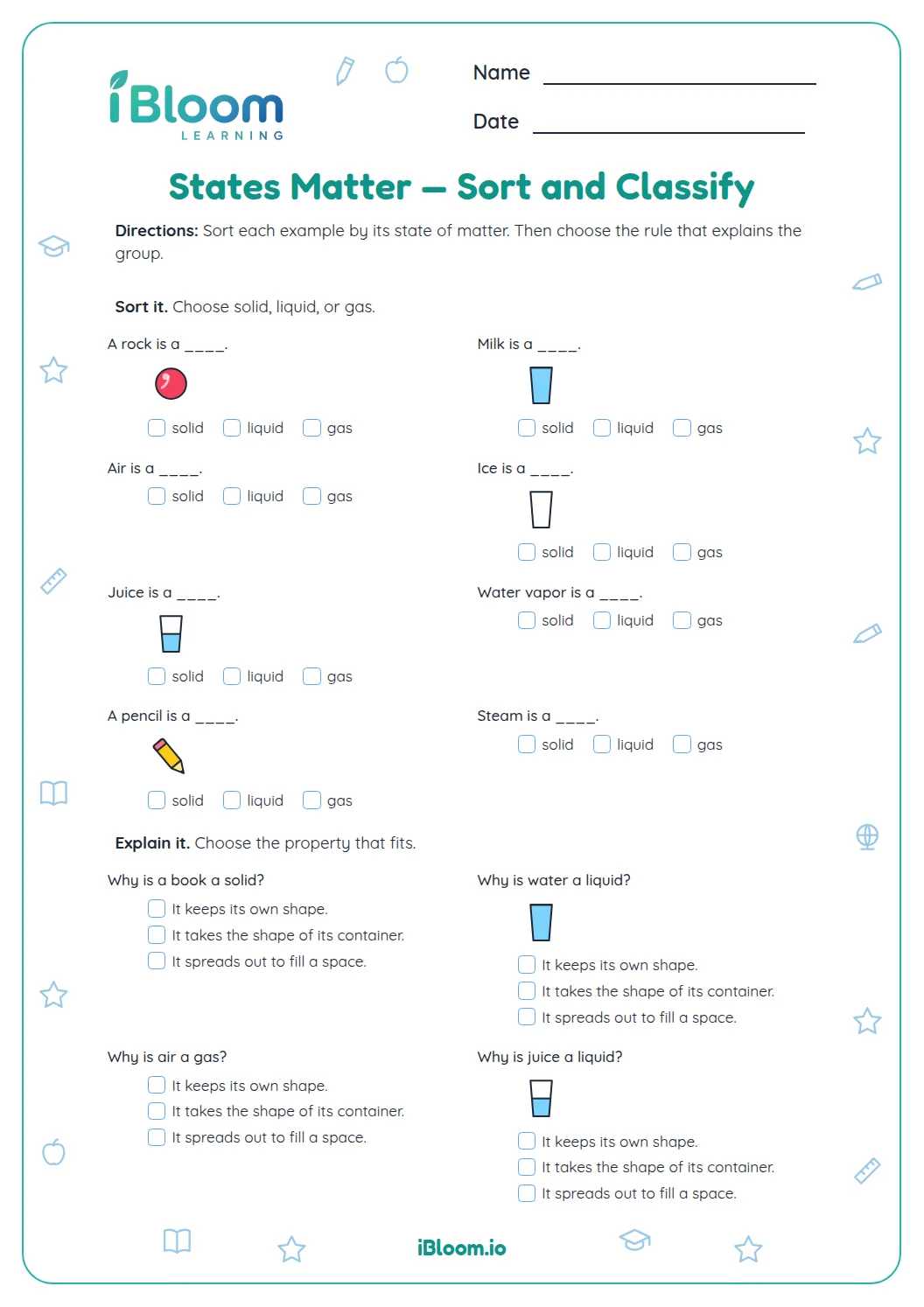
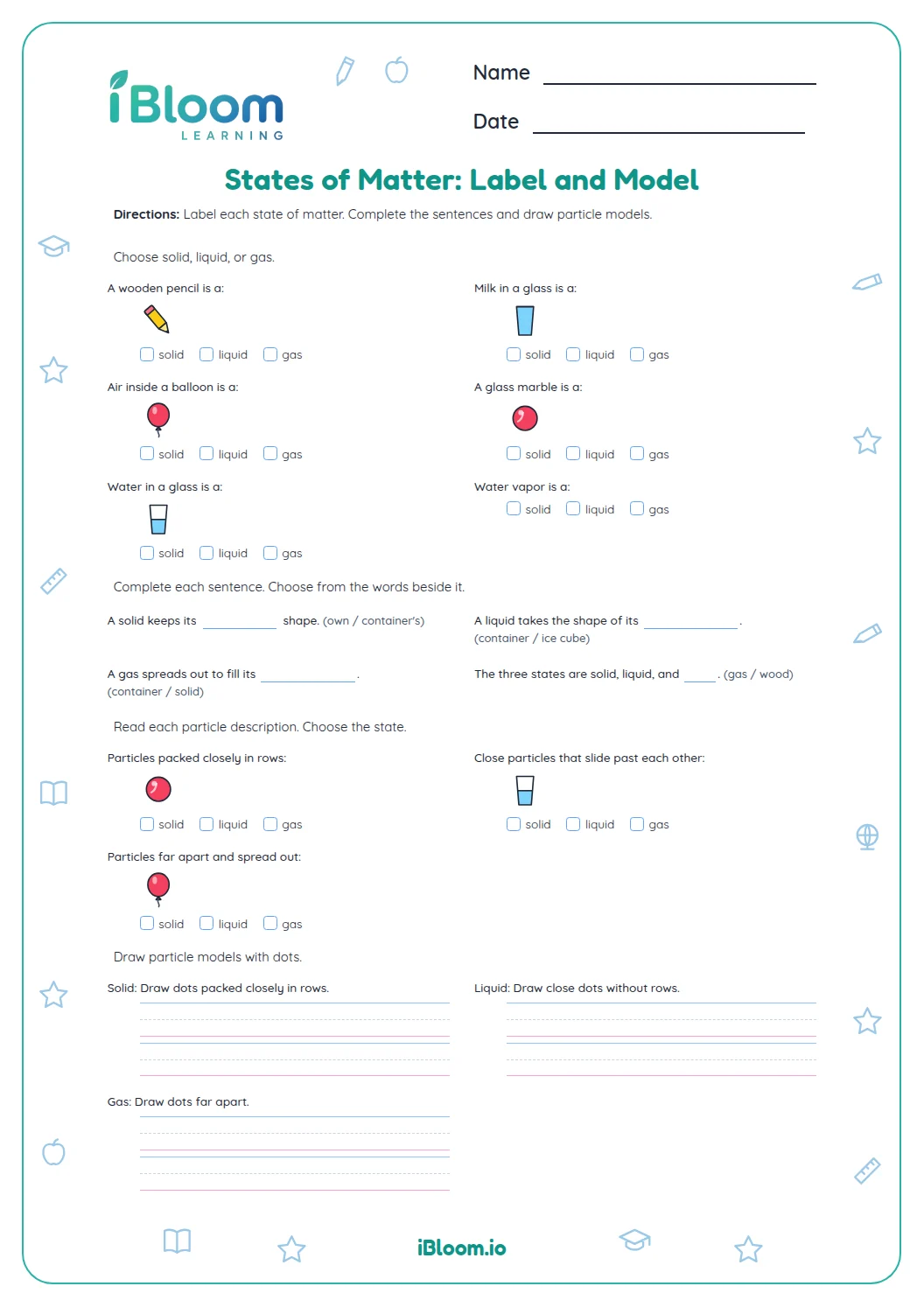
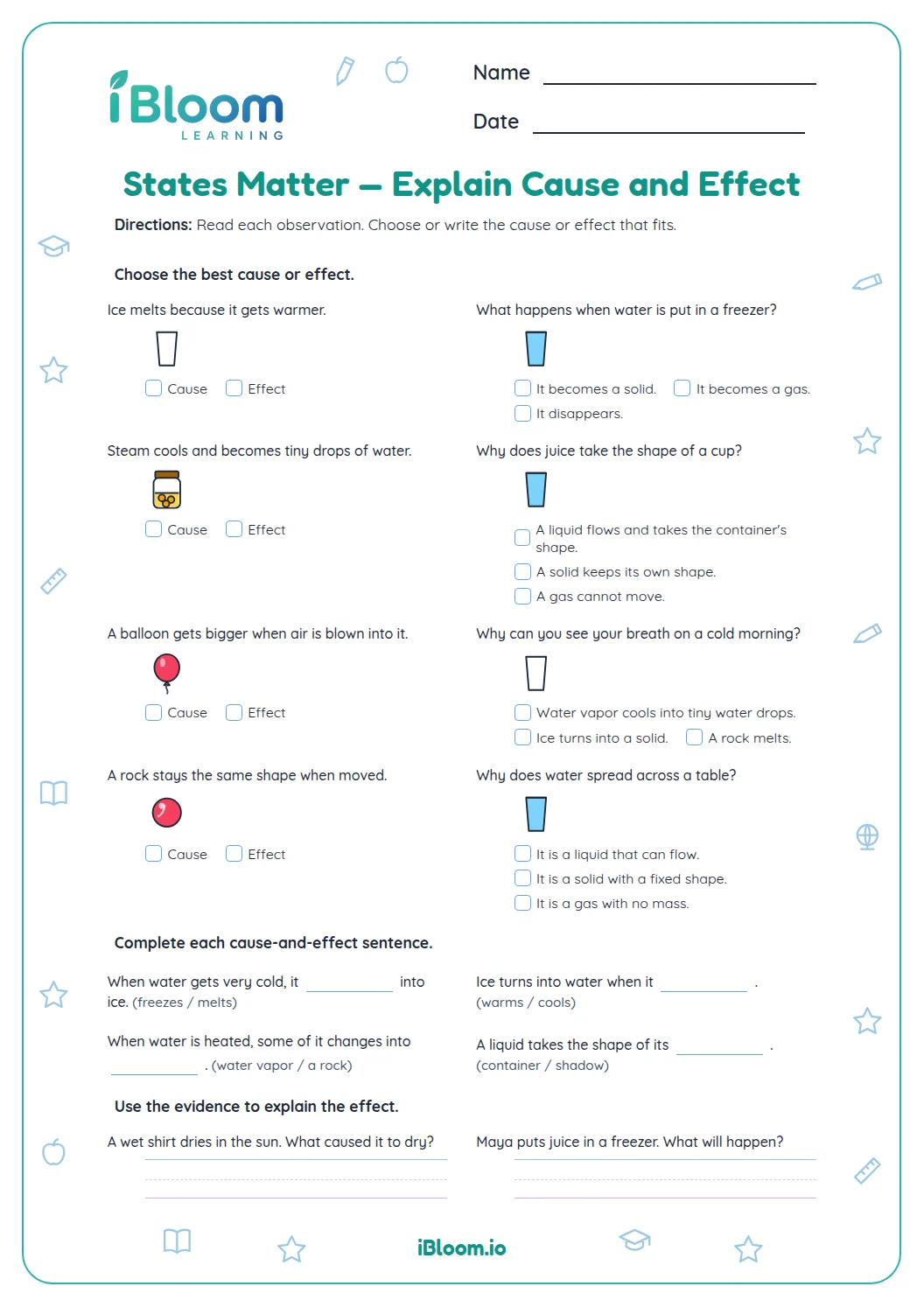
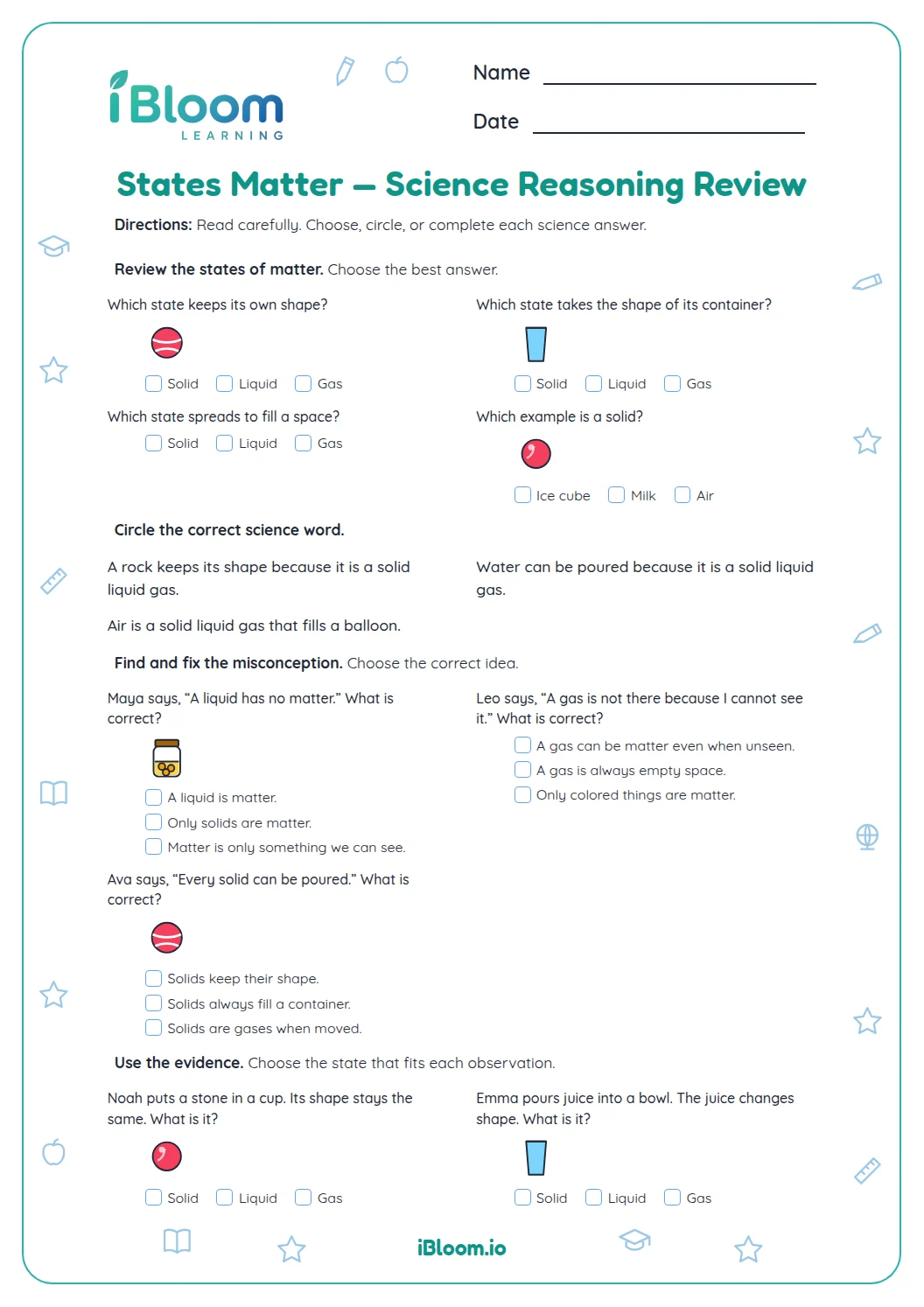
This Grade 2 science worksheet asks children to classify solids, liquids, and gases by familiar properties, then reason about melting, freezing, and evaporation. Later questions compare materials, select a simple flexibility test, and connect observations to changes of state. A separate key supports checking. It practices NGSS 2-PS1-1 through questions about describing and classifying materials by observable properties.
Aligned to 2-PS1-1
How can you tell solids, liquids, and gases apart?
Look at what a material does. A solid keeps its own shape; a liquid flows and takes the shape of its container; a gas spreads out to fill available space. These are clues children can observe in familiar materials.
Question 1 describes ice keeping its shape on a plate, so it is a solid.
- 1Observation: Ice keeps its shape on a plate.
- 2Clue: It keeps a shape of its own.
- 3Classification: solid.
What happens when matter warms or cools?
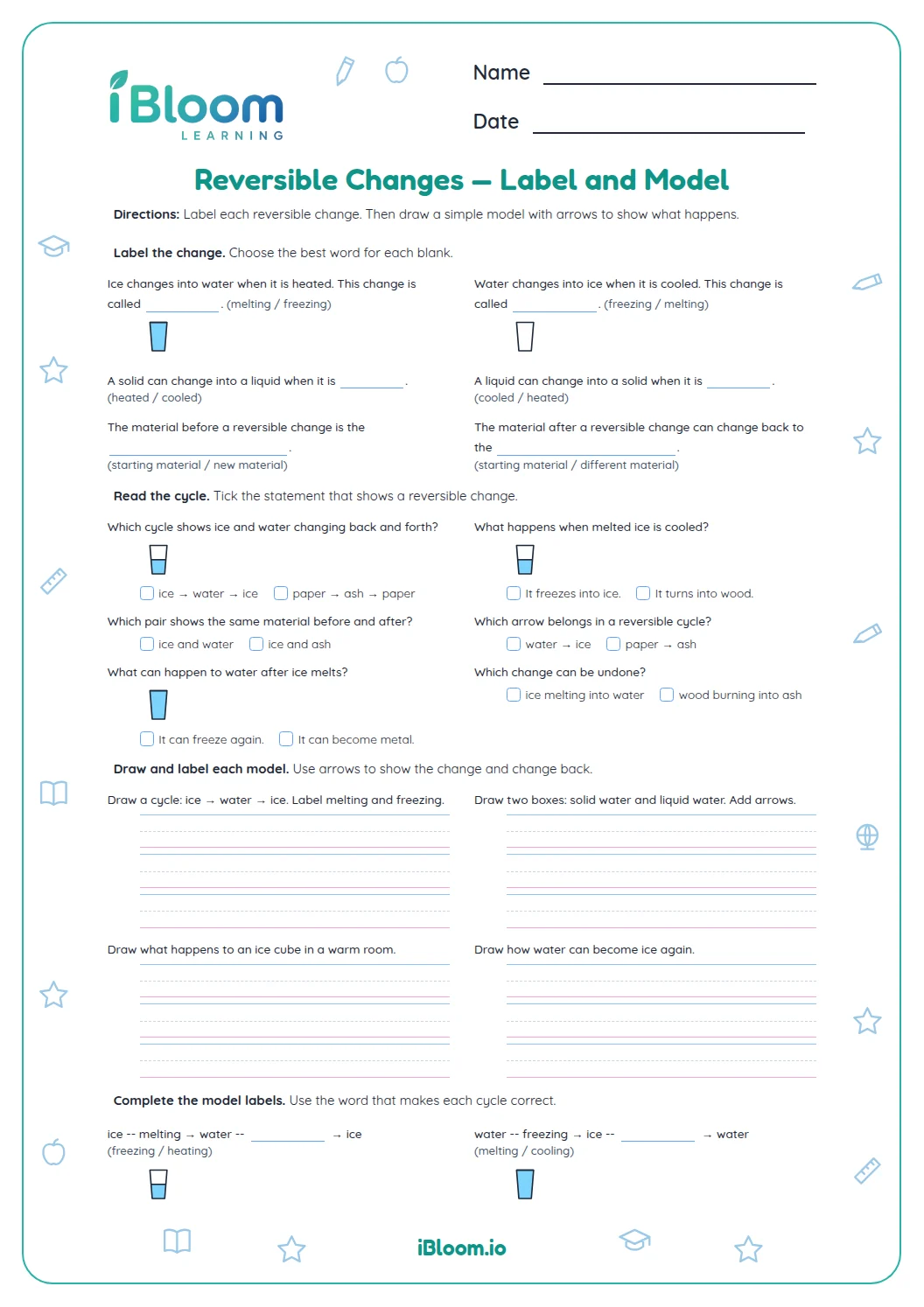
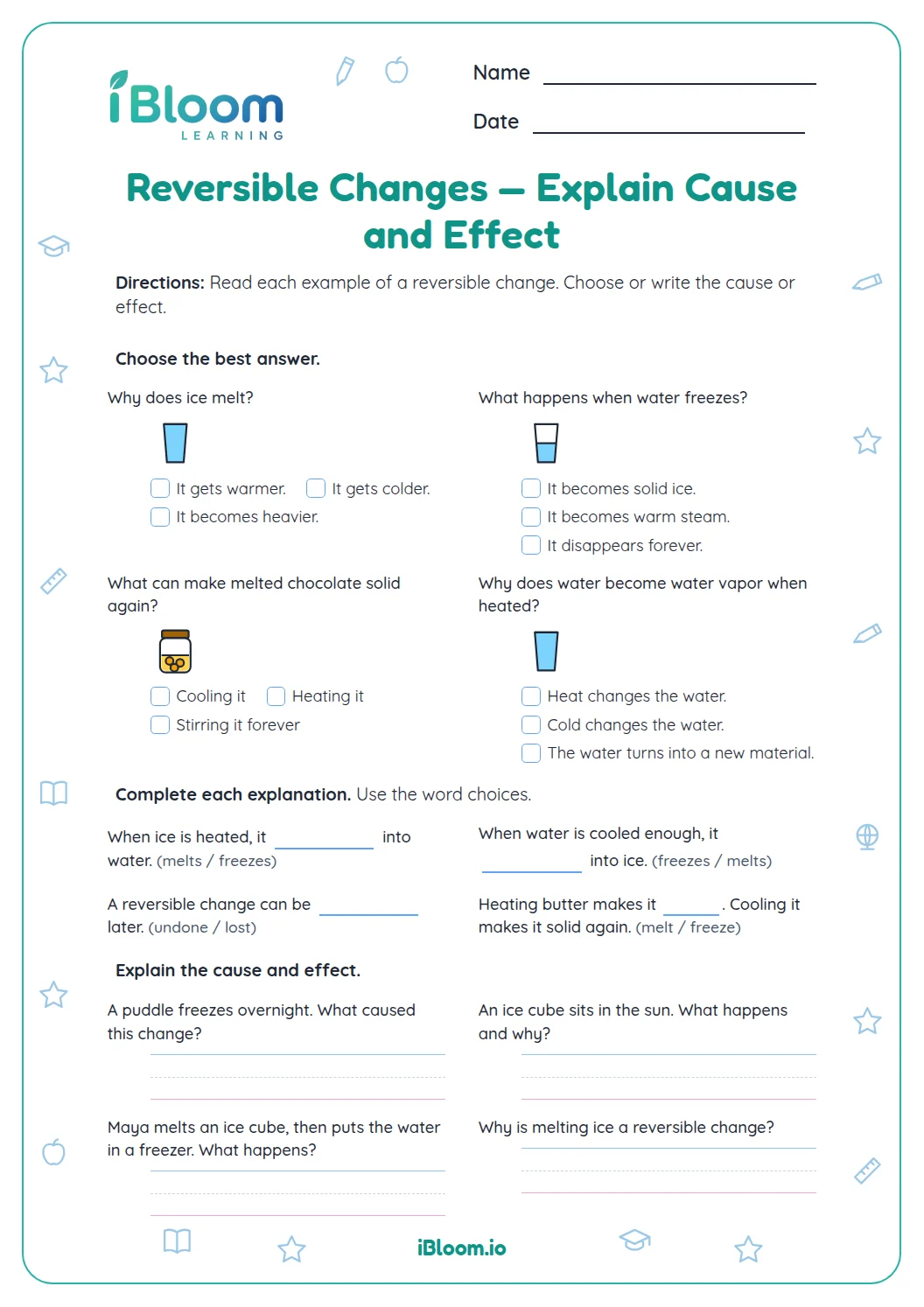
Some materials change state when they gain or lose heat. Ice melts into liquid water as it warms. Liquid water freezes into solid ice as it cools. The material changes state, while the example remains water.
How can observations support an explanation?
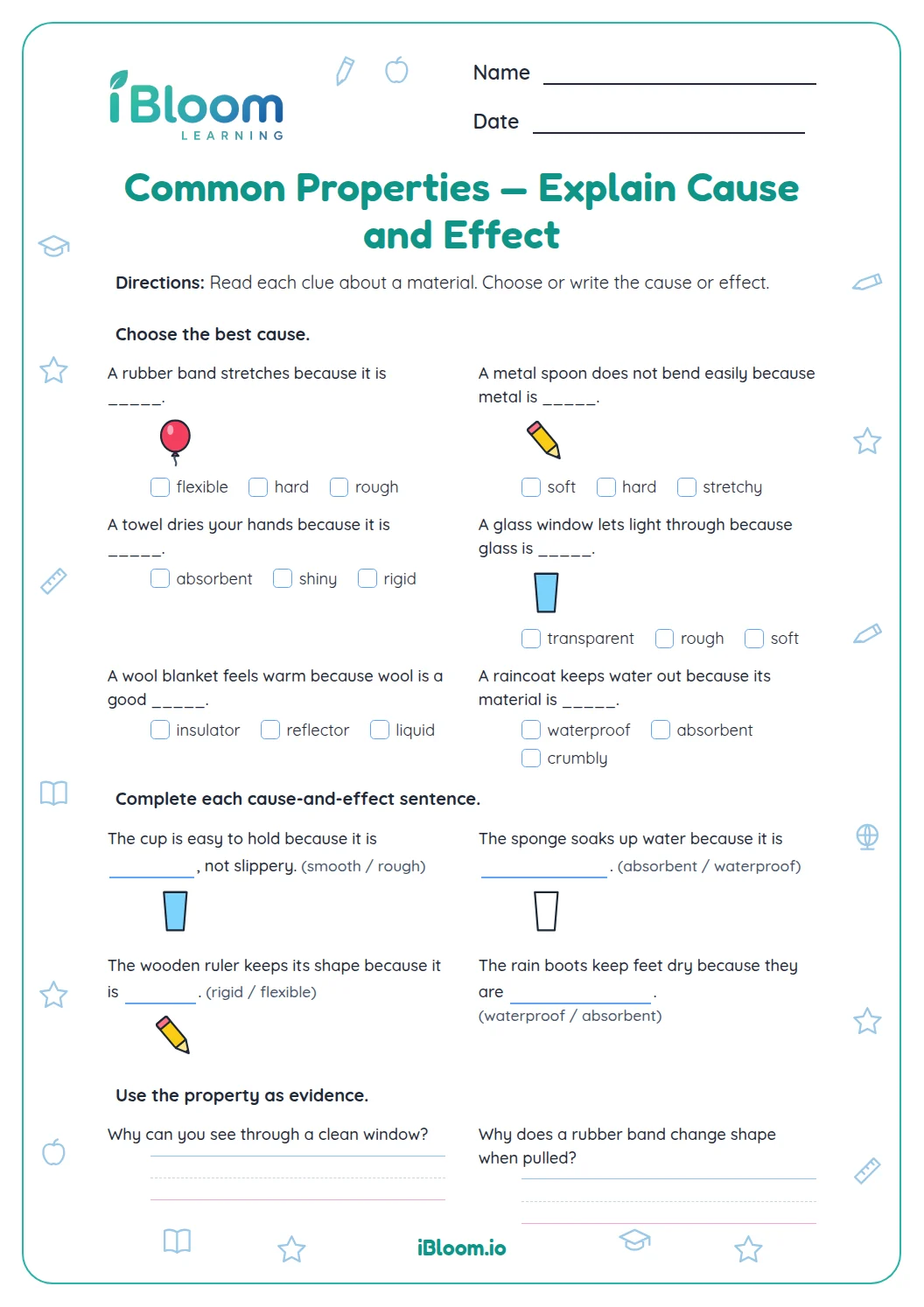
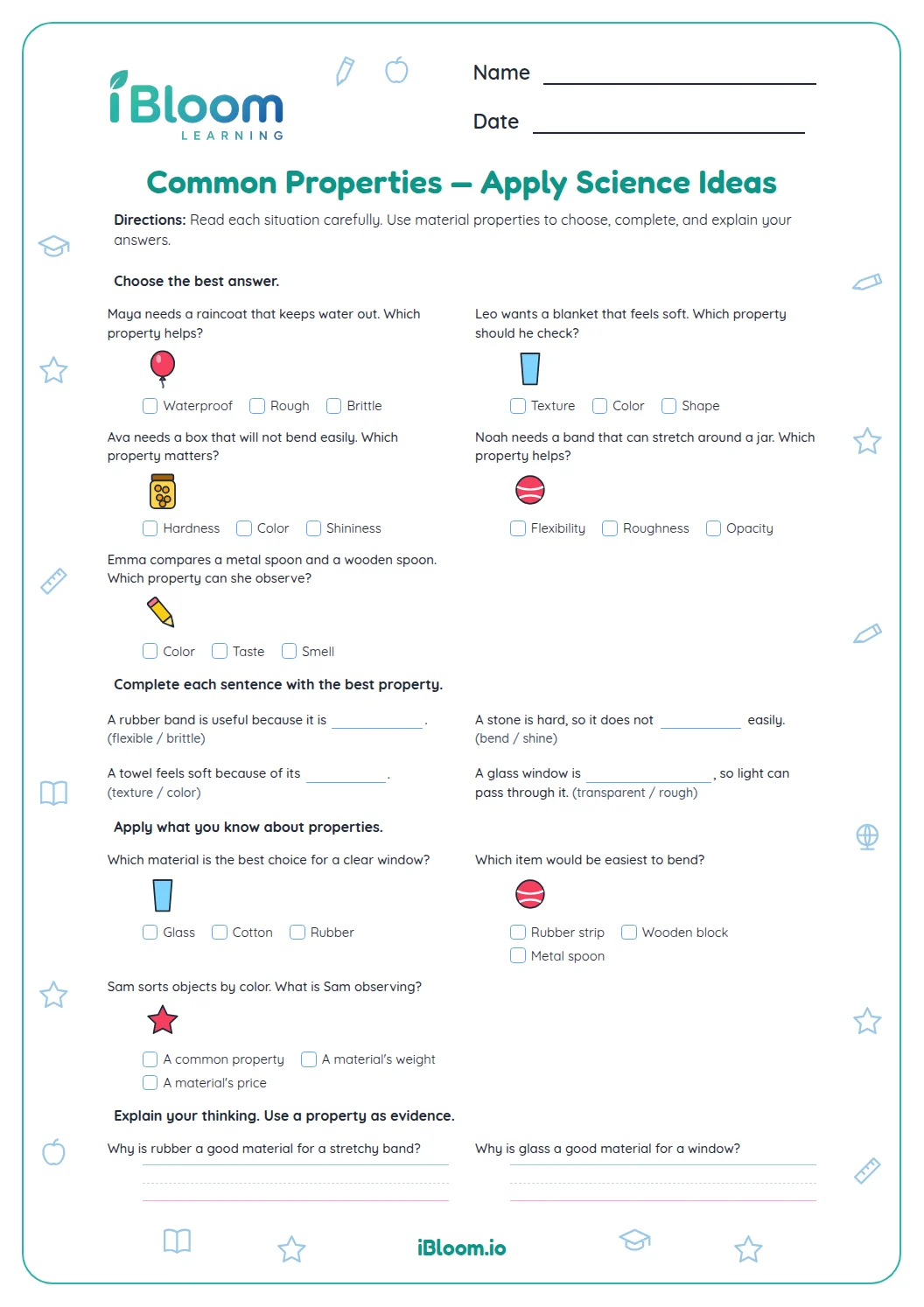
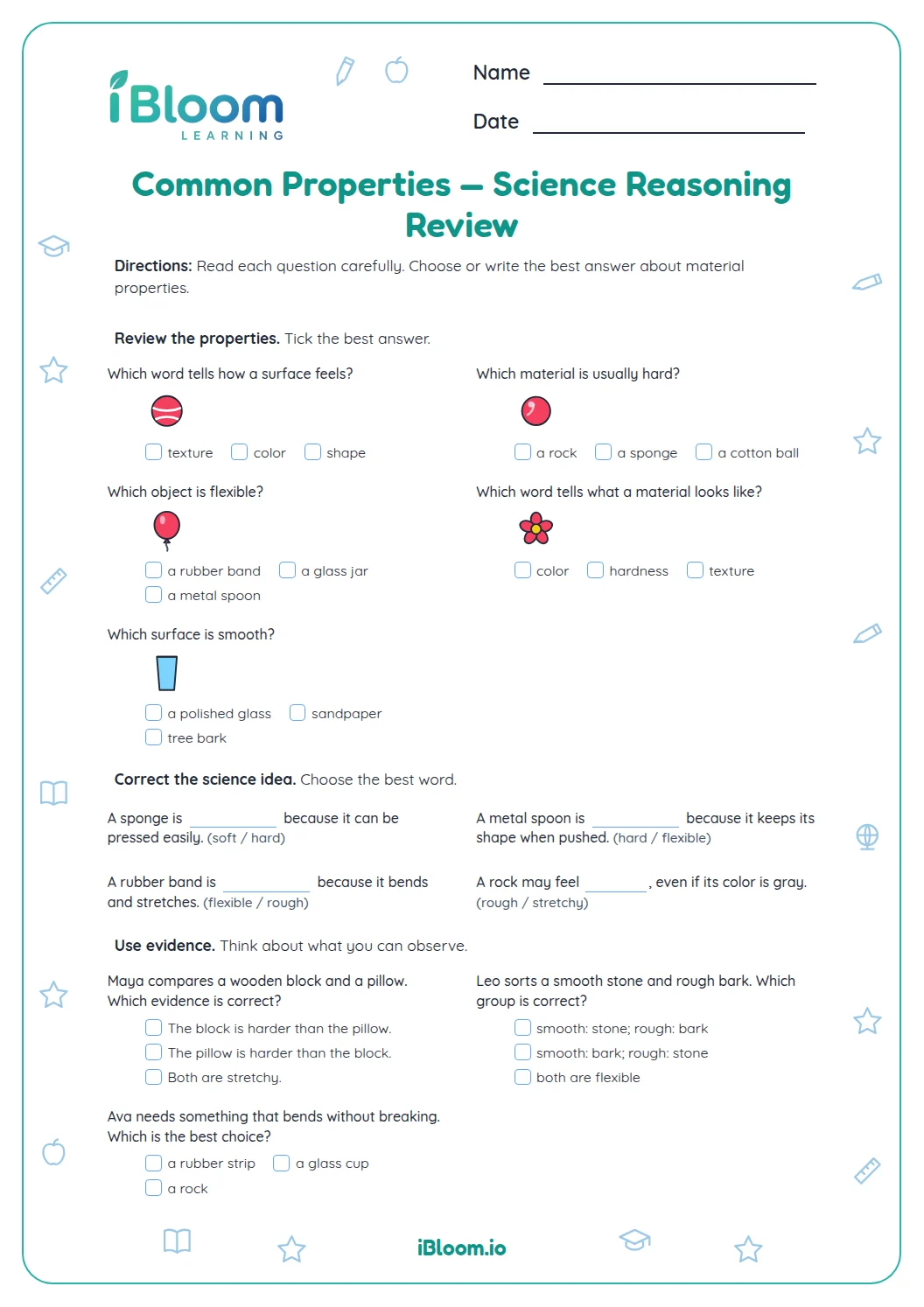
Describe what you can observe, then connect it to a property. A rock and sponge can both be solids but differ in hardness and flexibility. Question 14 asks children to choose a gentle bend test for flexibility.
- Part A classifies matter and applies ideas about state changes.
- Part B compares materials and chooses a flexibility test.
How to use this worksheet
- 1Read each situation and focus on what the material does.
- 2Use shape, flow, and spreading as clues to classify a state.
- 3For a change question, identify whether the material warms or cools.
- 4Support written answers with an observation or a simple test.
- 5Check each response with the answer key and discuss any different examples.
Common states-of-matter mix-ups
The mistake
Calling a liquid a solid because it is inside a solid cup.
The fix
Describe the liquid itself: it flows and takes the cup’s shape.
The mistake
Thinking melting makes water disappear.
The fix
Explain that solid ice becomes liquid water as it warms.
The mistake
Saying gas has no properties because it is hard to see.
The fix
Use an observation such as air filling and pushing on an inflated balloon.
Next Generation Science Standards alignment
The questions use visible properties and simple observations to classify materials.
Use observable properties to describe and classify materials.
On this sheet: Children classify materials from observations such as keeping shape, flowing, and flexibility.
Show the official wordingHide the official wording
Plan and conduct an investigation to describe and classify different kinds of materials by their observable properties.
What to practice next
Make more practice
Further reading
Questions parents and teachers ask
What are the three common states of matter?
The three states practiced here are solid, liquid, and gas. A solid keeps its own shape, a liquid flows to fit its container, and a gas spreads through available space. Children use these clues in questions 1 through 6.
What happens when ice melts?
Ice changes from a solid to liquid water as it warms. The material is still water, but its state changes. Questions 7 and 15 apply this idea to butter melting and ice melting. Question 8 contrasts this change with freezing, when liquid water becomes solid ice.
How can a child observe a gas?
Air is difficult to see, but its effects can be observed. Air fills an inflated balloon and pushes outward on it. That observation helps show that a gas takes up space and can be studied through its effects.
How can a child test whether a material is flexible?
Choose a gentle bend test and observe whether the material bends without breaking. Question 14 asks which test checks flexibility. Comparing that result with a material such as a rock or sponge helps children connect an observation to a property.
Does the worksheet include a key?
Yes. A separate answer key marks the correct choice for each of the 16 questions. Children can use it to check classifications, changes of state, and property questions. For question 14, the key identifies the gentle bend test as the way to check flexibility.