
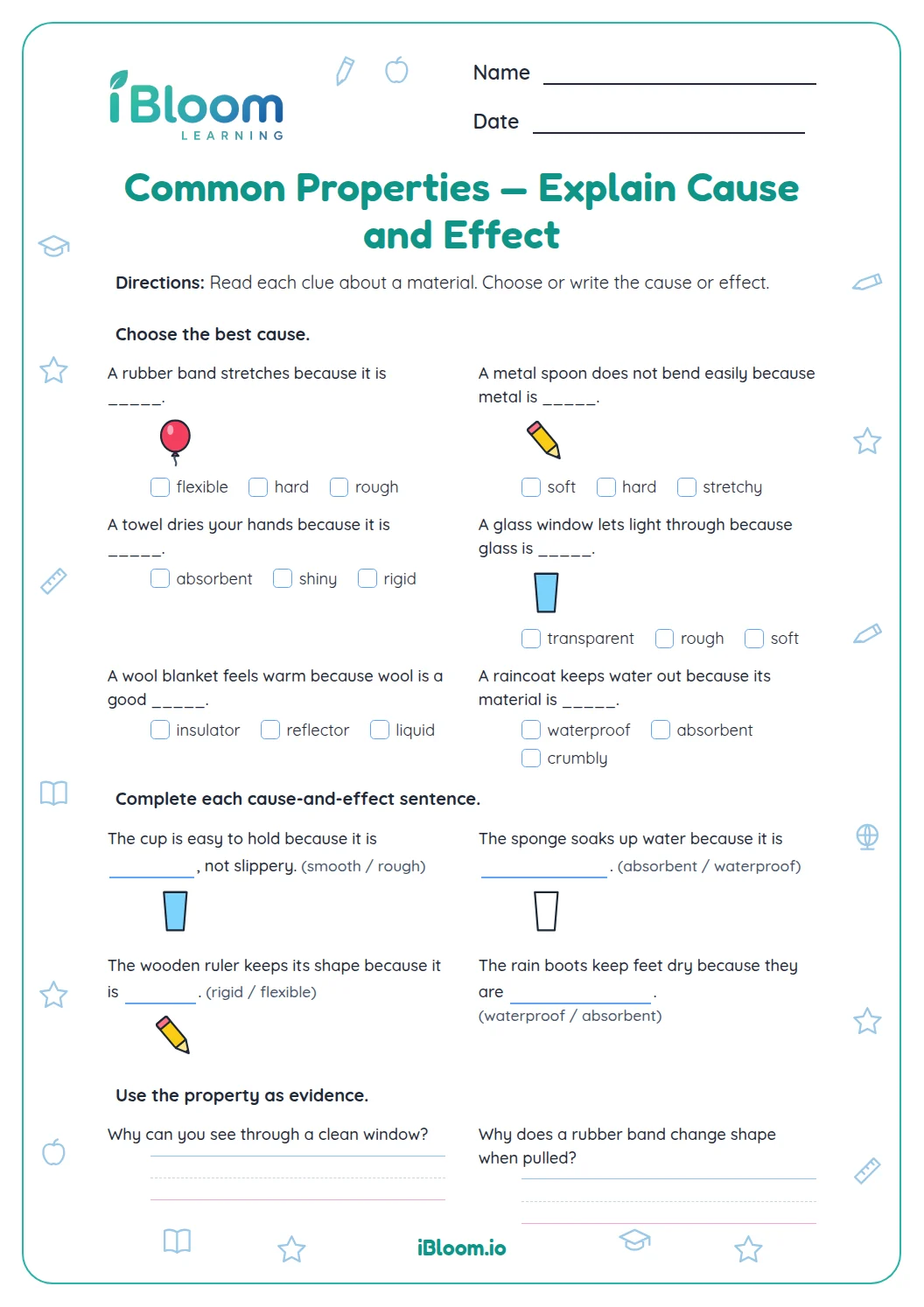
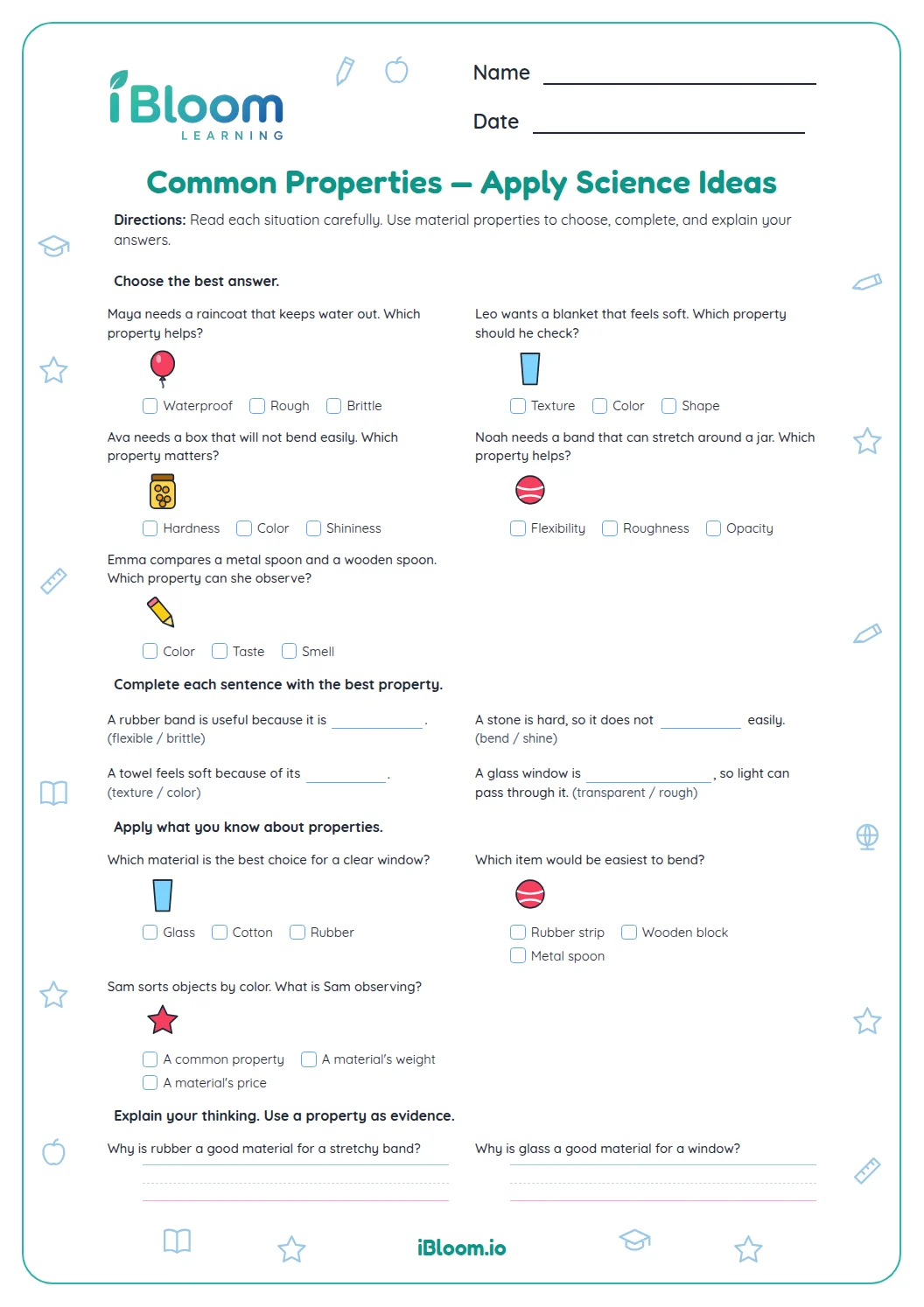
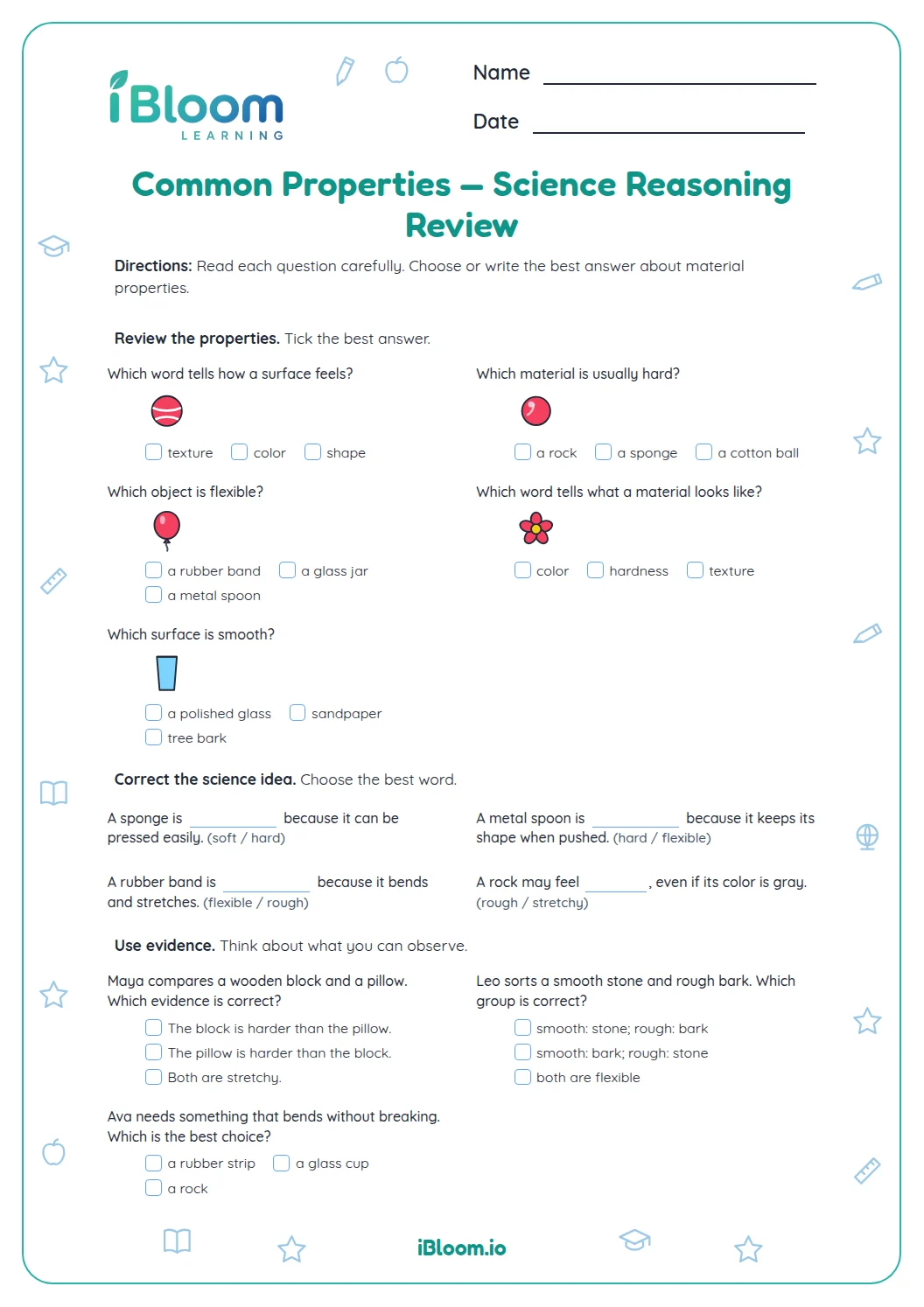
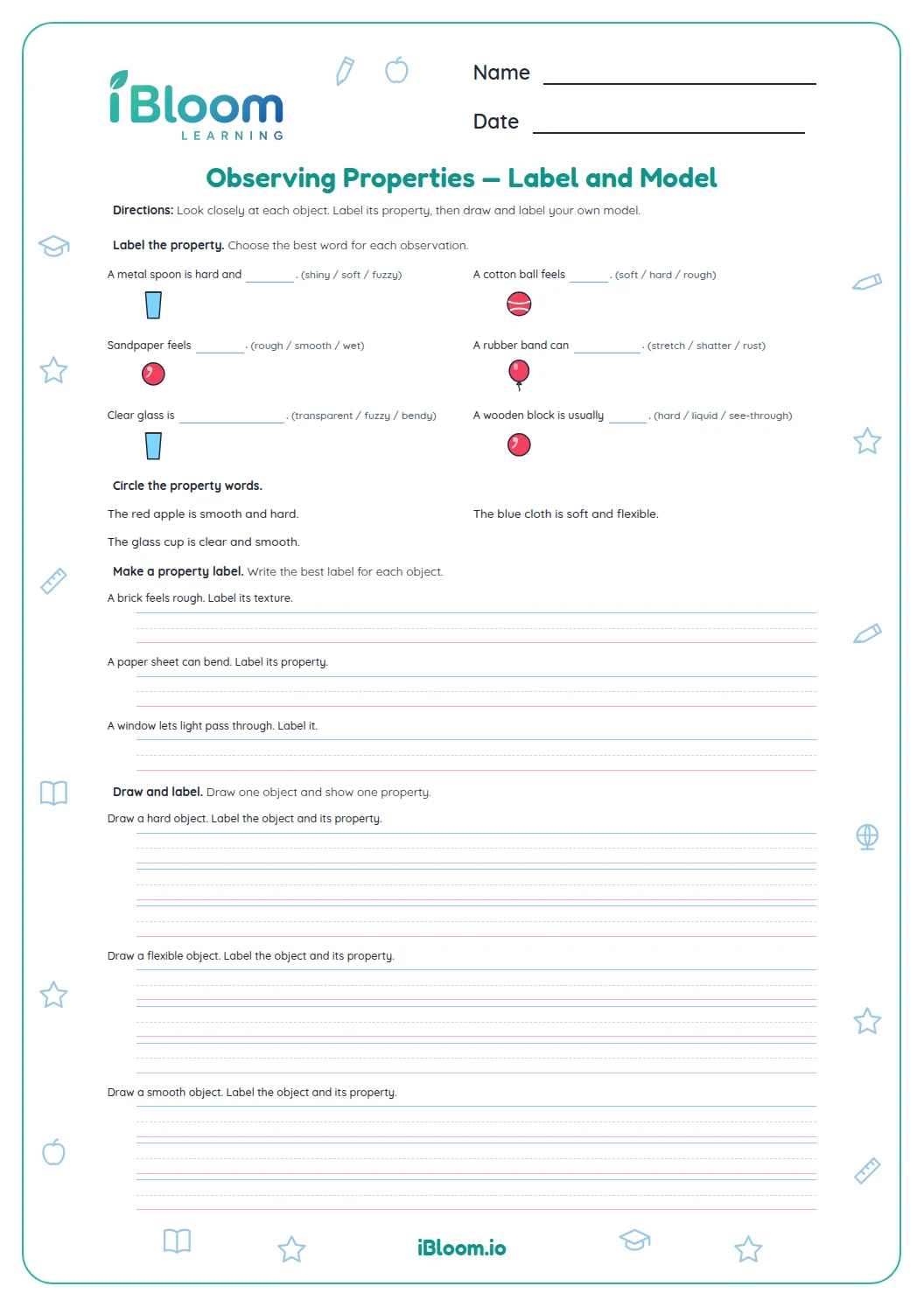
About this worksheet
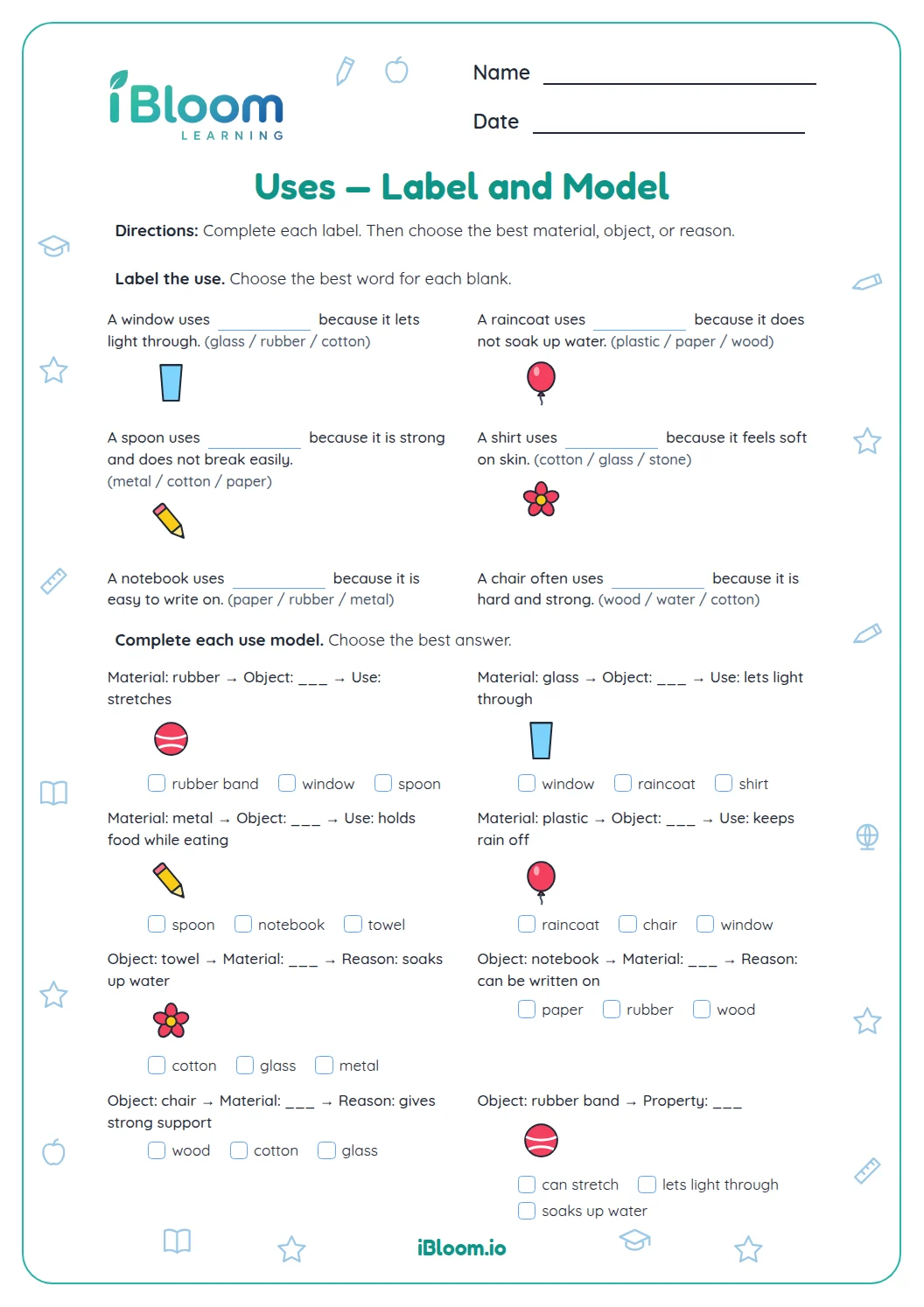
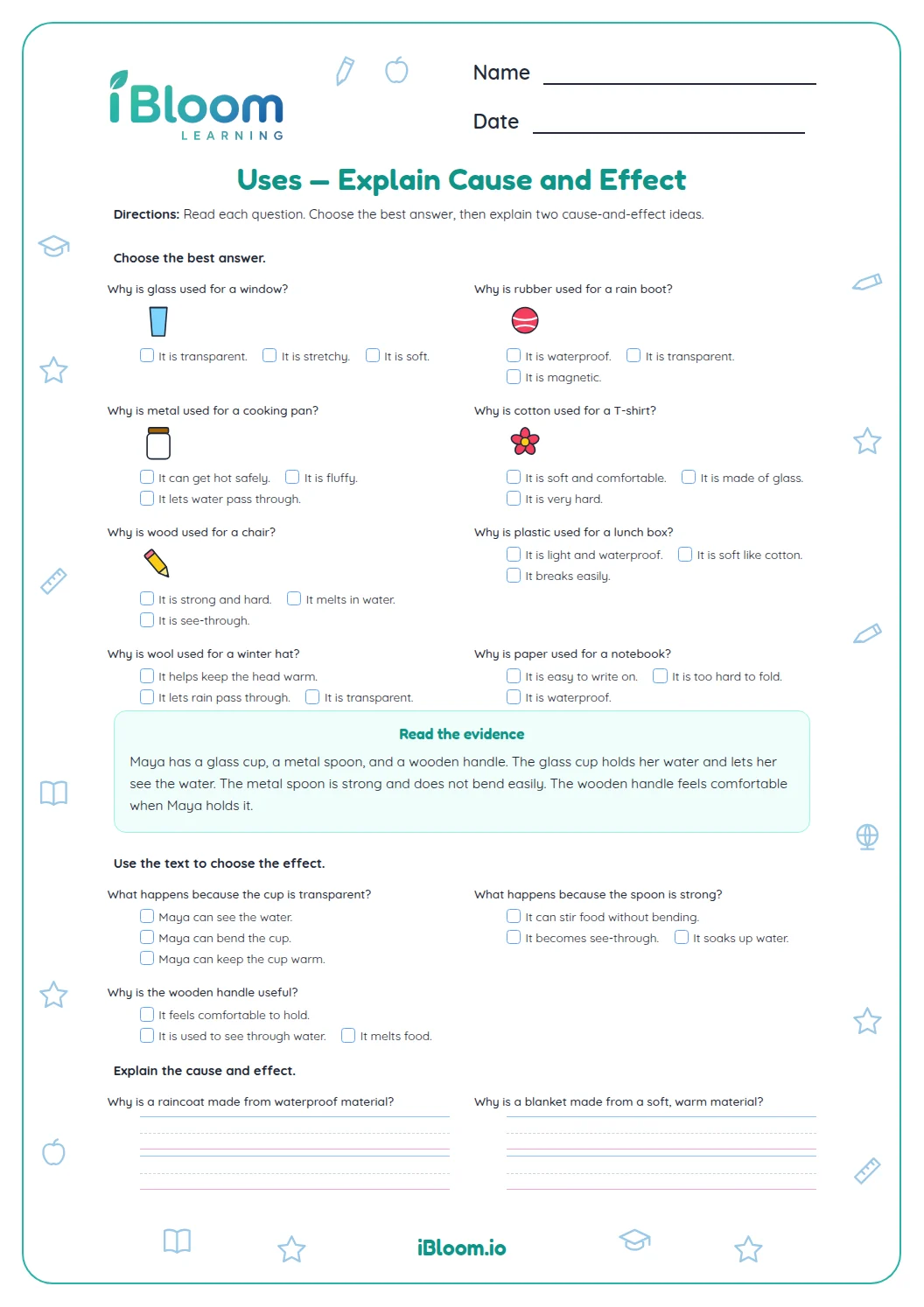
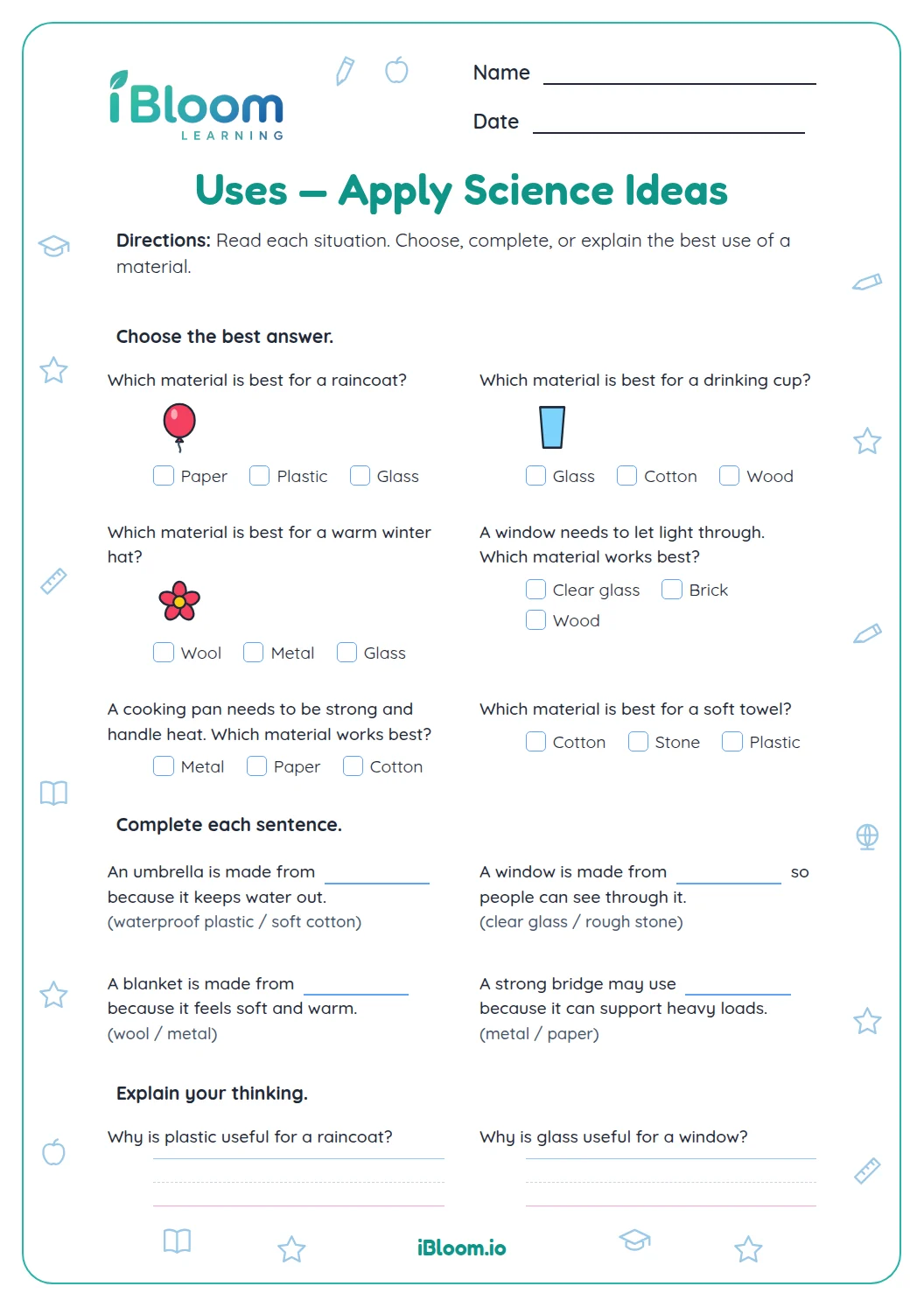
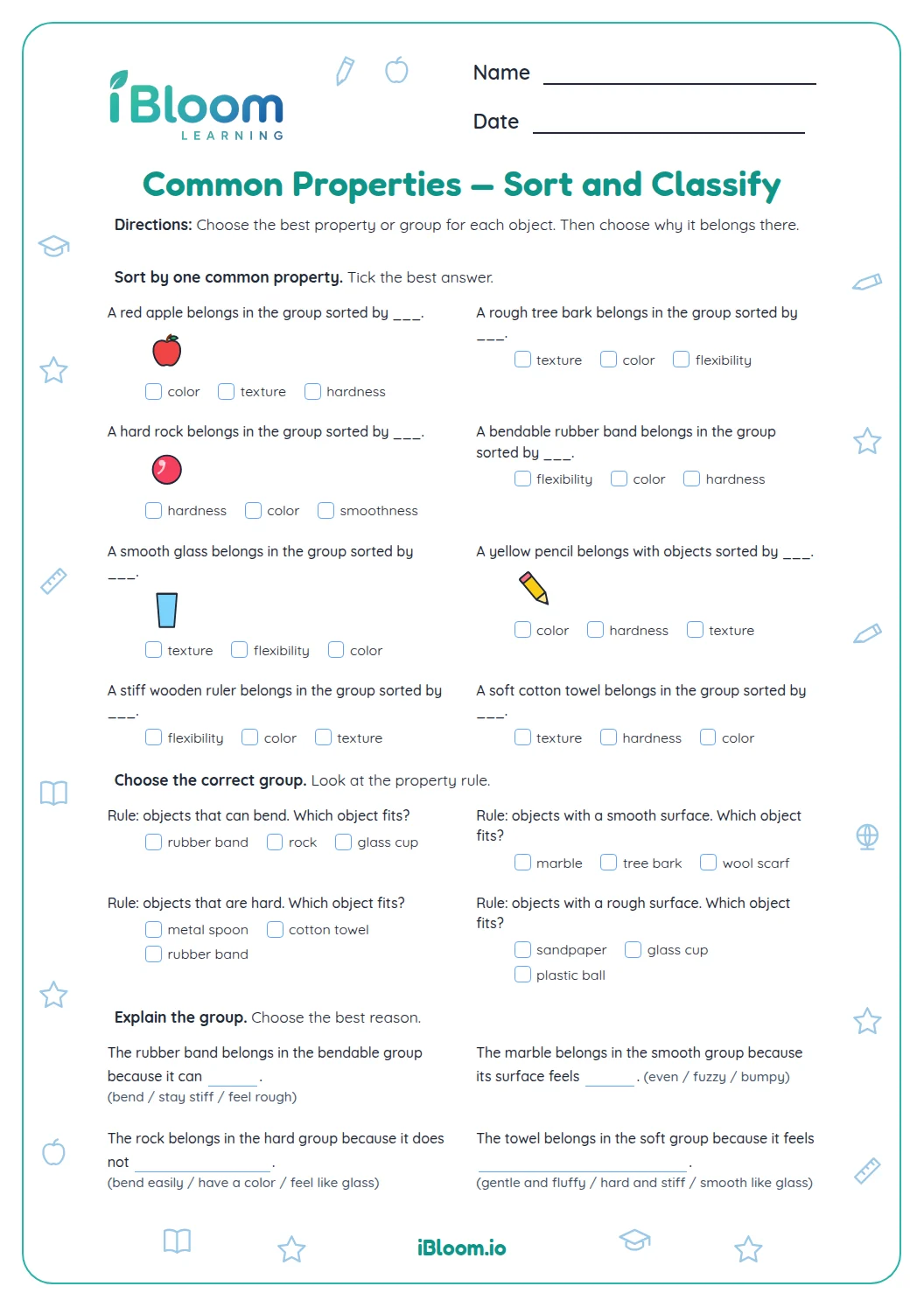
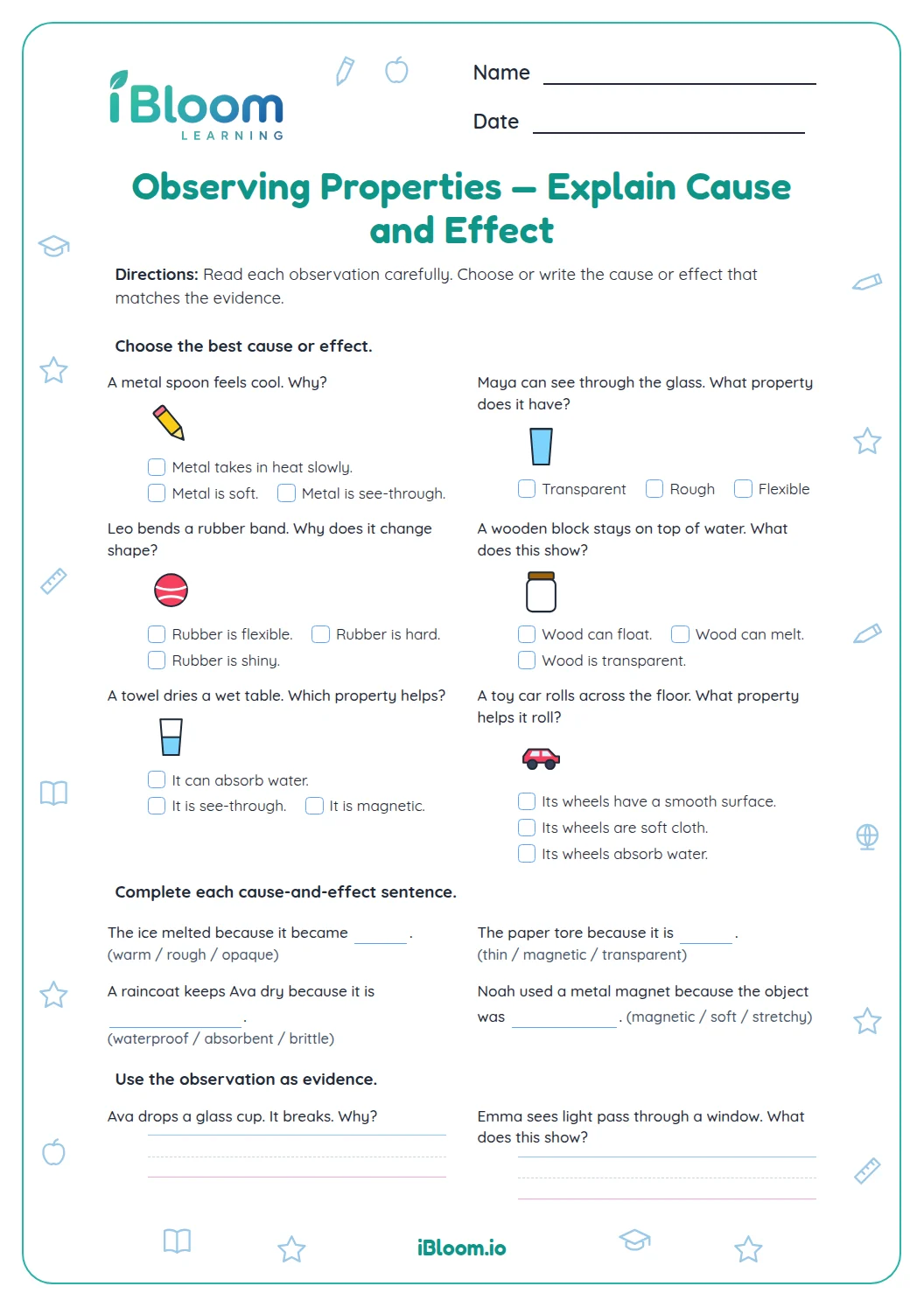
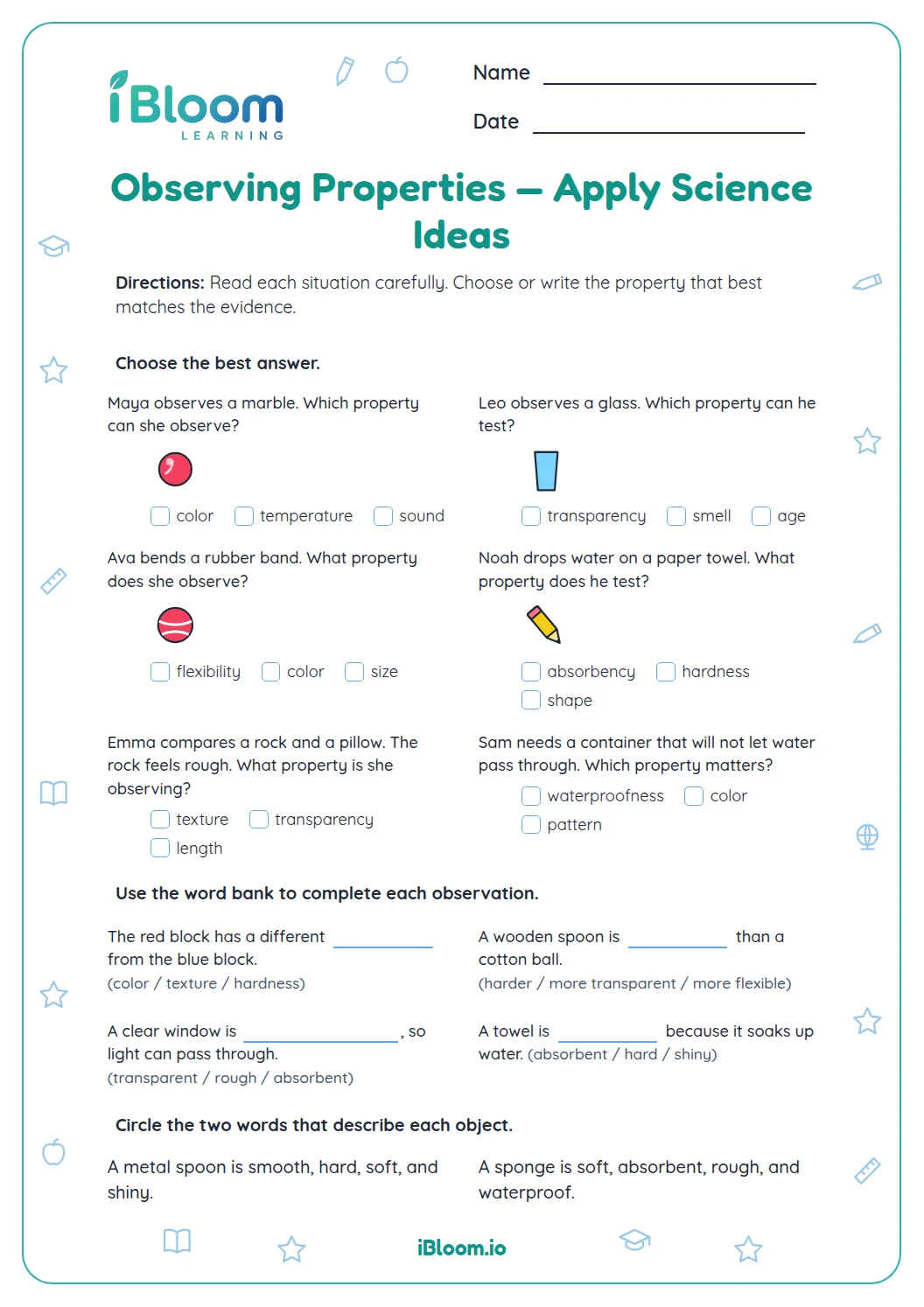
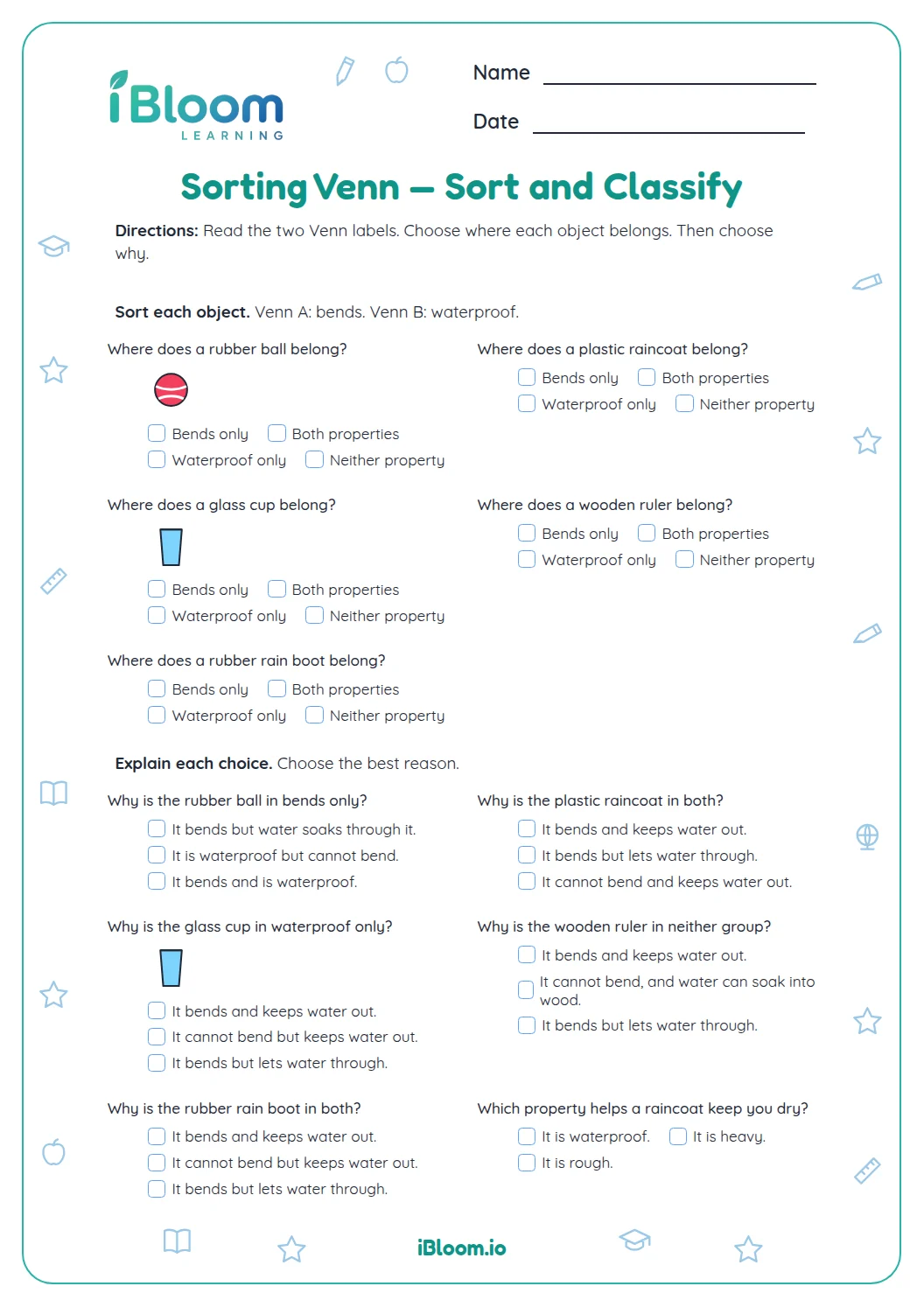
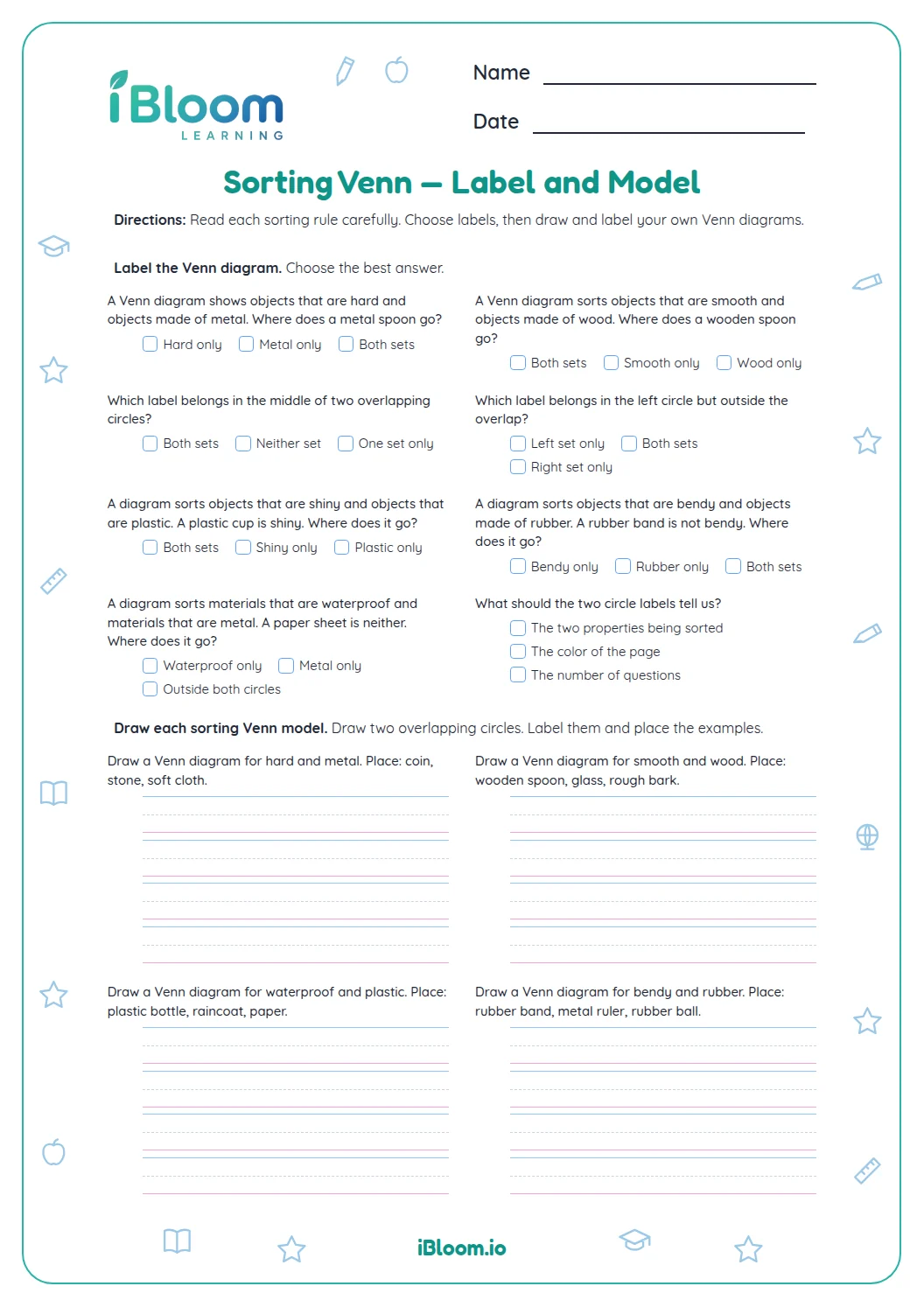
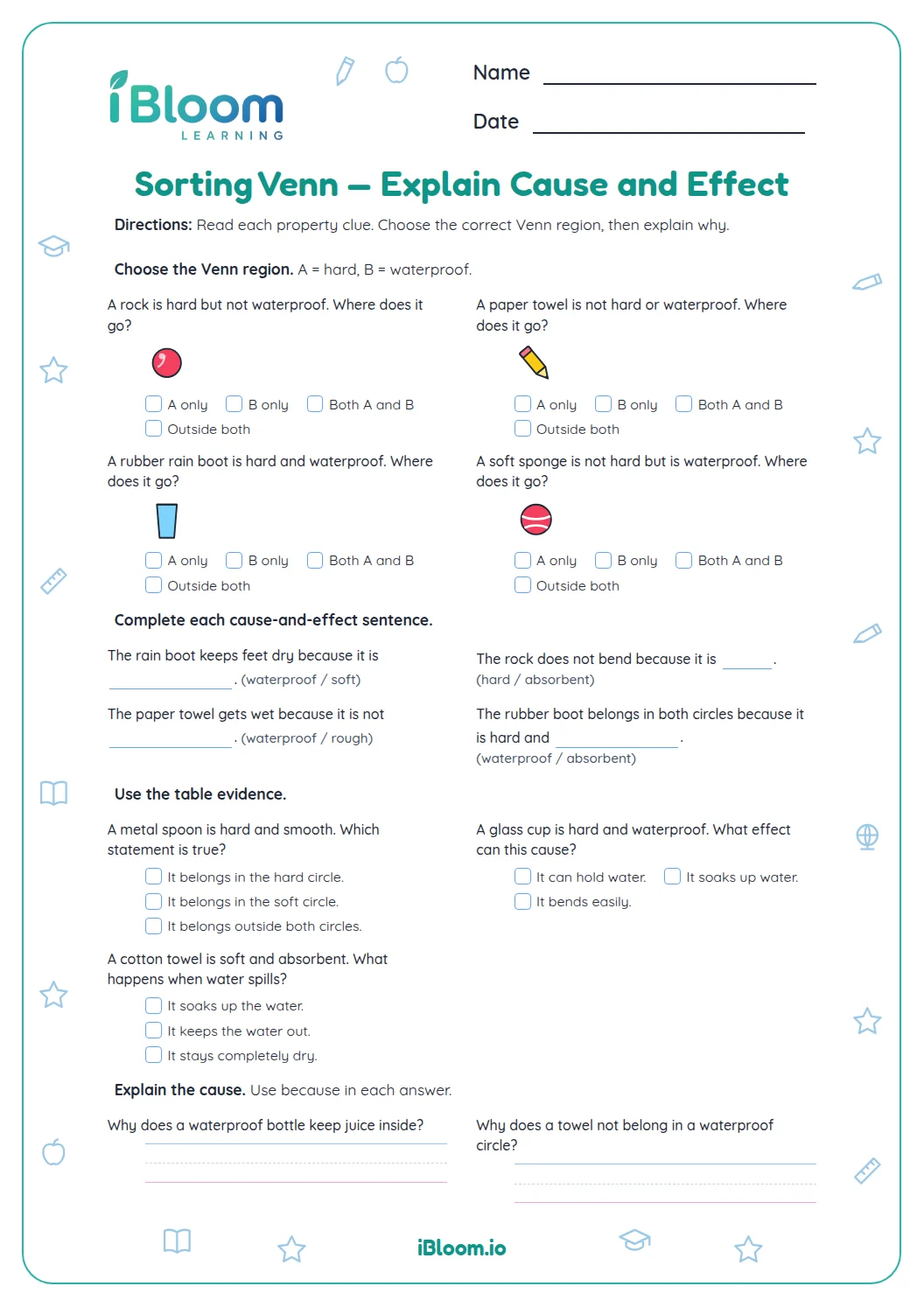
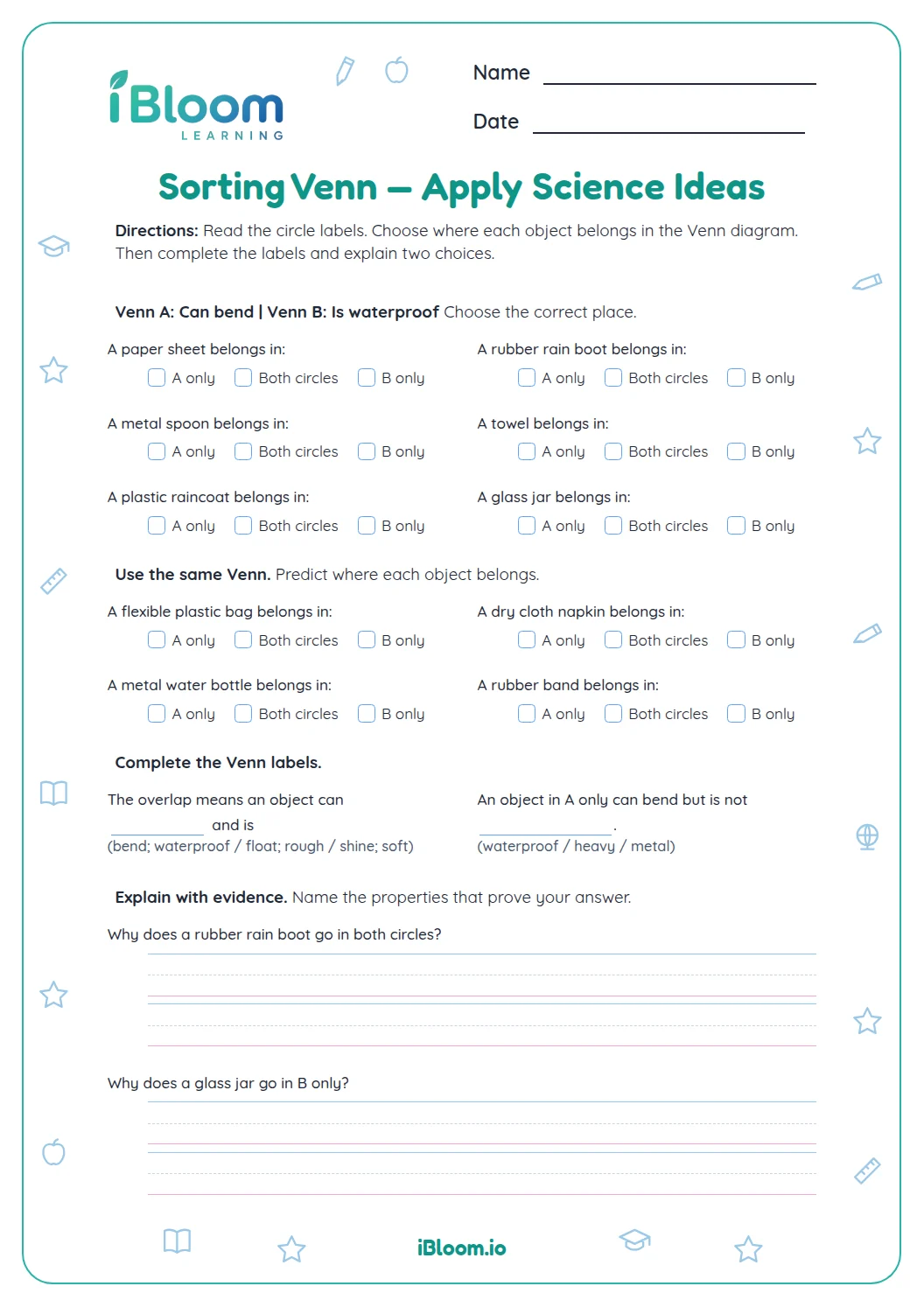
This free Grade 2 science worksheet helps students connect material properties with everyday uses. Across three parts, children choose materials for familiar jobs, identify properties that explain those uses, and analyze brief test results to make a final selection. The questions practice NGSS 2-PS1-2, and a separate answer key supports checking.
Aligned to 2-PS1-2
How does a property help a material do a job?
Part A compares familiar jobs with material properties. A raincoat works best when its material keeps water out; a towel works best when it absorbs water.
- 1A raincoat needs to keep rain from reaching clothing.
- 2Rubber repels water, so rubber fits the job.
How can a test help you choose?
Part B connects a stated property with an object’s use. Part C gives results from simple tests of different materials; children use those results to choose a material for a job.
- 1The water test says plastic stayed dry.
- 2A lining that should stay dry can use plastic.
How to use this worksheet
- 1Read what the object needs to do.
- 2Name the property that would help.
- 3Compare each material choice with that property.
- 4For test questions, use the result stated in the prompt.
- 5Check the key and explain your choice aloud.
Common mistakes and quick fixes
The mistake
Choosing a material because it is familiar, without checking the job.
The fix
Say what the object must do first, such as keep water out or bend.
The mistake
Mixing up absorbent and waterproof.
The fix
Absorbent materials take in water; waterproof materials keep water out.
The mistake
Ignoring the test result in a question.
The fix
Point to the result and use it as evidence for the choice.
Next Generation Science Standards alignment
This page uses everyday examples to connect material properties with intended uses.
Use test data to choose materials with properties suited to a purpose.
On this sheet: Students choose materials for familiar jobs by connecting a tested property with the job.
Show the official wordingHide the official wording
Analyze data obtained from testing different materials to determine which materials have the properties that are best suited for an intended purpose.
What to practice next
Make more practice
Further reading
Questions parents and teachers ask
How do children choose a material for a job?
Look at what the object needs to do, then choose a material with a fitting property. A raincoat needs to keep water out, while a towel needs to absorb water. This worksheet asks students to connect those needs with material choices and simple test evidence.
What is included on the worksheet?
There are 16 questions in three parts. Students choose materials for familiar jobs, identify properties that explain an object’s use, and use four short test results to select materials for new purposes. A separate answer key lists the intended choice for each question.
What grade is this material uses worksheet for?
This Grade 2 science page uses familiar objects and properties such as strength, flexibility, absorbency, and transparency. Its final four questions state simple test results so students can use evidence to choose a material. An adult can read the short prompts aloud if needed.
Does the page include an answer key?
Yes. A separate answer key lists the intended material choice for all 16 questions. The last four prompts include test results, so children can point to the evidence that supports a choice. An adult can ask which property fits the object’s job.
How can I help if my child picks a different material?
Ask what the object needs to do, then have the child find the test result that supports a material choice. In the lunch-bag example, plastic stayed dry in the water test. The prompt’s evidence helps narrow the choice even when real products can use several materials.