Free printable practice
Uses Practice Activities
Grade 2 science worksheets that help children match everyday materials to sensible uses based on their properties.
Free printable worksheet PDFs
Preview every available page, then download the free worksheet PDF for home, homeschool, tutoring, or classroom practice.
Preview the exact activity before downloading it.
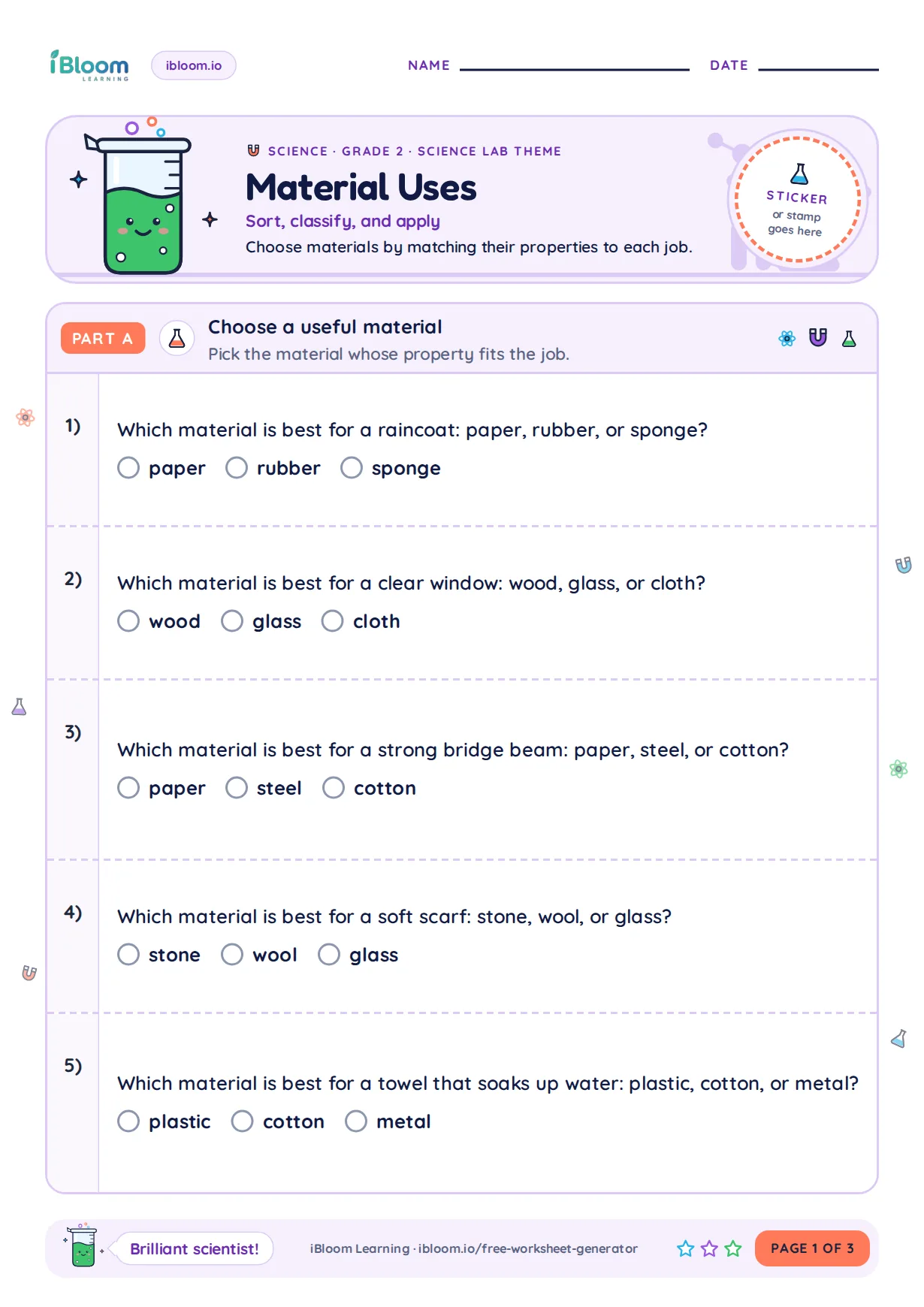 Uses — Sort and ClassifyGrade 2 science worksheets that help children match everyday materials to sensible uses based on their properties. This sort and classify worksheet provides a distinct, age-appropriate way to practise the same lesson.Grade 2Free PDF preview
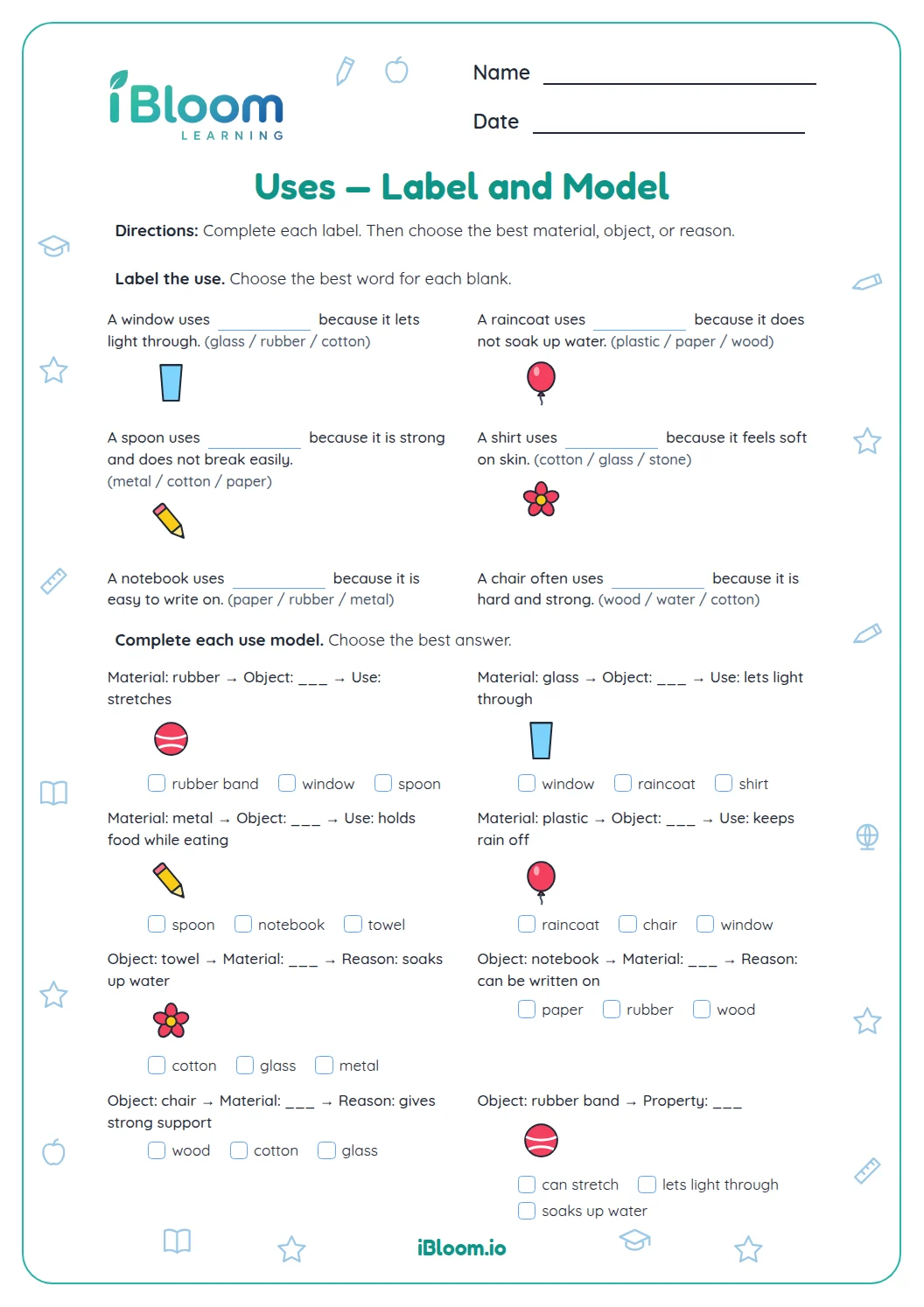 Uses — Label and ModelGrade 2 science worksheets that help children match everyday materials to sensible uses based on their properties. This label and model worksheet provides a distinct, age-appropriate way to practise the same lesson.Grade 2Free PDF preview
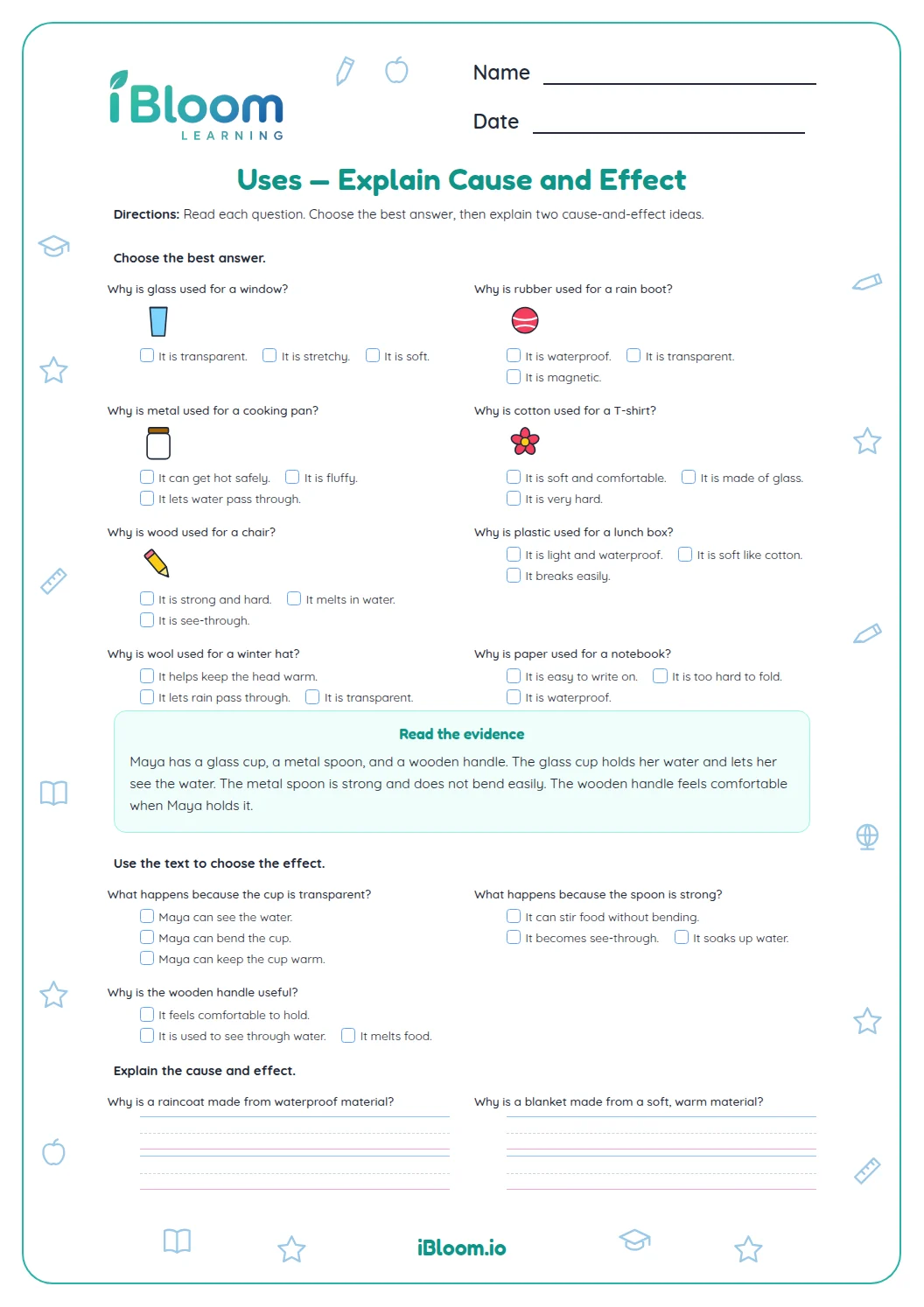 Uses — Explain Cause and EffectGrade 2 science worksheets that help children match everyday materials to sensible uses based on their properties. This explain cause and effect worksheet provides a distinct, age-appropriate way to practise the same lesson.Grade 2Free PDF preview
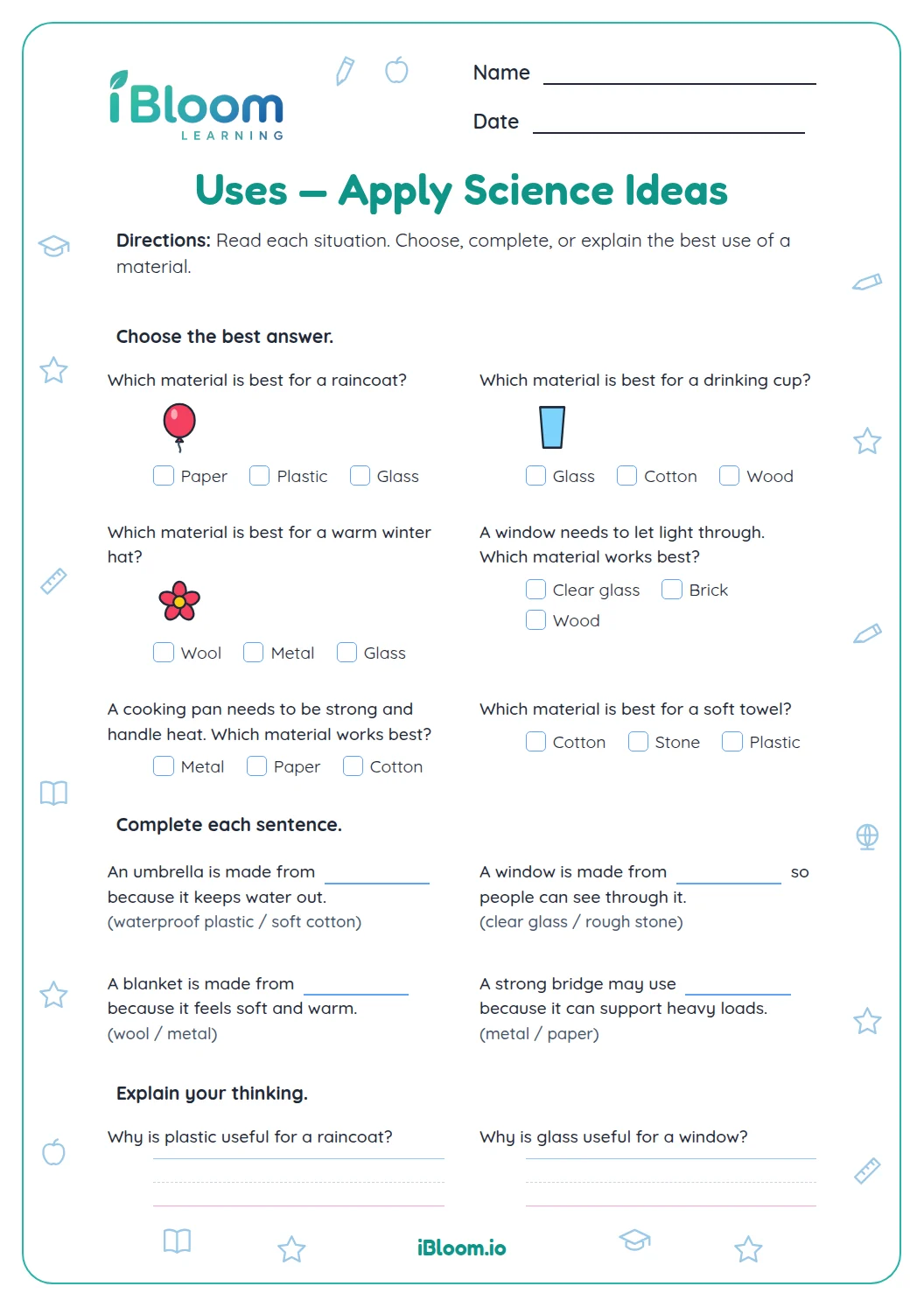 Uses — Apply Science IdeasGrade 2 science worksheets that help children match everyday materials to sensible uses based on their properties. This apply science ideas worksheet provides a distinct, age-appropriate way to practise the same lesson.Grade 2Free PDF preview6 pages
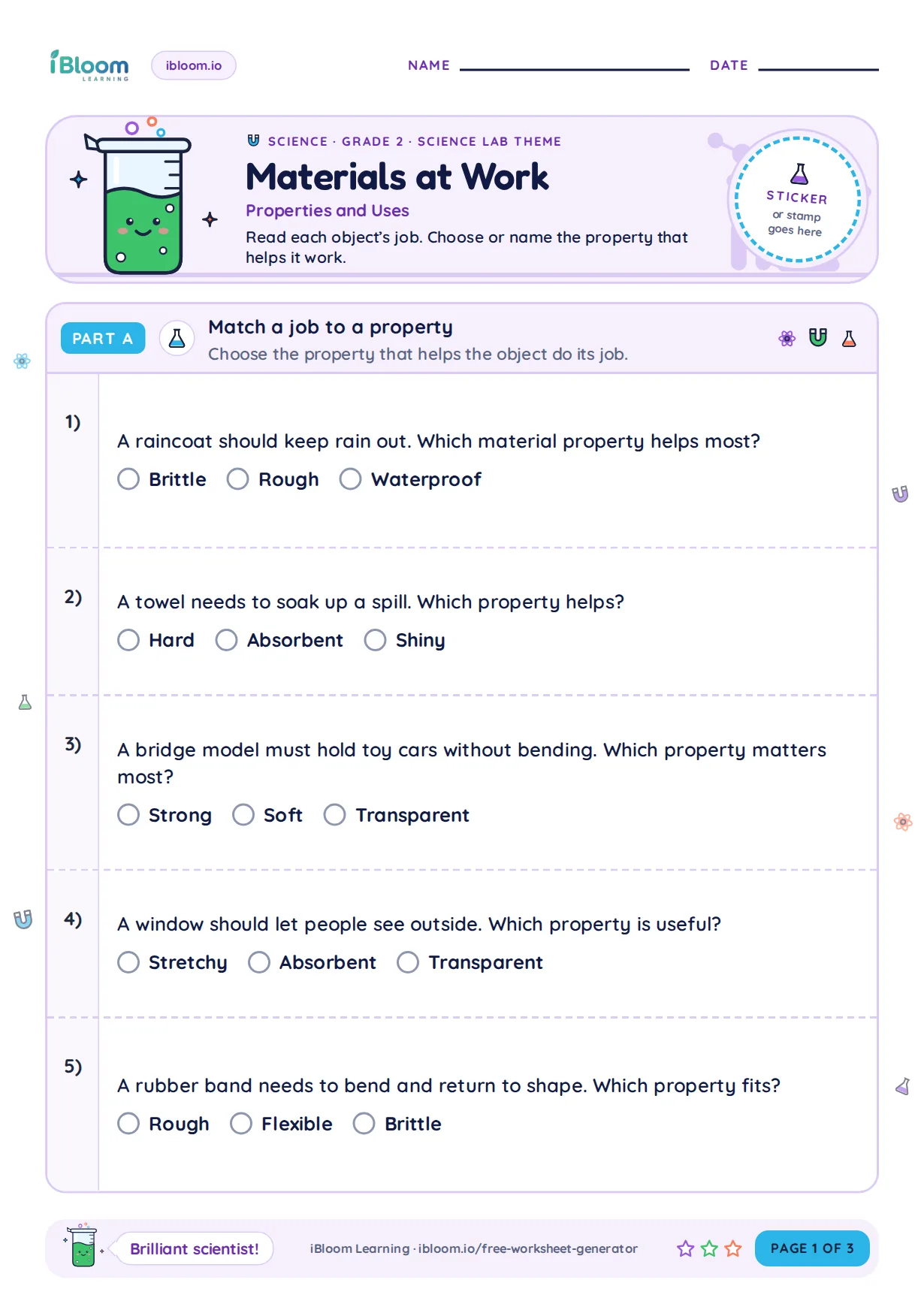 Uses — Science Reasoning ReviewGrade 2 science worksheets that help children match everyday materials to sensible uses based on their properties. This science reasoning review worksheet provides a distinct, age-appropriate way to practise the same lesson.Grade 2Free PDF preview
Practice that builds confidence
From properties to purpose
These Grade 2 science worksheets help children connect everyday materials with the jobs they are best suited for. Students look beyond naming wood, metal, glass, plastic, paper, fabric, or rubber and think about why each material is used in real objects.
The printable activities include sorting, matching, choosing the best material for an object, and giving simple reasons using property words. Children practise linking uses to qualities such as strong, flexible, transparent, waterproof, soft, hard, or easy to shape.
This skill is about cause and effect: a material is chosen because it has useful properties. A window may use glass because it is transparent, a tire uses rubber because it is flexible and grips well, and a cooking pot often uses metal because it is strong and conducts heat. The focus is not memorising one answer, but explaining a reasonable choice.

How the worksheets build understanding
Activities usually begin with familiar objects, then move toward comparisons. Children may match an umbrella to a waterproof material, decide whether paper or plastic is better for a water bottle, or sort objects by the material they are made from. As they progress, they are encouraged to use science vocabulary in short explanations: “I chose metal because it is strong,” or “Fabric is soft, so it is good for a shirt.”
A simple parent routine
At home, choose three objects such as a spoon, bag, and book cover. Ask, “What is it made from?” then “Why is that material useful?” If your child gives a one-word answer, prompt with property words: hard, soft, bendy, shiny, clear, waterproof, or strong. Finish by asking them to imagine a poor material choice, such as a paper rain boot, and explain what would go wrong.

Classroom uses for teachers
Teachers can use these pages during a material properties unit, in science centers, or after a hands-on object investigation. They also work well for partner talk: one student chooses a material and the other justifies the use. Written responses provide a quick check of whether students can connect an object’s purpose to a property rather than simply name the material.

Common errors to watch for
Some children choose materials based only on appearance or personal preference, such as “I like plastic.” Others think every hard material is strong enough for every job, or forget that one object can contain several materials. Encourage them to test their reasoning: Would it get wet? Would it break? Can you see through it? Is it comfortable to wear?
Free printable PDF download
Use this grade 2 material uses worksheet page to preview the activity, print it, or download it as a PDF for quick practice. It works well for homework, homeschool lessons, tutoring, morning work, revision, and classroom centers.
Answers and answer key support
After the child completes the worksheet independently, parents and teachers can use the answer support or answer key information to check the work, review mistakes, and choose the next practice step.
Why iBloom worksheets help
The activities use everyday examples, clear visuals, and short prompts so Grade 2 learners can reason scientifically without being overwhelmed. A helpful strategy is: name the object, name the material, name the property, then name the use. For example: “A raincoat is made from waterproof material so it keeps water out.”
Helpful answers
Frequently asked questions
What does “uses of materials” mean in Grade 2 science?
It means understanding why certain materials are chosen for particular objects, such as glass for windows because it is transparent or rubber for tires because it is flexible and grips the road.
Do these worksheets focus on naming materials or explaining choices?
They include naming materials, but the main goal is explanation. Children practise connecting a material’s property, such as waterproof, strong, soft, or clear, to the way an object is used.
What vocabulary should my child know before using these pages?
Helpful words include wood, metal, glass, plastic, paper, fabric, rubber, hard, soft, flexible, strong, transparent, waterproof, and absorbent. The worksheets also reinforce these words through context.
How can I support my child if they choose an unsuitable material?
Ask a practical question instead of giving the answer right away: “What would happen if it got wet?” or “Would that break easily?” This helps your child test the material against the object’s purpose.
Can these worksheets be used with hands-on science activities?
Yes. They pair well with sorting real classroom or household objects by material, testing simple properties, and then recording which materials are best for different uses.
Is this grade 2 material uses worksheet free?
Yes. You can preview it for free and use the printable worksheet for home or classroom practice.
Can I download this grade 2 material uses worksheet as a PDF?
Yes. Use the worksheet download option to save a printable PDF, or print the worksheet directly from the page.
Does this grade 2 material uses worksheet include answers or an answer key?
When the activity has fixed answers, iBloom includes answer support so parents and teachers can check the completed worksheet.