
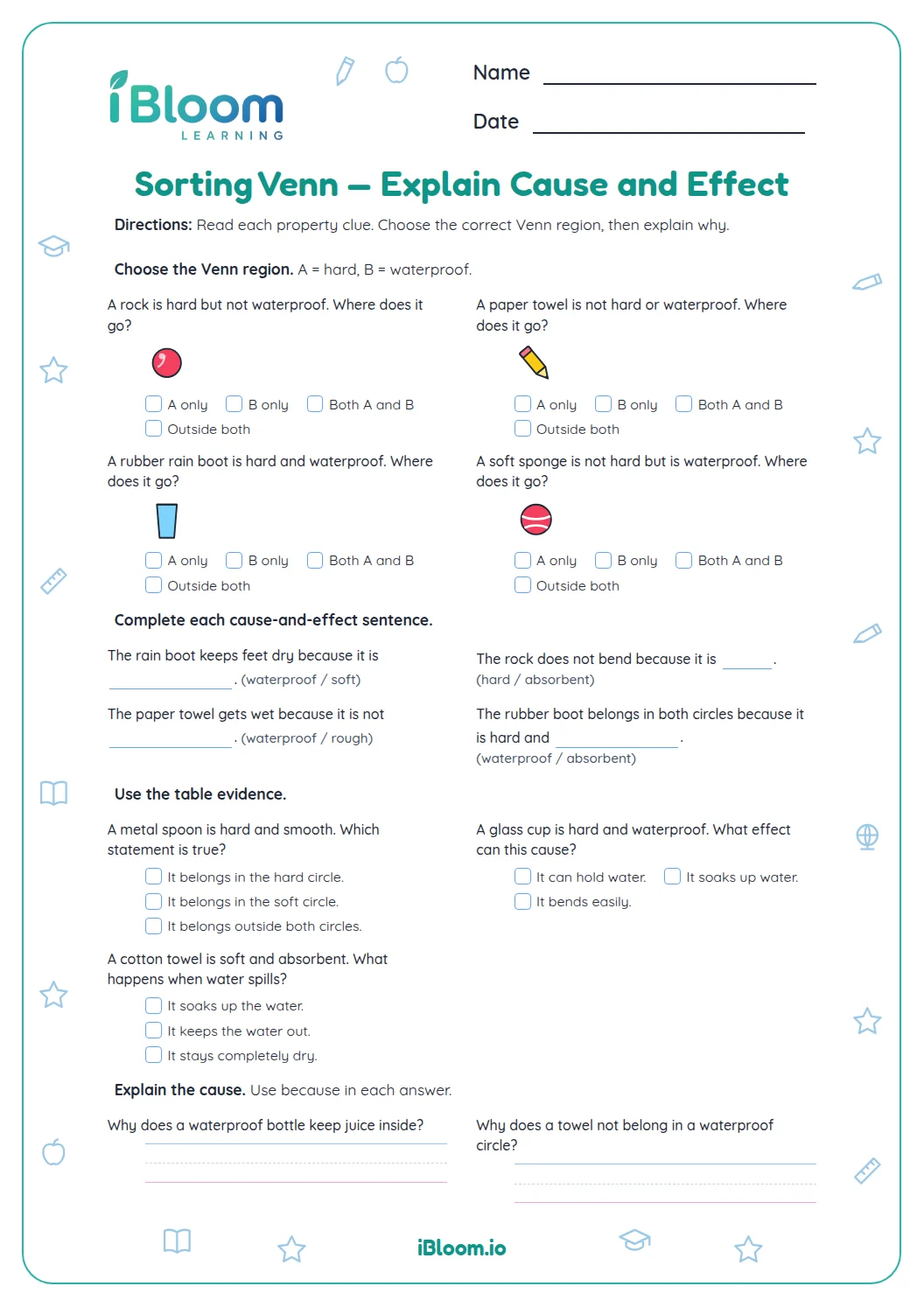
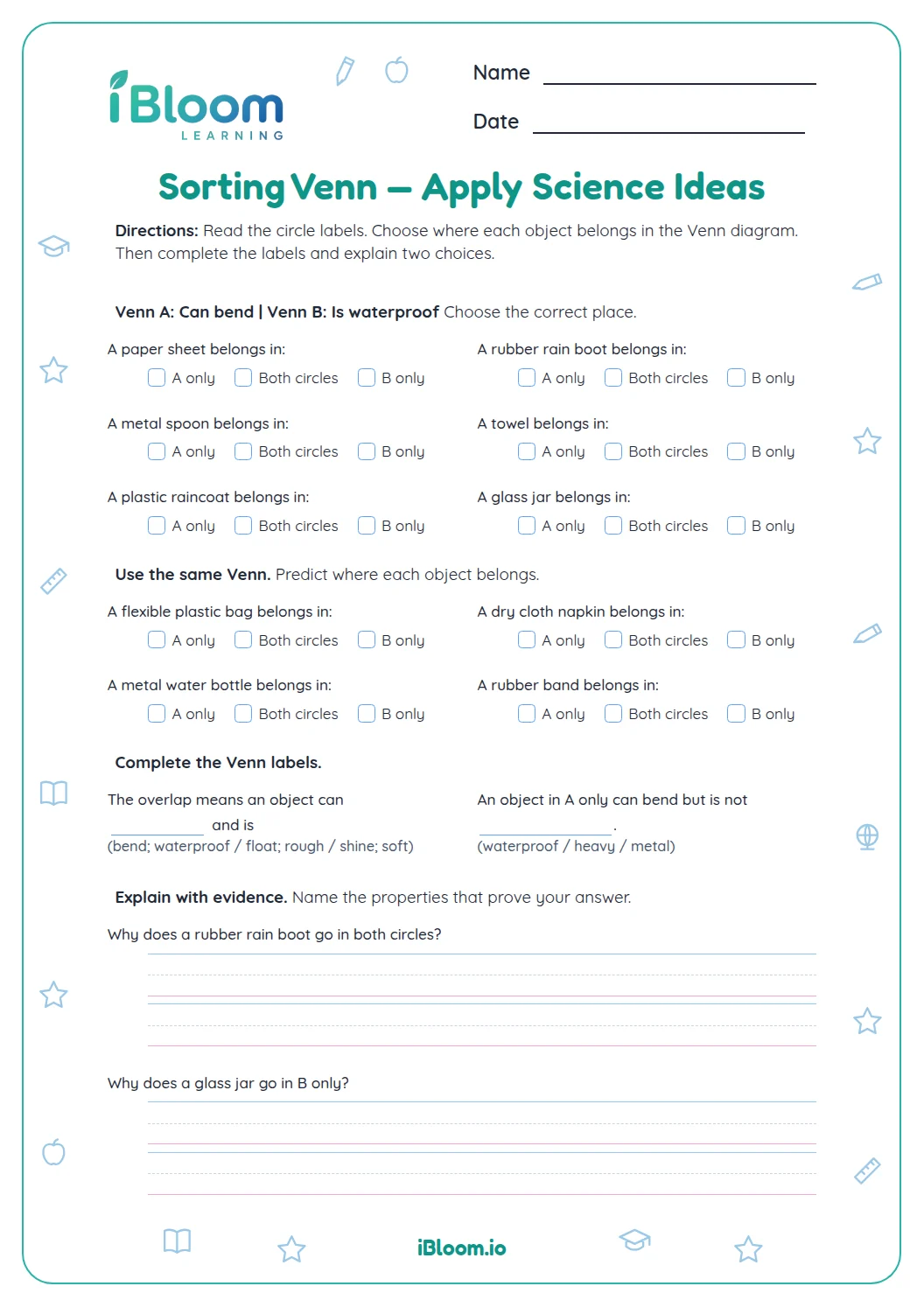
About this worksheet
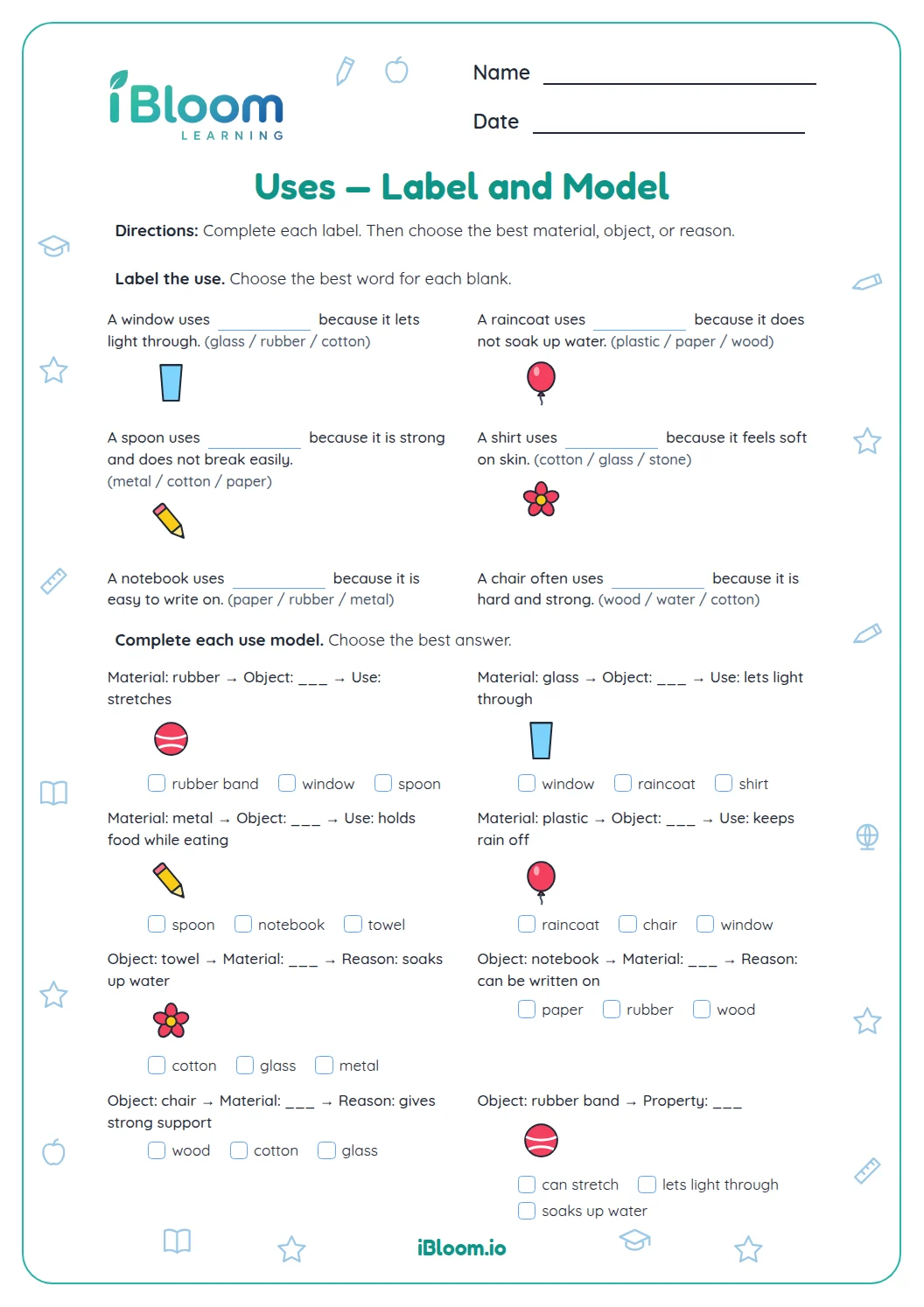
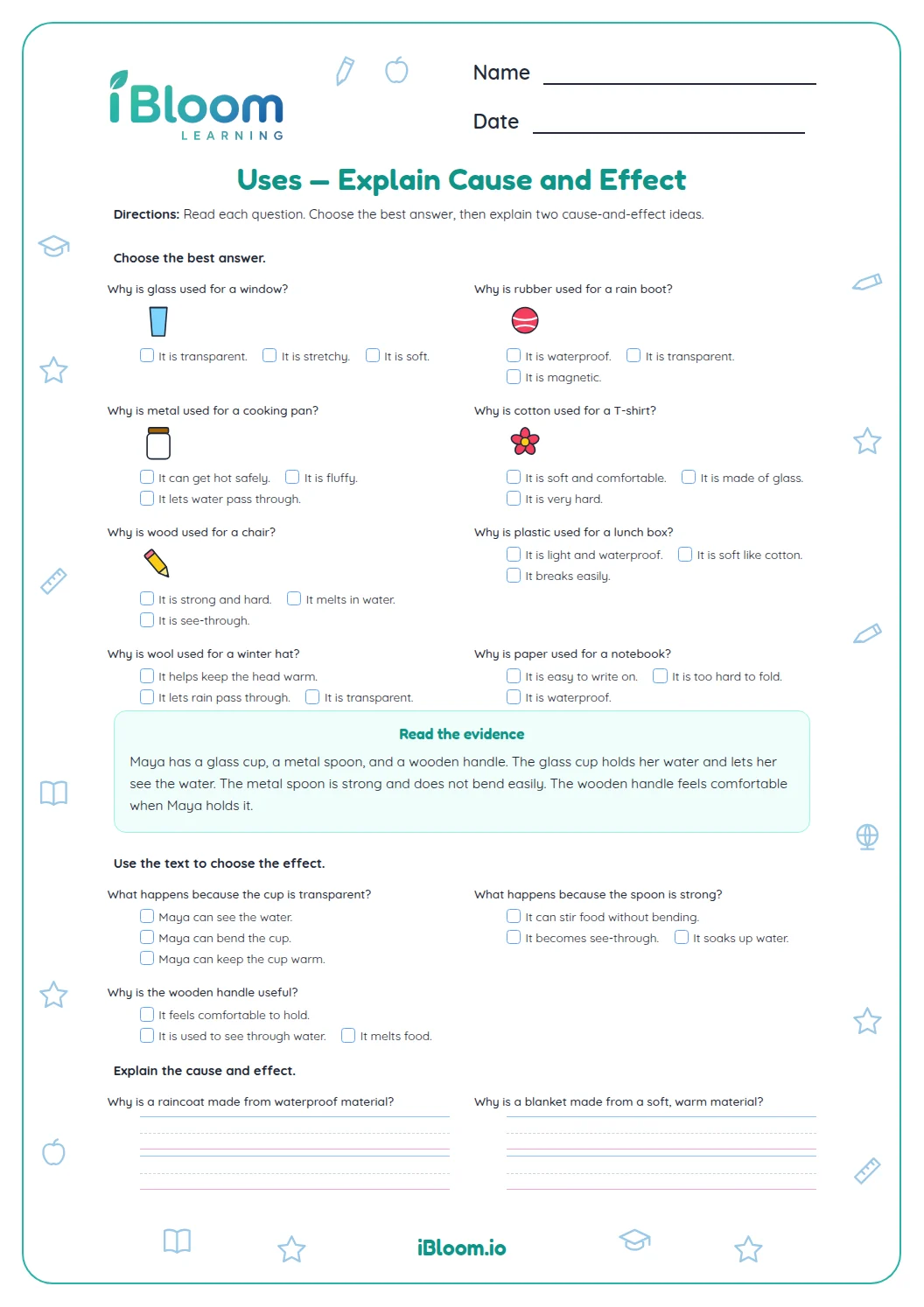
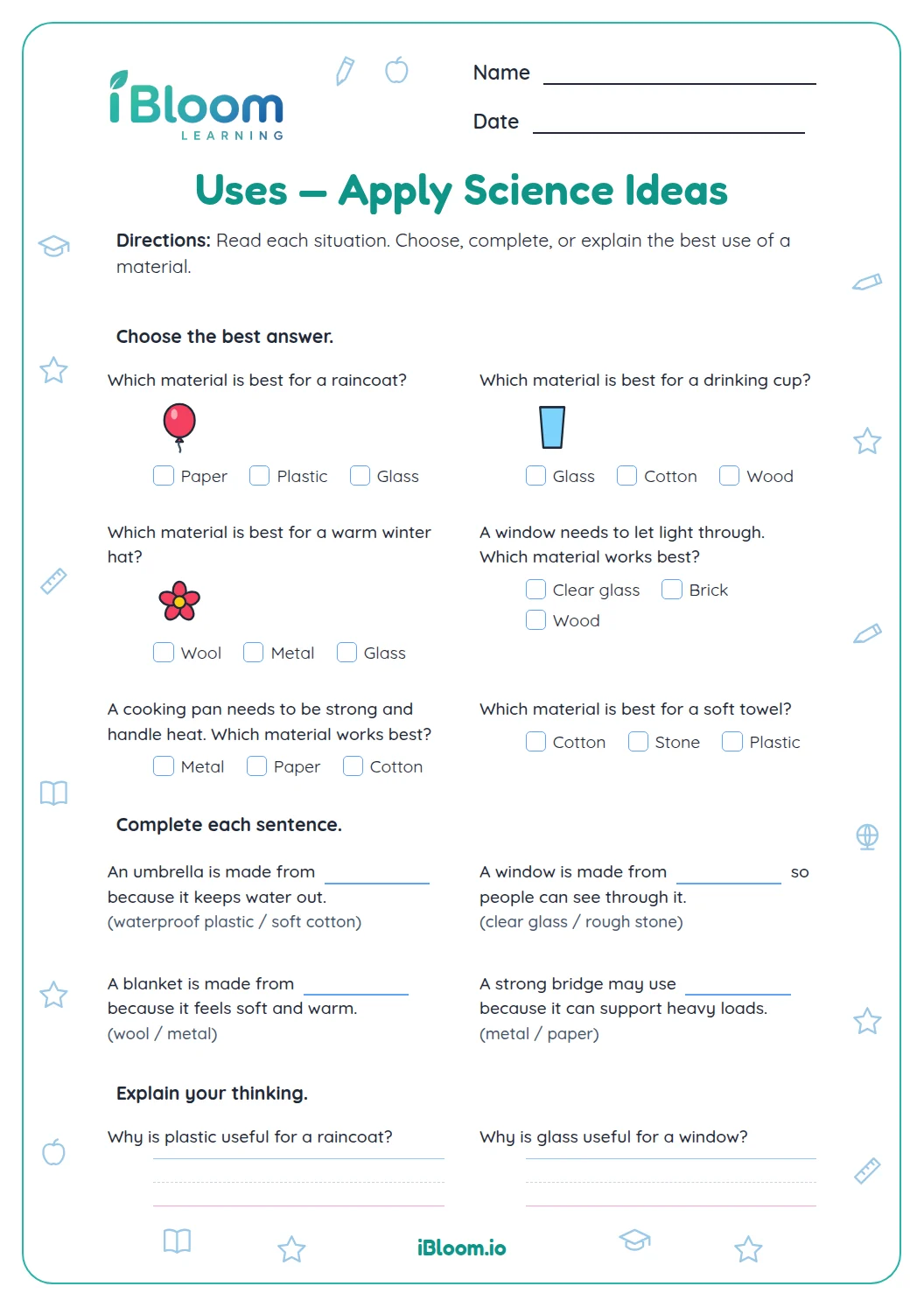
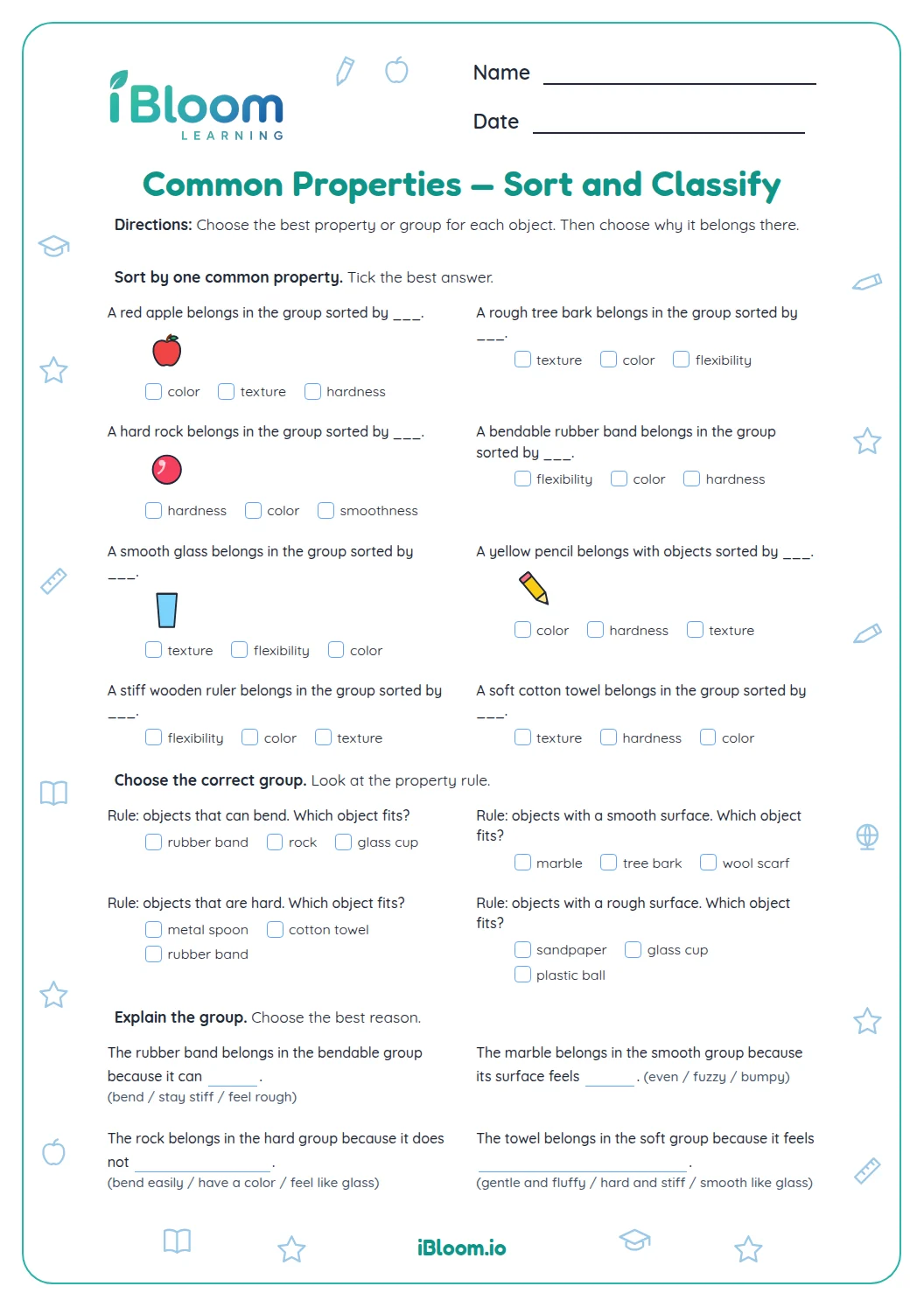
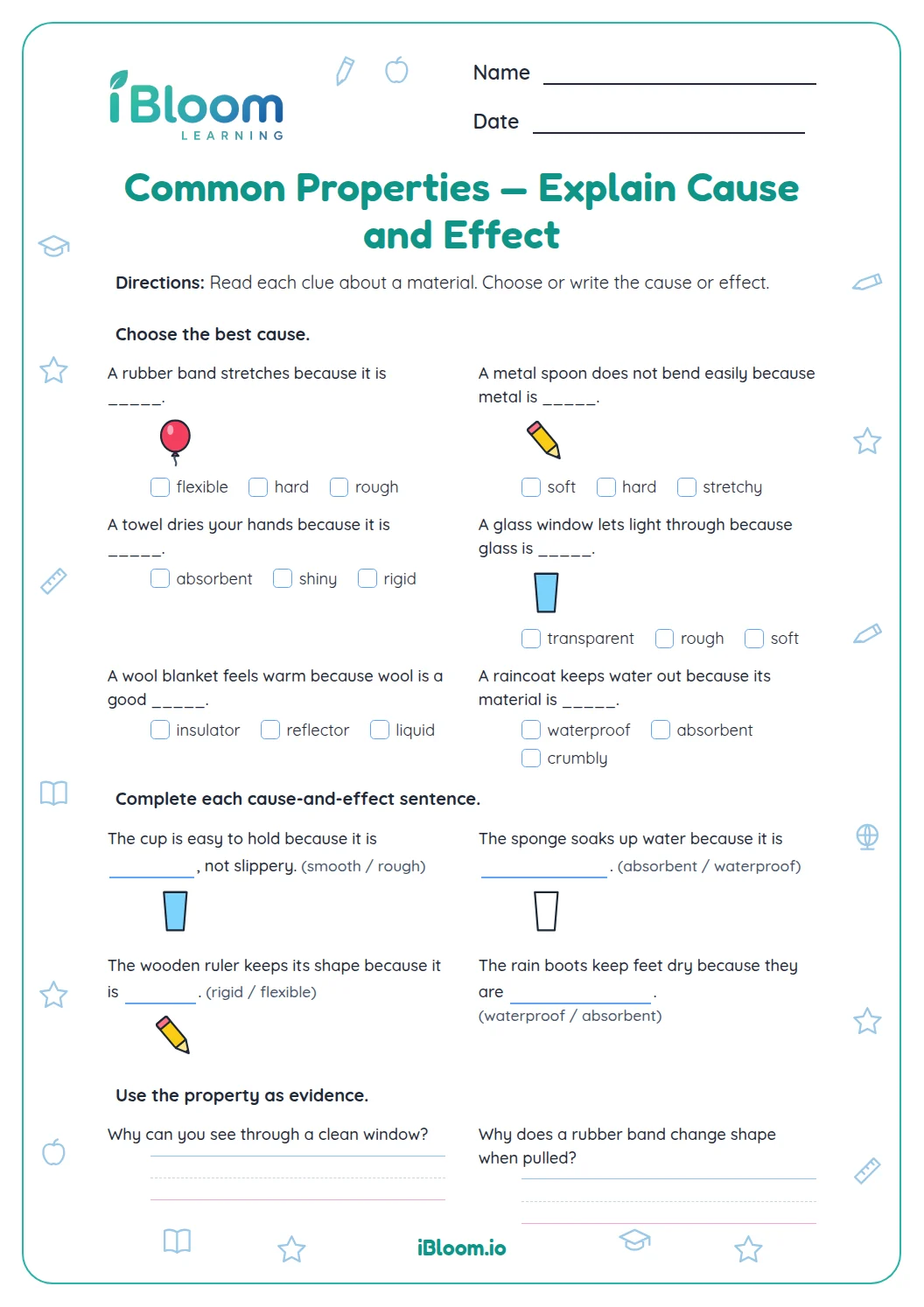
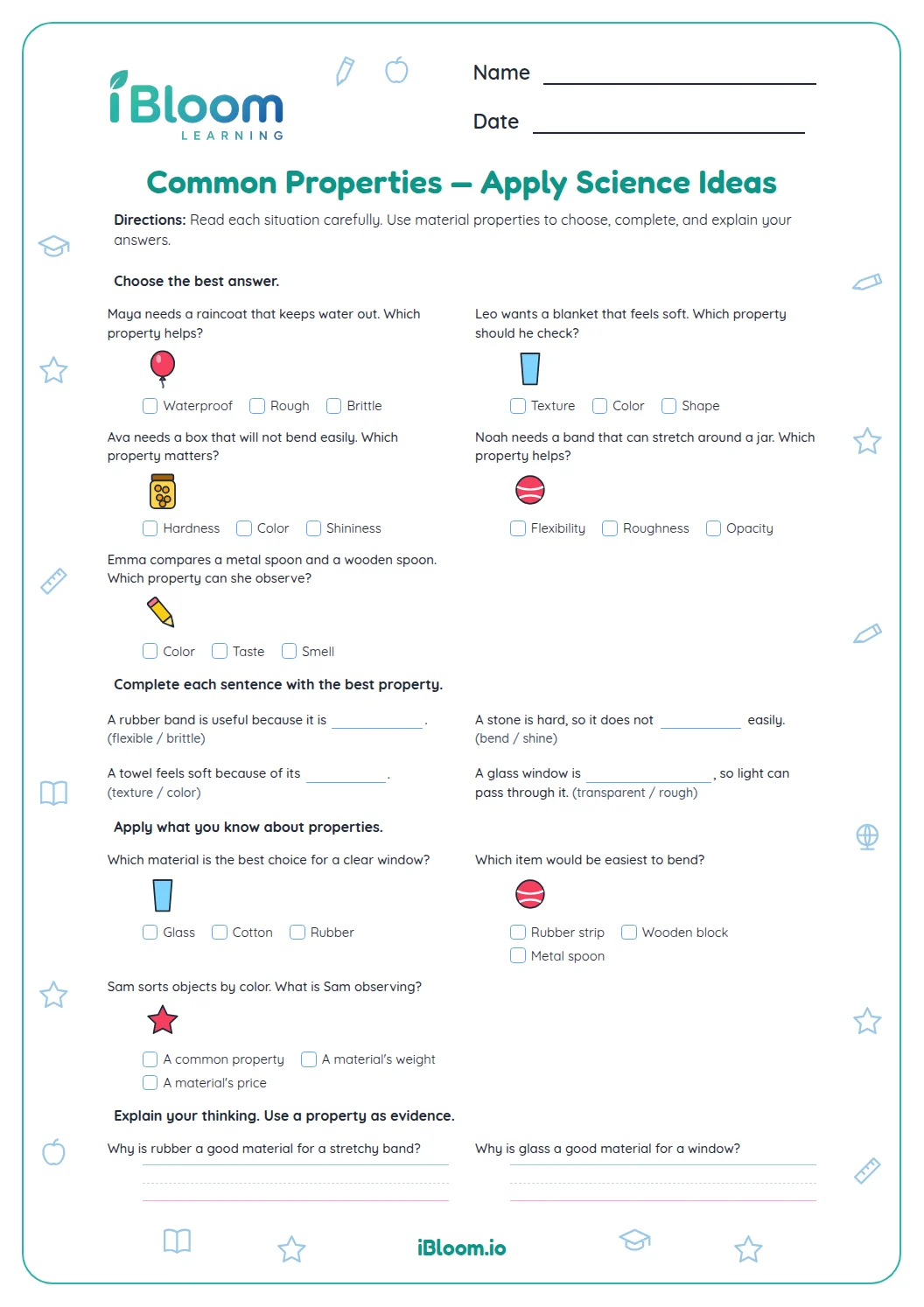
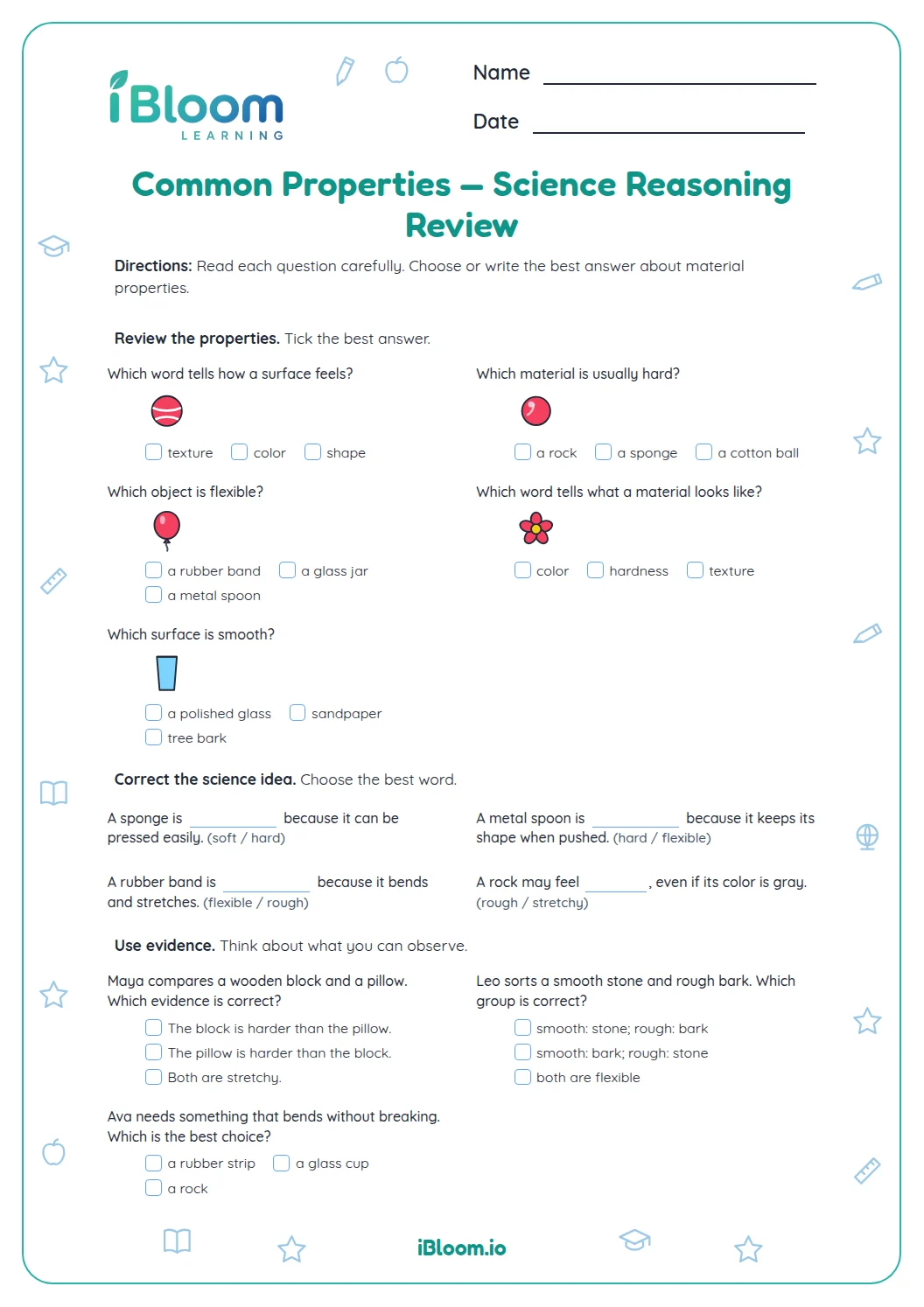
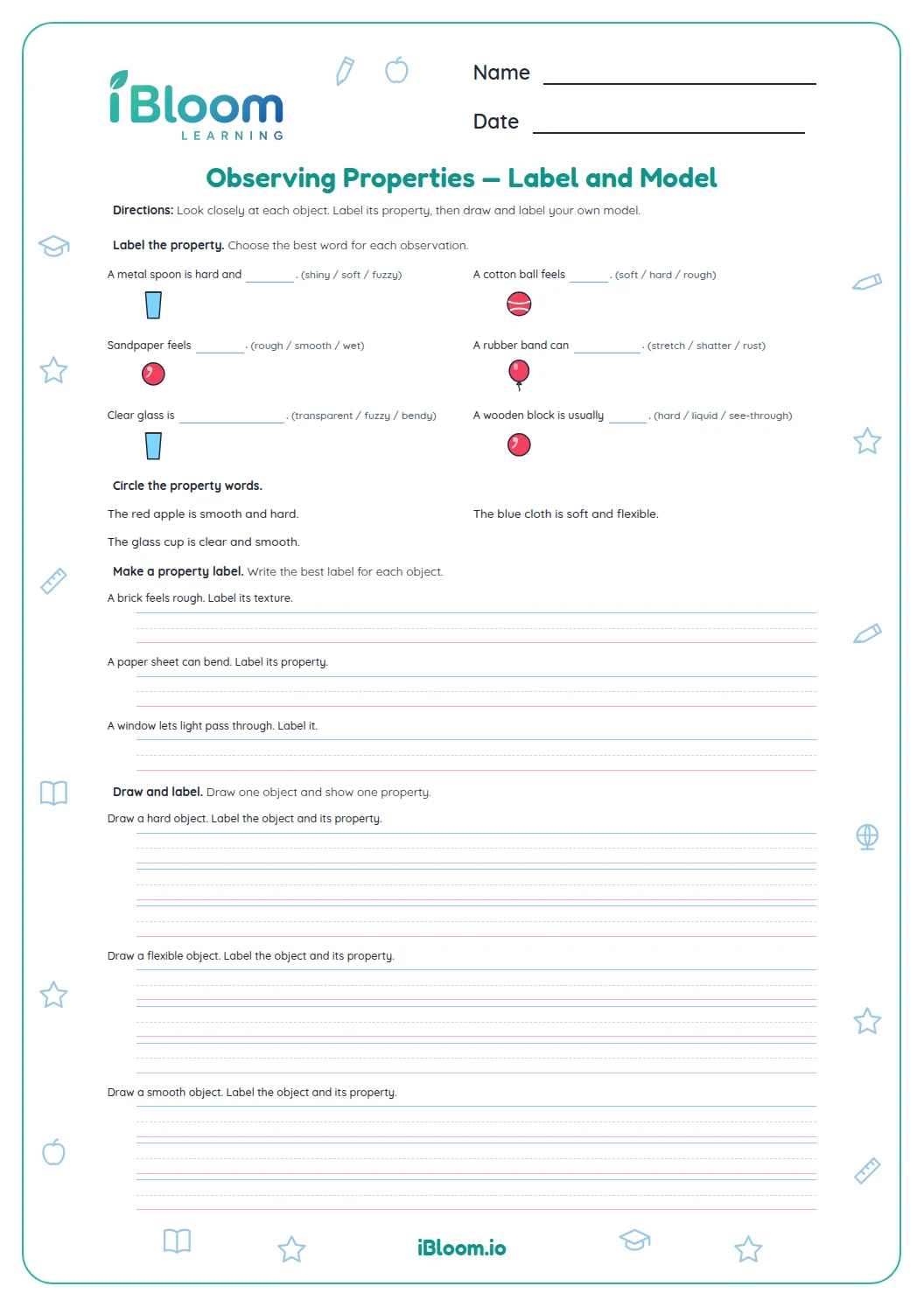
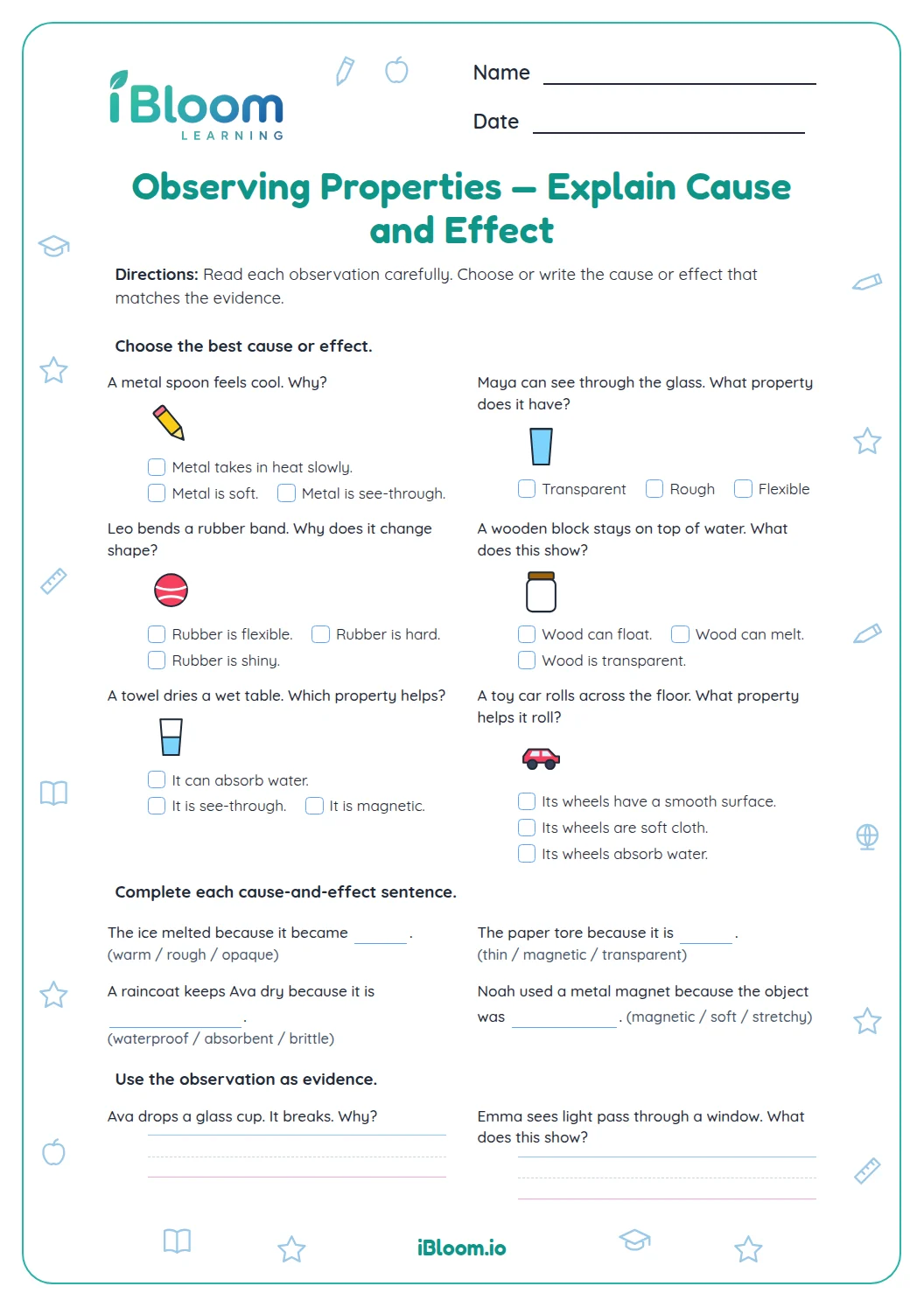
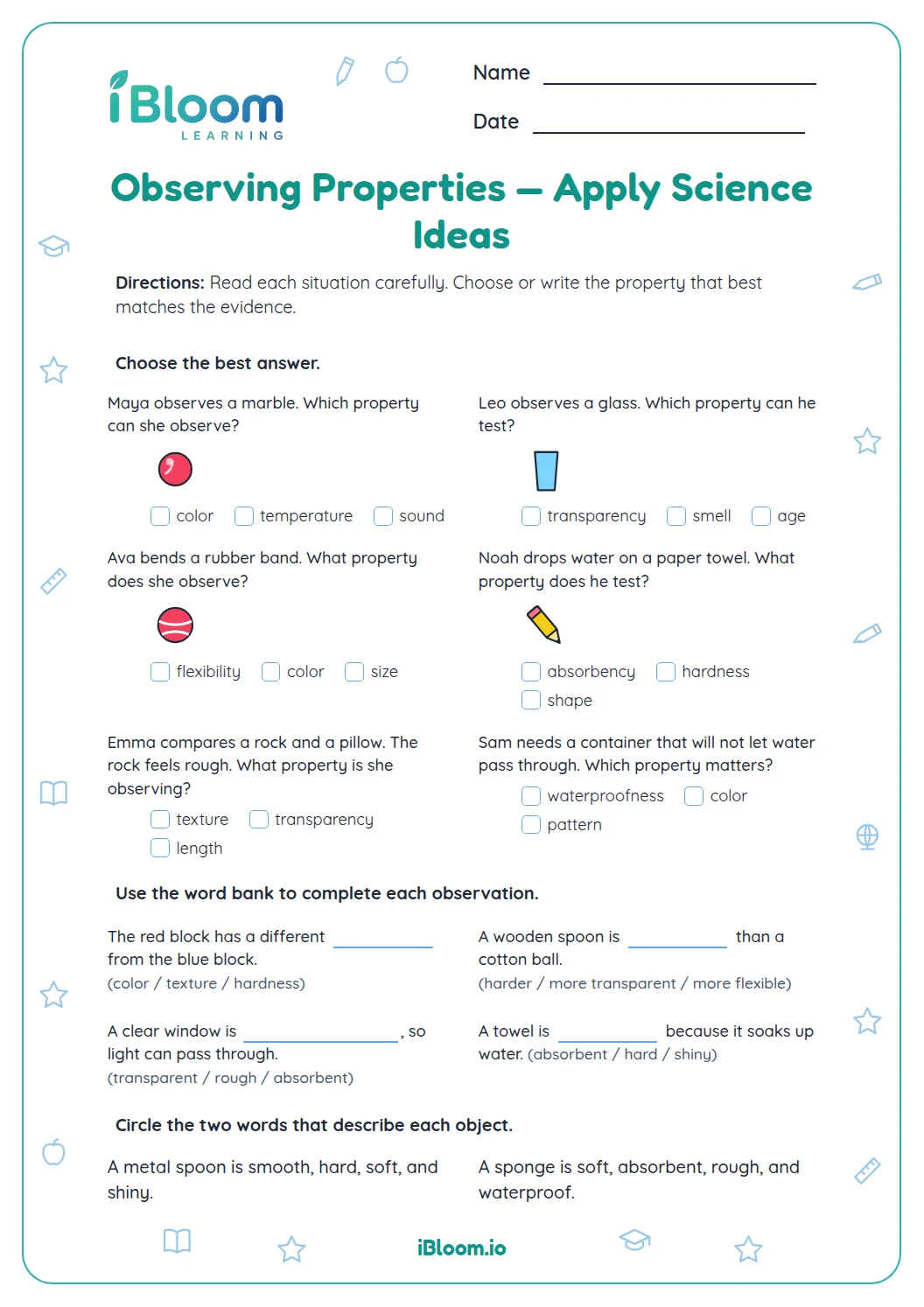
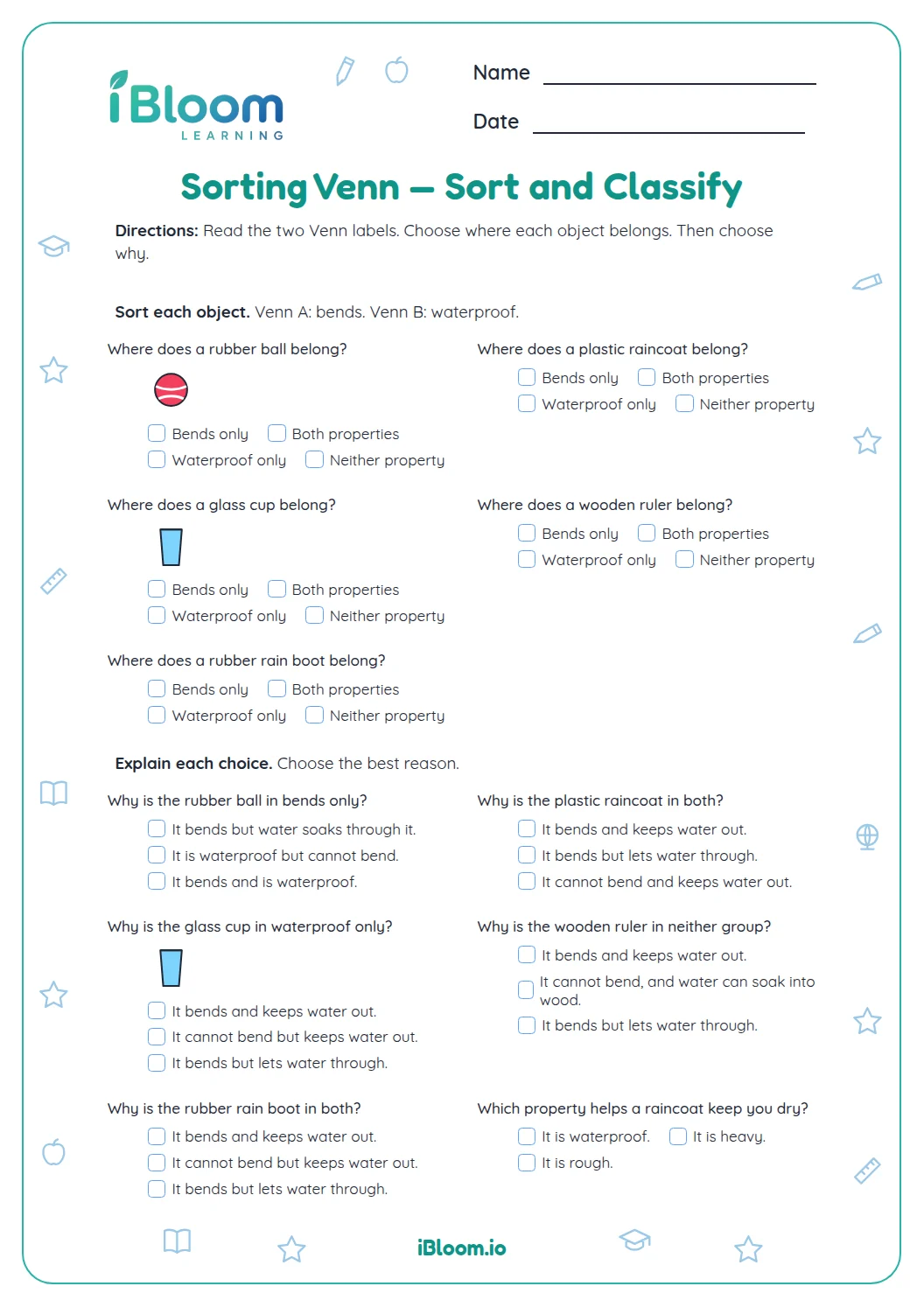
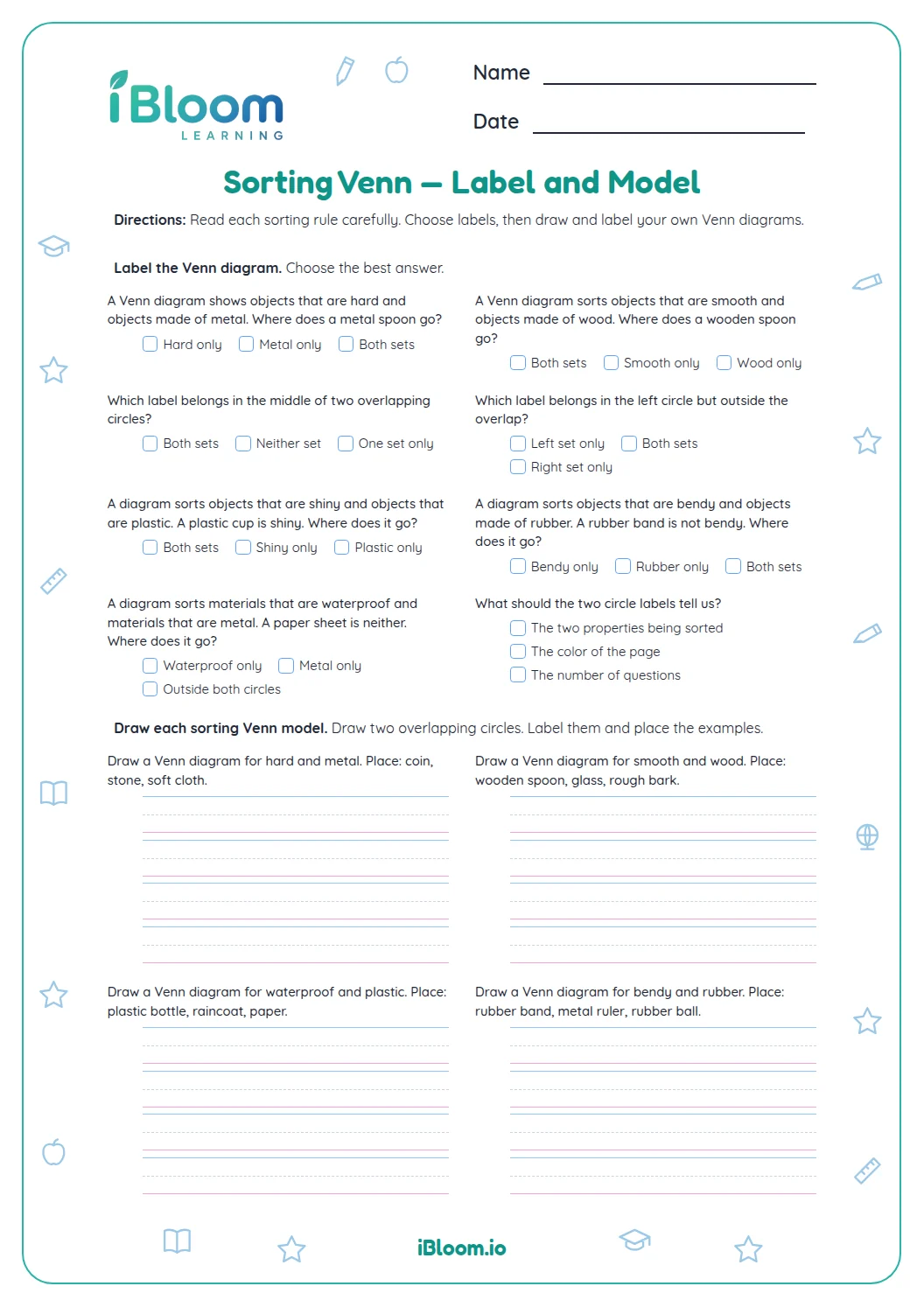
This Grade 2 science worksheet gives 16 situations involving materials used for familiar objects. Children match a needed job—such as keeping rain out or absorbing a spill—to a property, then explain how an observed property helps an object work. The questions progress from property choices to short explanations about rigid, flexible, hard, absorbent, and transparent materials. The separate answer key includes sample reasoning. This page practices NGSS 2-PS1-2 by connecting material properties to intended uses.
Aligned to 2-PS1-2
How does a property help an object?
An object’s job suggests which material property matters. A window needs transparency so people can see through it; a towel needs absorbency to take in water.
How can I connect a job to a property?
Name what the object must do, then choose a property that supports that job. In q1, keeping rain out points to a water-resistant material.
- 1q1: A raincoat should keep rain out. Which property helps?
- 2Keeping liquid out is the needed job.
- 3Answer: Waterproof.
How should we check an explanation?
For q9–q16, look for both the property and the job it supports. A good response to q14 explains that a hard tabletop resists dents or supports objects.
Reason from the object’s job
- 1Read what the object needs to do.
- 2Underline or say the important job: keep out, soak up, let through, or hold its shape.
- 3Choose the property that helps with that job.
- 4For a short answer, name the property and connect it to the object.
- 5Check the key and revise explanations that do not link property and purpose.
Common property mix-ups
The mistake
Choosing a property that describes appearance instead of the needed job.
The fix
Ask what the object must do before choosing a property.
The mistake
Calling a material flexible when it keeps its shape.
The fix
Flexible materials bend; rigid materials resist bending.
The mistake
Saying a clear window absorbs light.
The fix
Transparent means light passes through so people can see through the window.
Curriculum alignment
Use material properties such as strength, flexibility, hardness, texture, or absorbency to explain a use.
On this sheet: Learners connect observable material properties to intended jobs for everyday objects.
Show the official wordingHide the official wording
Analyze data obtained from testing different materials to determine which materials have the properties that are best suited for an intended purpose.
What to practice next
Make more practice
Further reading
Questions parents and teachers ask
What properties appear on this worksheet?
The examples include raincoats, towels, bridge models, windows, rubber bands, cups, pan handles, and blankets. Each question links a familiar object to a property that suits its job. A towel’s absorbency helps it soak up a spill; a transparent window lets people see through it.
What grade is this science worksheet for?
It is designed for Grade 2 science practice. Adults can read prompts aloud and encourage children to explain how a property helps an object do its intended job. The examples use familiar objects and observable features, so children can focus on the connection.
How many questions are included?
The first eight questions are multiple choice. The other eight ask children to name a useful property, compare examples, or explain a material choice in a short response. A sample answer connects the property with the purpose of the object.
Is an answer key included?
Yes. The key lists a target property or sample reasoning for every question. A child may phrase an explanation differently as long as it connects the property with the purpose. Questions include objects meant to hold juice or keep feet dry.
How does this connect to NGSS 2-PS1-2?
This worksheet practices connecting material properties with intended uses, part of NGSS 2-PS1-2. Its examples ask children to reason from each object’s stated job and choose a property that fits. This supports discussion of why materials suit different purposes.