

About this worksheet
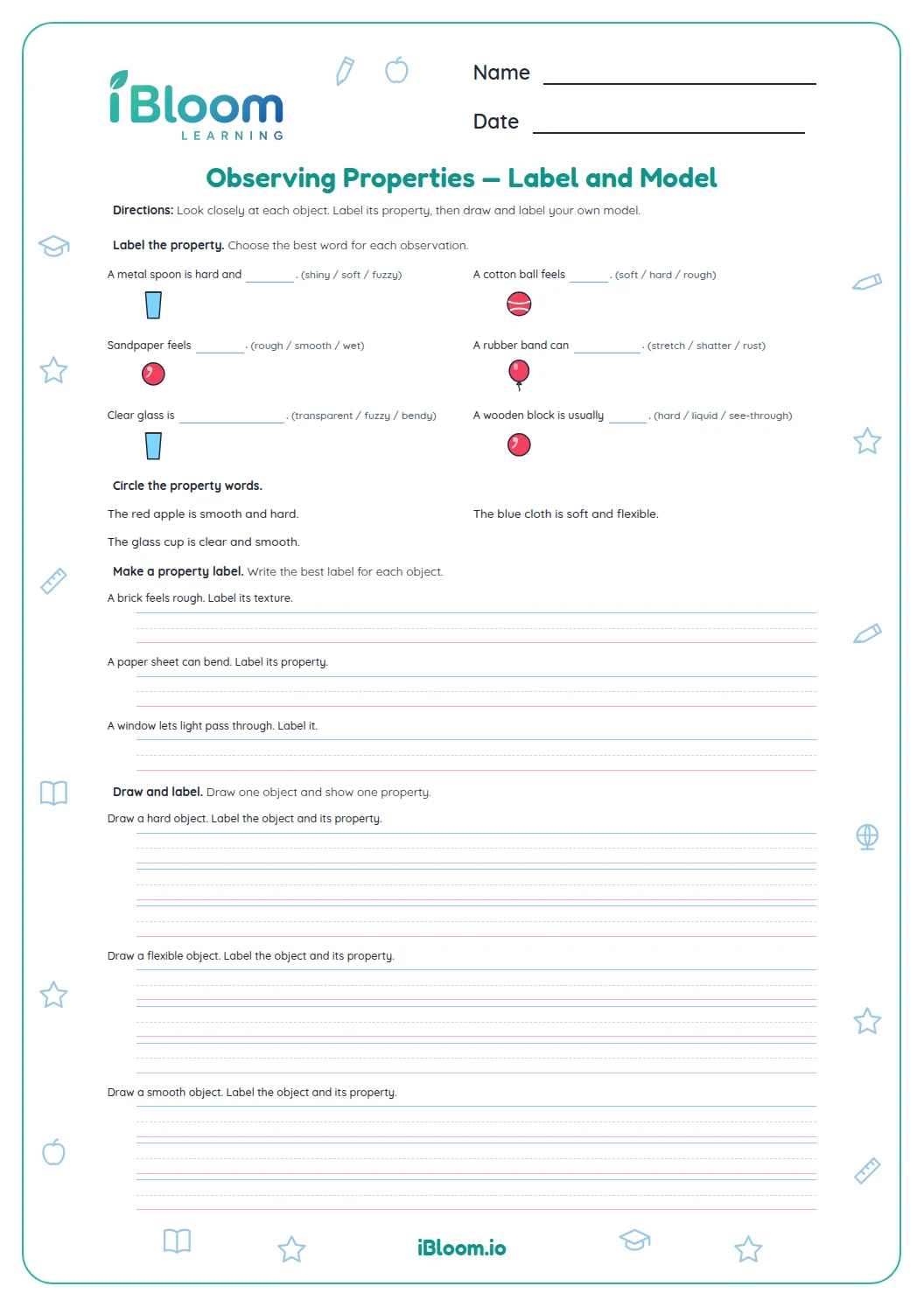
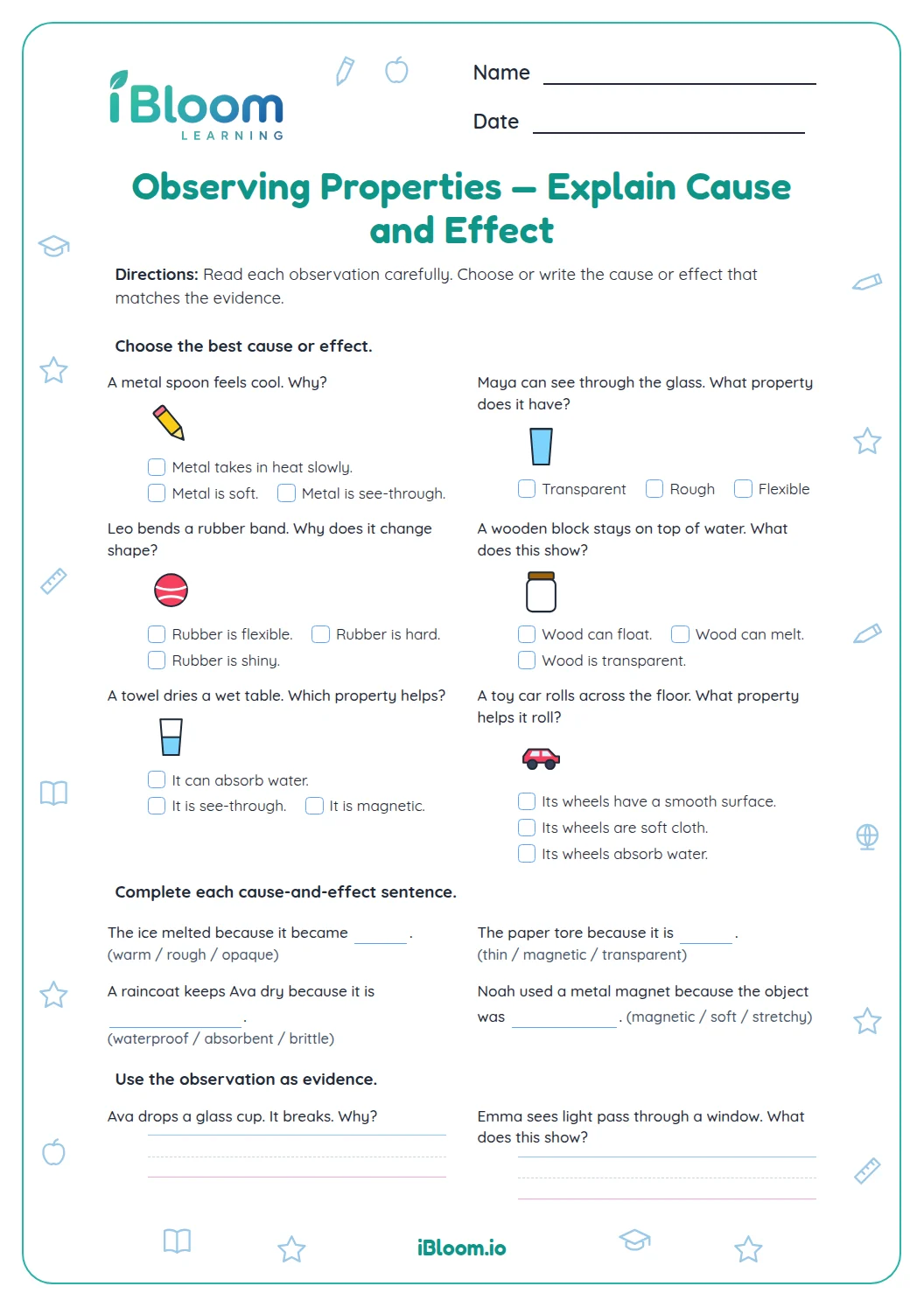
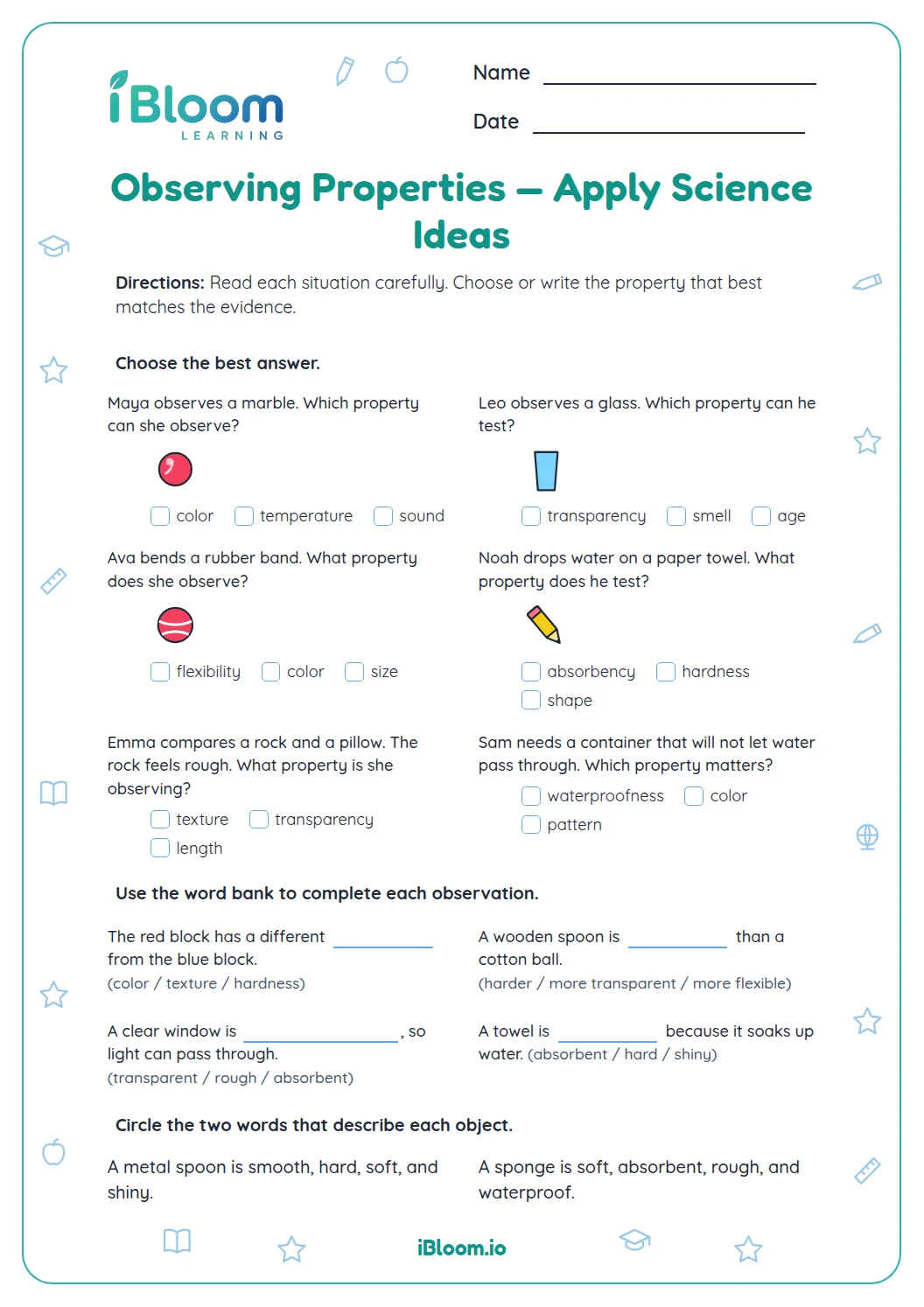
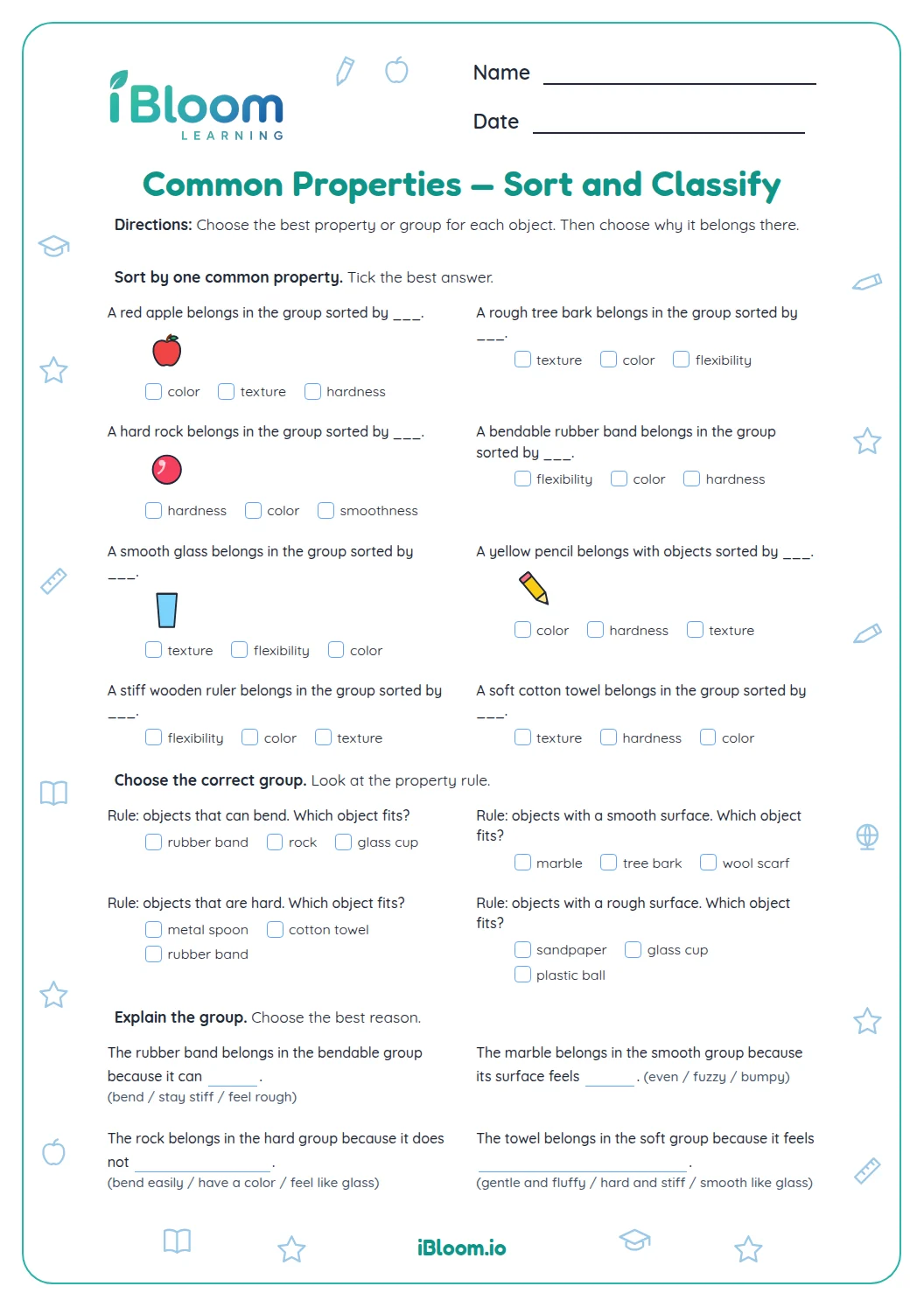
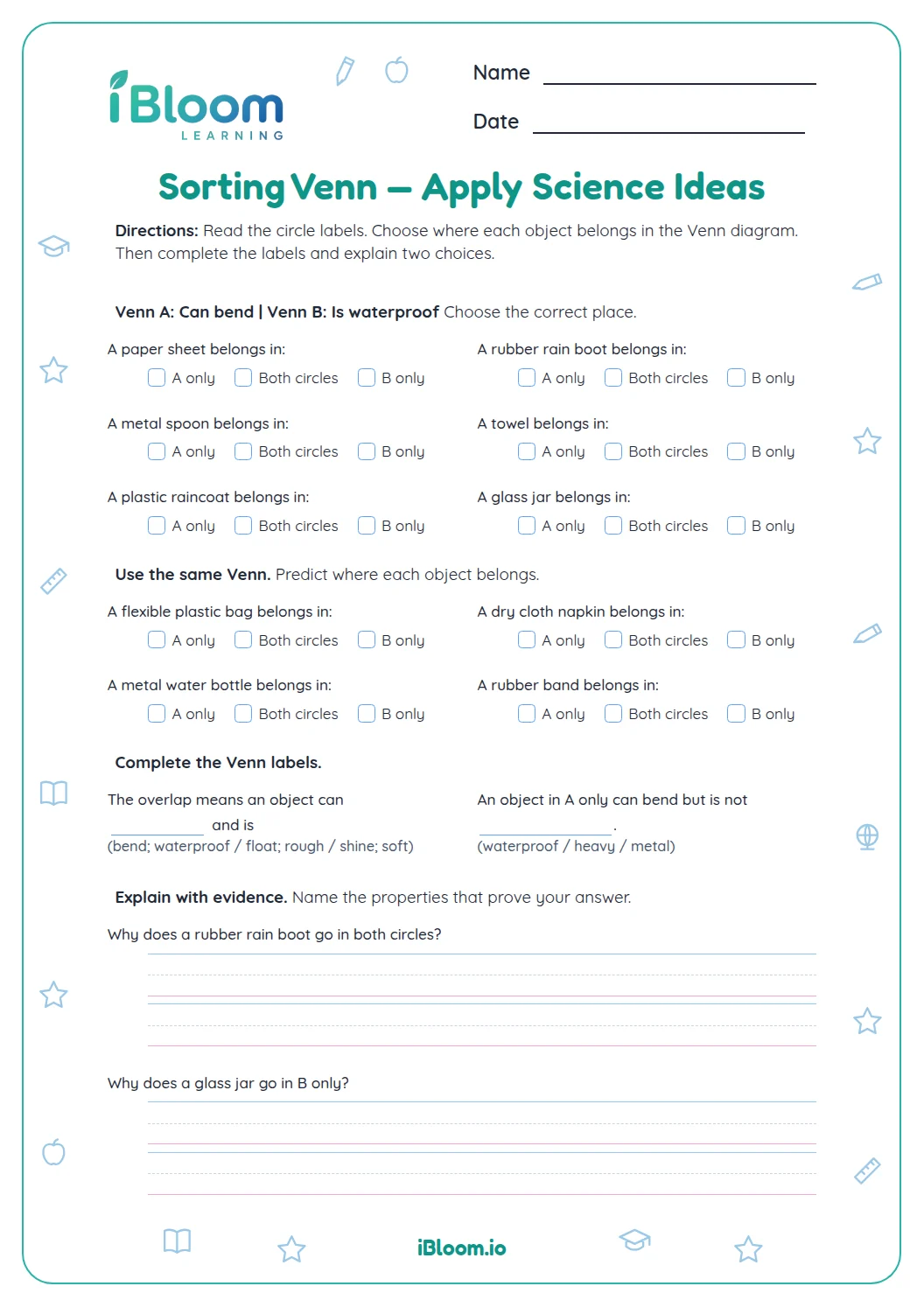
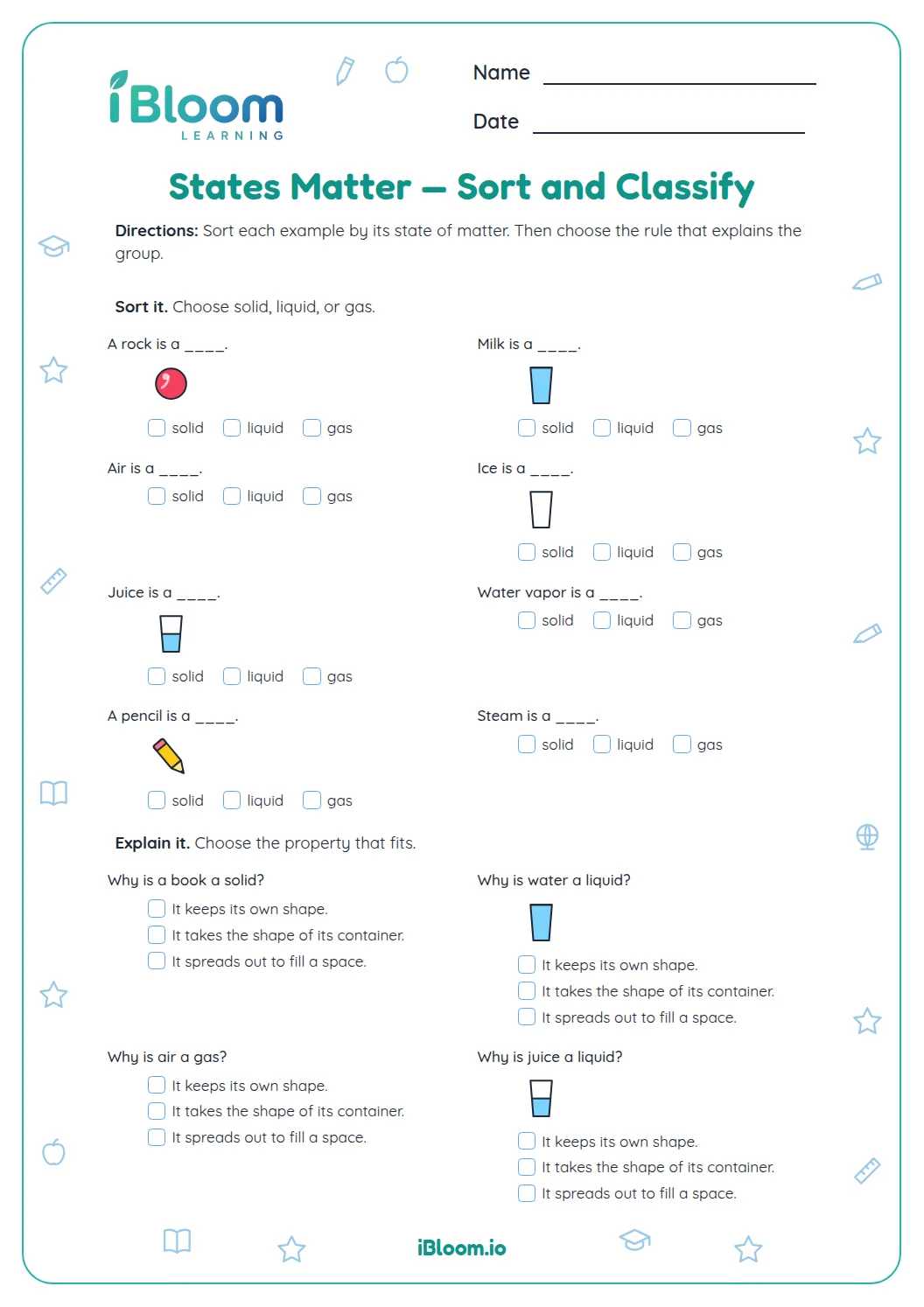
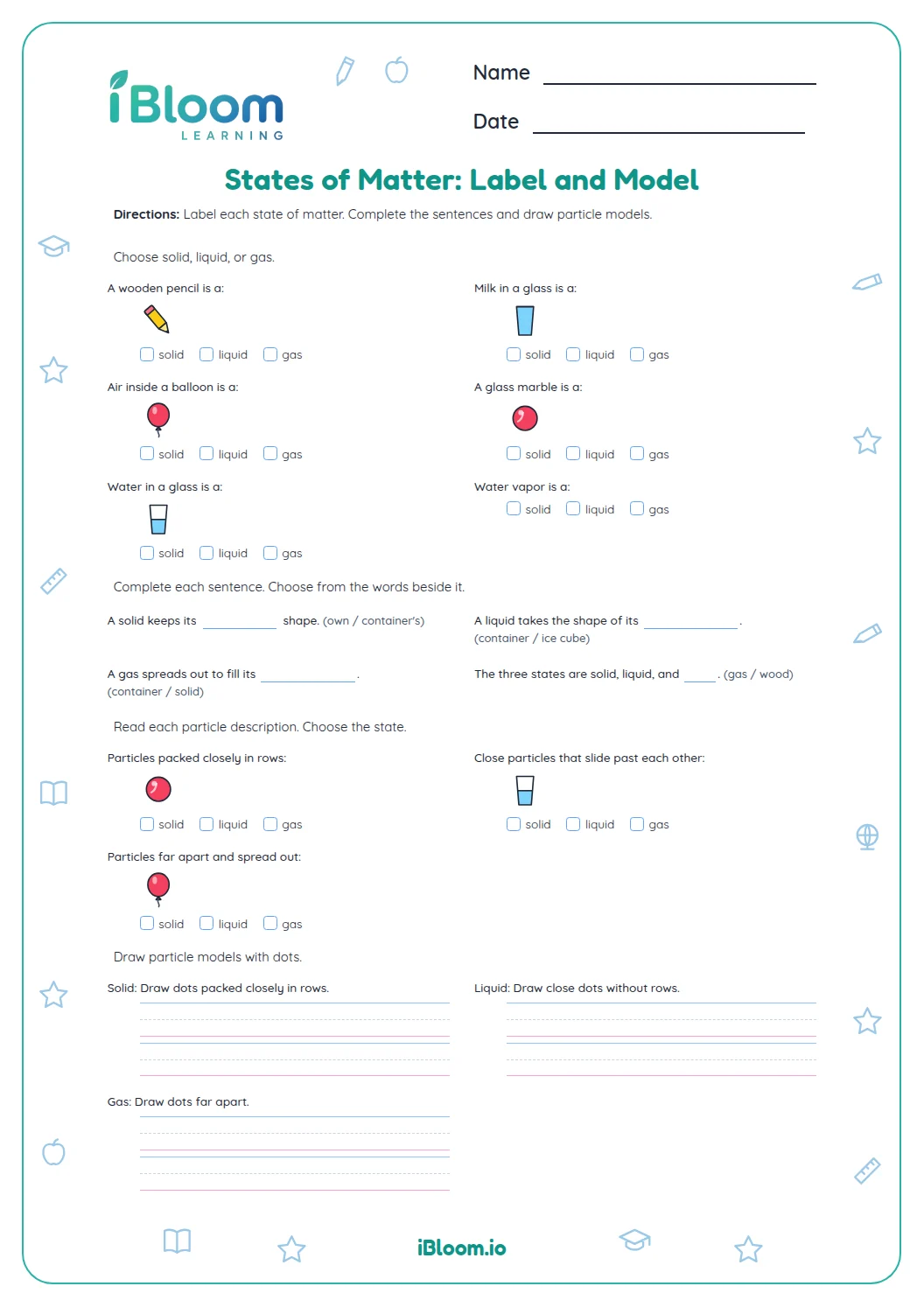
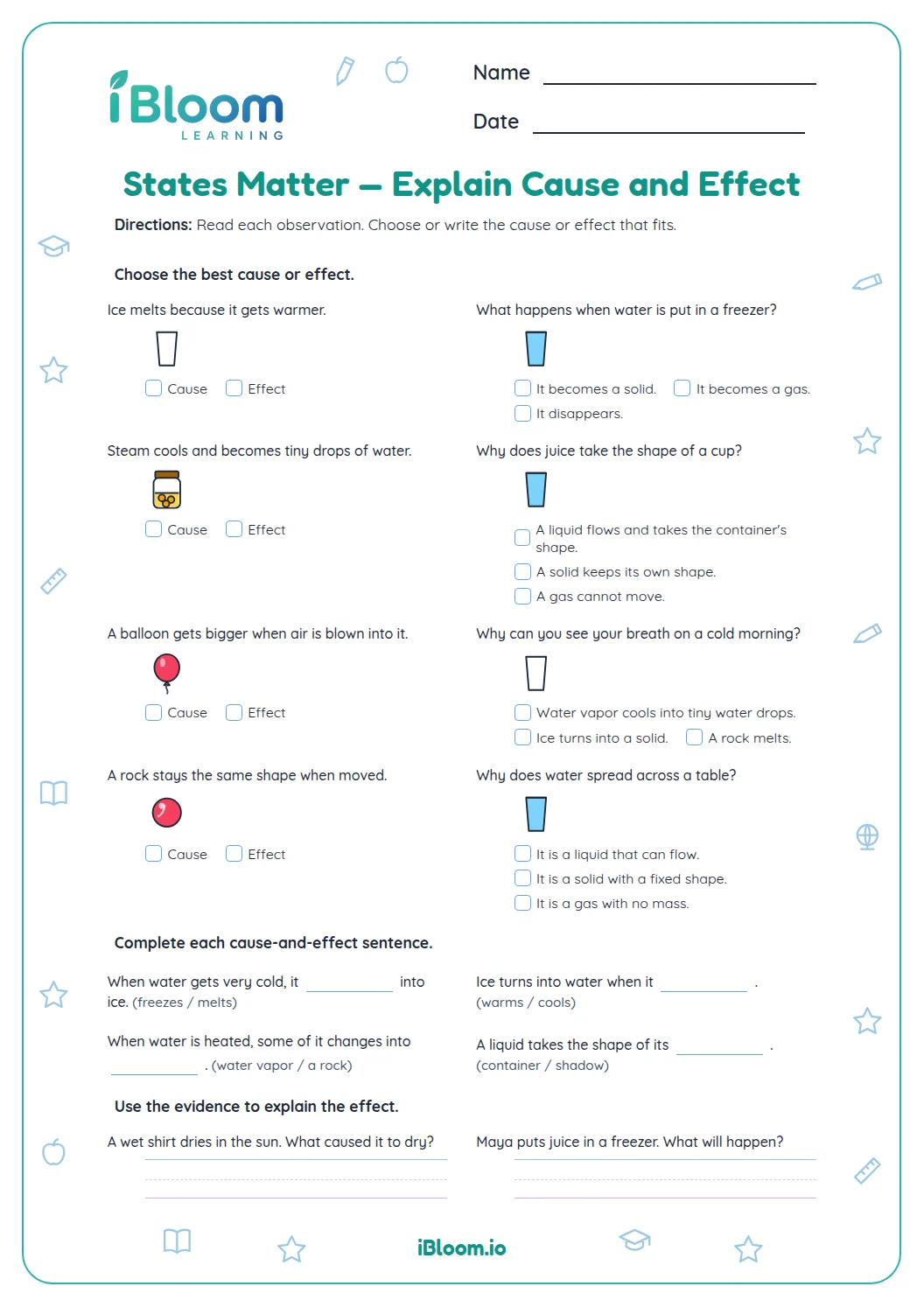
This Grade 2 science review asks students to identify properties they can observe, such as texture, flexibility and transparency, then use a property to choose a material for a purpose. The multiple-choice items use familiar materials and objects; two short responses invite a reason. The page aligns with NGSS 2-PS1-1 and 2-PS1-2 and includes an answer key.
Which material properties can students observe?
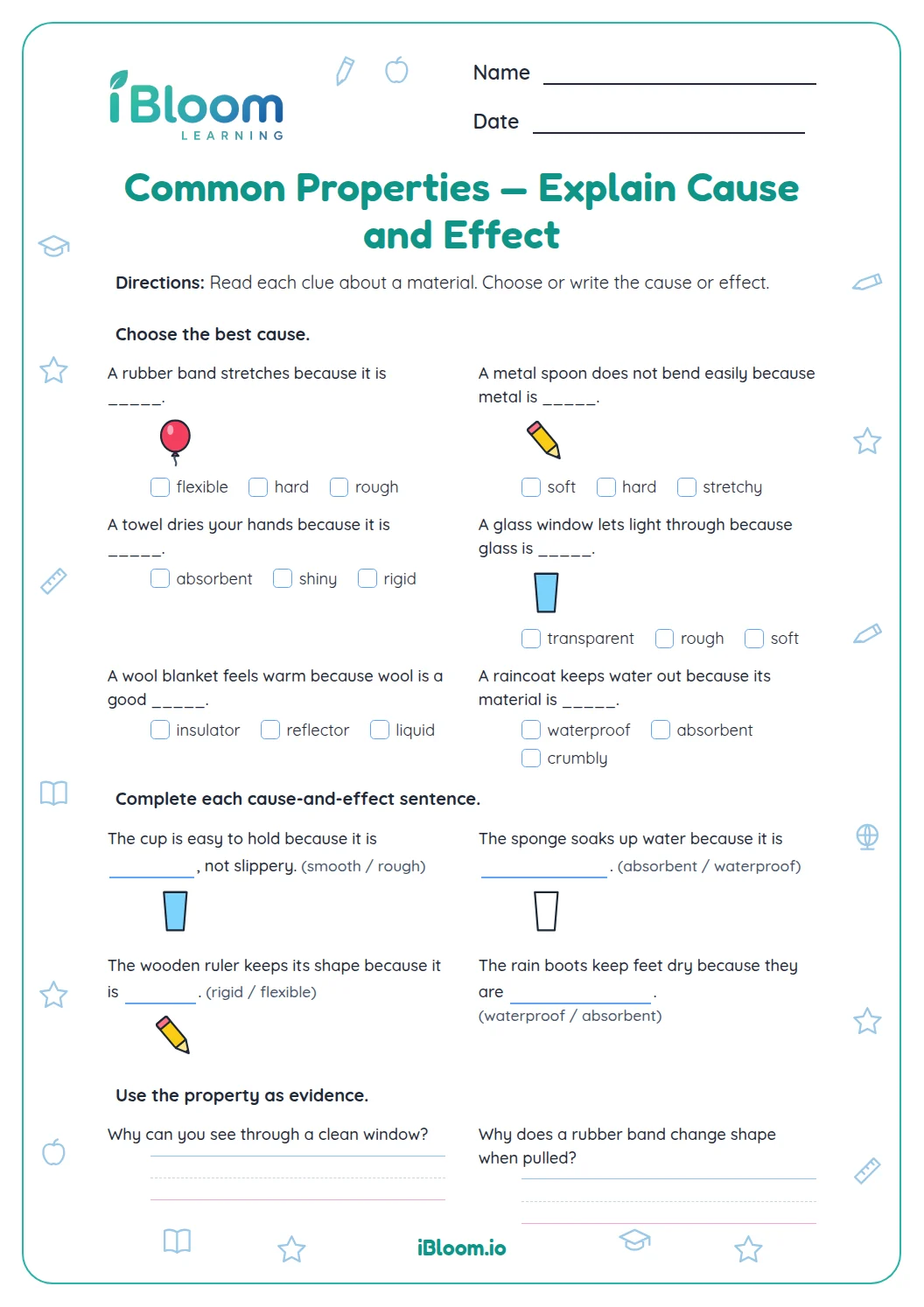
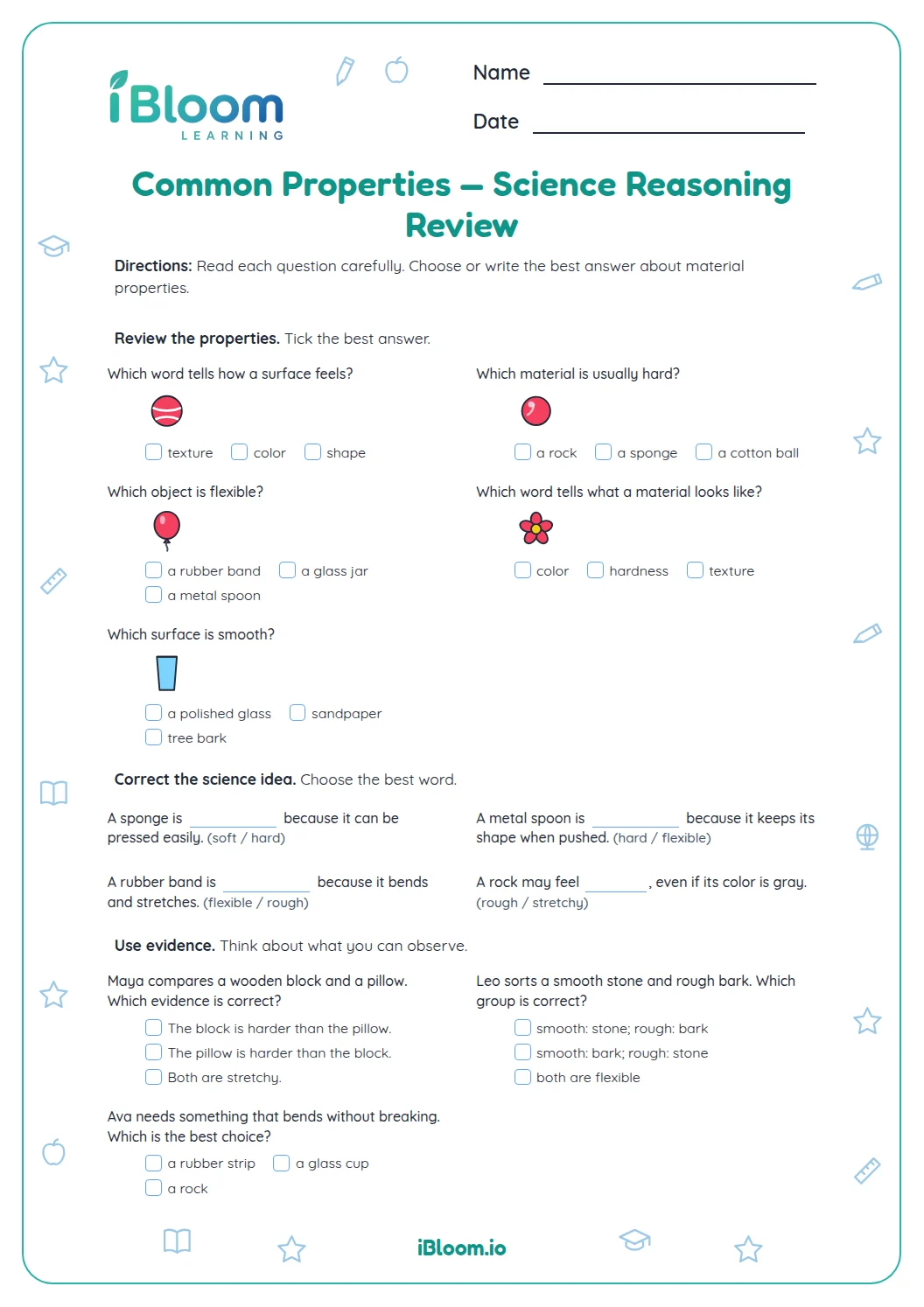
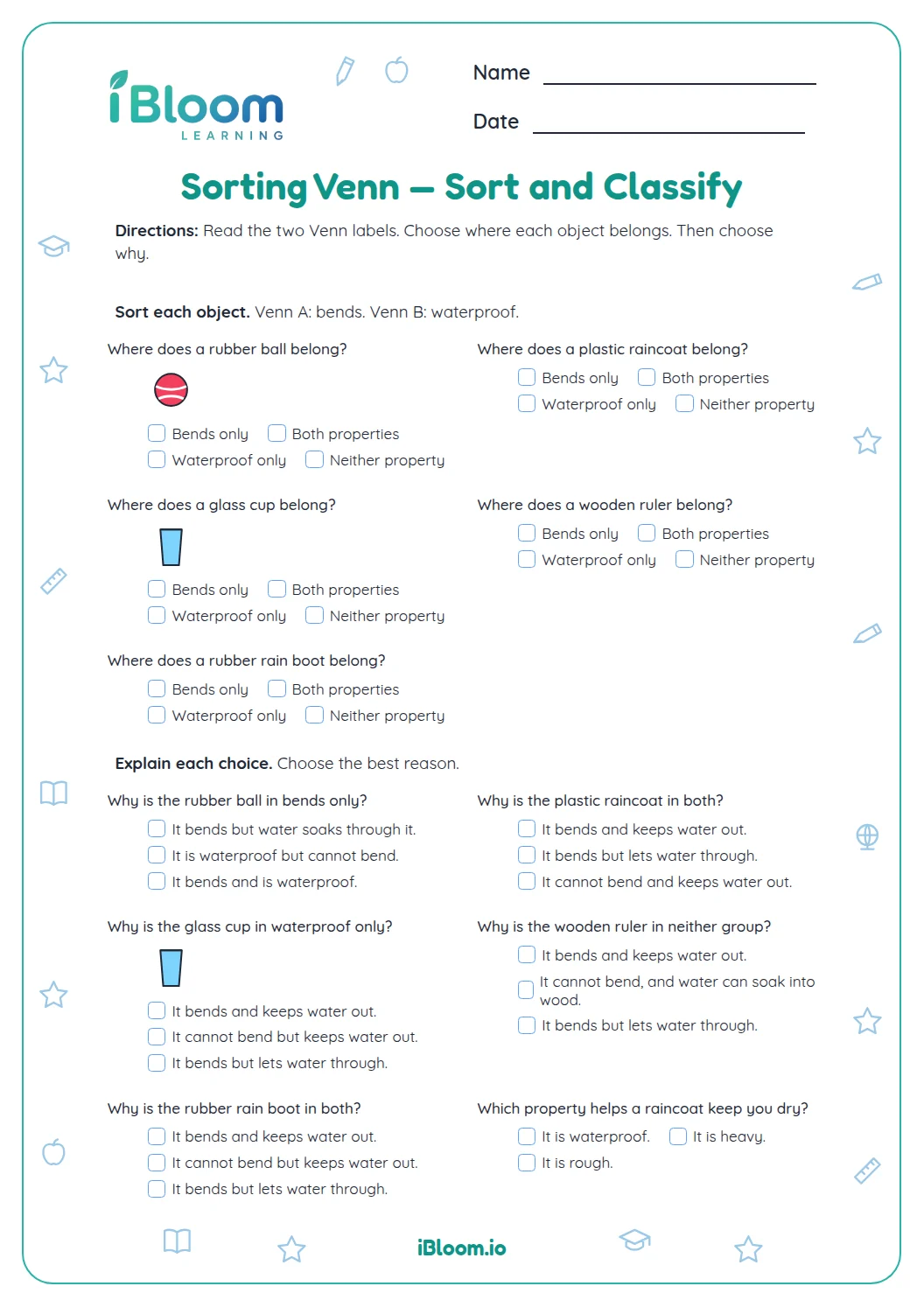
Part A asks about visible and testable features such as clear, rough, soft, hard, waterproof and magnetic. Students use familiar examples rather than guessing from an object’s name alone.
How does a property help choose a material?
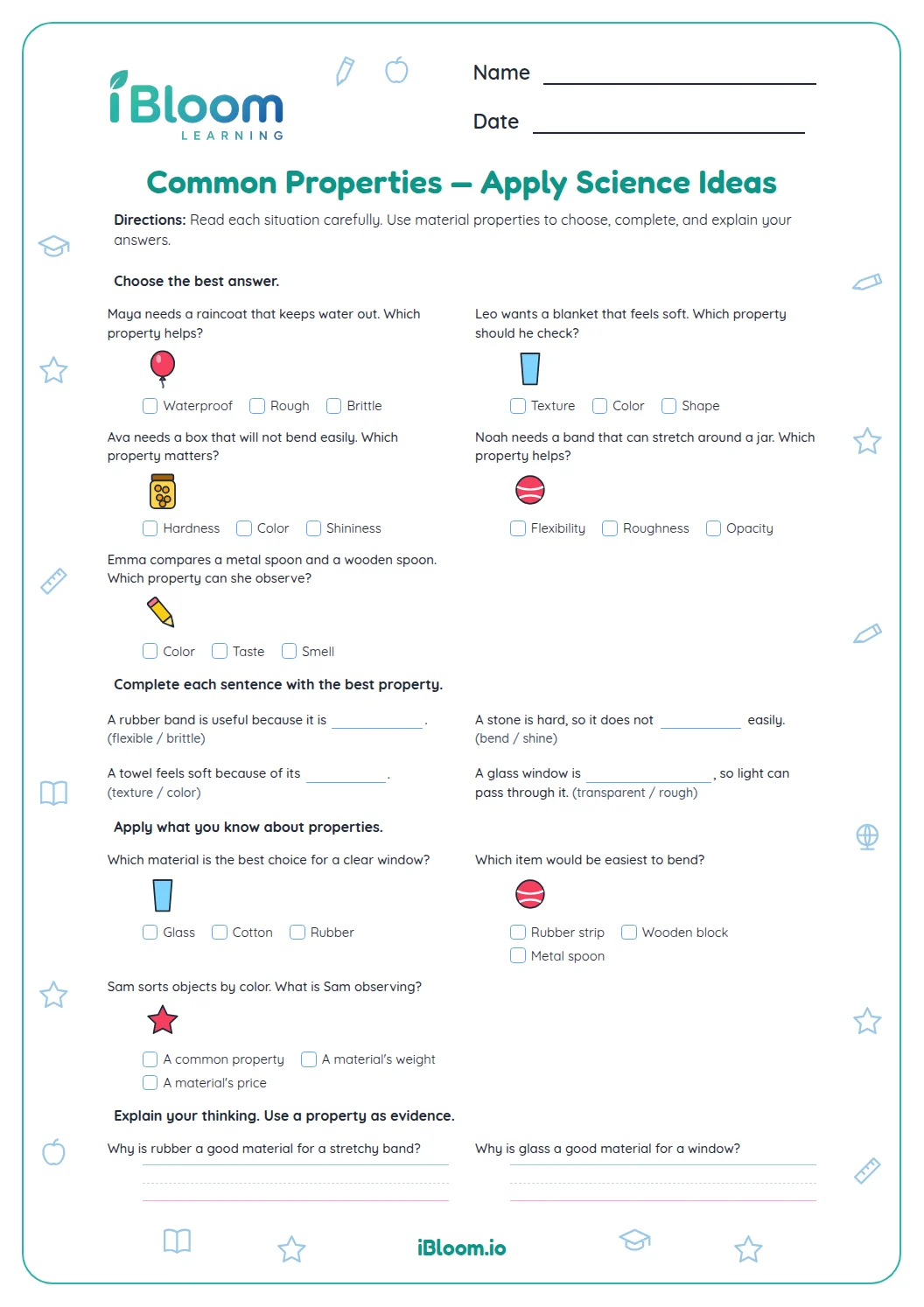
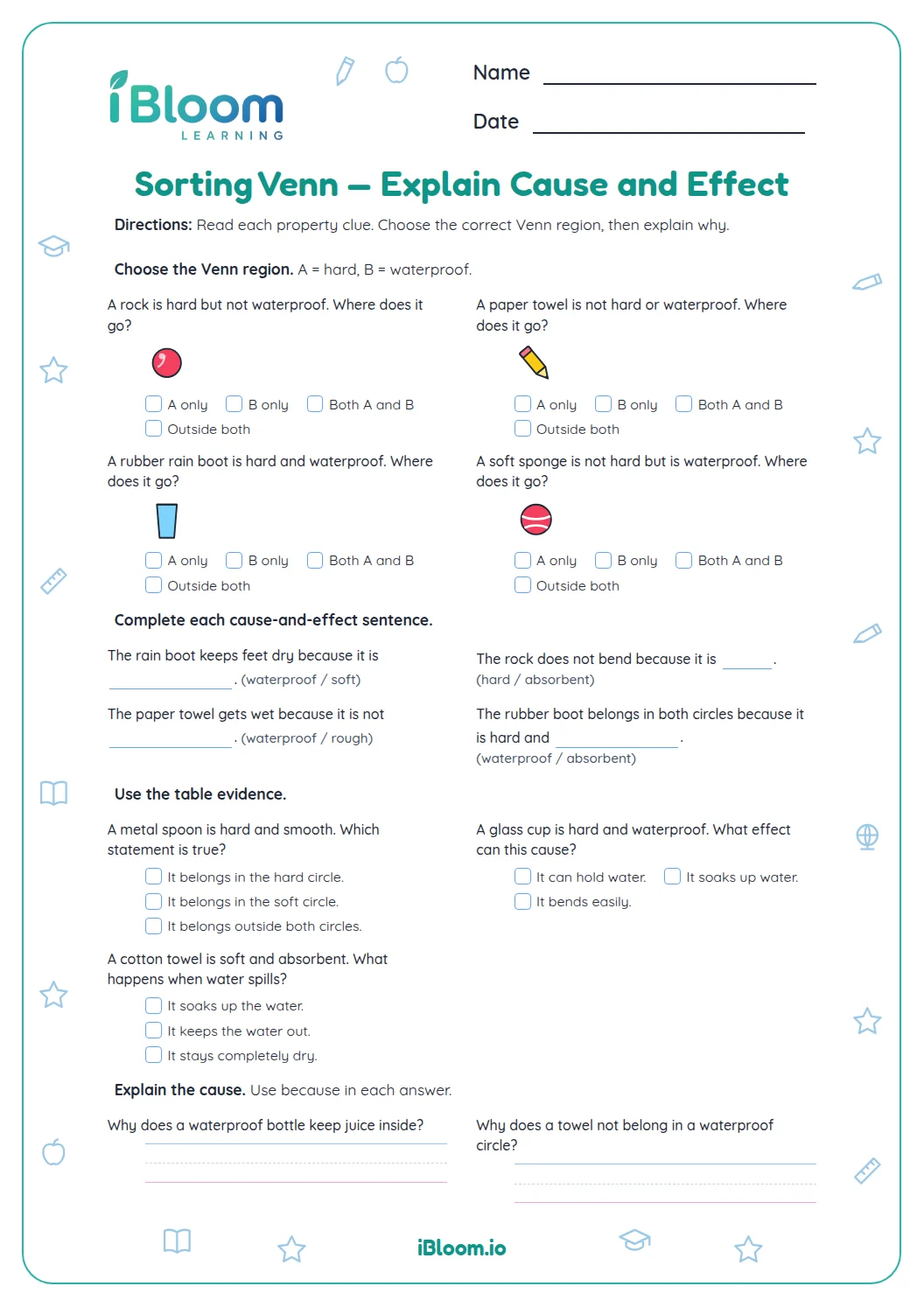
A material is useful when its properties fit the job. A window needs a material that lets light through, and a raincoat needs a material that keeps water out. The final questions ask students to name or explain a property.
How to use this worksheet
- 1Read the full choice before selecting.
- 2Think about a property you can observe or test.
- 3Match the property to the material or job.
- 4Write a brief reason for the two final items.
- 5Review your choices with the answer key.
Common mix-ups and fixes
The mistake
Calling a material waterproof because it is hard.
The fix
Think about whether water passes through or is kept out.
The mistake
Assuming every metal item is magnetic.
The fix
Use a magnet to test; not all metals are attracted.
The mistake
Choosing a material by its name alone.
The fix
Ask which property makes it work for the intended job.
What to practice next
Questions parents and teachers ask
What properties do students identify?
The questions cover clear, rough, soft, flexible, magnetic, waterproof, hard and absorbent. Students also connect a material property to a use, such as choosing a waterproof material for a raincoat. A few prompts ask them to describe evidence from an observation.
What makes a property observable?
An observable property is something a person can notice through a safe observation or simple test. Examples here include texture, hardness, flexibility, whether light passes through, and whether a magnet attracts an object. Students name the property that matches each described observation.
Are all metals magnetic?
No. A magnet attracts some metals, including iron, but not every metal. One question asks what a magnet test could tell about a paper clip: whether it is attracted. This keeps the answer tied to the test rather than making a claim about every metal.
How should students answer the written questions?
A short response is enough. Students name a property they could observe without tasting, then choose a window material and explain how its property fits. The key gives sample responses; another scientifically sound answer can work when it clearly connects the material and its use.
Does the page include an answer key?
Yes. A separate key lists the twelve choice answers and sample responses to both written questions. Students can check the property named and whether the explanation connects it to the intended use, then revise an answer that does not match the evidence.