Free printable practice
Temperature Practice Activities
Grade 2 temperature worksheets help children read thermometers, compare hot and cold conditions, and connect temperature changes to weather.
Free printable worksheet PDFs
Preview every available page, then download the free worksheet PDF for home, homeschool, tutoring, or classroom practice.
Preview the exact activity before downloading it.
 Temperature — Sort and ClassifyGrade 2 temperature worksheets help children read thermometers, compare hot and cold conditions, and connect temperature changes to weather. This sort and classify worksheet provides a distinct, age-appropriate way to practise the same lesson.Grade 2Free PDF preview4 pages
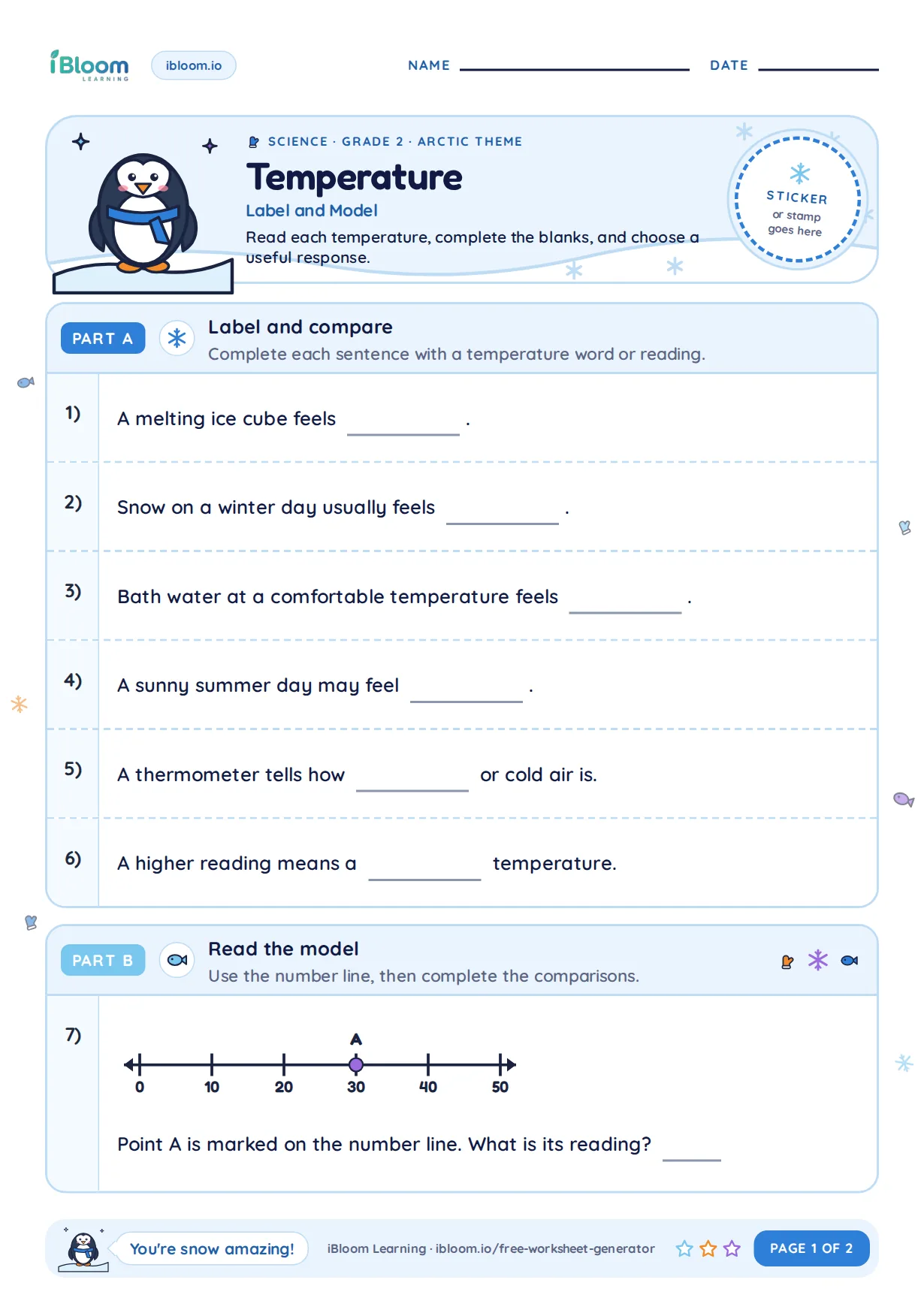 Temperature — Label and ModelGrade 2 temperature worksheets help children read thermometers, compare hot and cold conditions, and connect temperature changes to weather. This label and model worksheet provides a distinct, age-appropriate way to practise the same lesson.Grade 2Free PDF preview
 Temperature — Explain Cause and EffectGrade 2 temperature worksheets help children read thermometers, compare hot and cold conditions, and connect temperature changes to weather. This explain cause and effect worksheet provides a distinct, age-appropriate way to practise the same lesson.Grade 2Free PDF preview6 pages
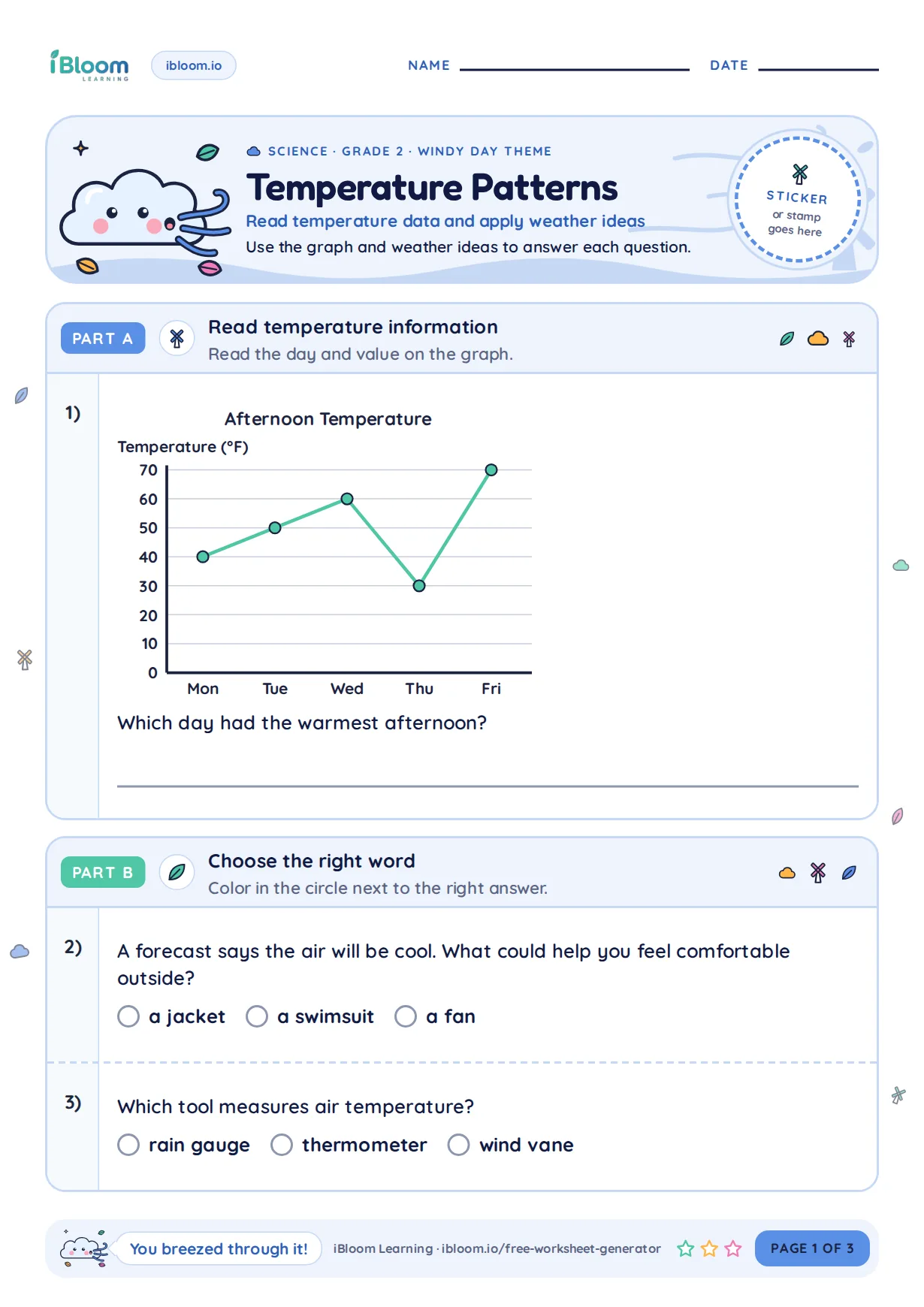 Temperature — Apply Science IdeasGrade 2 temperature worksheets help children read thermometers, compare hot and cold conditions, and connect temperature changes to weather. This apply science ideas worksheet provides a distinct, age-appropriate way to practise the same lesson.Grade 2Free PDF preview
 Temperature — Science Reasoning ReviewGrade 2 temperature worksheets help children read thermometers, compare hot and cold conditions, and connect temperature changes to weather. This science reasoning review worksheet provides a distinct, age-appropriate way to practise the same lesson.Grade 2Free PDF preview
Practice that builds confidence
Understanding temperature in weather
These Grade 2 science worksheets give children focused practice with temperature as part of their weather learning. Students observe what temperature tells us, compare warmer and cooler conditions, and connect temperature words to everyday weather situations.
The printable activities include thermometer reading practice, temperature comparisons, weather-based questions, and simple recording tasks. Children build confidence using science vocabulary such as hot, cold, warm, cool, degrees, thermometer, and temperature.
Temperature is one of the first measurable weather features children learn. In these worksheets, Grade 2 students practise noticing that temperature describes how hot or cold the air is. They connect numbers on a thermometer with familiar weather experiences, such as needing a coat on a cold morning or choosing lighter clothing on a warm afternoon.

Reading and comparing temperatures
The activities move from simple recognition to comparison. Children may look at thermometers, read marked temperatures, decide which day is warmer or cooler, and answer questions about temperature changes. This helps them see temperature as data, not just a feeling. Where numbers are shown, the focus stays on careful reading, comparing, and using words such as higher, lower, warmer, and colder.
A simple parent routine
At home, choose one daily weather moment, such as breakfast or after school. Ask your child, “Does it feel warm, cool, hot, or cold?” Then look at a weather app or outdoor thermometer together and say the temperature aloud. Have your child draw a small weather picture and write one sentence, for example, “Today is cooler than yesterday.” This quick routine makes worksheet practice feel connected to real life.

Classroom uses for teachers
Teachers can use these printables during a weather unit, morning work, science centers, or small-group review. They also work well after a class discussion about daily weather observations. Students can complete a page independently, then compare answers with a partner and explain the clues they used. A class chart of daily temperatures can extend the worksheets into observation, recording, and discussion.

Common errors to watch for
Some children confuse temperature with other weather conditions, such as rain, wind, or clouds. Others may think the biggest-looking thermometer picture is always the hottest, rather than reading the marked level. Watch for reversed comparisons too: a lower temperature means colder, not warmer. Encourage children to point to the thermometer level and use a complete sentence when explaining an answer.
Free printable PDF download
Use this grade 2 temperature worksheet page to preview the activity, print it, or download it as a PDF for quick practice. It works well for homework, homeschool lessons, tutoring, morning work, revision, and classroom centers.
Answers and answer key support
After the child completes the worksheet independently, parents and teachers can use the answer support or answer key information to check the work, review mistakes, and choose the next practice step.
Why iBloom worksheets help
The iBloom temperature worksheets are designed for clear Grade 2 practice without unnecessary clutter. Questions guide children from weather words to thermometer thinking, then to comparison and explanation. A helpful child strategy is: “Look, read, compare, say.” Look at the thermometer or weather clue, read the temperature information, compare it with the other choice, and say whether it is warmer or cooler.
Helpful answers
Frequently asked questions
What temperature skills do these Grade 2 worksheets practise?
They practise understanding temperature as a measure of how hot or cold the air is, reading simple thermometer information, comparing warmer and cooler conditions, and using temperature vocabulary in weather contexts.
Do children need to know exact weather instruments before using these pages?
No. The worksheets introduce and reinforce the thermometer as the tool used to measure temperature, so children can build the idea through pictures, labels, and guided questions.
How can I help my child if they mix up warmer and colder?
Ask your child to point to the temperature level or number first. Then compare: the higher temperature is warmer, and the lower temperature is colder. Using real daily weather examples also helps.
Can these worksheets be used with a weather journal?
Yes. Children can complete a worksheet and then record the day’s temperature in a journal with a drawing and one sentence, such as “Today is warm and sunny.”
Are these temperature activities suitable for independent work?
Most Grade 2 students can use them independently after a short introduction, especially if they have already discussed hot, cold, warm, cool, and thermometer readings in class.
Is this grade 2 temperature worksheet free?
Yes. You can preview it for free and use the printable worksheet for home or classroom practice.
Can I download this grade 2 temperature worksheet as a PDF?
Yes. Use the worksheet download option to save a printable PDF, or print the worksheet directly from the page.
Does this grade 2 temperature worksheet include answers or an answer key?
When the activity has fixed answers, iBloom includes answer support so parents and teachers can check the completed worksheet.