Free printable practice
Biomes Practice Activities
Printable Grade 3 science worksheets help students compare biomes by climate, landforms, plants, animals, and adaptations.
Free printable worksheet PDFs
Preview every available page, then download the free worksheet PDF for home, homeschool, tutoring, or classroom practice.
Preview the exact activity before downloading it.
 Biomes — Sort and ClassifyPrintable Grade 3 science worksheets help students compare biomes by climate, landforms, plants, animals, and adaptations. This sort and classify worksheet provides a distinct, age-appropriate way to practise the same lesson.Grade 3Free PDF preview
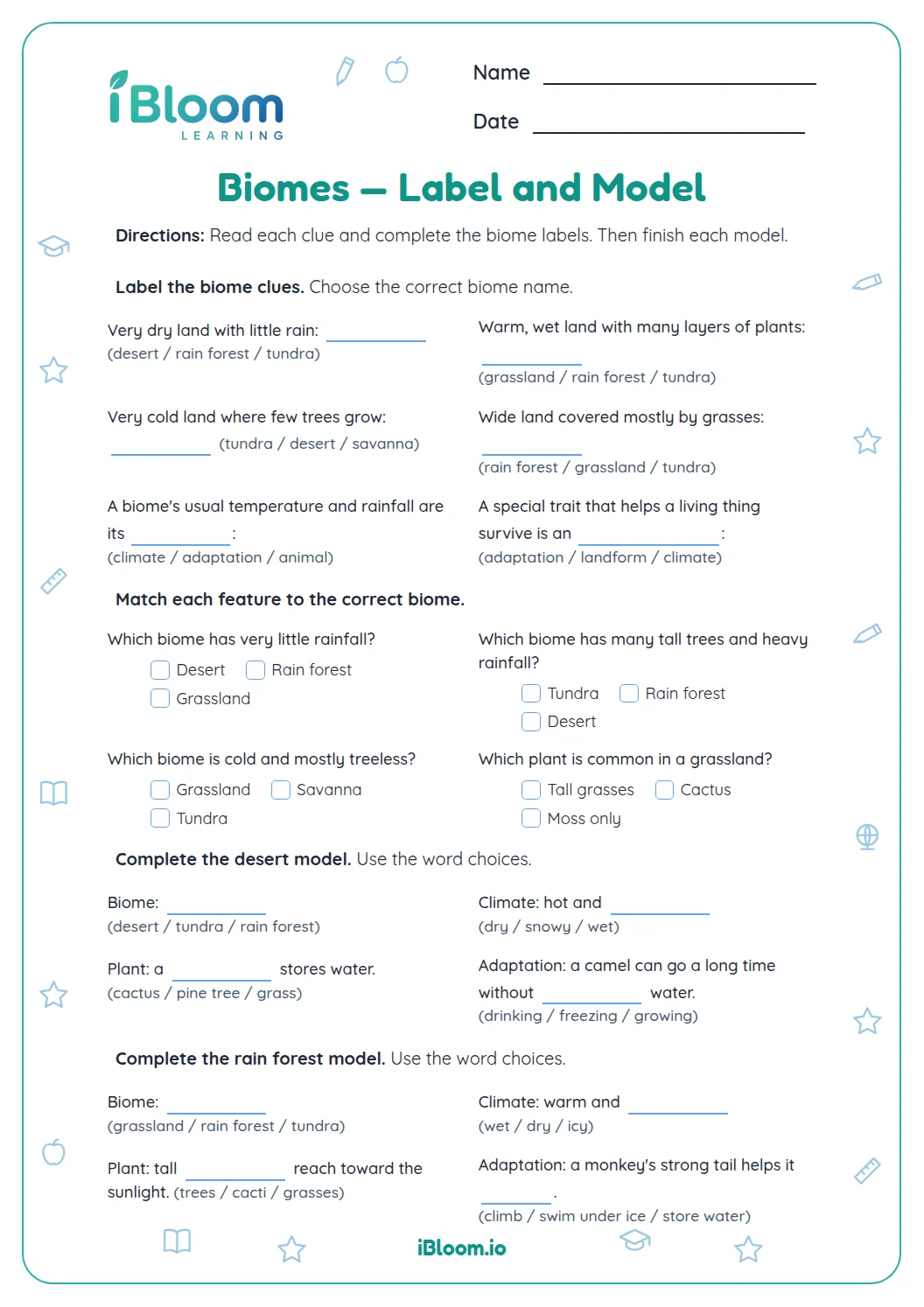 Biomes — Label and ModelPrintable Grade 3 science worksheets help students compare biomes by climate, landforms, plants, animals, and adaptations. This label and model worksheet provides a distinct, age-appropriate way to practise the same lesson.Grade 3Free PDF preview
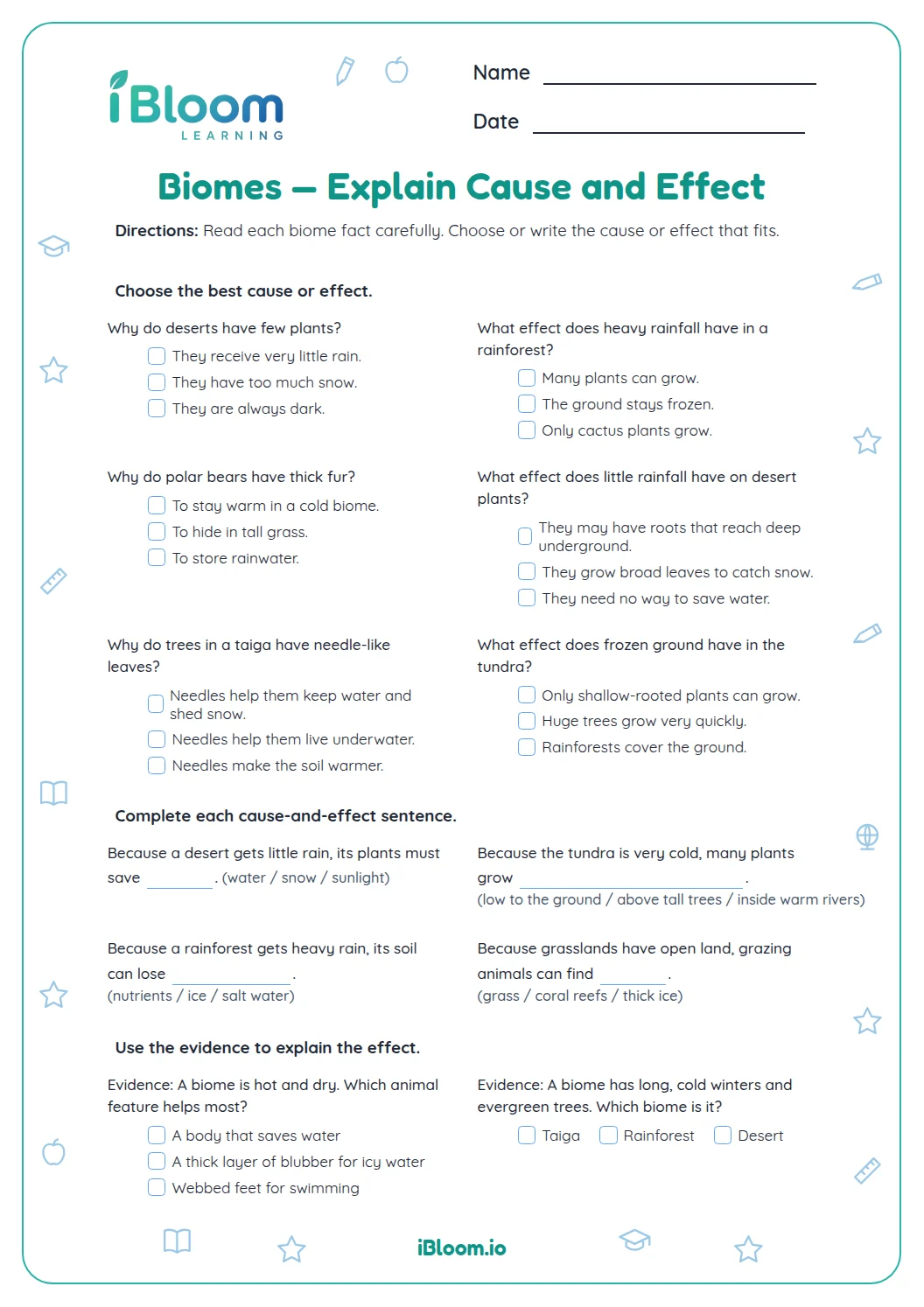 Biomes — Explain Cause and EffectPrintable Grade 3 science worksheets help students compare biomes by climate, landforms, plants, animals, and adaptations. This explain cause and effect worksheet provides a distinct, age-appropriate way to practise the same lesson.Grade 3Free PDF preview4 pages
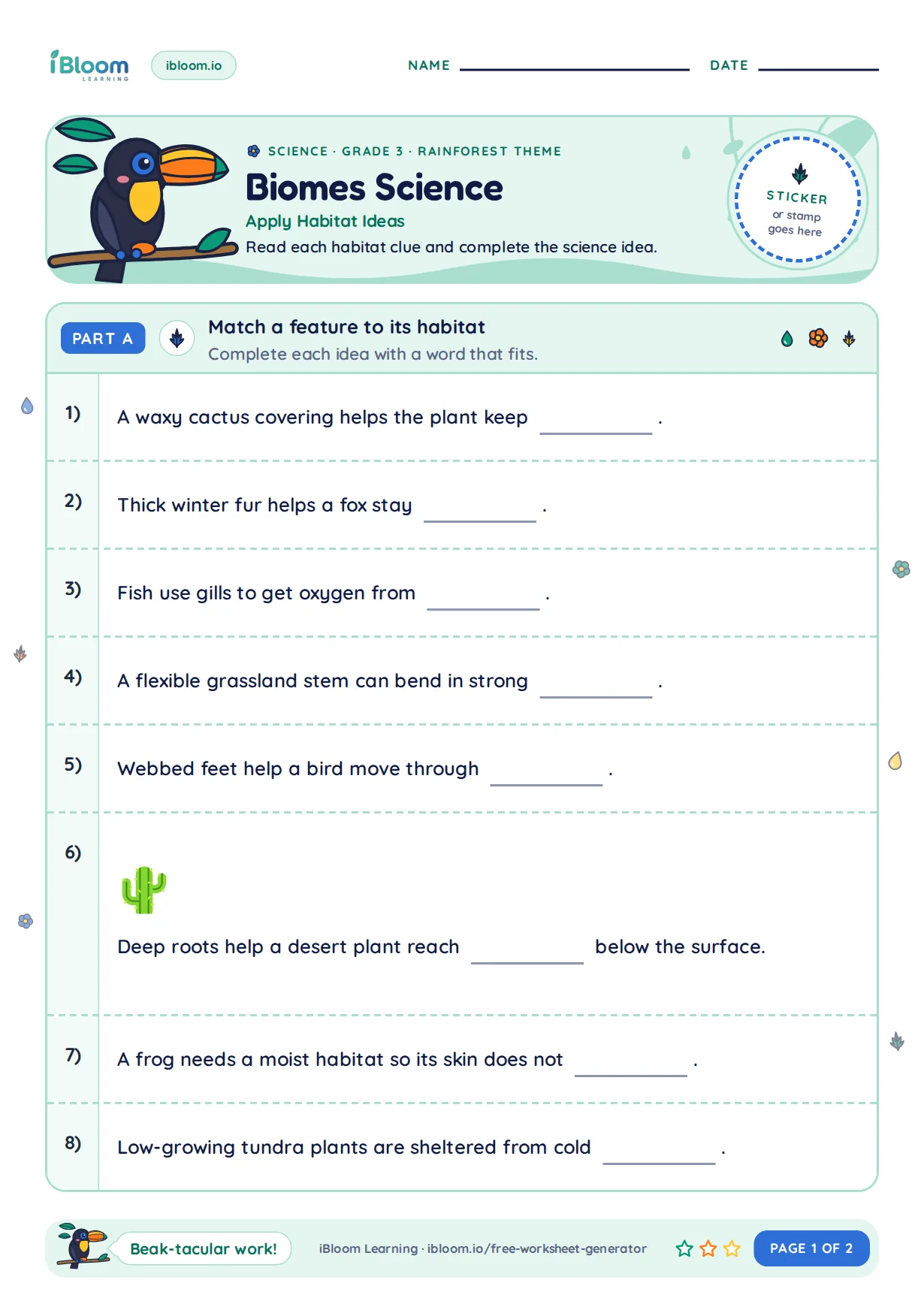 Biomes — Apply Science IdeasPrintable Grade 3 science worksheets help students compare biomes by climate, landforms, plants, animals, and adaptations. This apply science ideas worksheet provides a distinct, age-appropriate way to practise the same lesson.Grade 3Free PDF preview
 Biomes — Science Reasoning ReviewPrintable Grade 3 science worksheets help students compare biomes by climate, landforms, plants, animals, and adaptations. This science reasoning review worksheet provides a distinct, age-appropriate way to practise the same lesson.Grade 3Free PDF preview
Practice that builds confidence
Building the idea of a biome
These Grade 3 biomes practice activities help children understand that large regions of Earth have patterns of weather, land, water, plants, and animals. Students compare familiar biome types such as deserts, forests, grasslands, tundra, and water-based habitats using simple science vocabulary.
The printable worksheets include sorting, matching, labeling, reading, and short-response tasks. Children practise identifying biome clues, connecting animals and plants to their habitats, and explaining how living things survive in different environments.
A biome is a large area with a typical climate and living things that are suited to that environment. At this grade level, children do not need to memorize every biome on Earth. They should notice patterns: deserts are dry, tundra is very cold, forests have many trees, grasslands have wide open areas of grass, and aquatic habitats are shaped by water.

How the worksheets progress
The activities begin with recognition and vocabulary, then move toward comparison. A child may match a cactus to a desert, sort animals by habitat, label features on a scene, or read a short passage and choose the biome being described. Later questions ask students to explain evidence: “This biome is likely a grassland because it has few trees and many grazing animals.”
A simple parent routine
At home, choose one worksheet and first ask your child to circle clue words such as dry, cold, trees, ocean, grass, or snow. Then have them say one plant or animal that could live there and why. Finish with a quick real-world connection: “Would a polar bear be comfortable in a desert? What would be missing?” This keeps the focus on reasoning, not guessing.

Classroom uses
Teachers can use these printables for science centers, small-group review, early finisher work, or a notebook page during an Earth science unit. They also work well before a biome poster, diorama, or short research task because students practise the core language they will need: climate, habitat, adaptation, survive, environment, and region.

Common errors to watch for
Many Grade 3 students mix up habitat and biome. A habitat is where one organism lives; a biome is a much larger region with similar conditions. Children may also place animals only by appearance, such as thinking every white animal belongs in the tundra. Encourage them to use evidence from climate, food, shelter, and body features.
Free printable PDF download
Use this grade 3 biomes worksheet page to preview the activity, print it, or download it as a PDF for quick practice. It works well for homework, homeschool lessons, tutoring, morning work, revision, and classroom centers.
Answers and answer key support
After the child completes the worksheet independently, parents and teachers can use the answer support or answer key information to check the work, review mistakes, and choose the next practice step.
Why iBloom worksheets help
The pages are designed to make biome clues visible. Pictures, word banks, short texts, and comparison prompts help children connect facts instead of memorizing lists. A useful child-friendly strategy is: “Look for the weather, look for the plants, then choose the animals that fit.”
Helpful answers
Frequently asked questions
What should a Grade 3 student understand about biomes?
A Grade 3 student should understand that biomes are large regions with similar climate, plants, and animals. They should be able to use clues such as temperature, rainfall, water, trees, grass, or ice to identify and compare biomes.
Do these worksheets cover specific biomes?
Yes. The activities commonly practise major biome examples that are appropriate for this level, such as deserts, forests, grasslands, tundra, and aquatic habitats. The focus is on recognizing patterns rather than memorizing advanced classifications.
How can I help my child if they confuse habitat and biome?
Use a scale comparison: a habitat is the smaller place where one living thing lives, while a biome is a large region with similar conditions. For example, a pond can be a habitat, while an aquatic biome includes many water-based environments.
What vocabulary is useful before starting biomes worksheets?
Helpful words include biome, habitat, climate, environment, adaptation, survive, desert, forest, grassland, tundra, and aquatic. Children should also understand simple describing words such as dry, cold, wet, warm, icy, and grassy.
Can these printables be used for a classroom science center?
Yes. They work well in centers because students can sort biome cards, match animals to environments, read clue passages, and explain their answers independently or with a partner.
Is this grade 3 biomes worksheet free?
Yes. You can preview it for free and use the printable worksheet for home or classroom practice.
Can I download this grade 3 biomes worksheet as a PDF?
Yes. Use the worksheet download option to save a printable PDF, or print the worksheet directly from the page.
Does this grade 3 biomes worksheet include answers or an answer key?
When the activity has fixed answers, iBloom includes answer support so parents and teachers can check the completed worksheet.