

About this worksheet
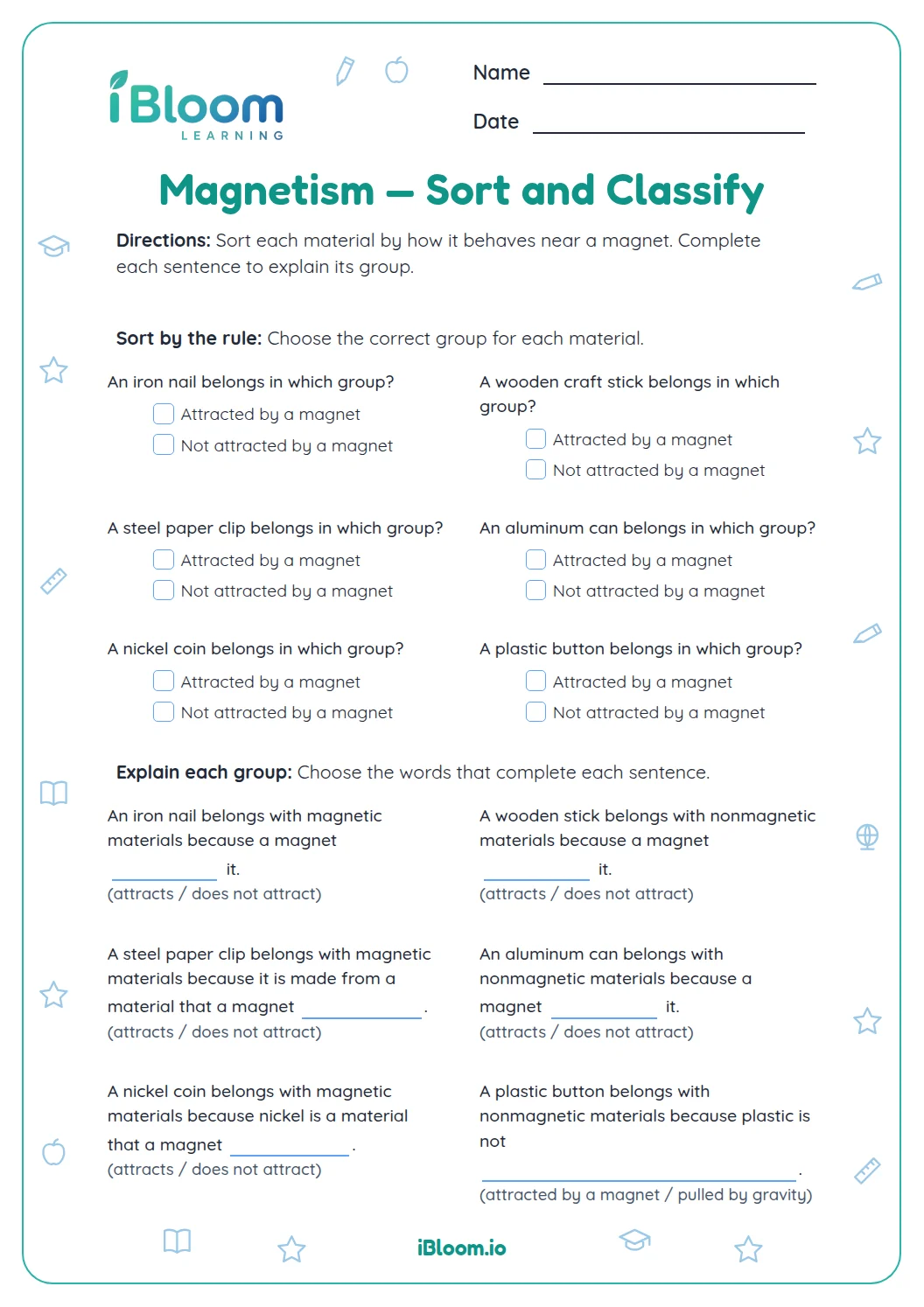
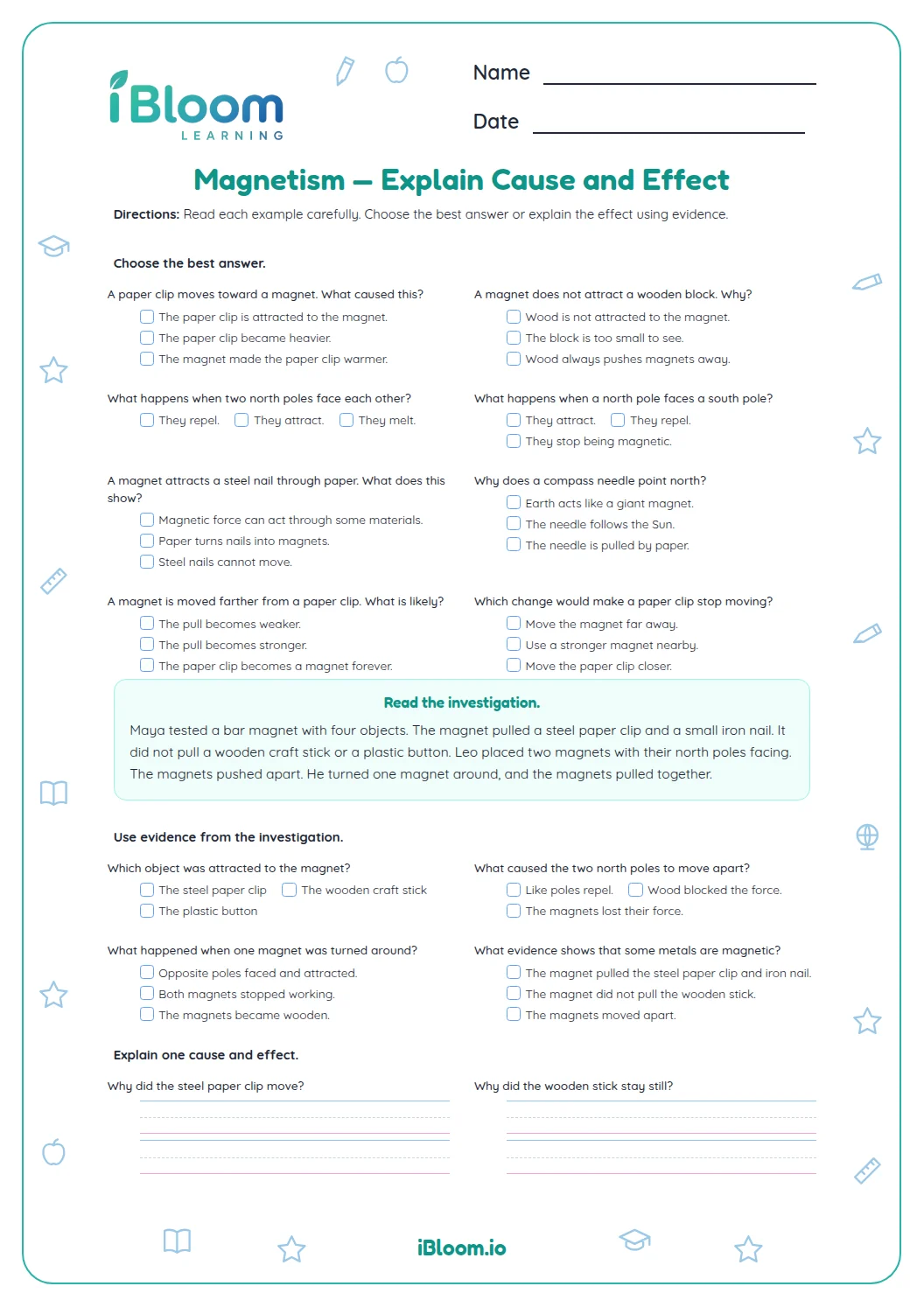
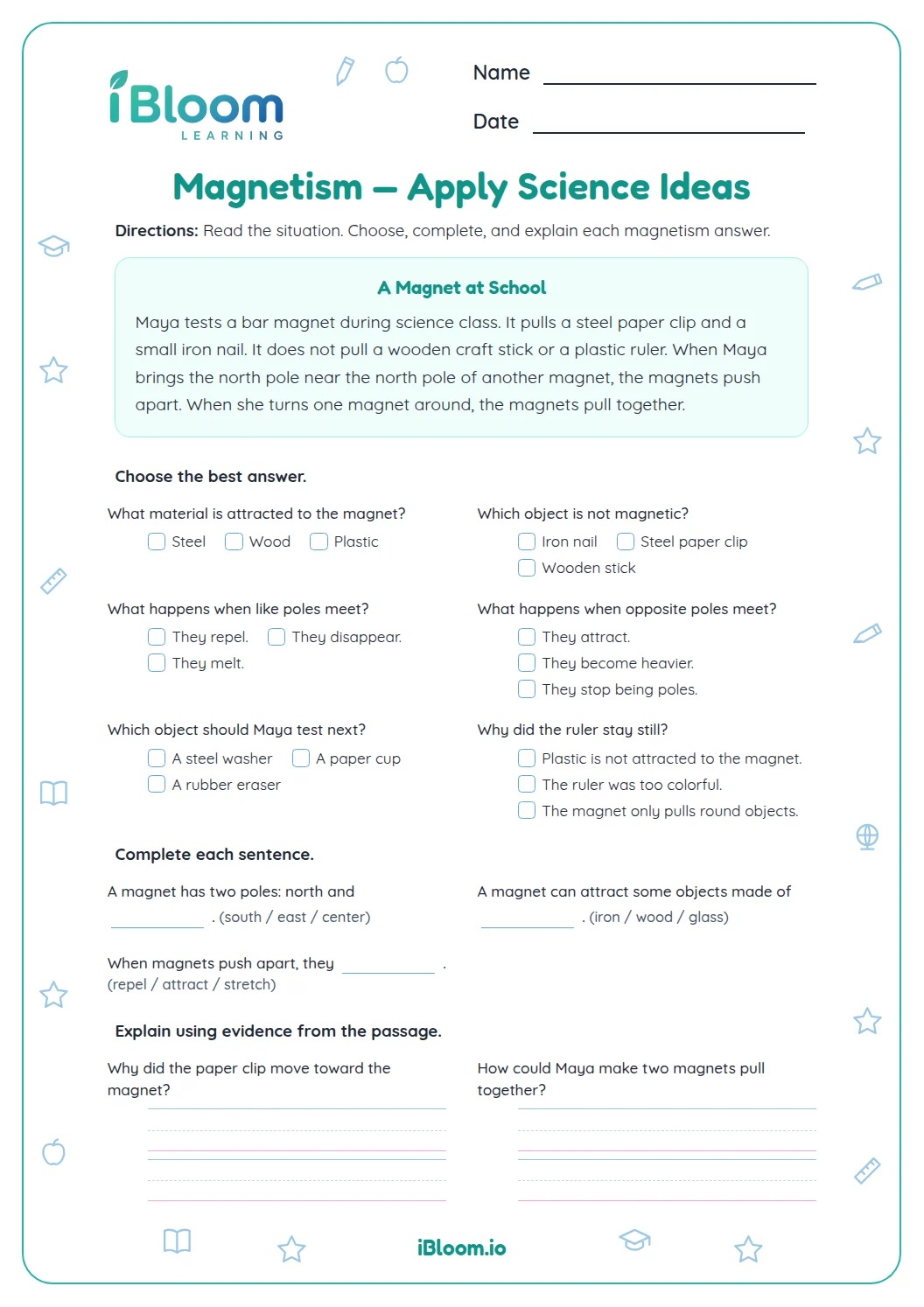
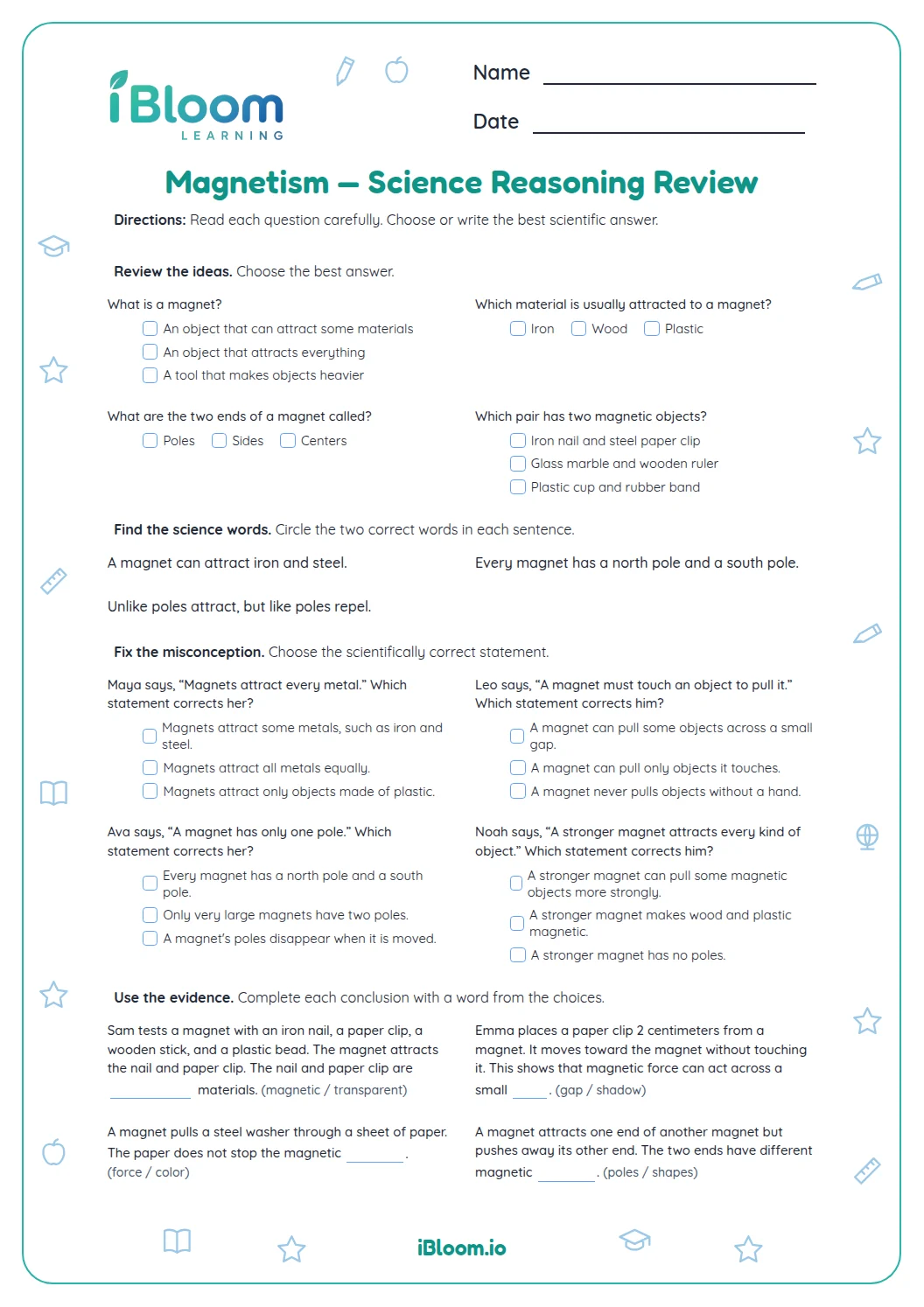
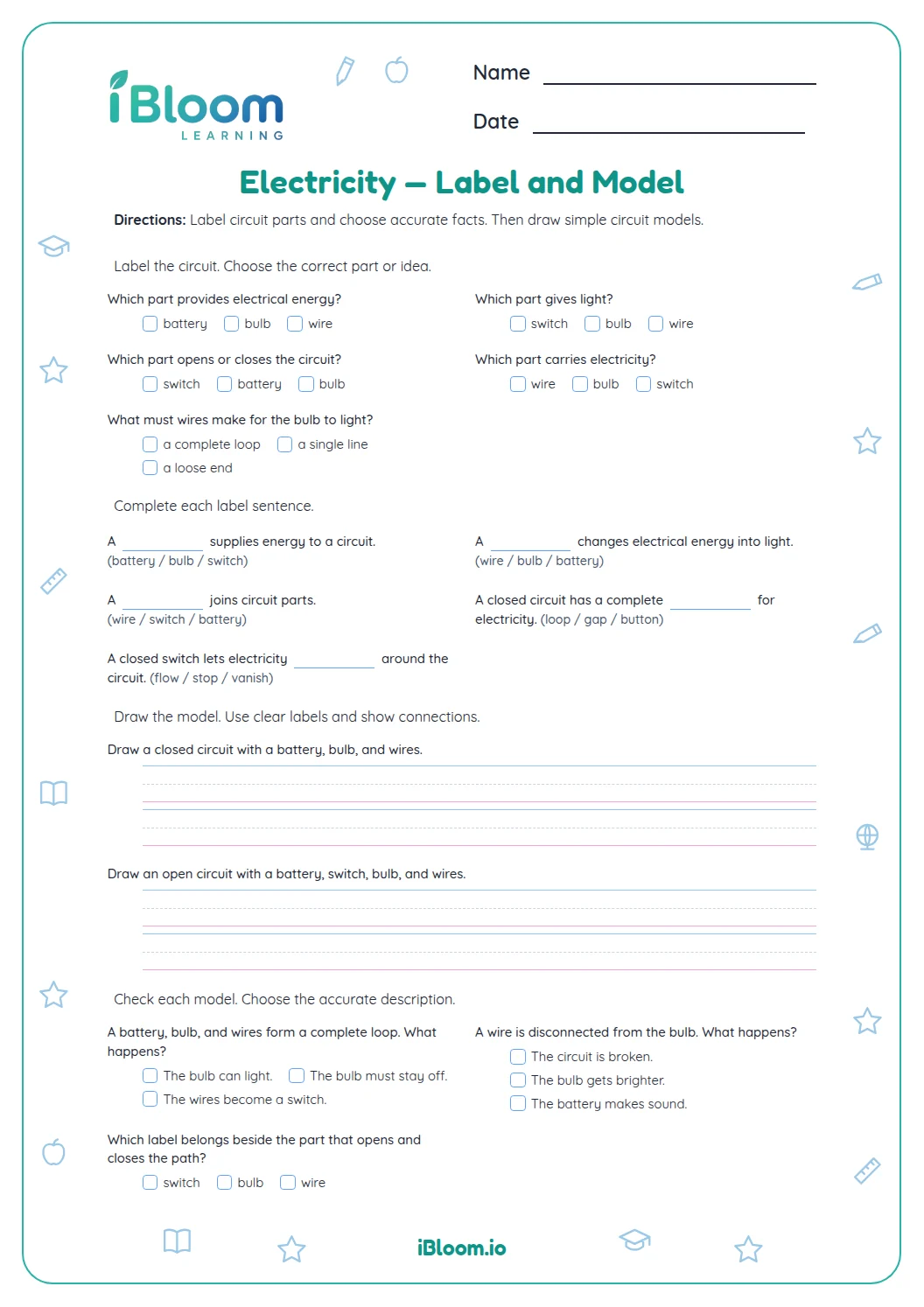
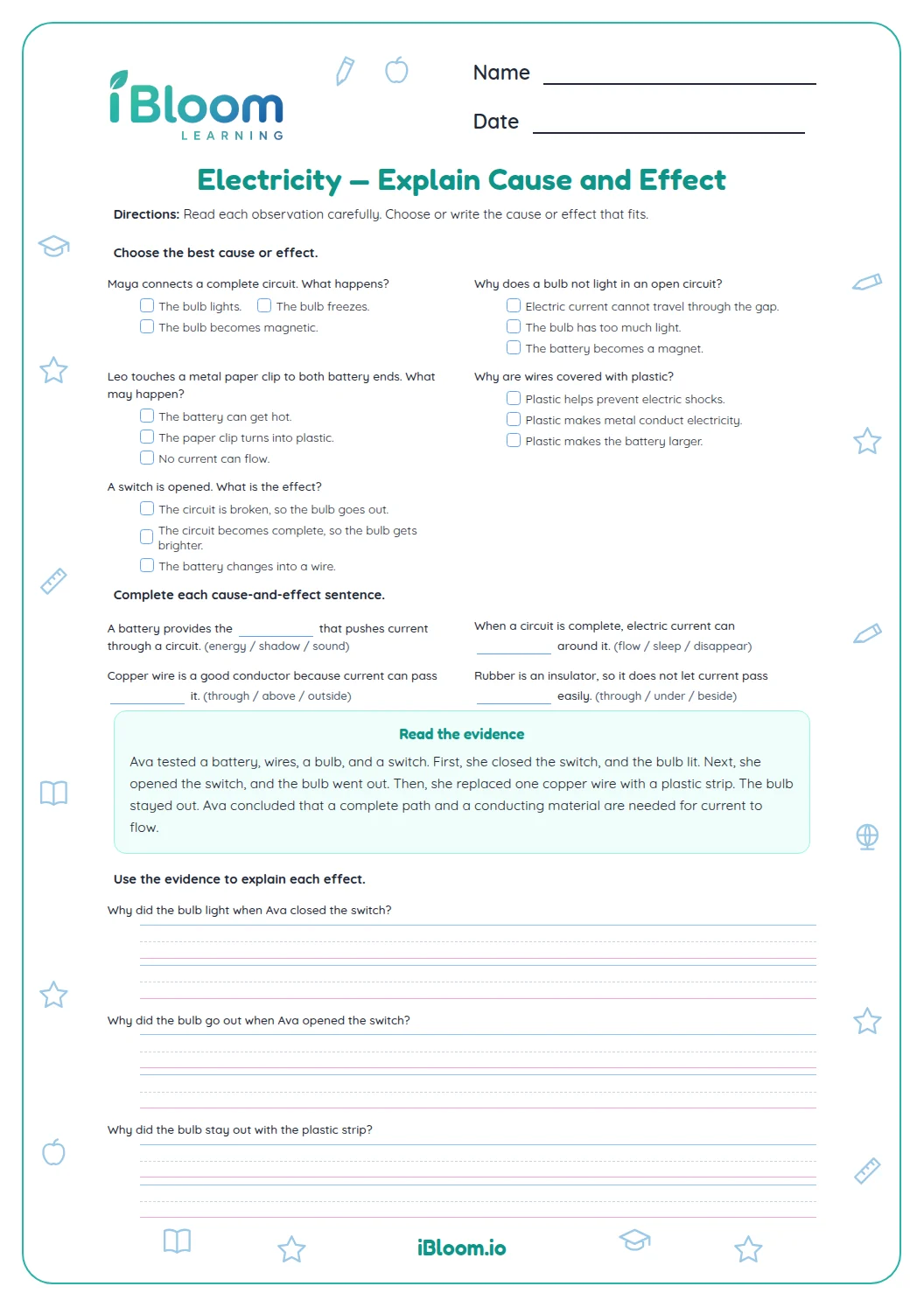
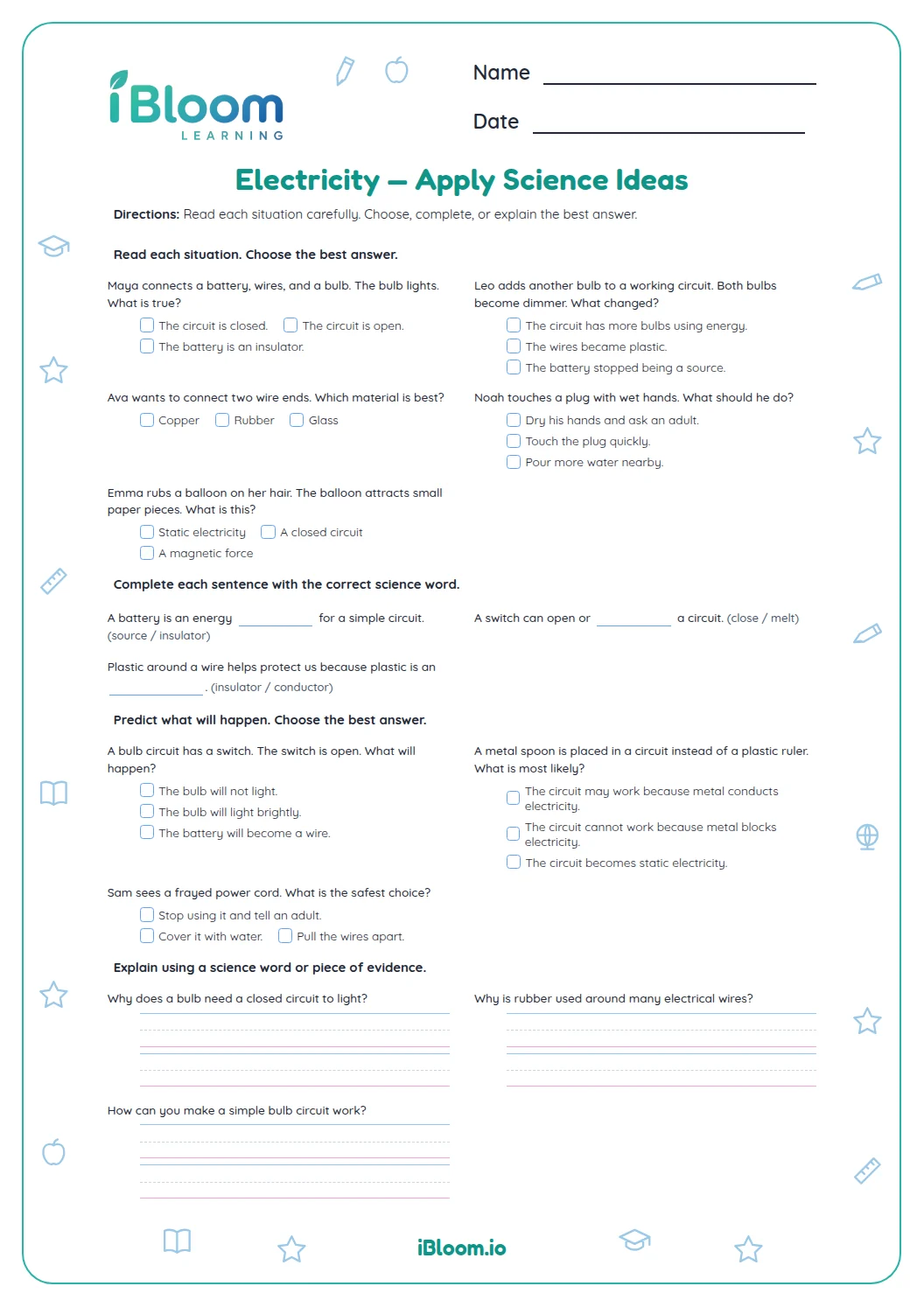
This Grade 3 magnetism worksheet connects labels and drawings to magnetic interactions. Students identify poles and the magnetic field, distinguish magnetic materials from wood and plastic, decide whether pole pairs attract or repel, and draw labeled models with force arrows. The two drawing questions replace preprinted magnet diagrams with space to construct and label a model. The activity practices NGSS 3-PS2-3 by asking students to reason about magnetic interactions between objects that do not touch.
Aligned to 3-PS2-3
What labels belong on a magnet?
A magnet has two poles, north and south. The magnetic field is the area around a magnet where magnetic forces can act.
How do poles help predict attraction or repulsion?
Unlike poles attract; like poles repel. In Part B, compare the pole names to decide which interaction occurs.
How do pole pairs model magnetic forces?
Use the names of the facing poles to predict whether magnets pull together or push apart. The questions compare unlike and like poles, then apply the same idea to a simple magnetic test.
How to use this worksheet
- 1Review the labels north pole, south pole, and magnetic field.
- 2Choose magnetic materials carefully; a paper clip made of steel is attracted.
- 3Compare the two pole names in each statement.
- 4For Part C, label both ends of each magnet before drawing arrows.
- 5Use the model to explain attraction or repulsion.
- 6Check your answers with the key and correct any pole labels.
Common mistakes and quick fixes
The mistake
Thinking all metal objects are magnetic.
The fix
Use the stated material: iron and steel are attracted in these examples.
The mistake
Saying like poles attract.
The fix
Same poles repel; unlike poles attract.
The mistake
Drawing arrows before labeling poles.
The fix
Write N and S first, then use the pole pair to choose arrow direction.
Next Generation Science Standards alignment
The worksheet models how magnetic forces depend on pole orientation.
Ask testable questions about causes of magnetic interactions without contact.
On this sheet: Students reason about pole orientation and magnetic attraction or repulsion and frame a testable question about distance.
Show the official wordingHide the official wording
Ask questions to determine cause and effect relationships of electric or magnetic interactions between two objects not in contact with each other.
What to practice next
Make more practice
Questions parents and teachers ask
What labels are used for magnet poles?
A bar magnet has two poles, called north and south. Questions ask learners to identify magnet parts and use pole pairs to predict whether magnets pull together or push apart. The answer key confirms the label and each force prediction.
When do two magnets attract or repel?
Unlike poles attract: a north pole facing a south pole pulls toward it. Like poles repel: north facing north or south facing south pushes apart. The models ask students to label poles before showing the force with arrows. A quick sketch can show the two poles clearly.
Which objects are attracted to magnets?
Unlike poles pull together, and like poles push apart. The worksheet asks learners to predict what happens when north and south face, then when two north poles or two south poles face. The key gives the force for each pair.
Is there an answer key?
Yes. The separate key includes the labels, attraction and repulsion choices, and sample drawings. A learner’s drawing can vary; check that the poles and arrows show the stated interaction correctly. Use the arrows to check the model against the rule.
What should the force arrows show?
When unlike poles face each other, draw arrows pointing toward the space between the magnets to show attraction. When like poles face, arrows should point away from one another to show repulsion. The drawing prompt on this page asks for the unlike-pole attraction model.