






About this worksheet
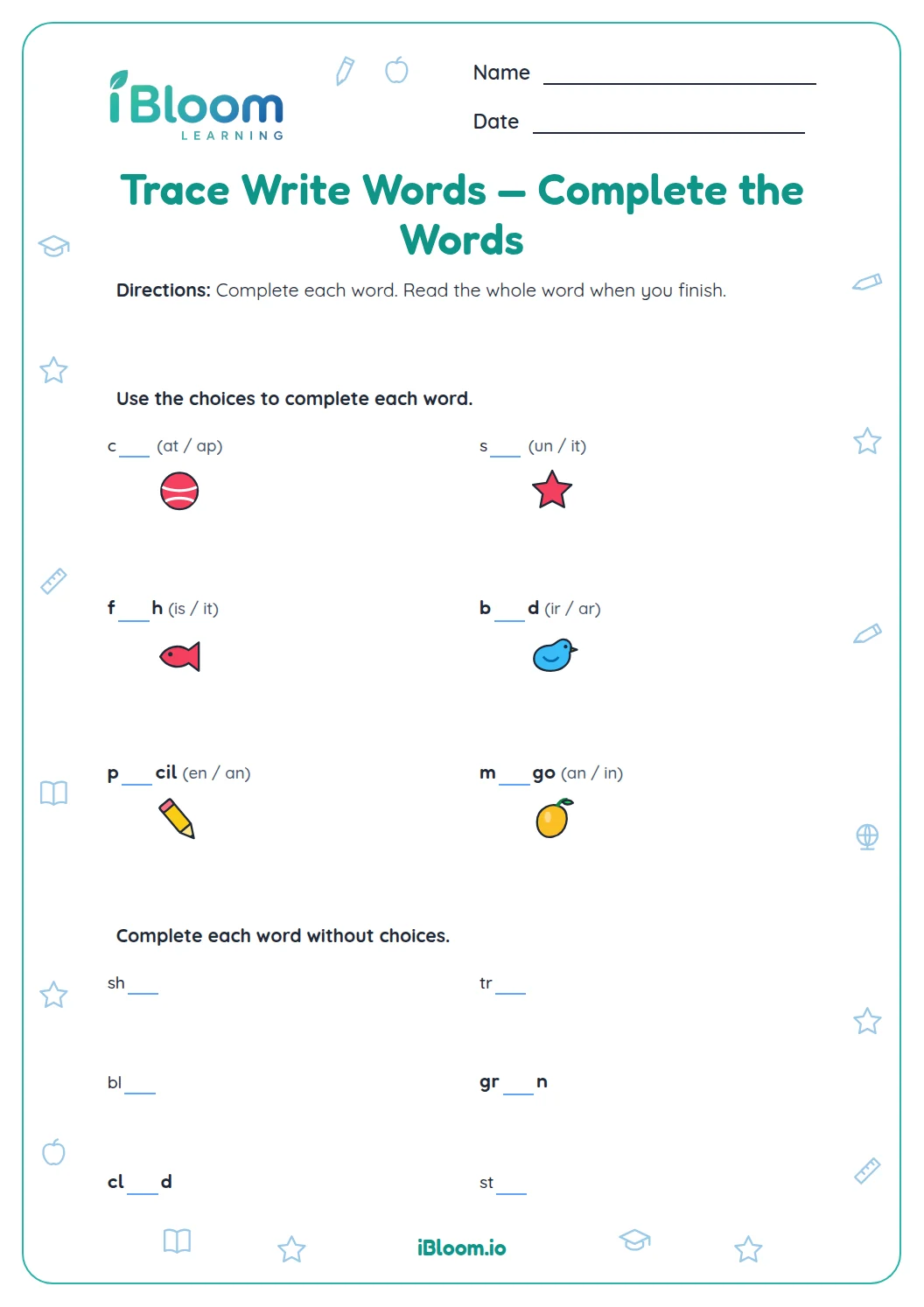
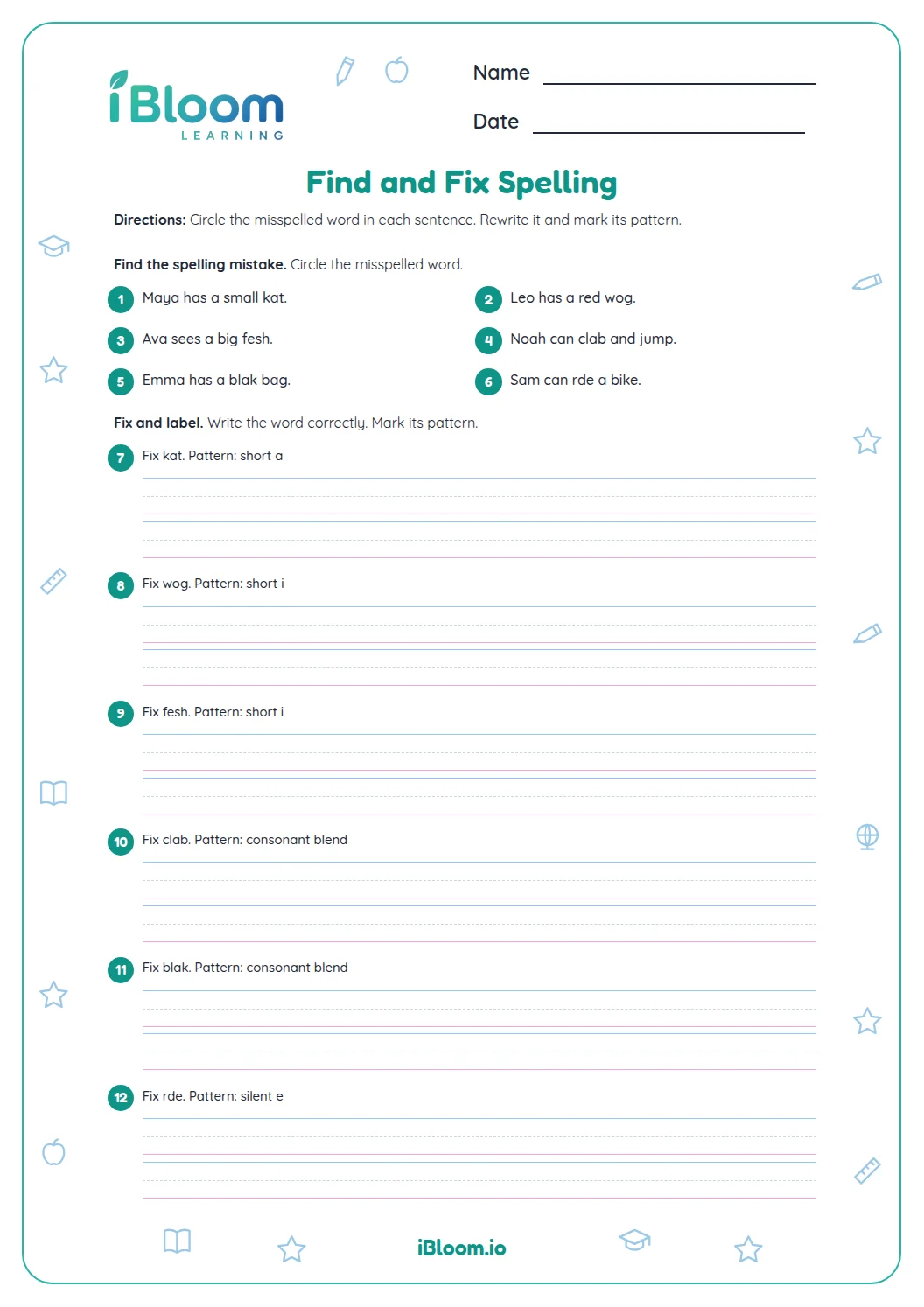
This Grade 1 spelling worksheet has 14 items across two pages. Children correct words such as cap, kit, and hop by choosing or writing the final-e word that fits each sentence. The separate answer key lists all responses. The work practices spelling conventions and phonetic spelling, aligned to CCSS L.1.2e.
Aligned to L.1.2e
What changes when a word ends in e?
A silent final e can change a short-vowel word into a different word, as in cap and cape or kit and kite. The first part asks children to select the word that fits a sentence; the second asks them to write the final-e word.
How can a child check the spelling?
Read the whole sentence for meaning, then compare the short word with the final-e word. Say the intended word aloud and check that the final e is present.
How does question 2 work?
A kit is a toy; a kite is flown outside. The sentence says Leo flew it, so the final-e spelling fits.
- 1Leo flew a kit in the park. Which word fixes kit?
- 2Answer: kite
How to use this worksheet
- 1Read the sentence or word carefully.
- 2Say the word slowly.
- 3Check whether a silent e belongs at the end.
- 4Choose or write the complete word.
- 5Read the sentence again with the corrected word.
Common mistakes and quick fixes
The mistake
Leaving off the final e
The fix
Check the very last letter after you say the word.
The mistake
Adding e to the wrong word
The fix
Say the word aloud and see whether final e makes the familiar word.
The mistake
Choosing a similar-looking word
The fix
Read the whole sentence with your choice to check that it fits.
Common Core alignment
This worksheet practices L.1.2e through grade-level tasks.
Notice the silent final e that completes a familiar word.
On this sheet: Notice the silent final e that completes a familiar word.
Show the official wordingHide the official wording
Spell untaught words phonetically, drawing on phonemic awareness and spelling conventions.
What to practice next
Make more practice
Further reading
Questions parents and teachers ask
What spelling pattern does this page practice?
Children practice adding silent final e to change short words into familiar words such as cap/cape, kit/kite, and hop/hope. They choose a sentence fit and write several words. Read each sentence aloud, notice the clue that gives its meaning, and use that context to decide which spelling fits best. Then compare it with the key.
How many items are included?
The two-page worksheet has 14 items: seven multiple-choice corrections and seven written corrections. A separate answer key follows. Read each sentence aloud, notice the clue that gives its meaning, and use that context to decide which spelling fits best. Then compare it with the key.
Why does the final e matter?
In these word pairs, adding final e changes the vowel sound and the word’s meaning. The sentence clue helps children decide which word the writer intended. Read each sentence aloud, notice the clue that gives its meaning, and use that context to decide which spelling fits best. Then compare it with the key.
What is the answer to the kite example?
Question 2 describes Leo flying a toy in the park. “Kite” fits that meaning; “kit” does not name the toy. Read each sentence aloud, notice the clue that gives its meaning, and use that context to decide which spelling fits best. Then compare it with the key.
Does the key include answers?
Yes. It lists the corrected words for all 14 questions, including the words children write in the second part. Read each sentence aloud, notice the clue that gives its meaning, and use that context to decide which spelling fits best. Then compare it with the key.
How can an adult support the practice?
Ask the child to read the sentence, say the intended word, and compare the short and final-e spellings. Then check the response against the key. Read each sentence aloud, notice the clue that gives its meaning, and use that context to decide which spelling fits best. Then compare it with the key.