





About this worksheet
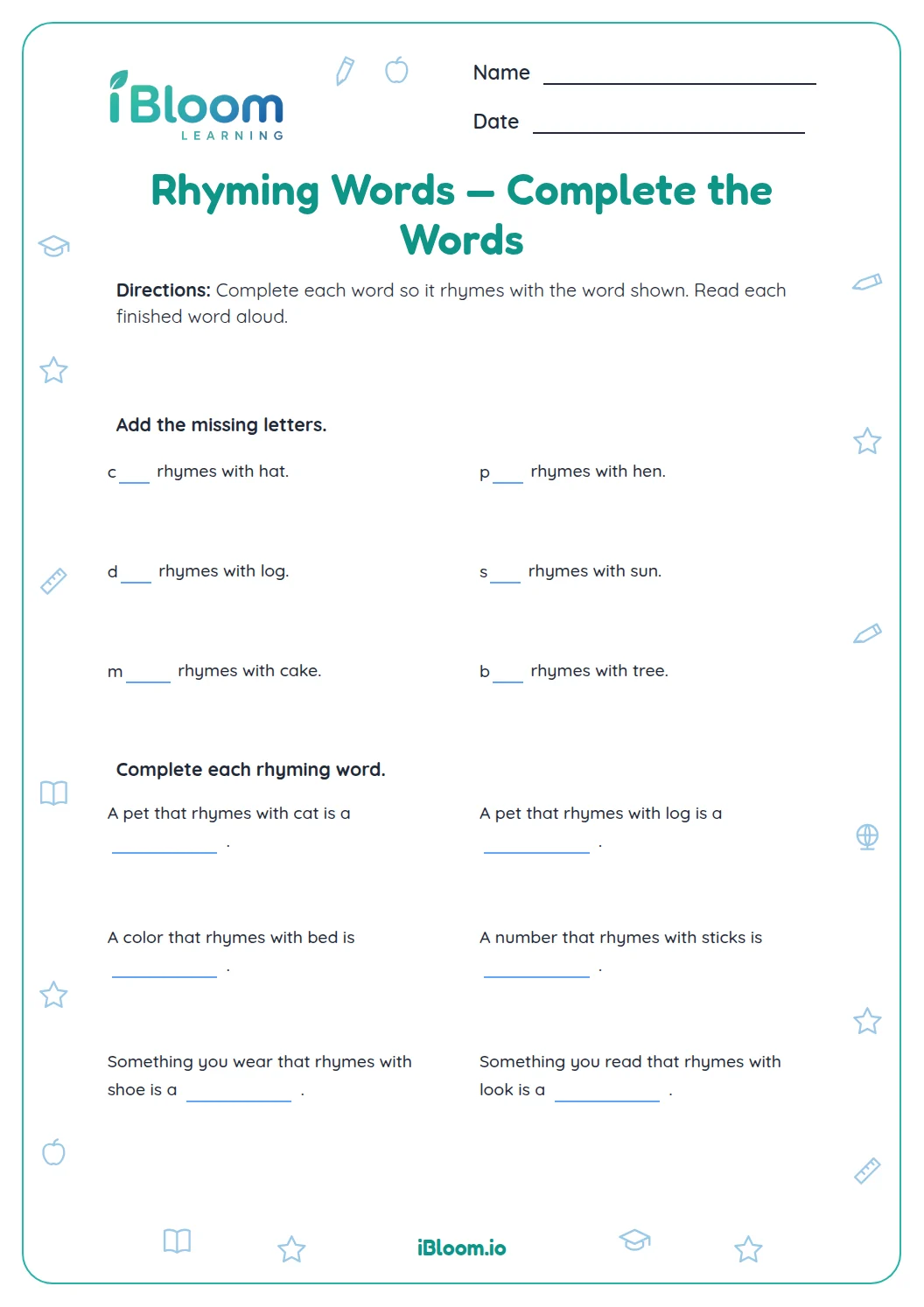
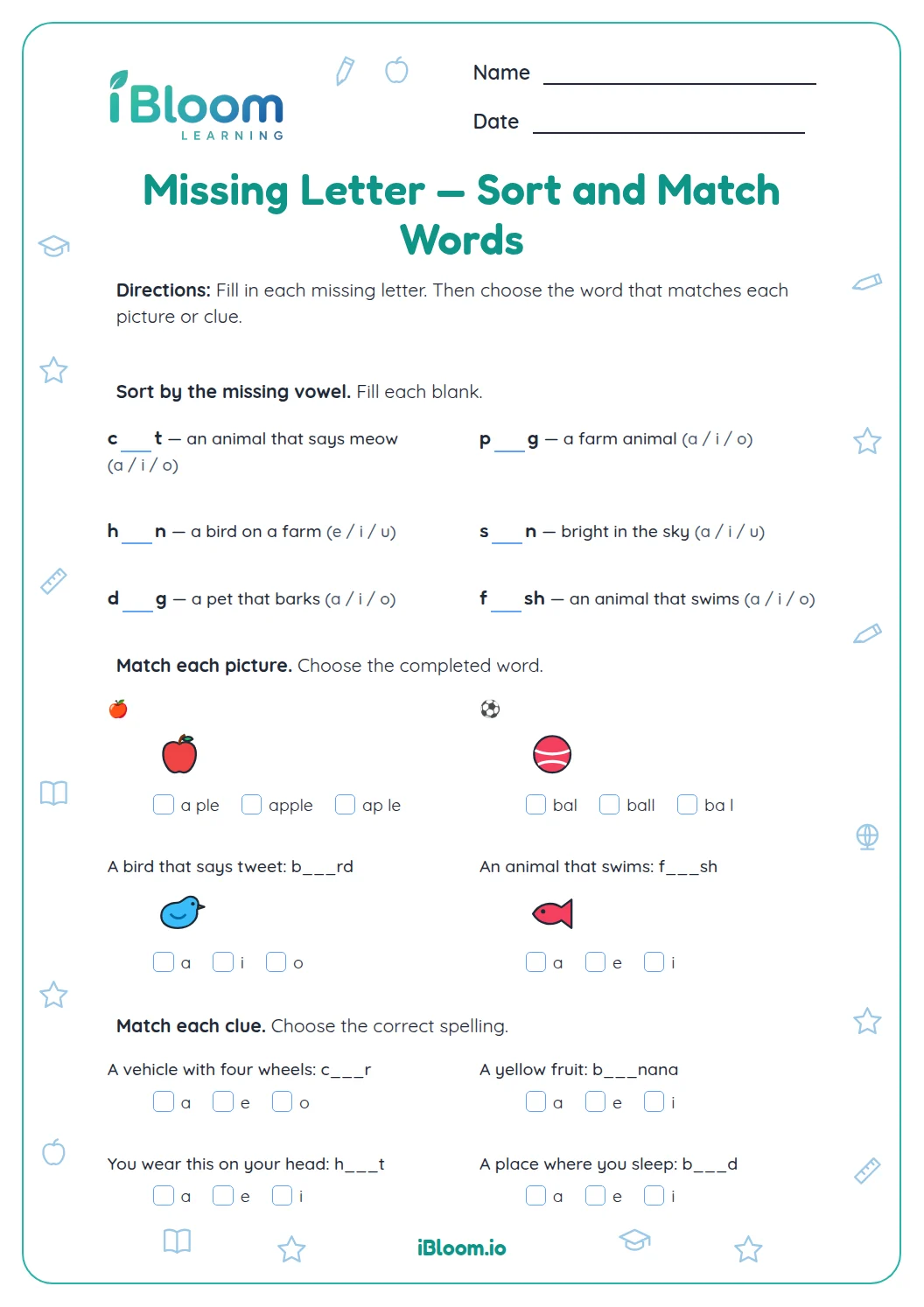
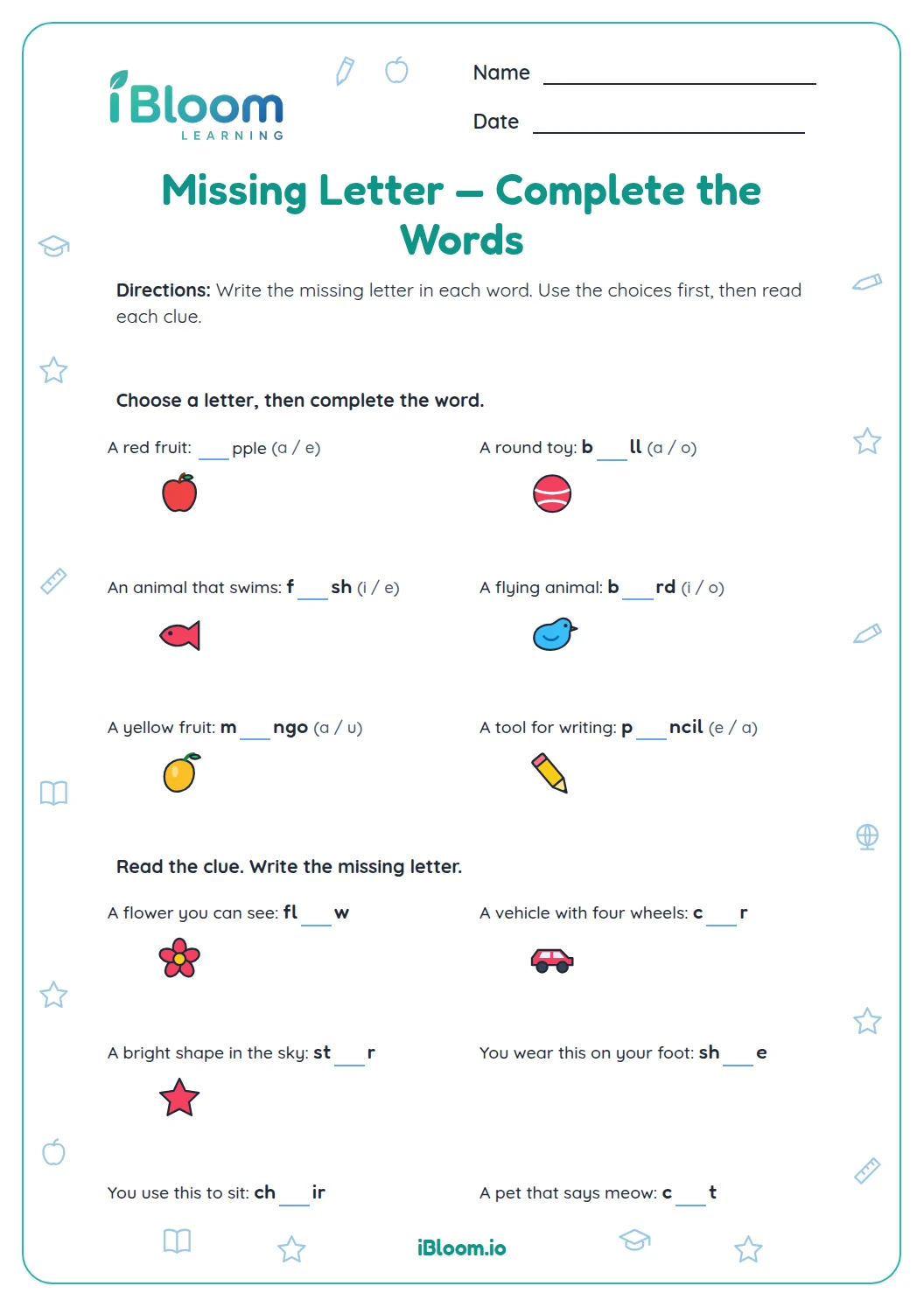
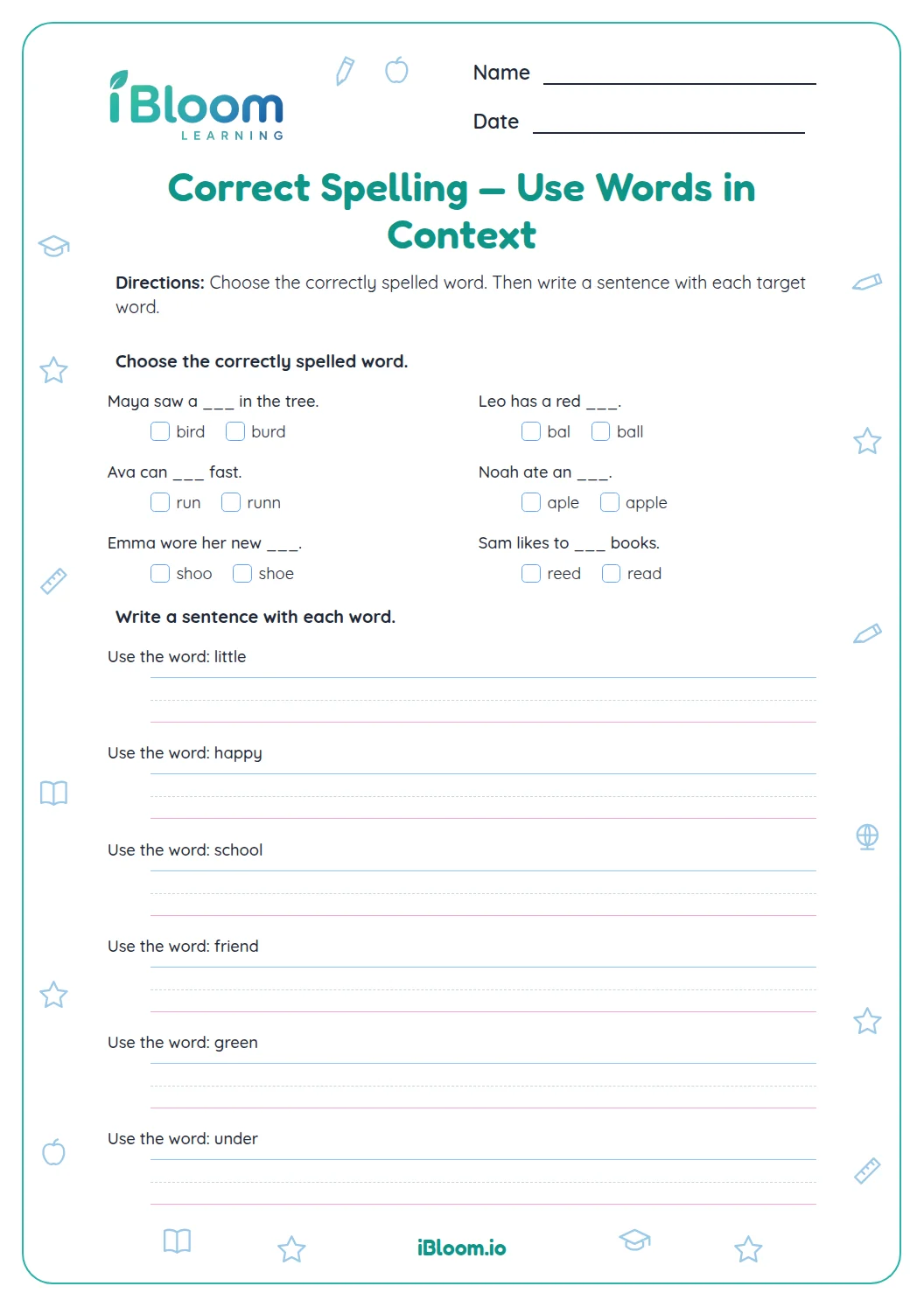
This free Grade 1 spelling worksheet reviews rhymes with short and long vowel sounds. Children choose eight rhyming words, fill four missing vowels and spell four words in sentences. Cat and hat share -at; green and clean show that rhyming sounds can have different spellings. The review practices Common Core L.1.2d through common spelling patterns. An adult can read the clues aloud while the child checks the letters. A separate answer key gives every word and missing letter.
Aligned to L.1.2d
What should children listen for?
Rhyming words share the sounds from the vowel to the end. Cat and hat have different first sounds but the same ending. Say each pair naturally before pointing to its letters.
Some rhymes share a spelling pattern, such as bike and like. Others use different letters for the same ending sound, such as green and clean. Listen first, then check how each word is spelled.
How does the rhyme help with a missing letter?
Question 9 gives both a meaning clue and a rhyme. A pet that rhymes with hat is cat. The printed c and t leave room for the vowel a.
- 1A pet that rhymes with hat: c___t
- 2Say hat, cat. Both end with the short a sound followed by t.
- 3Write a. The completed word is cat.
How do the three parts build a spelling review?
Part A mixes short vowel rhymes, such as pig and wig, with long vowel rhymes, such as light and night. Part B asks children to supply four missing vowels. Part C asks them to spell whole words using sentence and rhyme clues.
Read the completed sentence aloud. In question 13, log both makes sense as a place for the frog to sit and rhymes with dog. The answer needs to fit both clues.
How to use this worksheet
- 1Say cat and hat, drawing attention to the matching ending.
- 2Have the child read or repeat the three choices in Part A.
- 3In Part B, say the whole answer before filling in one vowel.
- 4In Part C, use the sentence and rhyme clue to spell a whole word.
- 5Read each completed sentence aloud and check the spelling with the key.
Mistakes to notice and fix
The mistake
Choosing cap for cat because both start with c.
The fix
Listen from the vowel onward: cat and hat share the same ending sound.
The mistake
Writing the whole word in a one-letter blank.
The fix
Read c___t together, then write only the missing a.
The mistake
Spelling clean as cleen because it rhymes with green.
The fix
Say the matching sound, then check the spelling: green uses ee, while clean uses ea.
Common Core alignment
Spell short and long vowel rhyming words in missing-letter and sentence tasks.
On this sheet: Children choose rhymes, complete common spelling patterns and spell whole words in sentences.
Show the official wordingHide the official wording
Use conventional spelling for words with common spelling patterns and for frequently occurring irregular words.
What to practice next
Make more practice
Further reading
Questions parents and teachers ask
Which rhyming patterns does this review use?
The review mixes short vowel patterns such as -at, -en, -ig and -op with long vowel rhymes such as cake and lake, bike and like, tree and free, and light and night. The sentence section also includes green and clean, whose rhyming sounds have different spellings.
Can I read the clues to my first grader?
Yes, read the prompts, choices and sentence clues aloud if needed. Leave the printed words visible so the child can compare their letters. After the child chooses or writes an answer, say both rhyming words together and check that the completed word is spelled correctly.
What goes in the blanks in Part B?
Each blank takes one letter: a, e, i or o. The completed words are cat, ten, dig and mop. Ask the child to say the whole word first, then identify the missing vowel between the two consonants already printed on the sheet.
How do the sentence clues help in Part C?
Each sentence gives a meaning clue, and the word in parentheses gives a rhyme clue. In question 13, log names something the frog can sit on and rhymes with dog. Have the child check both clues before writing the whole word in the blank.
Do rhyming words always have the same ending letters?
No. Green and clean rhyme, but green uses ee and clean uses ea for the long e sound. Question 15 asks children to spell clean in a sentence. Use that pair to show why listening for a rhyme helps, but checking the written spelling still matters.