





About this worksheet
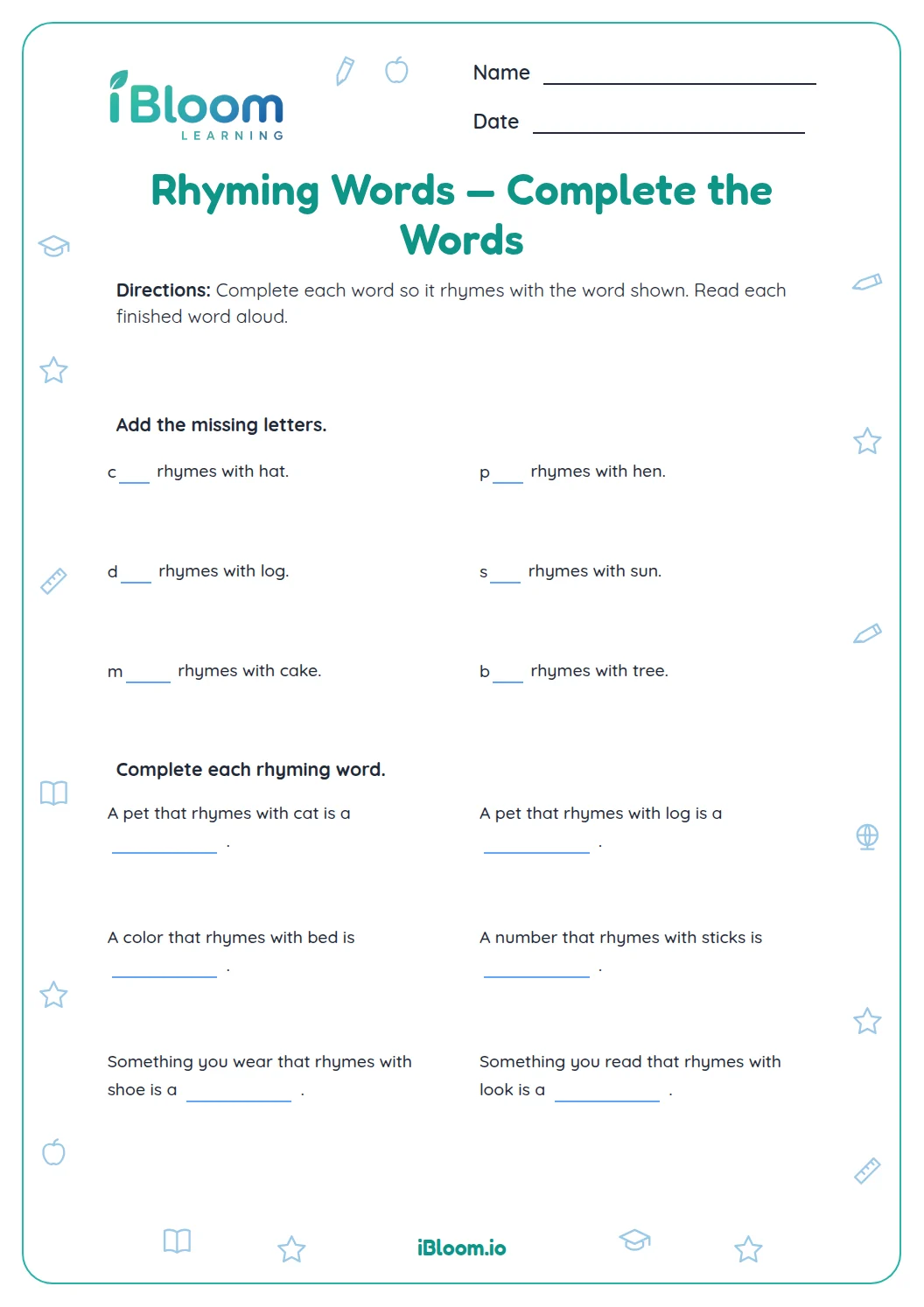
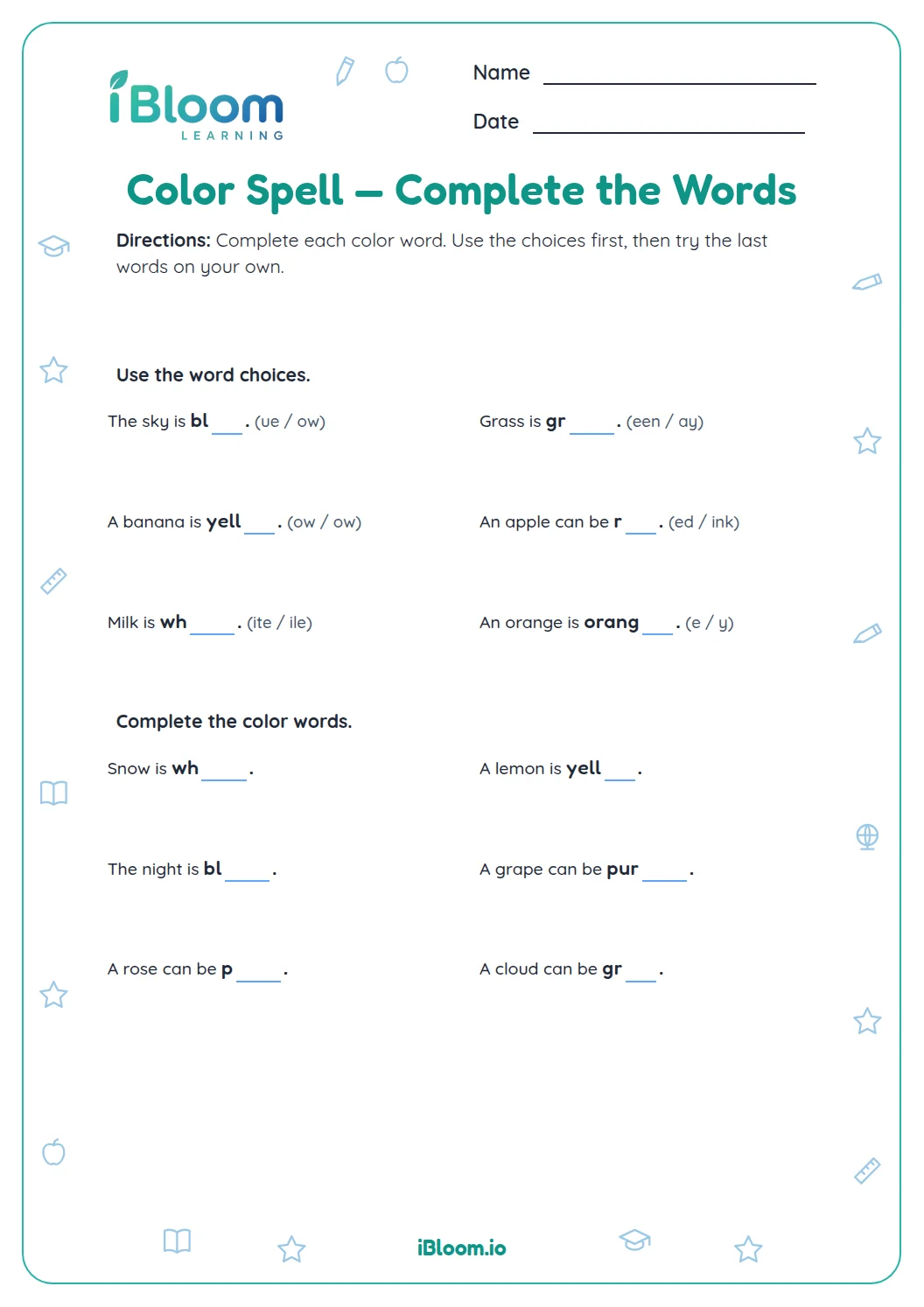
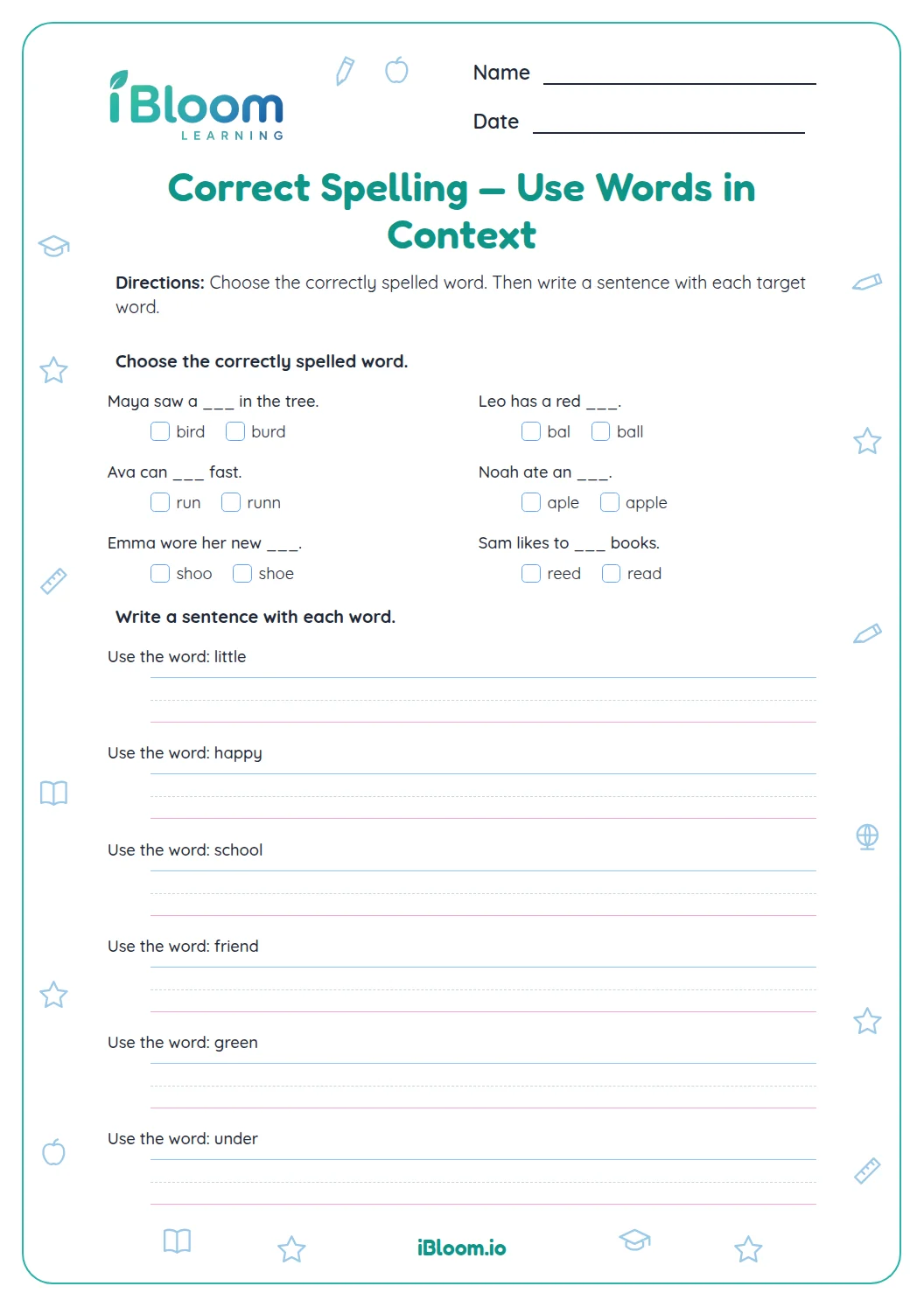
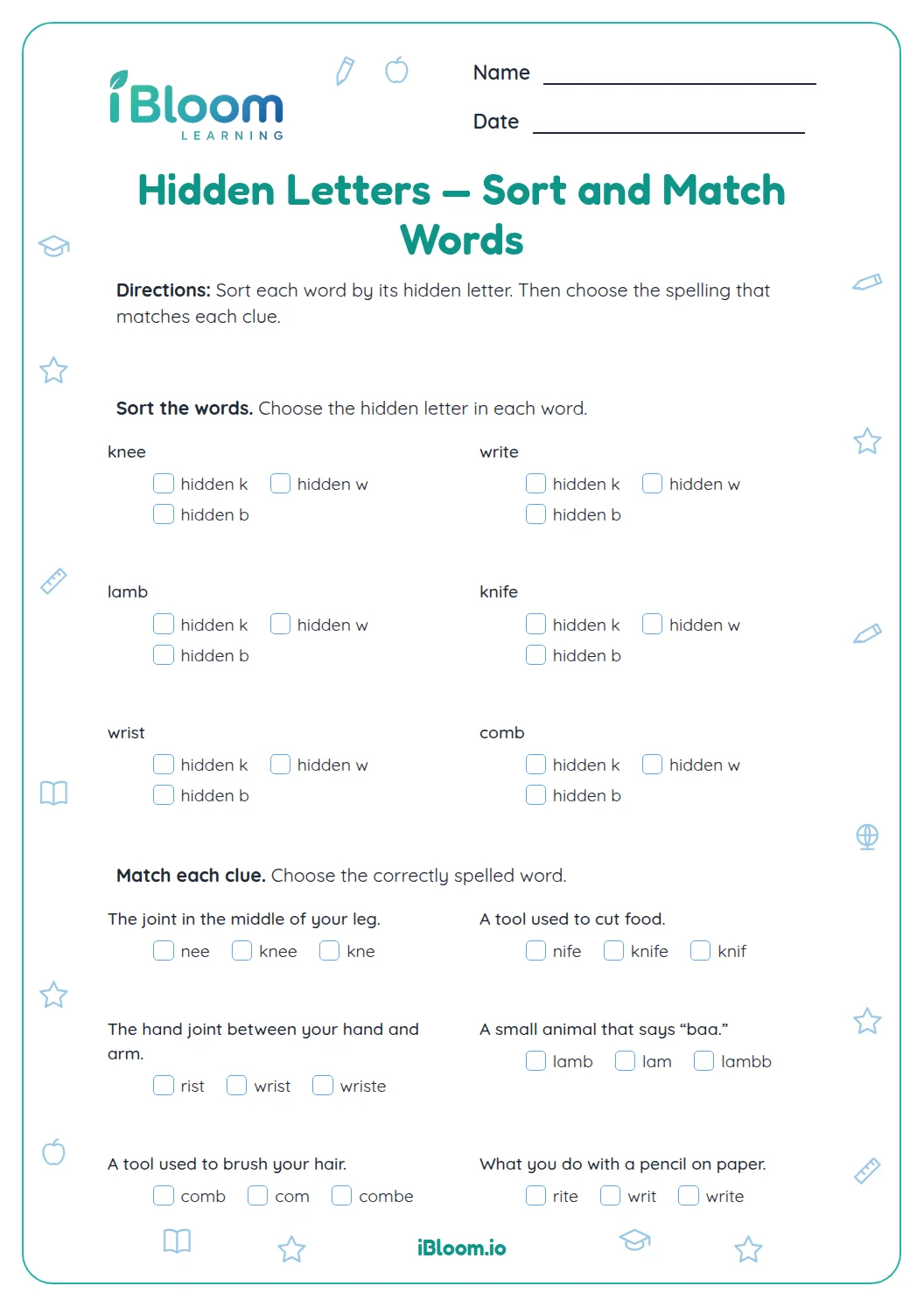
This Grade 1 printable pairs rhyme recognition with spelling practice. Students choose correctly spelled rhyming words, complete pairs when the starting sound is specified, and correct misspellings such as nite, mause, and logg. Its 14 questions fill two worksheet pages, with a separate two-page key that shows corrected words and their spelling patterns. The spelling practice aligns with CCSS L.1.2.d.
Aligned to L.1.2.d
What kinds of rhyming and spelling practice are included?
Part A asks children to select a correctly spelled rhyme from three choices. Part B has them complete rhyming pairs and correct misspellings in short sentences. Part C checks additional word families and one final rhyme.
There are 14 questions in all. The starting sound in open rhyme prompts narrows the answer, while correction prompts name the misspelled word directly.
How do you check a rhyming word’s spelling?
Say both words aloud to compare their ending sounds, then look at how the second word is spelled. A matching sound does not make every spelling acceptable.
- 1Question 1: Which correctly spelled word rhymes with cat?
- 2hat ends with the same sound as cat.
- 3Answer: hat
What should a child do when a word is misspelled?
Replace the whole misspelled word with its conventional spelling. For example, nite becomes night. Children can notice the letters that represent the long i sound in this familiar spelling.
Why do the prompts name a starting sound?
Many words share a rhyme, so a clue such as “Start the word with n” makes a completion like night specific. Children can still say the pair aloud to check that sun/fun, light/night, or book/look share their ending sounds.
How to use this worksheet
- 1Say the given word aloud.
- 2Compare the ending sound, not just the first letter.
- 3Use the provided starting sound when a prompt gives one.
- 4For a correction, replace the misspelled word with the standard spelling.
- 5Read the completed pair aloud and check it against the key.
Common mistakes and quick fixes
The mistake
Choosing a word with a similar beginning but a different ending sound.
The fix
Say both words and compare the last sound or sound group.
The mistake
Accepting a made-up spelling because it rhymes.
The fix
Check that the letters form a familiar, correctly spelled word.
The mistake
Correcting only one letter in a misspelled word.
The fix
Write the entire corrected word so the spelling can be checked.
Curriculum alignment
This page practices rhyming words and spelling through grade-appropriate examples.
Use conventional spelling for common word patterns in the rhyming word pairs.
On this sheet: Students choose and repair conventional spellings in familiar rhyming word families.
Show the official wordingHide the official wording
Use conventional spelling for words with common spelling patterns and for frequently occurring irregular words.
What to practice next
Make more practice
Further reading
Questions parents and teachers ask
How many items are included?
The printable has 14 questions in three parts and spans two worksheet pages. Children choose rhyming words, complete rhyme pairs, and repair misspelled words; the separate two-page answer key gives the correct responses. This gives children a concrete chance to practice the idea and explain their choices.
Do students need to write a sentence for every answer?
No. Most prompts need a word, and the first part uses multiple-choice answers. For misspelled words, students write the corrected word; the directions ask them to attend to the spelling pattern. This gives children a concrete chance to practice the idea and explain their choices.
Why are some rhyming prompts given a starting letter?
Several words can rhyme with the same word. The starting sound clue narrows the expected word, so a prompt such as “light and ___; start with n” points to night while still asking children to hear the rhyme. This gives children a concrete chance to practice the idea and explain their choices.
What does the answer key show for a misspelled word?
It gives the corrected word and, for the repair items, the word ending being practiced. For example, nite is corrected to night. Adults can use the marked ending to talk about the spelling pattern after the child fixes the word.
Which spelling standard does it practice?
The worksheet practices CCSS L.1.2.d by asking children to use conventional spellings for familiar spelling patterns. The rhyme prompts help children compare word endings as they choose or write the correct form. This gives children a concrete chance to practice the idea and explain their choices.