




About this worksheet
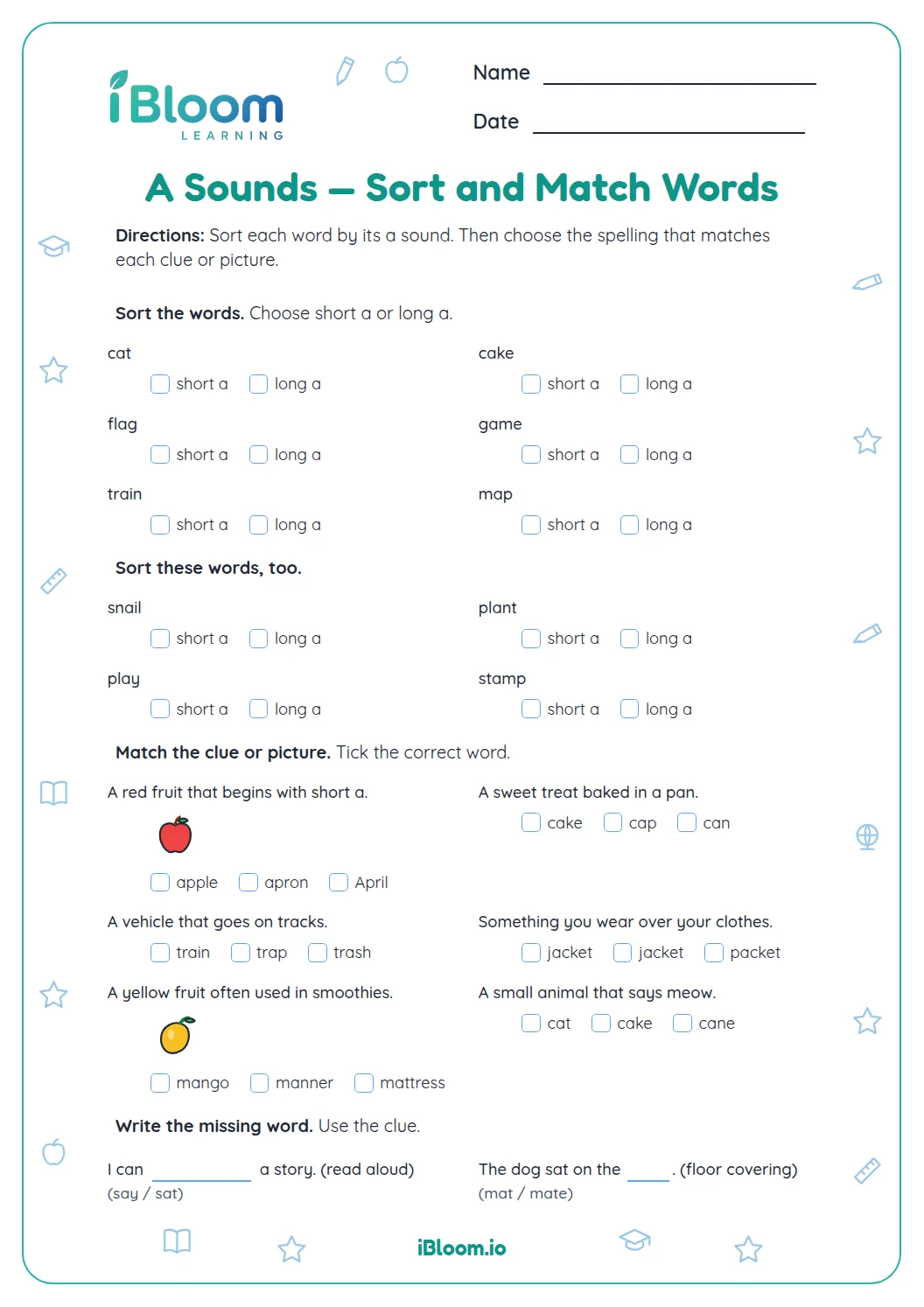
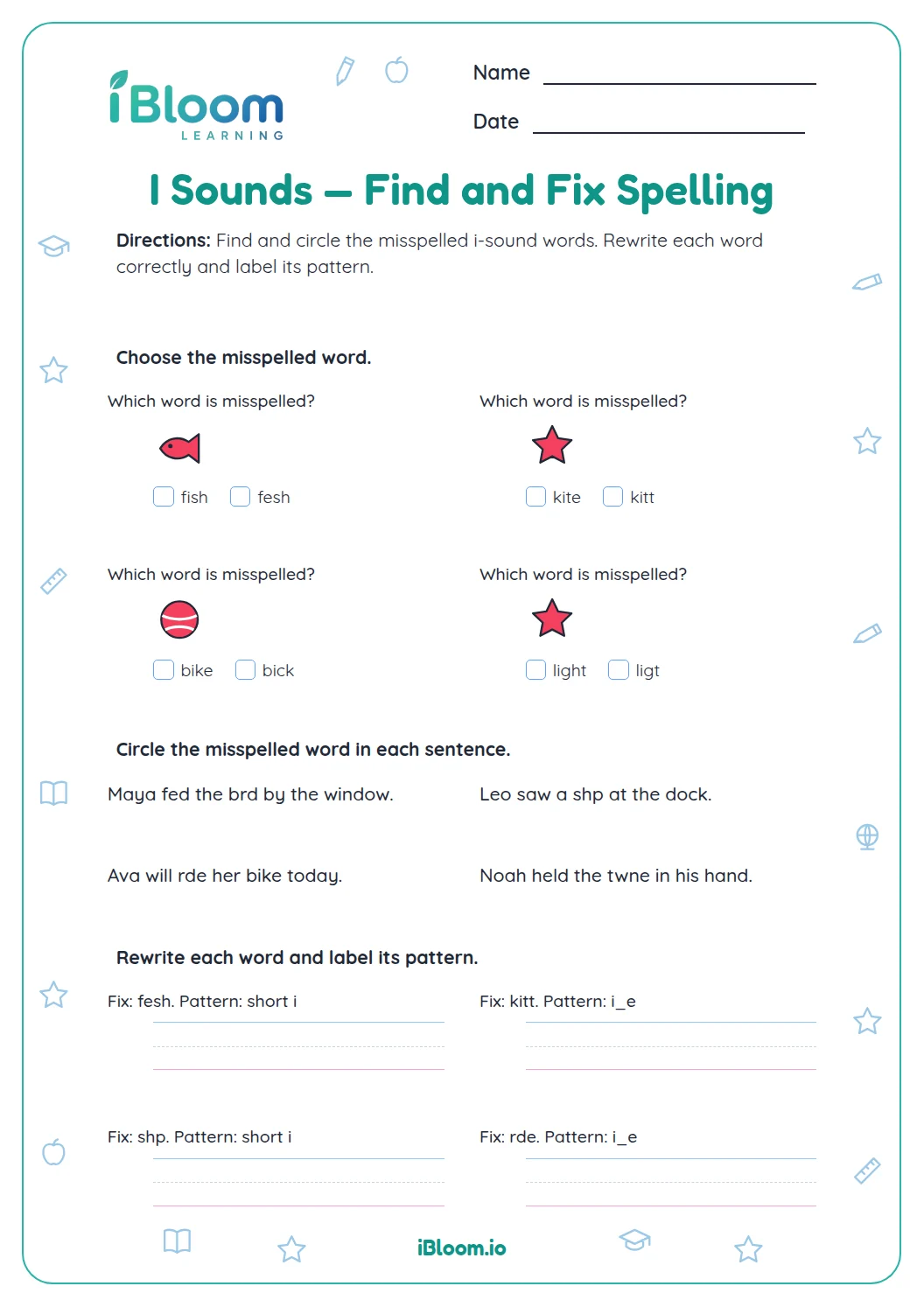
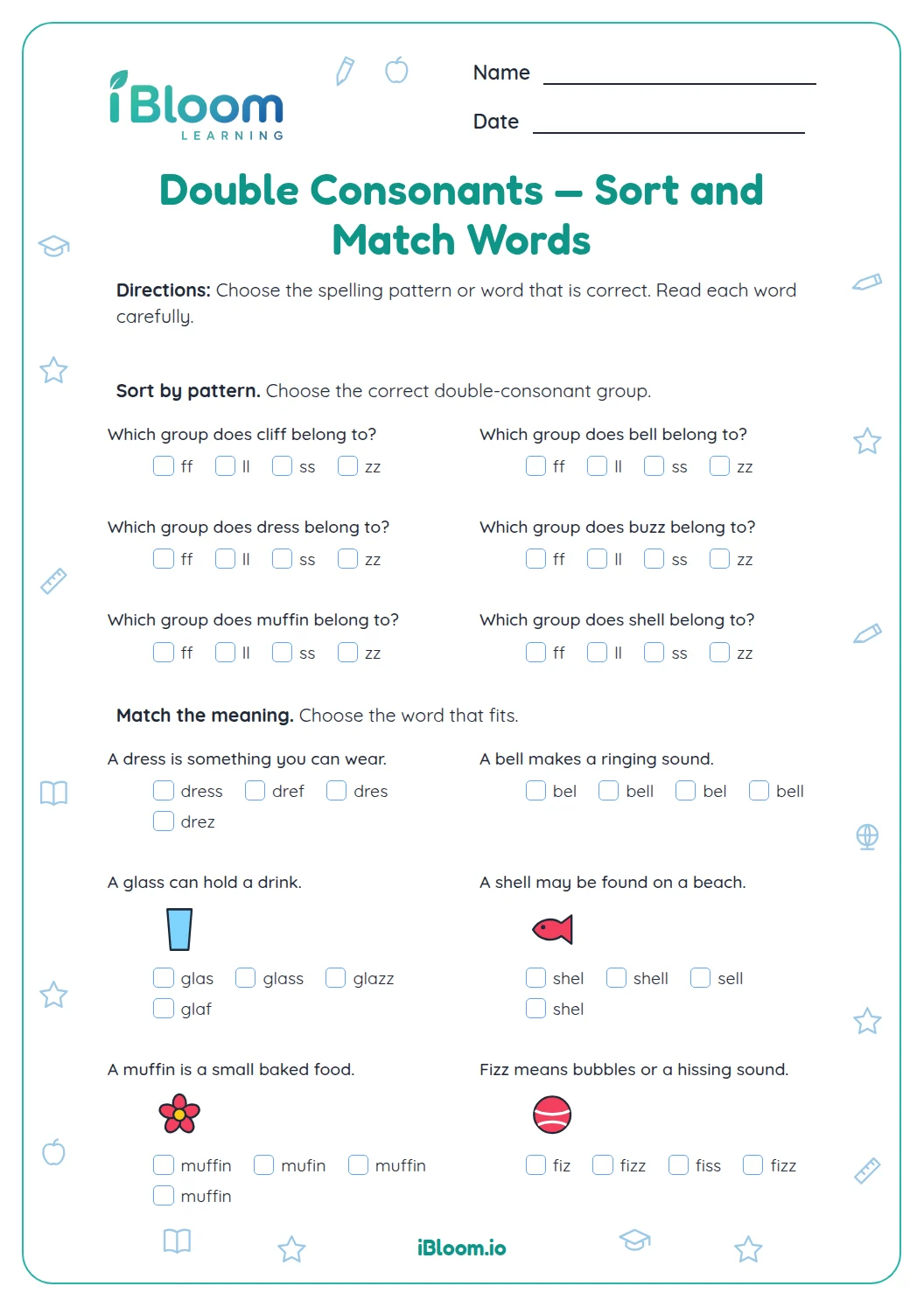
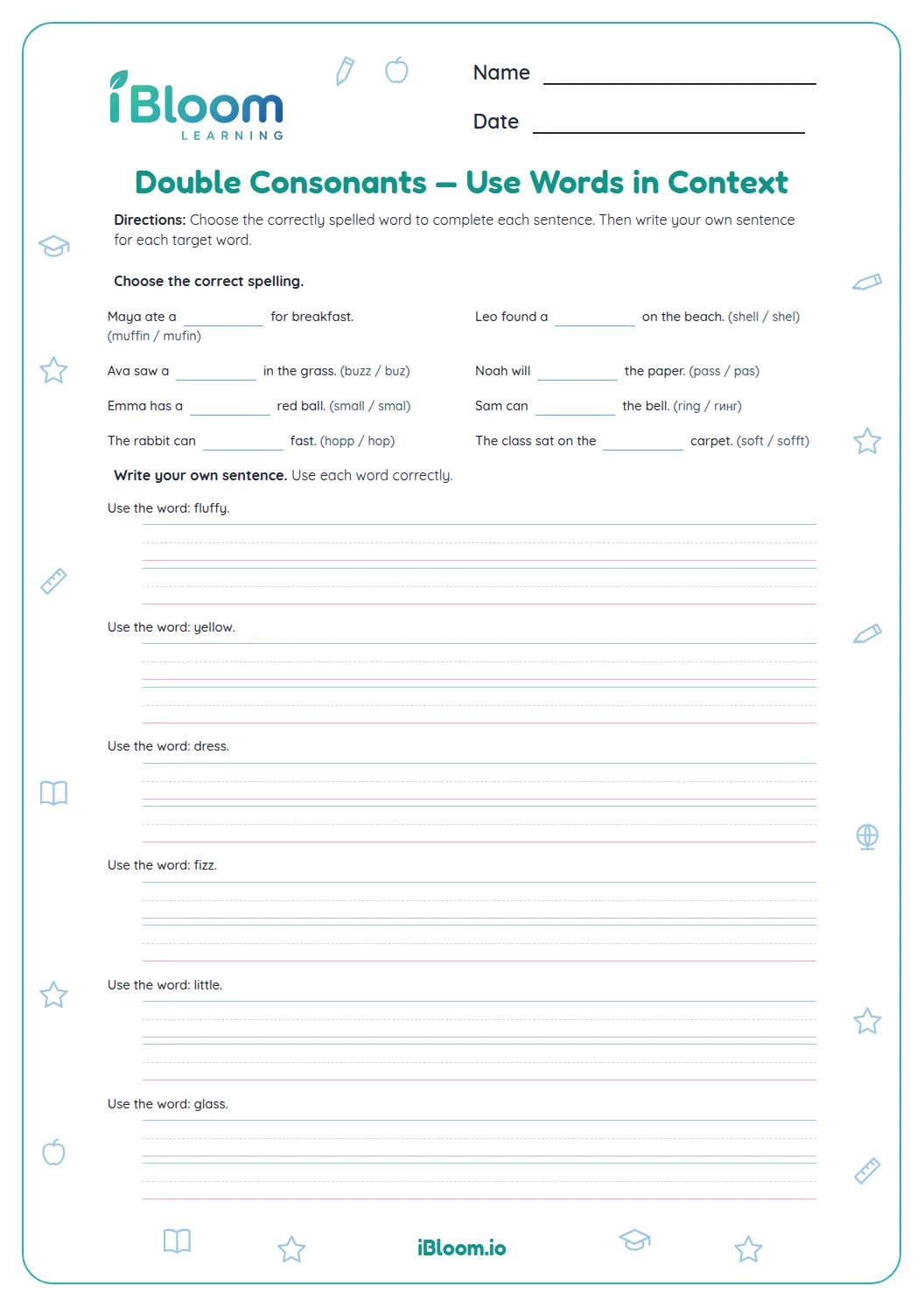
This free printable Grade 1 spelling worksheet focuses on short-a words such as cat, bag, cap, flag, and black. Children first find a misspelled word in a sentence, then write corrected forms, and finally rewrite complete sentences with accurate spelling. The 15 questions move from spotting an error to applying a correction in context. The page practices conventional spelling for common patterns under CCSS L.1.2d and includes an answer key.
Aligned to L.1.2d
What is on this short-a spelling sheet?
Part A asks children to circle one misspelled short-a word in each sentence. Part B gives a target spelling to correct. Part C puts spelling back into complete sentences so children check each word in context.
Words include familiar short-a patterns such as cat, bag, cap, flag, and black. The answer key shows each corrected word and a model sentence.
- Part A: find five spelling errors.
- Part B: write five corrected words.
- Part C: rewrite five sentences with accurate spelling.
How can a child hear the short-a sound?
Say the target word slowly and listen to its vowel sound. In cat, the middle sound is short a. Then look at the letters and compare them with a familiar word that has the same pattern.
The sound can be checked in a sentence too. Reading “The cat sat on the mat” makes the word’s spelling easier to remember.
What spelling patterns appear here?
The worksheet includes short-a words with consonants around the vowel, including cat and bag, and words with a consonant blend or digraph, such as flag and black. Check the complete word rather than changing letters at random.
- 1The kat sat on the mat.
- 2The sentence needs the animal word cat.
- 3Circle kat; write cat as the correction.
Why rewrite the whole sentence?
A corrected word should still make sense in context. Rewriting the complete sentence gives children a chance to check meaning, spaces, and spelling together. Read it once more after writing to catch a missed letter.
How to use this worksheet
- 1Read the whole sentence aloud.
- 2Find the word that does not match the familiar short-a spelling.
- 3In Part B, write the corrected word carefully.
- 4In Part C, copy the complete sentence with the corrected spelling.
- 5Use the answer key to check each word and reread any sentence that changed.
Common slips and fixes
The mistake
Changing a correct word because it looks unfamiliar.
The fix
Read the full sentence and identify the one word that does not match its meaning.
The mistake
Leaving out a consonant in a word such as black.
The fix
Say each sound and check the consonants before and after the vowel.
The mistake
Writing the corrected word but not checking the sentence.
The fix
Reread the whole sentence to make sure the corrected word fits.
Common Core alignment
This worksheet gives Grade 1 practice applying conventional spelling patterns in words and sentences.
Use conventional spelling for words with common spelling patterns.
On this sheet: Children repair words such as cat, bag, cap, flag, and black, then use corrected spelling in sentences.
Show the official wordingHide the official wording
Use conventional spelling for words with common spelling patterns and for frequently occurring irregular words.
What to practice next
Make more practice
Further reading
Questions parents and teachers ask
What short-a words does the worksheet practice?
The worksheet includes short-a words such as cat, bag, cap, flag, and black. Children see the words in sentences, correct misspellings, and rewrite a sentence. Looking at the whole word and reading it aloud can help connect the vowel sound with the spelling pattern.
How many spelling questions are included?
There are 15 questions in three parts: five error-finding sentences, five corrected-word blanks, and five sentence rewrites. The separate answer key lists the target words and model sentences. Plan for about 20 minutes, allowing time for children to read each sentence aloud.
Why are there words such as flag and black?
Flag and black keep the short-a vowel while adding consonants around it. They let children practice the same vowel sound in a slightly fuller spelling pattern. Part A includes a word like black so children check all the letters instead of focusing only on the vowel.
Can children use a different correction in the rewrite section?
The sentence rewrite should preserve the intended meaning and use conventional spelling. For open responses, the key shows a model. If a child corrects the target word accurately and the sentence remains meaningful, the spelling goal is met.
What should I do if a child guesses from the first letter?
Have the child read the whole sentence and say the target word slowly. Then compare the sounds with the letters in the misspelled form. The worksheet moves from spotting the word to rewriting it in context, which gives another chance to check the full spelling.