




About this worksheet
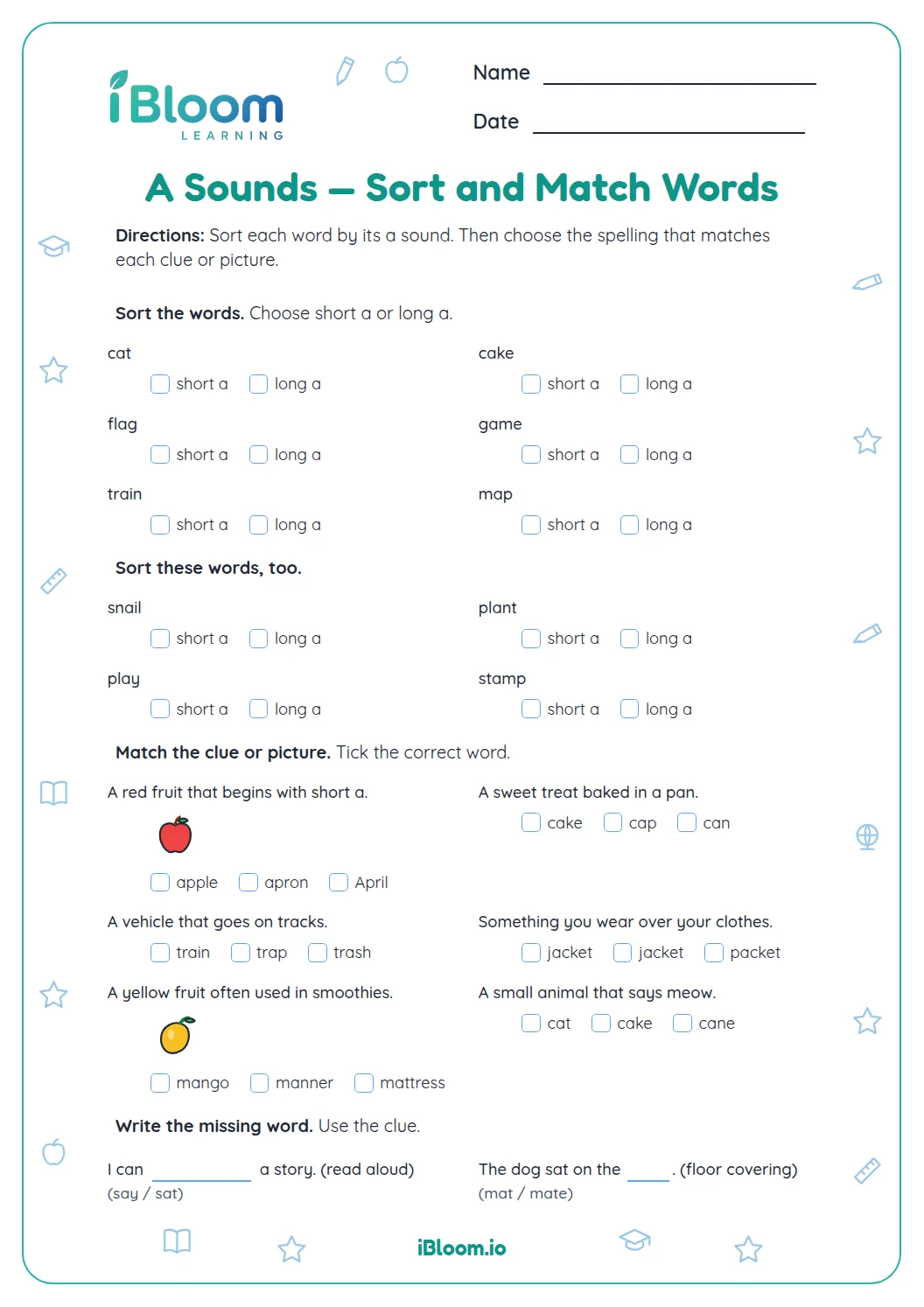
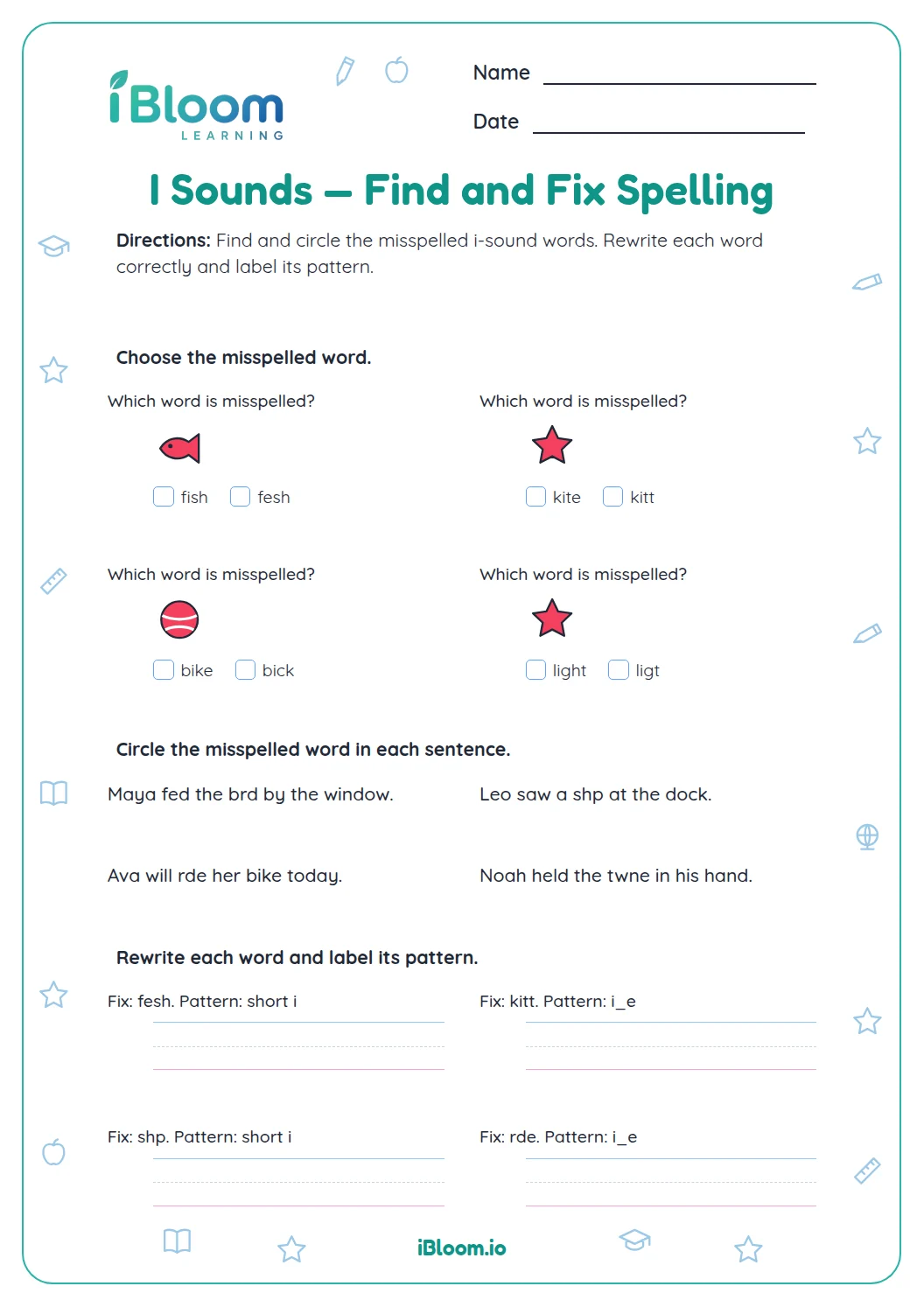
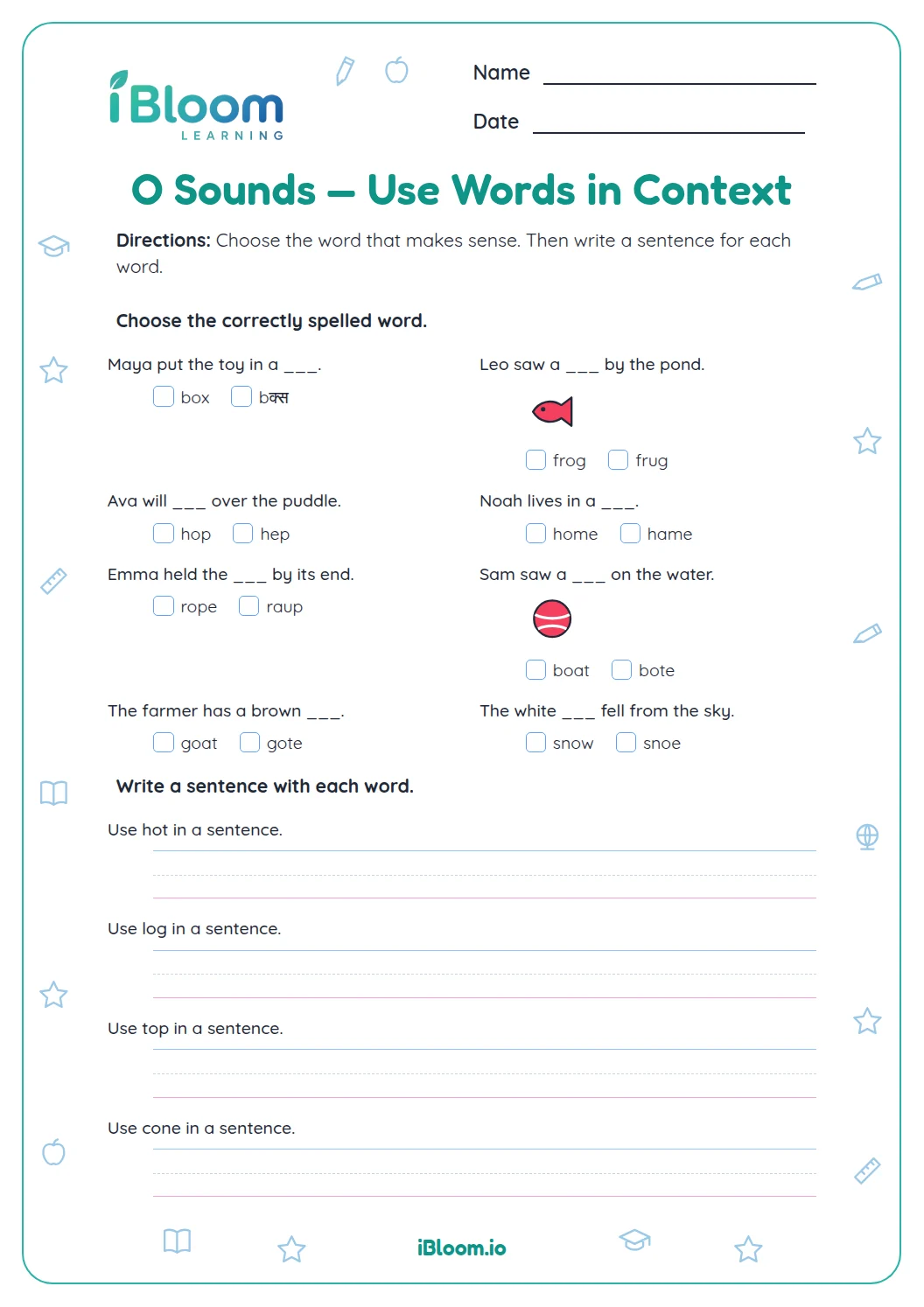
This Grade 1 spelling worksheet practices words with familiar a spellings in context. Children choose between correctly spelled words and plausible misspellings, then write target words in new sentences. The set includes short-a words such as cat, bag, hat, and jam, plus long-a spellings in cake, game, day, and trail. The context makes each word’s meaning clear while students attend to its letters. It aligns with Common Core L.1.2.e, spelling untaught words phonetically and using spelling conventions.
Aligned to L.1.2.e
How does Part A practice spelling in context?
Each sentence gives a clue to the target word. Students choose the conventional spelling from two options, such as “cat” rather than “cot” for a pet on the mat.
Which a spellings appear here?
The set begins with short-a words, including cat, bag, hat, and jam. It also includes long-a words such as cake and game, the vowel team in trail, and the spelling in day.
How does Part B use the same words differently?
Students write the word that completes each new sentence. For example, “We shared a ___ at the party” calls for cake. The sentence helps check meaning as well as spelling.
How to use this worksheet
- 1Read the whole sentence before looking at the spelling choices.
- 2Say the target word slowly and notice its vowel sound.
- 3In Part B, write the word that makes sense in the sentence.
- 4Read the finished sentence again and check every letter.
Common mistakes and quick fixes
The mistake
Choosing a word because it sounds close, without checking the letters.
The fix
Say the word, then compare the letter sequence in both choices.
The mistake
Using “cot” for the pet in the mat sentence.
The fix
Use the sentence meaning: a cat is the animal that naps on a mat.
The mistake
Leaving out a vowel team in “trail.”
The fix
Look across the whole word and check that it ends with ail.
Common Core alignment
This page practices the listed Common Core skill through the worksheet tasks.
Use sound knowledge and spelling conventions to write familiar a-pattern words.
On this sheet: Students choose and write a-pattern words in context, checking sound and conventional letter patterns.
Show the official wordingHide the official wording
Spell untaught words phonetically, drawing on phonemic awareness and spelling conventions.
What to practice next
Make more practice
Further reading
Questions parents and teachers ask
What words does the worksheet practice?
It includes cat, bag, hat, jam, cake, game, day, and trail. Students first choose the correct spelling in a sentence and then write those words in fresh sentence contexts. Check the target word against the sentence before moving on.
Are all the words short-a words?
No. The practice includes short-a words and other familiar spellings of the letter a, including long-a words and the vowel team in trail. This matches the “A sounds” focus of the saved worksheet while helping children attend to more than one pattern.
Should my child sound out every word?
Encourage the child to say the word and notice its sounds, then check the letters in the answer choices. Some words have familiar patterns that are easier to recognize by looking at the whole word as well as saying it.
Why do the sentences matter for spelling?
A sentence narrows down which word belongs in the blank. “Sam spread ___ on his toast” points to jam, while “We shared a ___ at the party” points to cake. Context checks that the spelling and meaning both fit. Read the completed sentence aloud to confirm the meaning.
What if my child chooses a misspelling?
Ask the child to say the word slowly and look at the vowel letters. Compare both choices letter by letter, then reread the sentence with the corrected spelling. Ask the child to point to the spelling pattern that helped.
Can we use this as a short spelling review?
Yes. Part A is a recognition round and Part B asks for written recall. You can complete a few questions at a time, then check the separate key and revisit any pattern that needs another look. The answer key makes it easy to return to a word for another try.