








About this worksheet
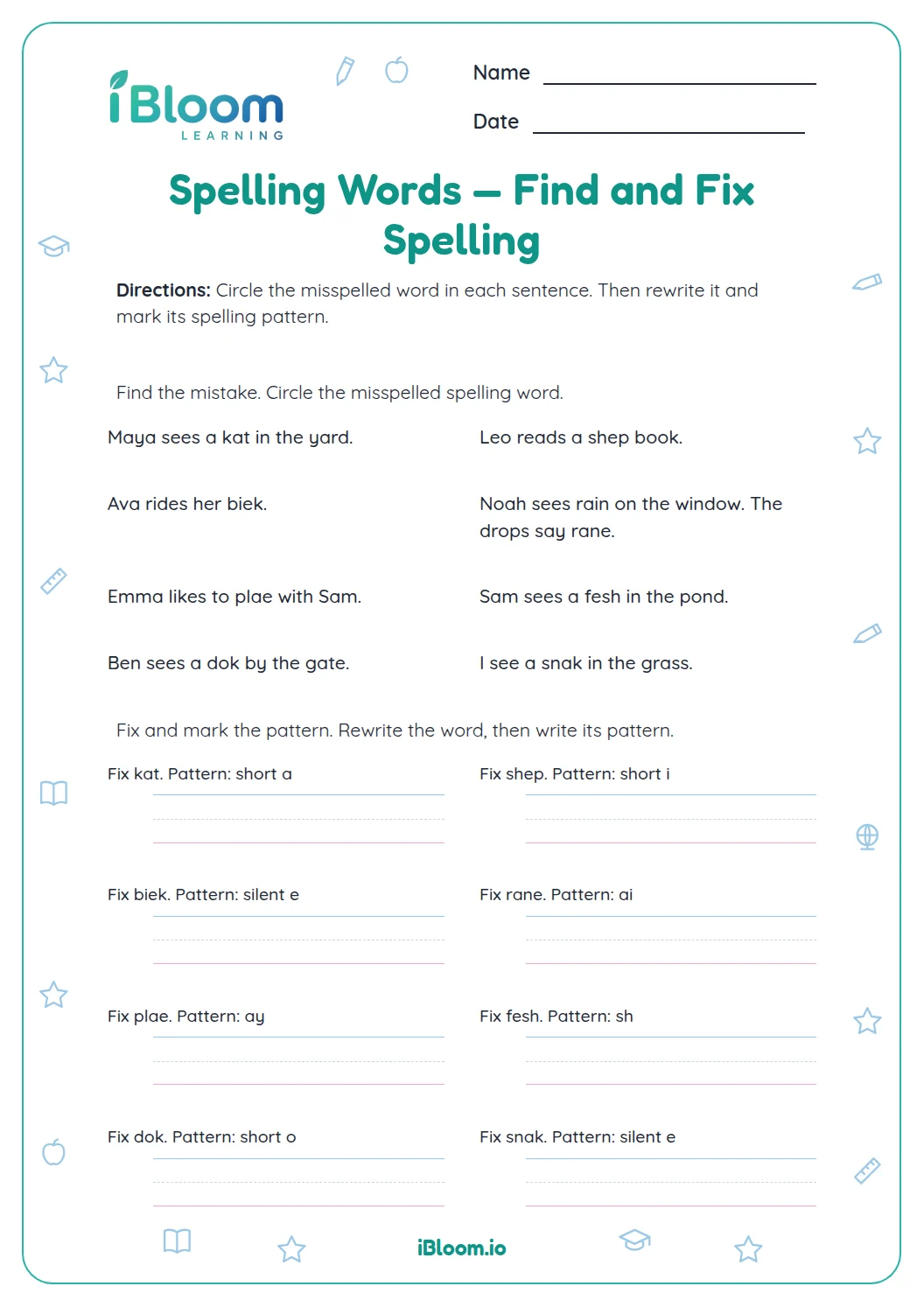
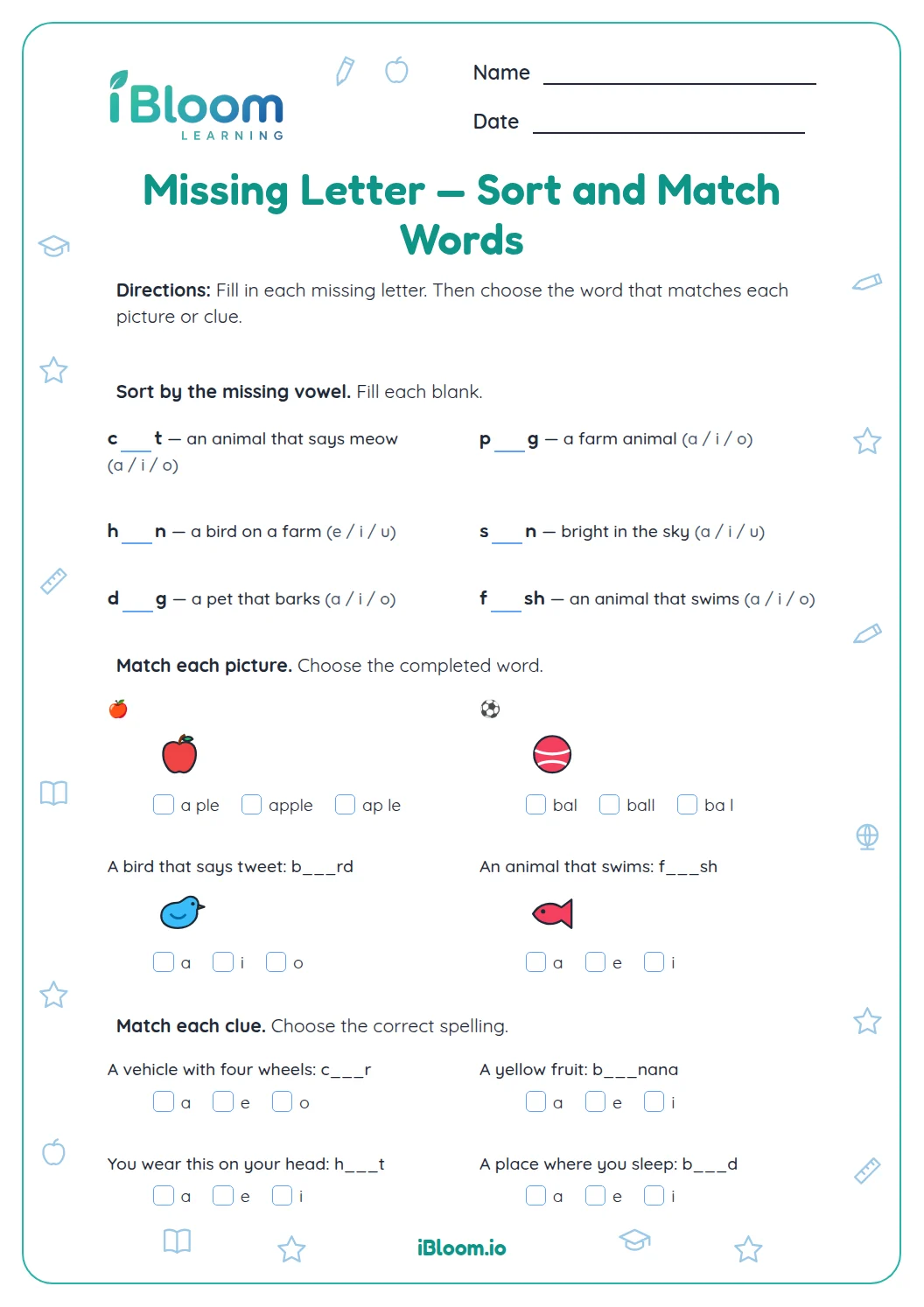
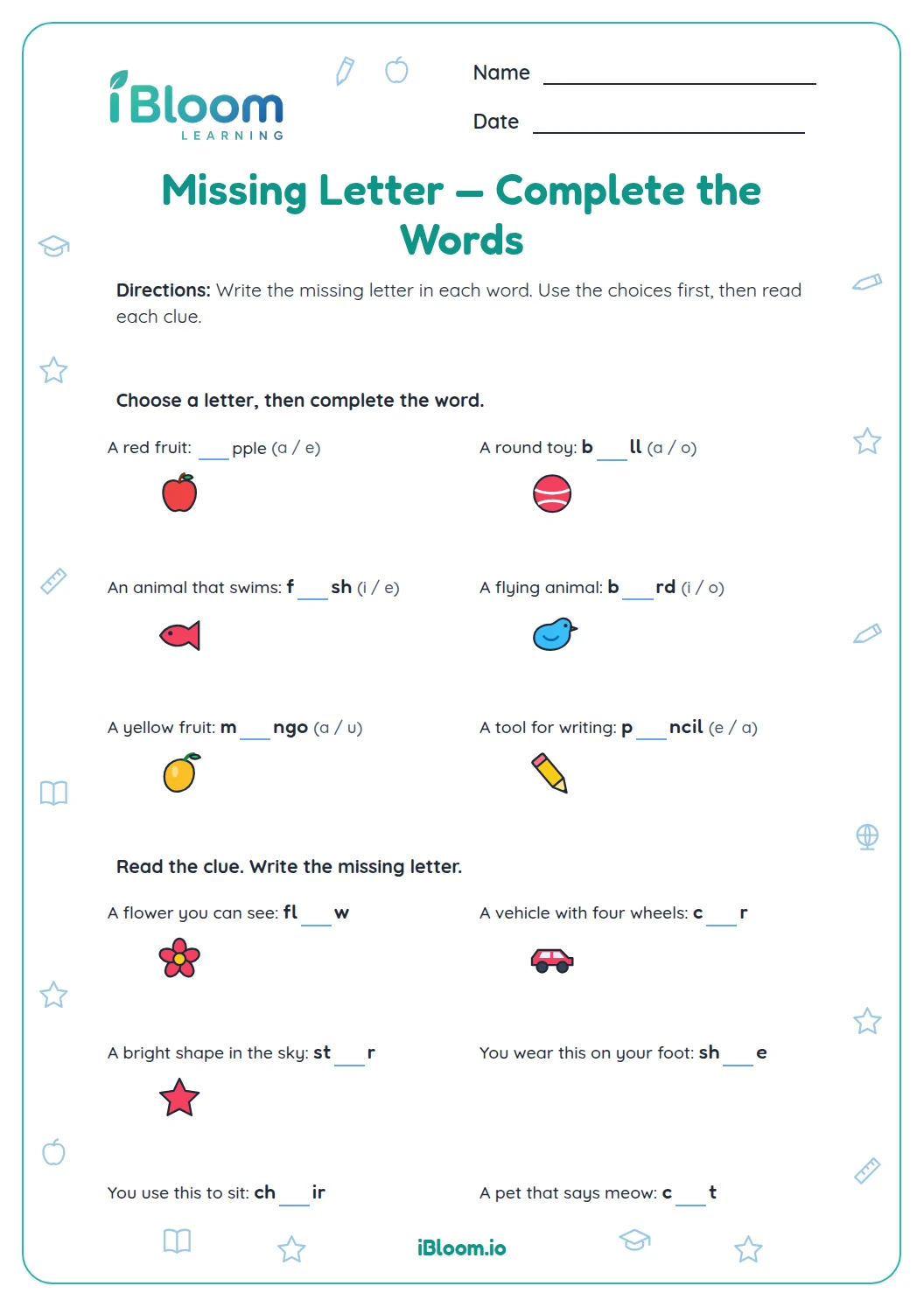
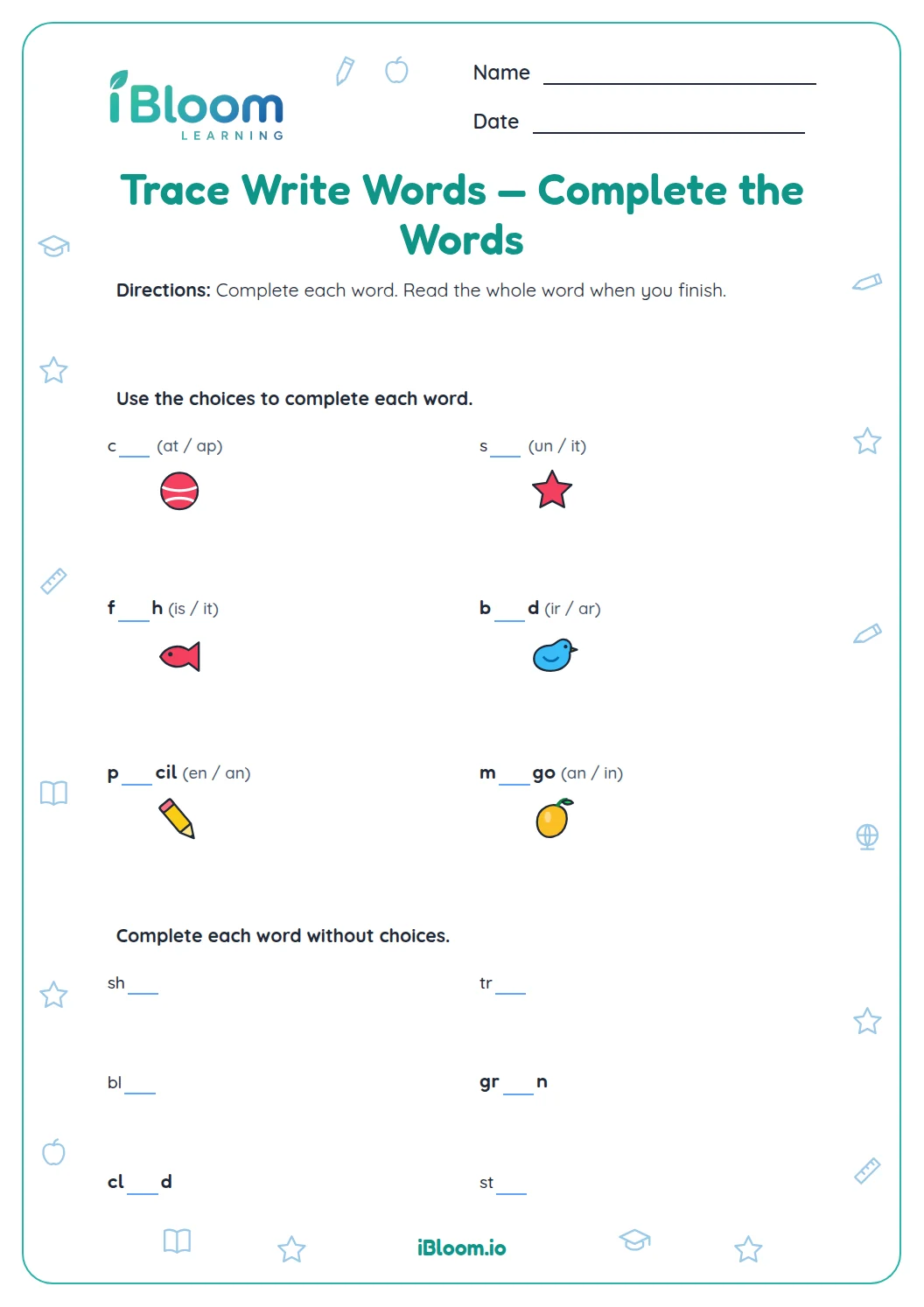
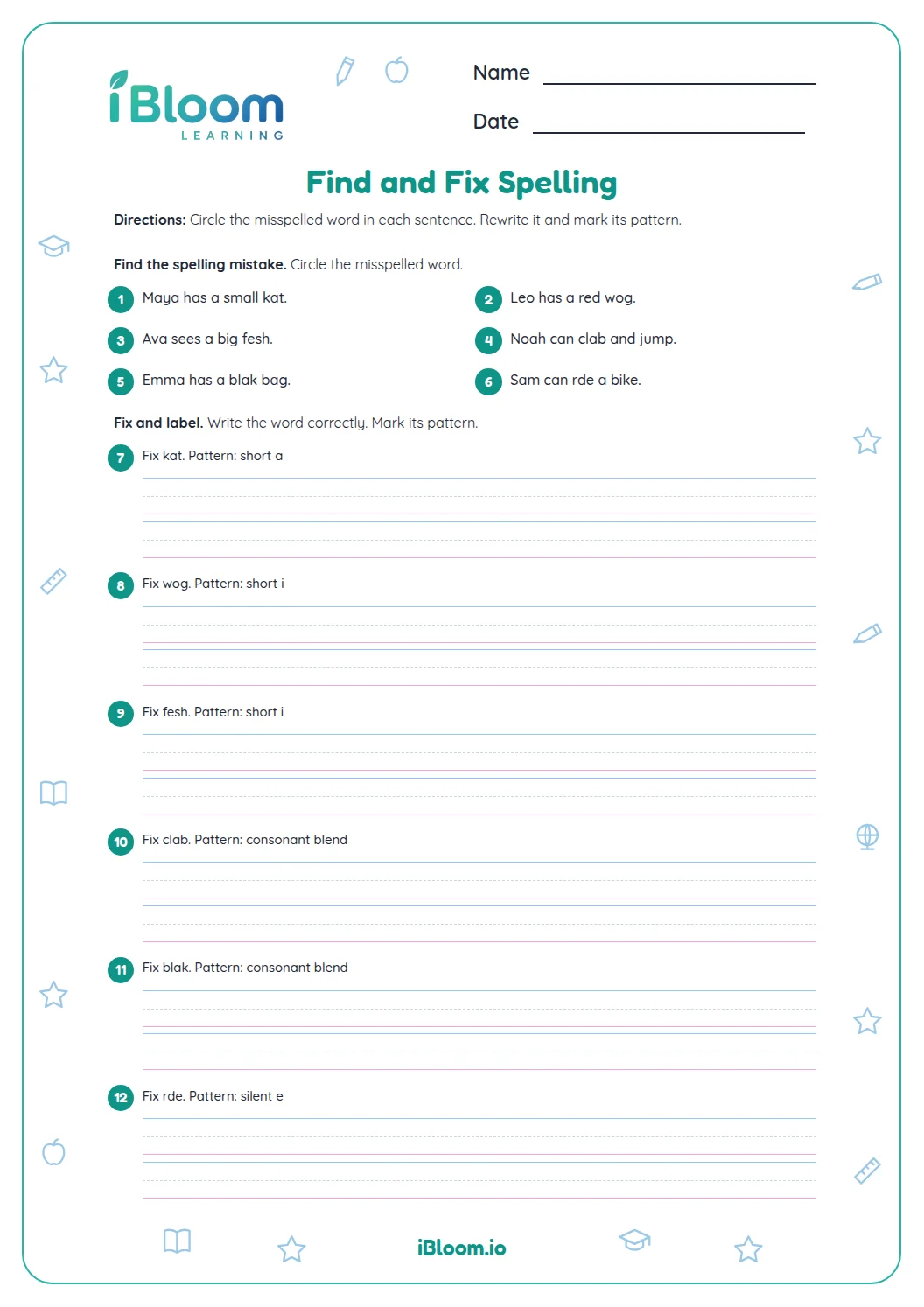
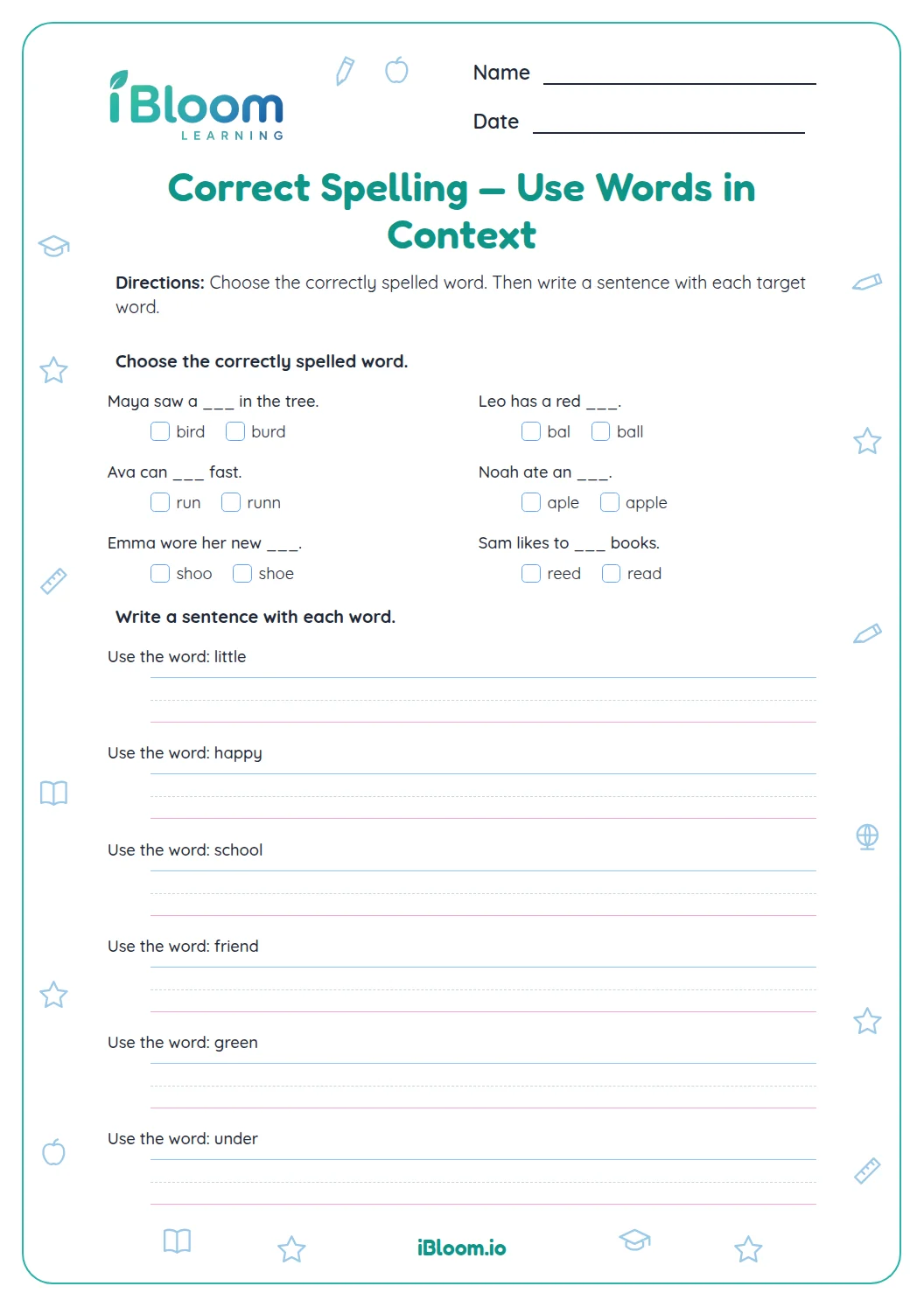
This free Grade 1 spelling worksheet asks children to use printed letters and complete a word with its missing letter or letters. It includes short-vowel words such as cat, sun and bed, plus familiar blends and digraphs such as frog, ship and brush. The answer key shows the missing letters for each item. The practice aligns with Common Core L.1.2.d on conventional spelling.
Aligned to L.1.2.d
How do the printed letters guide spelling?
Read the letters already printed, then say the whole word that they could form. The missing part may be one letter or a small group of letters. In Part A, choose from two letters; in Part B, recall the spelling without choices.
For question 1, the clue “pet that purrs” points to cat; select a to complete c___t.
How can children listen for a missing sound?
Say the word slowly without changing it. In sun, the middle sound is short u; in bed, it is short e. Blends such as fr in frog begin with two consonant sounds, so keep both letters when filling the remaining blank.
Some prompts leave more than one letter blank. The answer key lists exactly the letters that complete each word.
What is a good way to check a completed word?
Read the completed spelling and check that it forms a familiar word. Then point to each letter while saying the word. This links the spoken sounds to the spelling and helps catch a missing letter.
If the written word does not look right, say it again slowly and check which sounds match the printed letters.
How to use this worksheet
- 1Look at the picture and name the object.
- 2Read the letters already printed in the word.
- 3Say the word slowly and listen for the sound or sounds missing.
- 4Write the missing letter or letters in the blank.
- 5Read the complete word and compare it with the picture and key.
Common mistakes and quick fixes
The mistake
Guessing from the first letter without checking the whole spelling pattern.
The fix
Say the full word, then match all its sounds to the printed letters.
The mistake
Leaving out one letter from a beginning blend such as fr.
The fix
Listen for both consonant sounds and write both letters.
The mistake
Writing the full word when only the missing letters are requested.
The fix
Keep the printed letters and add only the missing part.
Common Core alignment
These standards describe the writing and language skills practiced on this sheet.
Spell words with common spelling patterns and frequently occurring irregular words.
On this sheet: Children complete words with familiar spelling patterns and use those patterns to write whole words.
Show the official wordingHide the official wording
Use conventional spelling for words with common spelling patterns and for frequently occurring irregular words.
What to practice next
Make more practice
Further reading
Questions parents and teachers ask
What should children write in each blank?
They should choose or write only the missing letter or letters, keeping the printed letters in place. In the pet clue c___t, choices a and o are offered; the purring pet is a cat, so the blank gets a. The answer key lists the missing part for each word.
What kinds of words are included?
The 20 words include short-vowel words such as cat, sun, bed, pig and run, plus familiar words with blends or letter groups, such as frog, flag, sheep and sunshine. The first part offers letter choices, the next has independent blanks, and the last asks children to write whole words.
How can I help if my child is unsure of a word?
Ask the child to read the pattern and use any meaning clue in the prompt. For frog, the clue “animal” points to the word, and the missing part is og. Then reread the completed word and check that each sound has a letter.
Why do some blanks need more than one letter?
Some familiar words have a consonant blend or digraph, so the missing part can contain two letters. The task is to complete the whole word, not to fill exactly one space with one letter. The key makes the expected missing letters clear.
Should my child say each word aloud?
Yes, saying the word can help connect sounds and letters. First read the printed pattern and consider the word it could form. After writing the missing part or full word, reread the spelling and check that it is a familiar word. The key lists the answers.