











About this worksheet
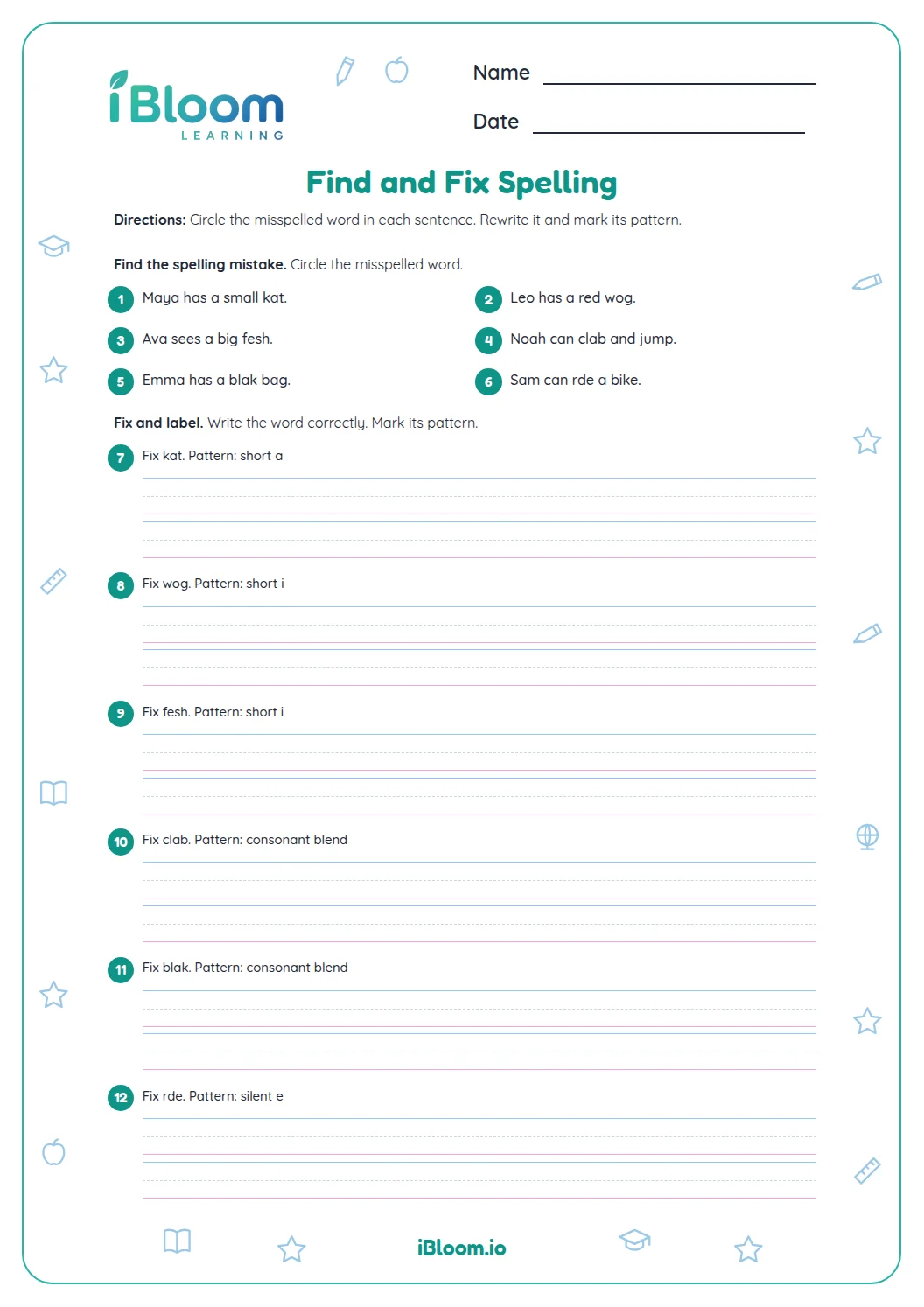
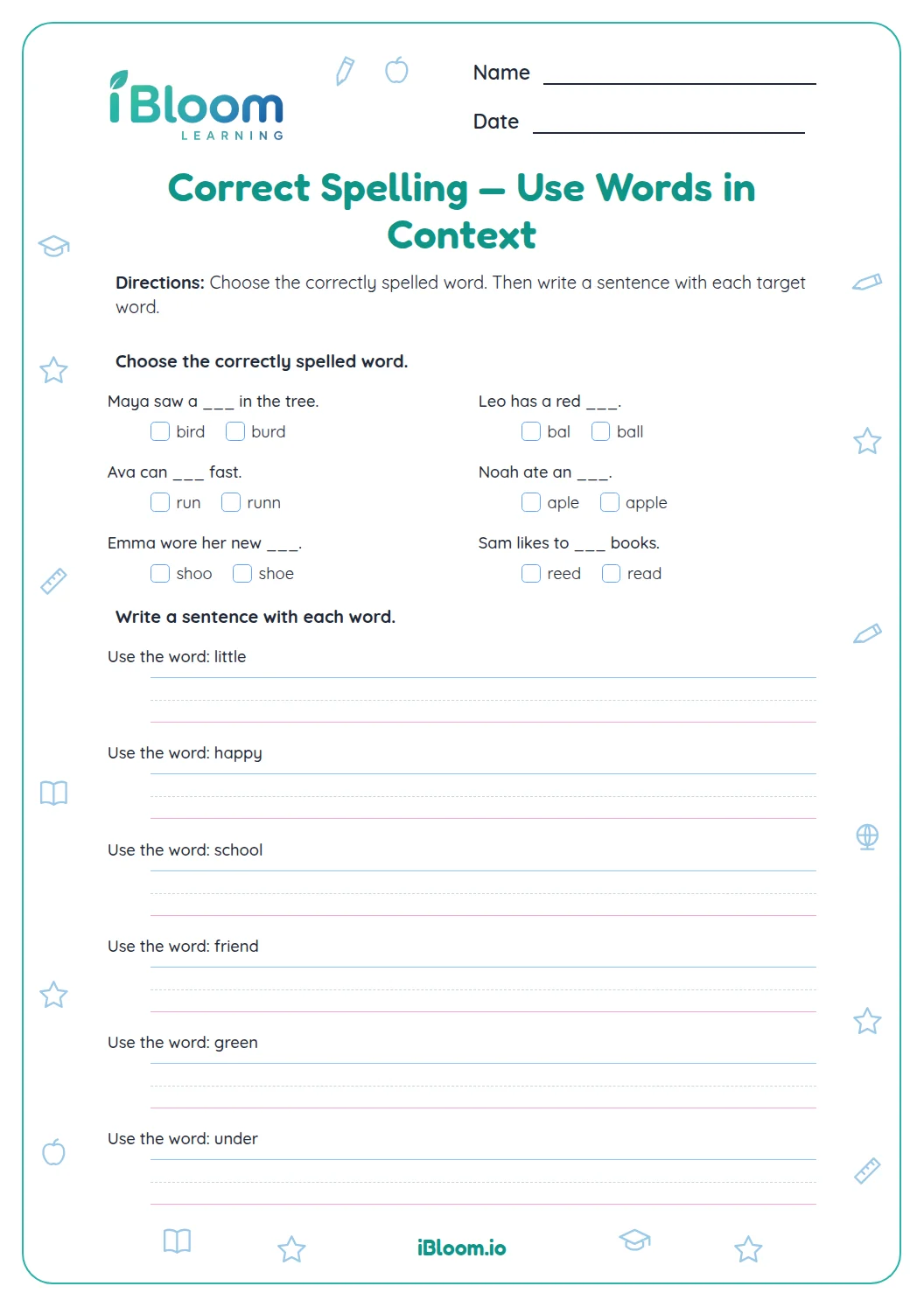
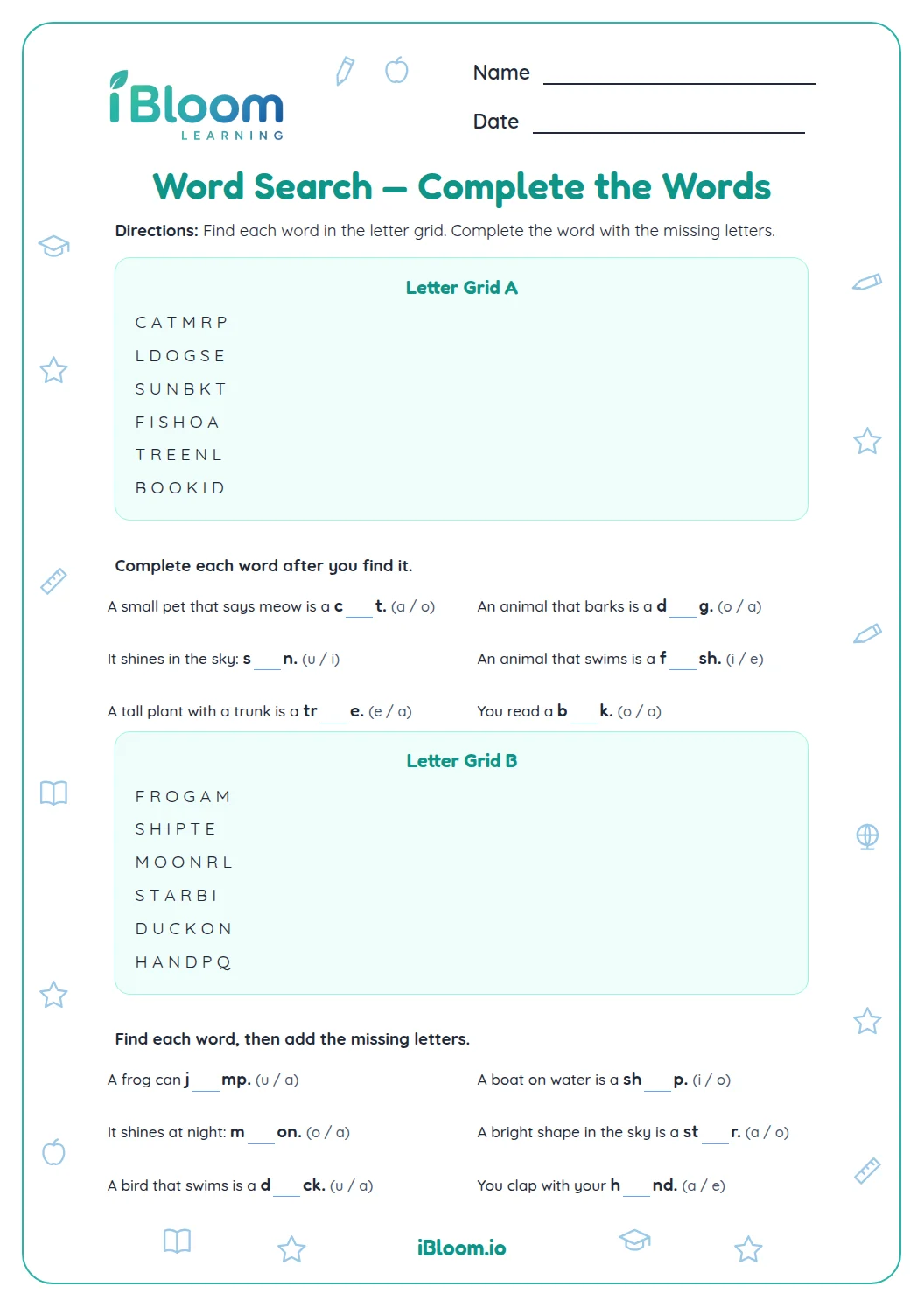
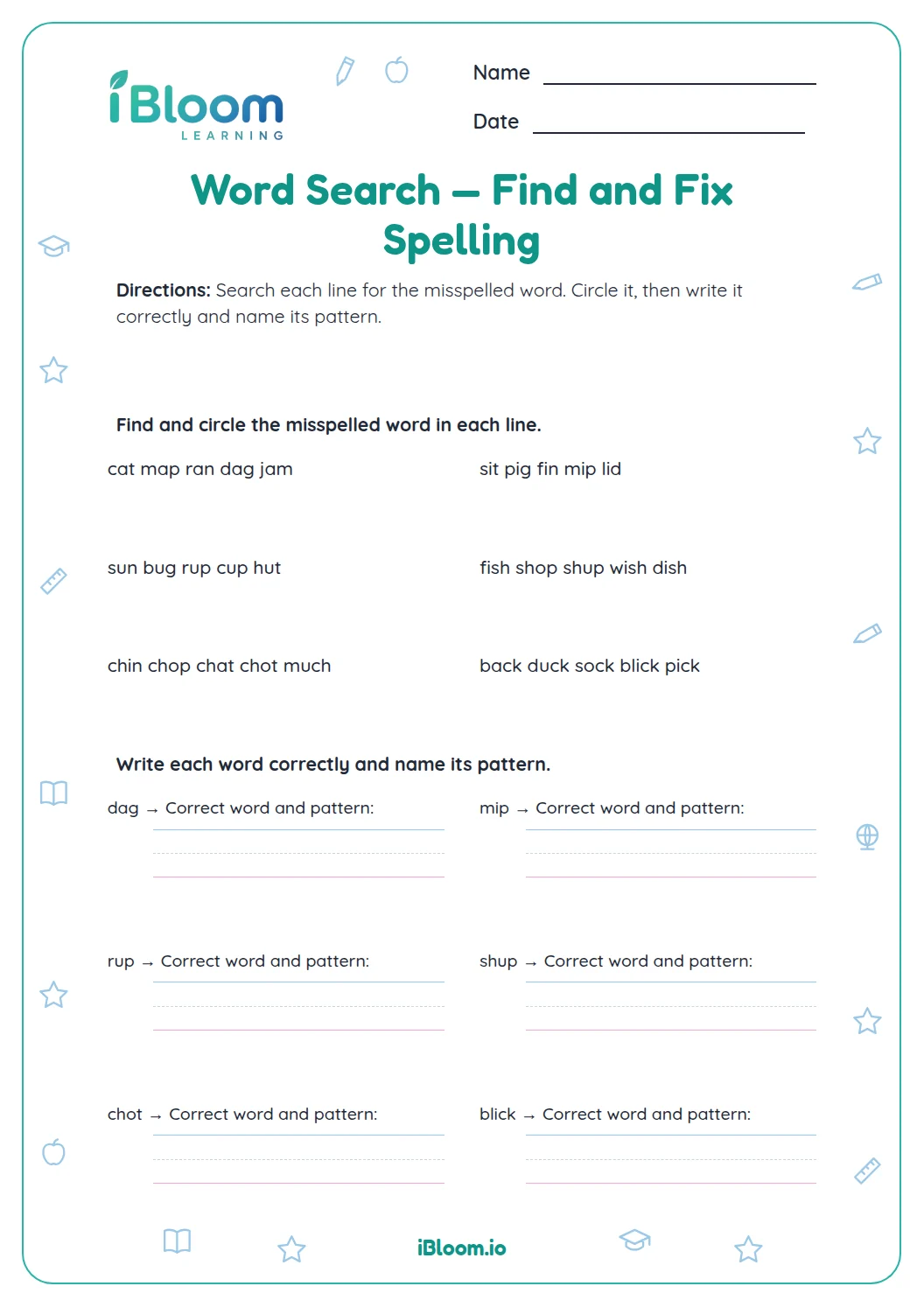
This free printable Grade 1 spelling worksheet has children sort and match short-vowel words. They first sort six picture words by their middle sound (short a or short i), then choose the correct spelling for six pictures from three tries each, and finally write three words from pictures alone. Every word is a short one-syllable word such as cat, ring, box and sun. It practices conventional spelling of common patterns (CCSS L.1.2d) and hearing the middle vowel sound in a spoken word (RF.1.2c). A separate answer key is included.
Aligned to L.1.2d and RF.1.2c
Why sort words by their vowel sound?
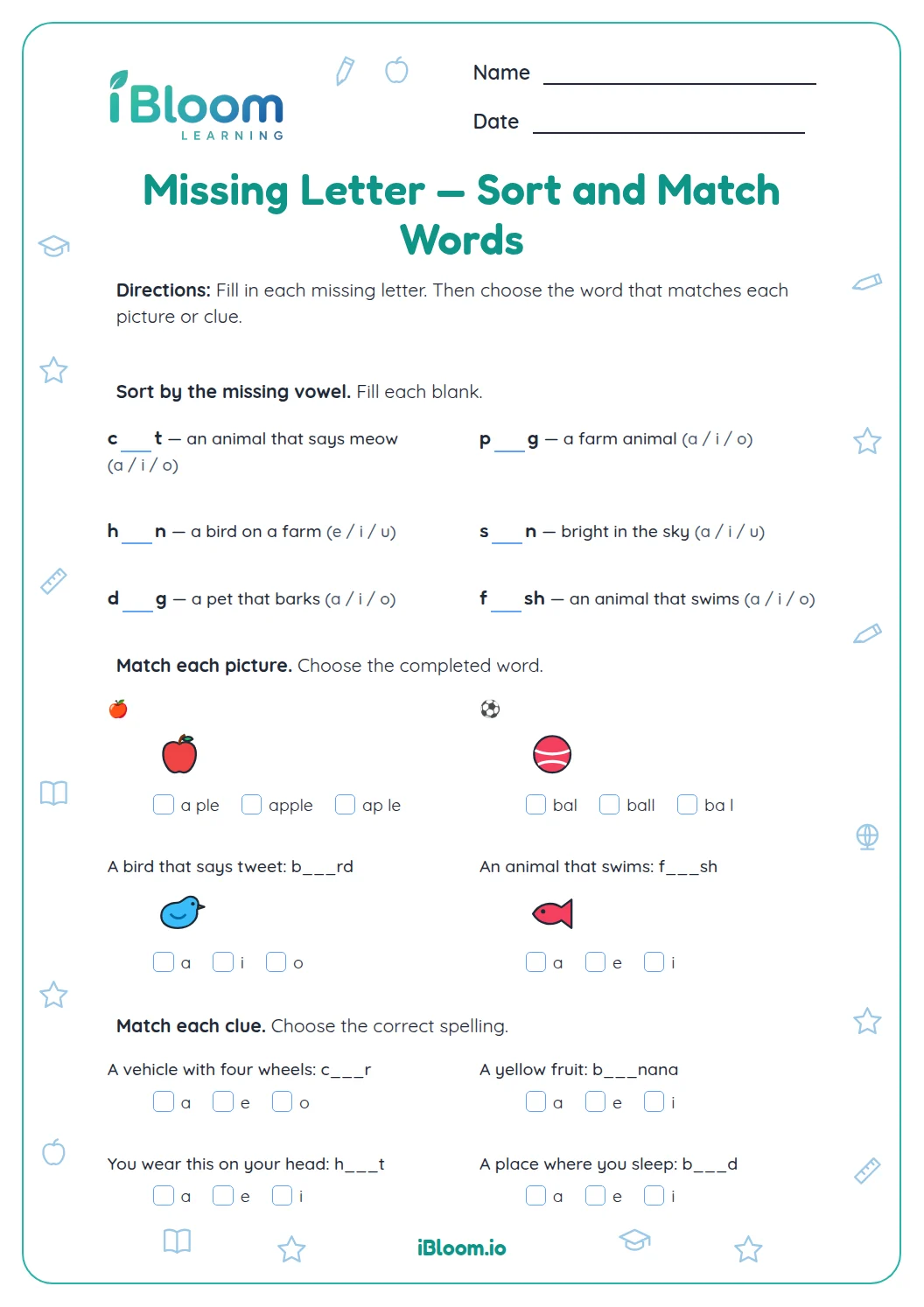
The vowel in the middle of a short word is the sound children most need to hear clearly before they can spell it, so Part A isolates it. Each question shows a picture, and the child says the word, listens to the middle sound and marks short a or short i. Cat, ant and crab have the short a of apple, while ring, fish and pig have the short i of igloo.
Sorting also builds the habit of grouping words that share a pattern, which makes new words easier to spell later. A child who knows that cat, hat and bag all have short a has a pattern to draw on.
- 1The picture shows a ring.
- 2Say it slowly: r - i - ng.
- 3The middle sound is short i, as in igloo.
- 4Mark short i.
How do the spelling choices work?
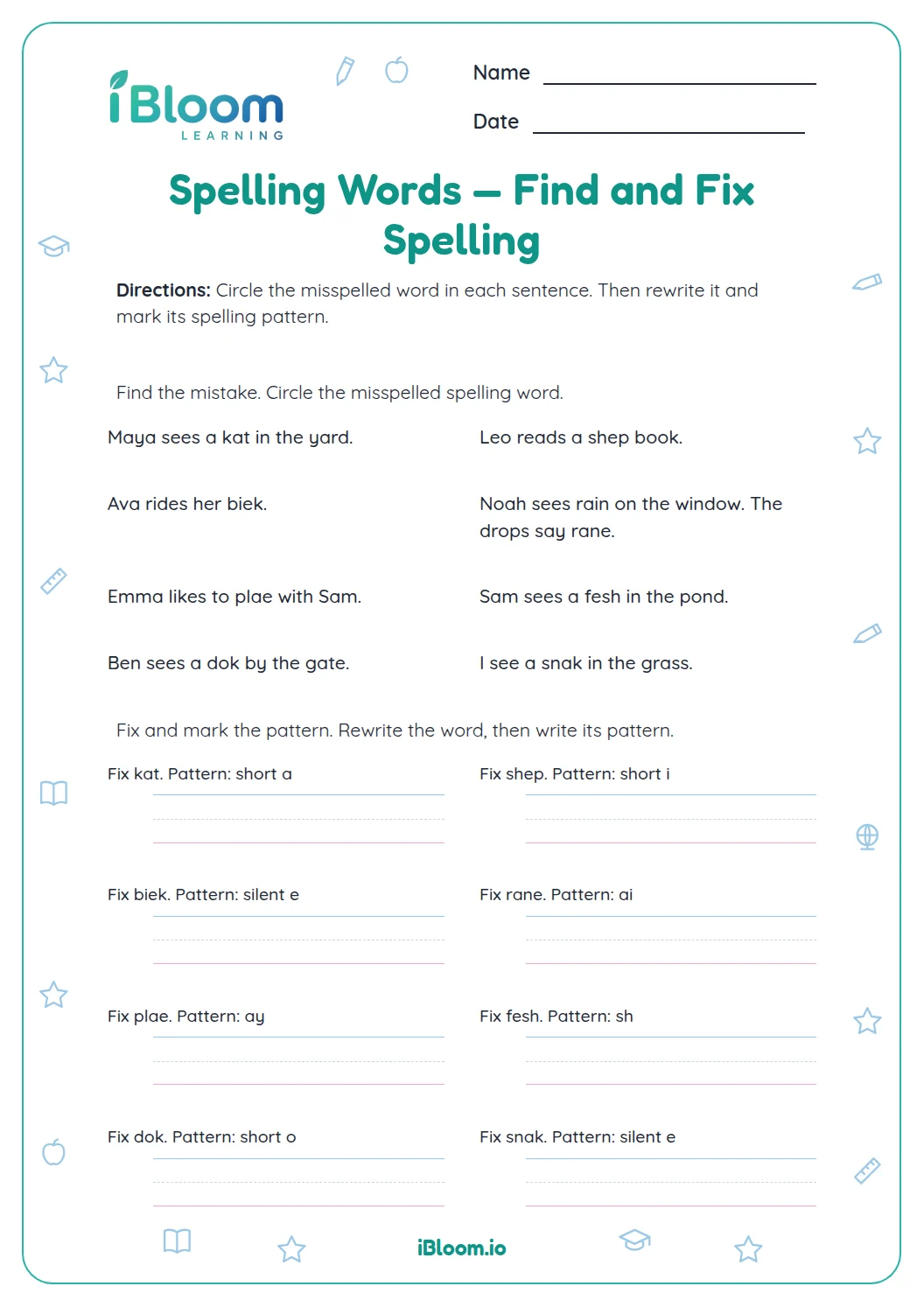
Part B shows a picture and three spellings, one correct and two with a typical slip, such as a doubled last letter (dogg), a swapped letter (dgo) or a spelling by sound (boks for box). The child looks at each spelling, says it and marks the one that looks right.
Choosing between spellings trains the eye as well as the ear. The words in this part include a few that need a closer look, such as duck, which ends with ck, and box, which ends with x and not ks.
What happens when children write the words?
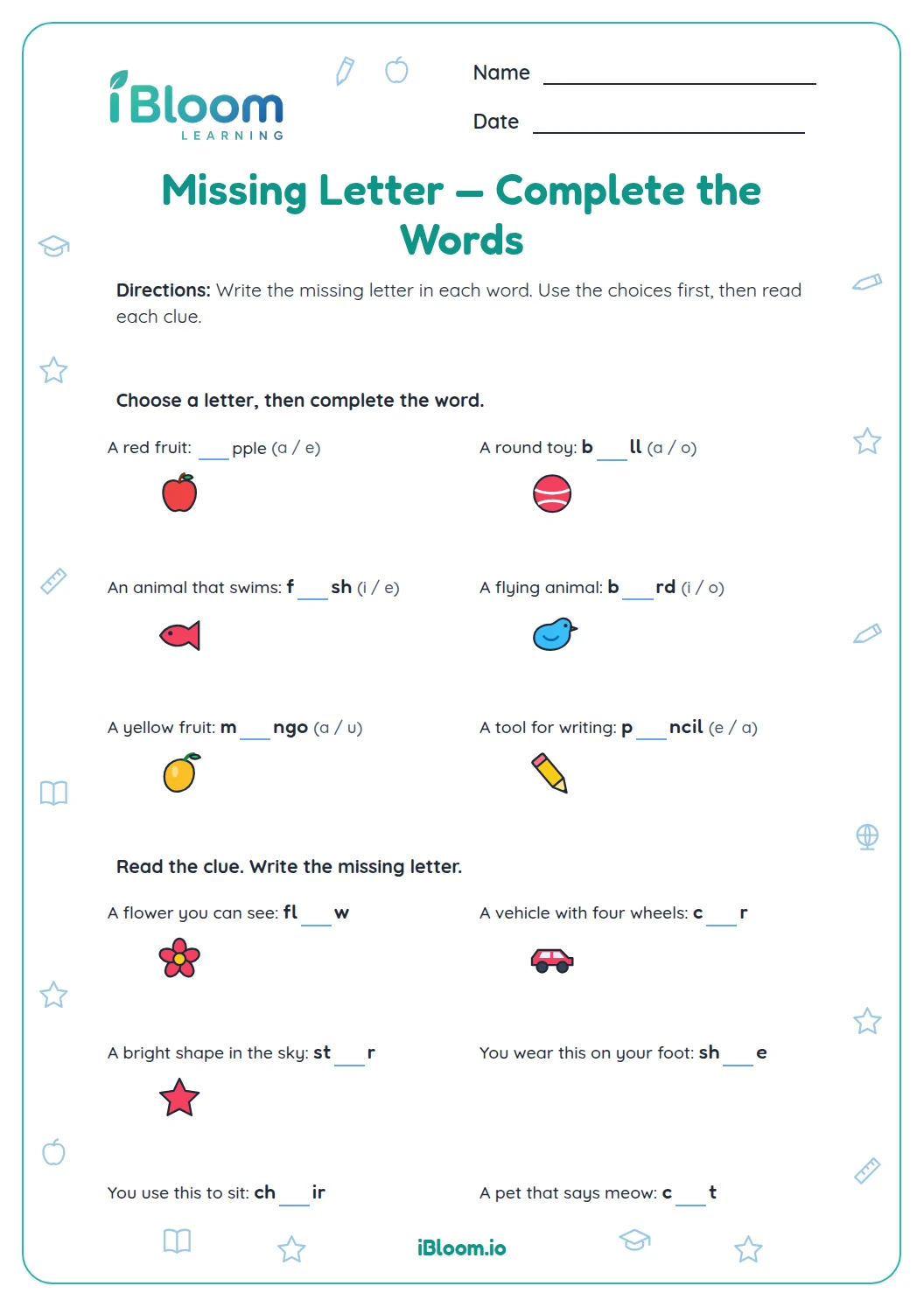
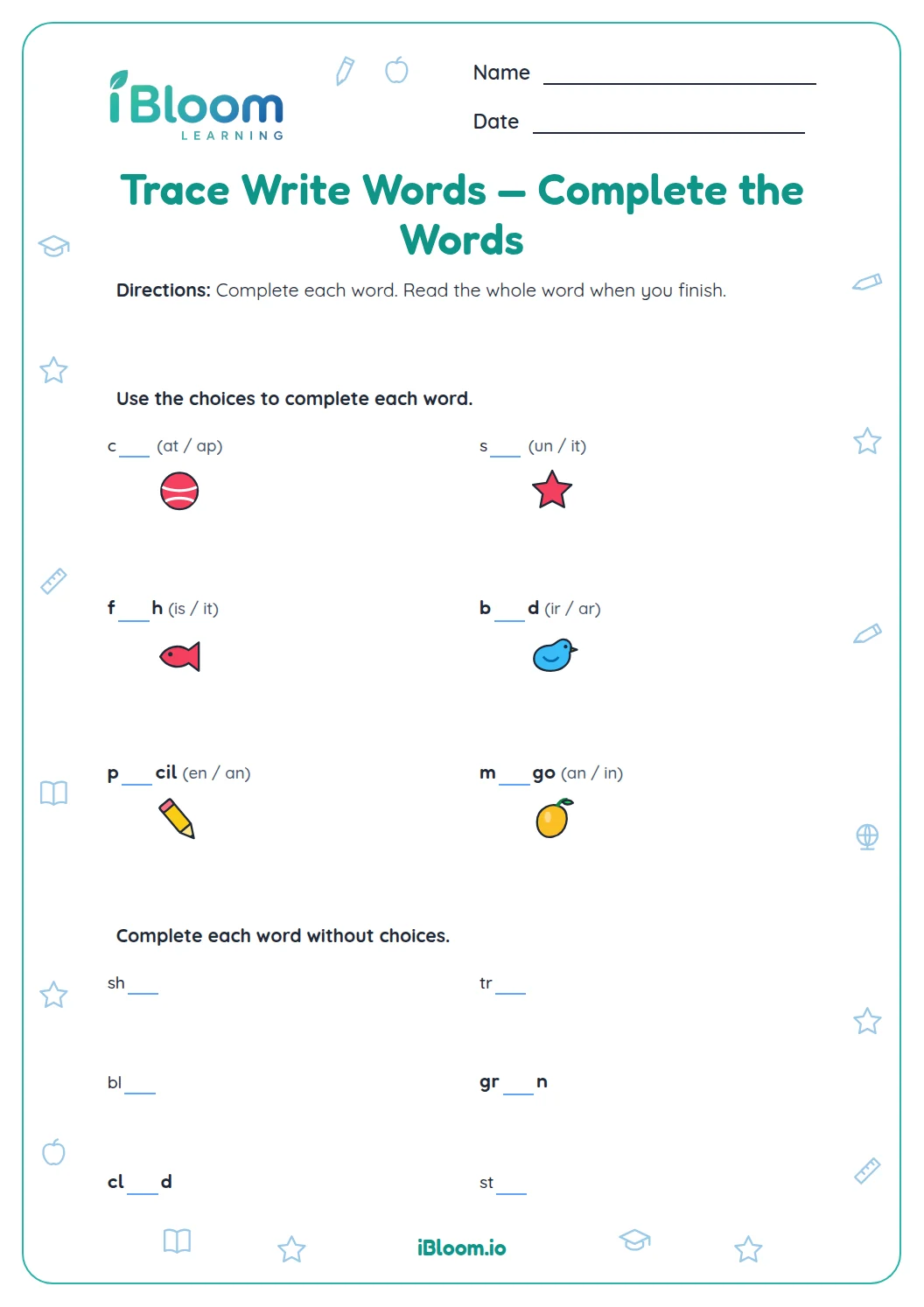
In Part C there is no spelling to choose from. The child names the picture (a sun, a bed and a cup) and writes the word. Each is a short, regularly spelled word, so children can sound it out and write one letter for each sound.
If they get stuck, they can say the word slowly and touch one finger for each sound. Sun has three sounds, s, u, n, and so three letters.
What is on this worksheet?
Fifteen questions in three parts on two pages, all with pictures.
- Part A, Sort by vowel sound: six pictures to sort into short a or short i (cat, ring, fish, ant, pig and crab)
- Part B, Match the spelling: six pictures, each with three spellings to choose from (dog, duck, box, bus, frog and drum)
- Part C, Write the word: three pictures to name and spell (sun, bed and cup)
- A separate answer key
How to use this worksheet at home or in class
- 1Say the name of each picture together before your child answers, so you both use the same word.
- 2In Part A, have your child stretch the word slowly and say the middle sound by itself.
- 3Compare each sorted word to a key word: short a is the sound in apple and short i is the sound in igloo.
- 4In Part B, ask your child to read all three spellings aloud before marking one.
- 5In Part C, have your child tap each sound on a finger and write one letter for each sound.
- 6Mark with the answer key, and ask your child to fix any word spelled wrongly and read it aloud again.
Common mistakes and quick fixes
The mistake
Spelling duck as duk, because the end of the word sounds like a single k.
The fix
Point out that right after a short vowel at the end of a short word, the k sound is usually spelled ck: duck, sock, back. Have your child read duk and duck aloud and look at which one matches.
The mistake
Spelling box as boks or bocks, because the x sounds like ks.
The fix
The letter x makes the two sounds k and s together. Show that box has just three letters, b, o, x.
The mistake
Doubling the last letter, as in dogg or frogg.
The fix
Count the sounds: d-o-g has three sounds, so three letters. Double letters at the end belong to a few other words, not these.
Common Core alignment
Most US states use the Common Core standards or a close state version. This sheet practices the two standards below.
Spell short one-syllable words with common spelling patterns.
On this sheet: Parts B and C choose and write conventional spellings for short-vowel words.
Show the official wordingHide the official wording
Use conventional spelling for words with common spelling patterns and for frequently occurring irregular words.
Hear and say the middle vowel sound in a short spoken word.
On this sheet: Part A asks children to say each picture word and pick out its middle vowel sound.
Show the official wordingHide the official wording
Isolate and pronounce initial, medial vowel, and final sounds (phonemes) in spoken single-syllable words.
What to practice next
Make more practice
Further reading
Questions parents and teachers ask
What should my child know before this worksheet?
Your child should know the letter names and the usual sounds of the consonants and the short vowels a and i. They should be able to say a short word slowly, one sound at a time. If the vowel sounds are new, practice with a few picture cards before starting the sheet.
What is a short vowel sound?
A short vowel is the quick sound a vowel makes in words like cat, pig and sun. Short a sounds like the start of apple, and short i sounds like the start of igloo. Part A of this sheet asks children to tell the short a from the short i.
Why are the wrong spellings so close to the right one?
The wrong choices show slips first graders really make, such as doubling a final letter, swapping two letters or spelling by sound, as in boks for box. Reading each choice aloud and comparing it with the picture teaches your child to check how a word looks, not only how it sounds.
How do I help if my child spells a word wrong in Part C?
Say the word slowly with your child and tap one finger for each sound. Then match each sound to a letter and have them write it again. Do not just give the correct spelling. Finding the missing sound themselves helps the spelling stick better than copying it.
Are the pictures always the same word everyone uses?
The pictures were chosen to be clear, but children may name some differently. The cup in Part C, for example, might be called a mug. If your child uses another name, say the word you are looking for before they write it. This keeps the focus on spelling, not on guessing the word.
Is there an answer key for this worksheet?
Yes. A separate answer key shows the vowel sound for each picture in Part A, the correct spelling in Part B and the written words in Part C. Print the worksheet on its own and use the key afterward to check your child's spelling together, word by word.