








About this worksheet
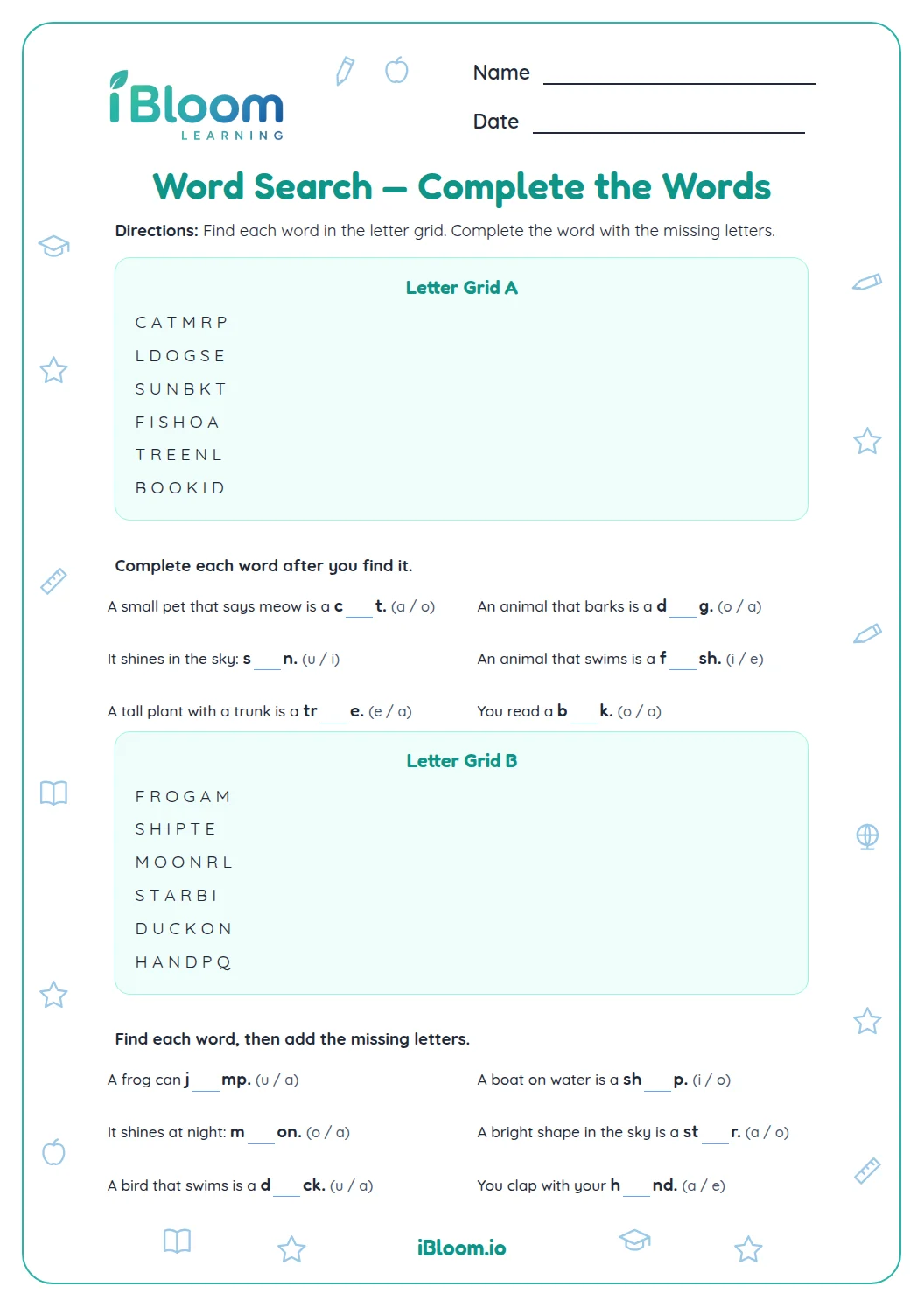
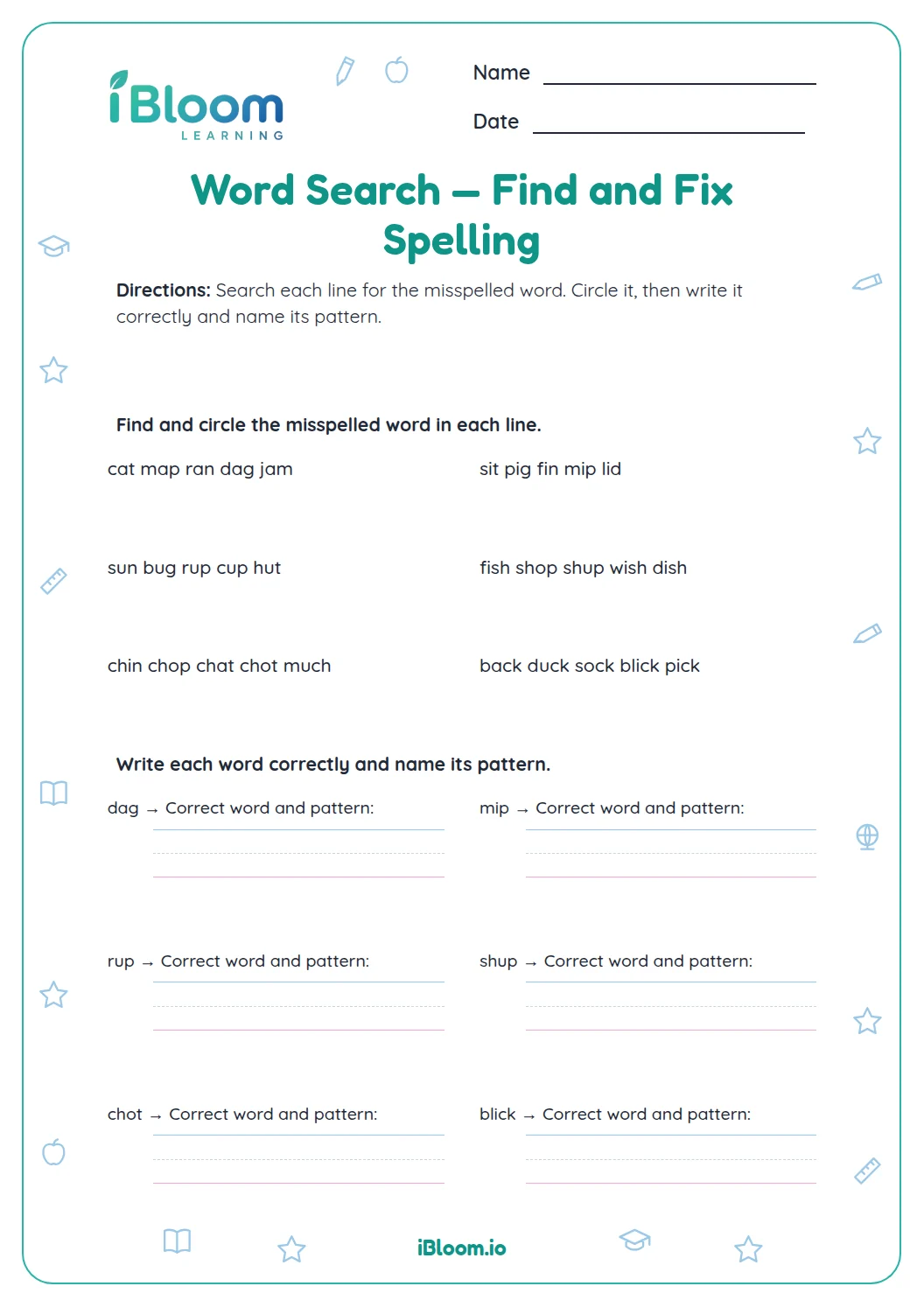
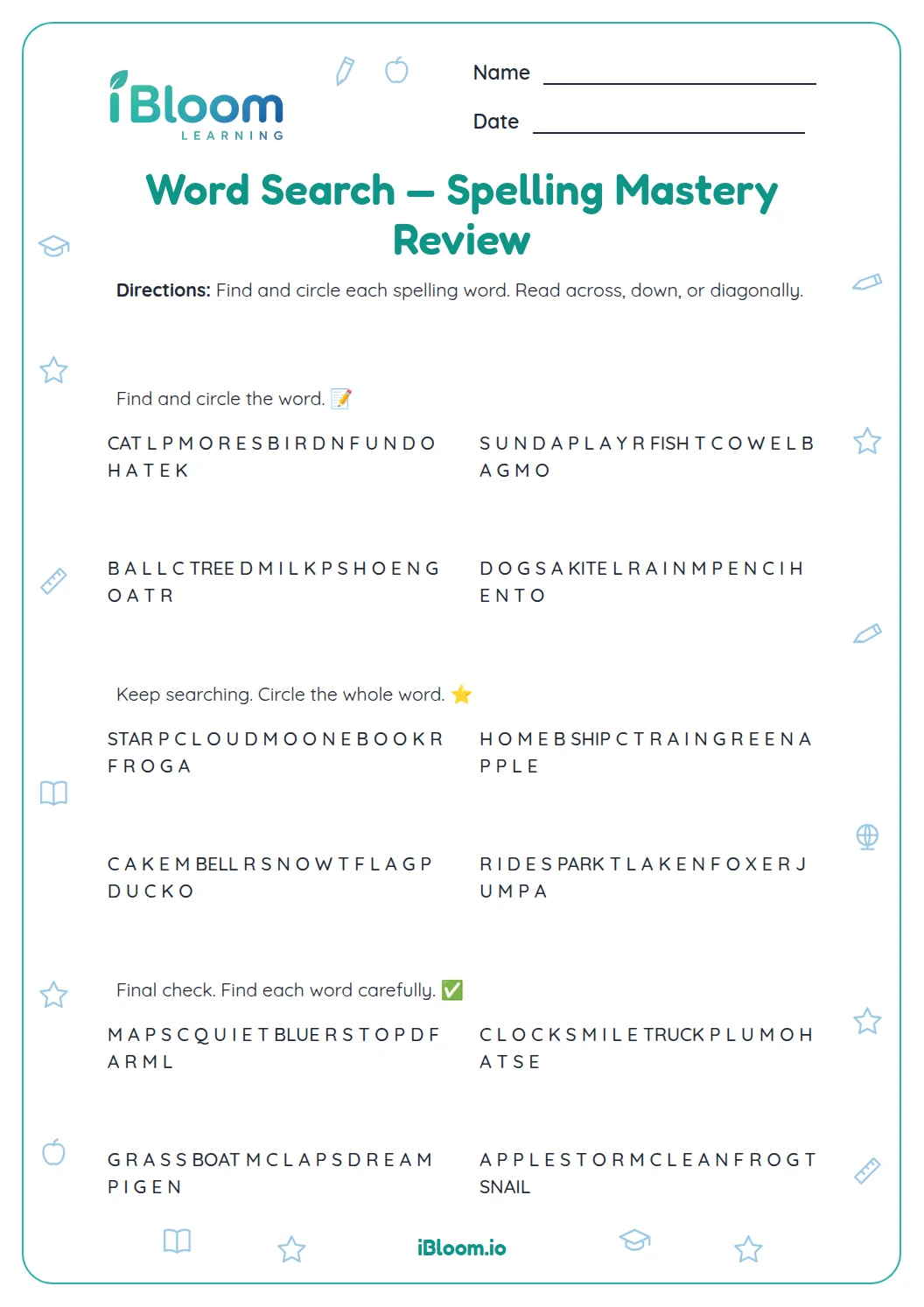
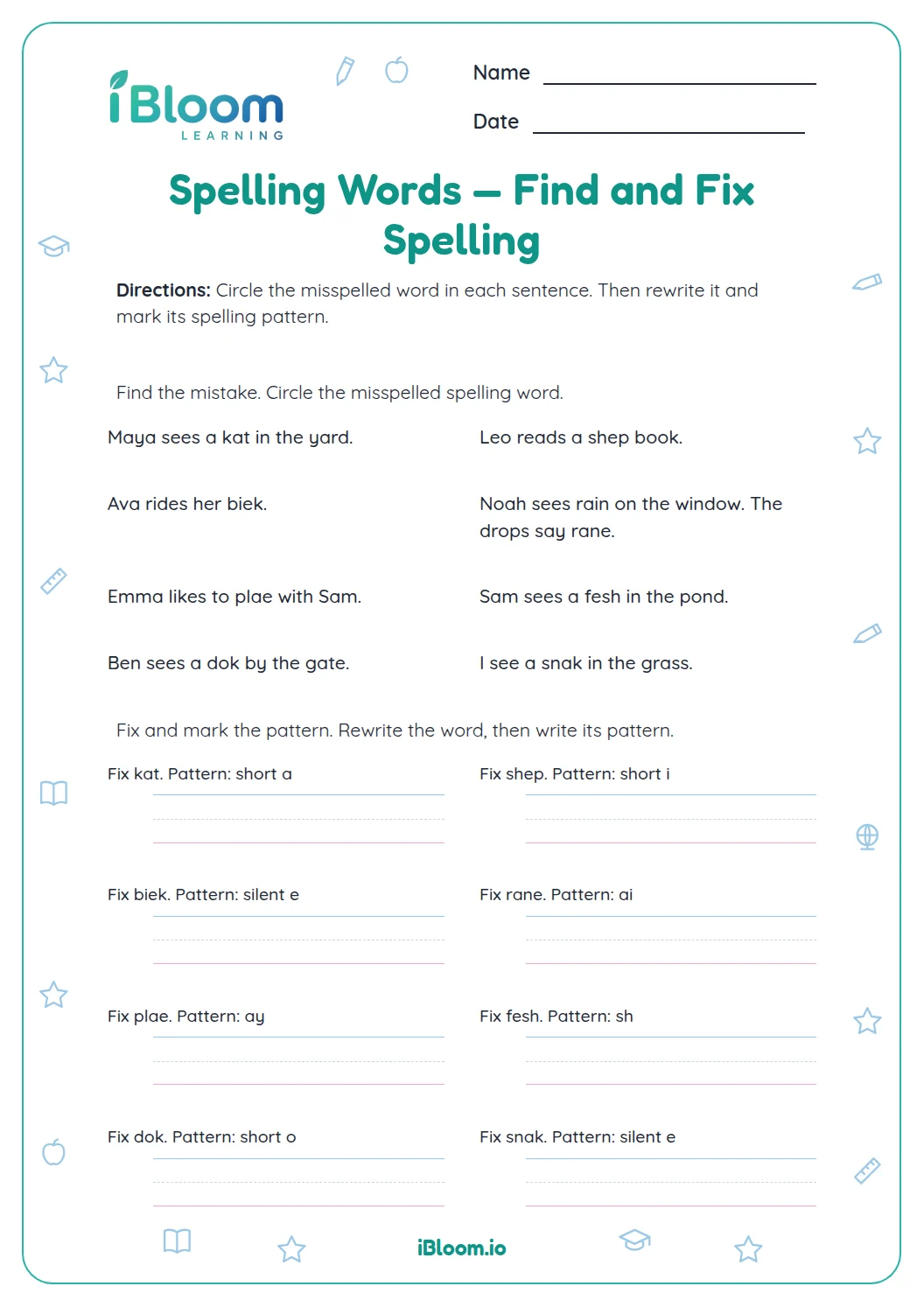
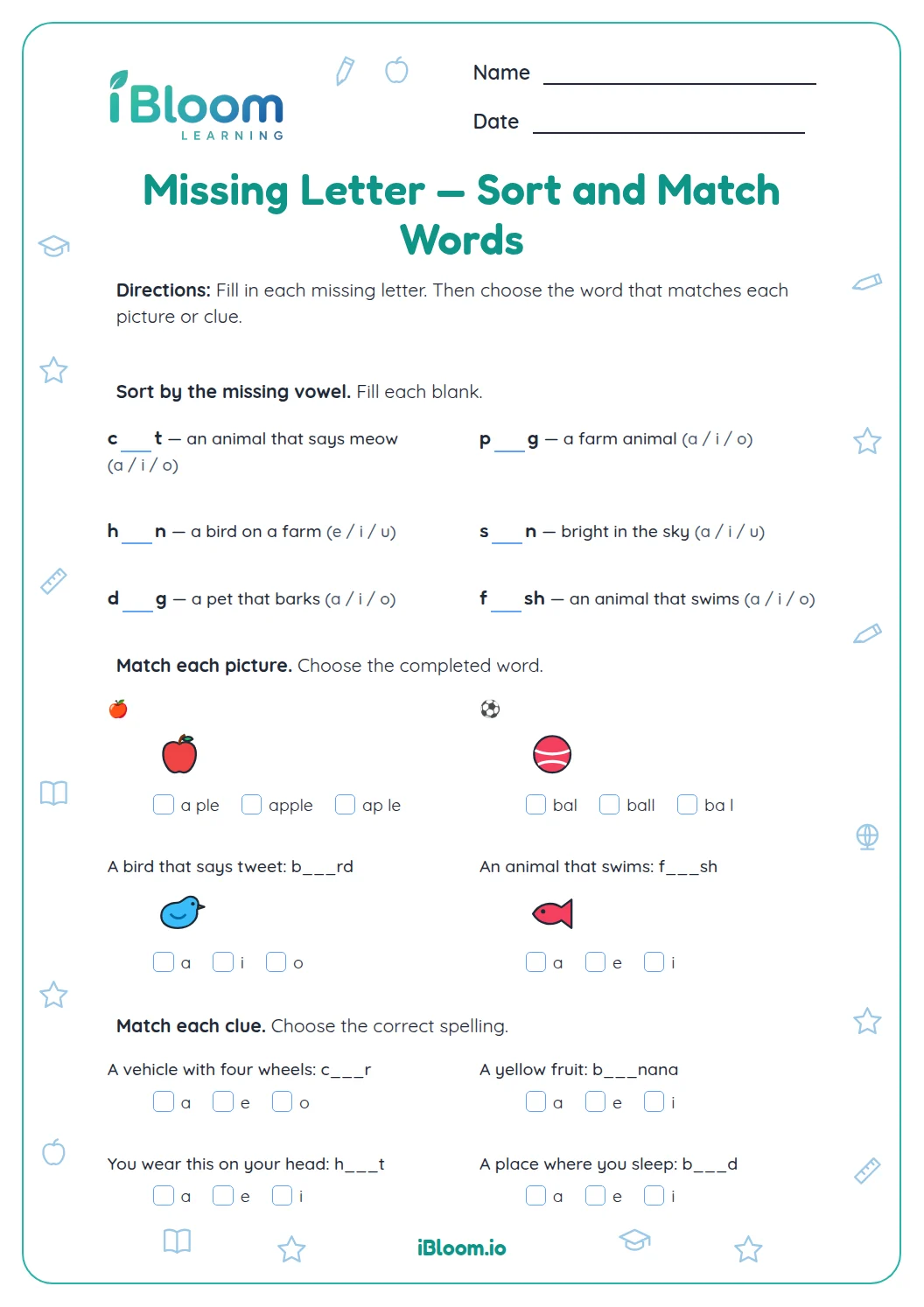
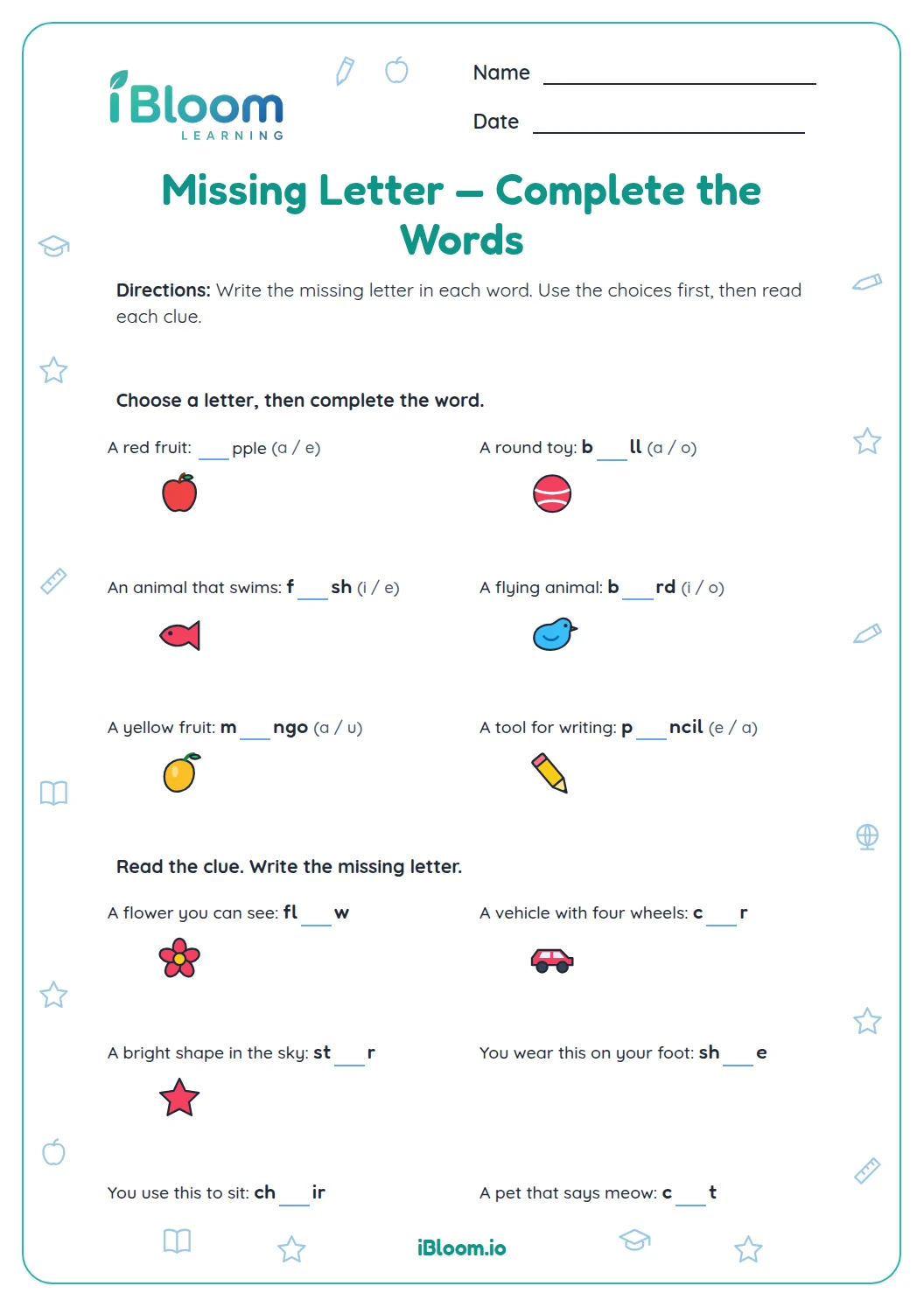
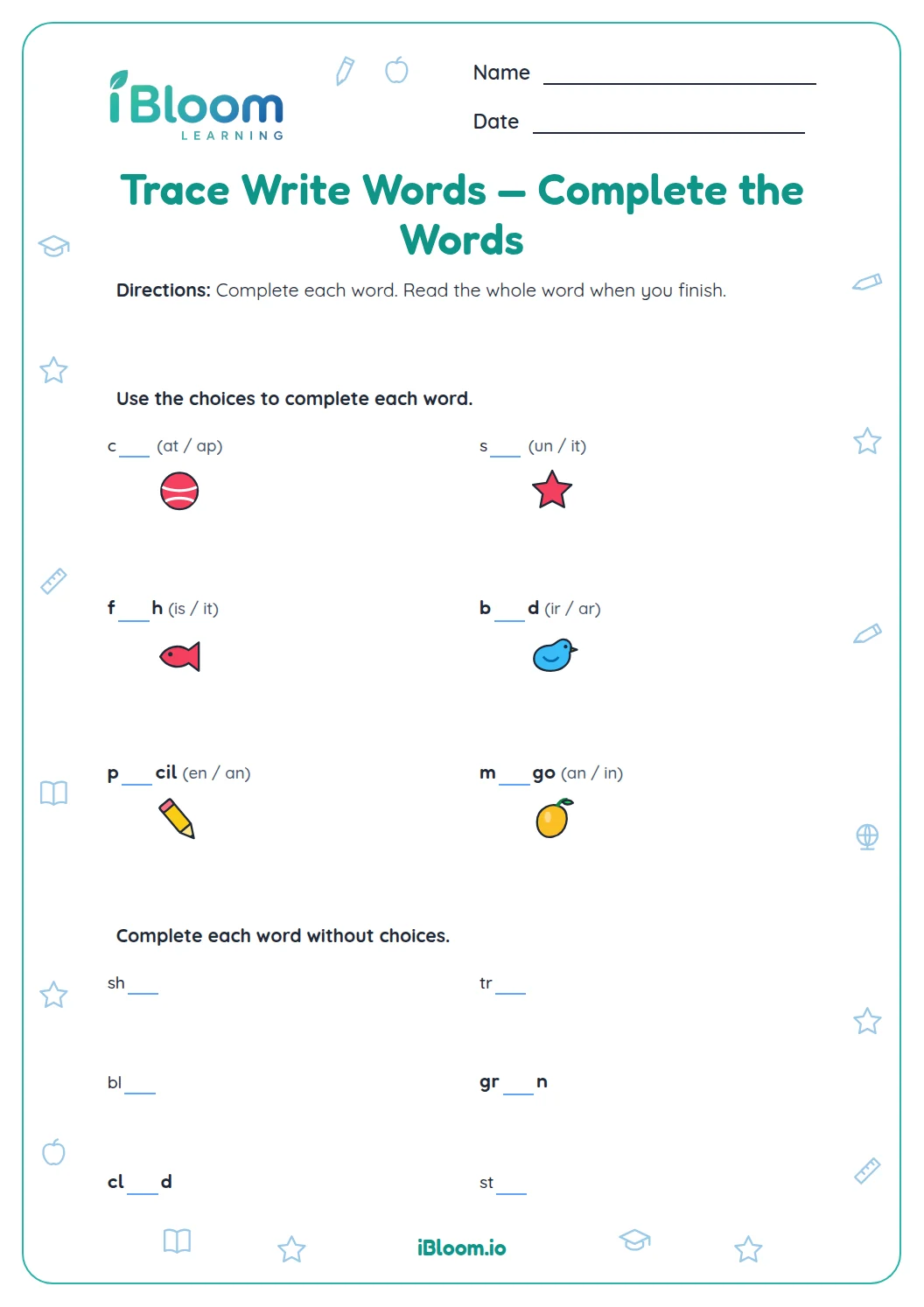
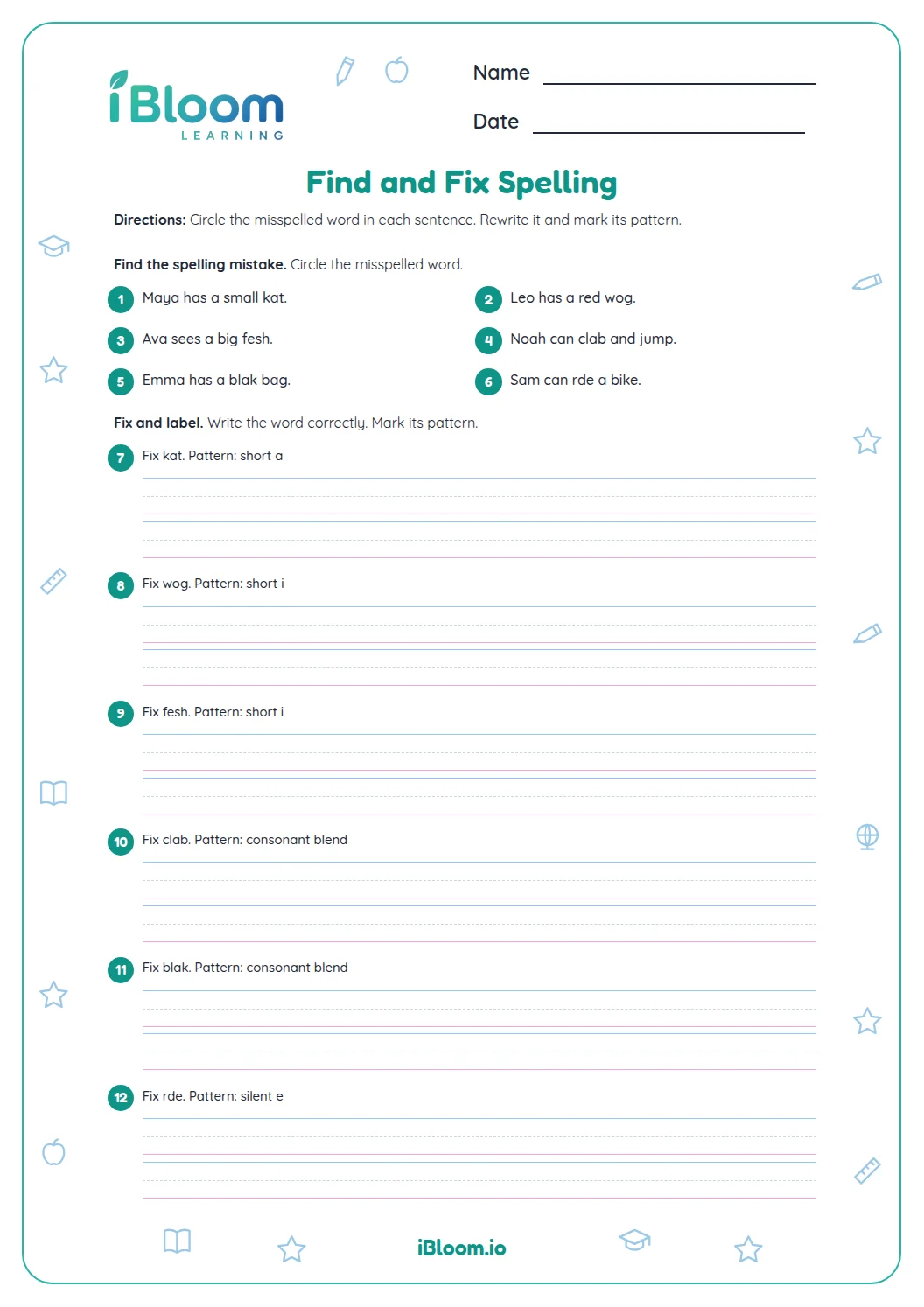
This free printable Grade 1 spelling worksheet is part of the word search set, and it works on the finding and sorting that make a word search useful. Part A has three sentences where children circle every short a word, such as cat, sat and mat. Part B asks which word has the same short vowel sound as map, pig, hop, sun or bed. Part C shows four pictures, and children pick the correct spelling from three choices. It practices CCSS L.1.2.d and RF.1.3.b. A short answer key follows the sheet.
Aligned to L.1.2.d and RF.1.3.b
What are short vowel words?
A short vowel word is a one-syllable word with one vowel that makes its short sound: the a in cat, the i in pig, the o in hop, the u in sun and the e in bed. Many of the first words children learn to read and spell follow this pattern, which makes it a useful one to know well.
Short vowel words are also the easiest ones to sort. Words with the same vowel sound usually have the same vowel letter, which gives children a first spelling pattern to rely on.
- 1Which word has the short a sound as in MAP?
- 2Say each word: mop, cat, pig.
- 3Listen to the middle sound: mop has /o/, cat has /a/, pig has /i/.
- 4Mop starts like map, but its middle sound is different.
- 5The short a word is cat.
What is on this word search sheet?
Twelve questions in three parts, from finding words to spelling them.
- Part A, Find the short a words: three sentences to circle in, with three or four words each (questions 1 to 3)
- Part B, Sort by vowel sound: choose the word with the short a, i, o, u or e sound of the example word (questions 4 to 8)
- Part C, Match the spelling: pick the right spelling for fish, star, tree and duck from three choices (questions 9 to 12)
- A matching answer key
Is this a word search with a letter grid?
No. It is the finding and sorting activity from the word search set, and it has no grid of letters. Children search for words inside sentences instead.
If your child enjoys puzzles, the free word search maker can build a grid from any spelling words you choose. Doing a grid after this sheet gives them a second look at the same words.
Why choose among spellings in Part C?
Each question shows the right spelling next to two wrong ones, such as duk, duck and dukk. Choosing between them asks children to picture the word and notice when a spelling looks wrong, which is a skill they use when proofreading their own writing.
Read each choice aloud together. Sounding out the wrong spellings is fine, and then children can say why the right one is right.
How to use this worksheet at home or in class
- 1Say cat, sat and mat aloud and ask what is the same in the middle of each word.
- 2Do question 1 together. Read the sentence, then point to each word and listen for the short a sound.
- 3Let your child finish Part A, then check that every circled word has the short a sound.
- 4Do Part B by saying each choice slowly. Ask your child to say the vowel sound before choosing.
- 5For Part C, read all three spellings aloud and ask which one looks right.
- 6Check with the answer key, and have your child write any missed word two times.
Common mistakes and quick fixes
The mistake
Circling the, to or his in Part A because they are small words in the sentence.
The fix
Only words with the short a sound count. Say each word slowly and listen for the /a/ sound, as in cat.
The mistake
Choosing a word that starts with the same letter, such as mop for MAP in question 4 or bus for BED in question 8.
The fix
Remind your child to listen to the middle sound, not the first. Say the two words one after the other: map, mop. Ask, “Do they sound the same in the middle?”
The mistake
Picking a spelling that sounds right but looks wrong, such as duk for duck in question 12.
The fix
Teach that ck comes at the end of short vowel words like duck and sock. Have your child write duck, then say what the ck says.
Common Core alignment
The sheet practices the two standards below.
Spell words with common patterns using the right letters.
On this sheet: Part C asks children to choose the conventional spelling of fish, star, tree and duck from look-alike choices.
Show the official wordingHide the official wording
Use conventional spelling for words with common spelling patterns and for frequently occurring irregular words.
Read short words by listening for their vowel sounds.
On this sheet: Parts A and B use regularly spelled one-syllable words, such as cat, pig, hop, sun and bed, sorted by their short vowel sounds.
Show the official wordingHide the official wording
Decode regularly spelled one-syllable words.
What to practice next
Make more practice
Further reading
Questions parents and teachers ask
Which words are on this worksheet?
Part A uses short a words such as cat, sat, Sam, ran, tap and pan. Part B compares short vowel words like map, pig, hop, sun and bed with words such as mop, dog, cup and web. Part C pairs four pictures with their spellings: fish, star, tree and duck.
What are short vowel sounds?
They are the short sounds of a, e, i, o and u, as in cat, bed, pig, hop and sun. In a one-syllable word with one vowel, the vowel usually says its short sound. This sheet uses only words that follow that pattern, plus four common picture words.
Why does Part A use only short a words?
Working on one sound at a time makes the hunt manageable. Children listen for the short a in each sentence and circle every word that has it. Part B then compares all five short vowels, so children hear how they differ.
What if my child circles words with other vowels?
Say the circled word together and ask which sound they hear in the middle. If it is not the /a/ in cat, they can erase it. Comparing sat with sit or mat with met is a good way to hear the difference.
Do children need to read every word alone?
Not at first. Read the sentences and choices aloud, and let your child listen for the vowel and look at the letters. As your child gets more confident, they can read more of the sheet alone, and you can check the answers together.
How long does it take, and is there an answer key?
Most first graders finish in about 15 minutes. Yes, a short answer key follows the sheet and shows the circled words and the correct choice for each question. You can print the sheet alone for your child and keep the key for checking.