



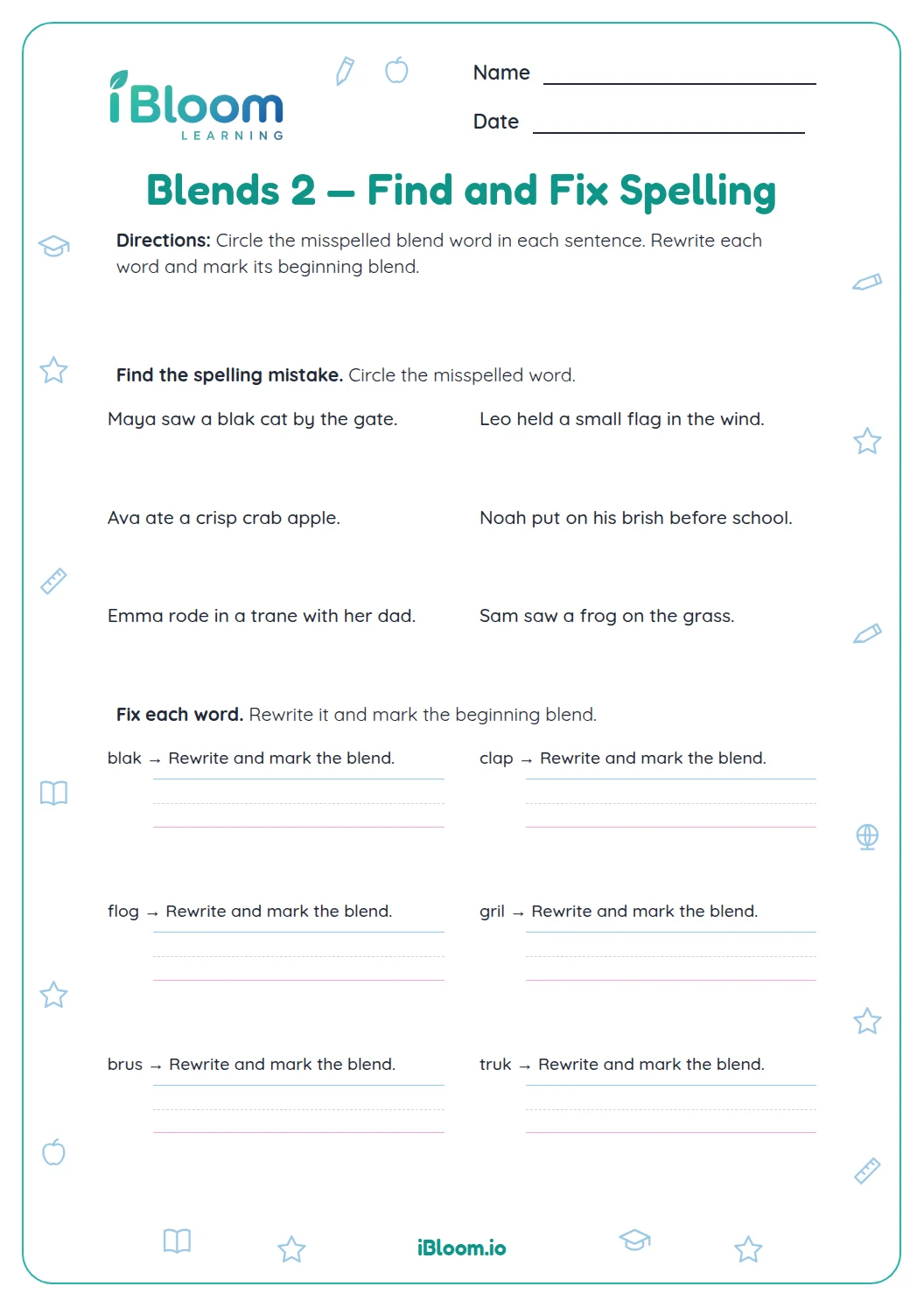


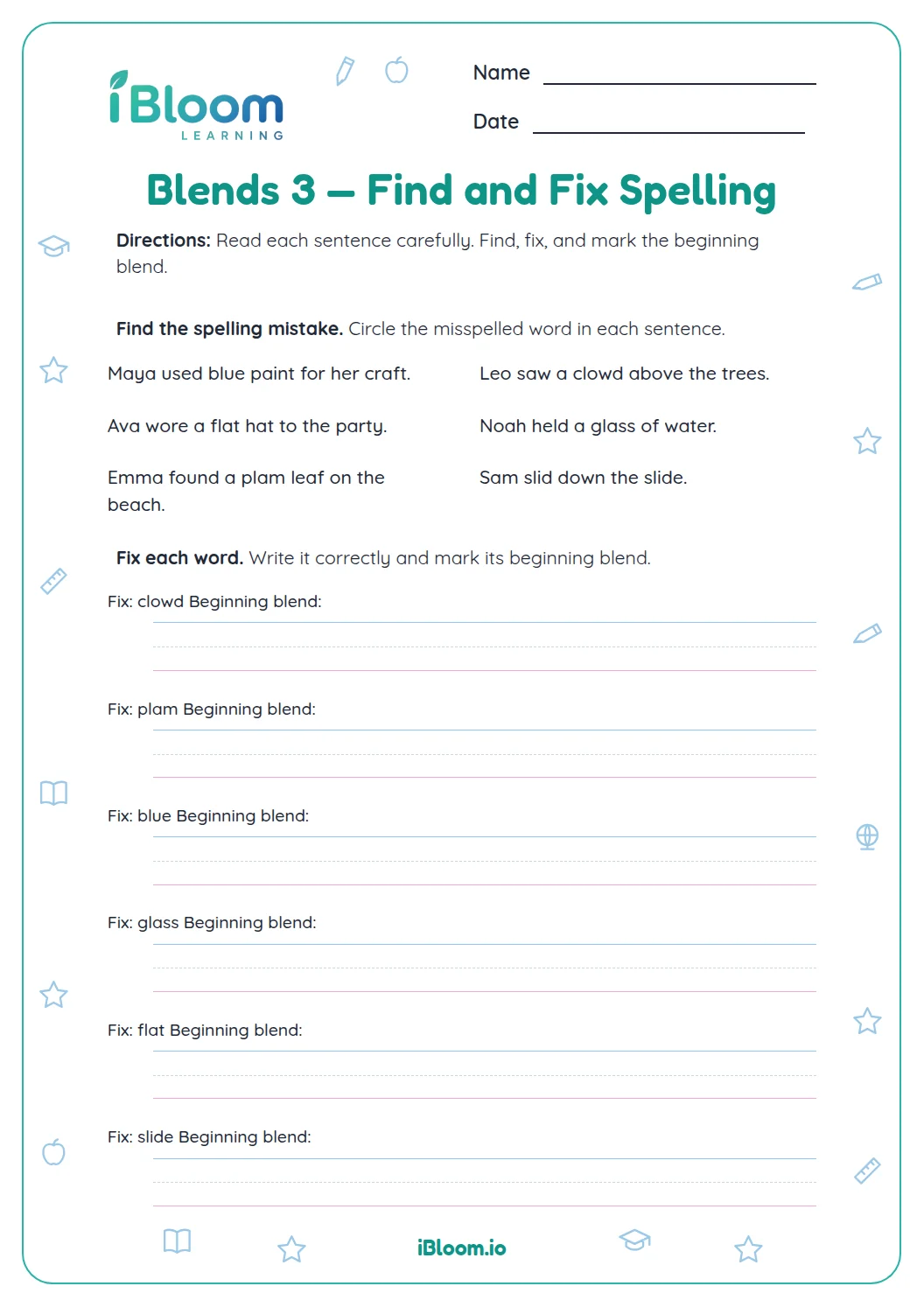
About this worksheet
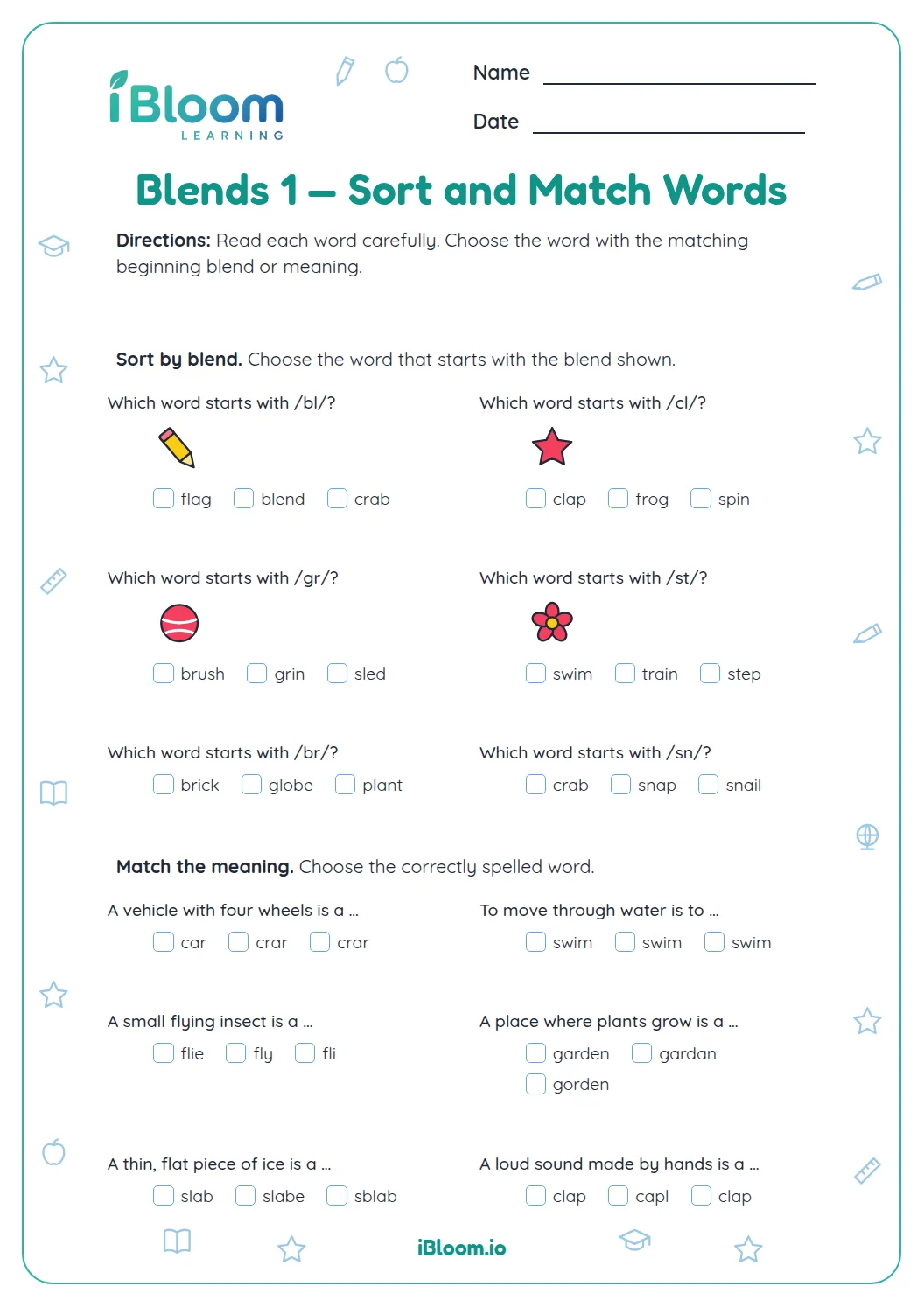
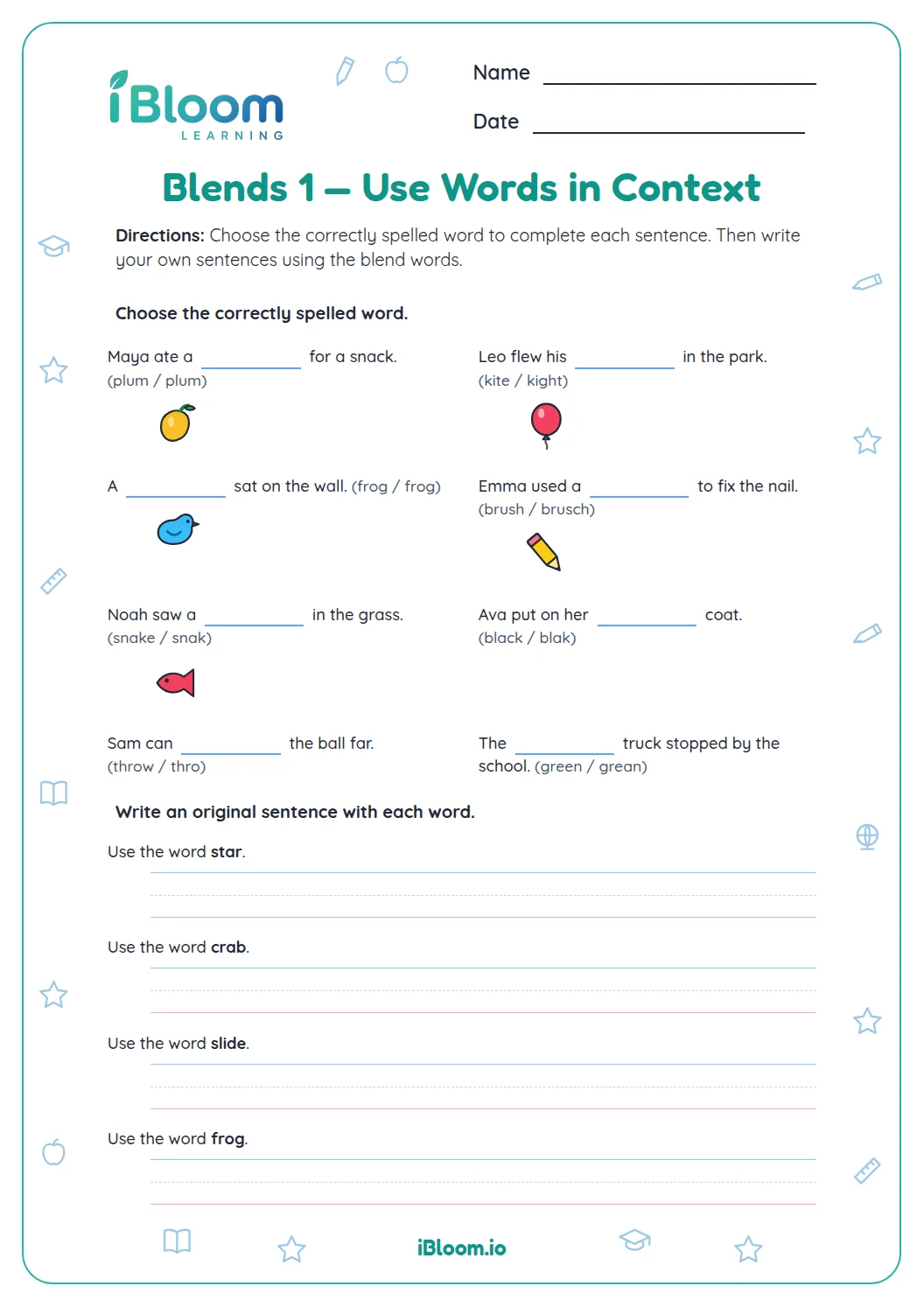
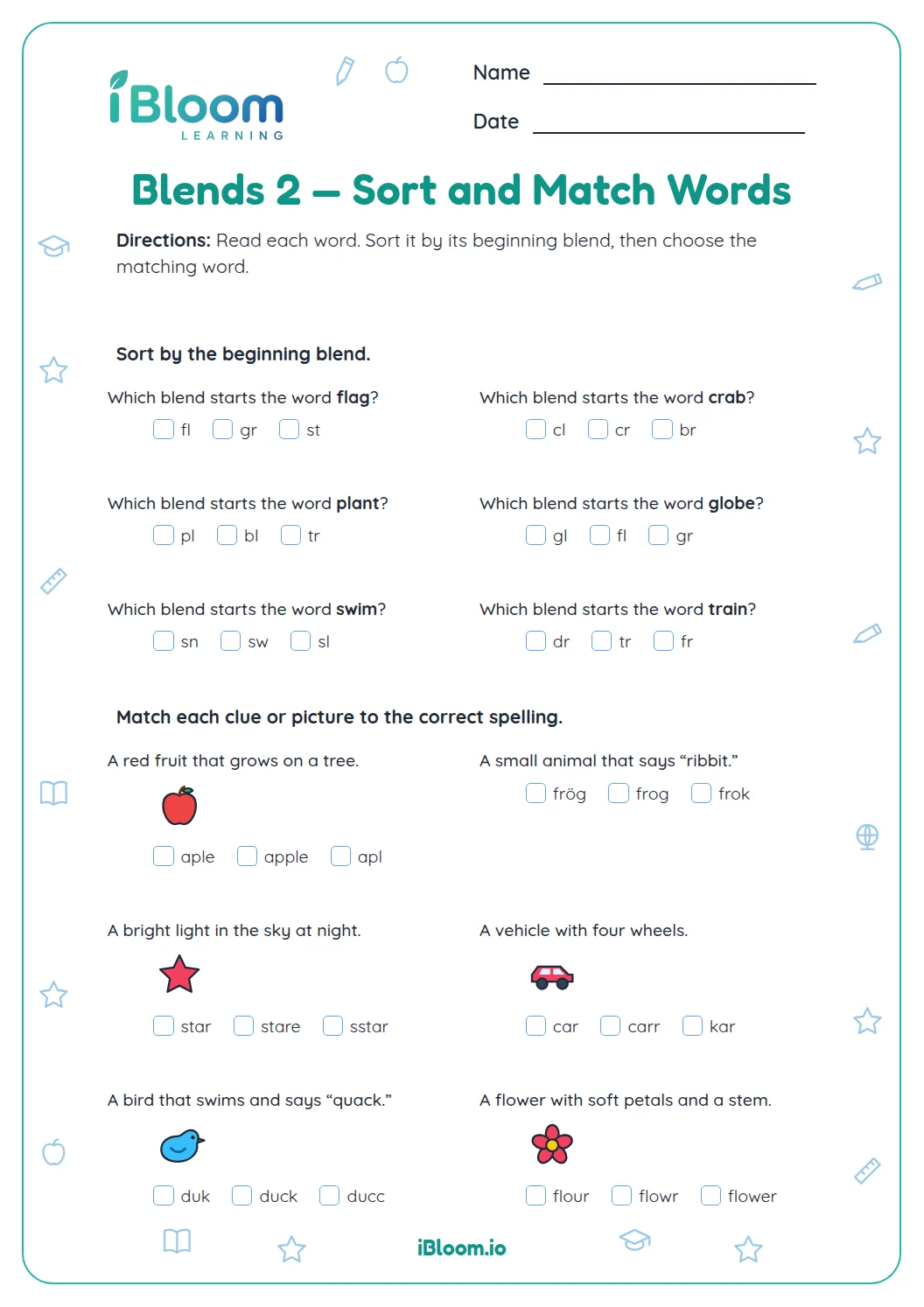
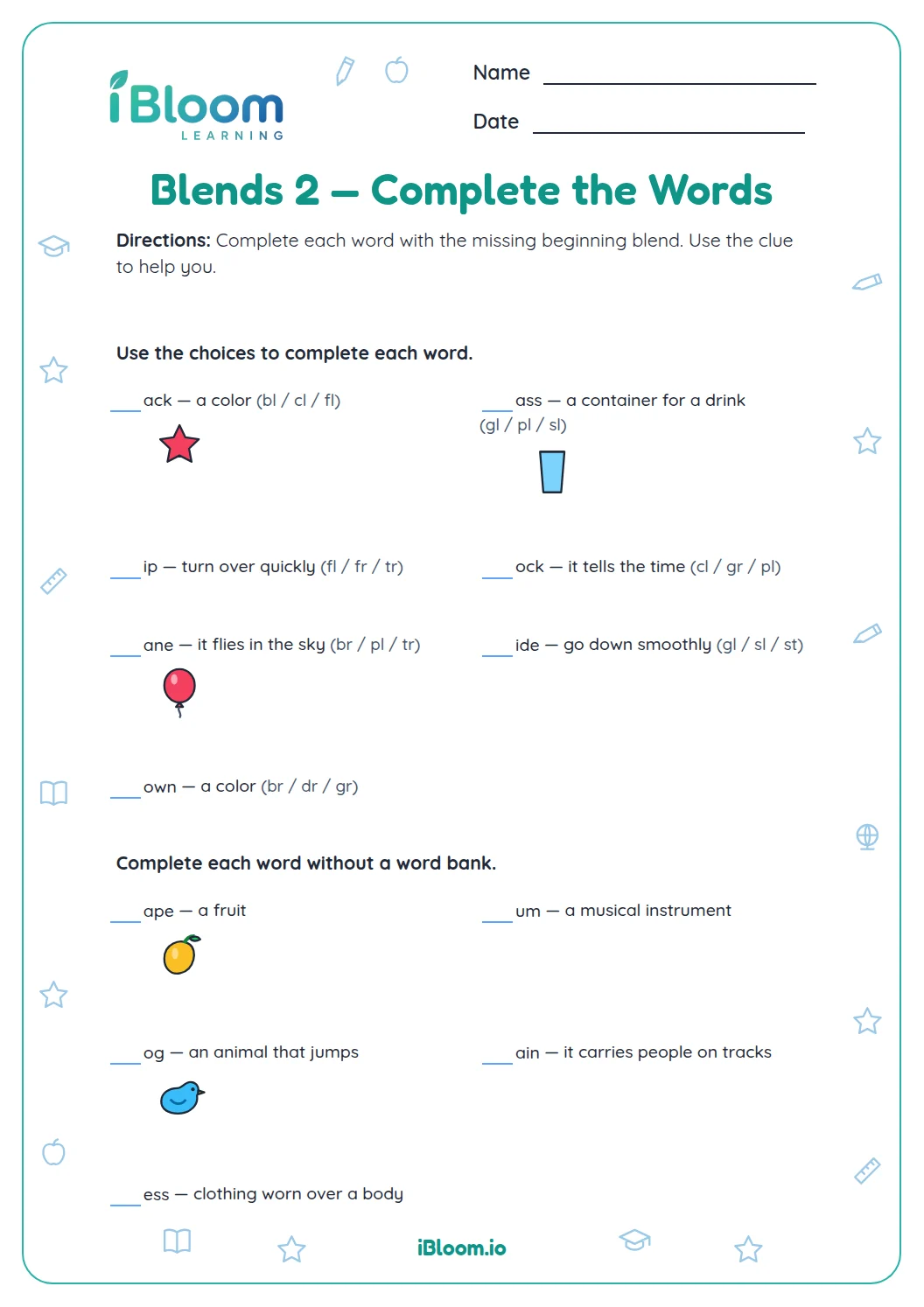
This free printable Grade 2 spelling worksheet practices beginning consonant blends. Students read a clue, supply the missing blend in 15 words, and then complete three more words in sentence context. The word set includes blends such as fl, cr, st, and spl. The spelling-pattern practice aligns with CCSS L.2.2d, and a separate answer key is included.
Aligned to L.2.2d
How do the clues help complete a blend?
Read the clue, say the word it describes, and listen to the sounds at the beginning. A blend has two or three consonants together, and each consonant sound can still be heard.
- 15 clue-based word completions
- 3 sentence-context completions
- Two- and three-letter beginning blends
How can you hear each sound in a blend?
Say the complete word slowly and listen to its first sounds. In flag, you hear /f/ and /l/ at the beginning, so the missing blend is fl.
- 1Clue: A piece of cloth with a design that can fly on a pole: ___ag.
- 2Say the word: flag.
- 3Listen to the beginning: /f/ /l/.
- 4Write fl to complete flag.
Why read the whole sentence?
A sentence gives meaning clues that help confirm a spelling. “The swimmer made a big ___ash in the pool” points to splash. Say the completed word and reread the sentence to make sure it matches the clue.
What happens with a three-letter blend?
Some words begin with three consonants, as in scrub and splash. Listen for each sound in order. Keep all three letters together when writing the blend.
How to complete the words
- 1Read the full clue or sentence before filling the blank.
- 2Say the word that fits the meaning.
- 3Listen for each consonant sound at the beginning.
- 4Write the full blend, keeping the consonants in order.
- 5Reread the completed word and sentence.
- 6Check spelling with the separate answer key.
Blend spelling checks
The mistake
Writing only the first consonant in a blend.
The fix
Say the word slowly and listen for every sound at the beginning.
The mistake
Reversing the letters in a blend.
The fix
Keep the sounds in the order you hear them; flag starts with fl.
The mistake
Leaving out one letter in a three-letter blend.
The fix
Listen for all three starting sounds in words such as scrub and splash.
Common Core alignment
The word completions practice applying learned consonant patterns while writing words.
Use learned spelling patterns to write words with beginning consonant blends.
On this sheet: Students apply a learned consonant-spelling pattern to complete words from clues and sentence context.
Show the official wordingHide the official wording
Generalize learned spelling patterns when writing words (e.g., cage → badge; boy → boil).
What to practice next
Make more practice
Further reading
Questions parents and teachers ask
What is a beginning consonant blend?
A beginning blend is a group of consonants at the start of a word where each consonant sound can still be heard. In flag, the blend is fl. This worksheet has 18 questions that ask students to complete a blend from a clue or sentence.
How should a child use the clues?
Read the clue all the way through, say the word it describes, and listen for its first sounds. For example, a piece of cloth flying from a pole is a flag, so the beginning blend is fl. The answer key lists the missing blend.
Does this worksheet include three-letter blends?
Yes. Most questions use two-letter blends, and the set includes three-letter patterns in words such as scrub and splash. Students should listen for each sound and keep all the starting letters in the same order when they write the blend.
Why are some words in full sentences?
Sentence context adds meaning clues. A student can use both the sentence and the sound of the word to decide which blend completes it. The final three questions ask learners to finish a word inside a sentence, then reread it to check that it makes sense.
Is the spelling answer key separate?
Yes. The answer key follows the two worksheet pages and gives the missing blend for all 18 items. Students can check a word after completing it, or an adult can use the key to review the whole page together.