




About this worksheet
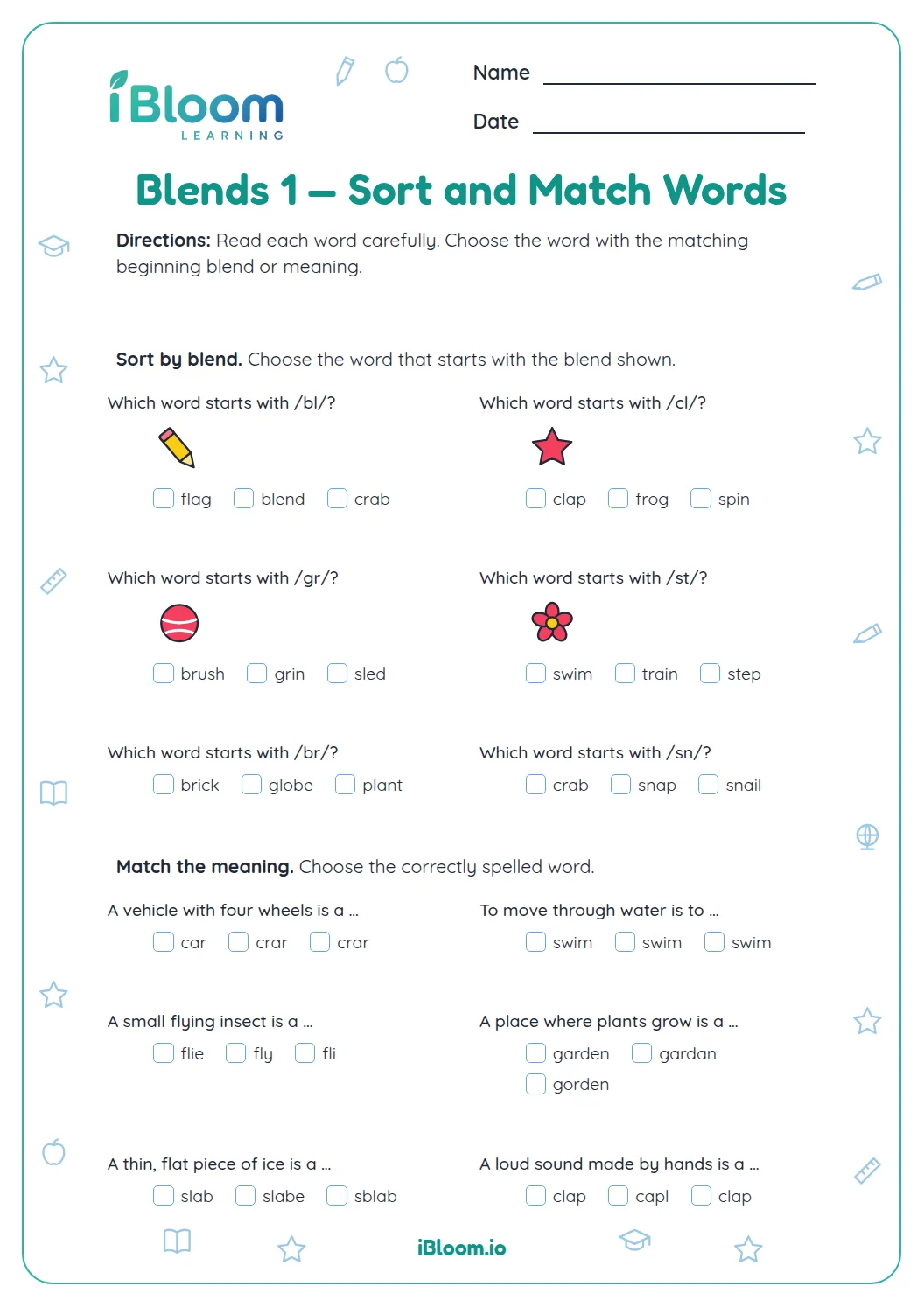
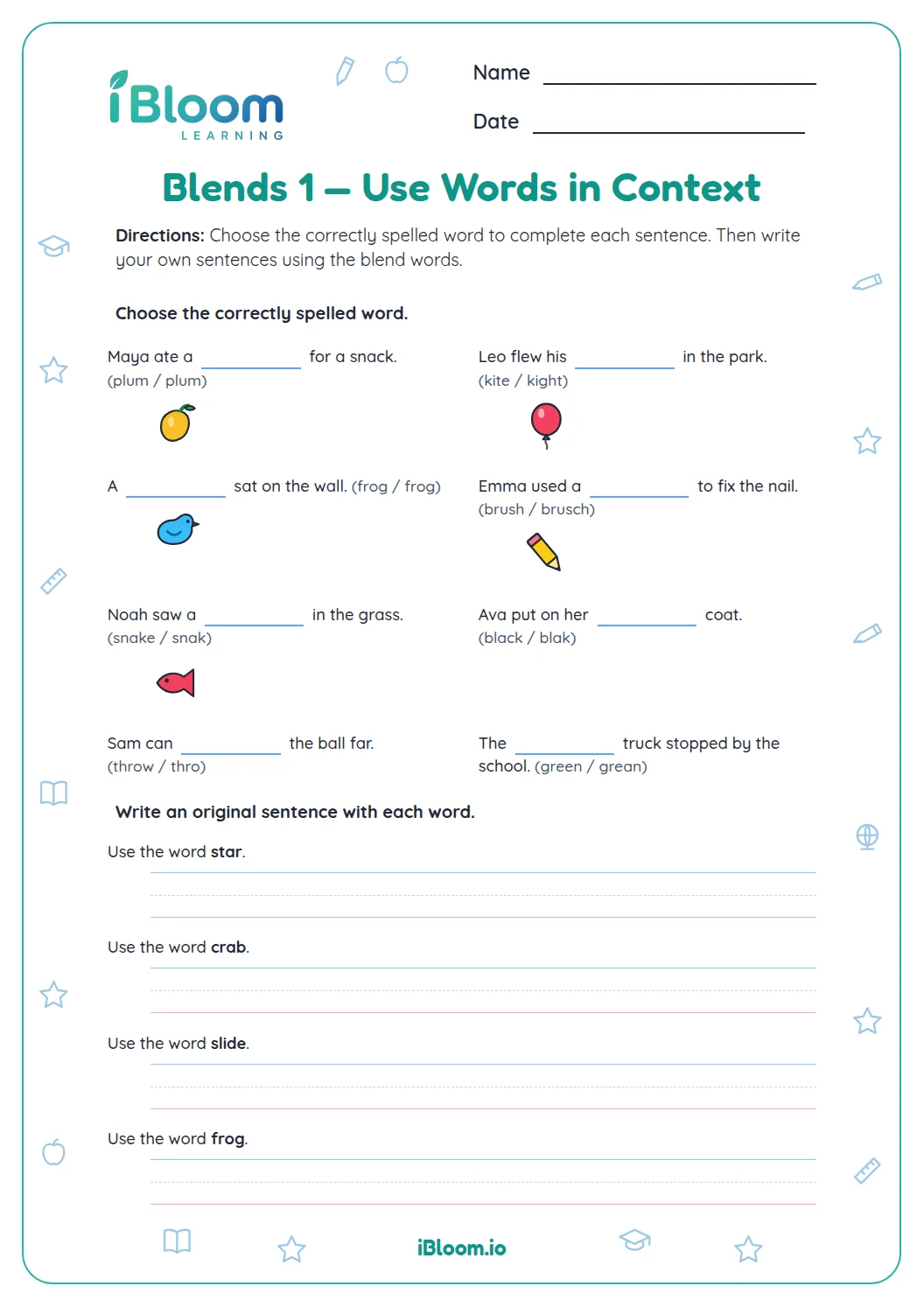
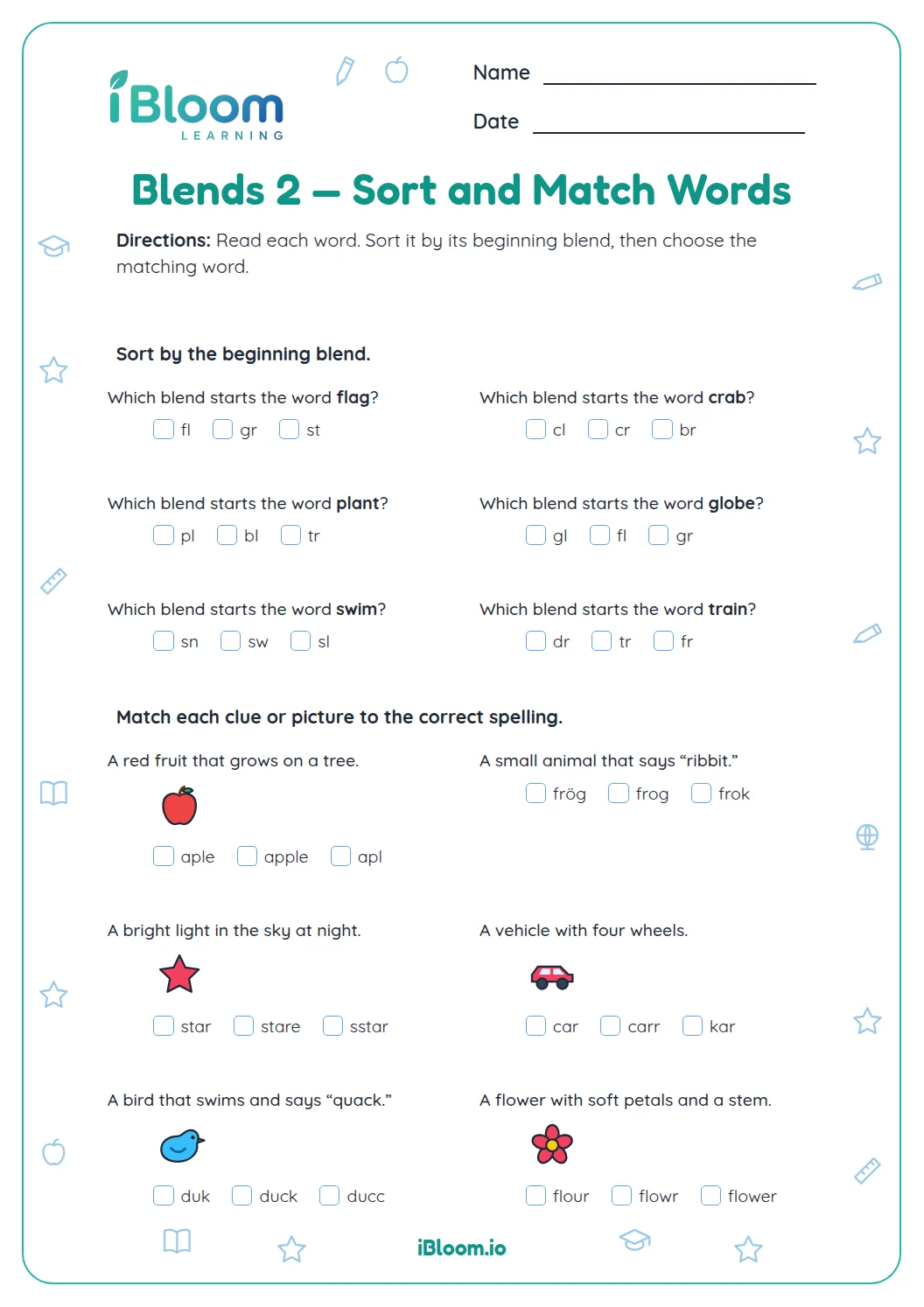
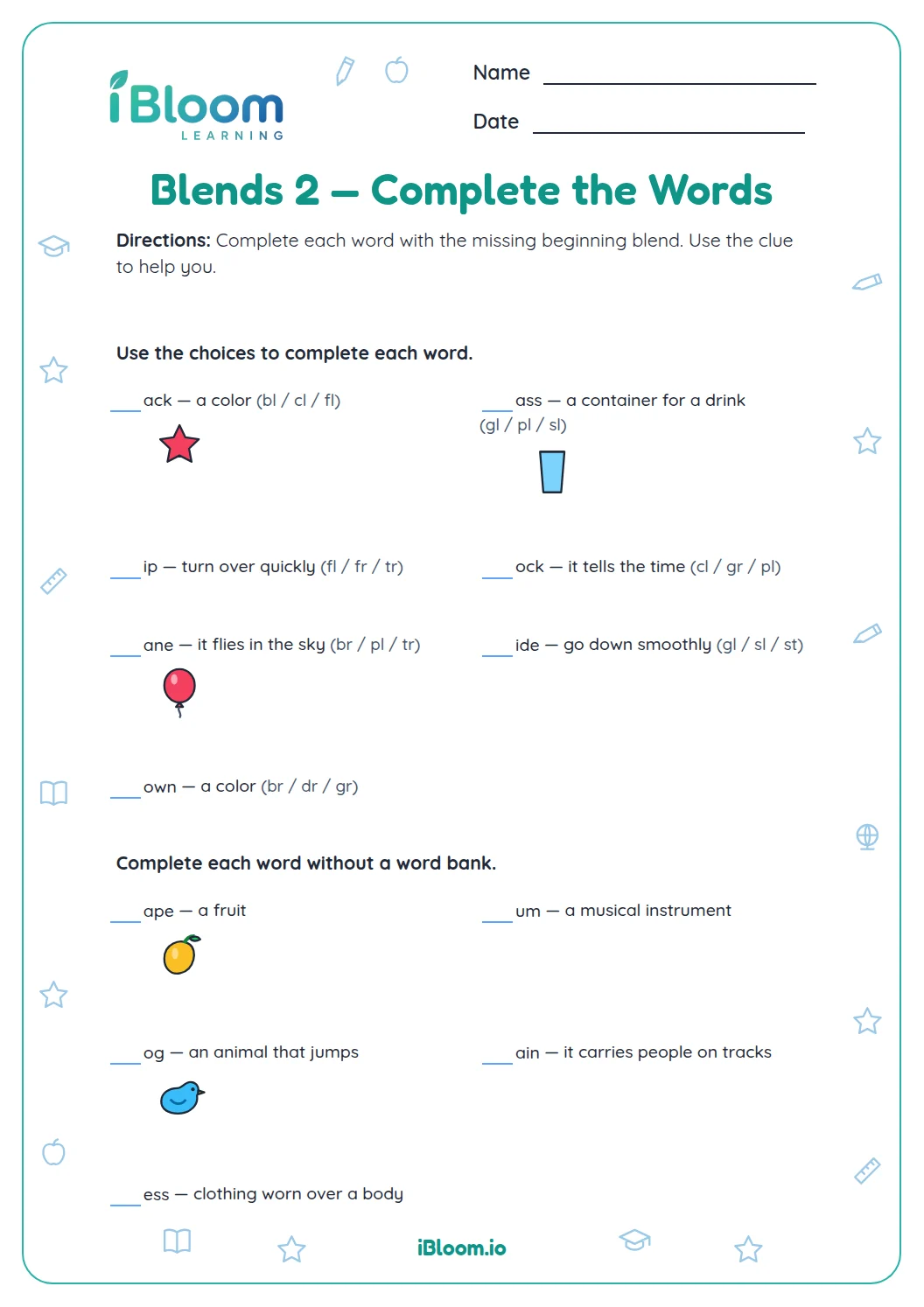
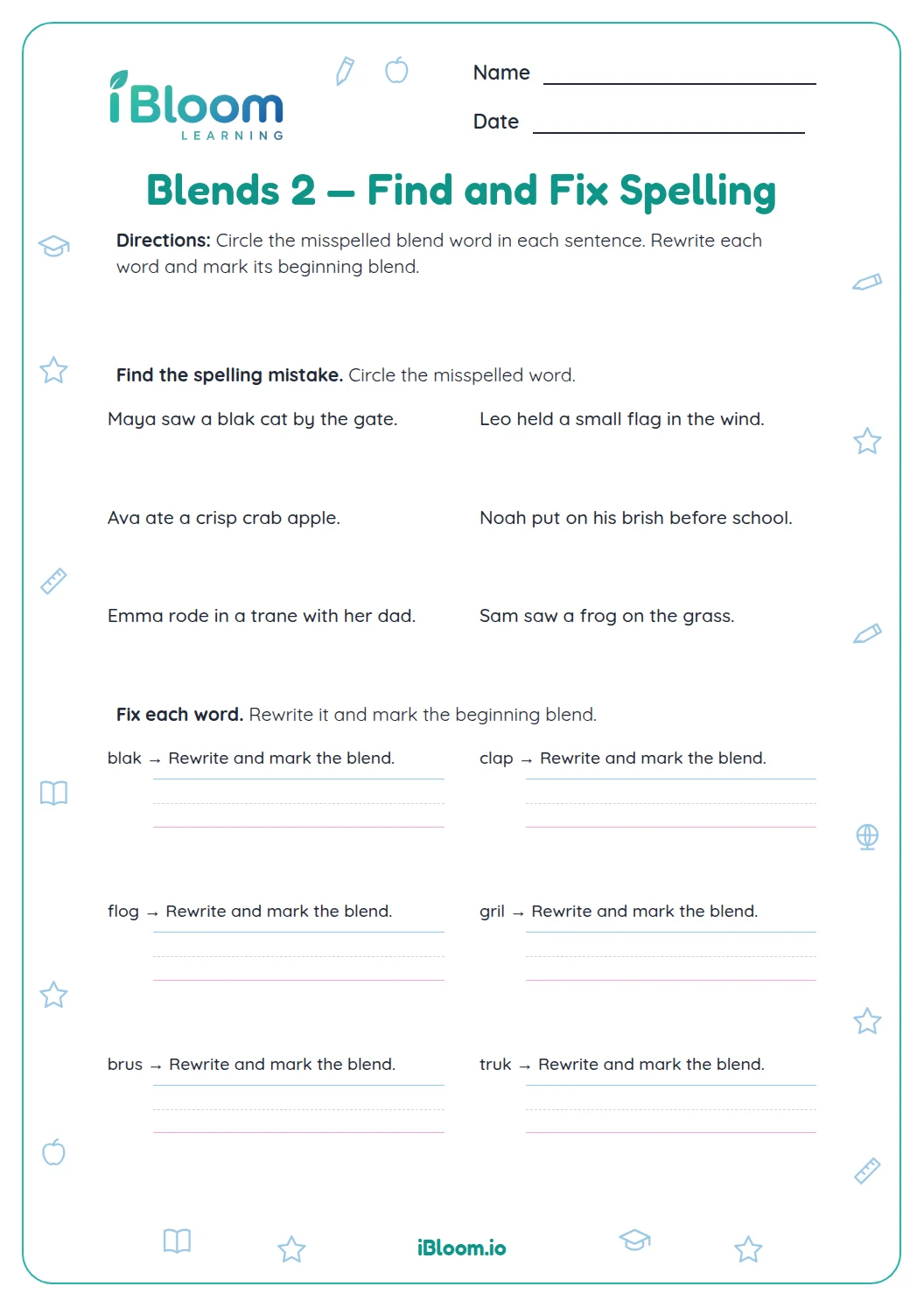
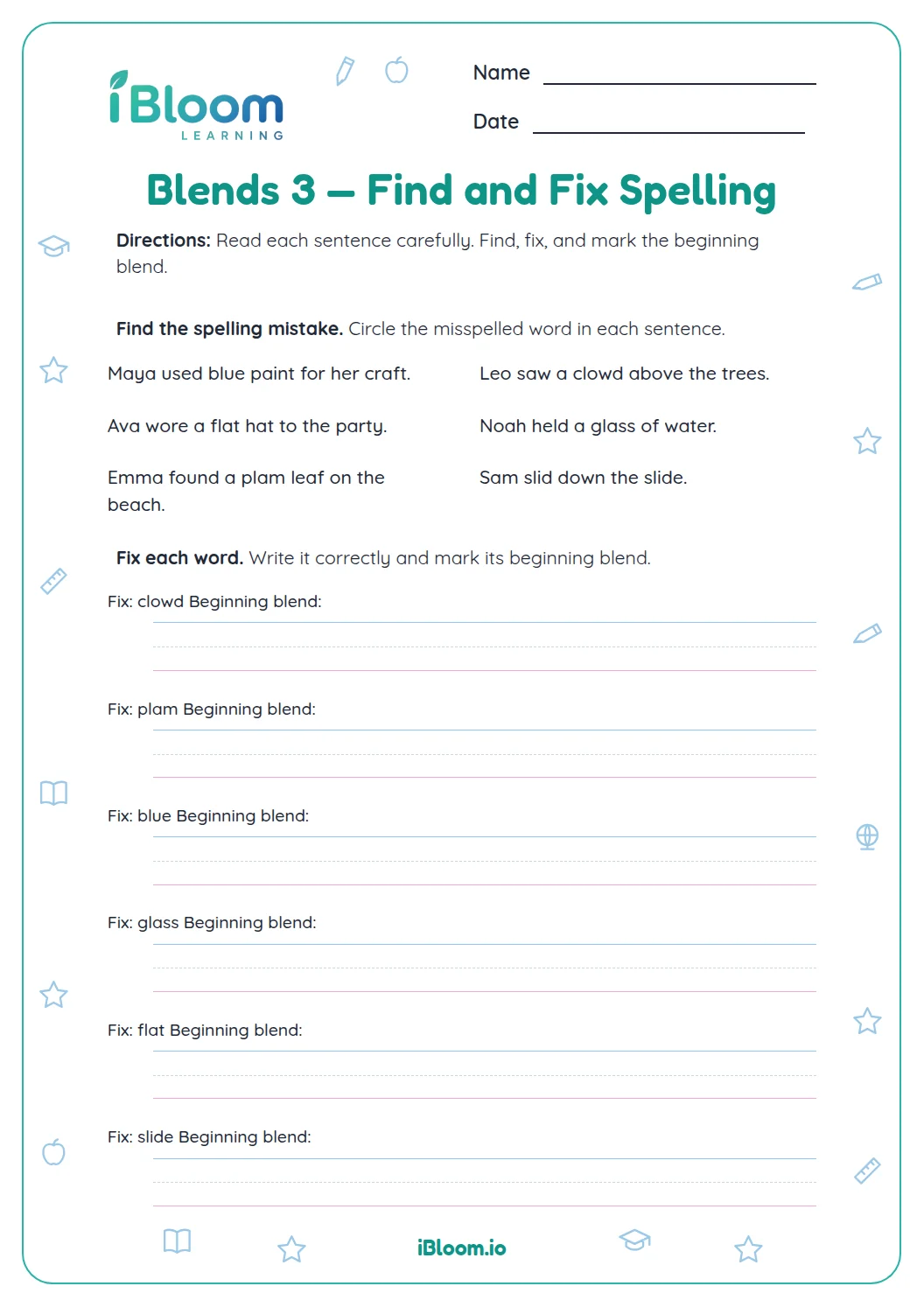
This Grade 2 spelling worksheet gives 18 chances to read and spell words with beginning consonant blends. Students spell whole words from short clues, supply a missing two-letter blend in a word, and choose correctly spelled or matching words. The answer key lists each target. The questions practice applying familiar spelling patterns to words.
Aligned to L.2.2.d
How do you spell a word from a clue?
Read the sentence clue, say the word, and listen for both beginning consonants. For flag, hear /f/ and /l/ before the short a, then write all four letters.
- 1Question 1: A flag waves from a pole. Write flag, including both beginning consonants.
How can you fill in a missing blend?
Use the rest of the word and the sentence clue to identify the missing start. In “Maya used a ___ush to paint,” brush fits the meaning, so write br.
How can similar words help with spelling?
Compare the first two letters and read the whole word. Brush, crush, and blush share an ending, but only brush begins with br.
How to use this worksheet
- 1Say the word slowly and stretch its first two consonant sounds.
- 2Write the whole word once before the missing-blend section.
- 3For each blank, say the completed word and check the ending.
- 4Compare the beginning letters in the choices, then read each whole word.
Common mistakes and quick fixes
The mistake
Leaving out one consonant in a blend.
The fix
Stretch the beginning sounds and tap once for each consonant.
The mistake
Reversing the blend letters.
The fix
Say the sounds in order and check left to right.
The mistake
Picking a word with the right ending but wrong beginning.
The fix
Read the full word aloud and check its spelling.
Common Core alignment
This page practices the skills named in the standard below.
Use familiar spelling patterns to write words with consonant blends.
On this sheet: Use familiar spelling patterns to write words with consonant blends.
Show the official wordingHide the official wording
Generalize learned spelling patterns when writing words (e.g., cage → badge; boy → boil).
What to practice next
Further reading
Questions parents and teachers ask
How many questions are included?
There are 18 questions: seven spell-from-clue items, seven missing-blend words, and four multiple-choice checks. The first group asks children to spell a whole word from a sentence clue. The answer key supplies the intended spelling or choice for every item.
Which blends does the worksheet practice?
The practice includes beginning blends such as fl, cl, dr, fr, gr, pl, sl, cr, br, tr, gl, pr, and sk. Children write complete words, supply two missing beginning letters, and compare words that share endings or similar spellings.
Are blends the same as digraphs?
No. In a blend such as br in brush, both consonant sounds can be heard. A digraph such as sh uses two letters to represent one sound. This worksheet asks children to listen for and spell two-consonant beginnings in words.
Can students say the words aloud?
Yes. Saying each clue sentence and target word slowly can help children hear both consonants at the beginning. They should then write the whole word and reread it, since listening for sounds is one part of checking its spelling.
What does the answer key show?
The answer key lists the intended word or choice for all 18 questions. For the clue-based items, children can compare their spelling with the target. For the missing-blend items, check that both beginning letters are present and form the word in context.