


About this worksheet
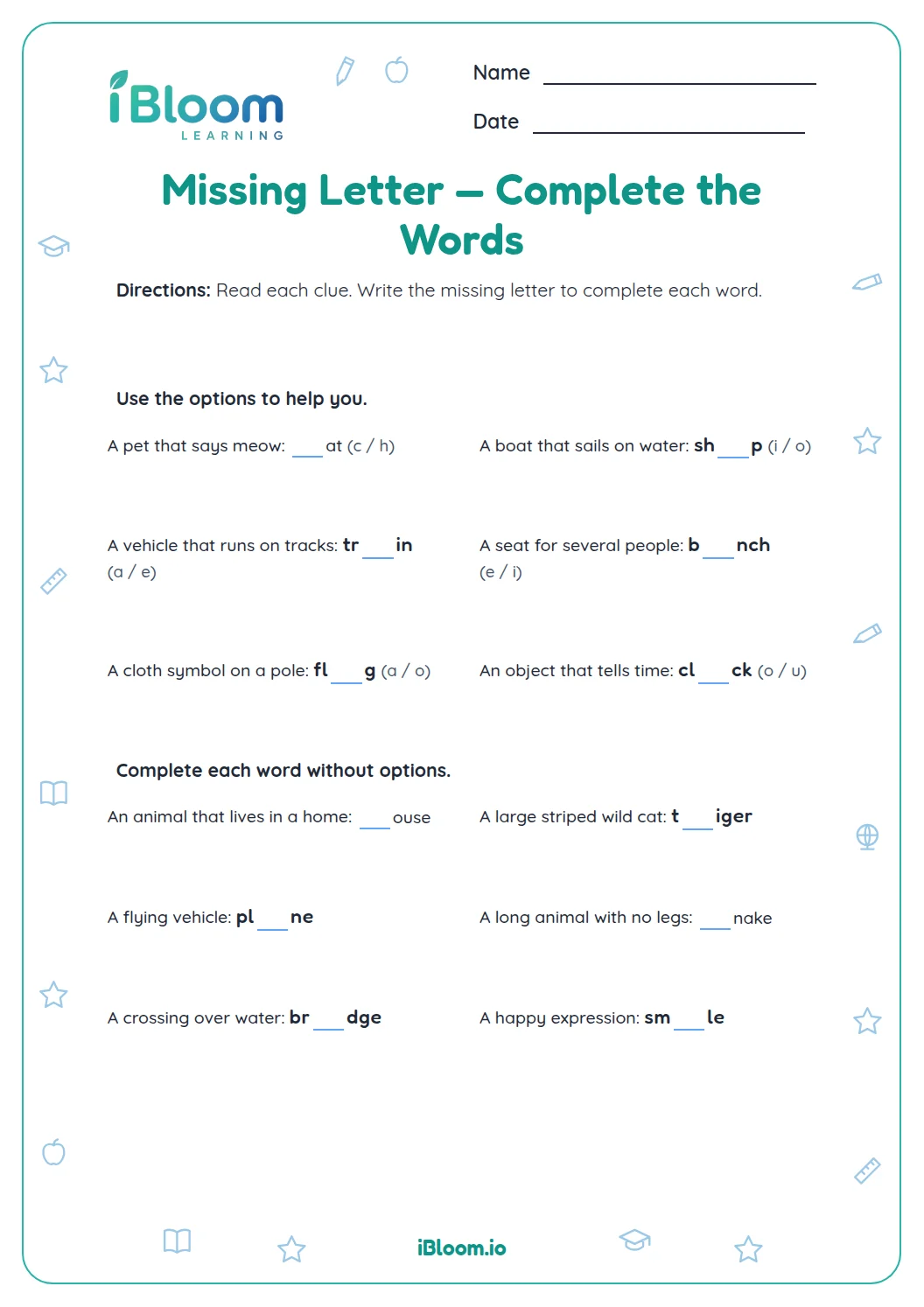
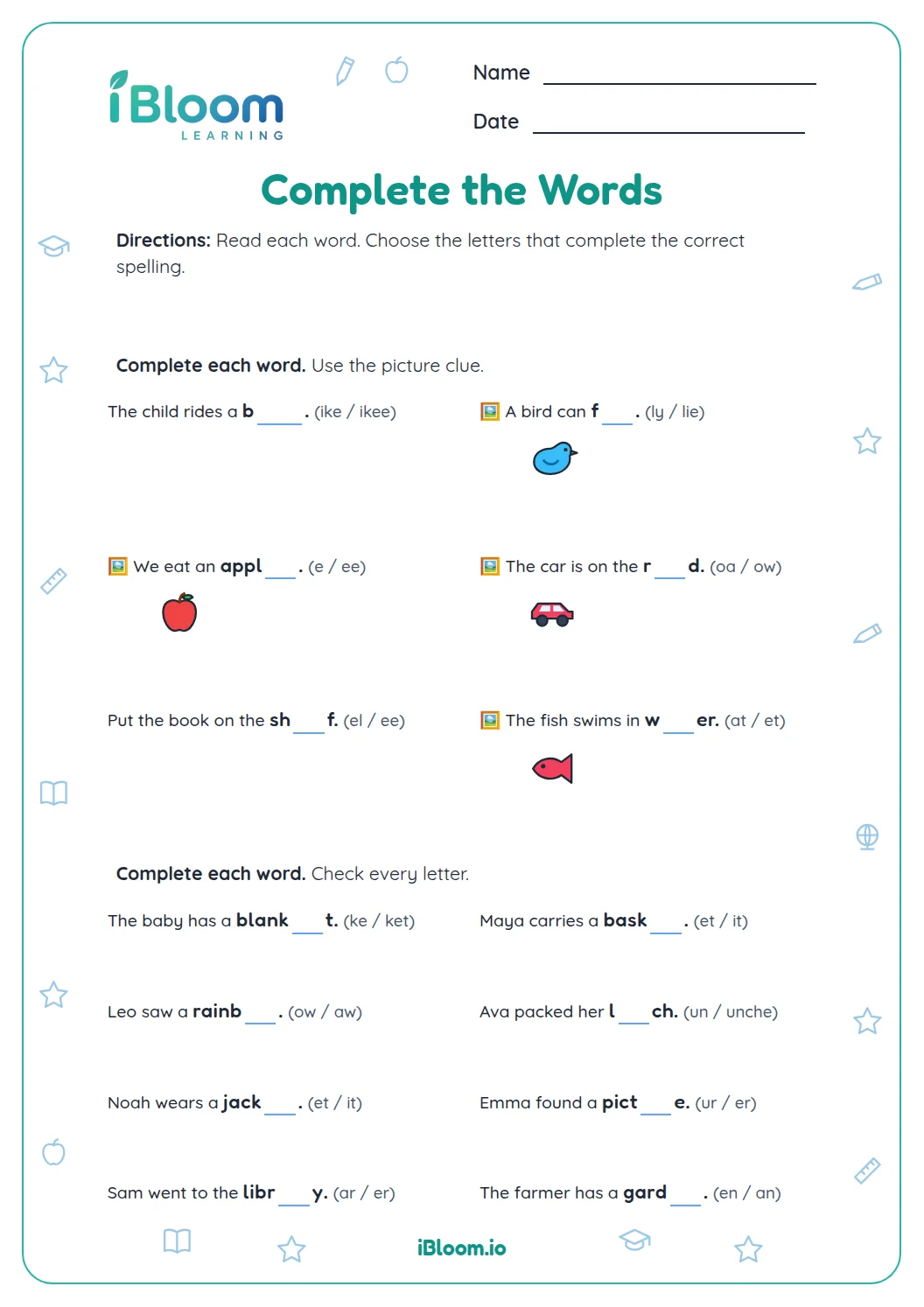
This Grade 2 spelling printable provides 16 items: two trace models followed by 14 missing-letter words. Children work with beginning and ending consonant patterns, blends, and vowel spellings, then reread each completed word. The layout replaces a single request to write “cat” with targeted pattern practice and tracing. It aligns with CCSS L.2.2.d for applying learned spelling patterns when writing words.
Aligned to L.2.2.d
How does tracing prepare a spelling check?
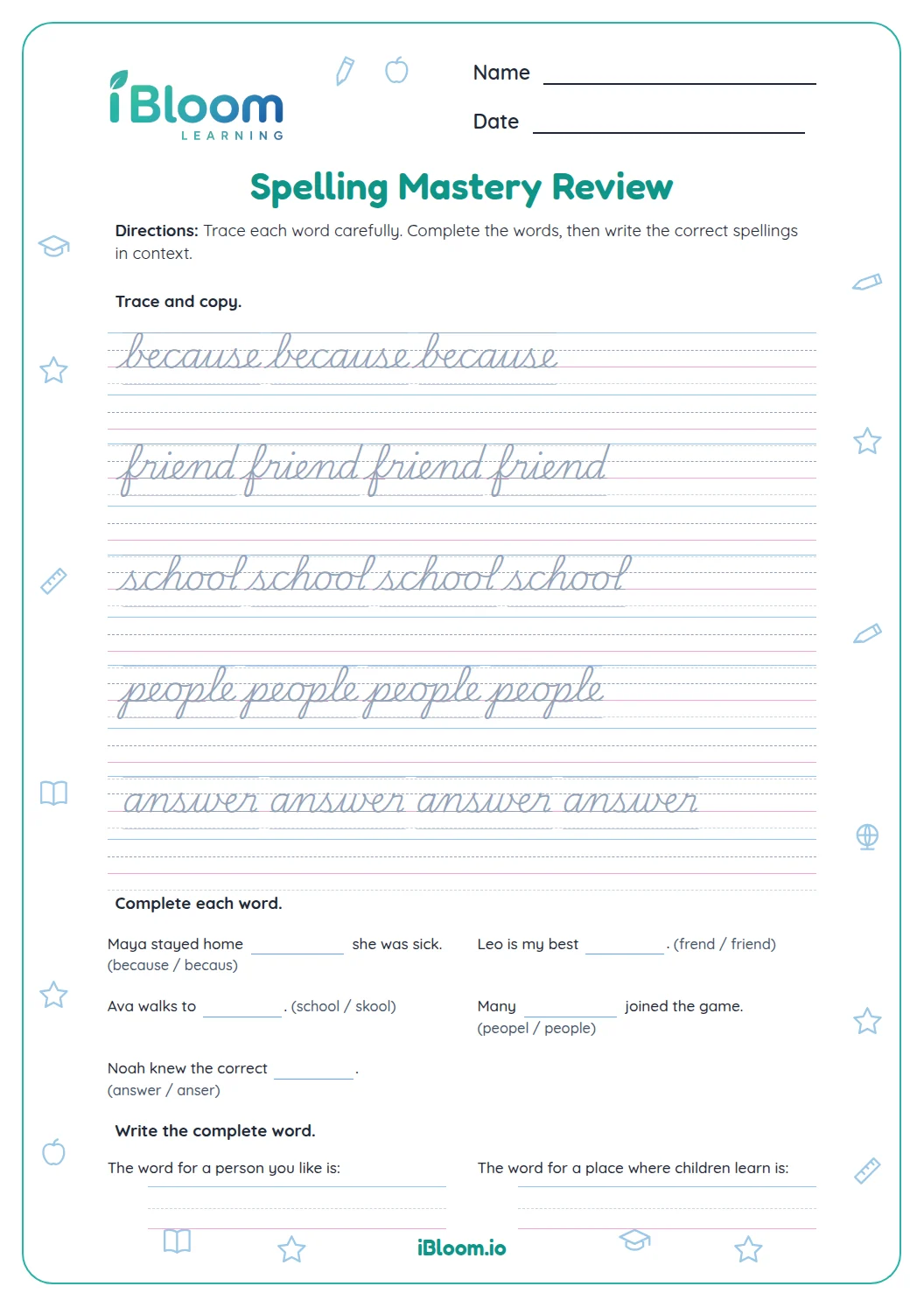
Trace each model while saying its sounds. The first two prompts model ship and when, helping learners attend to the letter sequence before completing more words.
- 1Trace: ship
- 2Say the sounds slowly.
- 3Notice sh at the beginning.
How can a missing letter reveal a pattern?
Look at the letters around the blank and think about the word’s sound. In “bl___ck,” the missing letter is a, making black. Read the finished word to see whether its spelling matches the intended sound.
What should learners check before finishing?
Reread every completed word from left to right. Notice familiar chunks such as sh, ch, br, and vowel teams. The last section mixes these patterns so children review the whole word rather than guessing from one letter.
How to use this worksheet
- 1Trace each model slowly and say the word.
- 2For each blank, read the partial word and say its sounds.
- 3Write one letter to complete the spelling.
- 4Reread the full word and check its familiar pattern.
- 5Use the key to review any word that needs another try.
Common mistakes and quick fixes
The mistake
Guessing from the first letter alone
The fix
Read all the letters around the blank and say the whole word.
The mistake
Choosing a letter that makes a different word
The fix
Check that the completed spelling matches the word’s sounds and pattern.
The mistake
Skipping a reread
The fix
Read each finished word once more from beginning to end.
Common Core alignment
This worksheet practices the following Common Core skill.
Use conventional spelling patterns when writing words.
On this sheet: The completion items practice applying familiar consonant and vowel spelling patterns.
Show the official wordingHide the official wording
Generalize learned spelling patterns when writing words (e.g., cage → badge; boy → boil).
What to practice next
Make more practice
Further reading
Questions parents and teachers ask
What does the blank stand for in each word?
Each completion item leaves out one letter, and the visible letters form part of the target word. Learners use the word’s sounds and spelling pattern to fill the blank, then reread it. The first two items are complete words to trace as models.
Which patterns appear in the worksheet?
The words include consonant teams such as sh and ch, blends such as br and bl, and vowel spellings in float, smile, and dream. Each blank asks for one letter. Rereading the whole word helps children check that the completed spelling fits.
Why are two words tracing models?
The first two items let children trace and reread ship and when before completing words independently. Tracing draws attention to letter order, while the remaining 14 items ask learners to supply one missing letter and check the finished spelling. Have the learner point to the relevant detail before using the answer key to check.
Should children say the word aloud?
Saying the word can help connect the sounds to its spelling, especially when a word contains a consonant pair or vowel pattern. Children should also look at all the visible letters and reread the completed word. Have the learner point to the relevant detail before using the answer key to check.
How many words are practiced?
There are 16 items: two trace models and 14 words with one missing letter. They are arranged in three parts, moving from tracing to completion and then pattern review. The answer key lists the completed spellings. Have the learner point to the relevant detail before using the answer key to check.
What should I do if a child writes a different letter?
Ask the child to read the full word and compare its sounds with the letters on the page. Then check the target spelling in the answer key and reread the word together. This supports noticing the letter pattern instead of guessing from the first letter alone.