






About this worksheet
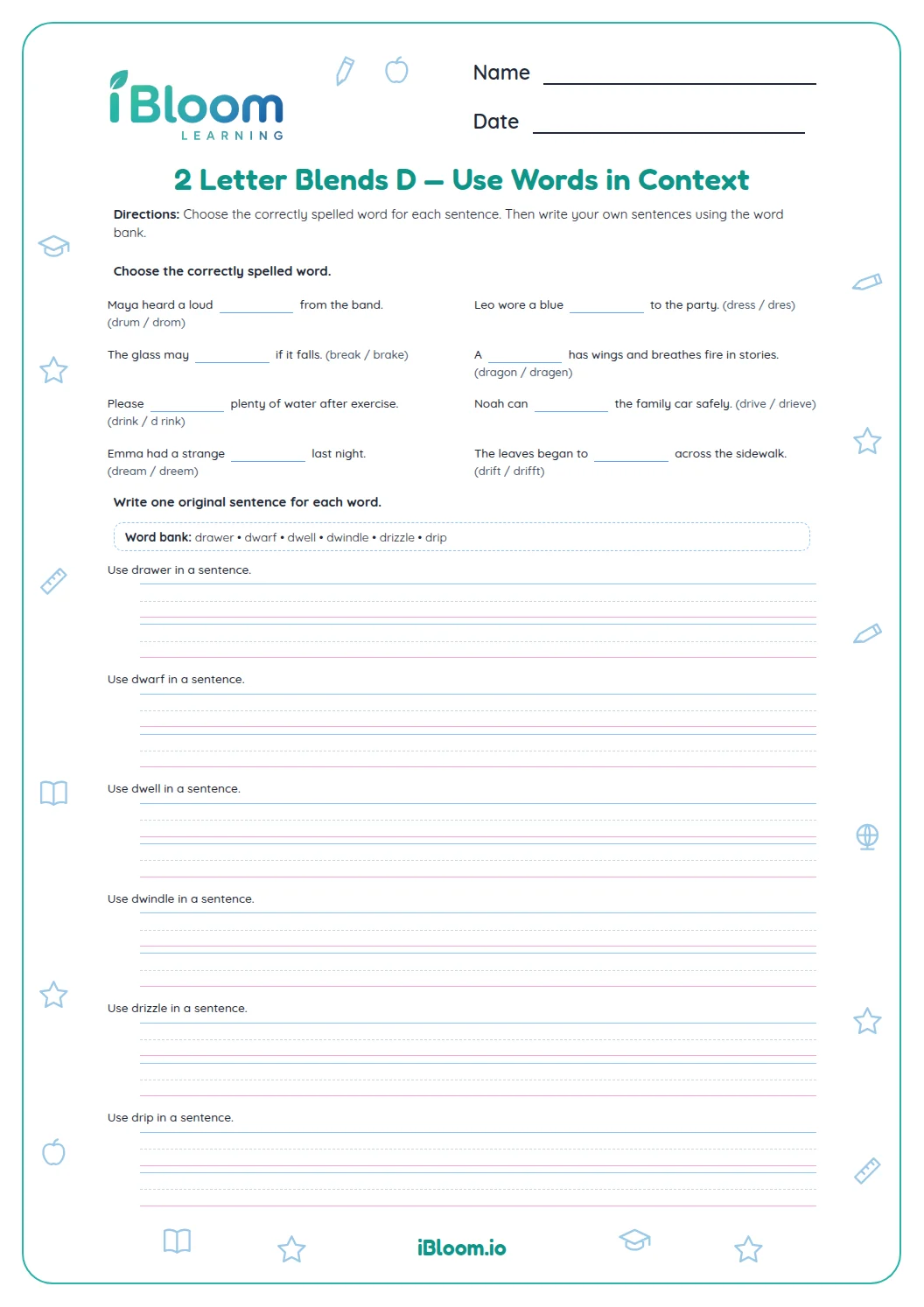
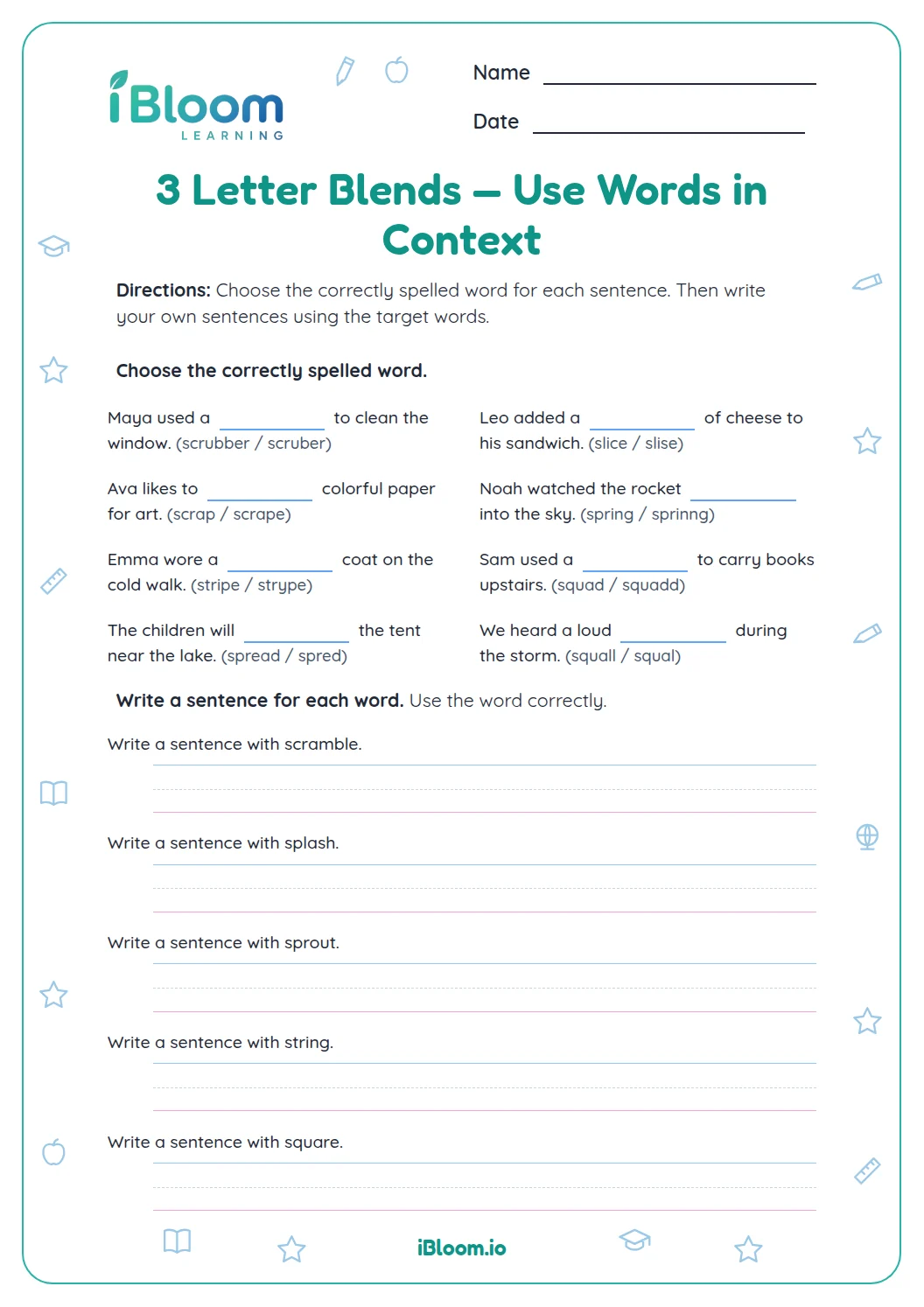
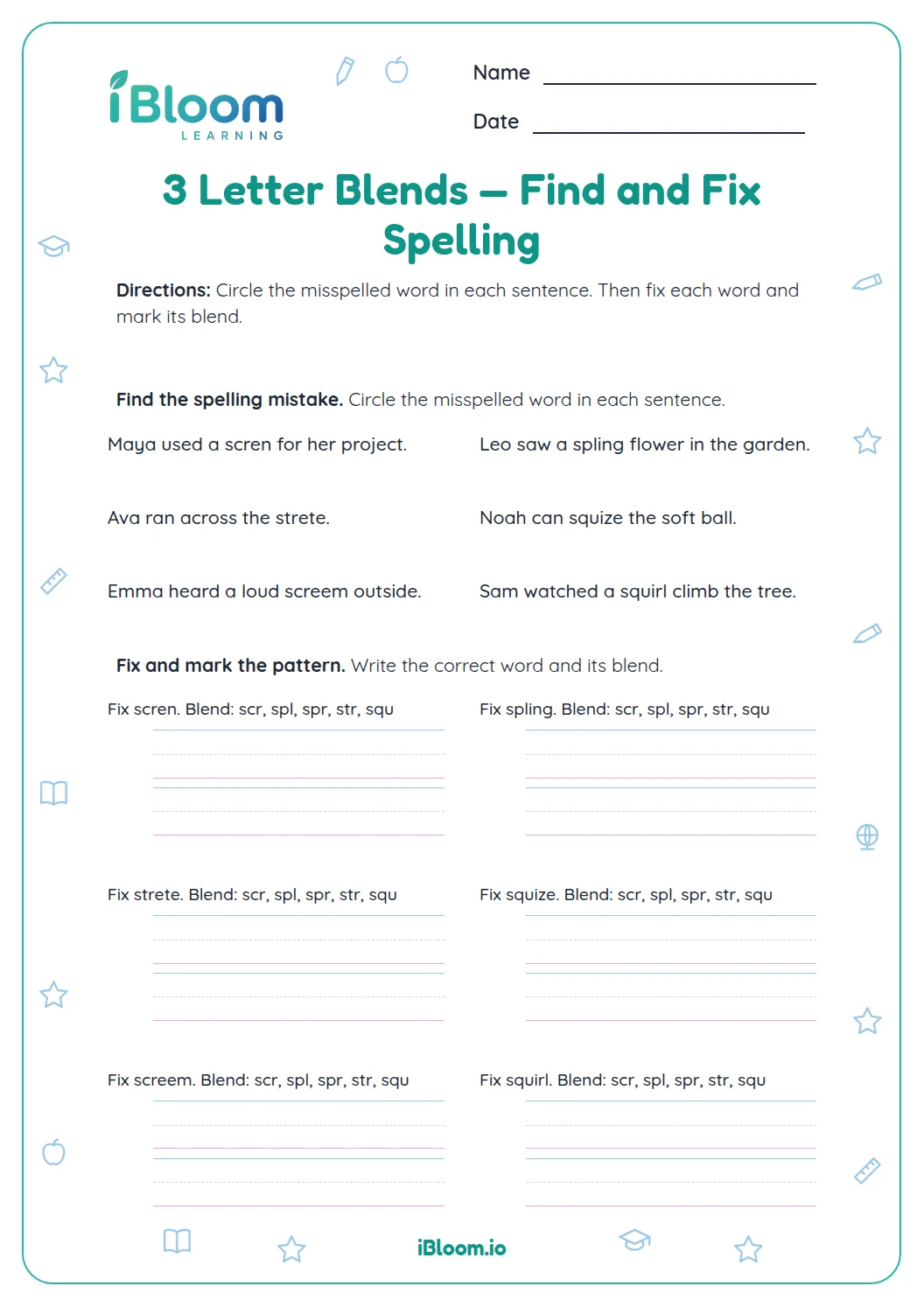
This Grade 4 spelling worksheet practices words beginning with dr and dw. Twelve context sentences ask children to spell a word, then six multiple-choice questions check spelling and meaning. The practice supports accurate spelling of grade-appropriate words in CCSS L.4.2.d; a separate answer key is included.
Aligned to L.4.2.d
How can a sentence help with spelling?
A context clue tells what a word means, while the beginning sounds help narrow the spelling. In “A faucet may ___ one drop at a time,” the meaning points to drip.
- 1Clue: A faucet may ___ one drop at a time.
- 2Word: drip
- 3Blend: dr
How do you check a D-blend spelling?
Read both consonants at the start. The dr words begin with d followed by r; the dw words begin with d followed by w. Then check that the rest of the word matches its meaning.
What is included?
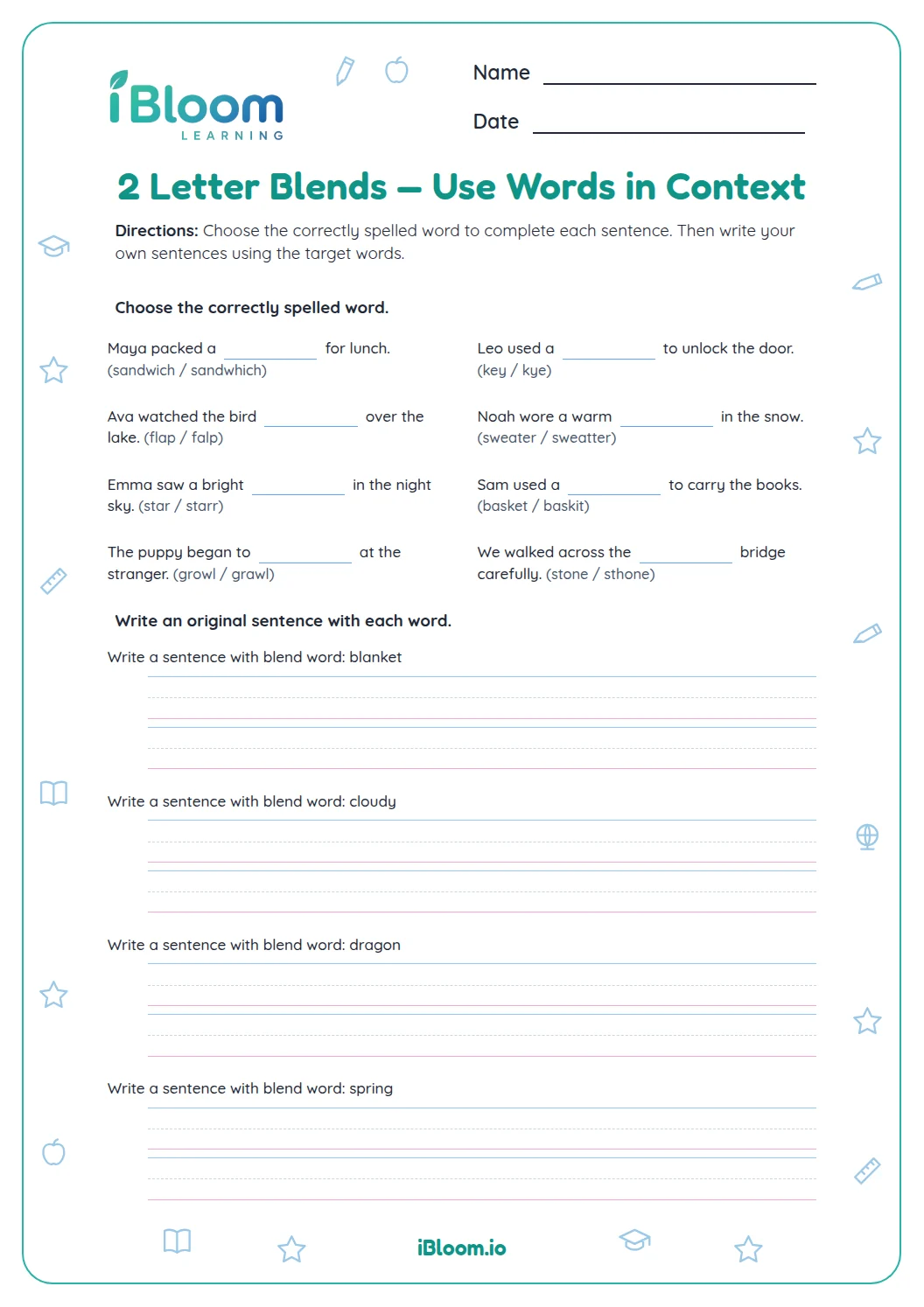
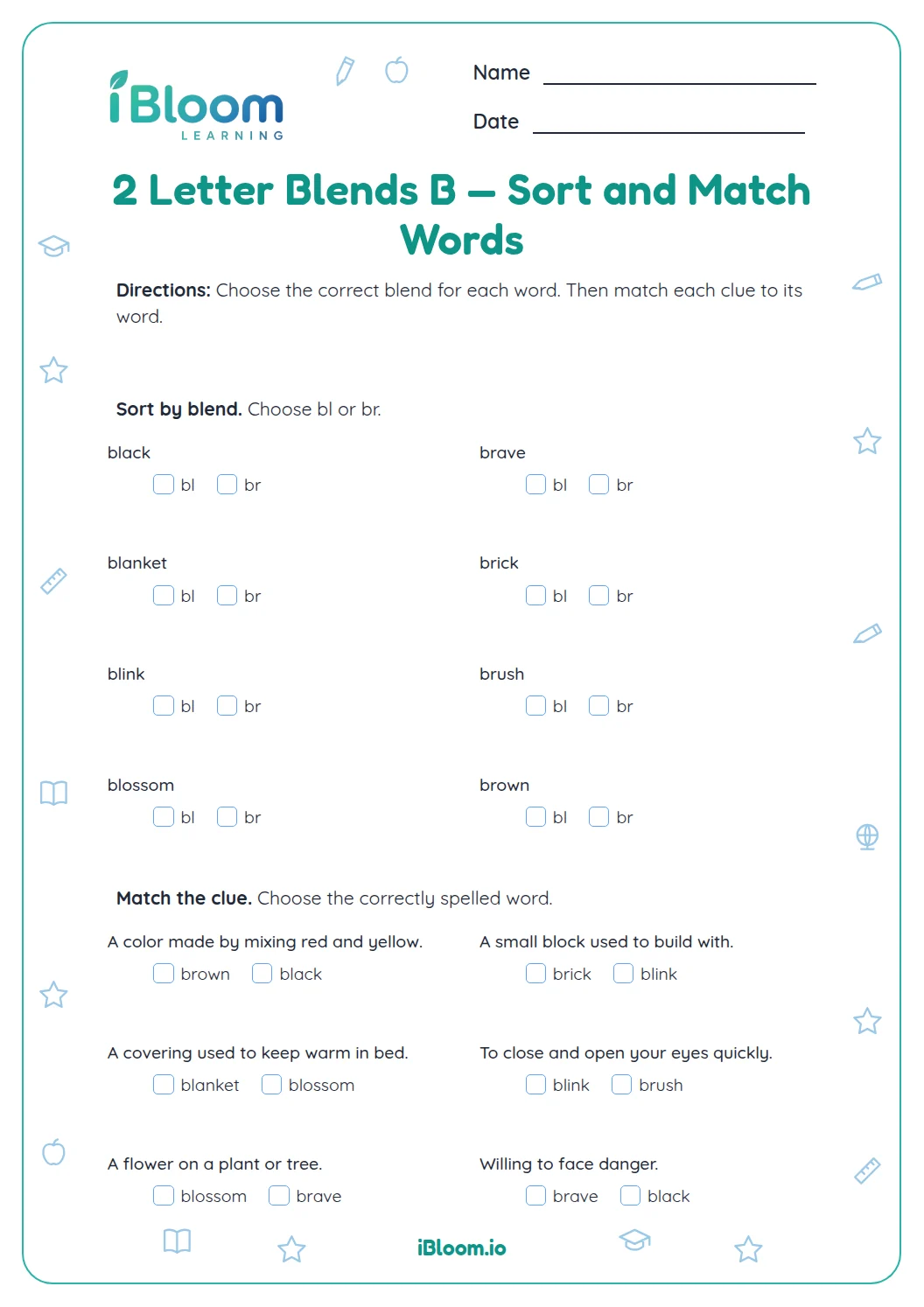
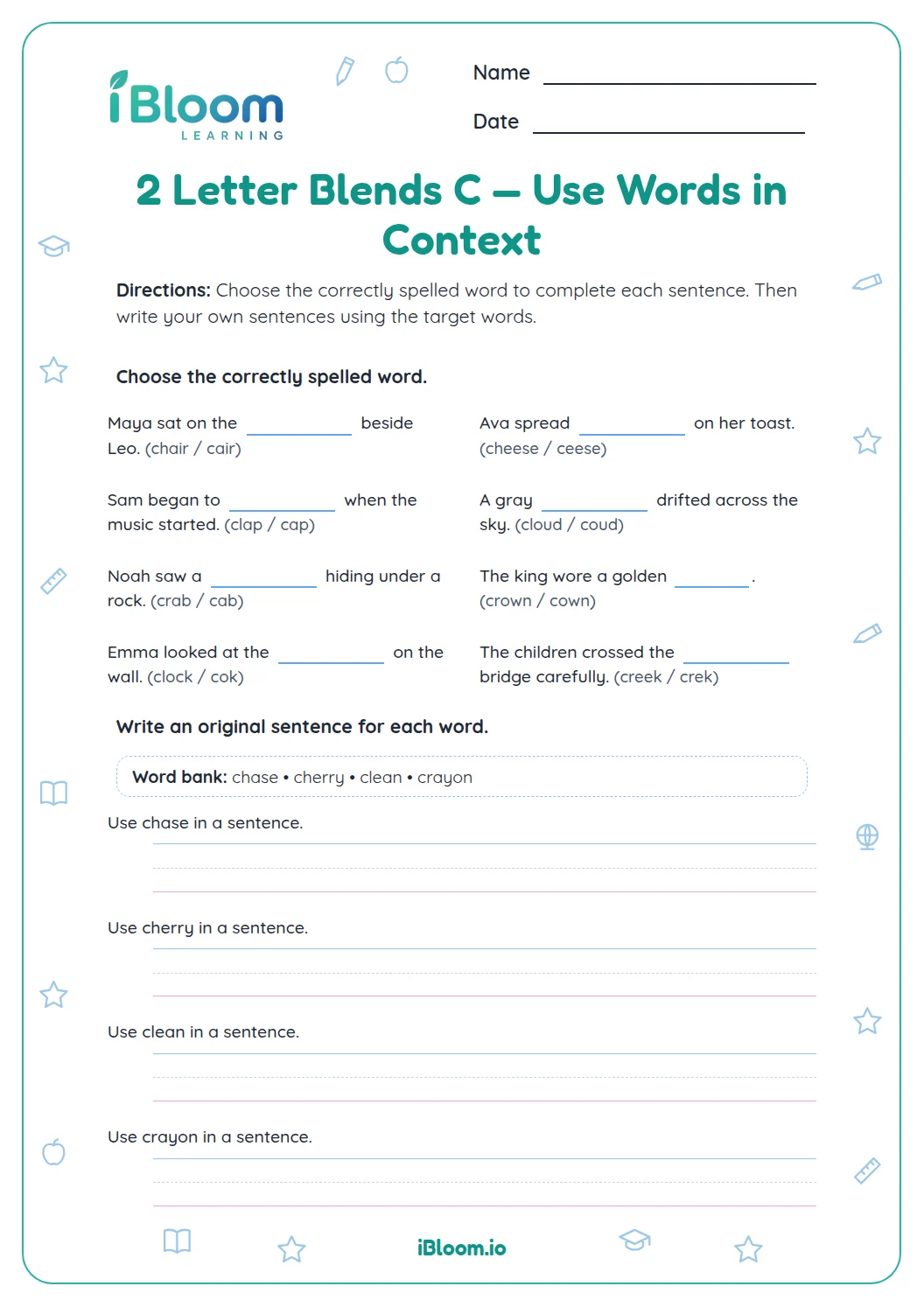
Twelve context clues prompt spelling from meaning. Six multiple-choice items check recognition and context use. The answer key provides the target spelling for every item.
How to use this worksheet
- 1Read the entire clue before writing.
- 2Say the word slowly and listen for both beginning sounds.
- 3Write dr or dw first, then complete the rest of the word.
- 4Reread your spelling inside the sentence.
- 5Use the key to correct each word carefully.
Common mistakes and quick fixes
The mistake
Leaving out the r or w after the d.
The fix
Say the blend slowly and write both consonants before the vowel.
The mistake
Choosing a familiar word that does not fit the sentence.
The fix
Use the meaning clue as well as the spelling pattern.
The mistake
Changing a vowel in a word such as drift or dress.
The fix
Reread the whole word and compare each letter with the spelling you know.
Common Core alignment
This worksheet gives focused practice with the standard below.
Spell grade-appropriate words correctly.
On this sheet: Children spell grade-appropriate words beginning with the dr and dw consonant blends.
Show the official wordingHide the official wording
Spell grade-appropriate words correctly, consulting references as needed.
What to practice next
Make more practice
Further reading
Questions parents and teachers ask
What does “two-letter D blend” mean here?
A beginning blend has two consonants whose sounds can both be heard. This sheet focuses on d followed by r or w, as in drift and dwell, and asks children to spell or recognize words that begin with those patterns.
How many words are in the spelling practice?
There are 18 questions: 12 context sentences with a word to spell and six multiple-choice spelling or meaning checks. The answer key provides the target answer for each question, so children can review both their written spellings and their choices.
Why are there sentence clues?
The sentence supplies a meaning clue, so the intended word fits both the spelling pattern and the context. In “A faucet may ___ one drop at a time,” drip completes the sentence. Children should reread the full sentence after spelling the word.
Which beginning blends should children notice?
Look for d followed by r, as in drum, or d followed by w, as in dwarf. Both letters appear at the start of each target word, and the context helps identify which word is intended. Read the beginning aloud before writing.
Can children use the answer key to practice again?
Yes. After checking the key, cover it and try missed words again using the original context clues. Saying the word and writing its first two consonants can reinforce the spelling pattern. Then reread the completed sentence to check that the word fits.
What standard is listed?
CCSS L.4.2.d addresses spelling grade-appropriate words correctly, consulting references as needed. This worksheet asks children to spell and recognize words with the dr and dw beginning blends, using context to identify the intended word. The answer key lets them check each spelling and revisit any missed item.