

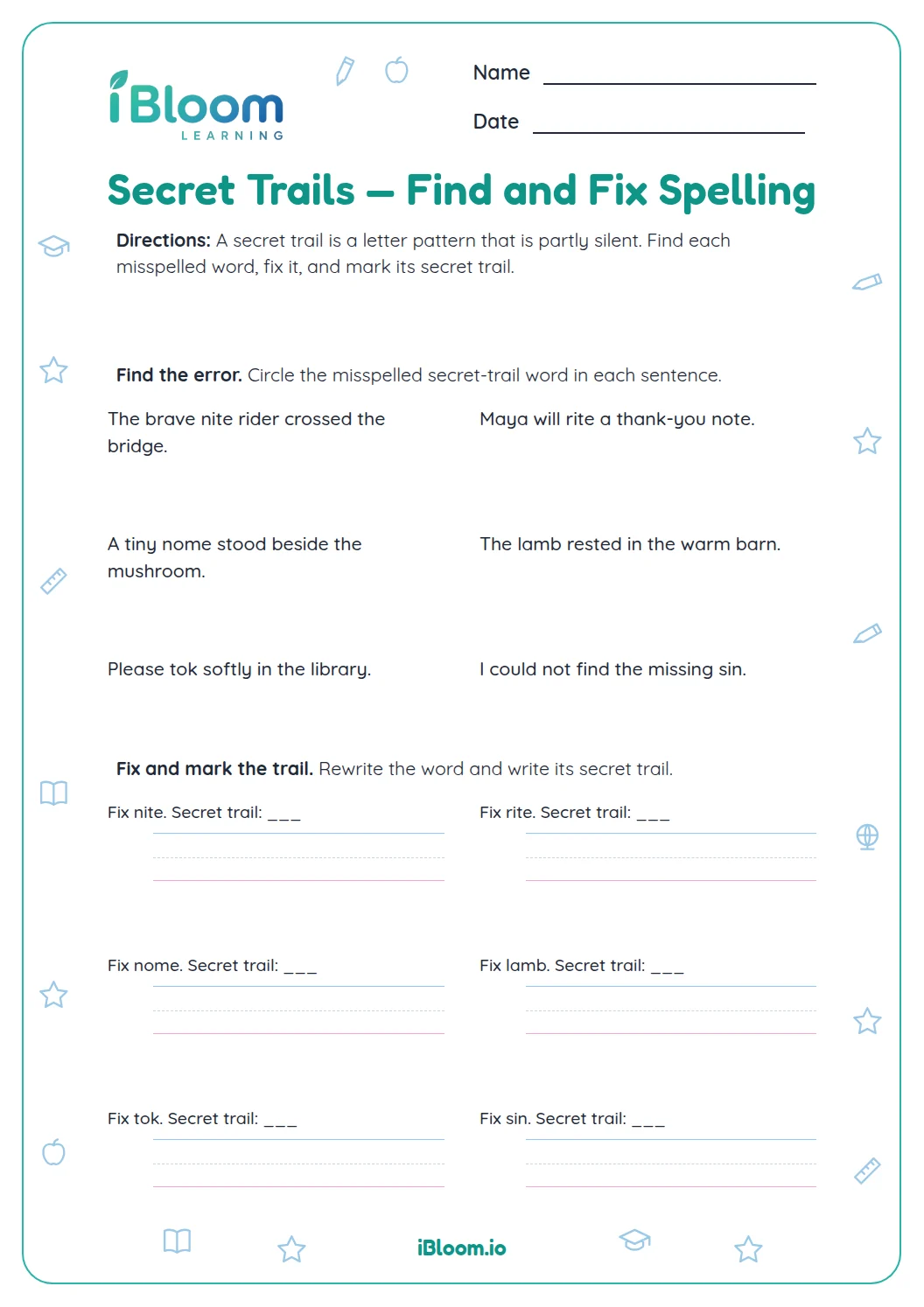


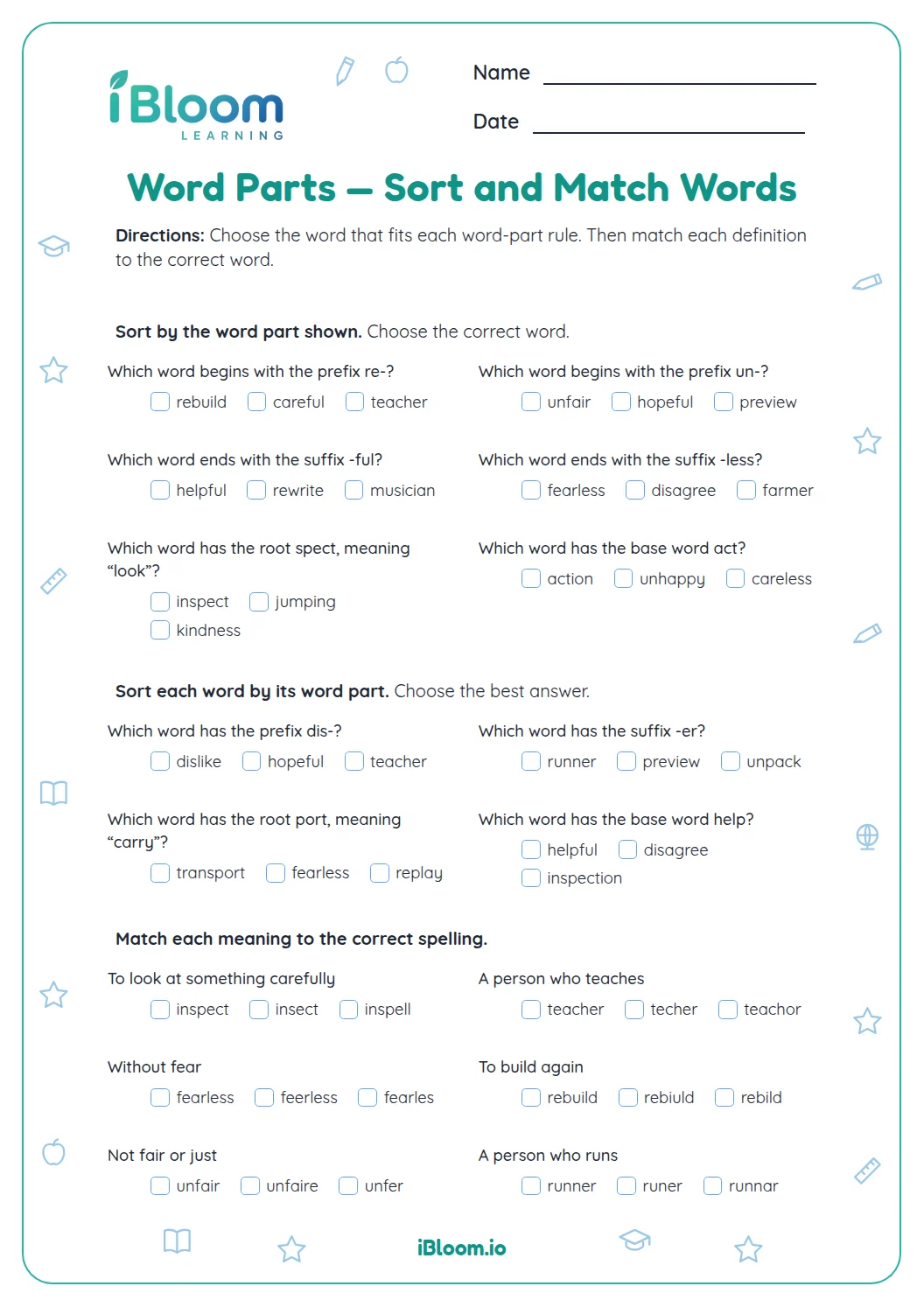
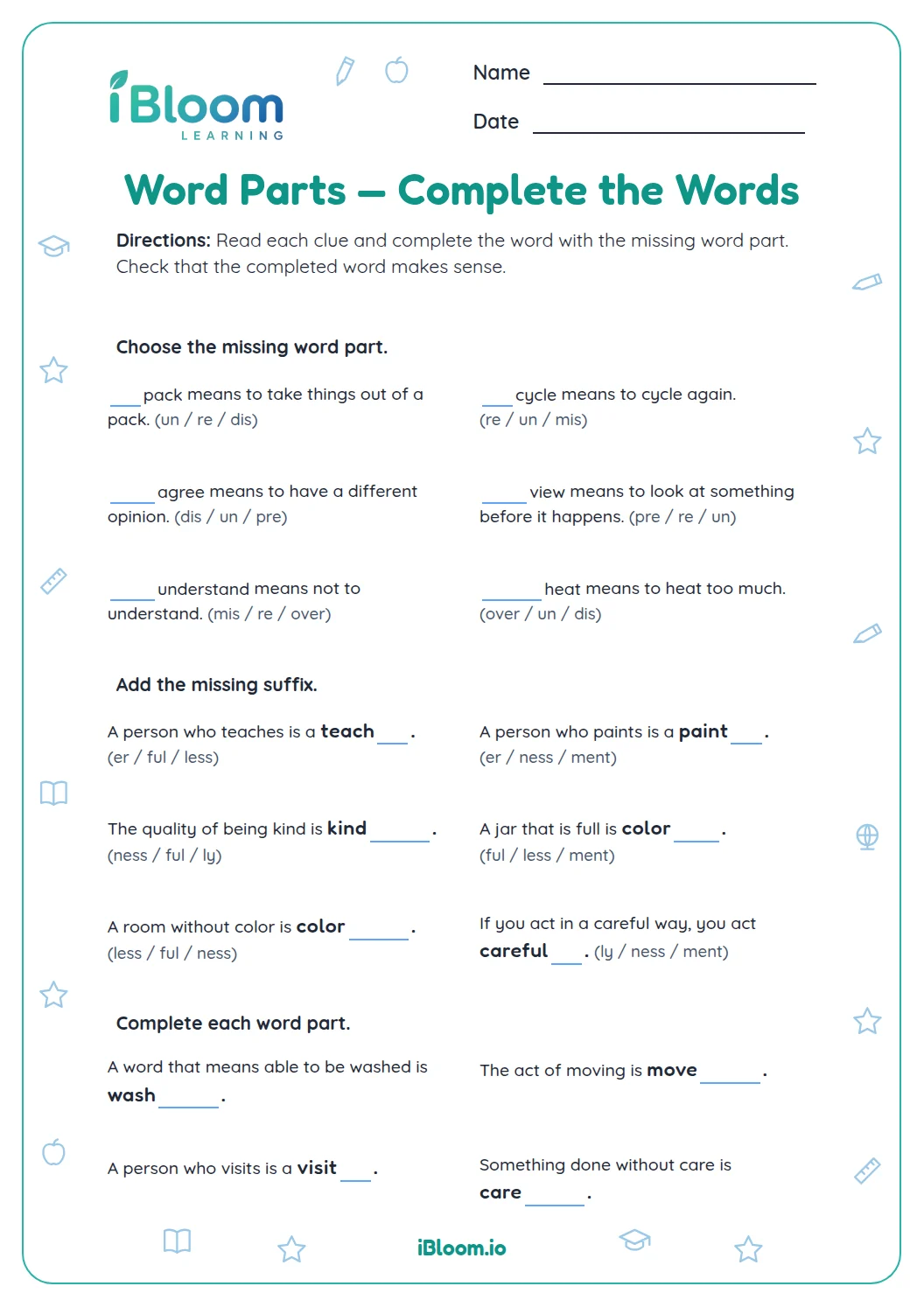

About this worksheet
This worksheet gives the “Secret Trails” word practice a clear job: students use a sentence or definition clue to find the correctly spelled word. Part A places each word in a sentence; Part B puts the meaning clue first. The choices include plausible spelling slips, so students need to read each word closely.
Aligned to L.5.2.e
What is on this worksheet?
Fourteen three-choice questions use a small set of outdoor and general words. Part A places each target word in a complete sentence. Part B gives a short meaning clue, so the student must connect the definition to the correctly spelled choice.
- Part A: complete a sentence with a correctly spelled word.
- Part B: use a definition clue to select the matching word.
How should students check a word?
First ask what meaning the sentence needs. Then inspect the spelling from beginning to end, including its vowel pattern and final letters. In question 9, the woods context points to a trail, while trial is a different word with a different meaning.
Why use context clues in spelling practice?
Spelling is easier to remember when the word has a job in a sentence. Meaning can rule out a look-alike word, and checking the letters catches a familiar word that has been misspelled. Students should use both checks rather than guessing from sound alone.
How to use this worksheet
- 1Read the full sentence or definition before looking at the choices.
- 2Say each choice aloud and decide which spelling matches the needed meaning.
- 3Check every letter, especially the vowel and ending.
- 4After checking the key, cover the choices and write two missed words from memory.
Common mistakes and quick fixes
The mistake
Picking a word because it sounds right without checking its letters.
The fix
Point to each letter and compare the whole spelling. “Lantern” has e-r-n at the end; a familiar sound can still hide a spelling slip.
The mistake
Choosing a similar-looking word that does not fit the sentence, such as trial for trail.
The fix
Read the sentence again and explain the meaning needed. Hikers follow a path, so trail fits; trial means a test or court proceeding.
Common Core alignment
This page practices a Common Core standard for the stated grade.
Check spelling of grade-appropriate words in sentence and meaning contexts.
On this sheet: Check spelling of grade-appropriate words in sentence and meaning contexts.
Show the official wordingHide the official wording
Spell grade-appropriate words correctly, consulting references as needed.
What to practice next
Further reading
Questions parents and teachers ask
What does “use words in context” mean?
It means using the surrounding sentence or a definition to decide which word belongs. The first part gives full sentences, and the second gives a short meaning clue. Students still need to inspect the letters, because context alone does not prove a spelling is correct.
Are the incorrect choices real words?
Some wrong choices are misspellings, while a few are real words with a different meaning. For instance, trail and trial are both words, but hikers follow a trail. Students should check both the sentence meaning and every letter.
Should students use a dictionary?
They can use a dictionary after attempting the page, especially to check words they missed. The worksheet is designed for independent practice first: read the context, choose a likely word, and inspect its spelling. A reference can confirm the answer afterward.
How can students remember a missed spelling?
Have them look closely at the word, say it, cover it, and write it from memory. Then compare the letters. Connecting the word to its sentence, such as a lantern lighting a trail, gives the spelling a useful memory hook.
What should a student do when two choices look similar?
Read the sentence aloud with both choices and explain what each would mean. Then compare the spelling letter by letter. Similar-looking words may differ in meaning, as trail and trial do, so context and spelling both matter when making the final choice.