








About this worksheet
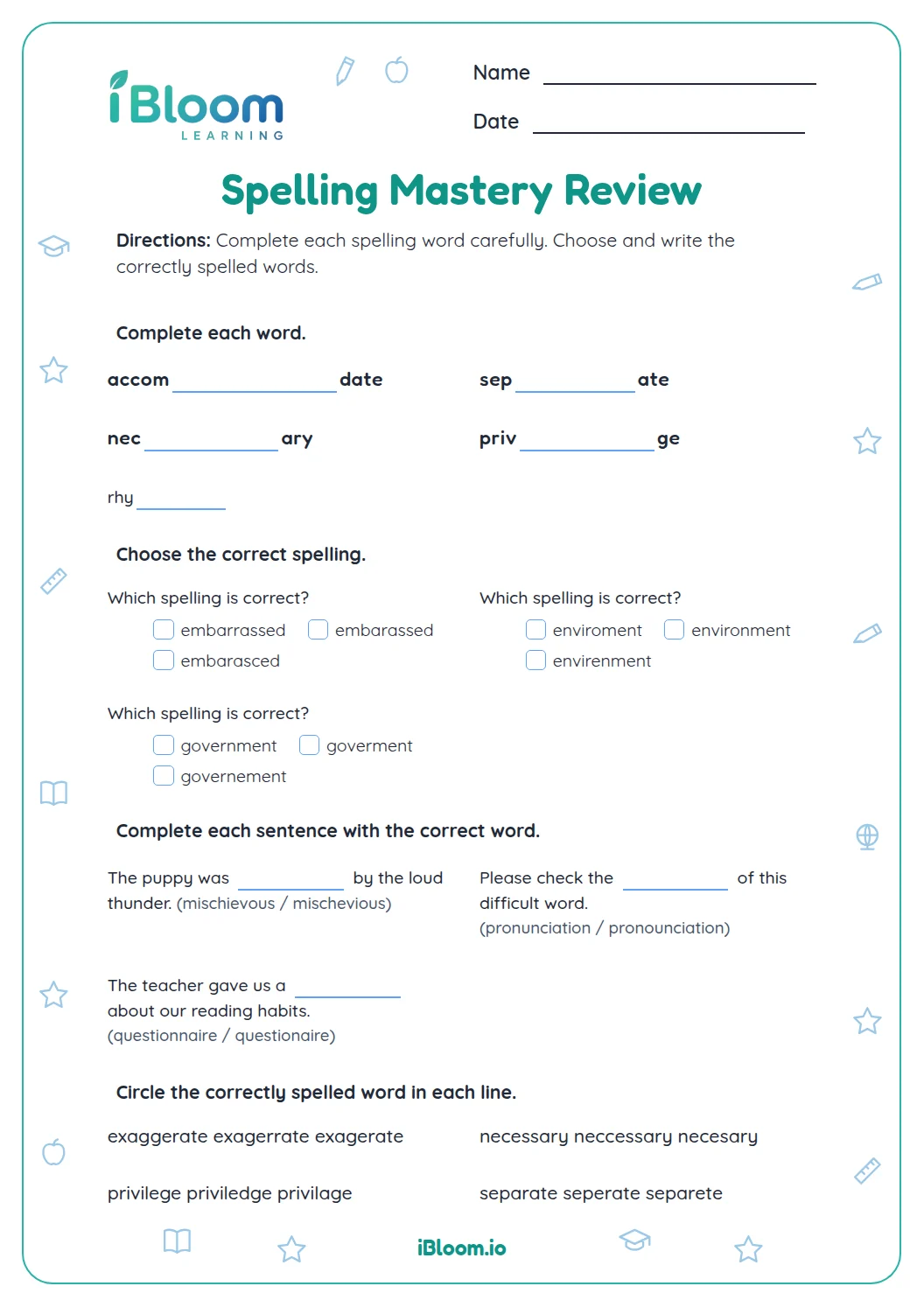
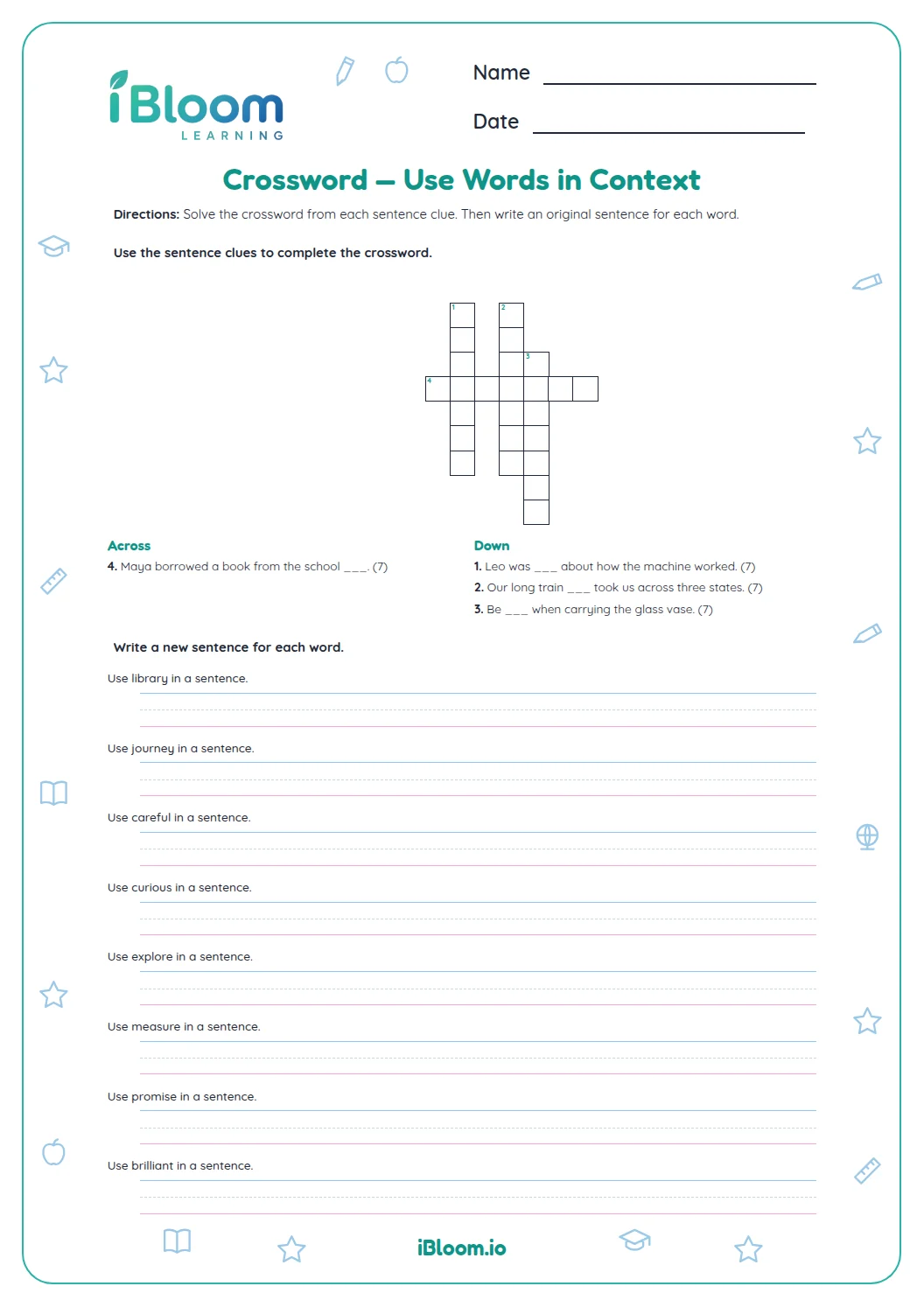
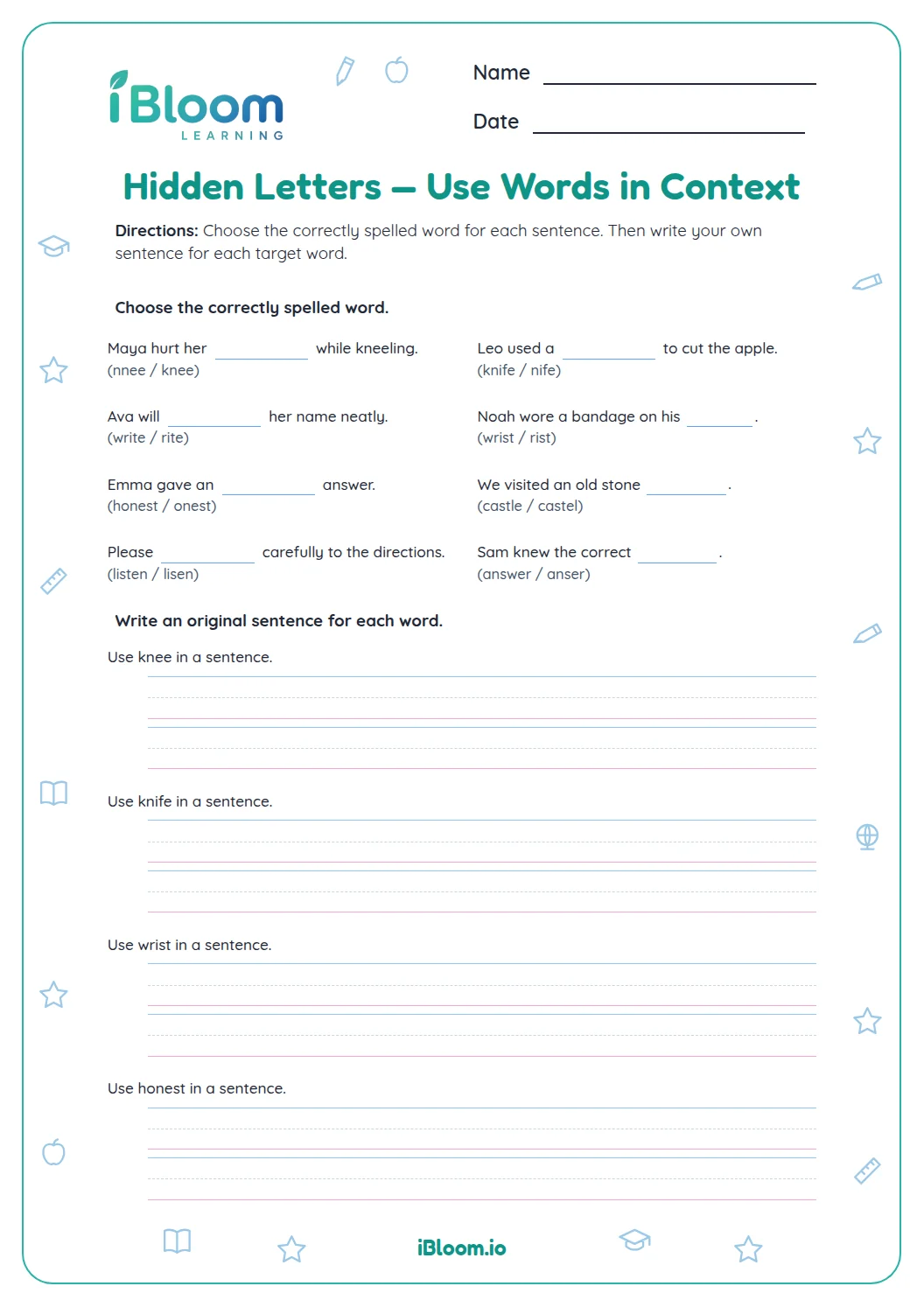
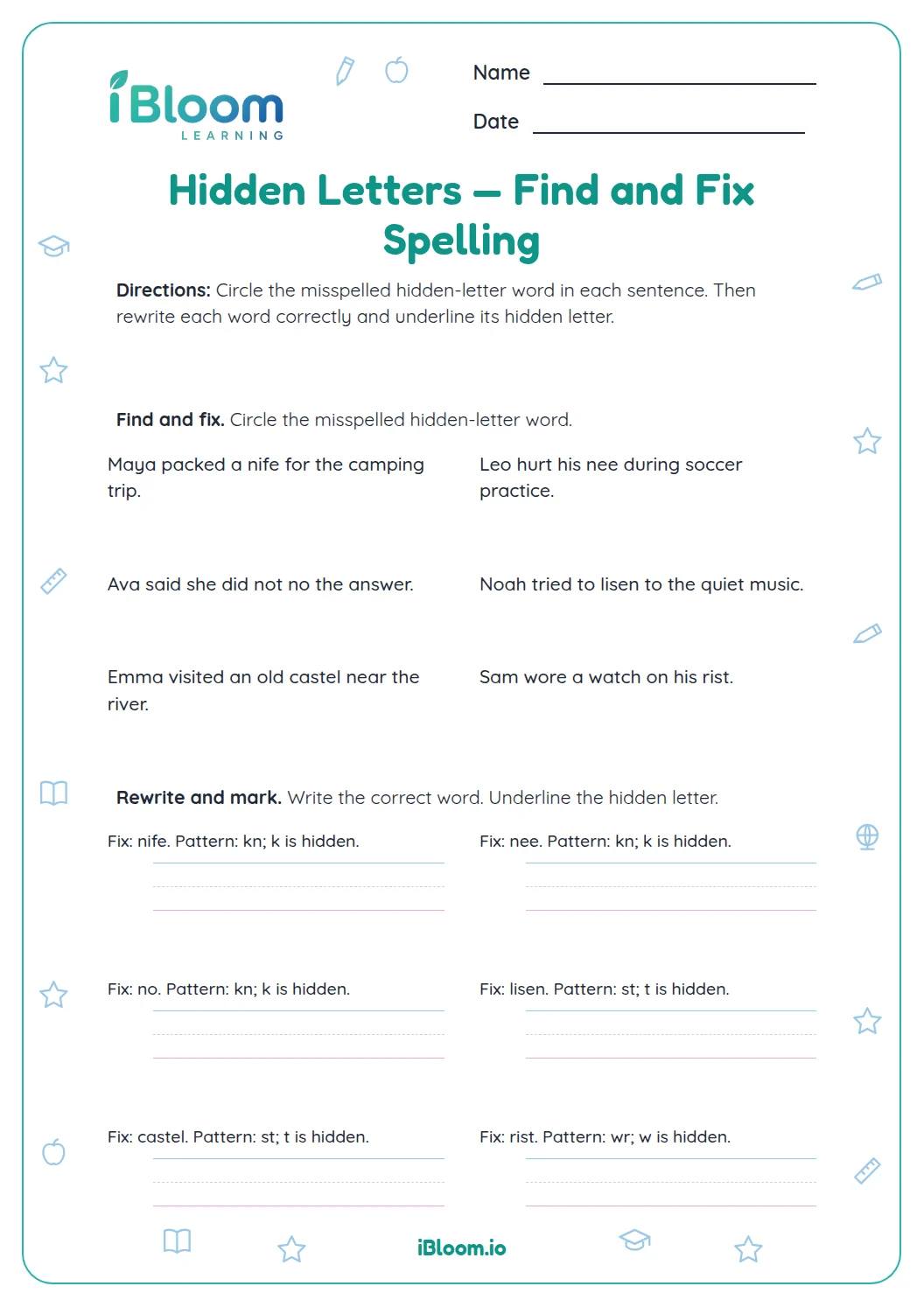
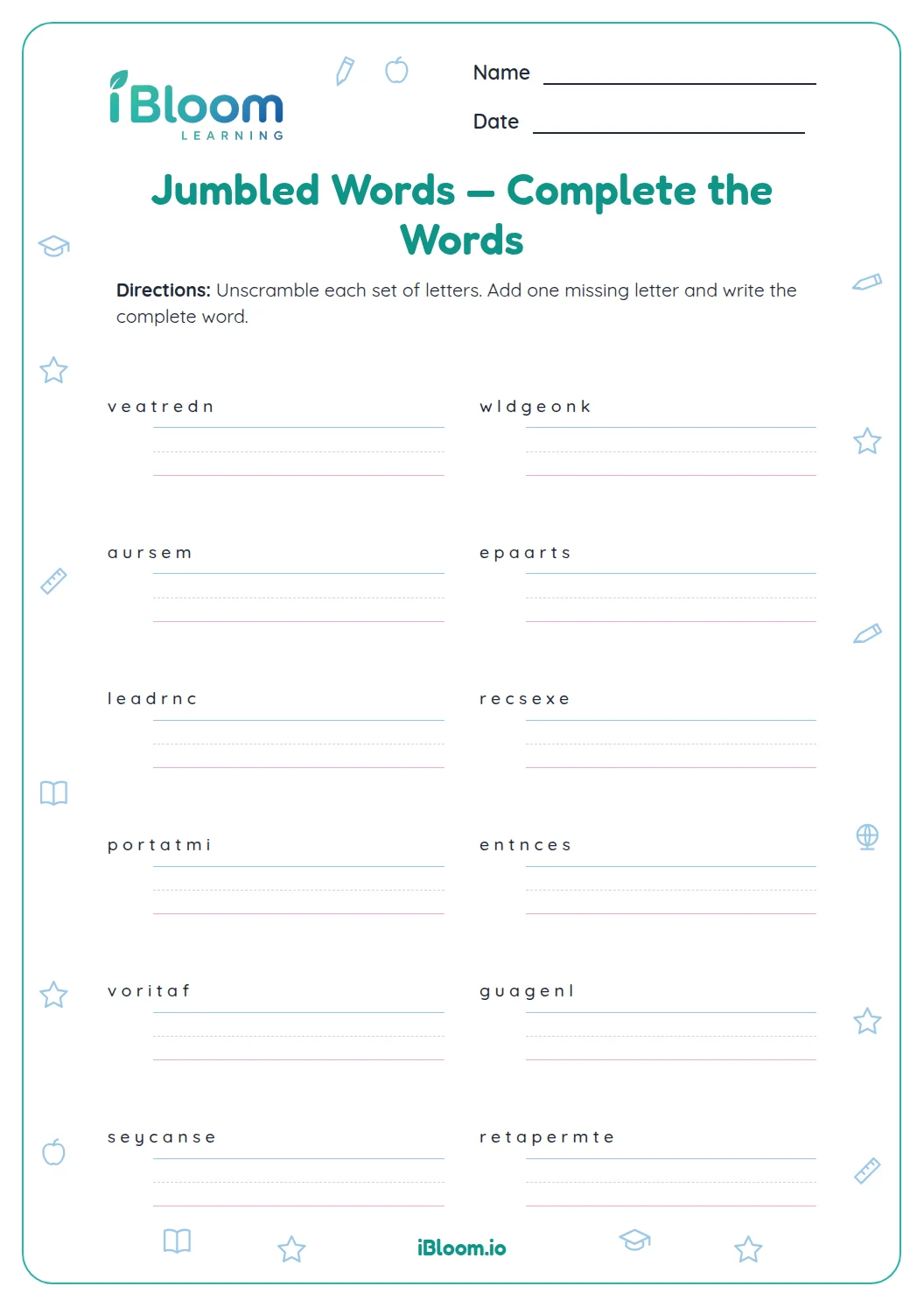
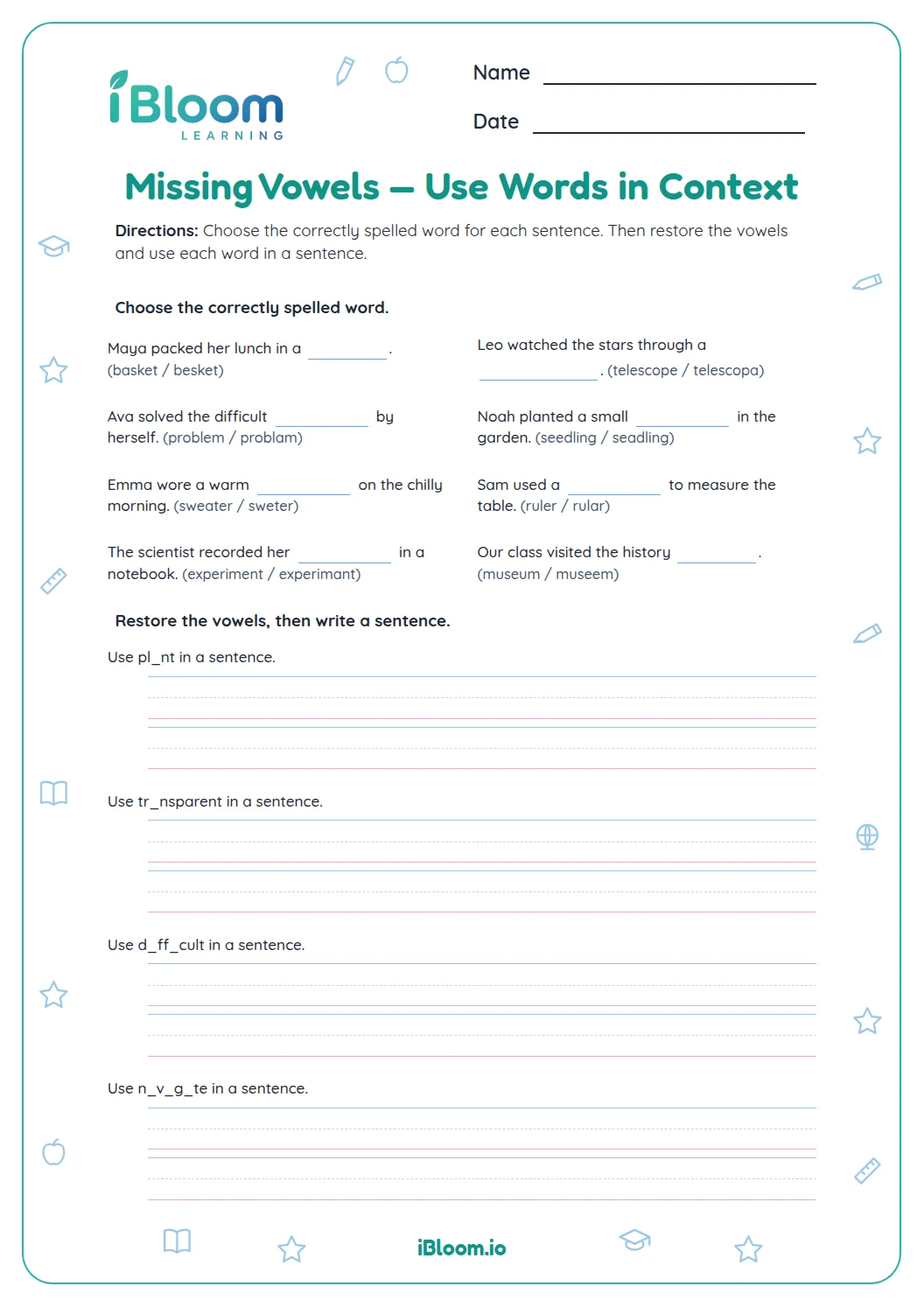
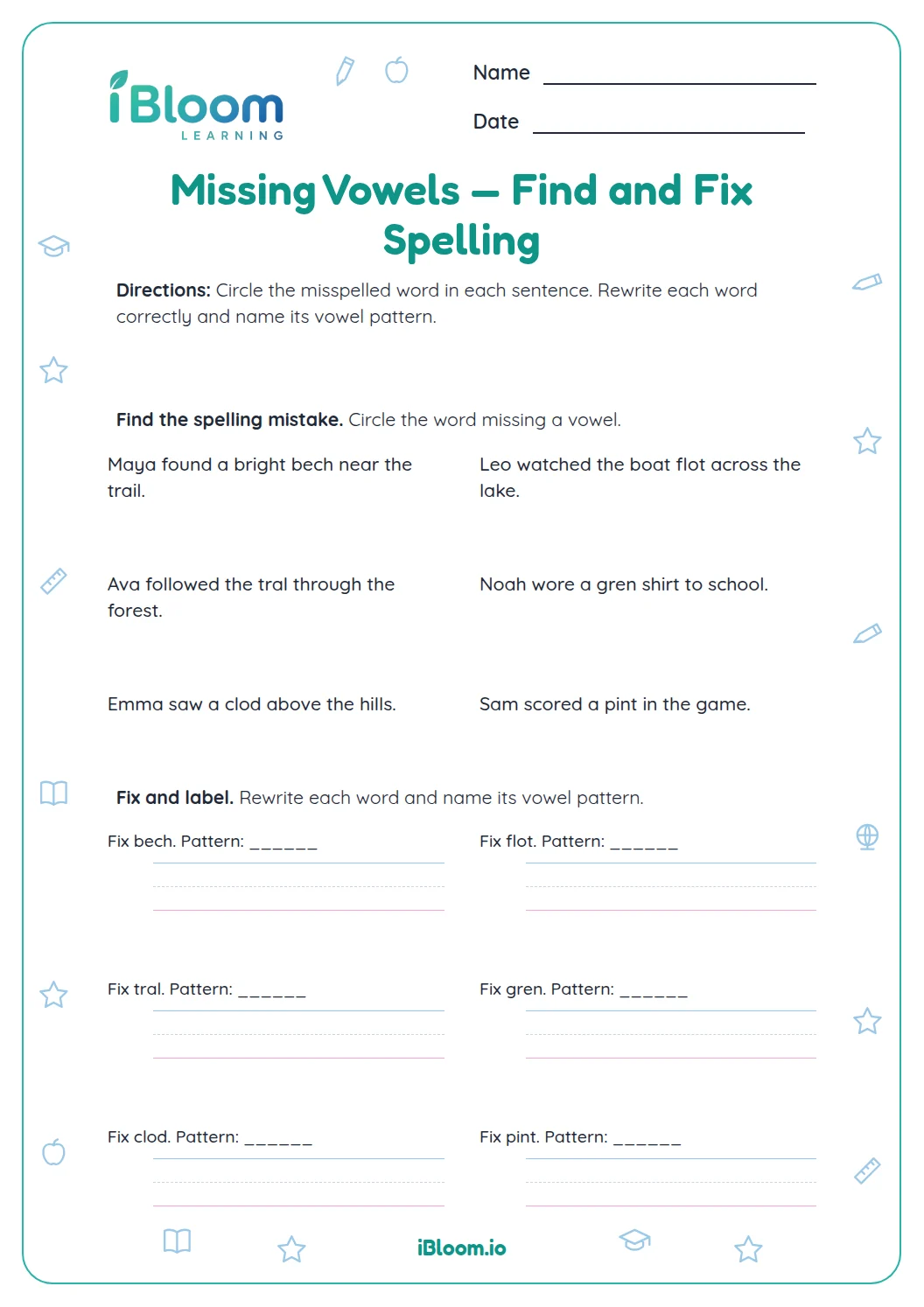
This Grade 5 printable asks students to complete spelling words in context, choose correct spellings, and supply missing letters or letter groups. Across 18 questions, the sheet practices spelling words such as adventure, neighbor, necessary, equipment, and temperature. A separate answer key shows the missing letters or correct choices; the work aligns with CCSS L.5.2.e.
Aligned to L.5.2.e
What will students practice?
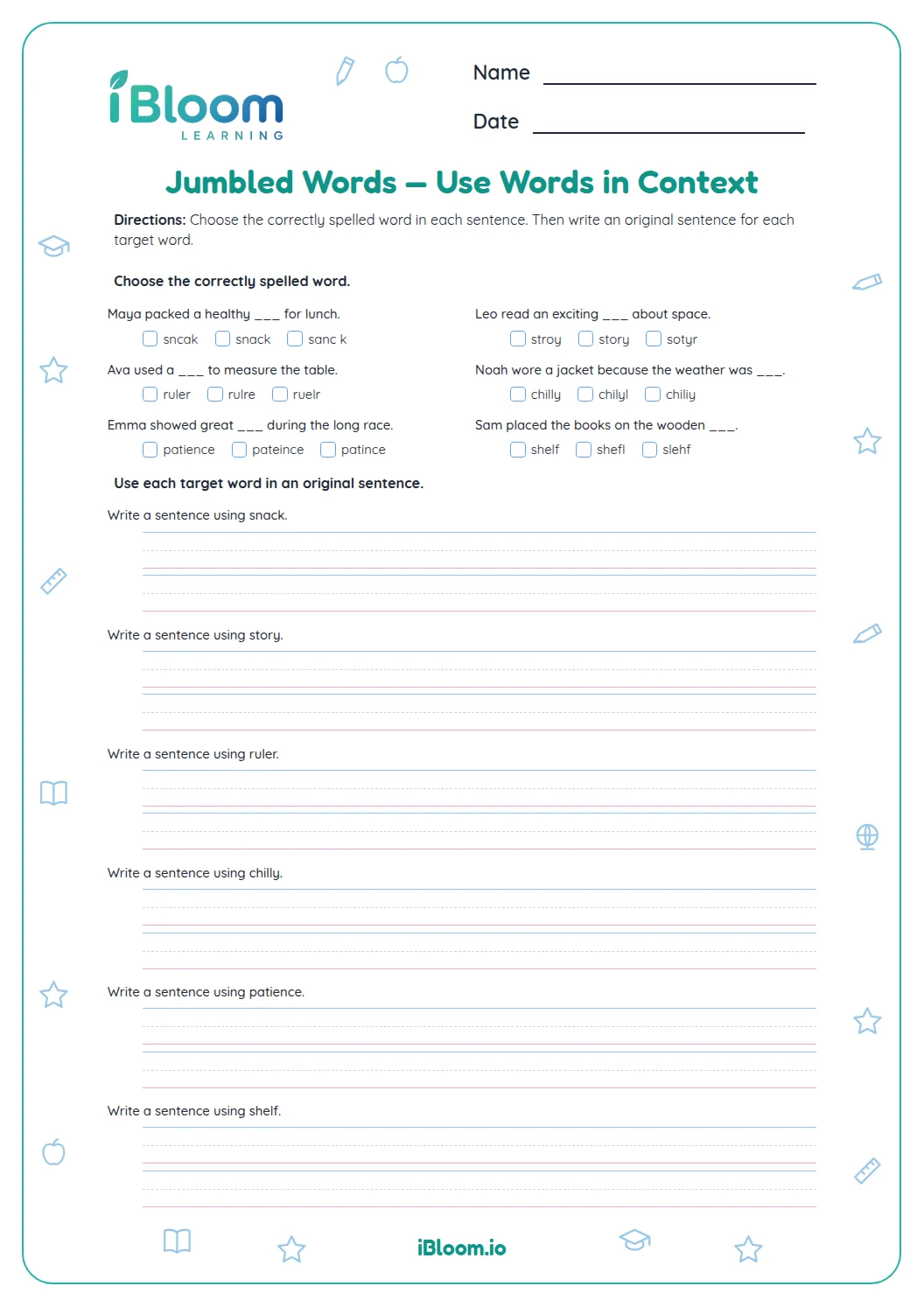
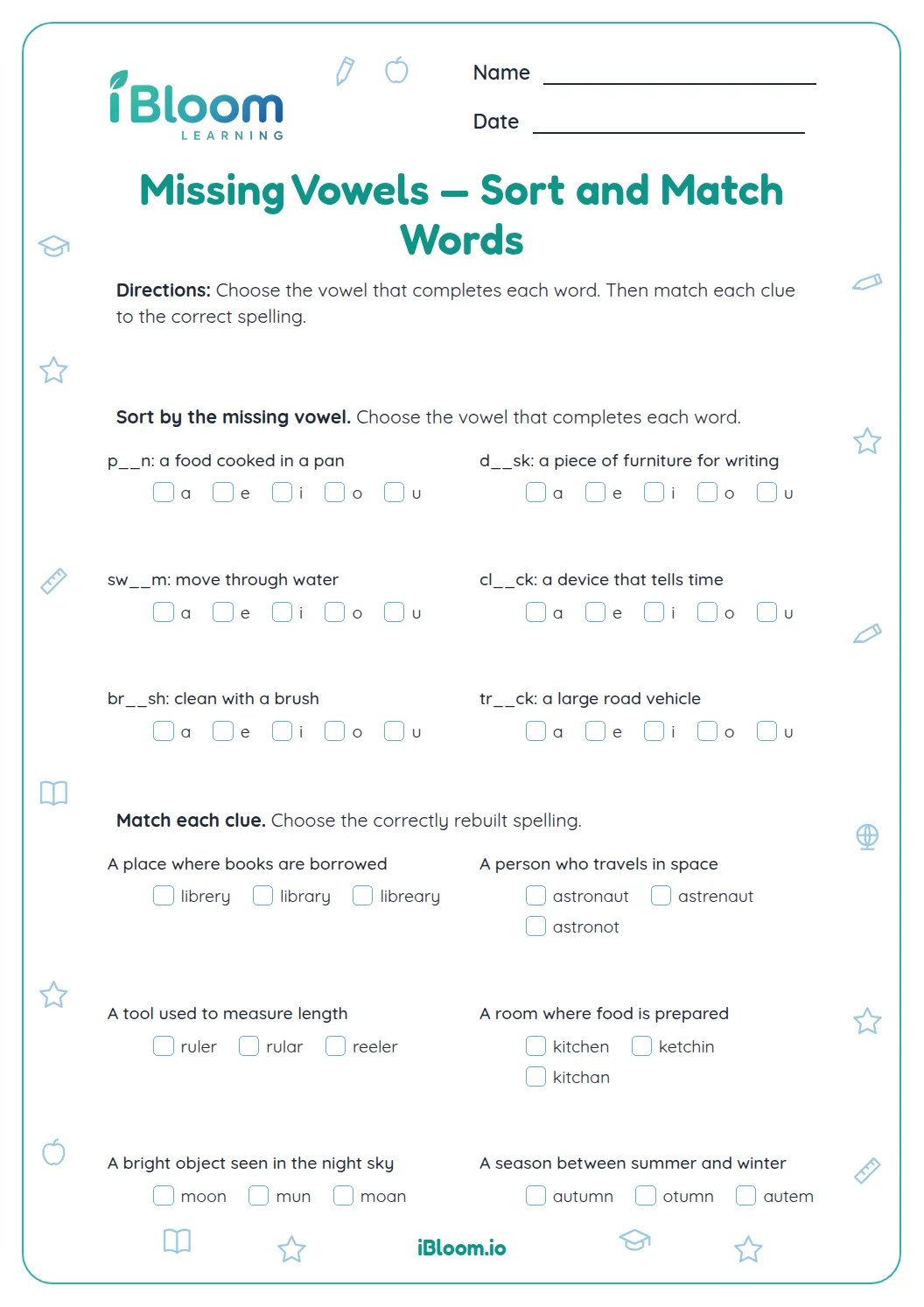
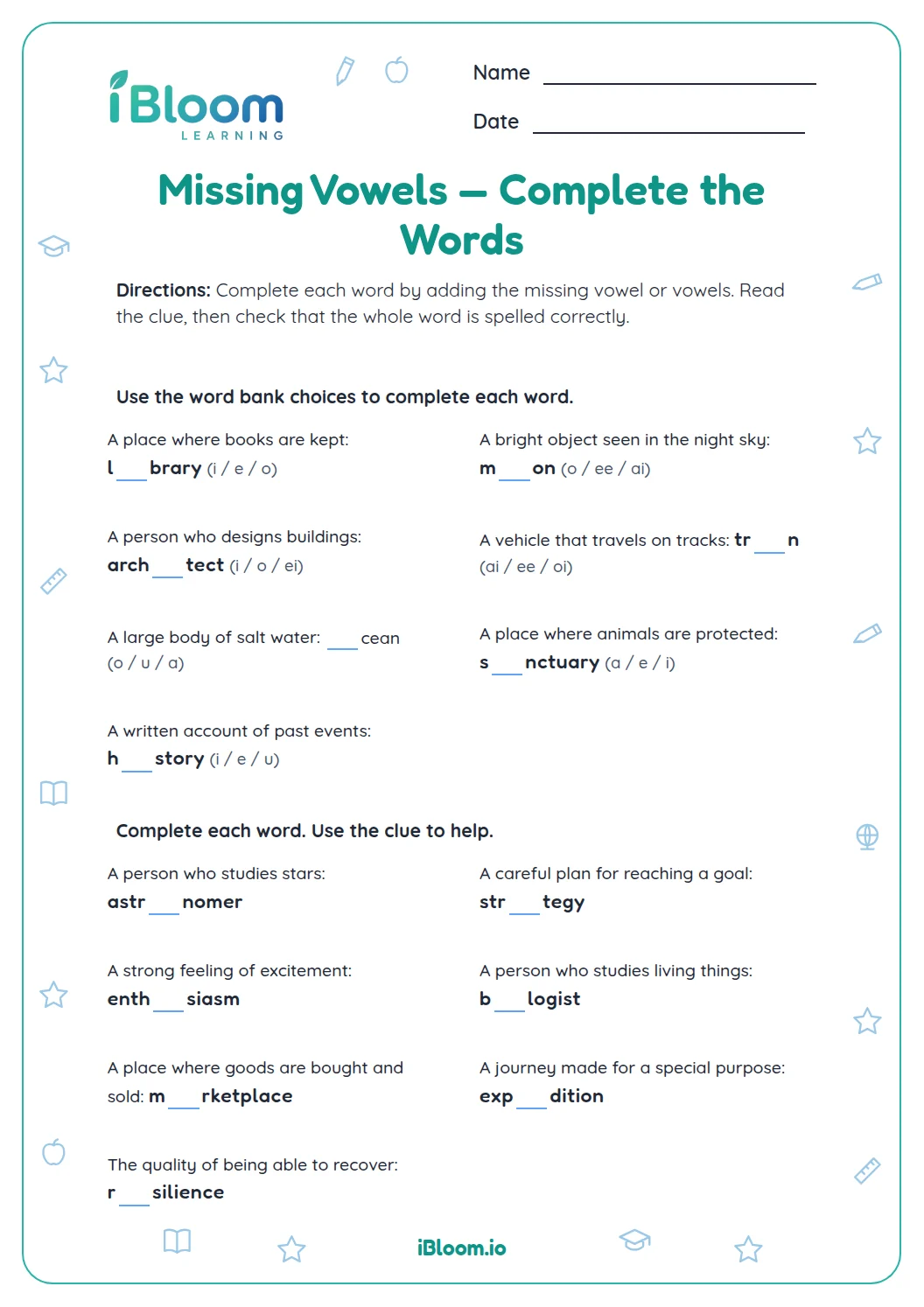
The first six items ask students to complete a word from its spelling pattern. Four multiple-choice items follow, each with one correctly spelled word. The last eight items place a missing letter or letter group inside a sentence.
Context helps identify the target word, while the answer key confirms its spelling. For example, a scientist makes a discovery, and a person can apologize.
- Part A: Complete the Word (6 items)
- Part B: Choose the Spelling (4 items)
- Part C: Check the Word Pattern (8 items)
How can students work through an example?
Question 11 reads “The scientist made a disc___ery.” The sentence points to discovery. Filling the blank with over gives the complete spelling.
- 1Question 11: The scientist made a disc___ery.
- 2Think of a word that fits the meaning and letters.
- 3Answer: over
How can an adult support practice?
Read the whole sentence to identify the intended word, then check each letter in sequence. If the word looks unfamiliar, say it aloud and compare it with the choices or the completed word in the key.
Some blanks need more than one letter. Add only the missing letters, keeping the printed letters in place.
What can students do next?
Use a related worksheet to practice the next small step, then return to this page later for a quick review.
How to use this worksheet
- 1Read the one-sentence directions together.
- 2Complete the first item and explain the clue used.
- 3Work through each part in order.
- 4Check answers with the key after finishing a part.
- 5Redo any missed item and say what changed.
Common mistakes and quick fixes
The mistake
Answering before reading the whole prompt.
The fix
Read it once for meaning, then look for the specific clue.
The mistake
Using a familiar pattern without checking every detail.
The fix
Compare the answer with the prompt one piece at a time.
The mistake
Treating a missed answer as a reason to stop.
The fix
Use the key to find the rule, then try the item again without looking.
Common Core alignment
This page supports the listed Common Core skill through its printed practice.
Spell grade-appropriate words correctly in completed words.
On this sheet: Students supply missing letters to spell grade-appropriate words.
Show the official wordingHide the official wording
Spell grade-appropriate words correctly, consulting references as needed.
What to practice next
Make more practice
Further reading
Questions parents and teachers ask
How many questions are on this worksheet?
There are 18 items in three parts: six word completions, four spelling choices, and eight sentence-based completions. Some blanks need one letter, while others need a letter group. The answer key gives the missing letters or the correct spelling.
Can students use the answer key while working?
Students can complete the page before checking the key. For each blank, first identify the full word from the sentence, then compare the spelling one letter at a time with the answer. This helps catch a spelling slip instead of guessing.
How long should this worksheet take?
About 20 minutes should allow time to read the sentences, complete each word, and review the spelling. Students may work one part at a time, especially when checking longer words such as appropriate, measurement, and imagination. Encourage a final letter-by-letter check.
What if a student misses an item?
Have the student read the entire sentence and name the word it describes. In Question 11, a scientist made a discovery, so the completed word is discovery. Then compare the word’s letters with the answer key and check the printed letters around the blank.
Can I use the worksheet in a small group?
For a small group, students can solve each item independently and then explain which sentence clue helped them identify the word. Compare spellings aloud before checking the key, especially for words with several syllables or letter groups. Ask students to point out the tricky part.