




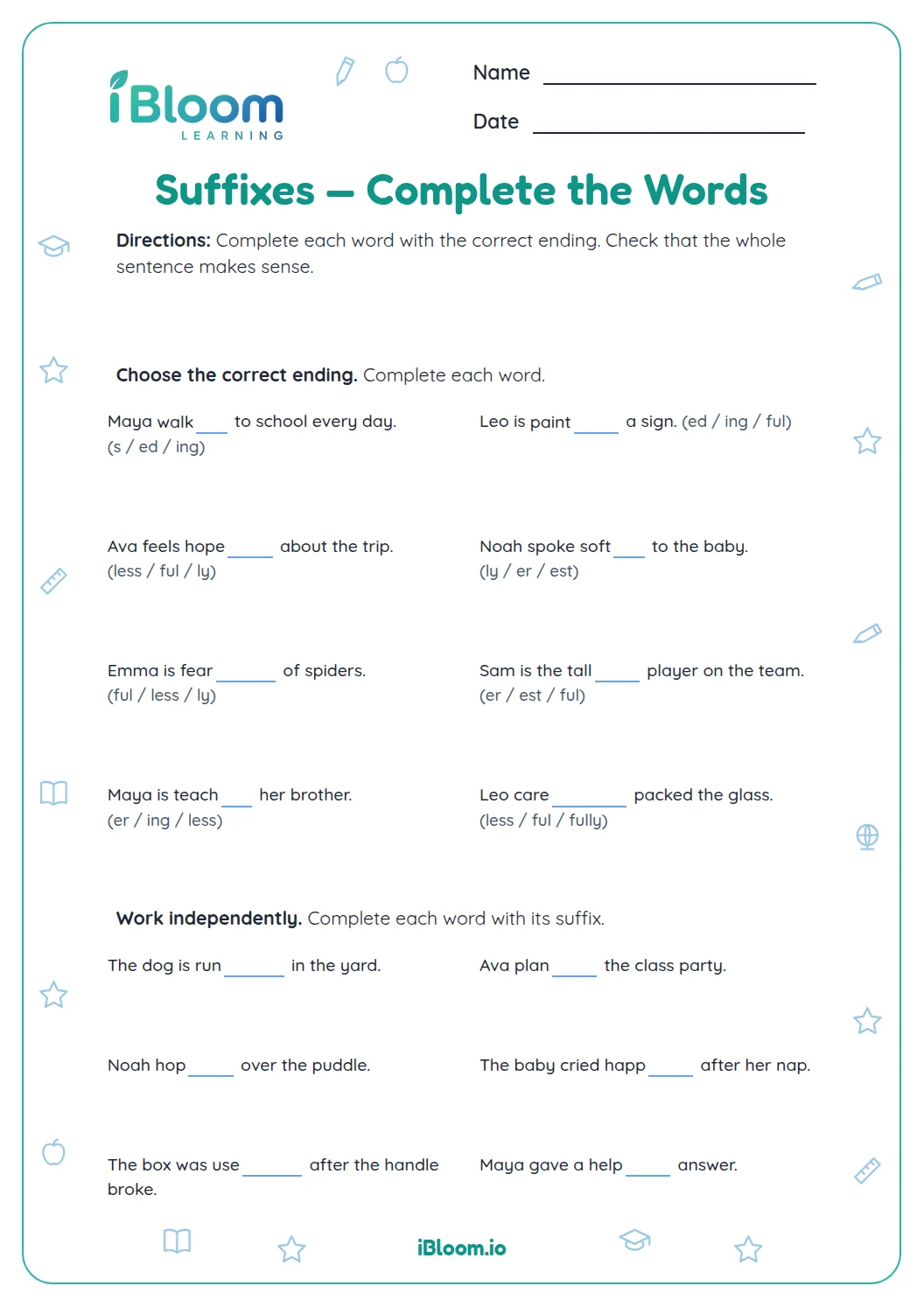
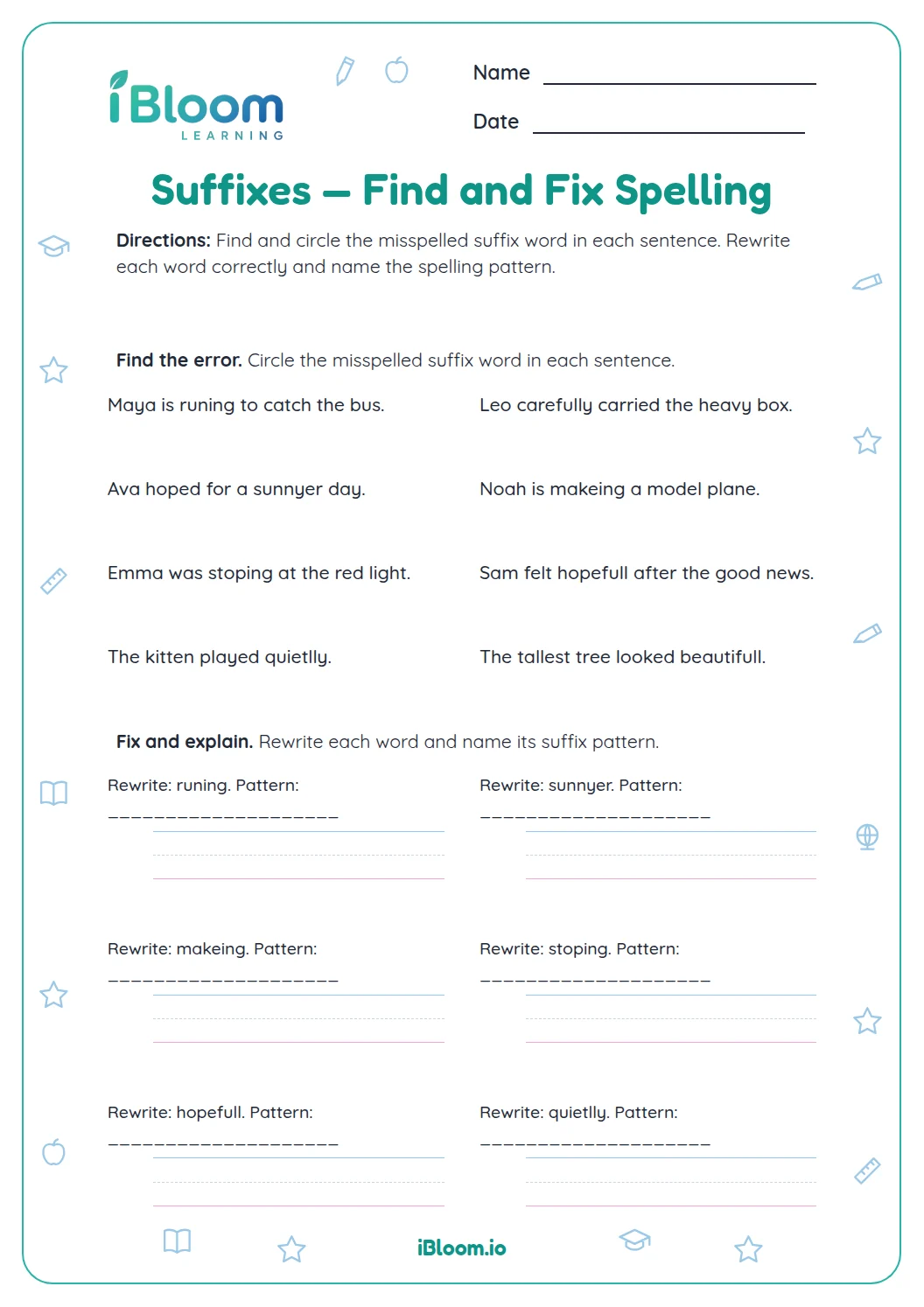
About this worksheet
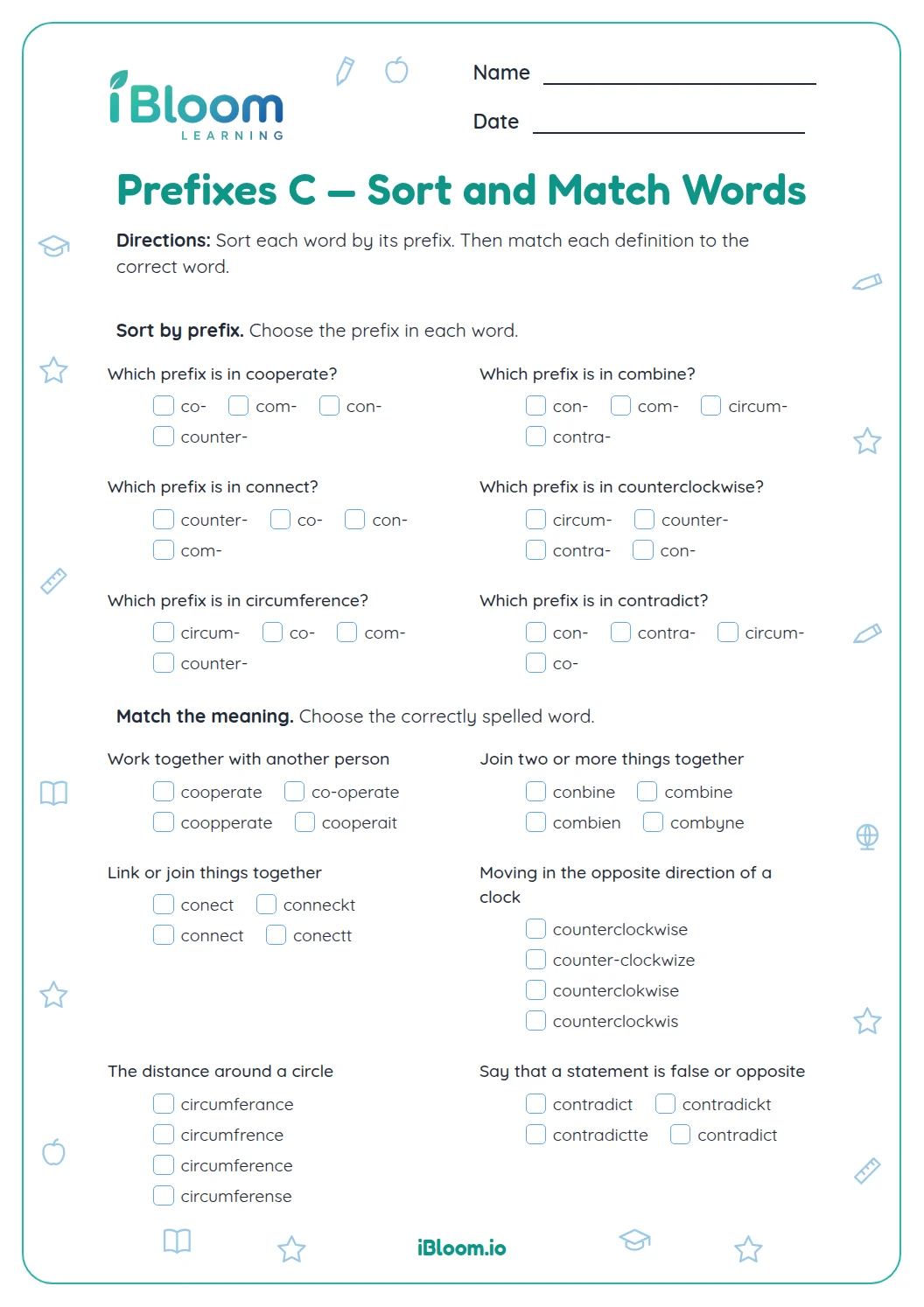
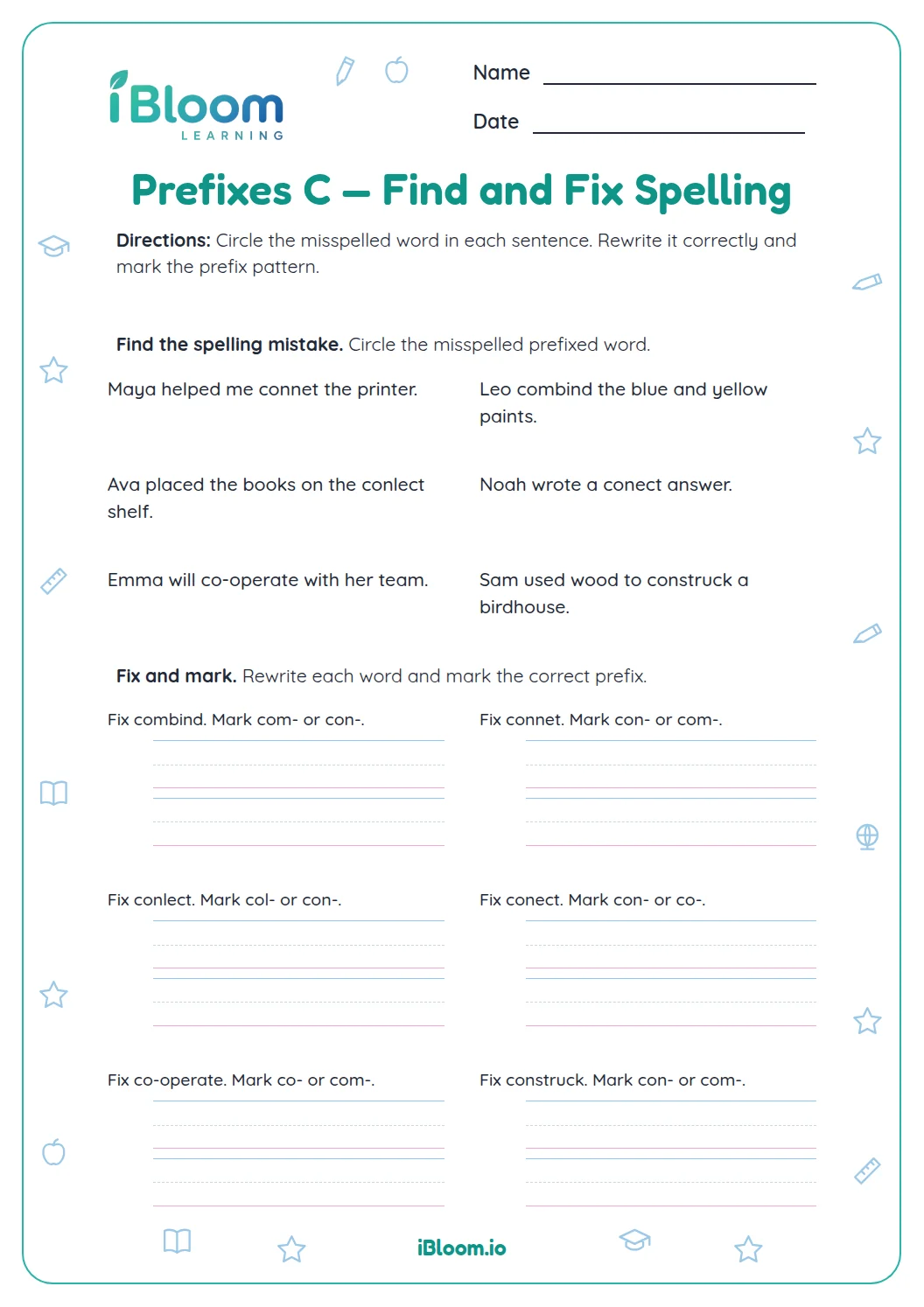
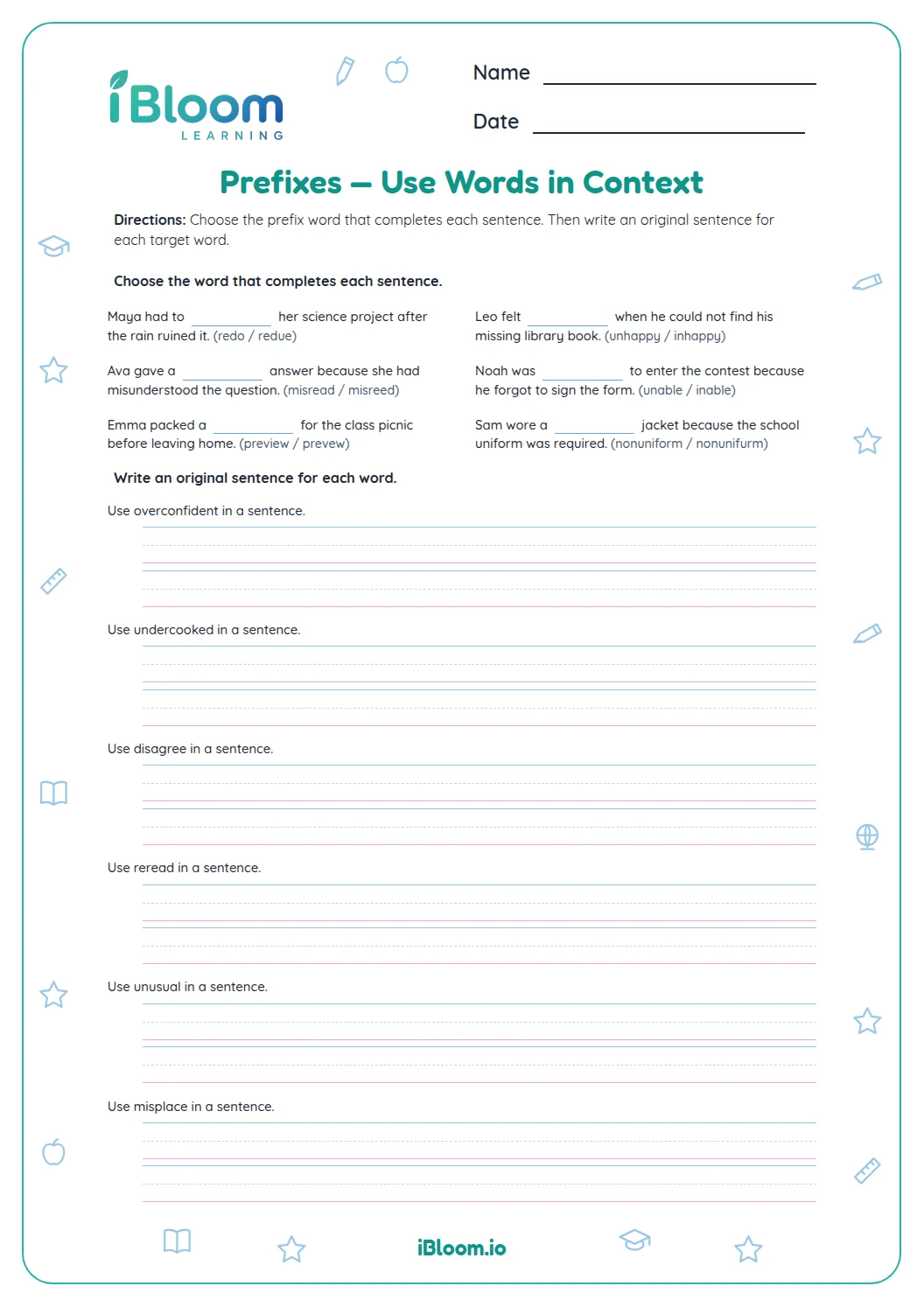
This Grade 5 printable practices the Prefixes C spelling list in context. Learners choose the correct spelling for eight words in sentence clues, then write seven original sentences using target words such as circumference, counterclockwise, and contradict. The answer key lists the correct spellings and gives sample sentences for the open responses.
How can a prefix help with meaning?
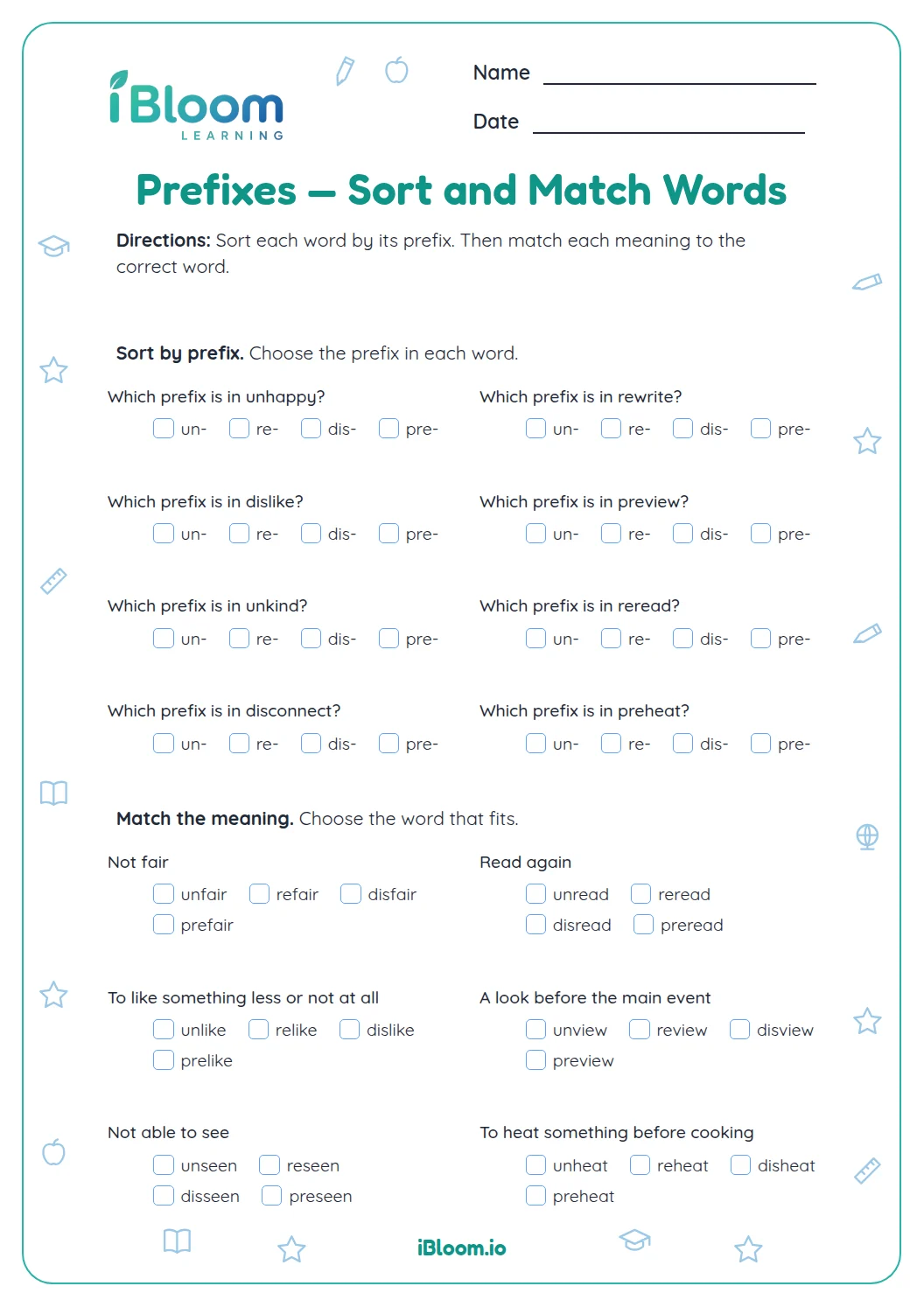
A prefix is a word part added to the beginning of a base word. Re- often means again, un- can mean not, mis- can mean wrongly, and dis- can mean apart or opposite. Read the whole sentence and use the prefix as one clue.
- 1“Please preview the instructions before you begin.”
- 2The sentence is about looking at instructions ahead of time.
- 3Preview means view or read beforehand.
- 4The prefix pre- means before.
What will children do with each word?
Part A places eight list words in short sentence clues. In Part B, students write complete sentences with target words, including circumference, counterclockwise, and contradict. The sample answers show one clear way to use each word.
How to use this worksheet
- 1Read the complete sentence first.
- 2Notice the base word and prefix.
- 3Test the word in the sentence for meaning and grammar.
- 4Use the prefix clue to explain your choice.
- 5Check spelling before using the answer key.
Common mistakes and quick fixes
The mistake
Choosing by prefix alone without reading the sentence; reread for context.
The fix
Read the directions again, mark the important information, and check the answer against the model or operation.
The mistake
Confusing mis- (wrongly) with re- (again); check the base word meaning.
The fix
Read the directions again, mark the important information, and check the answer against the model or operation.
The mistake
Forgetting that a prefix attaches to a base word; spell the complete word.
The fix
Read the directions again, mark the important information, and check the answer against the model or operation.
What to practice next
Further reading
Questions parents and teachers ask
Which words does this worksheet practice?
It practices cooperate, disturb, circle, compass, counterattack, cooperation, collision, complex, circumference, counterclockwise, and contradict. Eight appear as spelling choices; the written prompts use target words in original sentences. The answer key supplies one sample response for each open prompt.
How does context help with spelling?
A sentence clue makes the target word’s meaning clear, which helps a learner choose among similar spellings. For example, a compass helps a hiker find north, while circumference names the distance around a circle. Reading the whole sentence supports both meaning and spelling.
What should a good sentence-writing answer include?
A complete sentence should use the target word correctly and make its meaning clear. “The wheel turned counterclockwise” gives a direction of movement. The answer key includes examples, but other original sentences are correct when they use the word naturally.
What should a child do if two words seem possible?
Read the sentence aloud with each choice and check its grammar and meaning. Then compare the word’s prefix and base word. The sentence clues should point to one best fit. Checking both the spelling and the context helps children make a confident choice.
How should children explain a prefix?
They can name what the prefix contributes and connect it to the whole word. For example, re- means again in reread: read the text another time. A short explanation should include both the prefix clue and the sentence meaning. Ask the learner to explain the clue they used so the answer connects back to the skill.