






About this worksheet
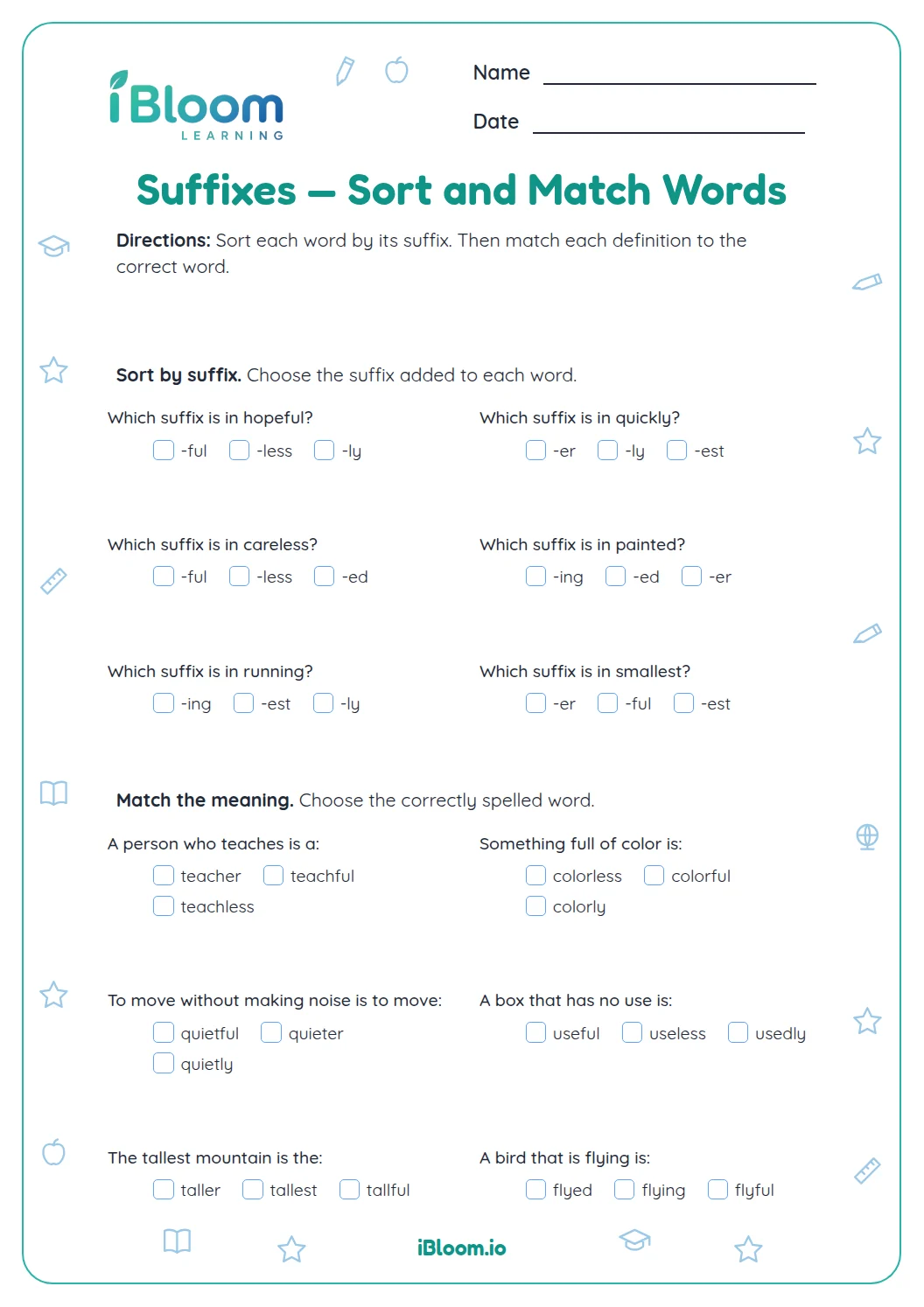
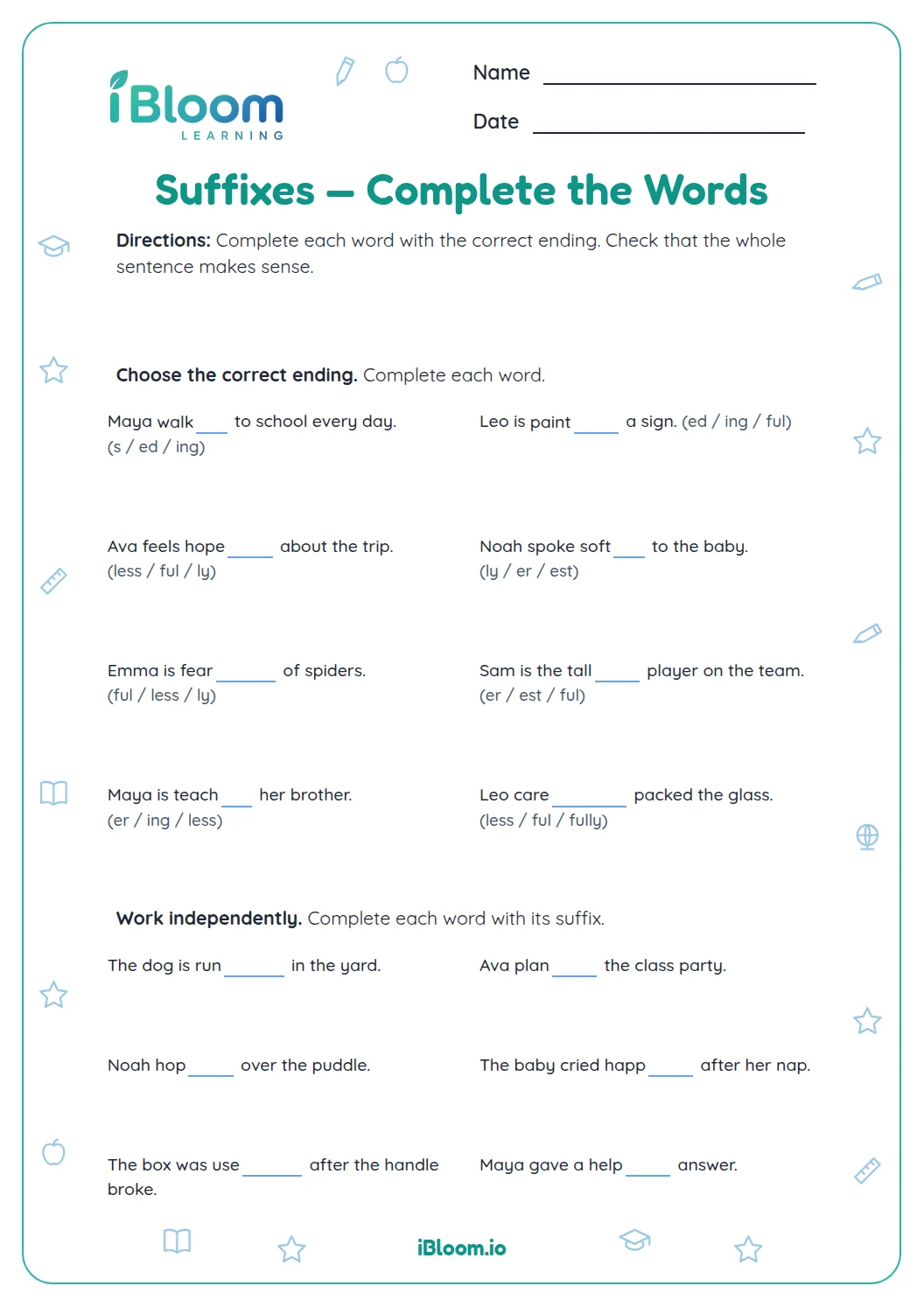
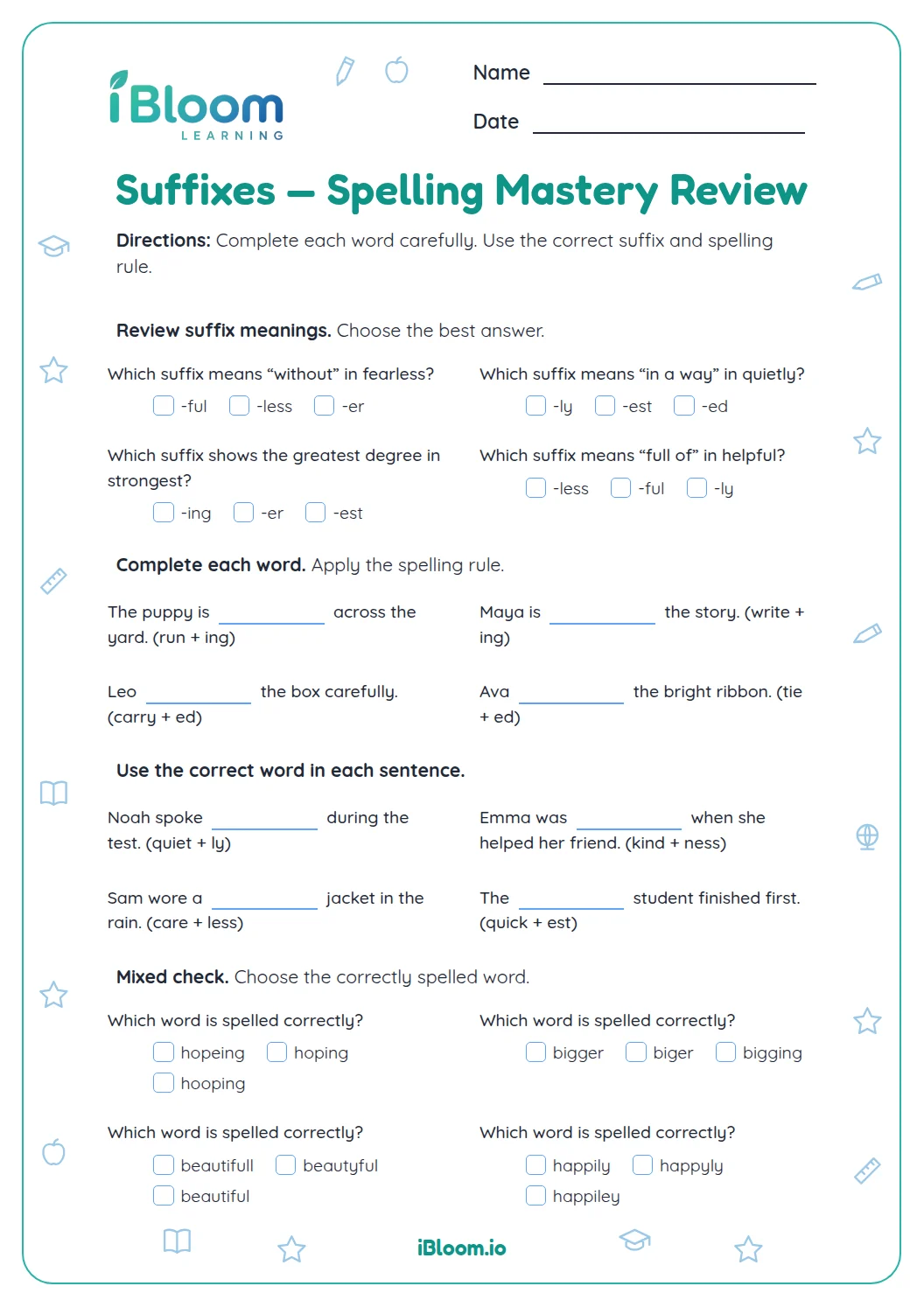
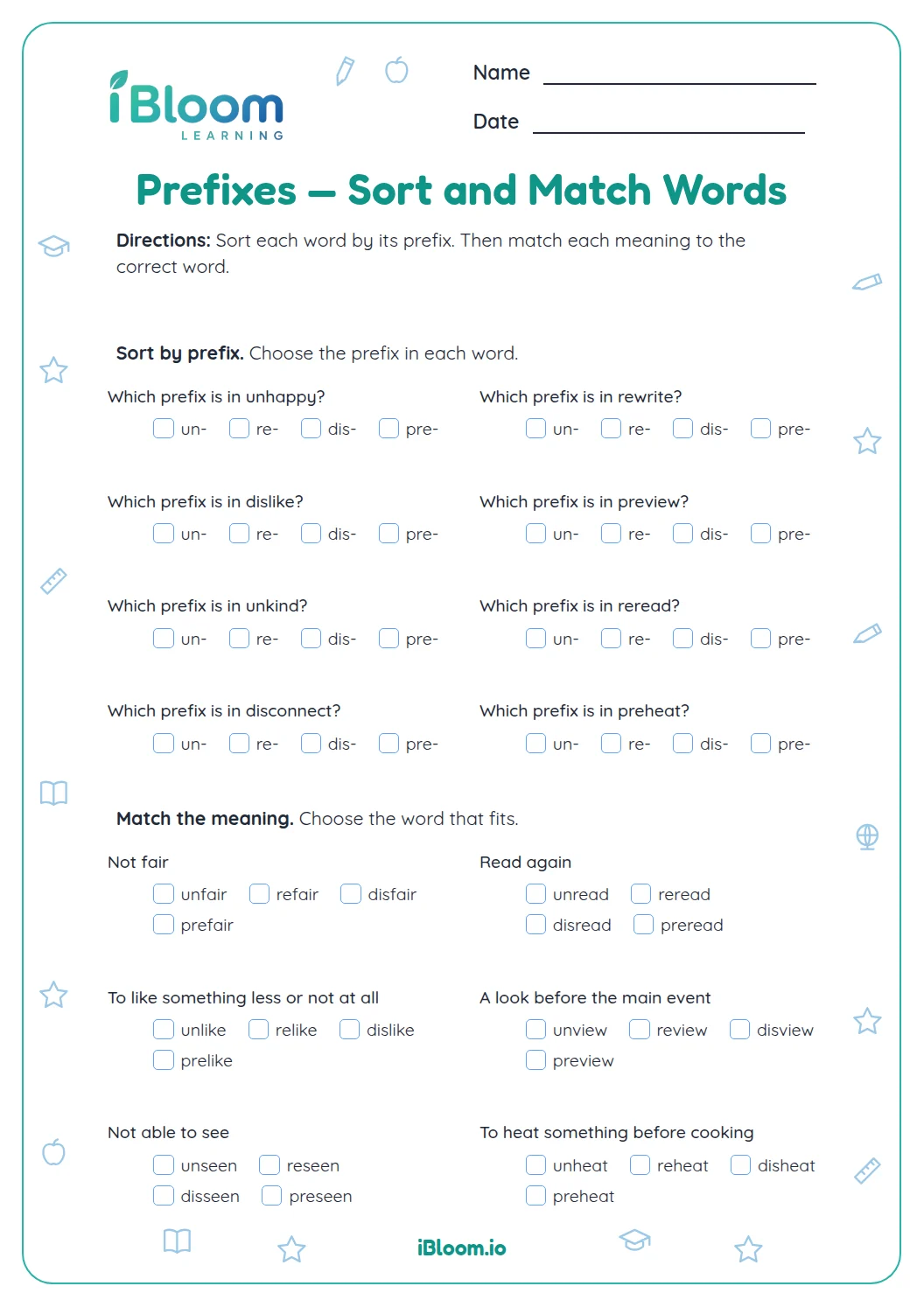
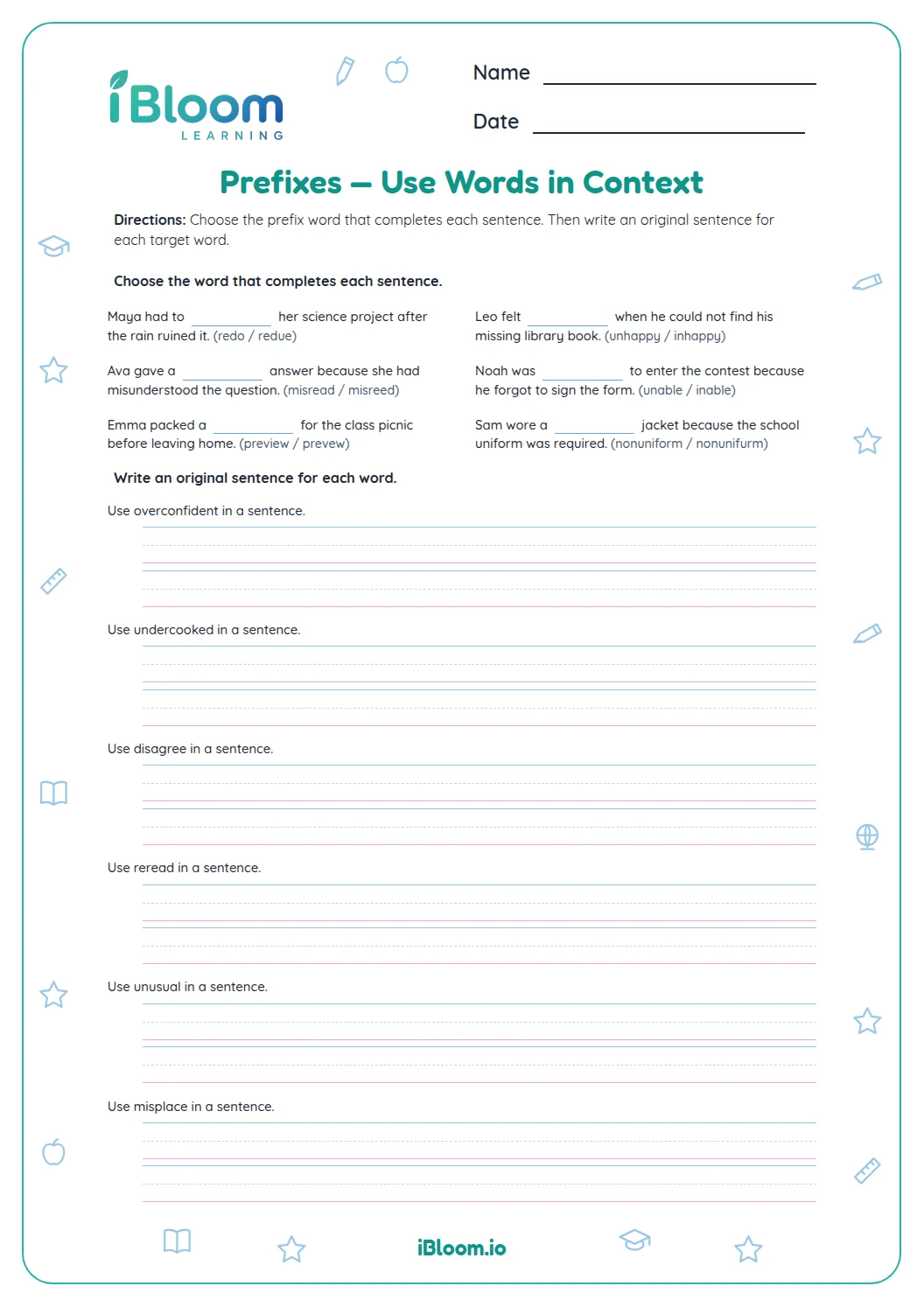
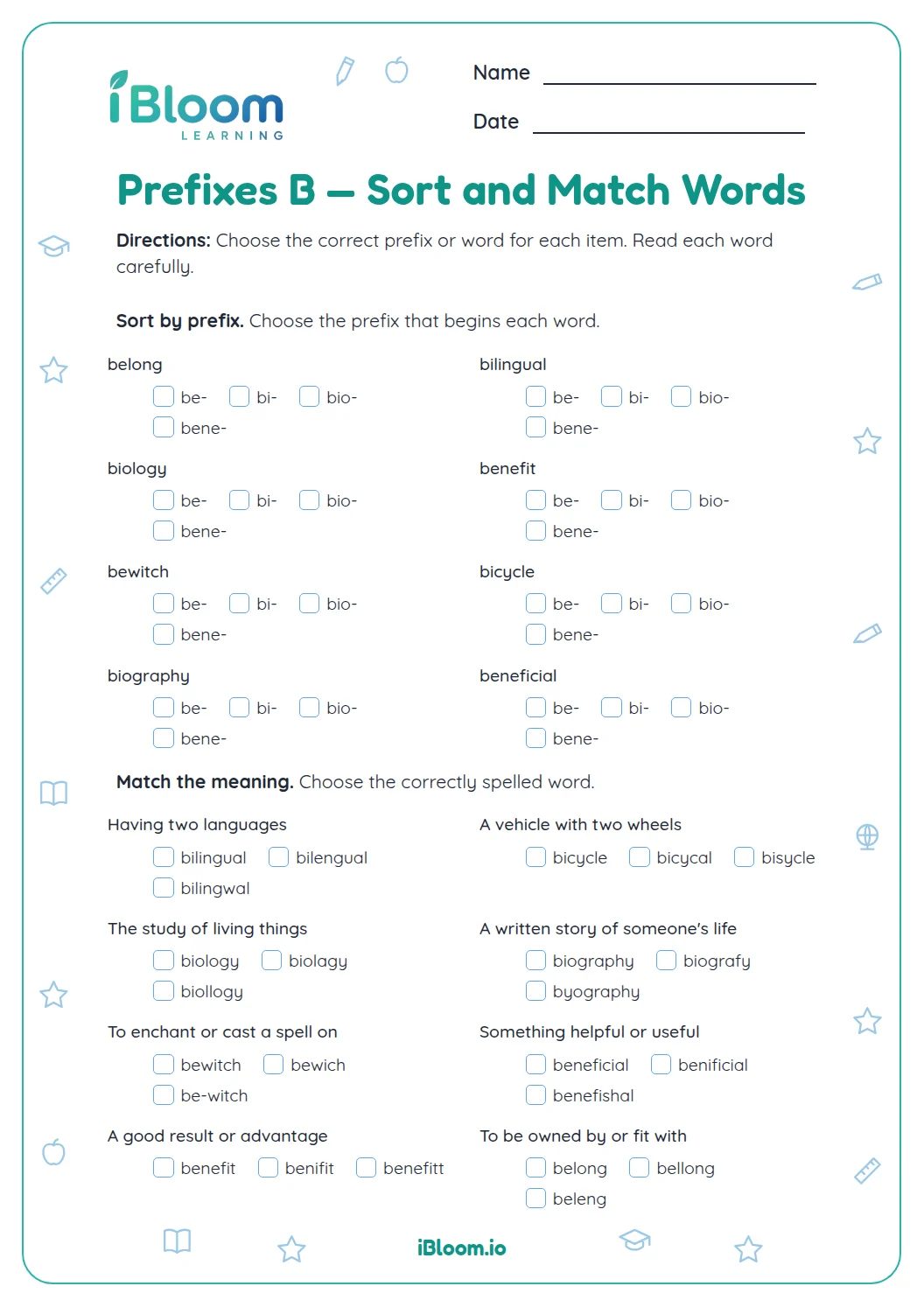
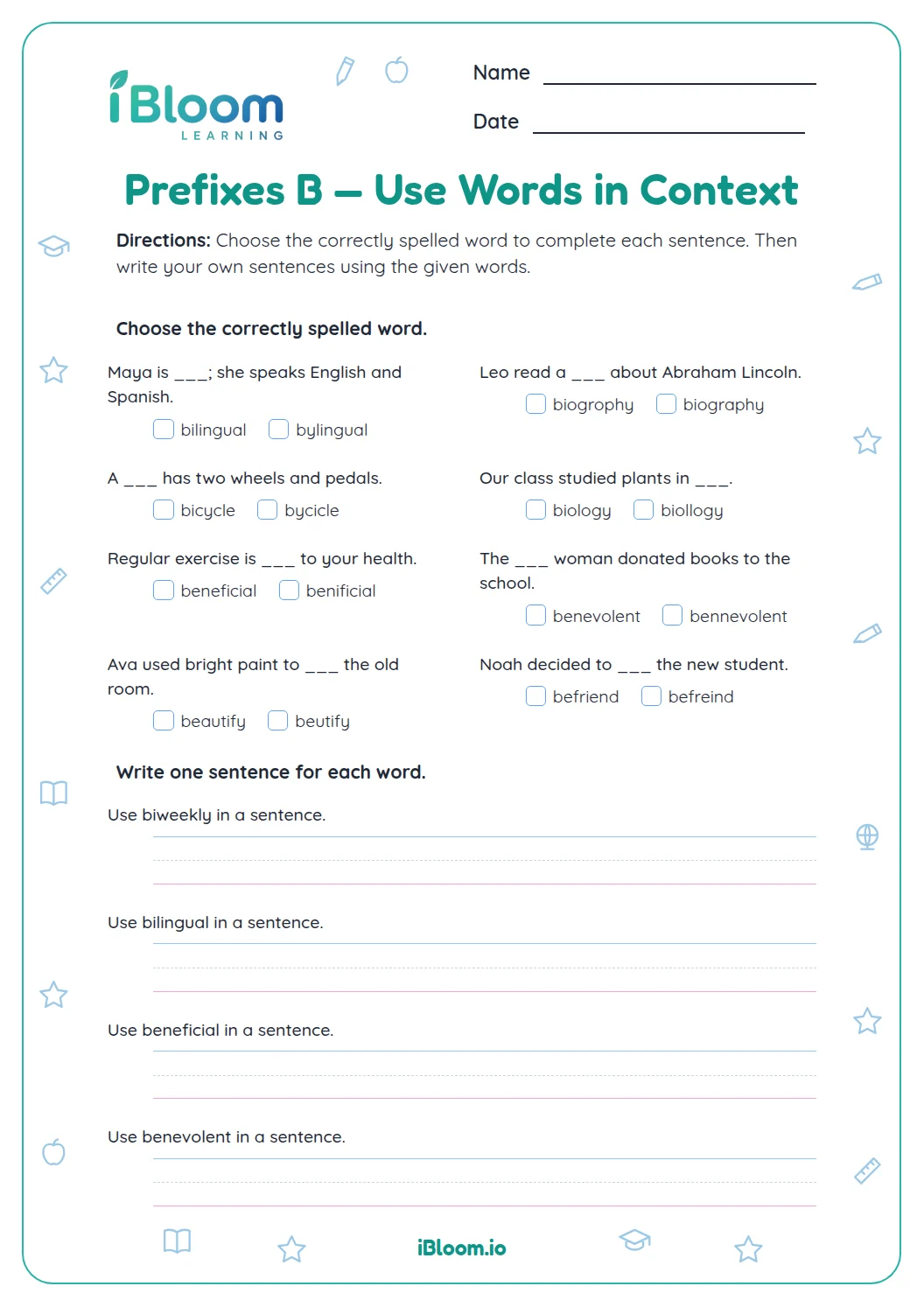
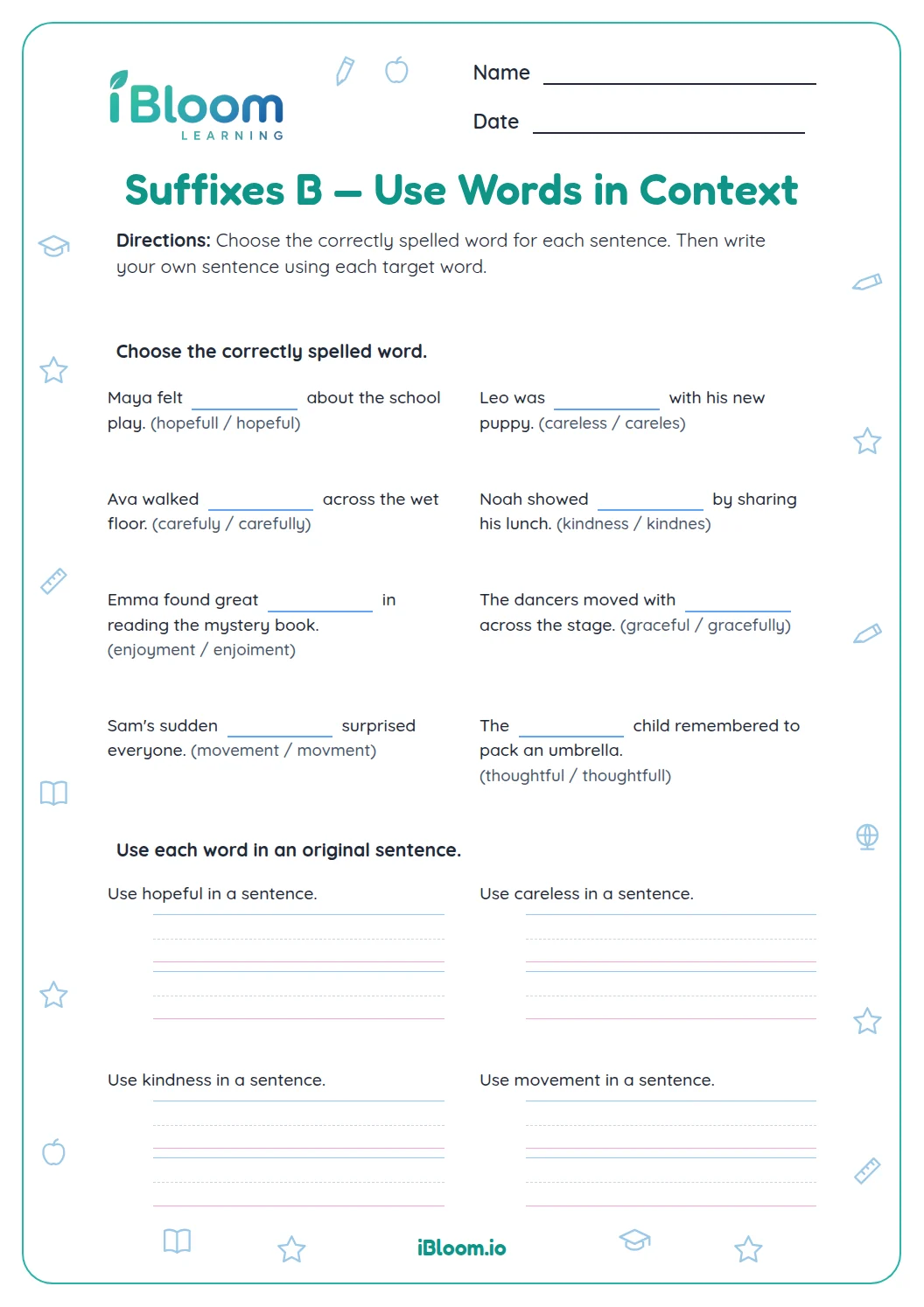
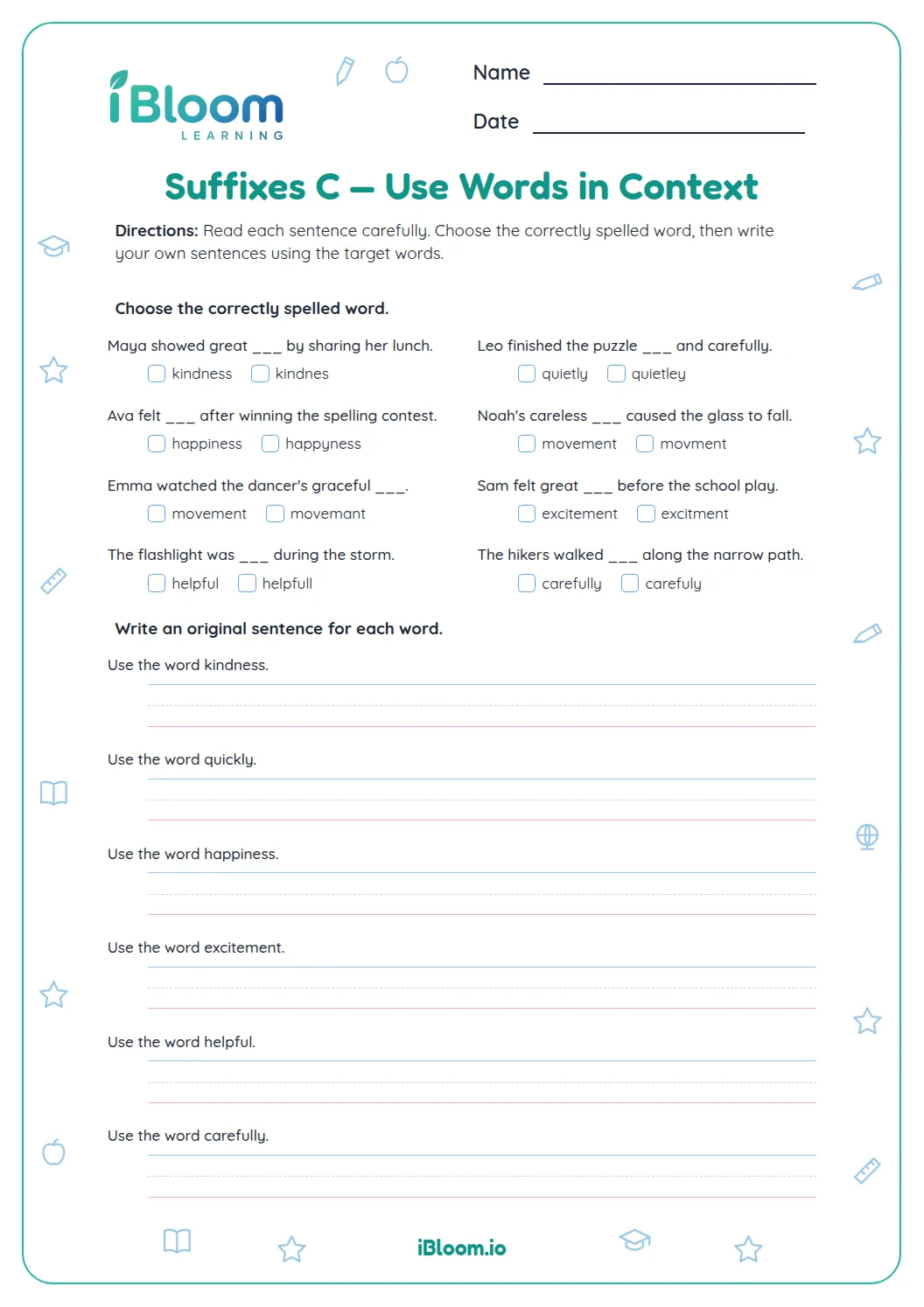
This Grade 5 spelling worksheet asks students to use sentence meaning and word structure together. Part A has ten context choices for correctly spelled suffix words; Part B has four word-building prompts. The 14 questions include endings such as -ful, -less, -ness, -er, and -able, with a separate answer key.
Aligned to L.5.2.e
How does context point to a suffix word?
The sentence supplies a meaning clue. A “person who teaches” is a teacher; a description of a scene that brings peace is peaceful. Use the whole sentence before choosing an ending.
- 1“The directions were ___, so we knew what to do.”
- 2Helpful fits because the directions gave help.
How do you build a word with a suffix?
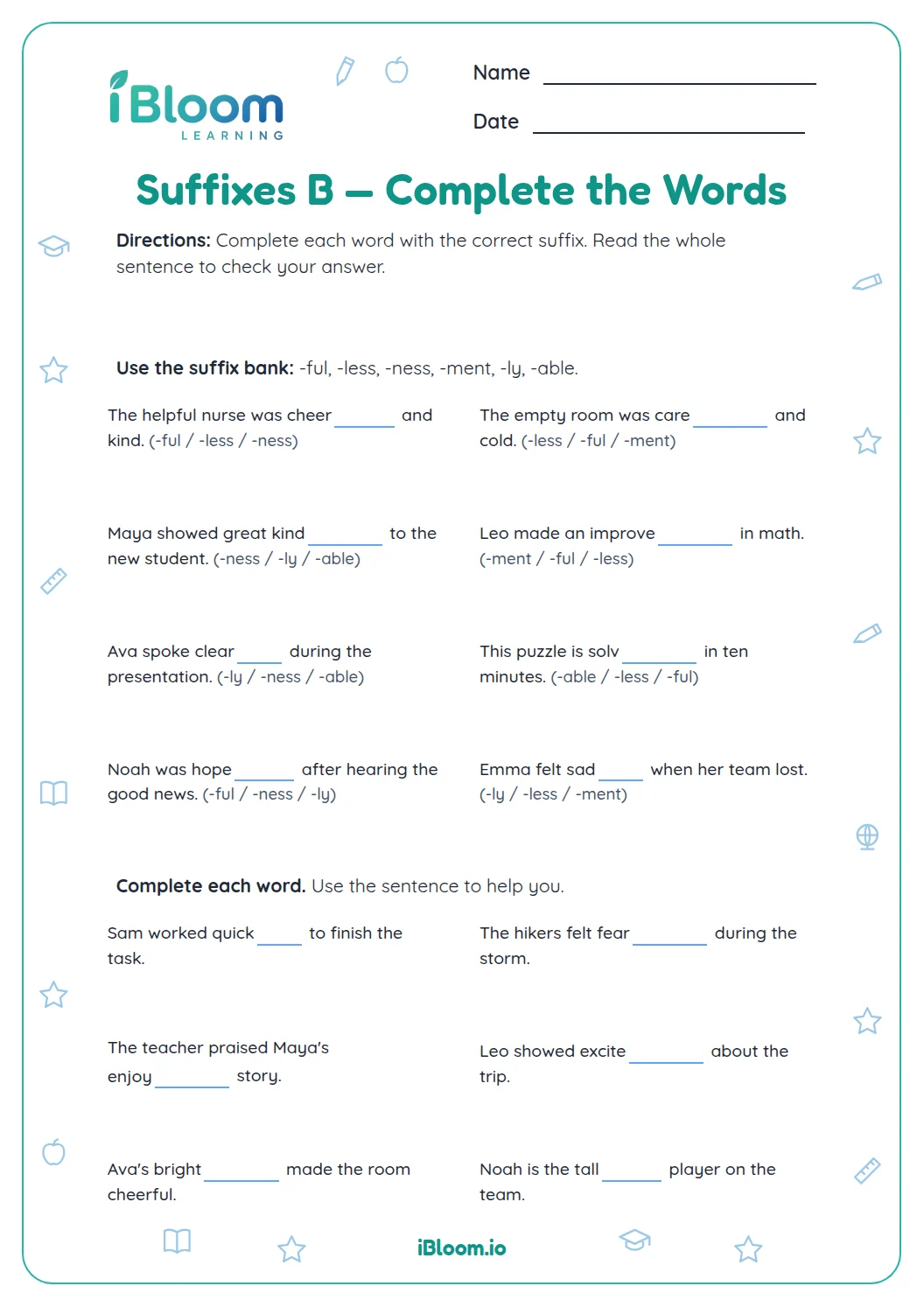
Part B starts with a base word and asks for a suffix that creates a specified meaning or kind of word. Check the spelling of the complete word after adding the ending.
What should you check before writing?
Read the finished word in its sentence. Confirm that its meaning and part of speech fit the clue, then check the spelling of the entire word.
How to use this worksheet
- 1Read the entire sentence for its meaning clue.
- 2Identify what kind of word the blank needs.
- 3Compare the suffix choices and their meanings.
- 4Check the base word and ending spelling.
- 5Read the completed sentence once more.
Common mistakes and quick fixes
The mistake
Choosing a word because its suffix looks familiar even when the meaning is wrong.
The fix
Substitute the word into the sentence and check that the clue still makes sense.
The mistake
Using an adverb where the sentence needs an adjective.
The fix
Check what the blank describes; “a ___ scene” needs an adjective.
The mistake
Leaving off a letter while adding an ending.
The fix
Read the whole finished word and compare it with a known spelling.
Common Core alignment
Spell grade-appropriate words correctly, checking references when needed.
On this sheet: Students select and spell correctly formed suffix words in sentence contexts.
Show the official wordingHide the official wording
Spell grade-appropriate words correctly, consulting references as needed.
What to practice next
Make more practice
Further reading
Questions parents and teachers ask
Which suffixes appear on this worksheet?
The items use endings such as -ful, -less, -ness, -er, -able, and -tion. Part A asks students to choose a word that fits a sentence. Part B asks them to form words such as helpful, kindness, careless, and painter from base words.
How many questions are included?
There are 14 questions: ten context choices and four word-building prompts. Students read a sentence clue before selecting a suffix word, then spell complete words from base words and given endings. A separate answer key lists the expected choices and formed words.
How does a sentence help with suffix spelling?
The surrounding words show the meaning and kind of word that belongs in the blank. Read the whole sentence, decide what idea fits, then test the choices. For “The directions were ___, so we knew what to do,” helpful matches both the clue and the sentence.
What should students do when two suffix words look possible?
Try each complete word in the sentence and check its meaning and grammar. A word may be spelled correctly but still fail to fit the clue. For example, helpful describes directions that make a task easier, while helpless would change the sentence meaning.
Can students use a dictionary during this practice?
Yes. A dictionary can help check the spelling or meaning of an unfamiliar word after students make an attempt. They should still use the sentence clue to select the best word. The answer key provides the expected response for reviewing each of the 14 prompts.