






About this worksheet
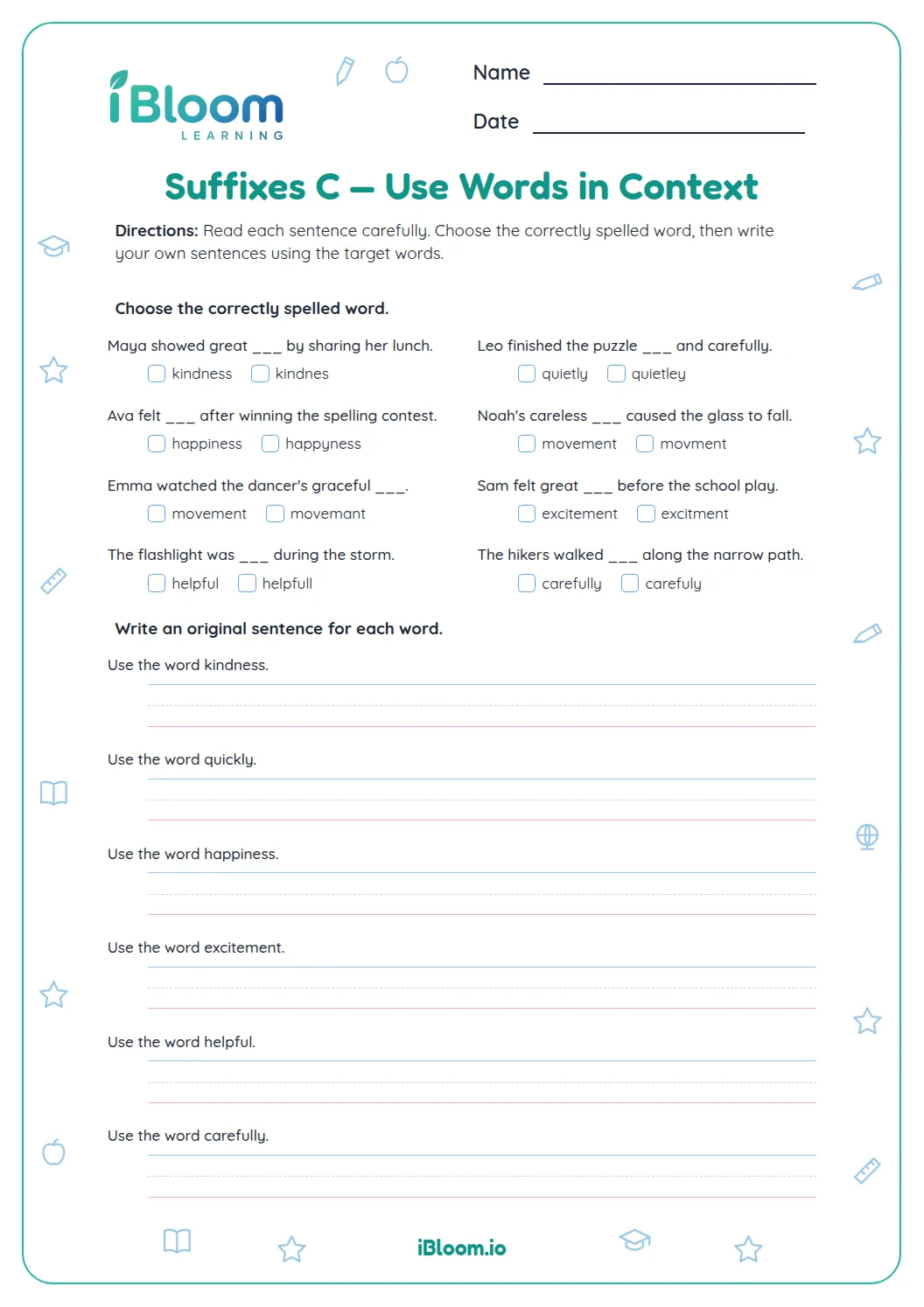
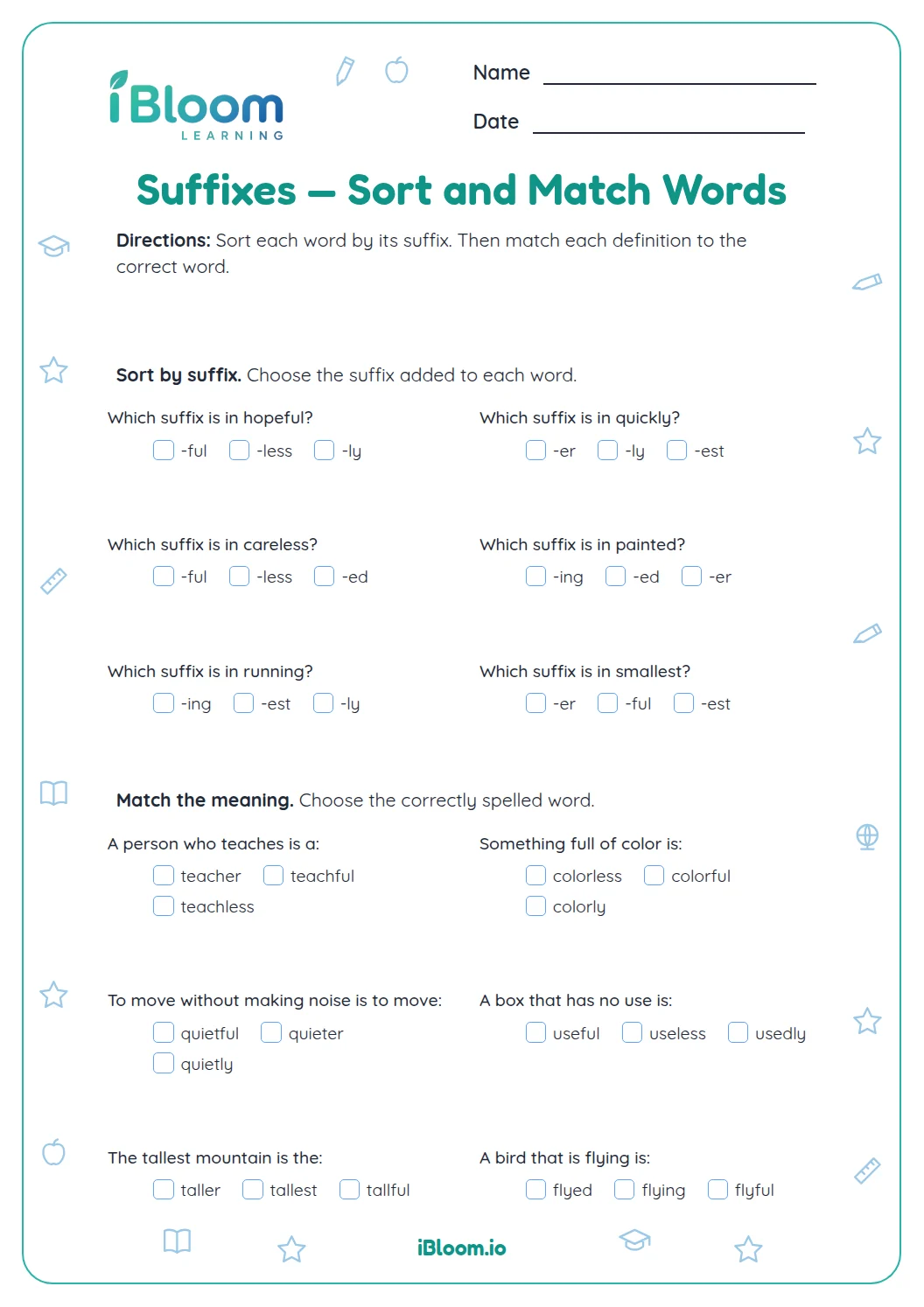
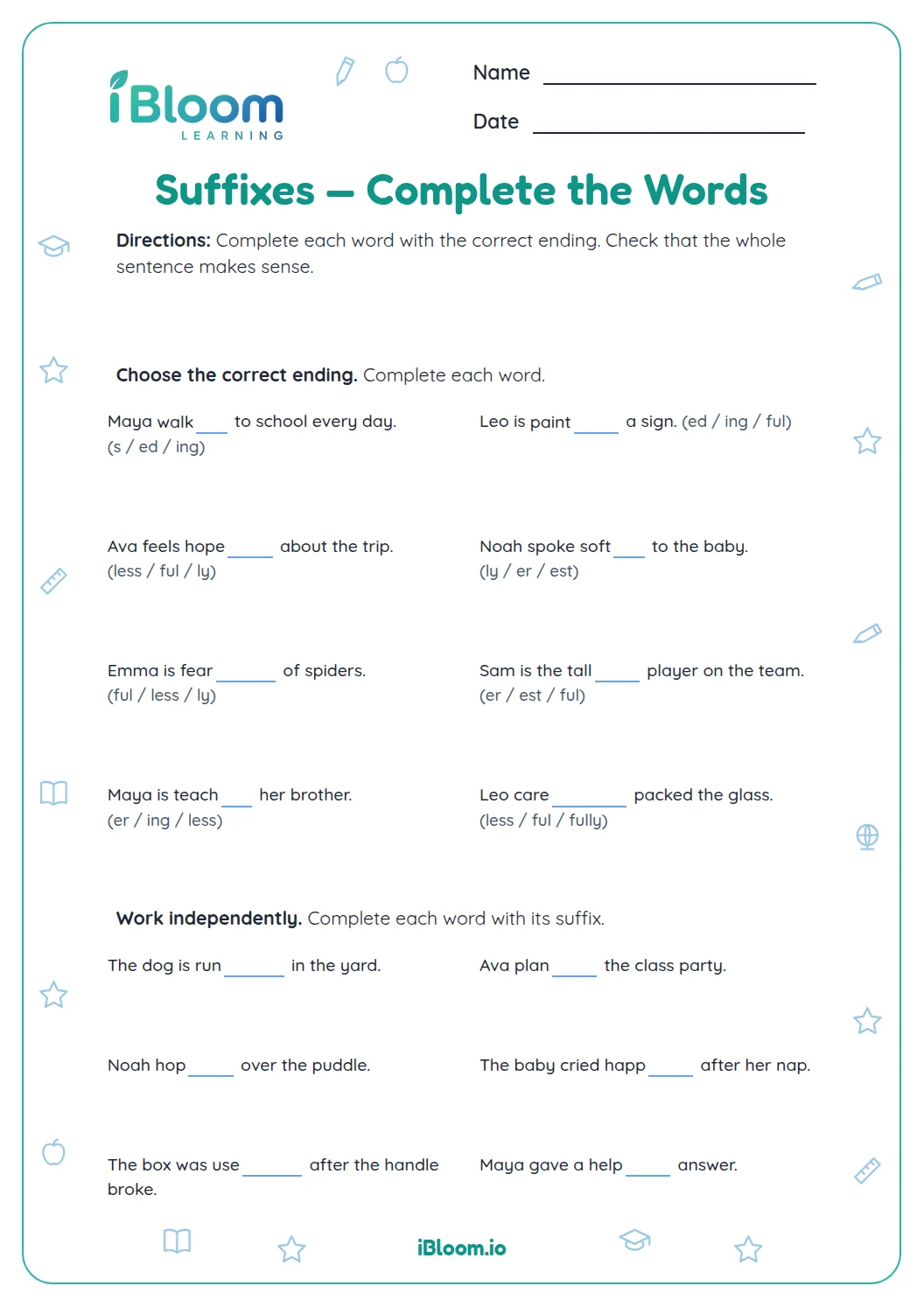
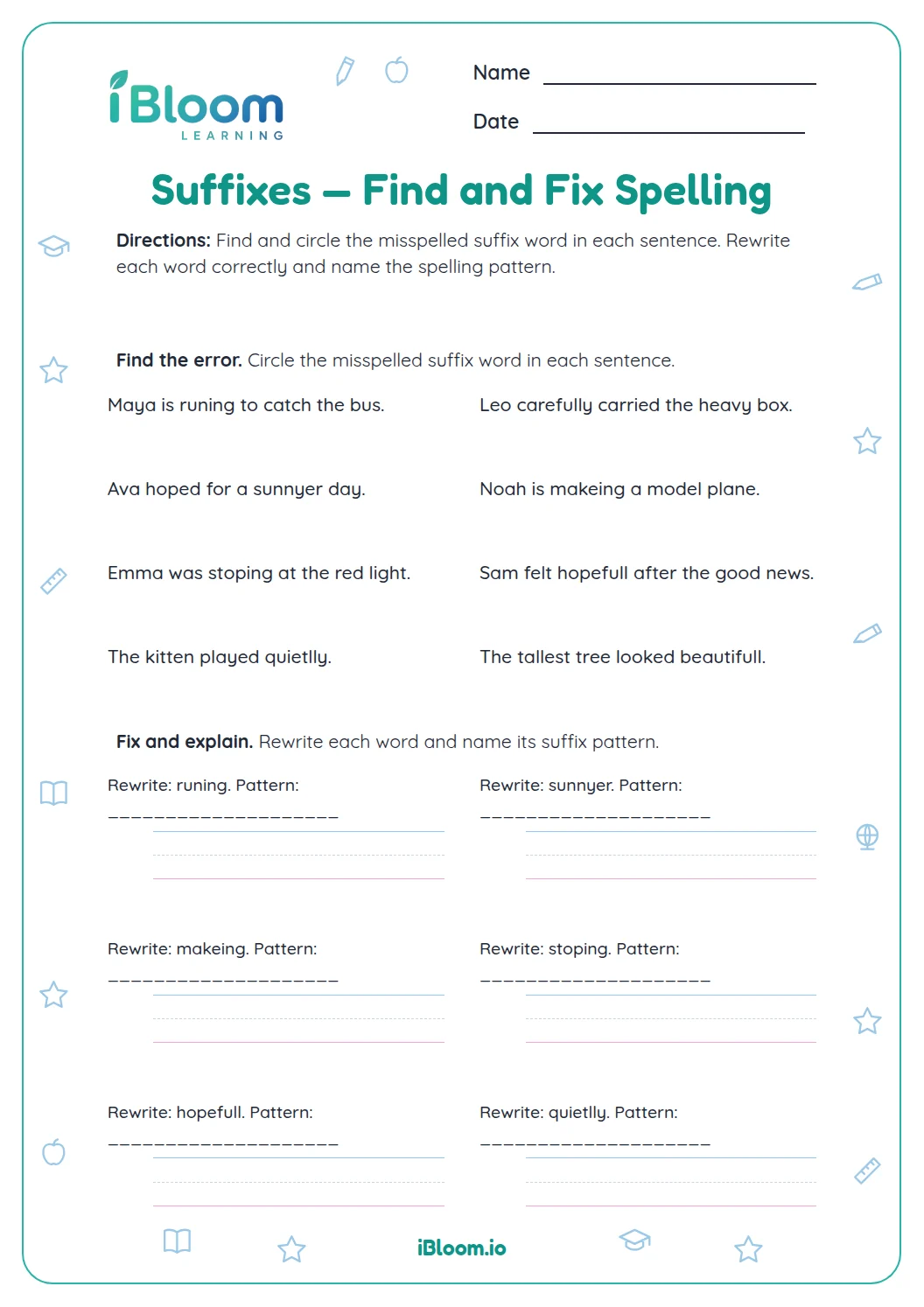
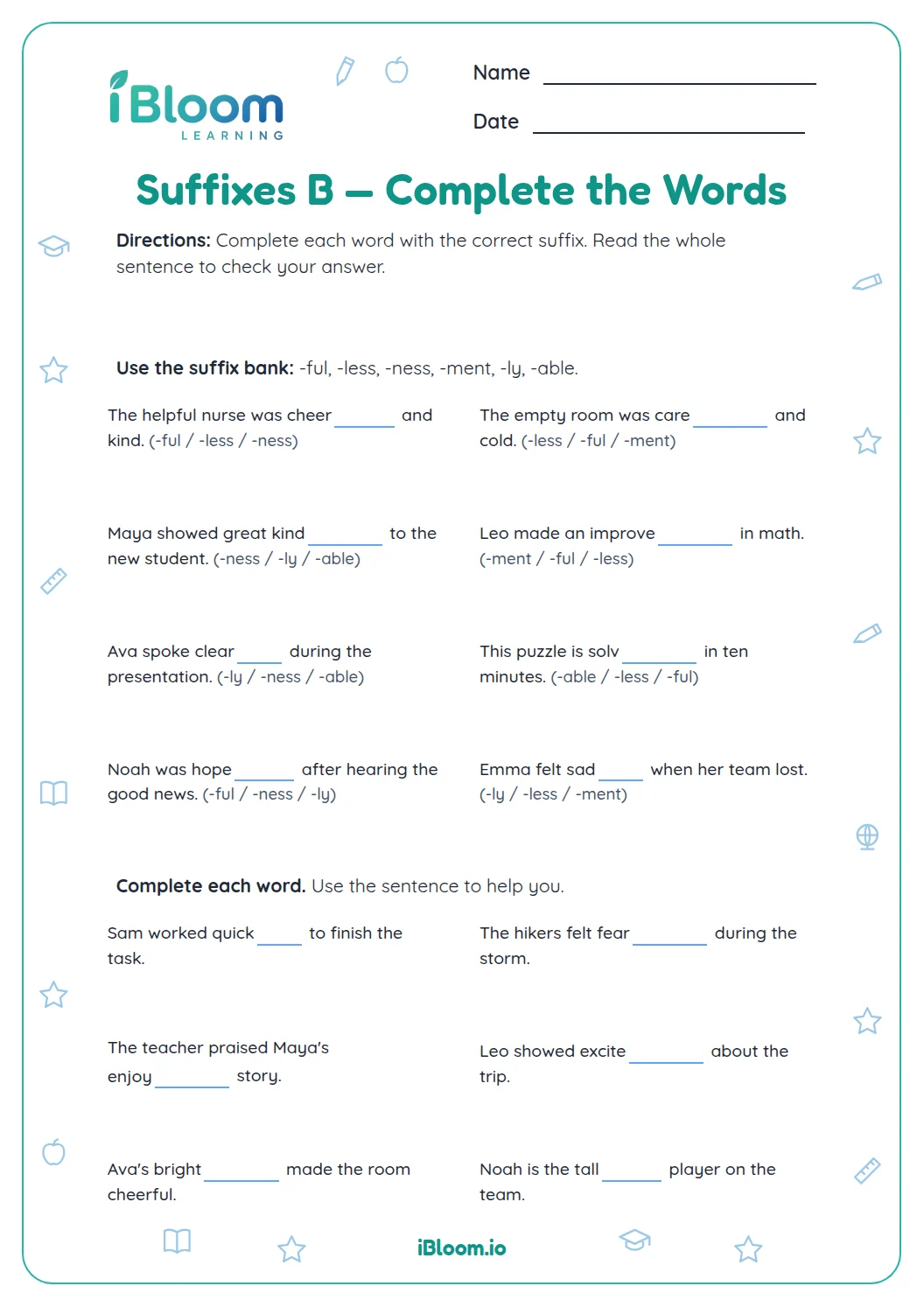
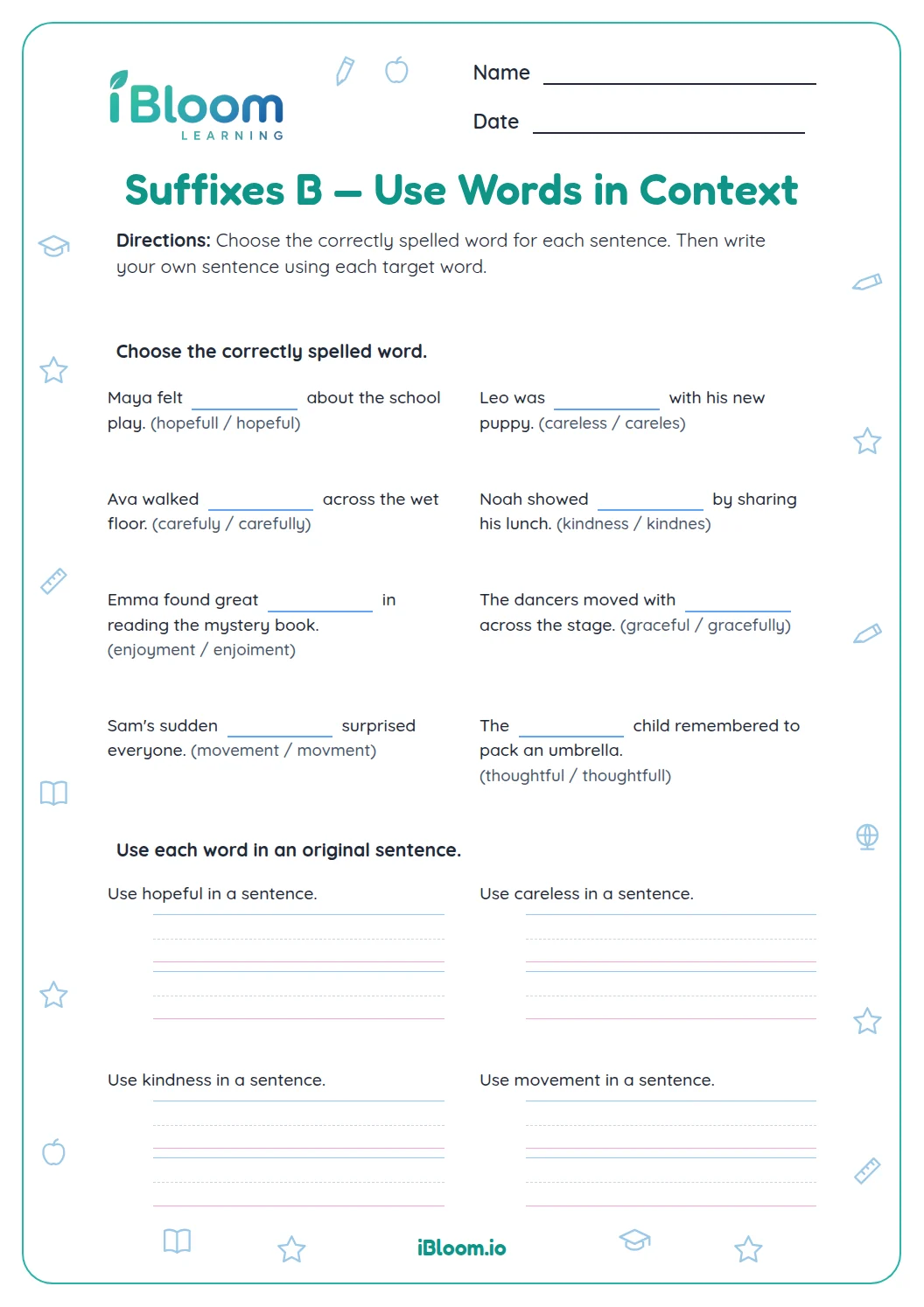
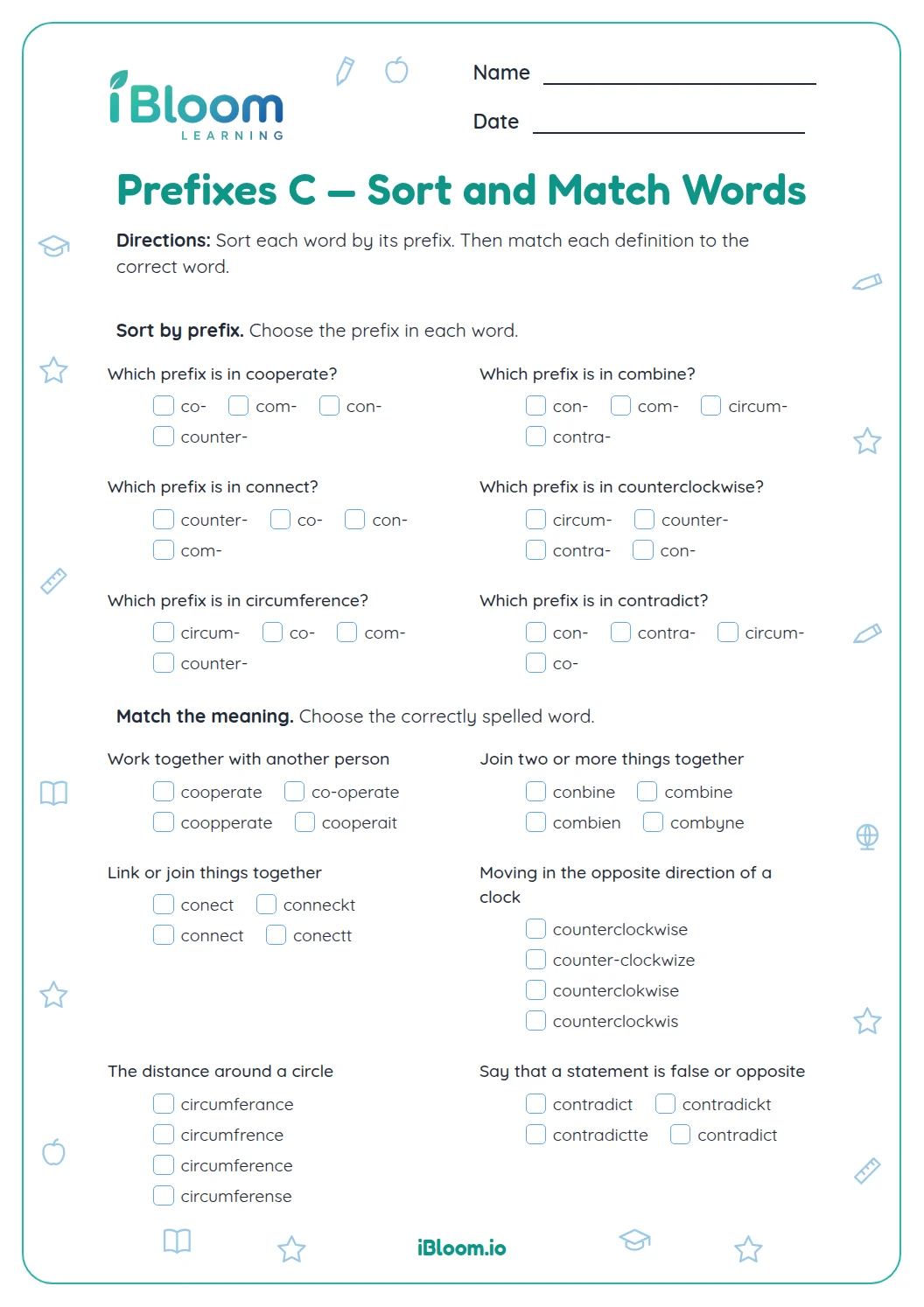
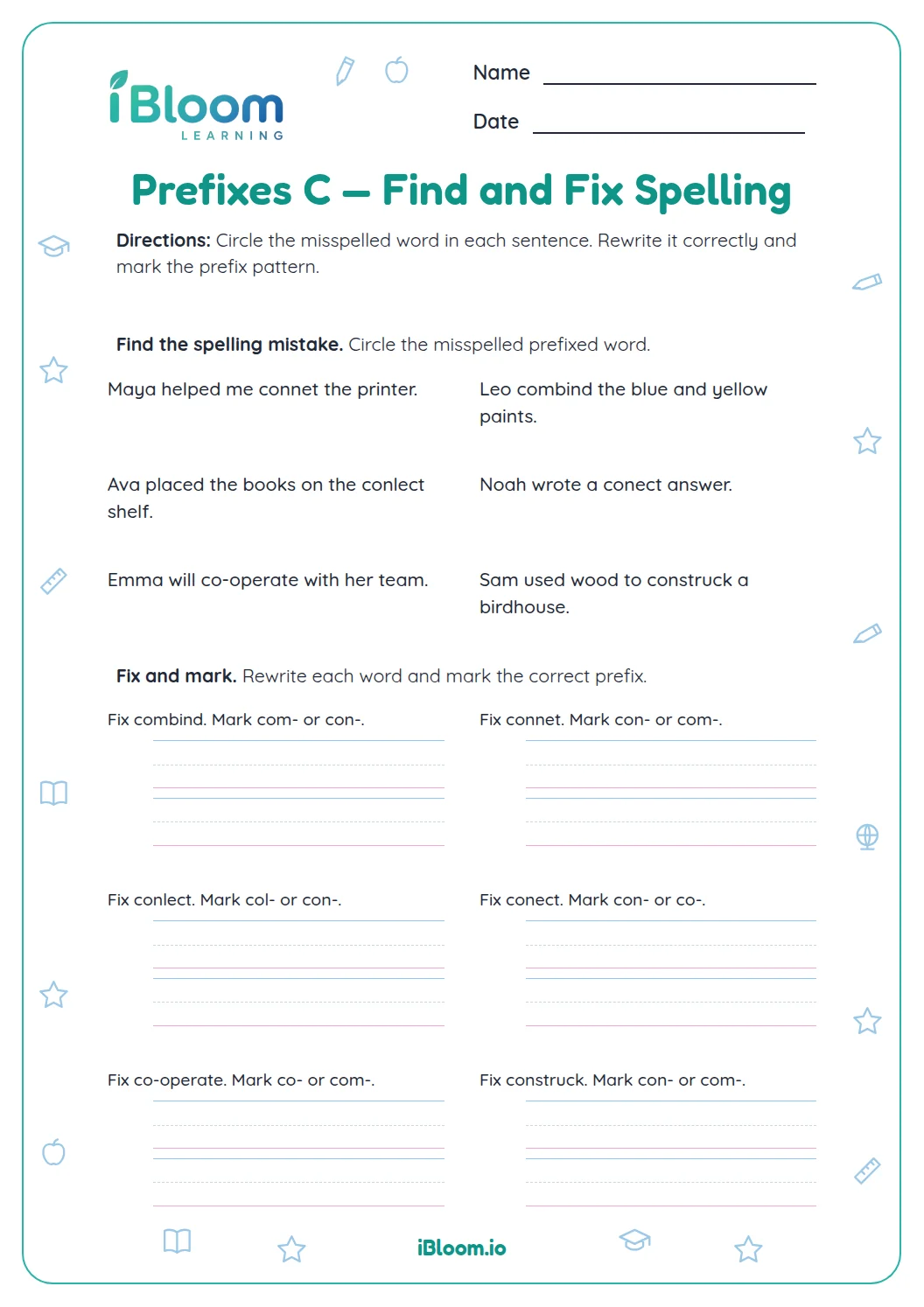
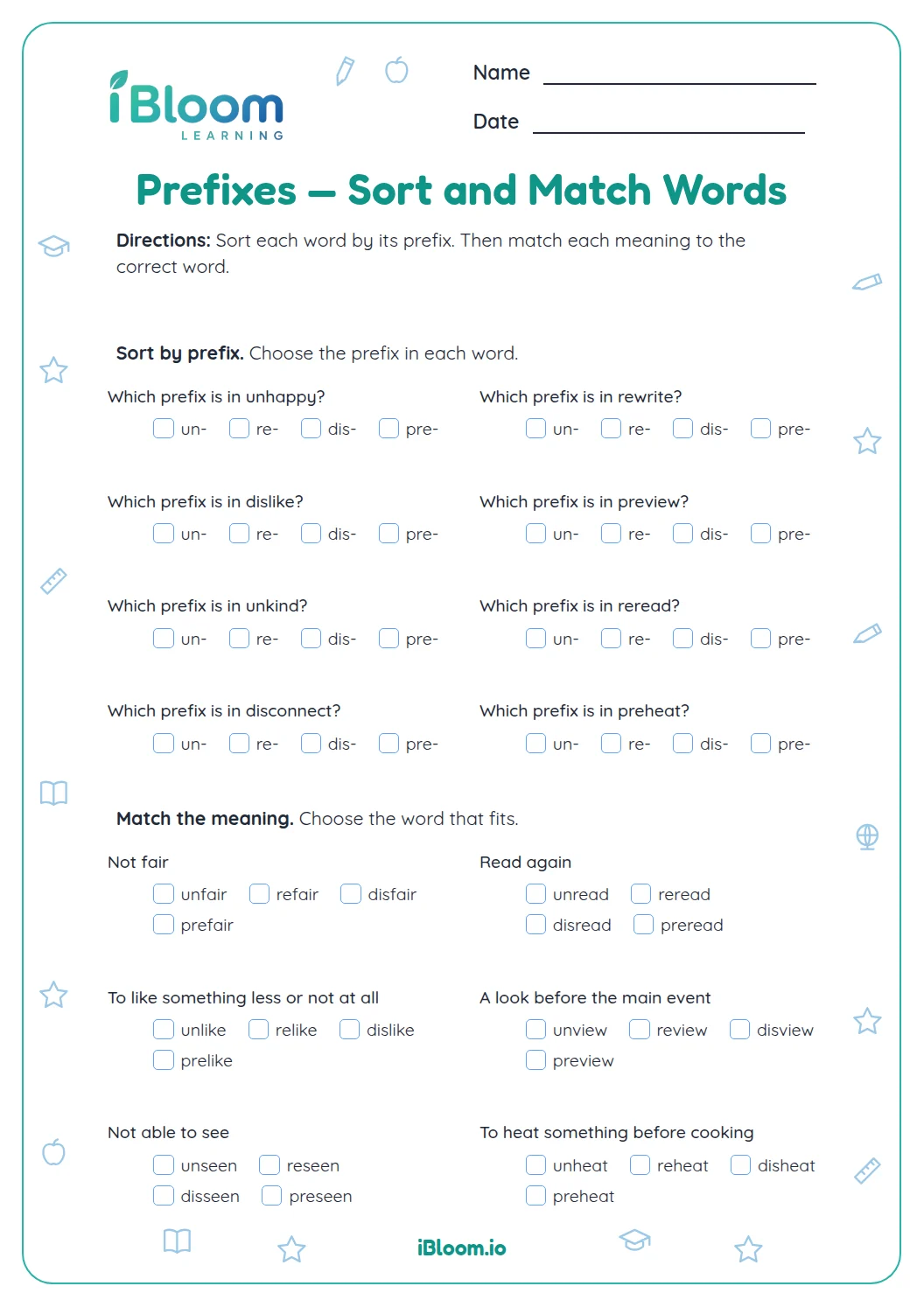
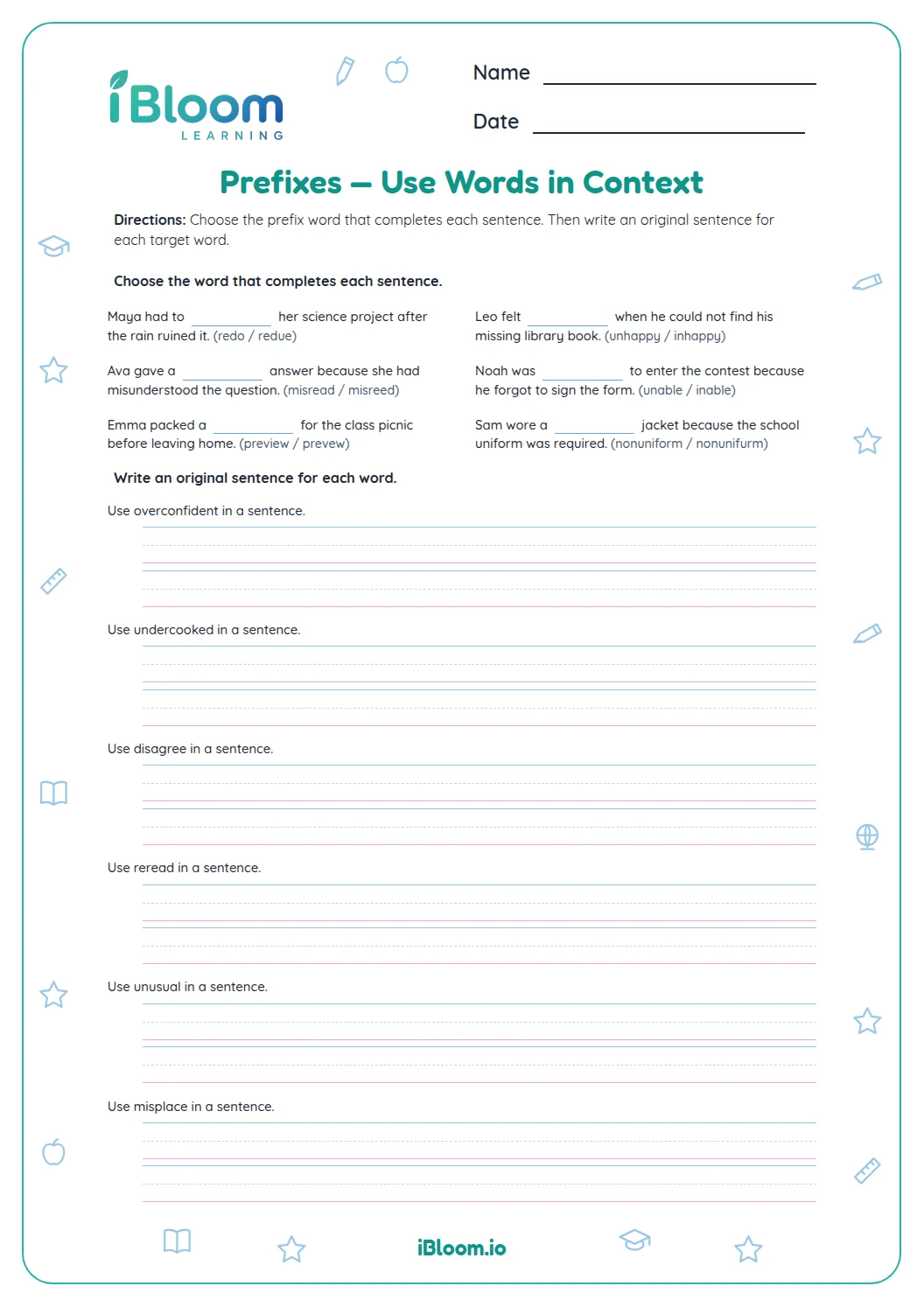
This Grade 5 spelling worksheet practices four endings from the Suffixes C word set: -able, -ible, -ment, and -ness. In Part A, students select an ending to complete each base-word clue. In Part B, they use a meaning clue to spell the whole word. This format replaces the old multiple-choice definition matching with a mix of suffix sorting and spelling recall. A separate key lists the expected answers.
Aligned to L.5.2.e
How can you sort a word by its suffix?
A suffix is a word part added to the end of a base word. The suffix can change meaning or word type. Read the whole word, find its ending, and check whether the spelling makes a familiar suffix such as -able, -ible, -ment, or -ness.
- 1washable
- 2Ending: -able
- 3Meaning clue: able to be washed
- 4The base word “wash” keeps its spelling before -able.
How can a meaning clue help with spelling?
First decide which word fits the clue. Then say the word in parts and check the suffix carefully. “The state of being sick” is illness: ill + ness, with the final l kept before -ness.
- 1Clue: the state of being sick
- 2Base word: ill
- 3Suffix: -ness
- 4Correct spelling: illness
What spelling patterns are useful in these words?
Some base words keep their spelling before a suffix, as in kind + ness. In other words, a final silent e is dropped before -able, as in comfort + able → comfortable. Check the full word rather than choosing an ending by sound alone.
How can an adult support this practice?
- 1Read the entire word before focusing on its last letters.
- 2Underline the suffix and compare it with the four choices.
- 3For a clue, say a word that matches the meaning.
- 4Write the base word and add the suffix with careful attention to spelling changes.
- 5Use the key to check the complete word, not only its ending.
Common mistakes and quick fixes
The mistake
Choosing -able or -ible by sound alone.
The fix
Recall the spelling of the whole familiar word and verify its meaning.
The mistake
Dropping a letter that belongs to the base, as in ill + ness.
The fix
Write the base word first, then attach the suffix.
The mistake
Keeping a final silent e when it is dropped in a word such as comfortable.
The fix
Check the spelling of the complete word after adding -able.
This page gives students focused practice with the skills named below.
Students use spelling conventions when writing grade-level words.
On this sheet:
Show the official wordingHide the official wording
Spell grade-appropriate words correctly, consulting references as needed.
What to practice next
Make more practice
Further reading
Questions parents and teachers ask
What is a suffix?
A suffix is a group of letters added to the end of a base word. The suffix can change the word’s meaning or how it is used. In “kindness,” for example, -ness joins “kind” to name the quality of being kind.
How are -able and -ible different?
Both endings can make an adjective meaning “able to be” or “can be.” There is no single sound rule that settles every spelling, so students should connect each word to its known spelling and meaning. This page gives complete words and clues to practice those choices.
Why does “illness” have two l’s?
The two l’s are part of “ill” and stay when -ness is added. Separating the word into ill + ness can help a student remember both the base and suffix. Say each part, then blend them into illness.
What does the answer key include?
The key lists suffix choices and complete spellings. Students can cover the answer, write each word from its clue, and compare the whole word letter by letter. Correct missed words by marking the base and suffix. Review the full spelling.
How can students study a missed word?
Cover the answer, say the base word, identify the suffix, and write the complete word. Then uncover the key and compare each letter. For a word such as comfortable, also notice that the final e in “comfort” is dropped before -able.