



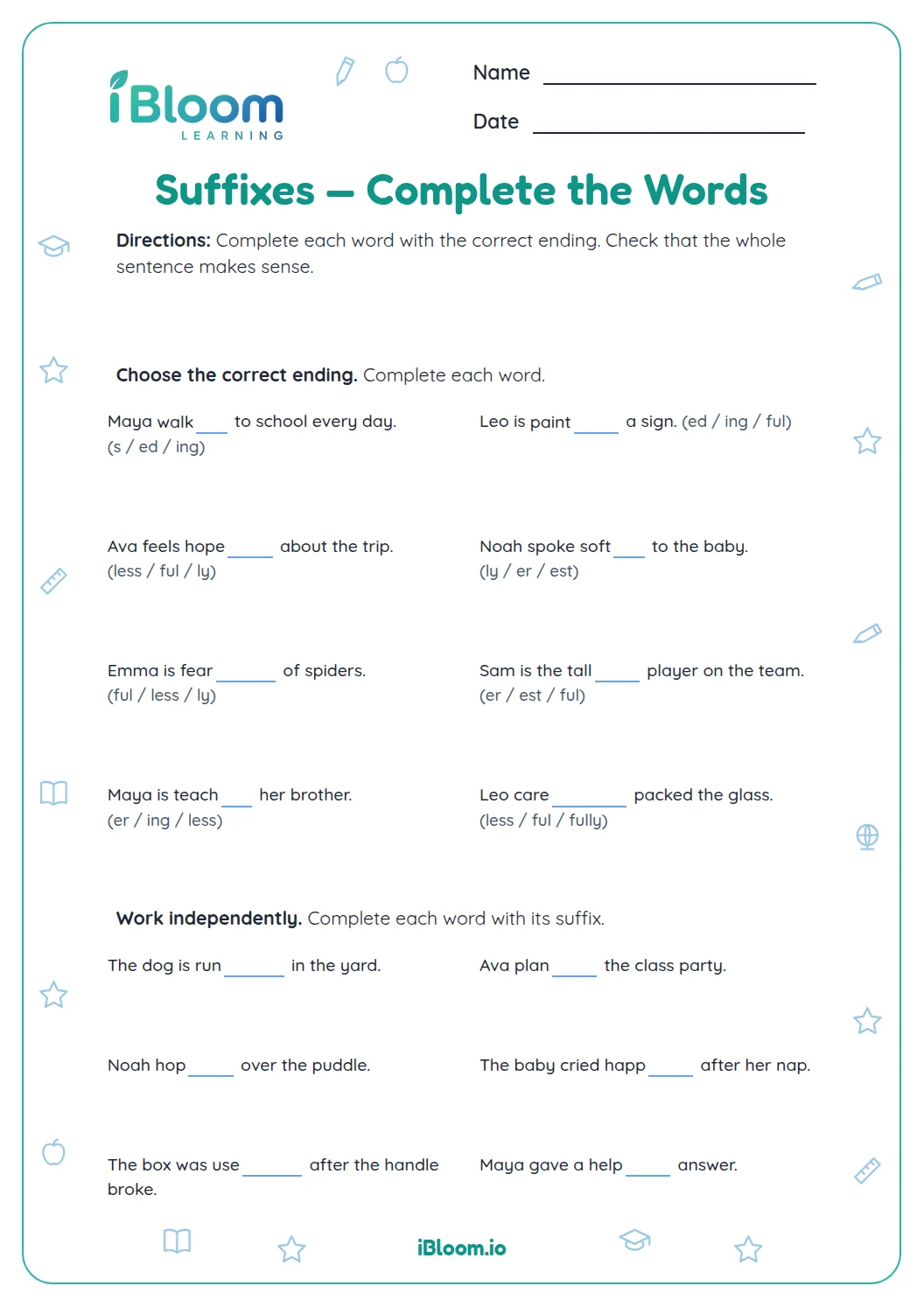
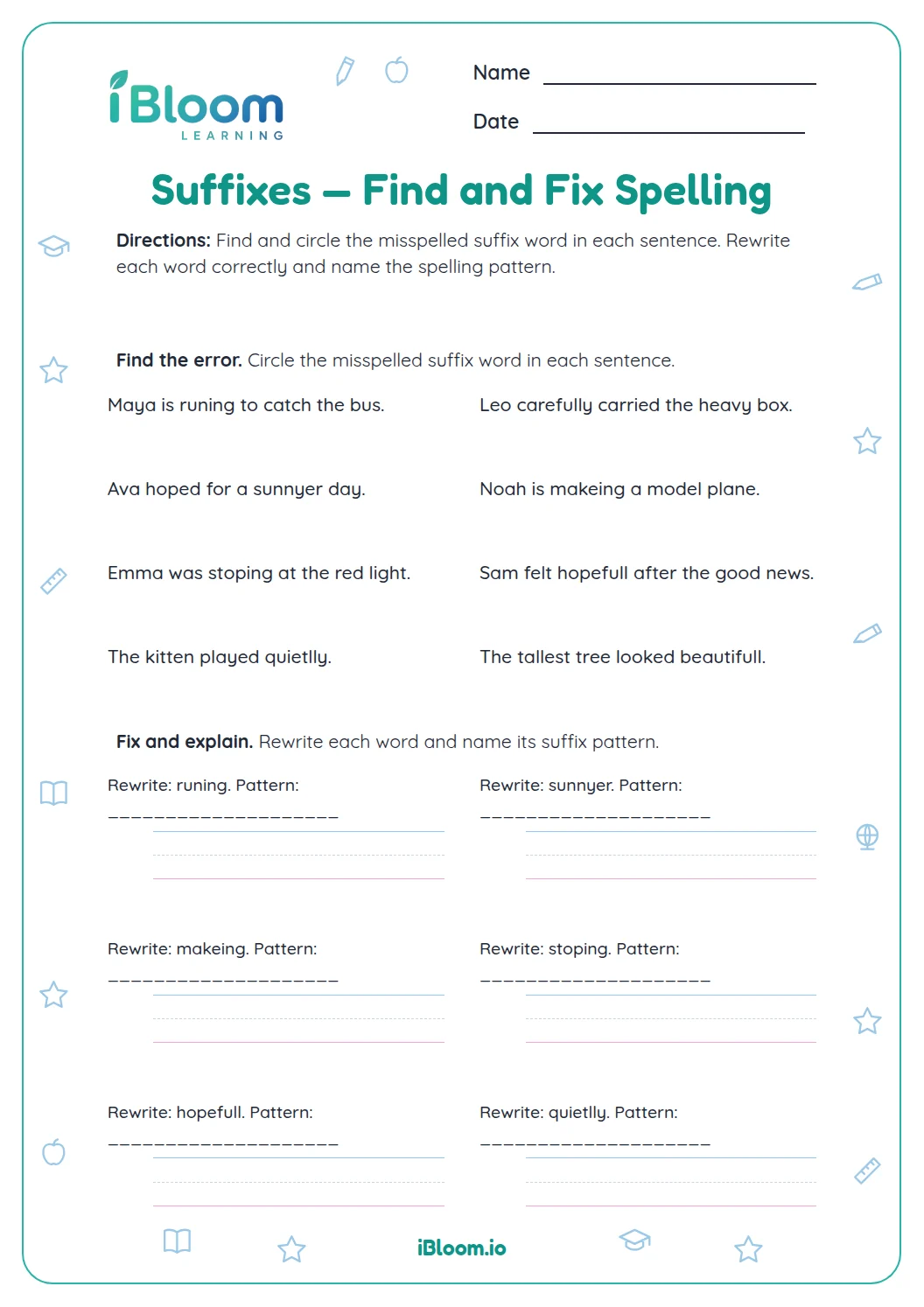
About this worksheet
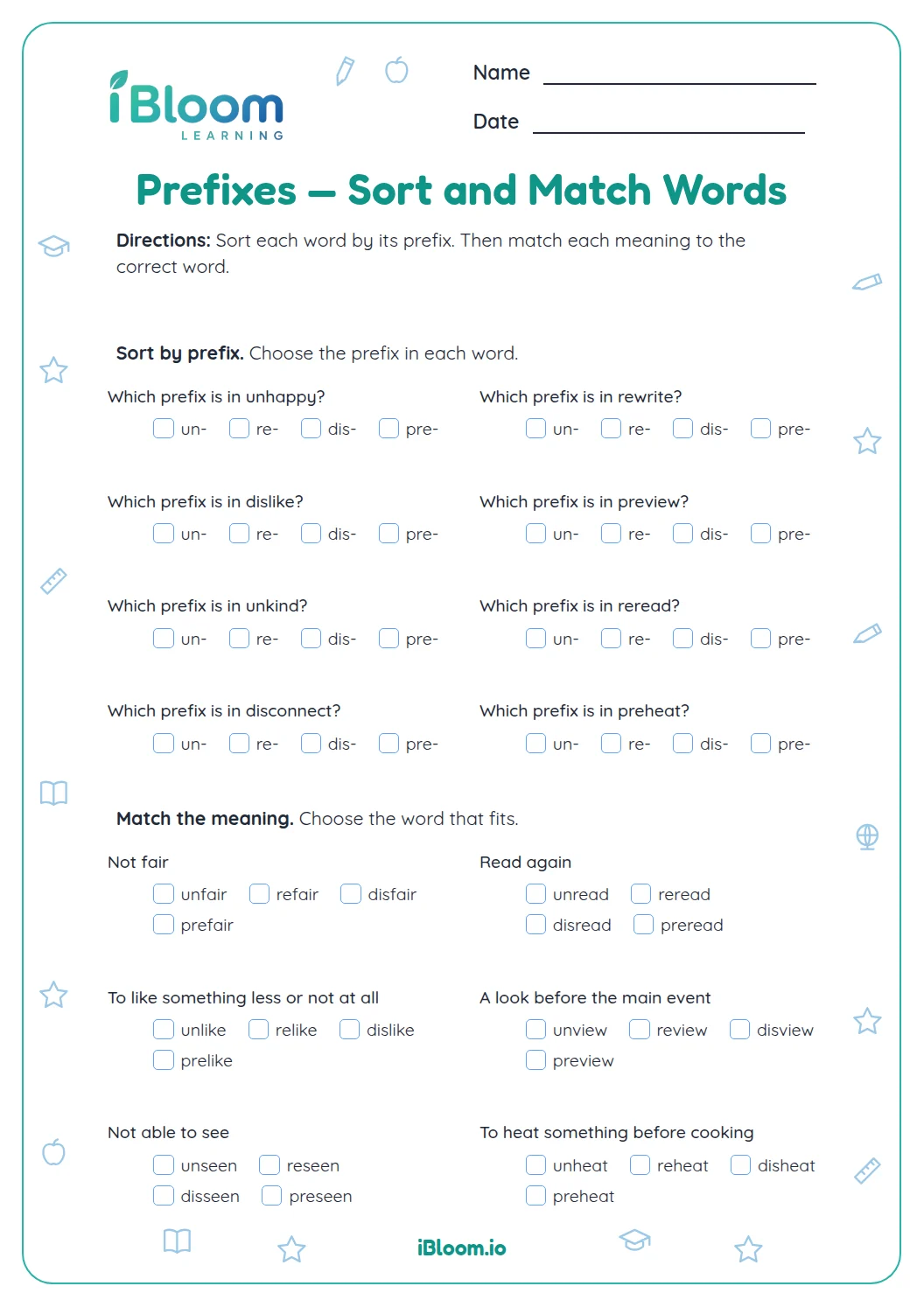
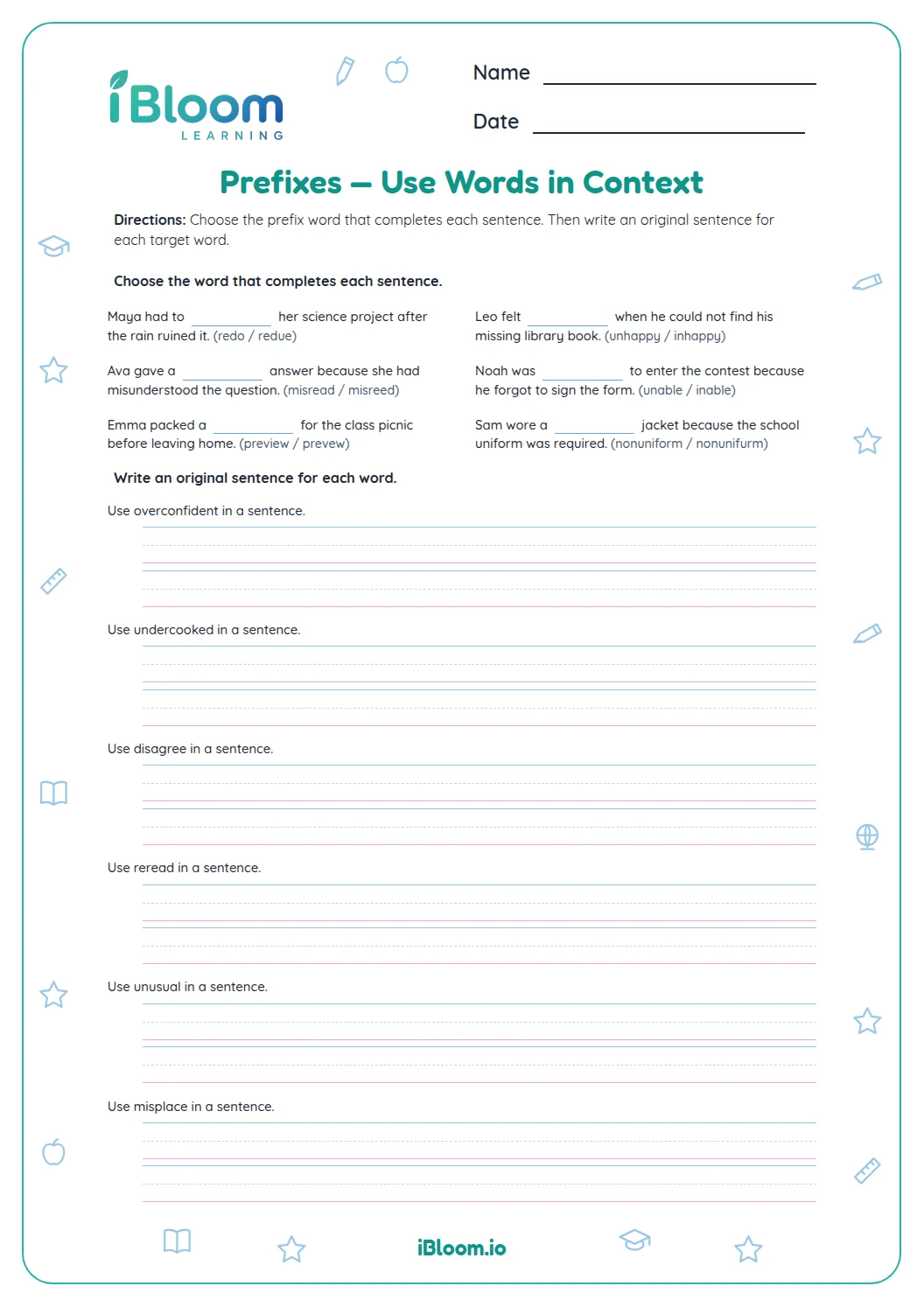
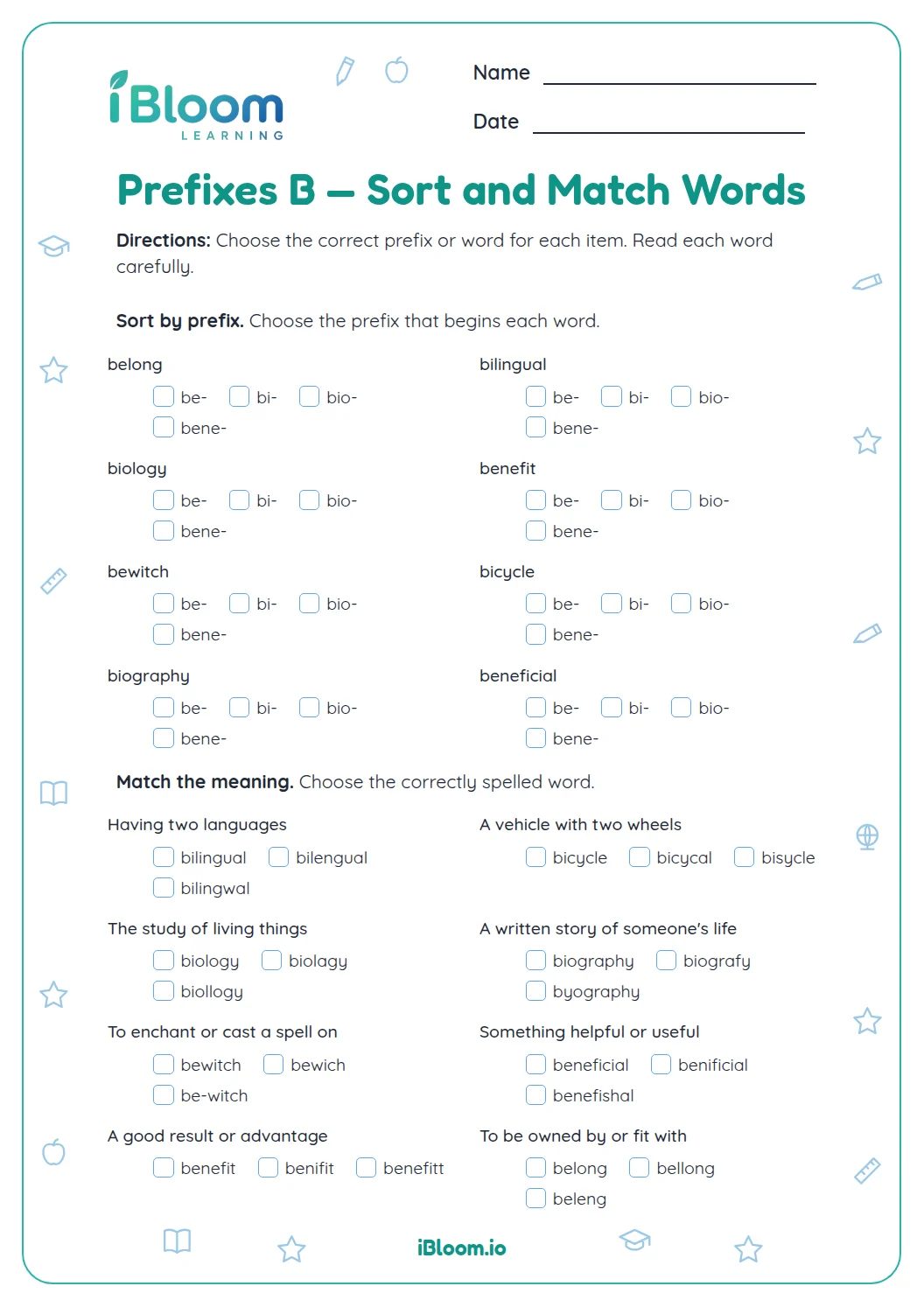
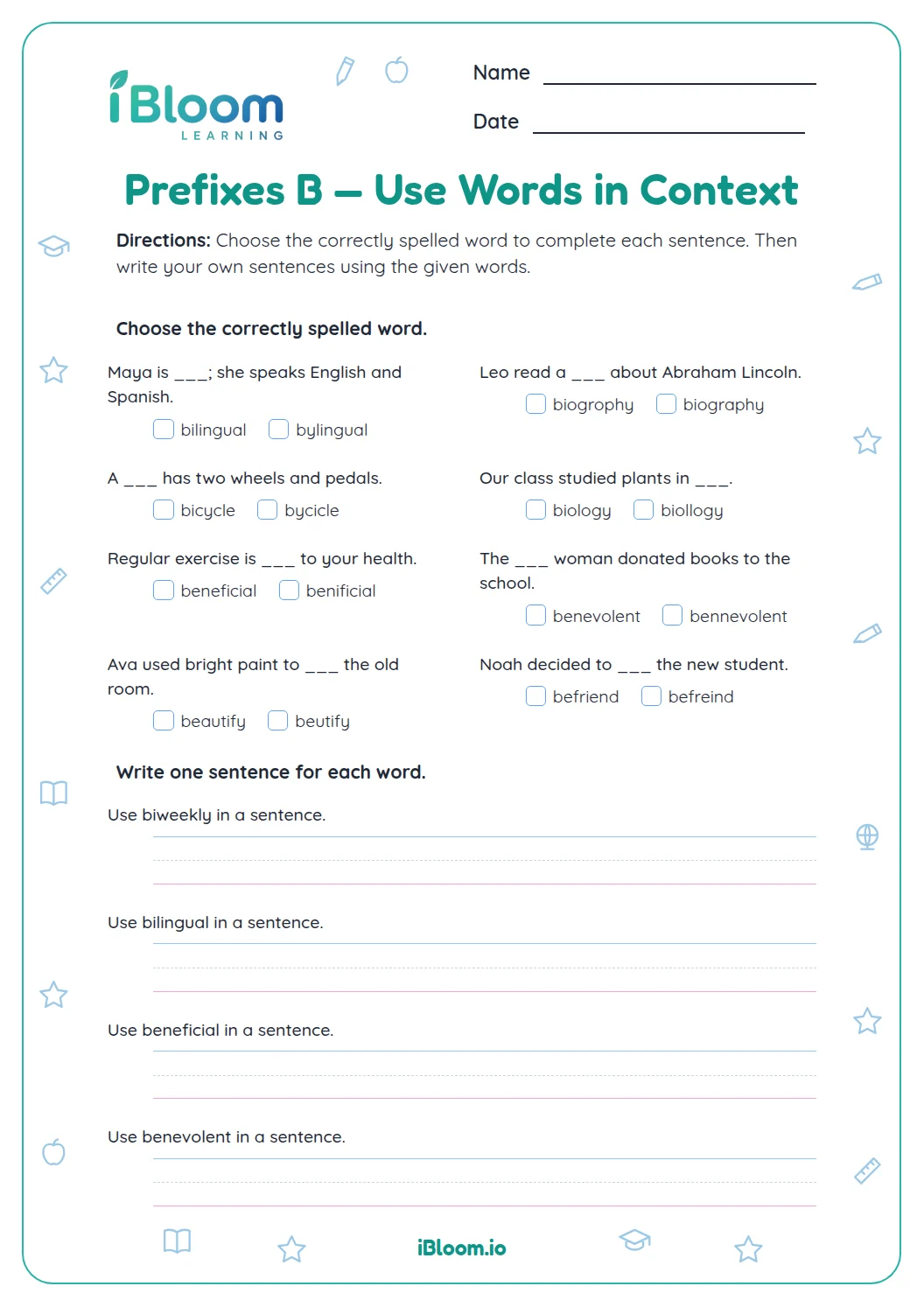
This Grade 5 printable focuses on completing words with common prefixes and using their meanings as clues. Children add a prefix to a base word, choose a completed word that matches a definition, and finish sentence contexts. The 19 questions include un-, re-, dis-, pre-, mis-, over-, non-, sub-, in-, and under-. A separate answer key is included.
What does a prefix do to a word?
A prefix is a word part added before a base word. Re- can mean again, un- can mean not, and pre- means before. Read the base word and clue together to choose a prefix that forms a correctly spelled word.
Question 9 asks for something built again: re- + build makes rebuild.
- 1Base word: build
- 2Meaning: again
- 3Completed word: rebuild
How can you complete a word accurately?
First identify the base word, then select a prefix that makes a familiar word. Say the whole word aloud and check that its meaning fits the clue. For example, re- + build makes rebuild, to build again.
How do sentence clues help?
The last four questions place prefix words in sentences. Read the whole sentence, identify its meaning clue, then write the prefix that completes the word. For question 13, “play again” calls for re-: replay.
What is included in the practice?
The three parts move from meaning recognition to building complete words and using a prefix in context.
- Part A: choose a prefix from a meaning clue
- Part B: complete four base words
- Part C: complete four sentence words
- A separate answer key lists all 16 prefixes
How to use this worksheet
- 1Read the base word before filling the blank.
- 2Say a possible prefix and base word together.
- 3Use the sentence or definition to check the meaning.
- 4Write the prefix clearly and reread the complete word.
- 5Use the key to review any word that did not sound right.
Common slips and quick fixes
The mistake
Choosing a prefix because its spelling looks familiar.
The fix
Test the completed word against the meaning clue or sentence.
The mistake
Leaving out a letter when joining prefix and base word.
The fix
Reread the whole word and compare it with the familiar spelling.
The mistake
Confusing un- (not) and re- (again).
The fix
Say the meaning of the prefix before choosing it.
What to practice next
Further reading
Questions parents and teachers ask
What is a prefix?
A prefix is a word part added to the beginning of a base word. It changes or adds to the word’s meaning. In unfair, un- means not and fair is the base word, so unfair means not fair. The first section gives direct practice joining prefixes and base words.
Which prefixes are practiced?
The worksheet practices un-, re-, dis-, pre-, mis-, over-, non-, sub-, in-, and under-. The words are familiar Grade 5 examples such as rebuild, misplace, preview, nonfiction, and underpaid. Children use both spelling patterns and sentence meanings to select them.
How can a child decide which prefix fits?
Start with the meaning clue, then read the base word with each possible prefix. In “heat too much,” over- fits to make overheat. In a sentence, nearby words can point to meanings such as again, before, not, or too much.
Is the answer always the whole word?
The directions vary by part. In the first and third parts, children write only the missing prefix, while the answer key shows that prefix. In Part B, children choose a complete word from the options. Remind learners to follow the printed instruction for each section.
What is an example of a common mistake?
A child might choose re- for a word meaning “not fair,” producing refair instead of unfair. Check the clue first: re- means again, while un- often means not. Then read the completed word aloud and see whether it matches the sentence or definition.
Does the sheet have an answer key?
Yes. The key lists the prefix answers for the completion items and the correct word choice for each multiple-choice item. It is separate from the worksheet pages, so an adult can check spelling and discuss why a prefix matches the clue.