









About this worksheet
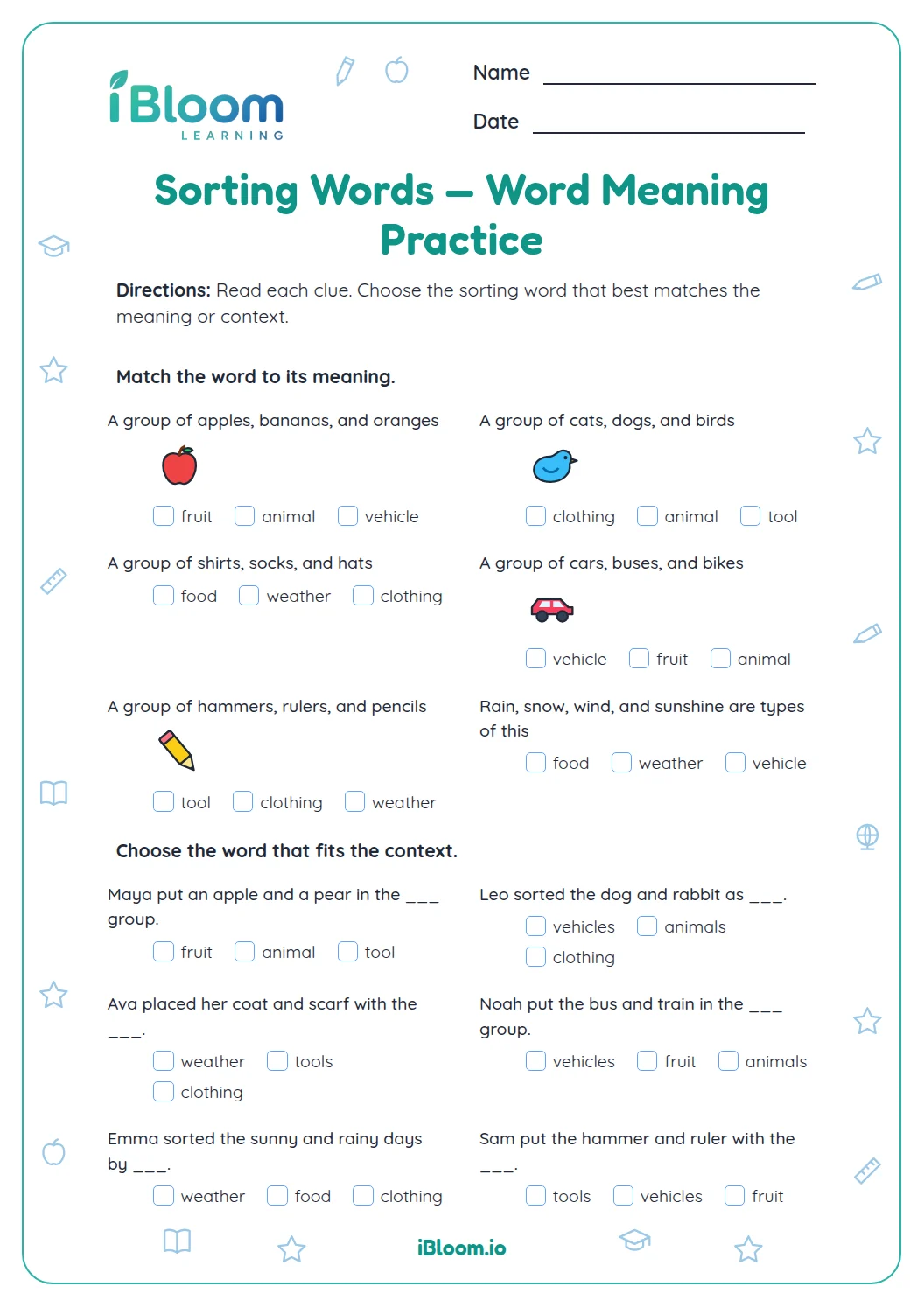
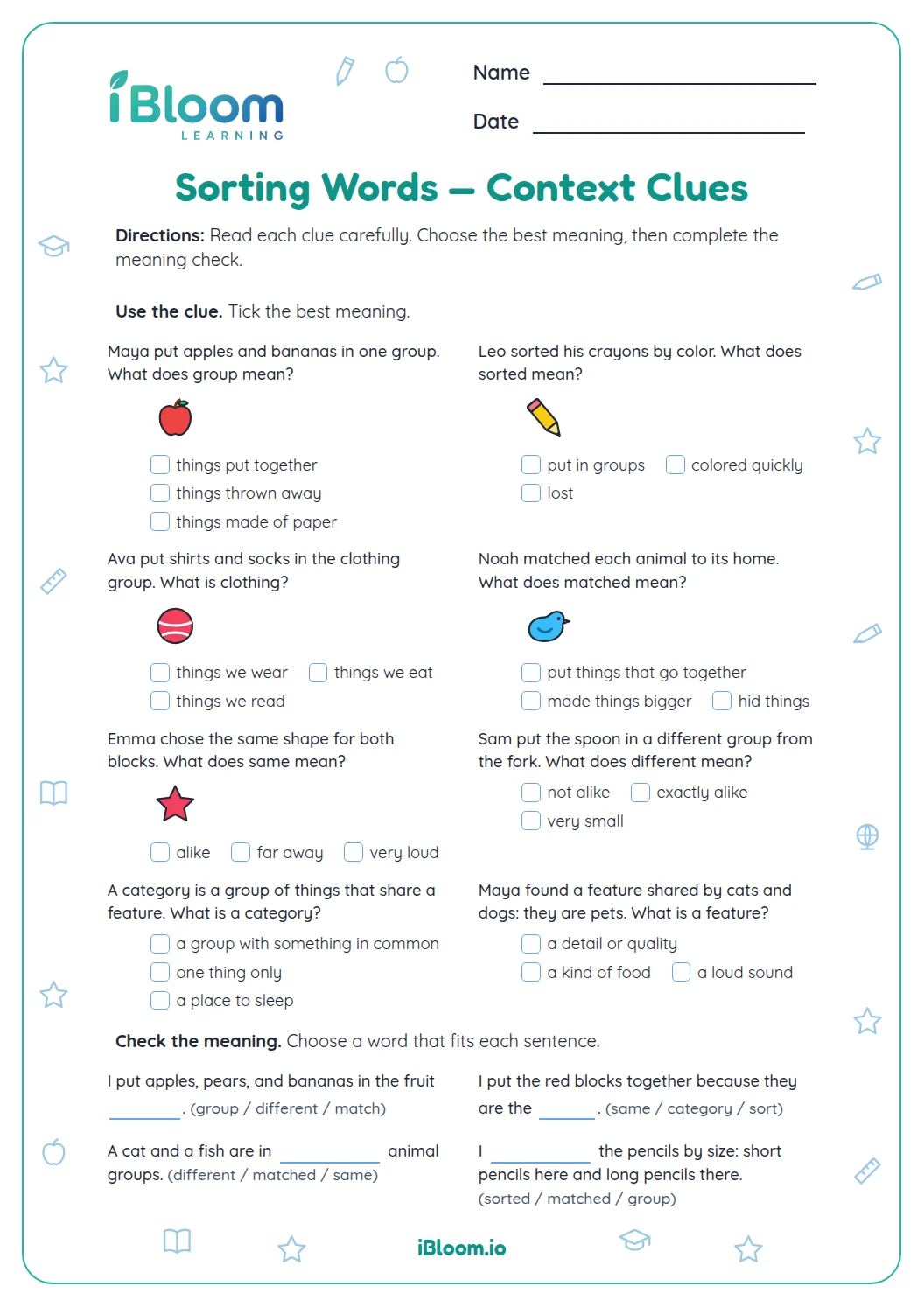
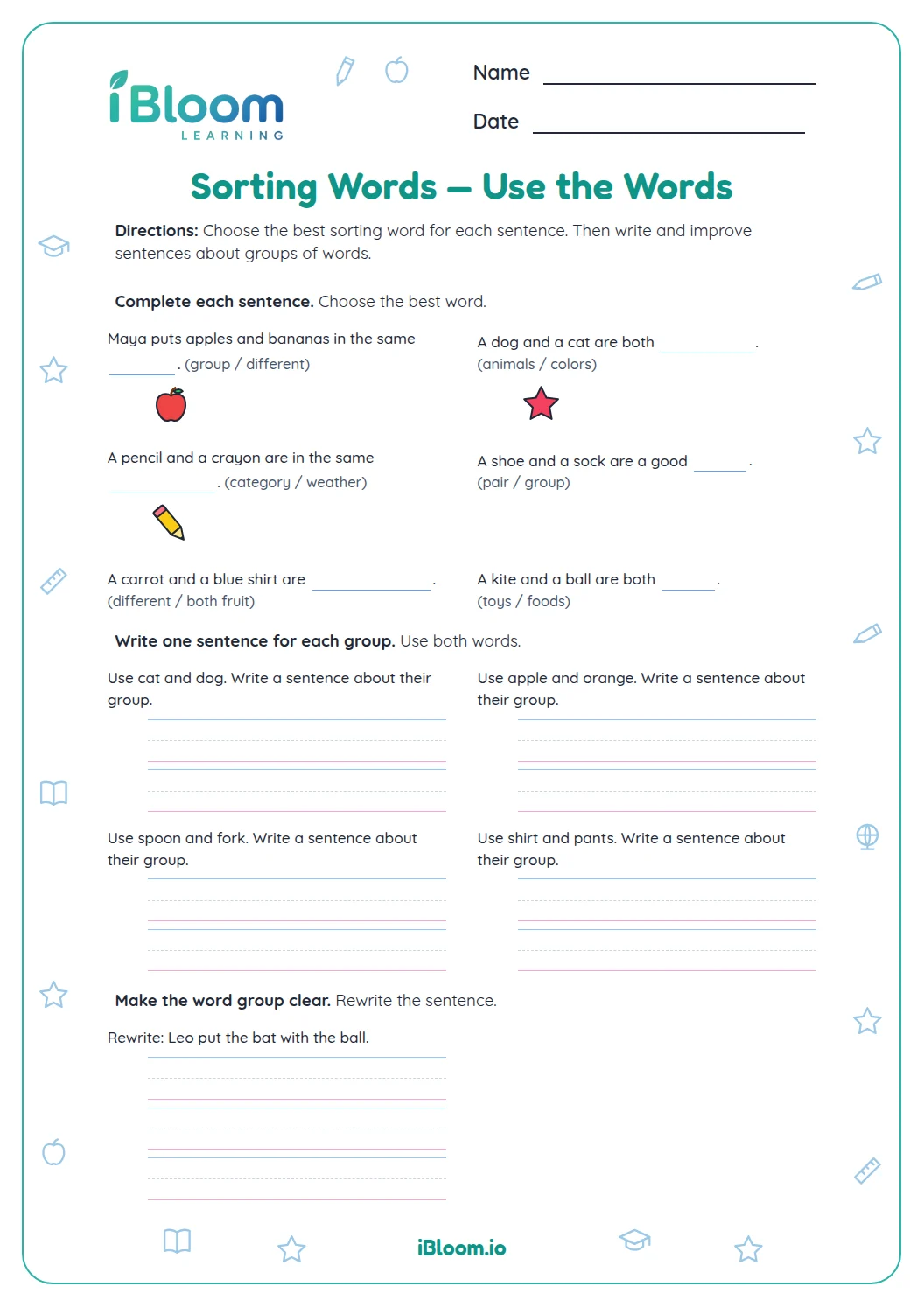
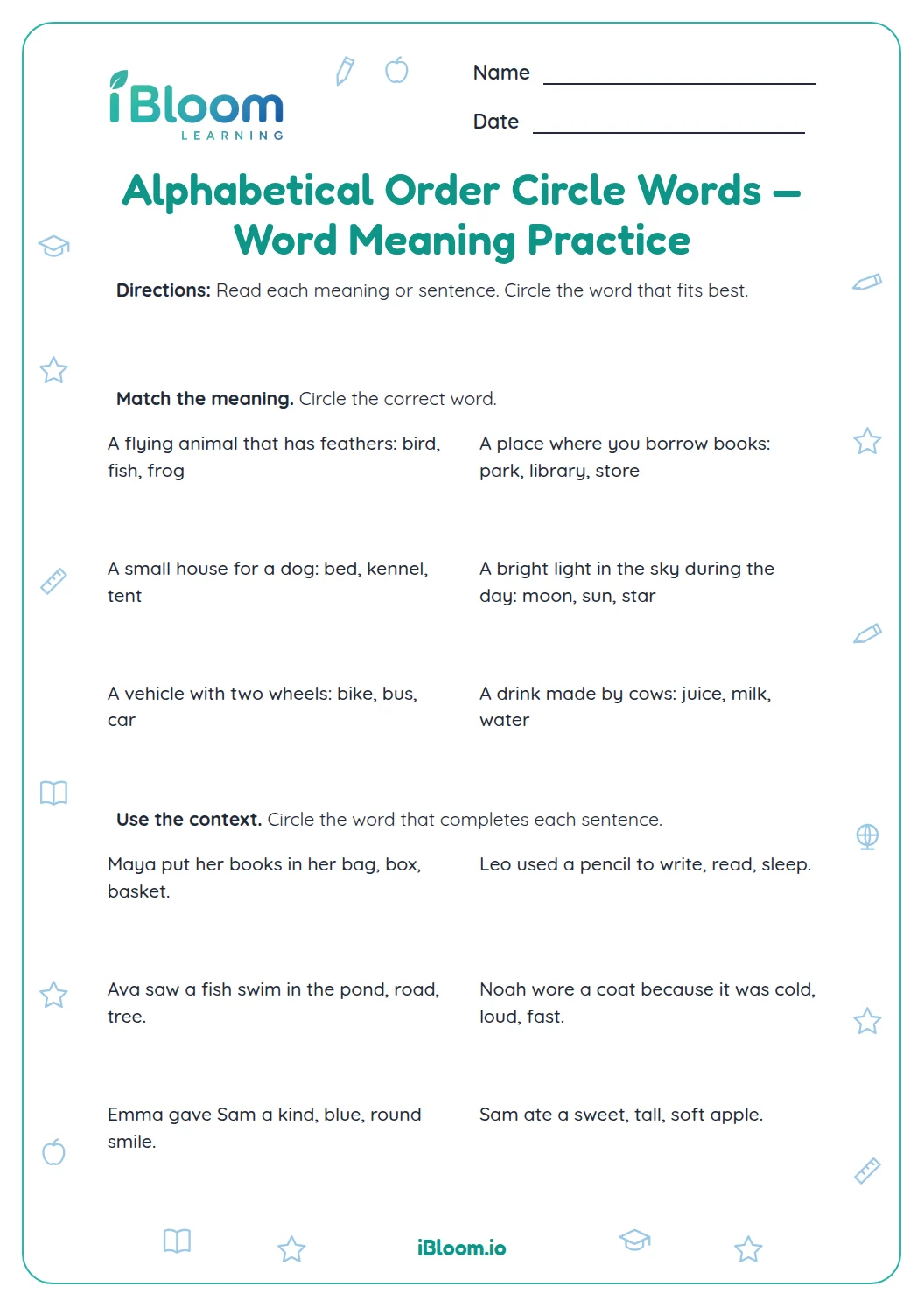
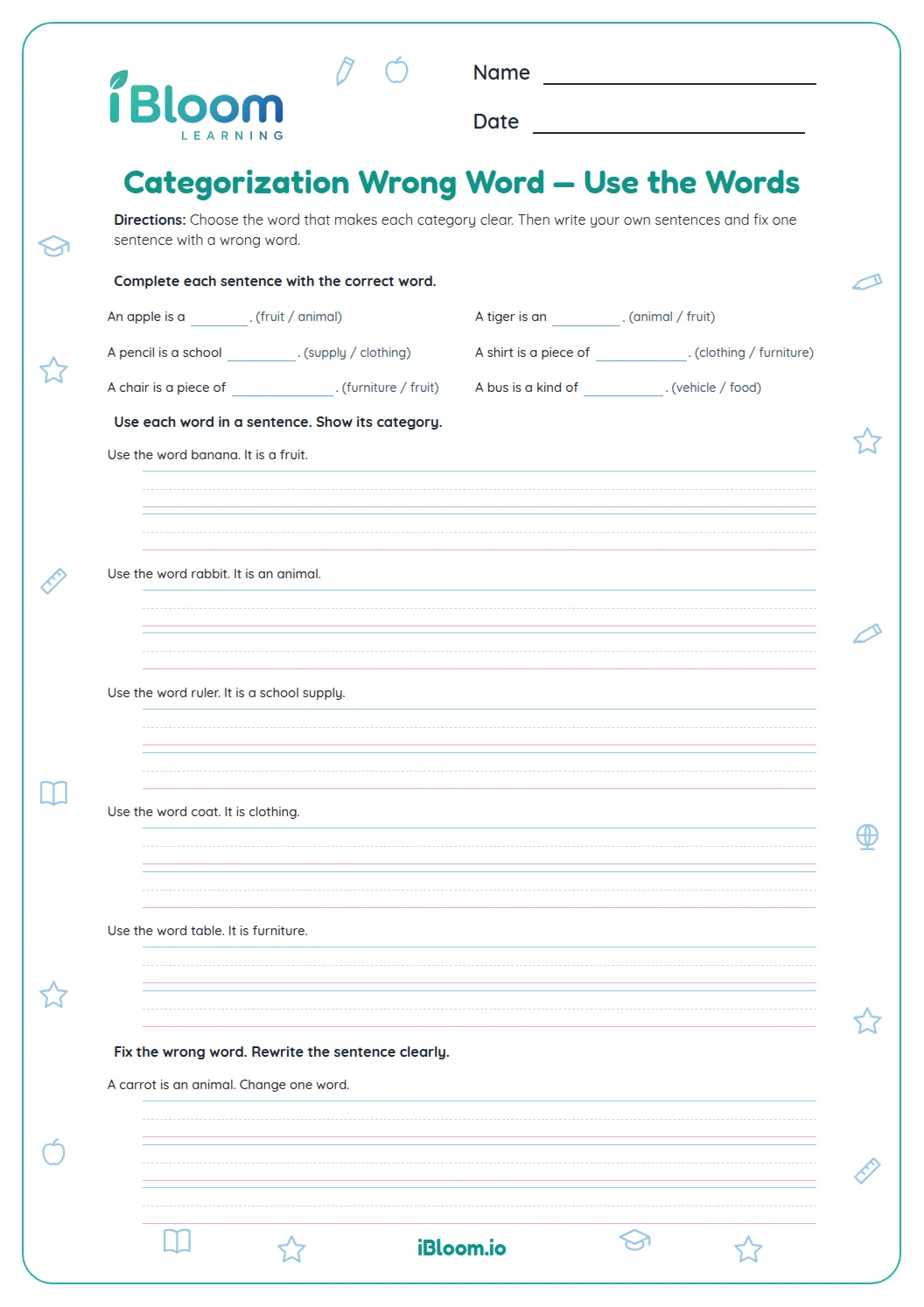
This Grade 1 vocabulary worksheet helps children sort familiar words into meaningful categories. Part A presents short category clues with three choices, such as choosing a fruit from pear, chair, and sock. Part B asks children to name the group shared by two related things. The two formats move from recognizing a category to explaining a word relationship, using familiar objects, animals, foods, and places.
Aligned to L.1.5a
What is a word category?
A category is a group of things that share a kind or feature. Pear belongs with fruit, and coat belongs with clothing. Thinking about the group name helps children connect a word to its meaning instead of choosing by how it sounds.
How can children choose the matching word?
The second activity asks children to name a group that includes both words. For example, rose and tulip are both flowers. A category name should fit each word in the pair.
- 1Pair: A rose and a tulip
- 2Both are flowers.
- 3Answer: flowers
How do two words connect?
In the second part, two words share a broader group. Rose and robin do not belong to the same category, but a rose and another flower share the group flower. Choose a category name broad enough to include both words.
How to sort each set
- 1Read the category clue or both words carefully.
- 2Say what each word means.
- 3For a choice question, test every option against the category.
- 4For a pair, name one group that includes both things.
- 5Check the answer key and explain one connection aloud.
Common sorting mix-ups
The mistake
Choosing a word because it appears near another familiar word.
The fix
Check whether the word truly belongs to the category named in the clue.
The mistake
Naming a category that fits only one of the two words.
The fix
Say both words with the category: “A ___ is a ___.” The group must fit both.
The mistake
Using a category that is too narrow or too broad to be useful.
The fix
Choose a familiar group name that clearly describes the words, such as fruit or clothing.
Common Core alignment
This worksheet gives children direct practice with the stated grade-level skill.
Sort familiar words into categories and notice the concepts those categories represent.
On this sheet: Part A chooses words by category; Part B names the category shared by familiar examples.
Show the official wordingHide the official wording
Sort words into categories (e.g., colors, clothing) to gain a sense of the concepts the categories represent.
What to practice next
Make more practice
Further reading
Questions parents and teachers ask
What does it mean to sort words?
Sorting words means grouping them by something they share. A pear belongs in the fruit category, and a coat belongs in the clothing category. Naming the group gives children a simple way to explain how a word connects to other words.
Why does Part B ask for the group name?
Part B gives two examples and asks for their shared group. For example, a rose and a tulip are flowers. The answer key lists an expected category for each pair; accept another clear category if it accurately fits both examples.
Can there be more than one good group name?
Yes. A pair may fit more than one accurate group name. The key gives a simple expected category, but a child can use another familiar word if it clearly includes both things. Ask the child to explain how each example fits the group.
How many questions are included?
There are 16 questions: six multiple-choice category items and ten shared-category responses. The first group asks children to select a word that belongs in a category. The second group asks them to name a category that fits both words in a pair.
How can I make this easier for a beginning reader?
Read the category clue and answer choices aloud, then ask the child to explain what each word means. For the pair questions, say both words and invite the child to name what kind of things they are before writing the category.