






About this worksheet
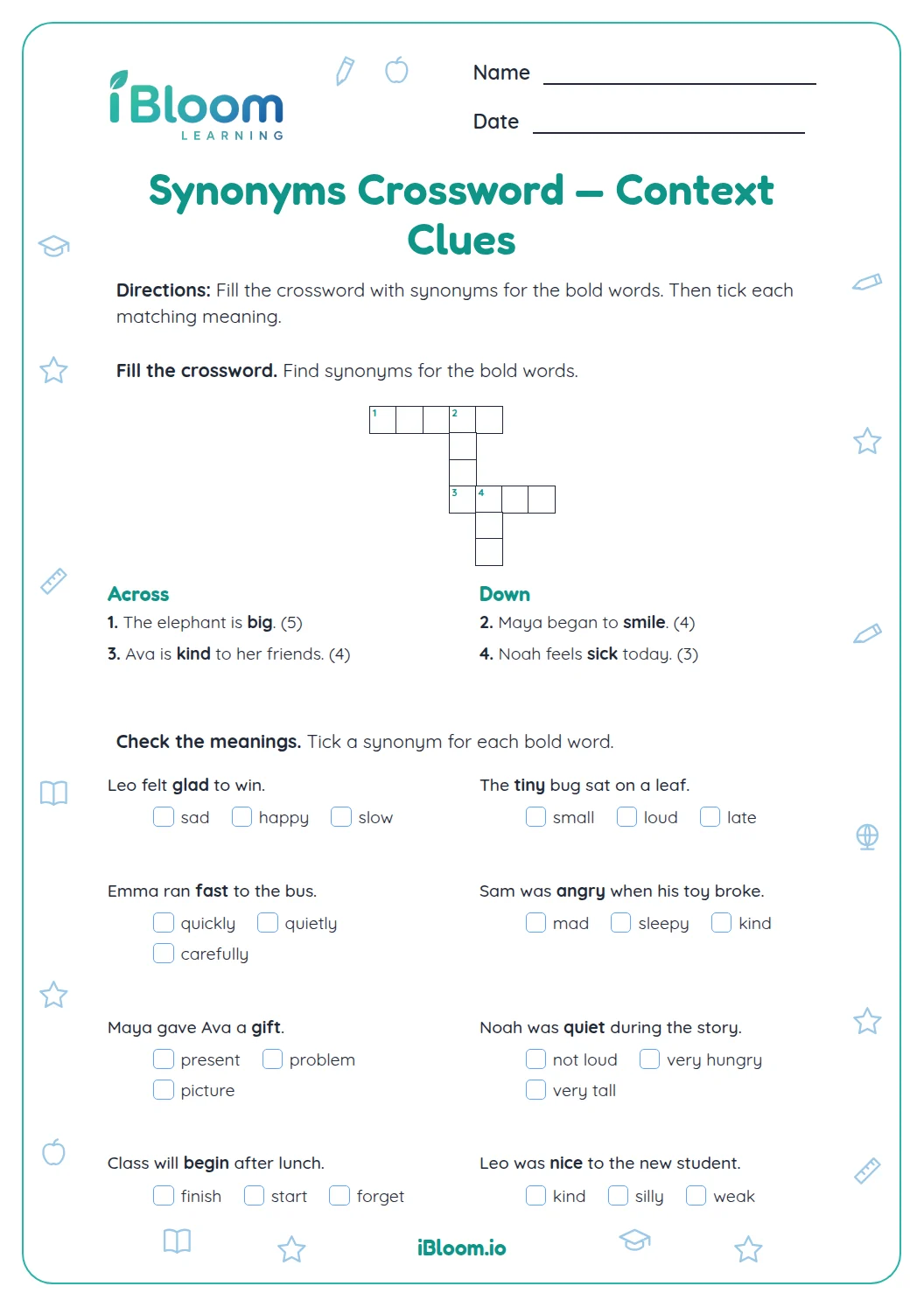
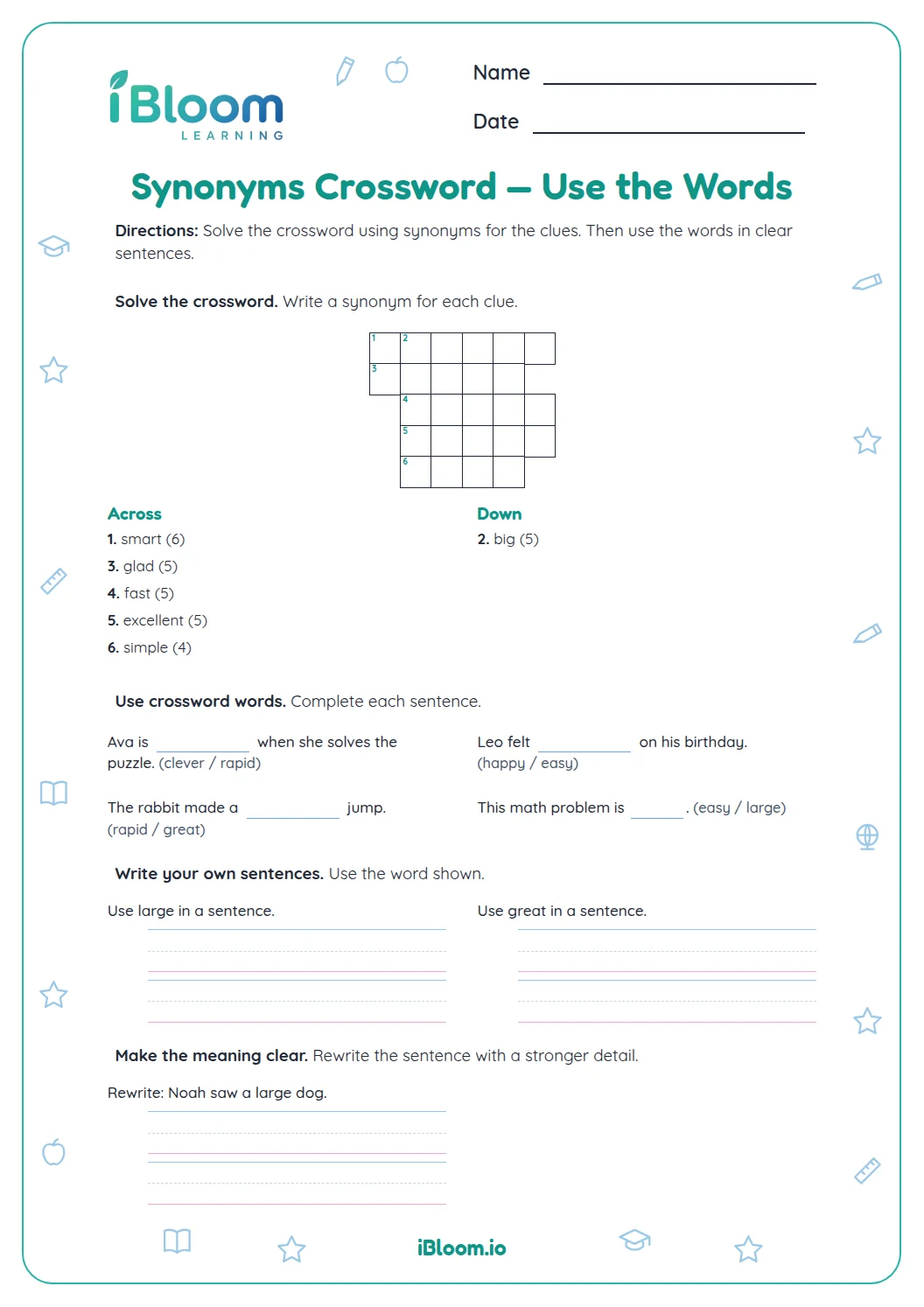
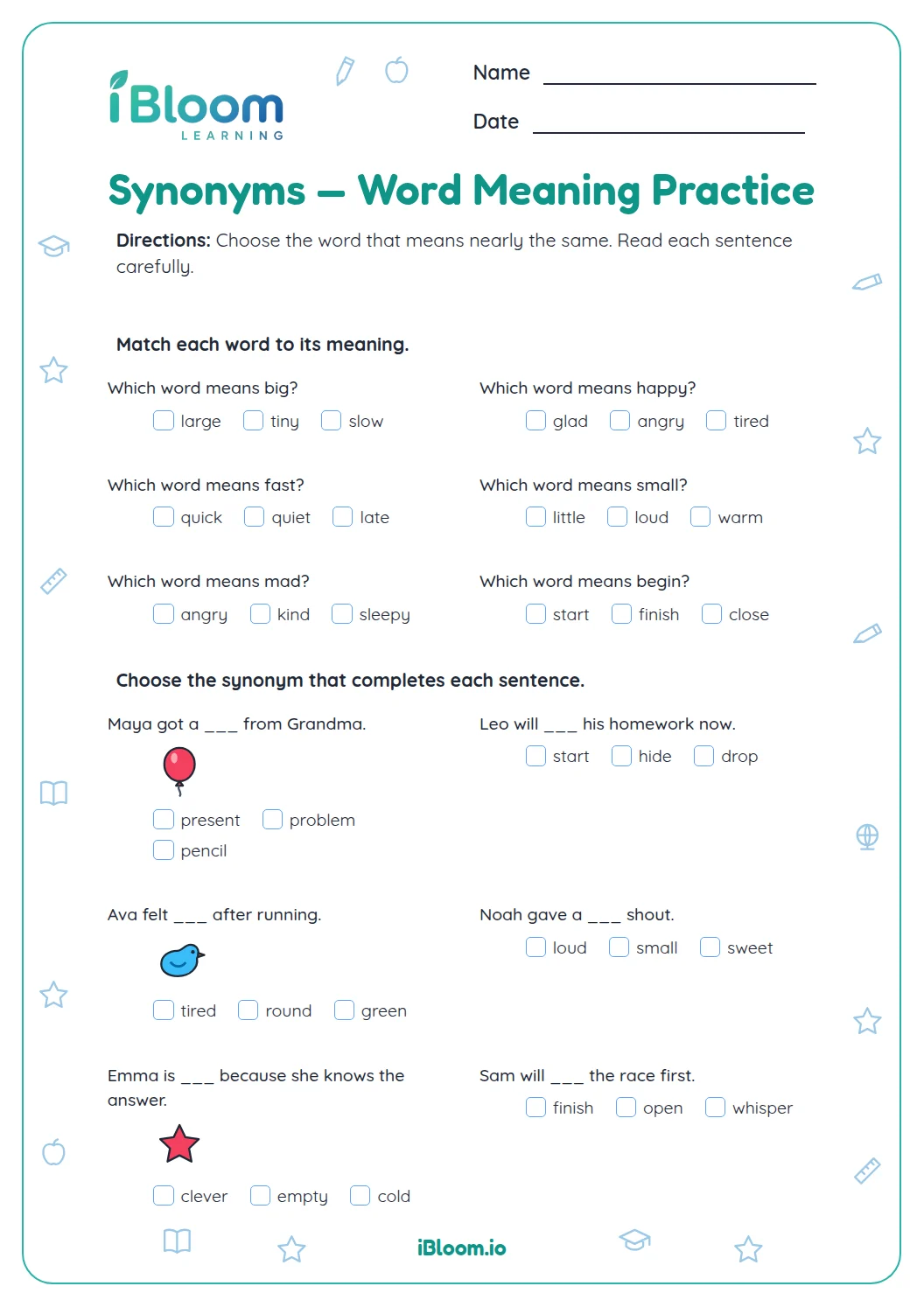
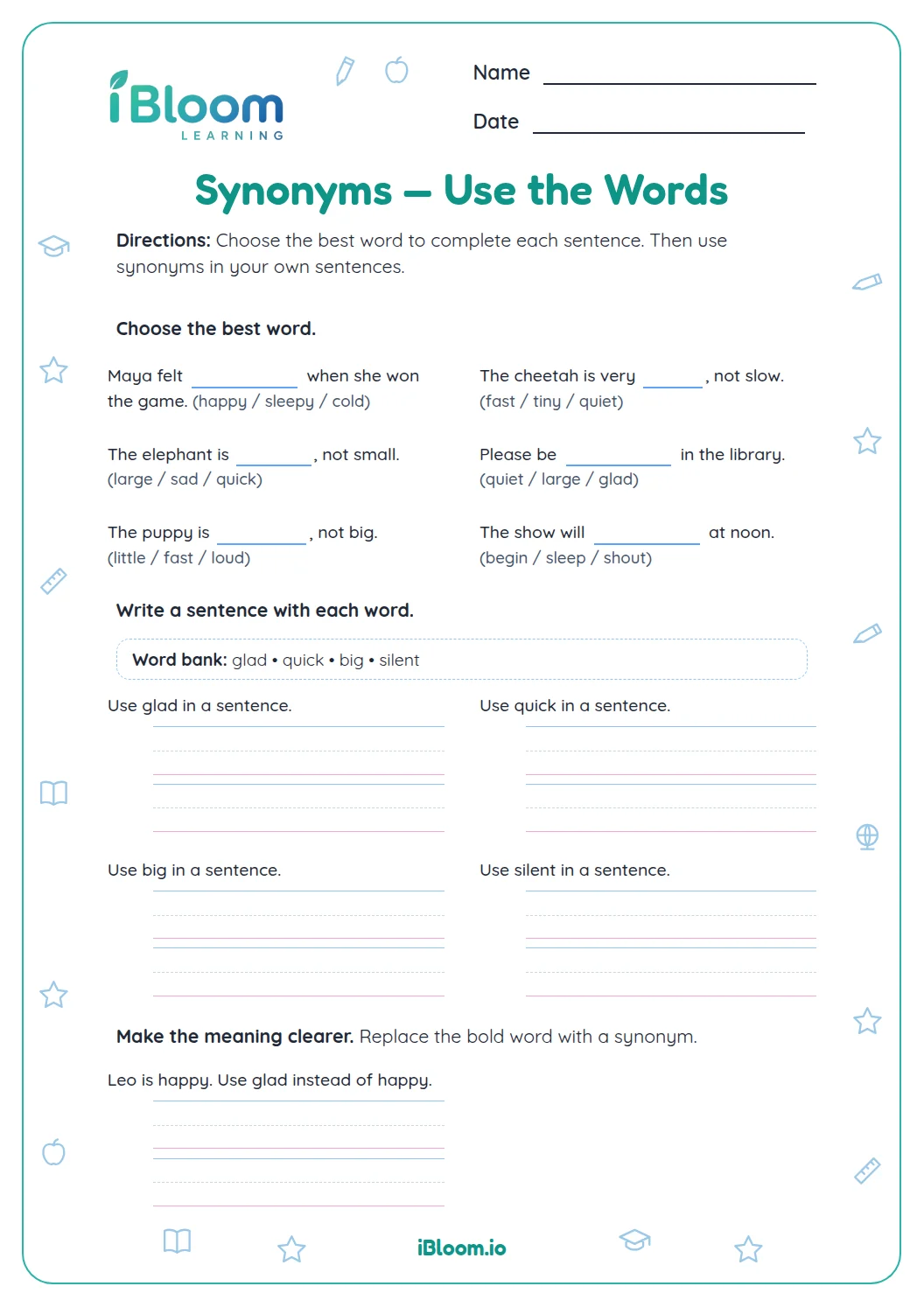
This Grade 1 synonym worksheet introduces words with like meanings using familiar pairs such as fast and quick, little and small, and glad and happy. Students begin by choosing between two clear options, then use a short sentence to check which synonym makes sense. Six clue answers finish the mini crossword. The printable includes 16 questions and a separate key, with a friendly progression from recognition to using meaning in context. It aligns with Common Core Language standard L.1.5, which asks students to show understanding of word relationships with adult guidance and support.
Aligned to L.1.4.a
What is a synonym?
A synonym is a word that means the same as, or nearly the same as, another word. For example, quick and fast are close in meaning.
- 1Which word means happy: glad or sad?
- 2Compare the choices with happy.
- 3Glad has a like meaning, so choose glad.
How does the sheet build word meaning?
Part A offers five simple word pairs. Part B uses short sentences and picture cues to help students check meaning in context. Part C has six crossword clues with everyday synonyms.
- Part A: 5 two-choice questions
- Part B: 5 picture-supported sentence clues
- Part C: 6 mini crossword clues
How can an adult support the activity?
Read a prompt and its choices aloud if needed. Ask the child to say each choice in the sentence and explain which one keeps the same idea.
How to use this worksheet
- 1Read the target word and both choices aloud.
- 2Ask what each choice means before selecting one.
- 3In Part B, reread the whole sentence with the chosen synonym.
- 4Use the clue in Part C to write a like-meaning word.
- 5Check each response with the separate key.
Common mistakes and quick fixes
The mistake
Choosing the opposite word.
The fix
Say the target word and the choice together; check that they are alike in meaning.
The mistake
Choosing a word that fits the topic but not the meaning.
The fix
Ask whether the two words could mean nearly the same thing.
The mistake
Ignoring the sentence in Part B.
The fix
Read the whole sentence after choosing; the new word should keep its idea.
Common Core alignment
This worksheet gives students direct practice with a grade-level Common Core skill.
Use a sentence as a clue when choosing a word with a similar meaning.
On this sheet: Part B uses a short sentence as a clue for choosing a synonym that preserves its meaning.
Show the official wordingHide the official wording
Use sentence-level context as a clue to the meaning of a word or phrase.
What to practice next
Make more practice
Further reading
Questions parents and teachers ask
What does synonym mean for a first grader?
A synonym is a word that means the same as, or almost the same as, another word. Fast and quick are synonyms. The worksheet uses clear choices and short sentences so a child can compare words without needing a dictionary. An adult can invite the child to say both words aloud and explain which one keeps the original idea.
How many questions are on the page?
There are 16 questions in three parts: five two-choice synonym questions, five picture-supported sentence questions, and six mini crossword clues. The separate key lists the expected answer for each item. The key gives a suggested response, and another word may be accepted when it clearly has a similar meaning.
Should an adult read the questions aloud?
Yes. An adult can read each prompt and choice aloud while the child decides which word has a like meaning. This keeps attention on understanding the word relationship, especially for children who are still building independent reading fluency. Read the prompt and options aloud, then let the child choose and explain the close meaning.
Why does Part B use sentences?
A sentence gives a little context for choosing a synonym. For example, if a kitten is described as little, small fits the sentence idea. Reading the whole sentence with the new word helps children check their choice. The sentence gives a meaning clue: “little” and “small” fit the same idea. Read the completed sentence aloud to check it.
How does the crossword practice synonyms?
Each of the six clues names a word or meaning and asks for a related word. Students write the synonym in the mini crossword, using the clue and crossing letters to check it. The key and crossing letters help children check whether each written word matches the clue and its neighboring answers.