Free printable practice
Feelings Practice Activities
Grade 1 vocabulary word search worksheets that help children recognize, read, and discuss common feelings words.
Free printable worksheet PDFs
Preview every available page, then download the free worksheet PDF for home, homeschool, tutoring, or classroom practice.
Preview the exact activity before downloading it.
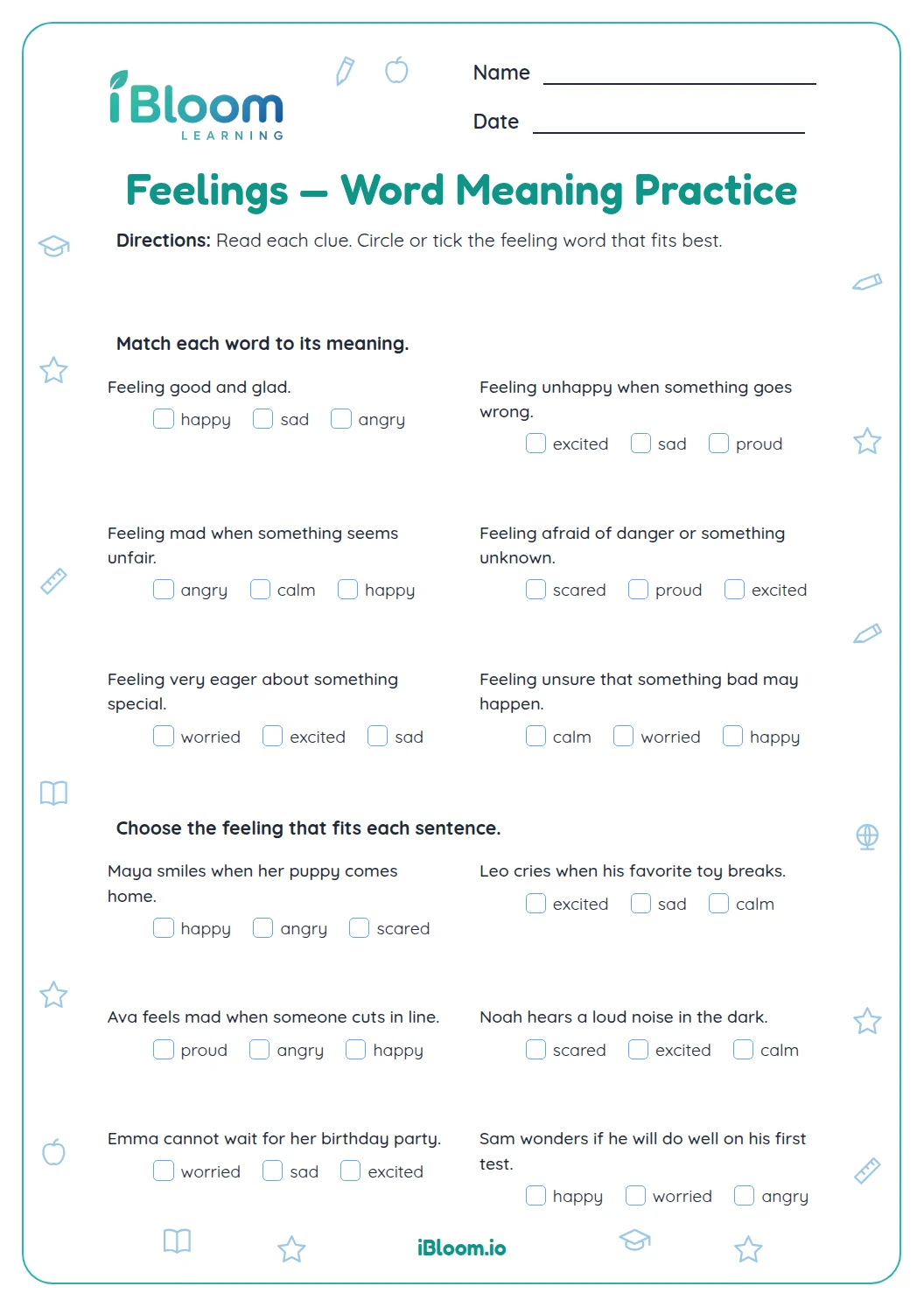 Feelings — Word Meaning PracticeGrade 1 vocabulary word search worksheets that help children recognize, read, and discuss common feelings words. This word meaning practice worksheet provides a distinct, age-appropriate way to practise the same lesson.Grade 1Free PDF preview
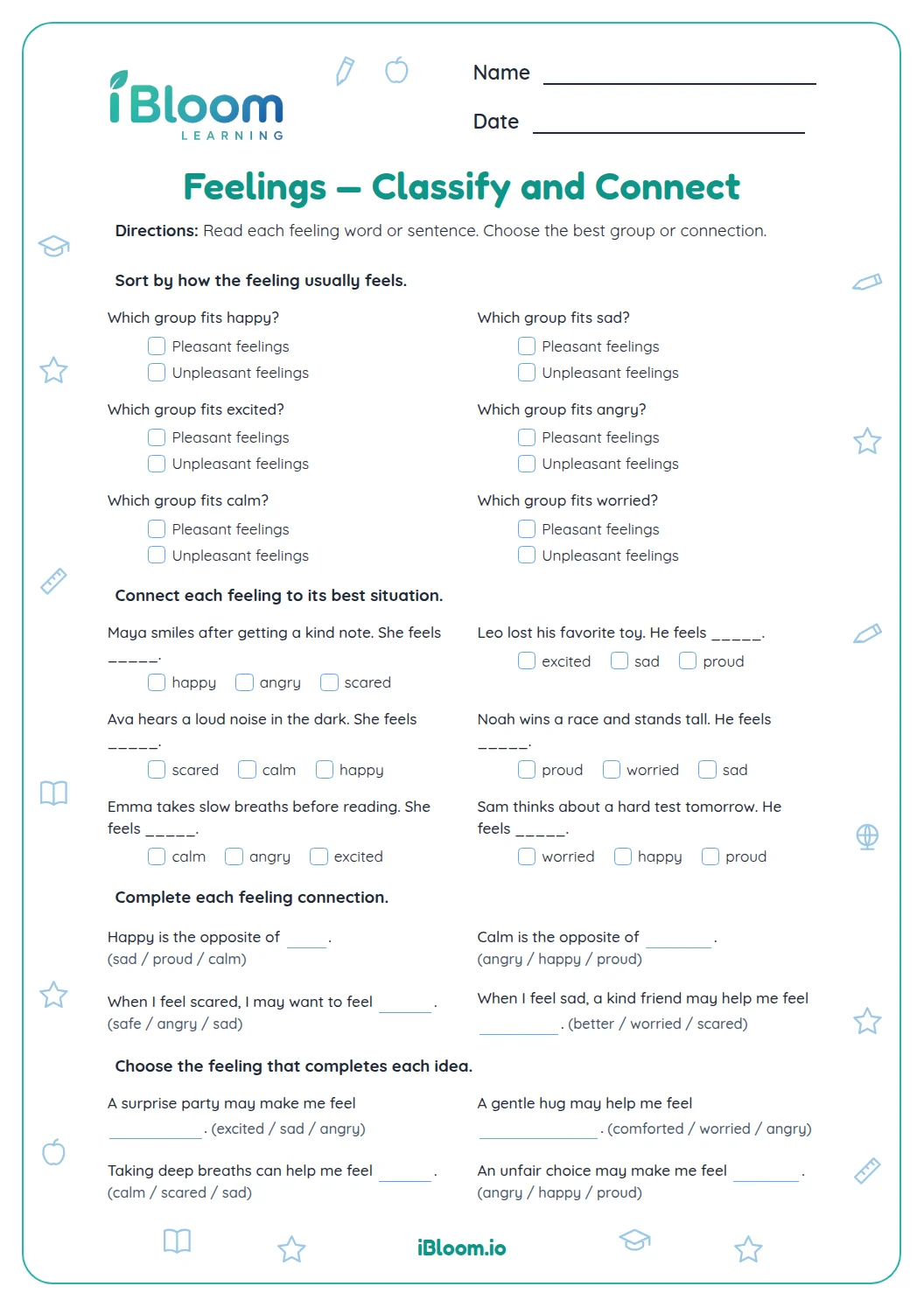 Feelings — Classify and ConnectGrade 1 vocabulary word search worksheets that help children recognize, read, and discuss common feelings words. This classify and connect worksheet provides a distinct, age-appropriate way to practise the same lesson.Grade 1Free PDF preview4 pages
 Feelings — Context CluesGrade 1 vocabulary word search worksheets that help children recognize, read, and discuss common feelings words. This context clues worksheet provides a distinct, age-appropriate way to practise the same lesson.Grade 1Free PDF preview4 pages
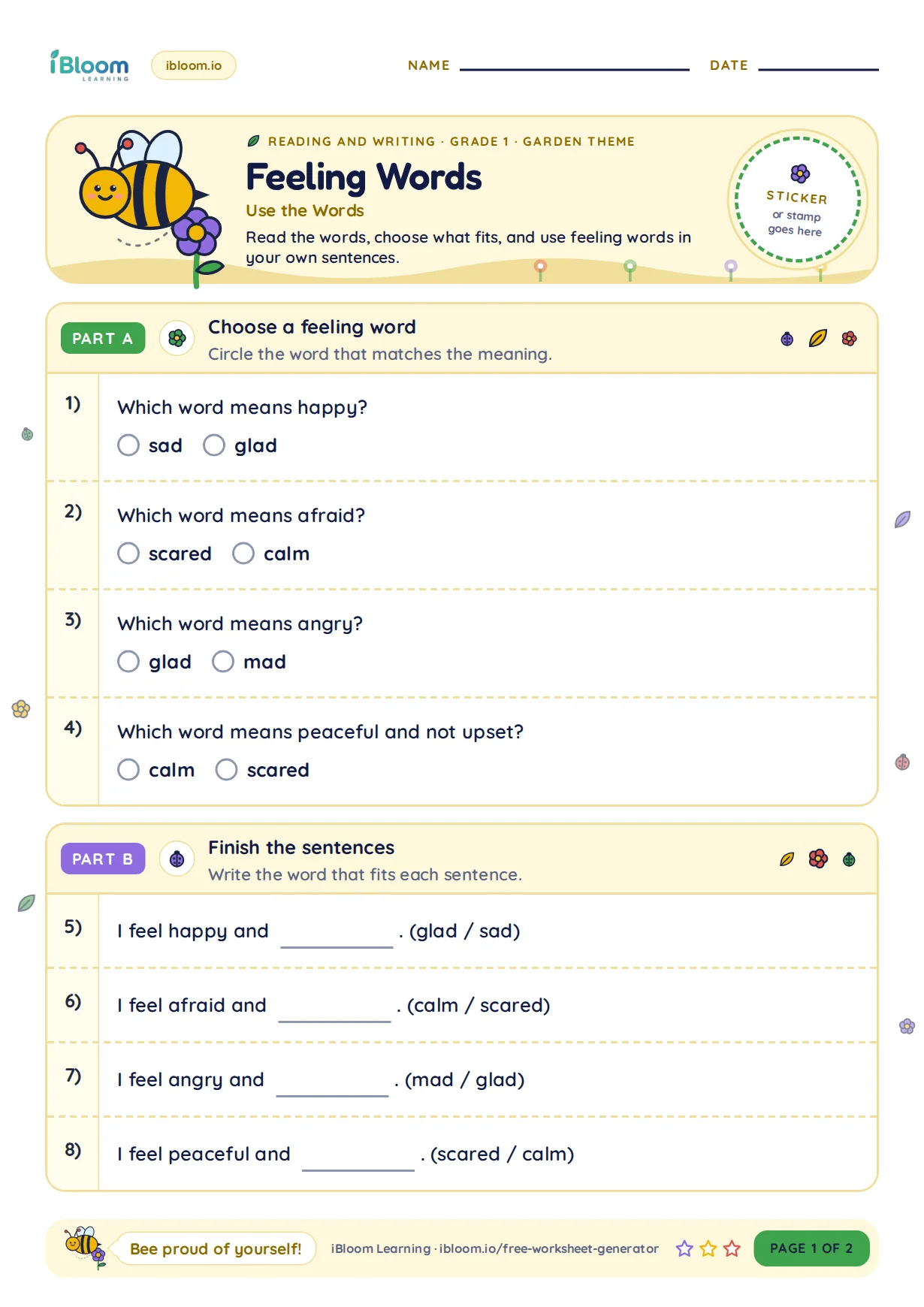 Feelings — Use the WordsGrade 1 vocabulary word search worksheets that help children recognize, read, and discuss common feelings words. This use the words worksheet provides a distinct, age-appropriate way to practise the same lesson.Grade 1Free PDF preview
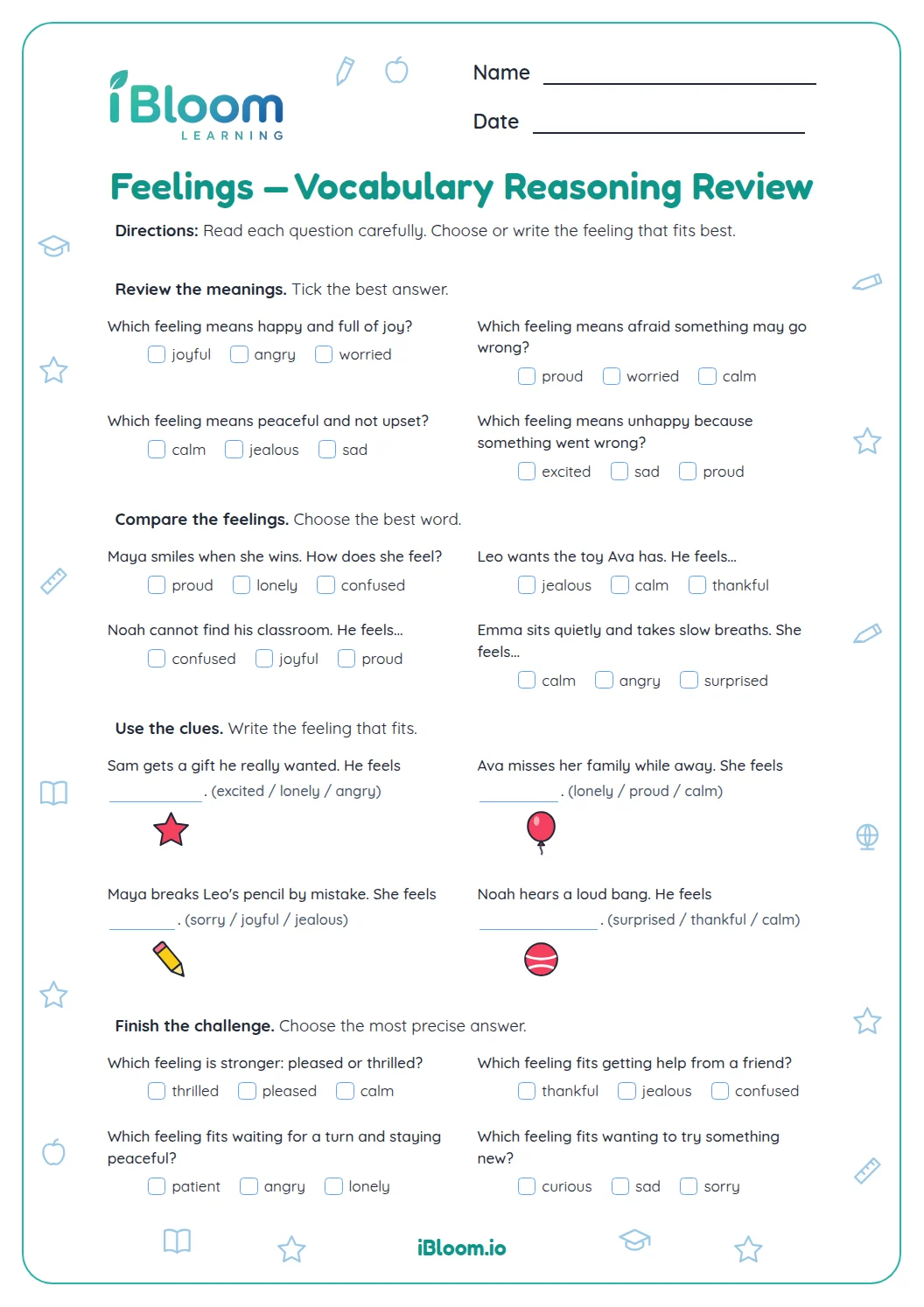 Feelings — Vocabulary Reasoning ReviewGrade 1 vocabulary word search worksheets that help children recognize, read, and discuss common feelings words. This vocabulary reasoning review worksheet provides a distinct, age-appropriate way to practise the same lesson.Grade 1Free PDF preview
Practice that builds confidence
What Feelings Vocabulary Builds
These Grade 1 vocabulary word search worksheets help children read and recognize words for feelings. Learners look for emotion words in a letter grid while building familiarity with words they can use to describe themselves and characters in stories.
The printable activities may include simple word lists, clear grids, and feeling vocabulary such as happy, sad, angry, scared, proud, calm, or excited when included on the page. Children practice scanning letters, matching words, and talking about what each feeling means.
Feelings words help first graders move beyond "good" and "bad" when they talk about experiences. A child who can read words such as happy, sad, angry, scared, calm, proud, or excited can describe a classroom moment, a story character, or a picture with more care. The word search format adds a playful reading task without asking for long written responses.

Skill Progression
Children begin by reading the word list with support. They then search left to right, top to bottom, or in simple directions depending on the grid design. As they find each word, they connect its spelling to its meaning. Teachers and parents can ask, "What might make someone feel proud?" after the child circles the word.
Parent Routine
Before the worksheet, choose two feelings and act them out with facial expressions. Ask your child to name each feeling, then find the word in the list. During the search, encourage them to look for the first letter, check the next letter, and trace the word lightly with a finger before circling it.

Classroom Uses
Teachers can use these worksheets during vocabulary lessons, social-emotional learning discussions, morning work, literacy centers, or after reading a story. After the search, students can choose one word and draw a face, match it to a character, or complete an oral sentence such as "I felt excited when...".

Common Errors to Watch
First graders may circle letters that are near each other but not in the correct order, confuse similar words, or recognize the feeling in a picture but not read the printed word. Slow scanning helps. Covering part of the grid with a paper strip can also reduce visual overload.
Free printable PDF download
Use this Grade 1 feelings word search worksheet page to preview the activity, print it, or download it as a PDF for quick practice. It works well for homework, homeschool lessons, tutoring, morning work, revision, and classroom centers.
Answers and answer key support
After the child completes the worksheet independently, parents and teachers can use the answer support or answer key information to check the work, review mistakes, and choose the next practice step.
Why iBloom Worksheets Help
The pages combine vocabulary, spelling attention, and emotional language in one simple task. A child-friendly strategy is: read the word, find the first letter, follow the letters in order, then say what the feeling means.
Helpful answers
Frequently asked questions
What do Grade 1 students practice in a feelings word search?
They practice reading emotion words, finding letter patterns in a grid, and connecting each word to a feeling they can describe.
Can these worksheets support social-emotional learning?
Yes. After finding each word, children can discuss when someone might feel that way or connect the word to a story character.
What should I do if a child only finds the first letter?
Ask the child to check the next two letters before circling. Following the whole word in order prevents random circling.
Are the feeling words too abstract for first graders?
The worksheets focus on common feelings. Pairing each word with facial expressions, examples, or story events makes the meaning clear.
How can teachers extend the worksheet after the word search?
Students can draw a matching expression, use one feeling word in an oral sentence, or name a character who felt that emotion.
Is this Grade 1 feelings word search worksheet free?
Yes. You can preview it for free and use the printable worksheet for home or classroom practice.
Can I download this Grade 1 feelings word search worksheet as a PDF?
Yes. Use the worksheet download option to save a printable PDF, or print the worksheet directly from the page.
Does this Grade 1 feelings word search worksheet include answers or an answer key?
When the activity has fixed answers, iBloom includes answer support so parents and teachers can check the completed worksheet.