




About this worksheet
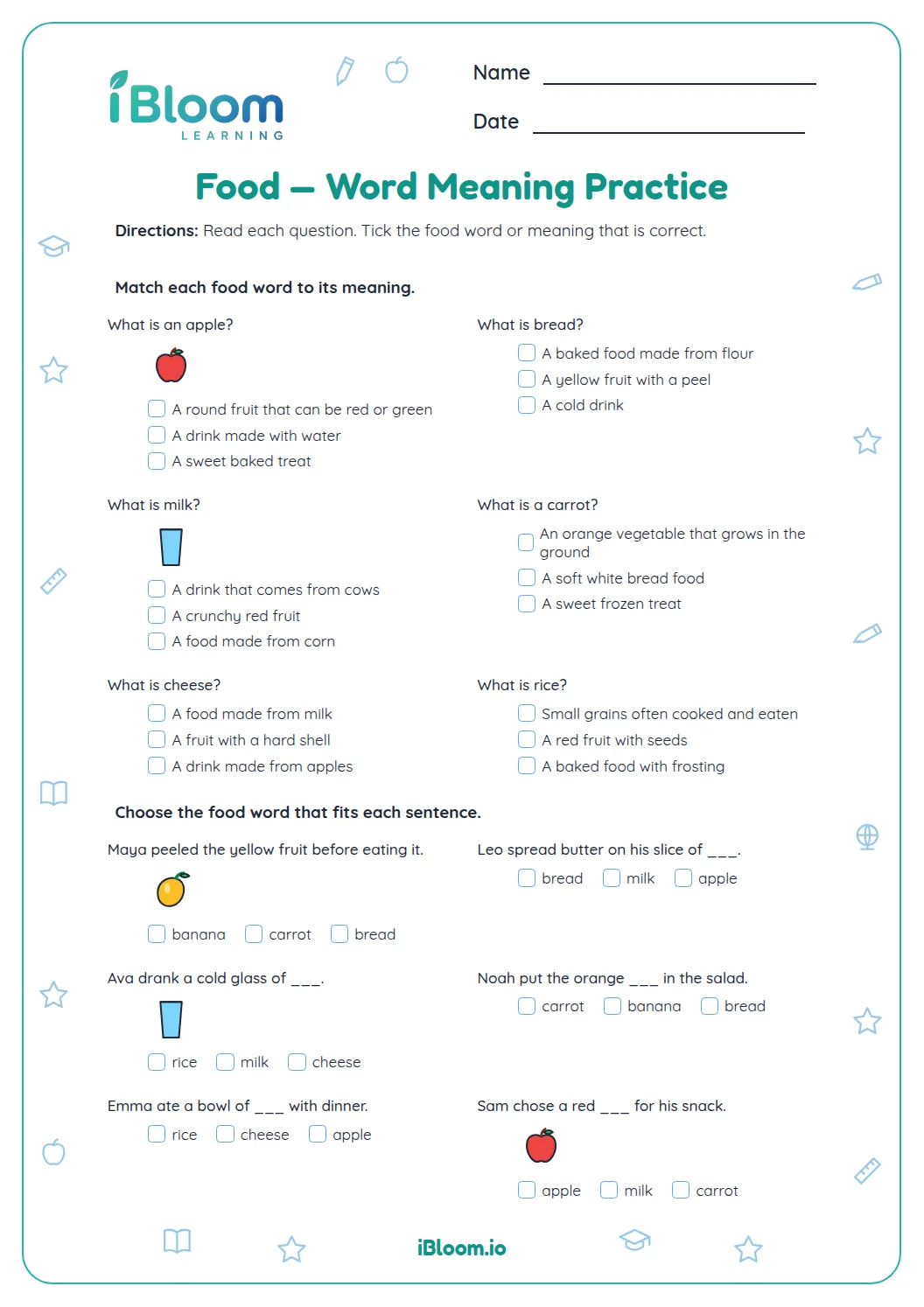
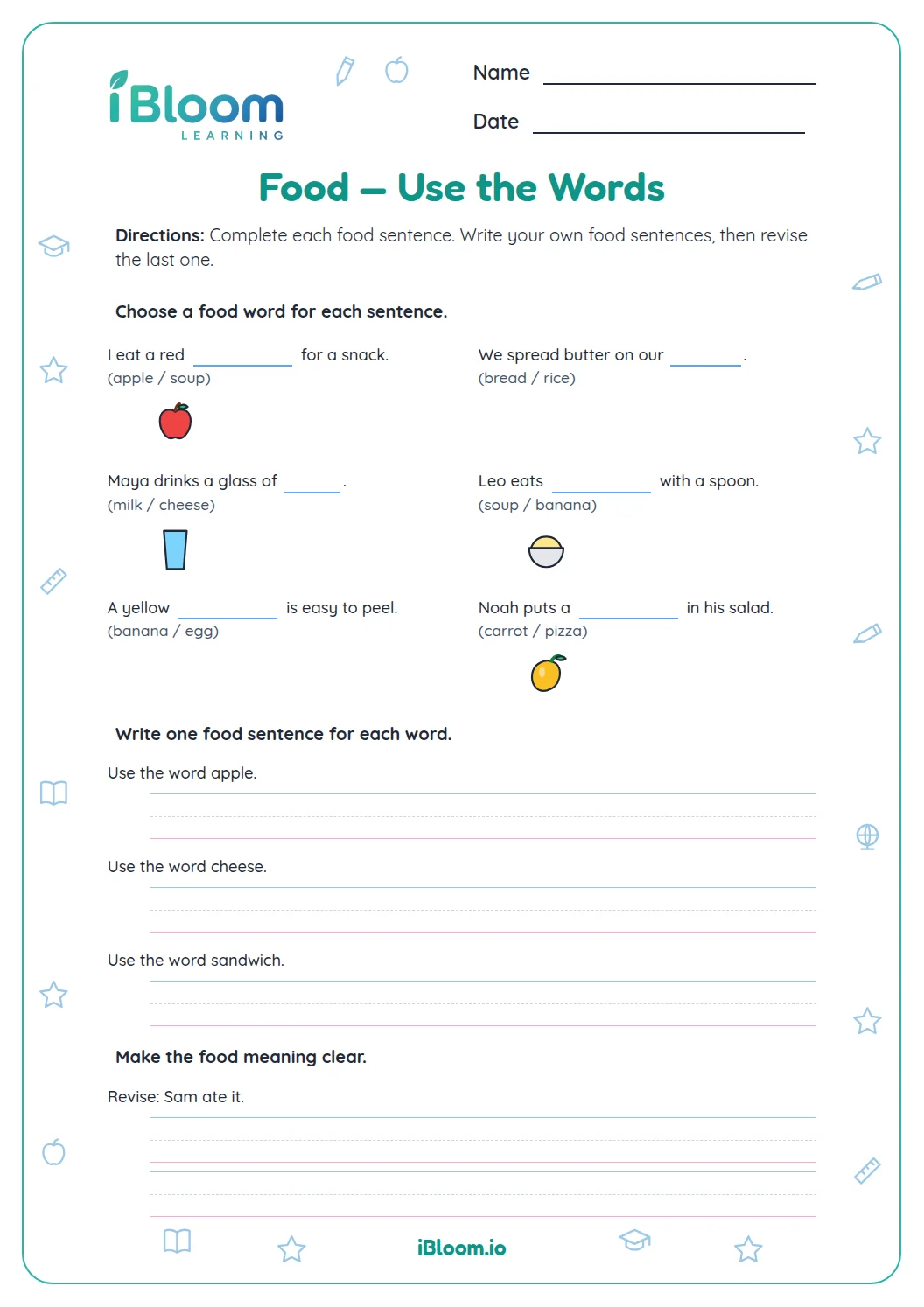
This free Grade 1 worksheet helps children use sentence clues to work out a word’s meaning. Part A has eight multiple-choice questions about words in short sentences; Part B has eight blanks where a nearby detail points to the missing word. The answer key is separate and includes a response for all 16 questions.
Aligned to L.1.4.a
What are context clues?
Context clues are details around a word that help a reader work out its meaning. In “The sun felt hot, so we moved to shade,” shade hints that hot means warm.
How do you choose a meaning?
Read the full sentence and connect the target word to its clue. In “The bag felt light to carry,” the word carry shows light means not heavy.
- 1The bag felt light to carry.
- 2Clue: carry
- 3Answer: not heavy
What does this worksheet practice?
Eight short choice questions and six fill-in clues all ask children to use a sentence to identify a word meaning. The answer key lists each response.
How to use this worksheet
- 1Read the whole sentence before looking at choices.
- 2In Part A, find the detail that hints at the bold idea.
- 3Try each choice in the sentence and choose the one that fits.
- 4In Part B, use the nearby detail to write one word in the blank.
- 5Check the key and reread any sentence whose clue was missed.
Common mistakes and quick fixes
The mistake
Choosing a familiar meaning without reading the rest of the sentence.
The fix
Read the sentence to the end and point to the detail that supports the meaning.
The mistake
Using just one nearby word as the clue.
The fix
Read the whole sentence; more than one detail may help explain the target.
The mistake
Writing a related word that does not fit the sentence.
The fix
Put the answer into the blank and read the sentence again to check its meaning.
Curriculum alignment
Use the sentence around a word to work out its meaning.
On this sheet: Each item uses a sentence clue to choose or complete a word meaning.
Show the official wordingHide the official wording
Use sentence-level context as a clue to the meaning of a word or phrase.
What to practice next
Make more practice
Further reading
Questions parents and teachers ask
What is a context clue?
A context clue is a detail in the sentence that helps explain a word. In the first question, moving into the shade hints that hot means warm. This page gives children short sentences and asks them to use those details to choose or write a meaning.
What is in Part A?
Part A has eight multiple-choice questions. Each includes a sentence with clues about a word, then asks what that word means in context. Children should read the whole sentence before choosing, because the hint may come after the target word.
What is in Part B?
Part B has eight sentences with one missing word. A nearby detail provides a clue, such as needing both hands to carry a watermelon. Children use the clue to write a word that completes the sentence and makes sense.
Can an adult read the worksheet aloud?
Yes. An adult can read each sentence and answer choice aloud while the child listens for the clue. Ask the child to point to the words that helped before choosing. This keeps the focus on using context, even when independent reading is still developing.
What does the answer key include?
The separate key lists answers to all 16 questions. Part A answers are the choices that fit the sentences, and Part B answers are words that complete each clue sentence. For a different but sensible Part B response, check that it fits the clue and intended meaning.