




About this worksheet
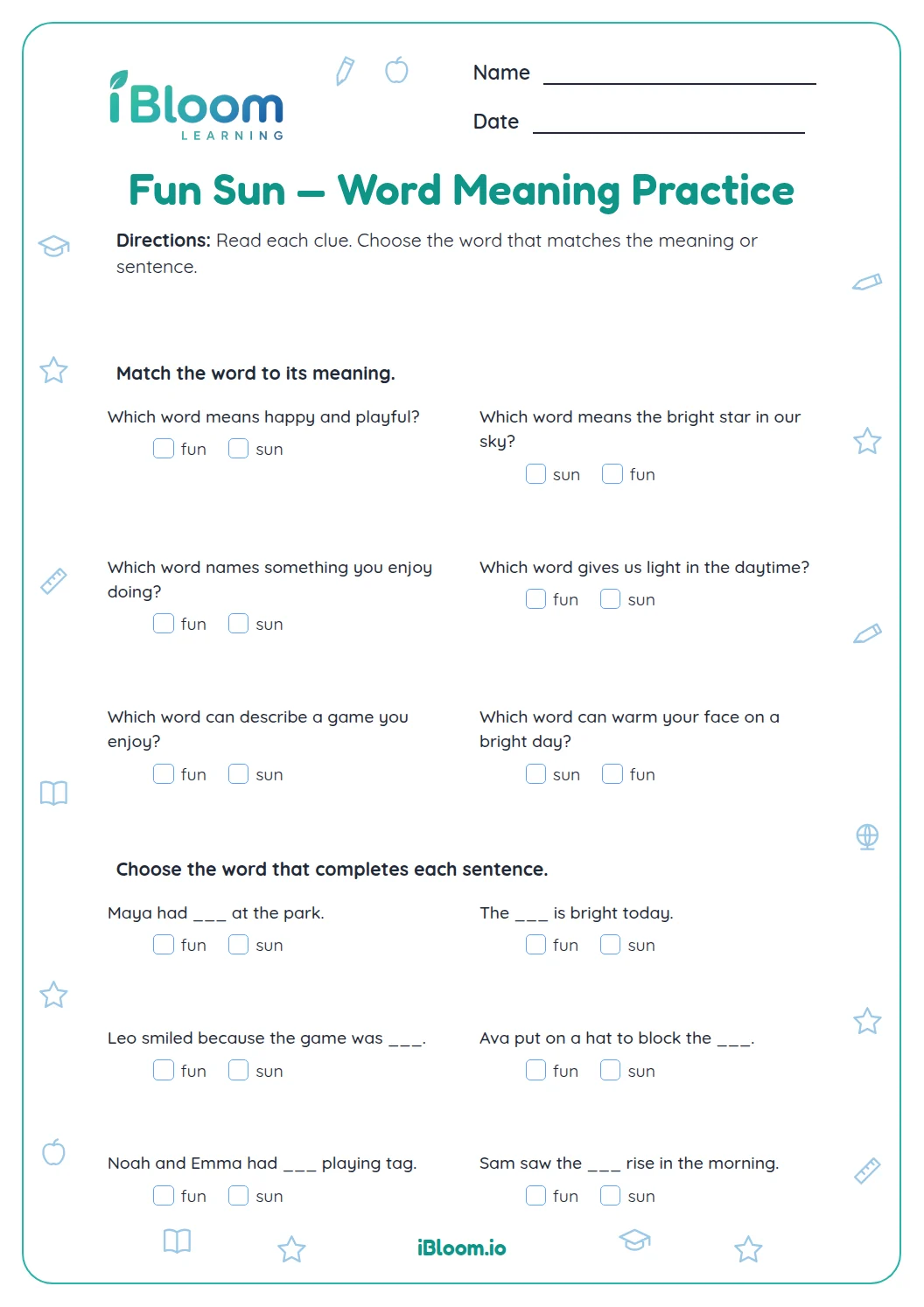
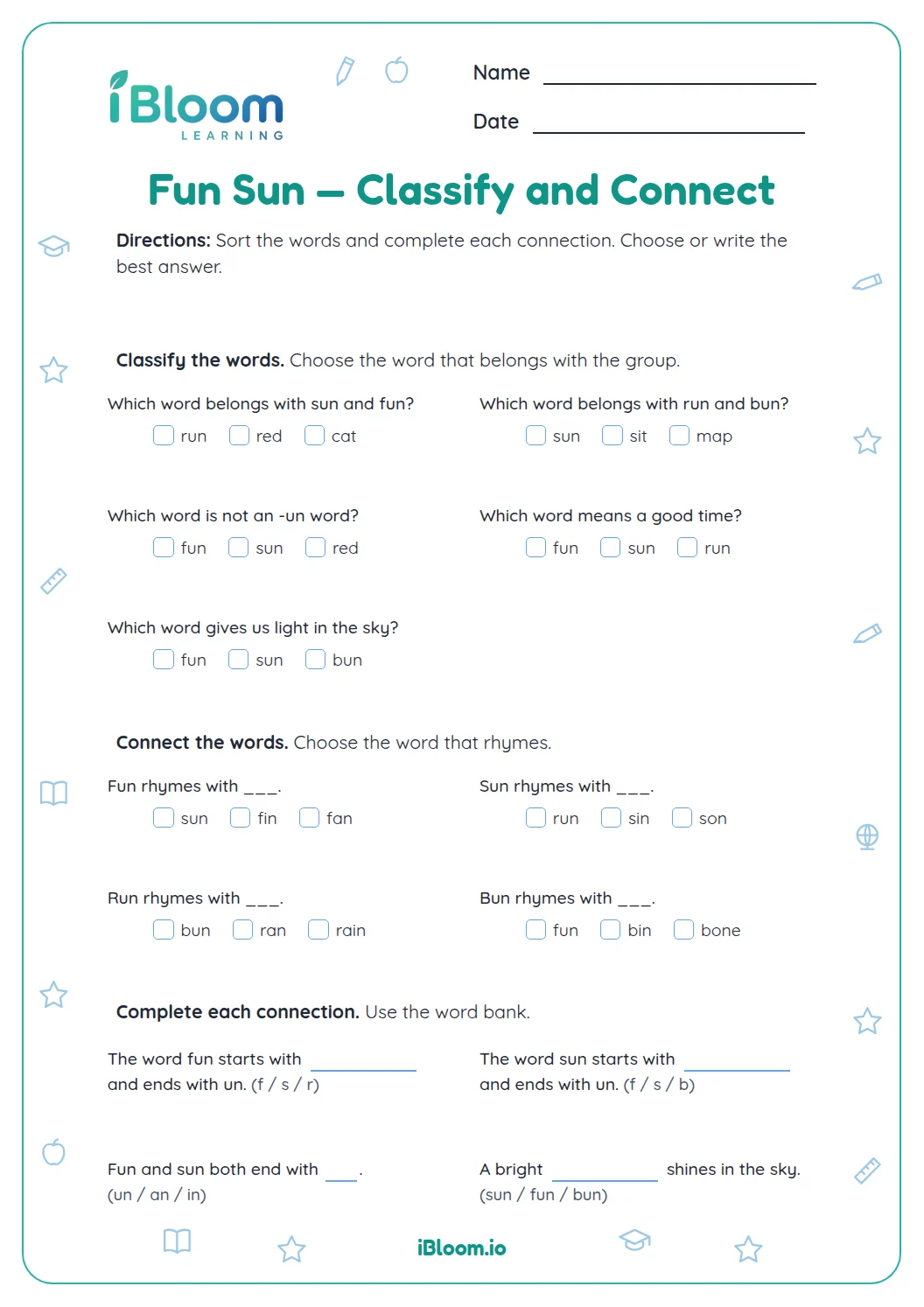
This Grade 1 vocabulary worksheet gives children practice using nearby words to choose a meaning that fits. Part A has seven sentence choices about sunshine, weather, and play. Part B asks seven short questions about related words, including sun, shade, and fun. A separate answer key lists the answers. The activity practices using sentence-level context as a clue to meaning.
Aligned to L.1.4a
How do context clues help?
The words around a blank can point to the word that fits. In “We laughed while we played a game,” laughed and played give clues about fun. Read the complete thought before choosing.
- 1The day was bright and warm. It was a ___ day.
- 2Bright and warm are clues about the weather.
- 3Answer: sunny
What words does the sheet use?
Part A has seven two-choice sentences. Part B has seven short meaning or clue questions. Children work with words such as sunny, shade, damp, dim, cold, glad, and fun.
- 1What word describes a place protected from direct sunlight?
- 2A place out of direct sunlight is shade.
- 3Answer: shade
How can I help with a word choice?
Ask the child to point to a clue before choosing. Then reread the sentence with the answer in place. If the sentence still makes sense, the word fits its context.
How to use this worksheet
- 1Read the full sentence or question.
- 2Find a word that gives a clue about meaning.
- 3Choose an answer in Part A.
- 4Write a word in Part B and reread the clue.
- 5Use the answer key to discuss any choices that need another look.
What mistakes can I help with?
The mistake
Choosing after reading only the blank.
The fix
Read the whole sentence first. Point to the word that gives a clue, then try the answer in the sentence.
The mistake
Confusing the sun with shade.
The fix
Ask whether the clue names the bright object in the sky or a place away from direct sunlight.
The mistake
Choosing a familiar word that does not fit the clue.
The fix
Reread the sentence with each choice. Keep the word that makes the whole sentence sensible.
Curriculum alignment
The questions use nearby words and sentence meaning to support vocabulary reasoning.
Use words in a sentence as clues to a word’s meaning.
On this sheet:
Show the official wordingHide the official wording
Use sentence-level context as a clue to the meaning of a word or phrase.
What to practice next
Make more practice
Further reading
Questions parents and teachers ask
What does “sunny” mean in this worksheet?
Sunny describes a day with sunshine. In the first sentence, bright and warm are clues that help the reader choose sunny. Read the whole sentence before filling the blank, then check that the word makes sense with both clues.
How do children find a context clue?
A context clue is a nearby word or idea that hints at meaning. For example, the sentence about laughing during a game points to fun. Ask the child to name the clue and explain how it helped before checking the answer key.
What is the difference between sun and shade?
The sun is the bright object in the daytime sky. Shade is a place protected from direct sunlight. The worksheet asks children to use each word in a different clue. Reading the full sentence helps show which meaning belongs.
Can an adult read the questions aloud?
Yes. Read the sentence and choices slowly, then let the child point out a clue and choose a word. Reading aloud keeps attention on the meaning of the sentence. The child can still mark or write the answer independently.
What does the answer key include?
The separate answer key lists answers for all 14 questions. Seven items use two choices, and seven ask children to supply a word from a meaning or context clue. If a response differs, reread the prompt and decide whether it fits the clue.